Oscillators
 Oscillator
• A circuit that generates a repetitive AC signal
• Output may be sinusoidal, rectangular, or
sawtooth waveforms
 Main requirement
• Output must not vary in frequency or amplitude
 Tank circuit
• Formed when an inductor and capacitor are
connected in parallel
• Oscillates when excited by external DC source
• Oscillation dampened by resistance of circuit
• Oscillation maintained by positive feedback
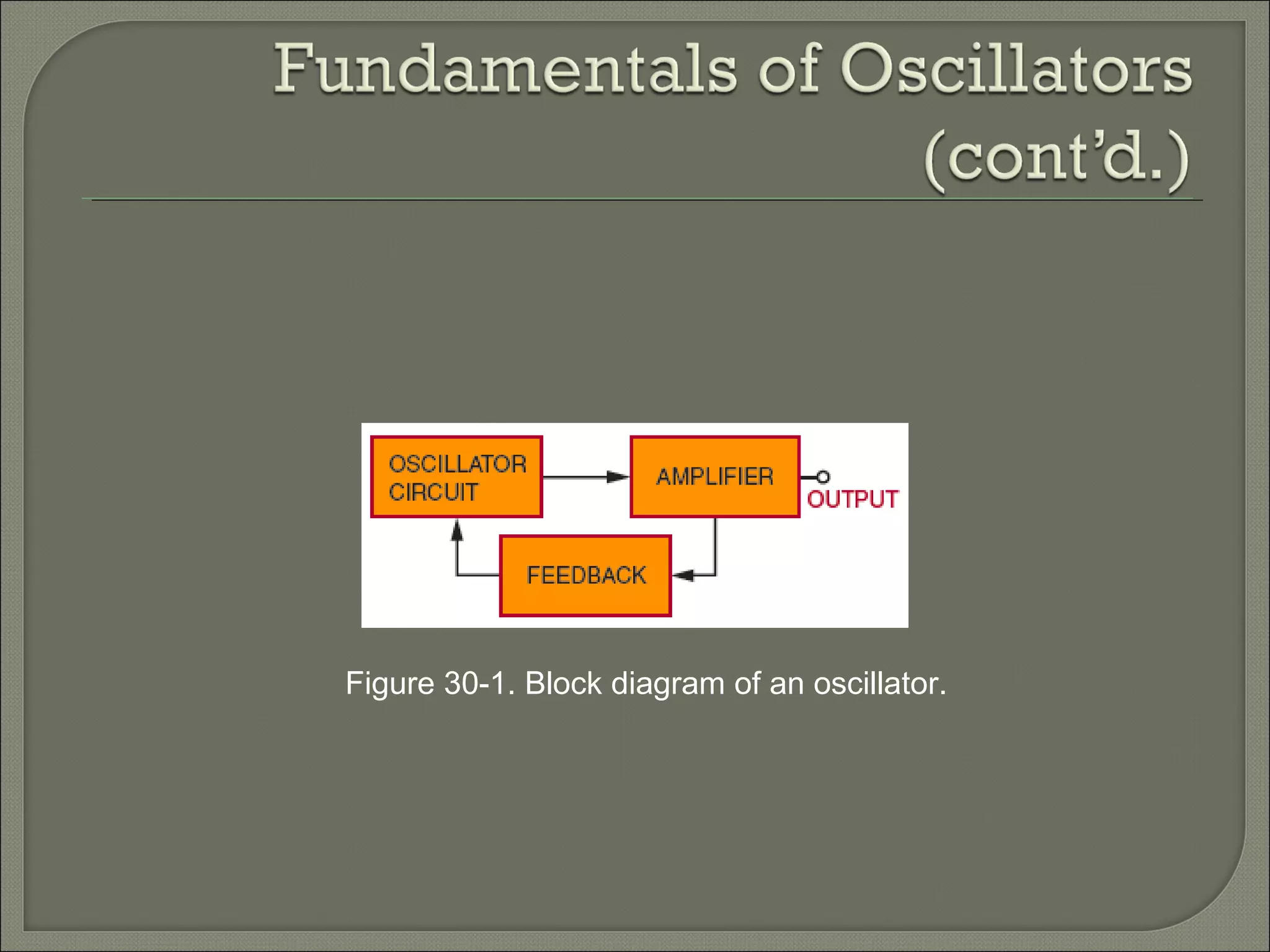
Figure 30-1. Block diagram of an oscillator.
 Sinusoidal oscillators
• Produce a sine-wave output
 Three basic types
• LC oscillators
• Crystal oscillators
• RC oscillators
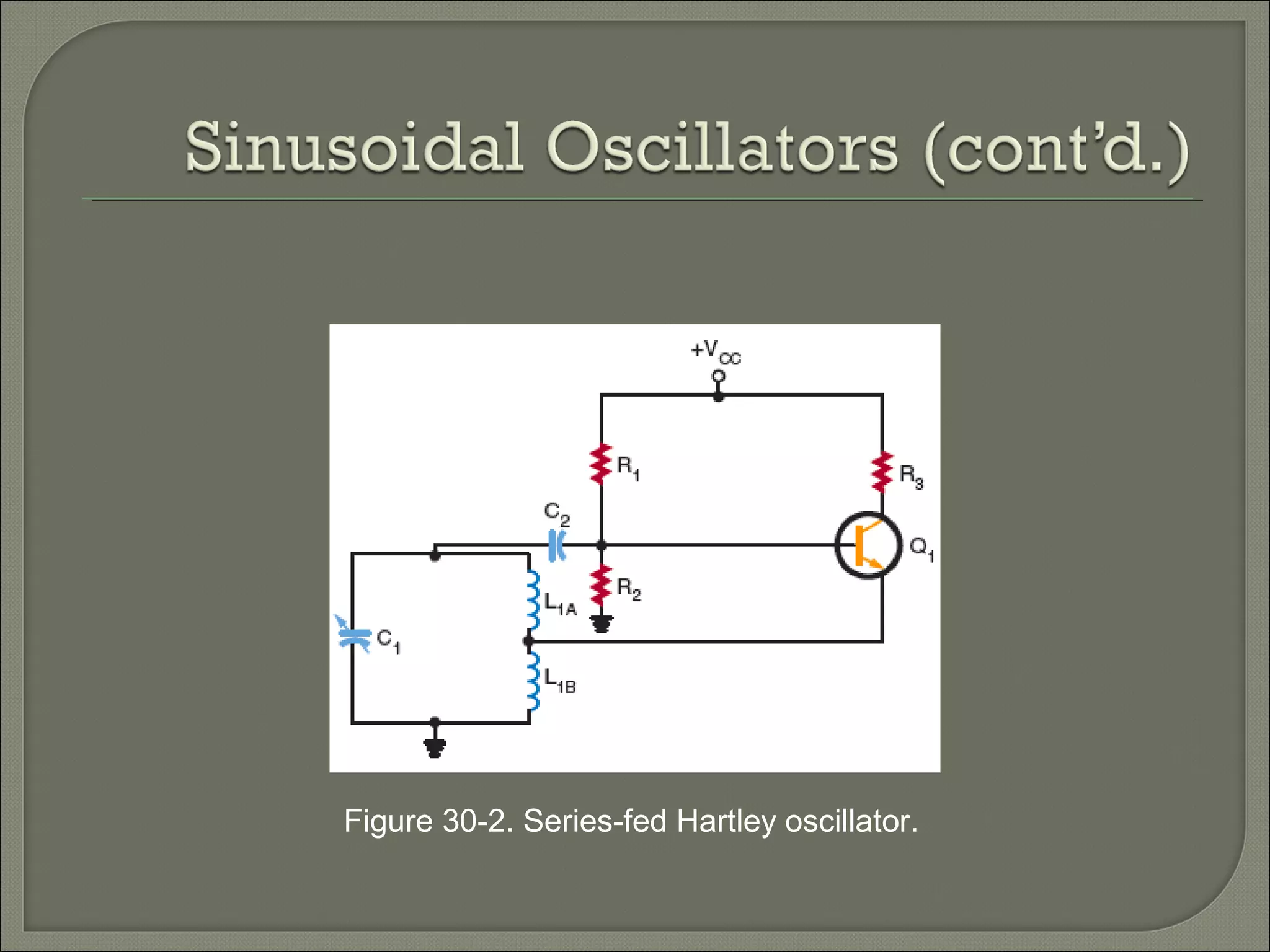
Figure 30-2. Series-fed Hartley oscillator.
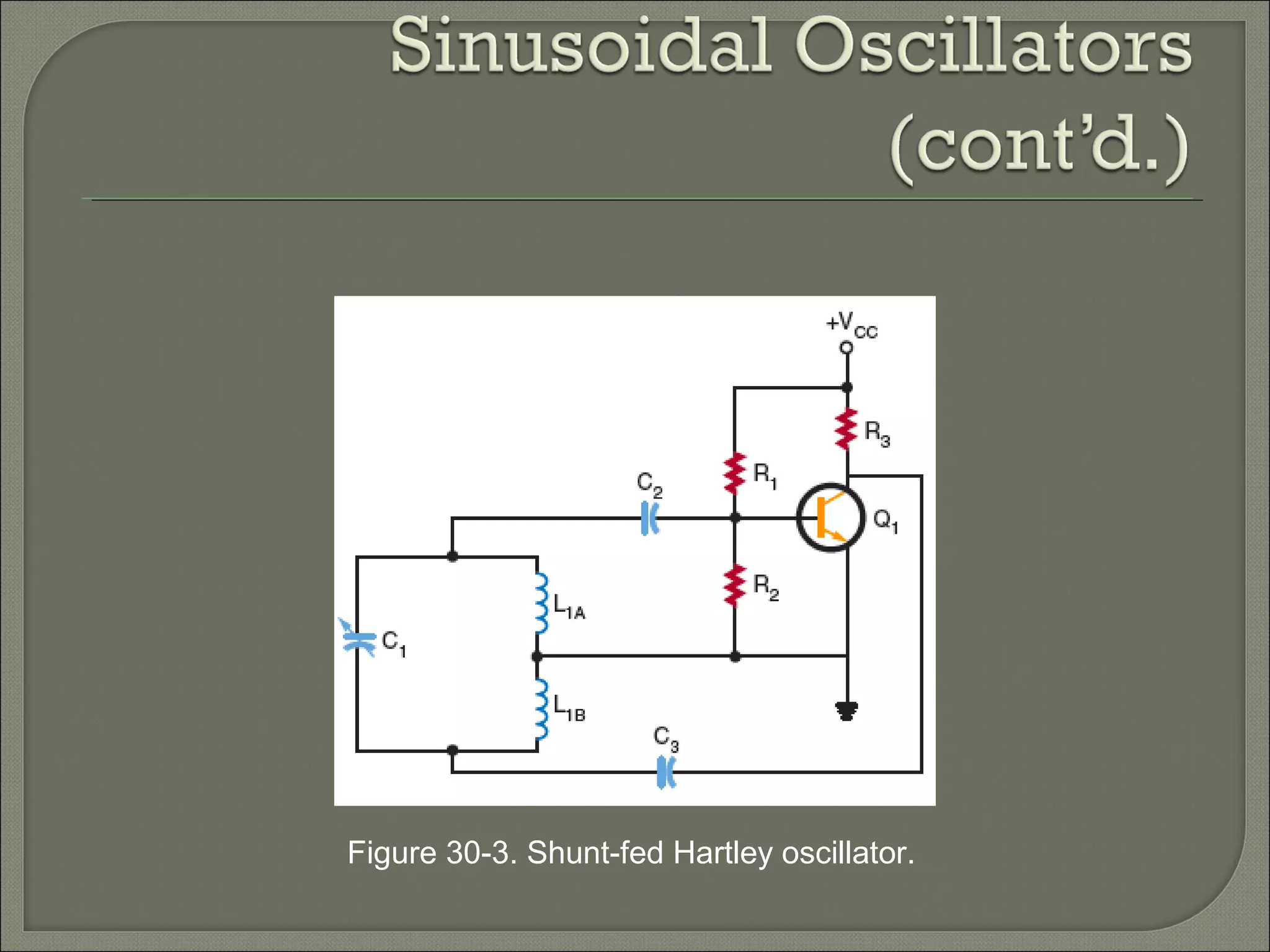
Figure 30-3. Shunt-fed Hartley oscillator.
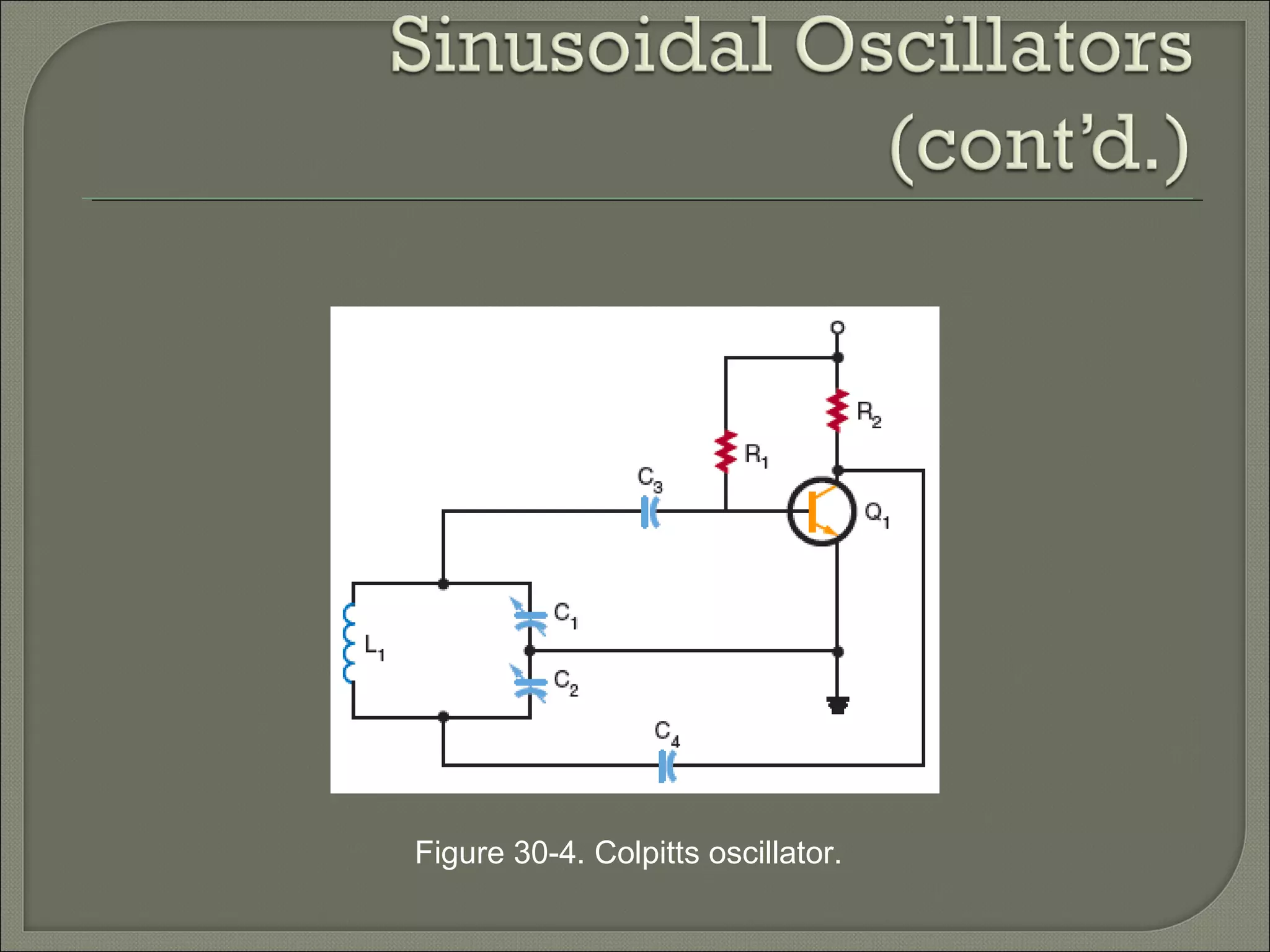
Figure 30-4. Colpitts oscillator.
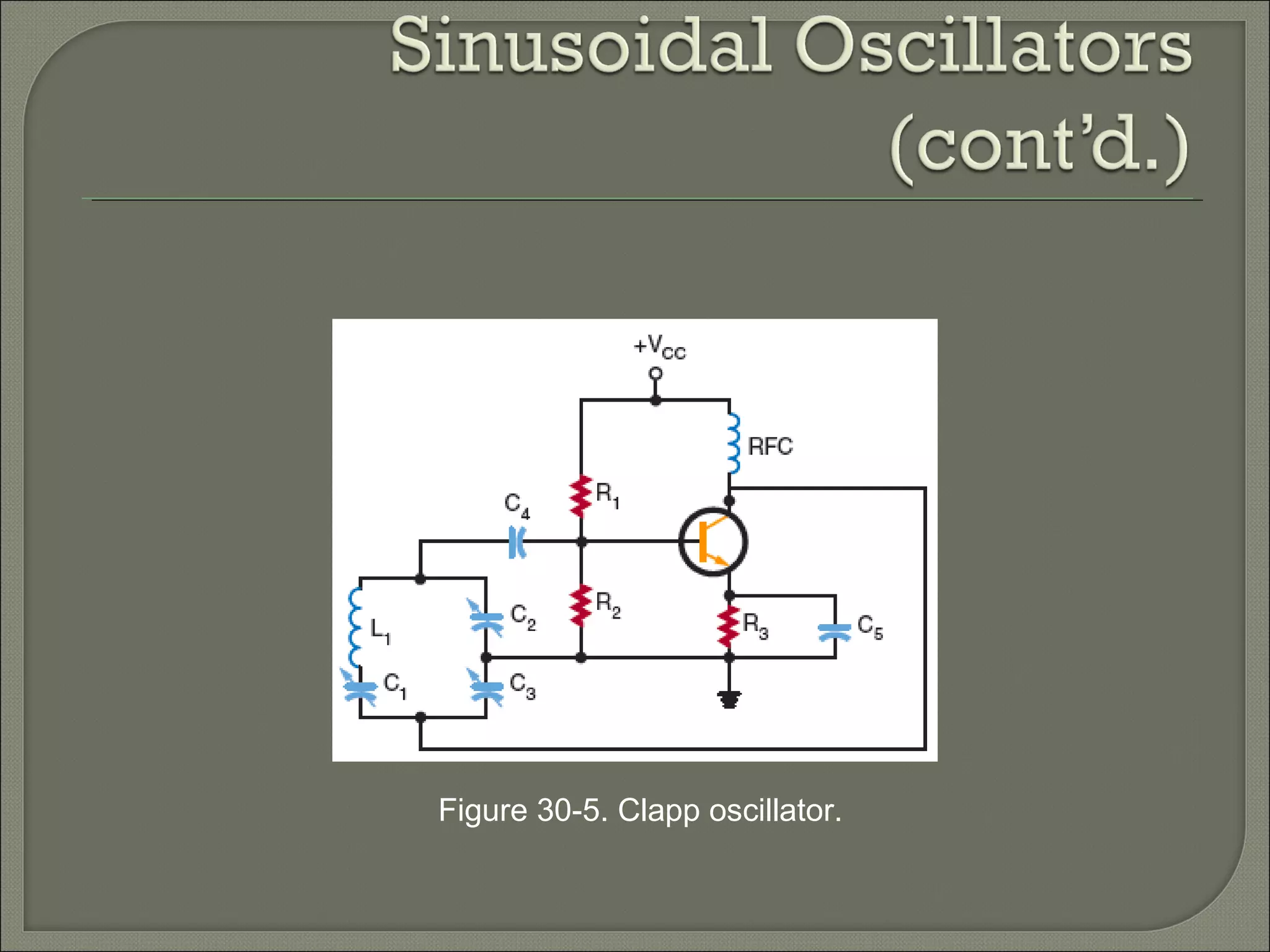
Figure 30-5. Clapp oscillator.
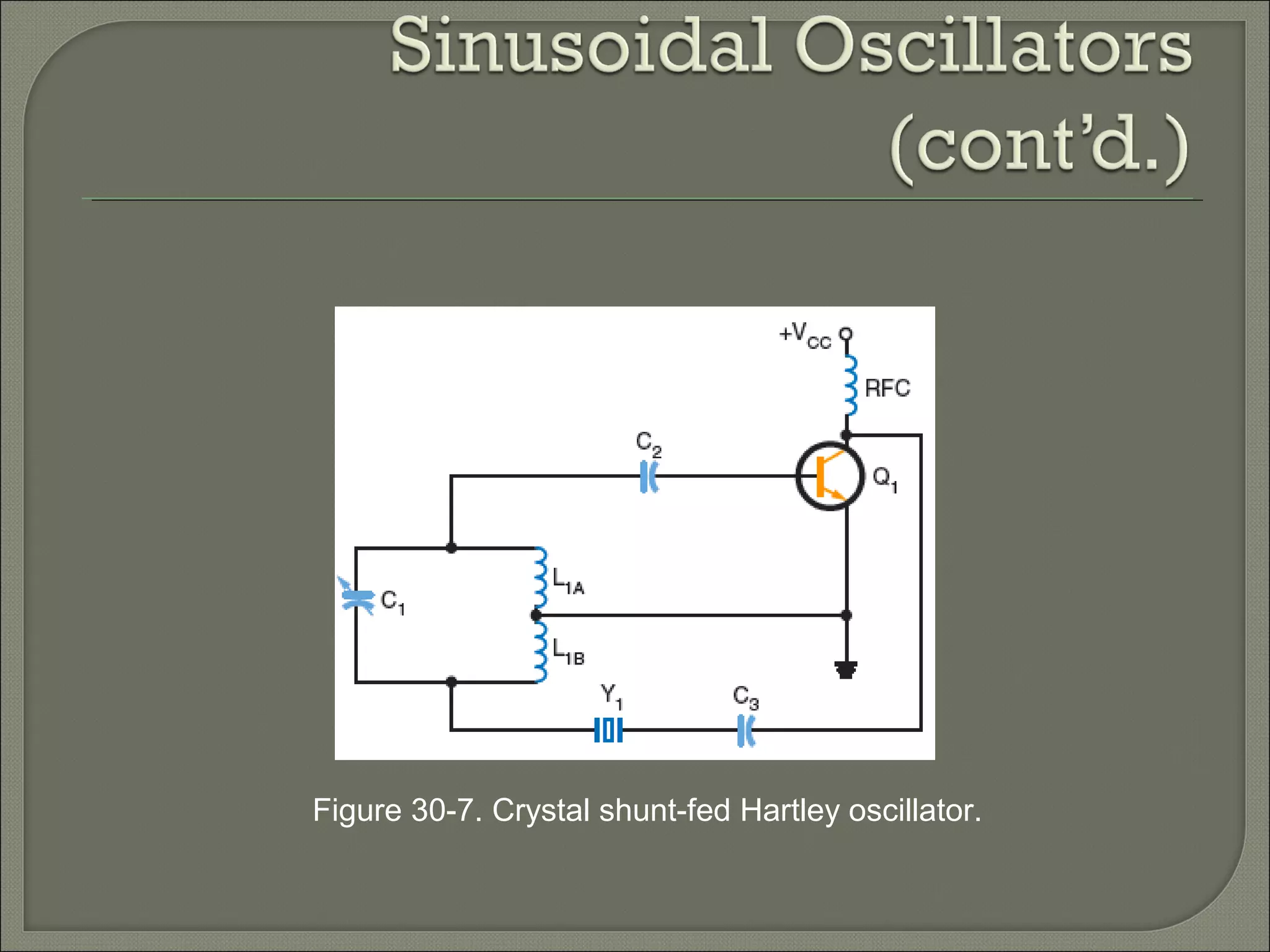
Figure 30-7. Crystal shunt-fed Hartley oscillator.
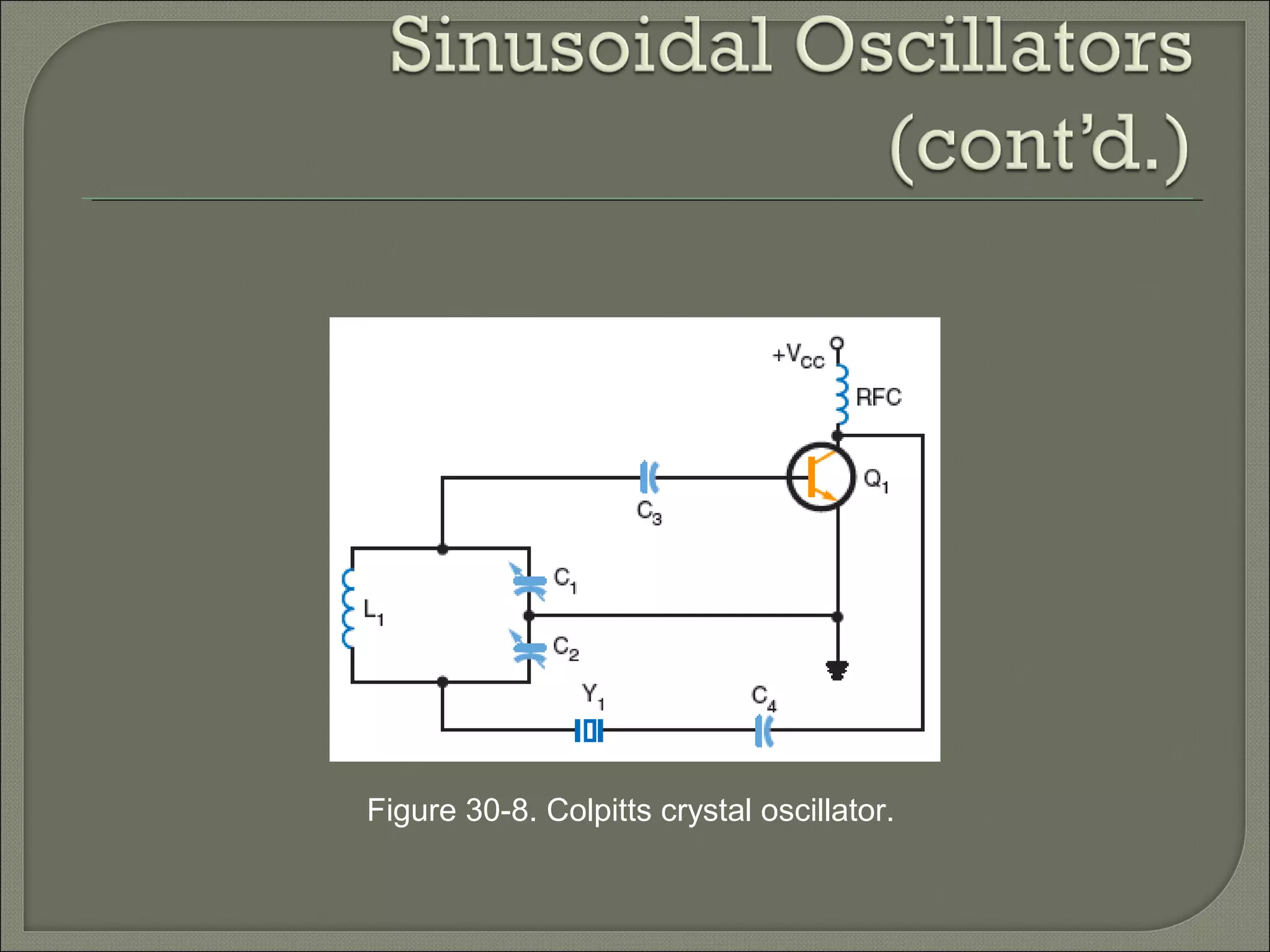
Figure 30-8. Colpitts crystal oscillator.
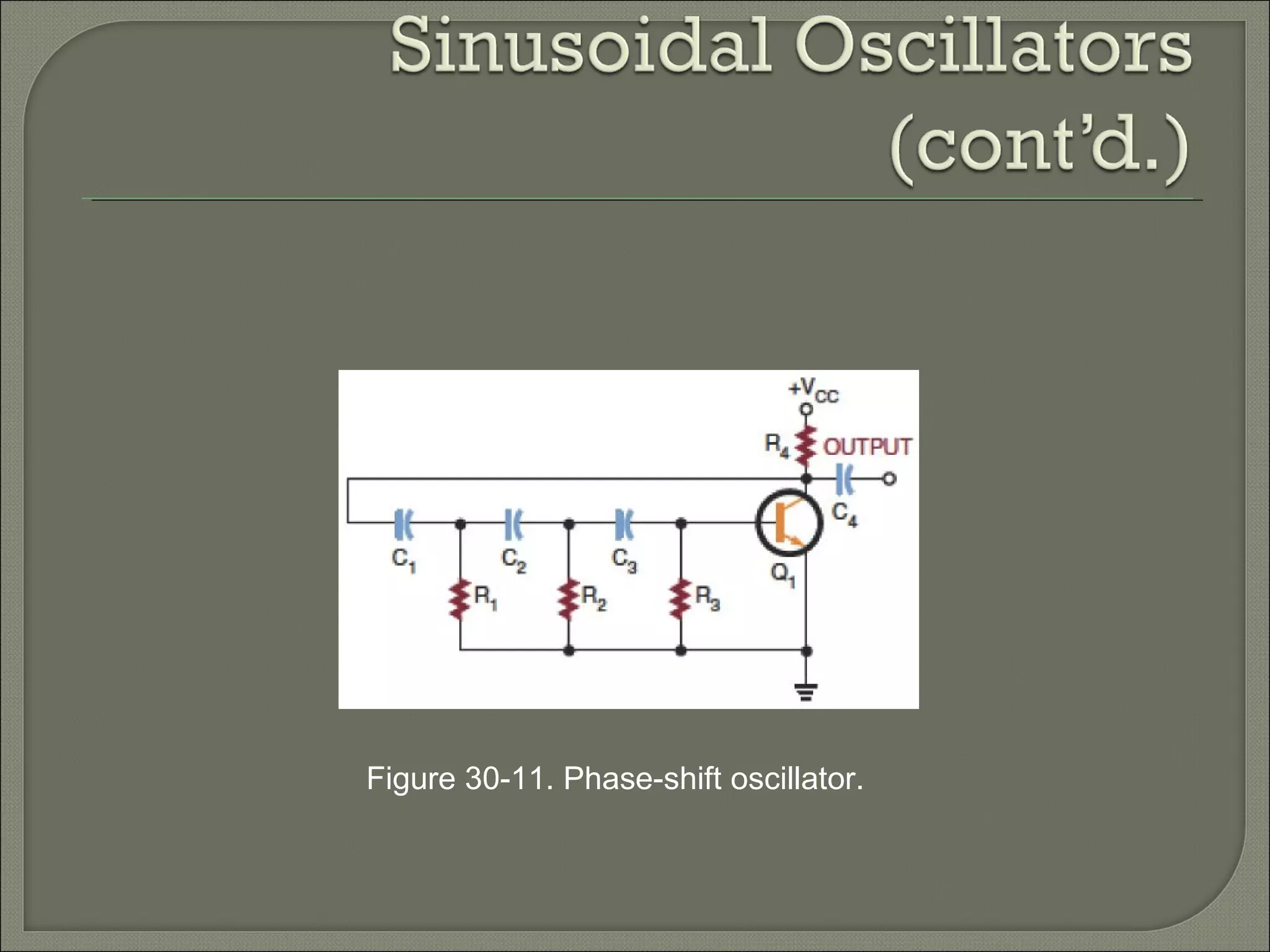
Figure 30-11. Phase-shift oscillator.
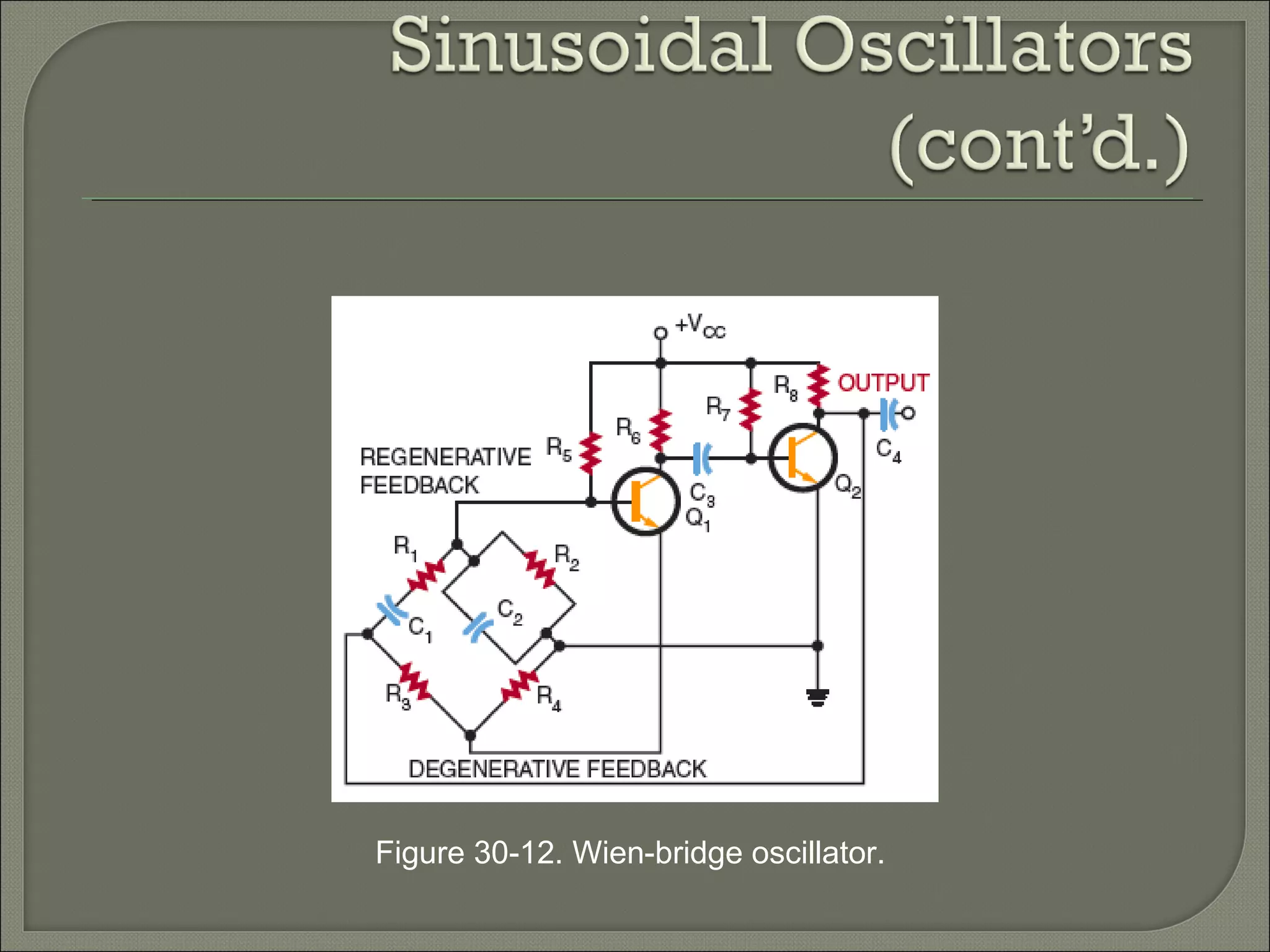
Figure 30-12. Wien-bridge oscillator.
 Nonsinusoidal oscillators
• Do not produce a sine-wave output
• Outputs include square, sawtooth, rectangular, or
triangular waveforms, or a combination of two
waveforms
• Form of relaxation oscillator
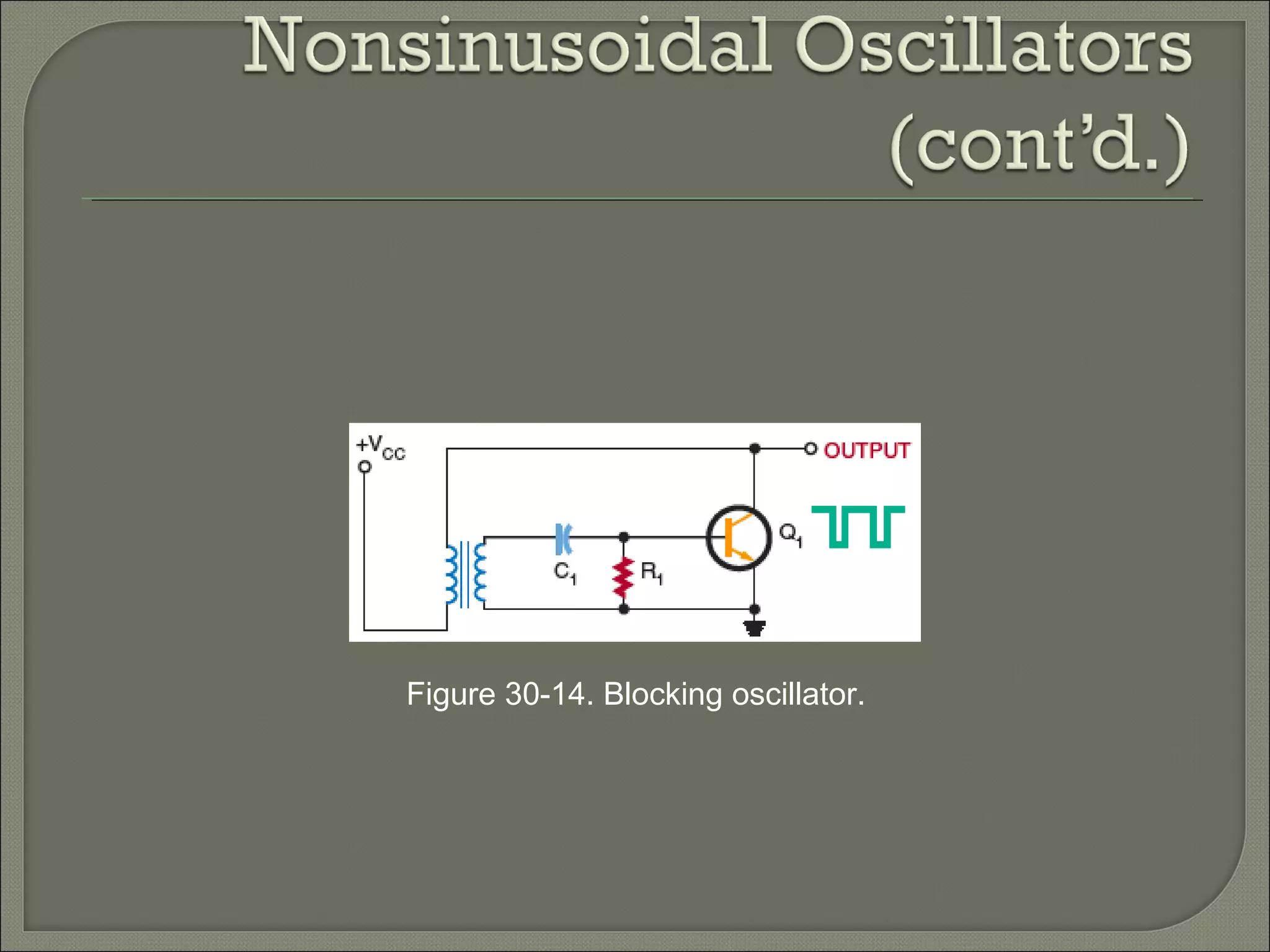
Figure 30-14. Blocking oscillator.
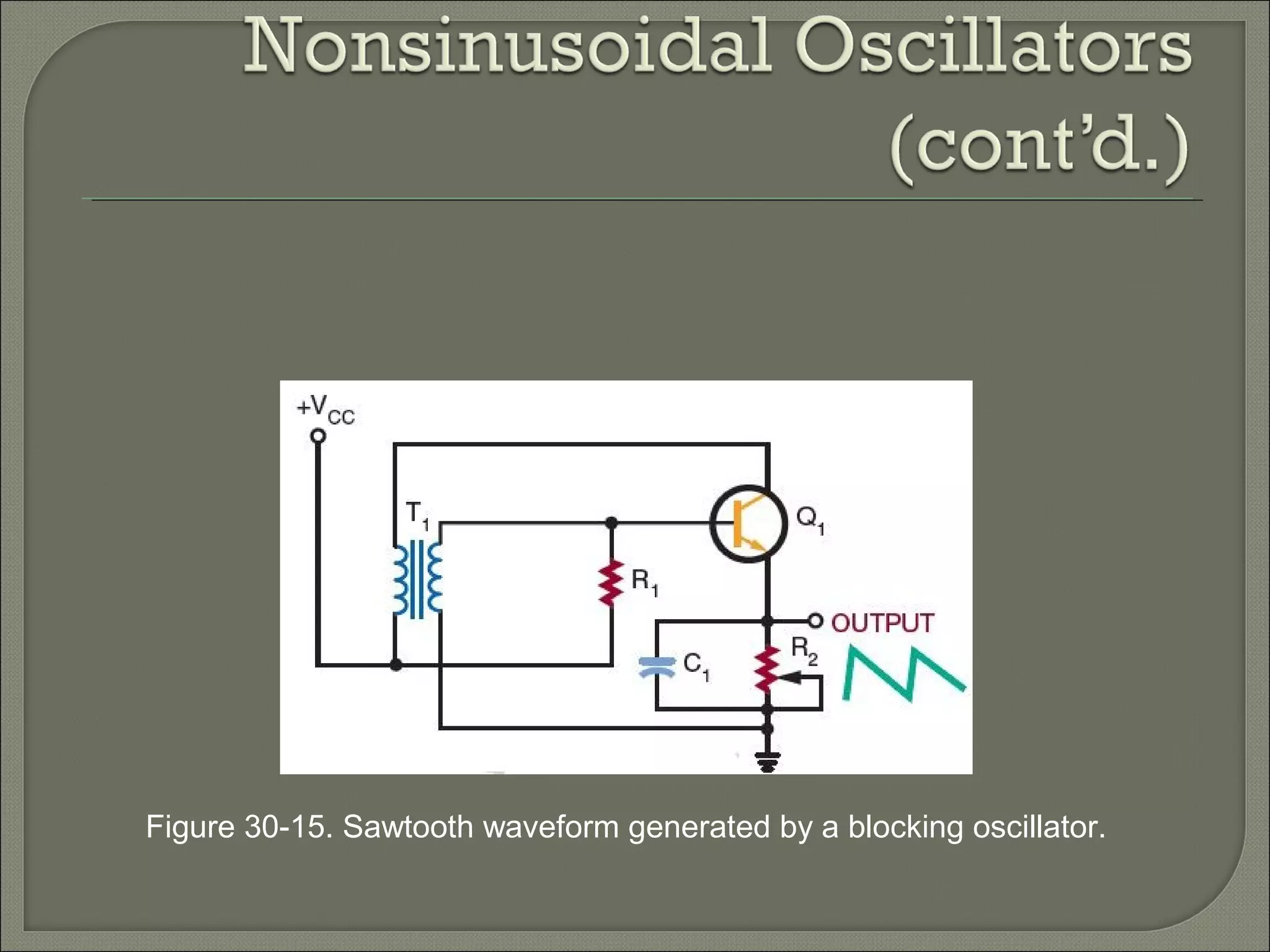
Figure 30-15. Sawtooth waveform generated by a blocking oscillator.
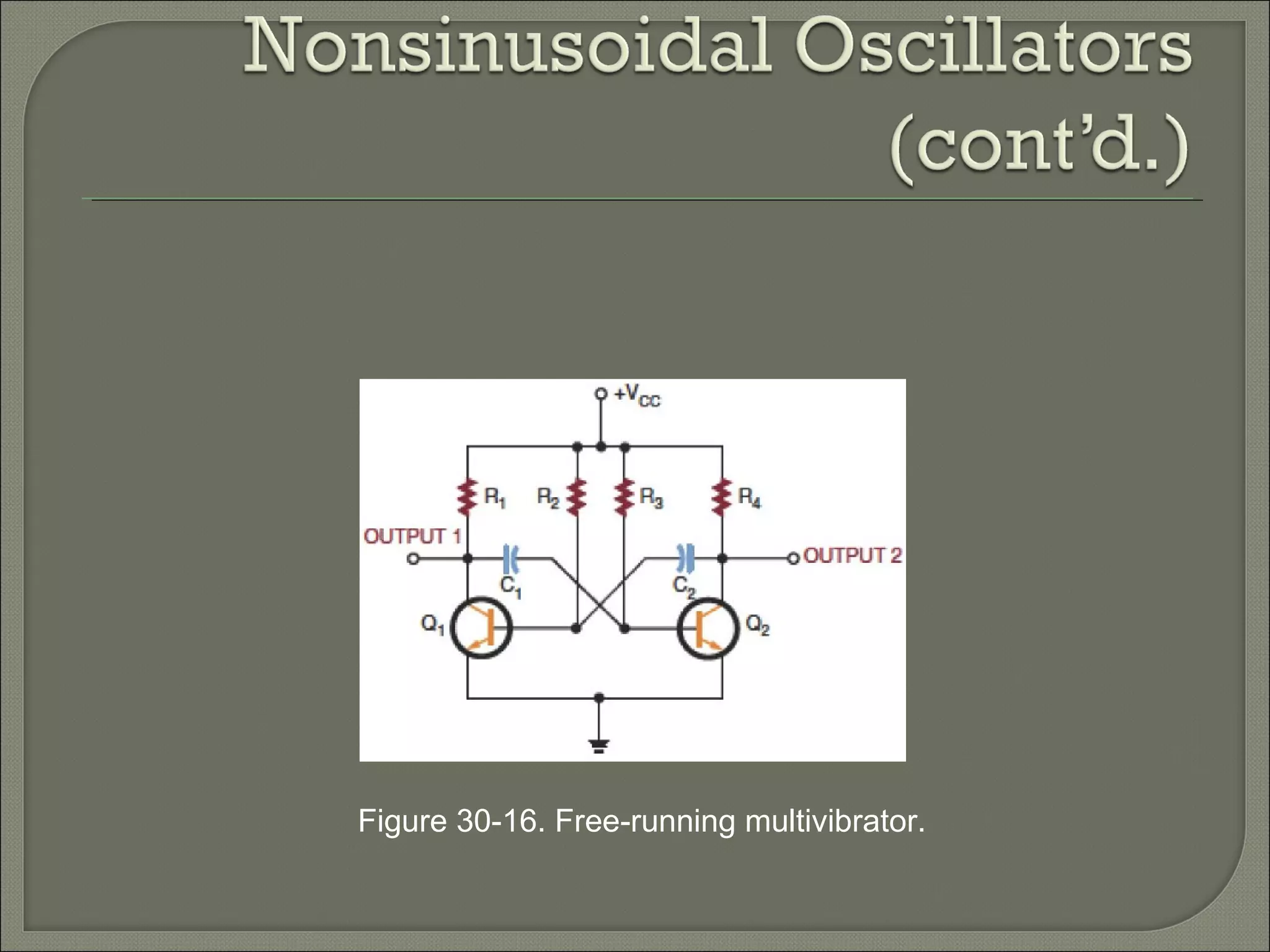
Figure 30-16. Free-running multivibrator.
 An oscillator is a nonrotating device for
producing alternating current
 Main requirement of an oscillator
• That output be uniform and not vary in
frequency or amplitude
 A tank circuit oscillates when an external
voltage source is applied
 The three basic types of sinusoidal
oscillators
• LC oscillators, crystal oscillators, and RC
oscillators
 Nonsinusoidal oscillators do not produce
a sine-wave output
 A relaxation oscillator is the basis of all
nonsinusoidal oscillators

oscillators