Vigyan Ashram Pabal
Plant Propagation
New plant life starts with
 Simple seed
 Cuttings and Grafting
 Tissue culture
Seed
 Seed is defined as a dormant plant which develops
into a complete plant when subjected to
environmental conditions
The environmental conditions are
 Soil
 Water
 Moisture
 Temperature
Cuttings and grafting
Cuttings
 It refers to cut section of plant like stem or a branch
and propagating it
 Example Rose branch directly cultivated in soil
Grafting
 It refers to combine tissues of plants similar or
dissimilar
 It requires a rootstock and a scion
For more details on grafting, please click the link here
Tissue Culture
It refers to
 Collection of tissues or sterile condition organs of
plants on an nutrient base
Example: Banana plant , Gerbera plant they are grown in
a tissue culture laboratory on a glucose base
Tissue culture is also called as micro propagation
Germination
 Germination is the process where embryonic plant is
contained in the seed leads to emergence of new plant
 The embryo formed is wrapped in a seed coat
 When the seeds are not subjected to
environment, they remain dormant
Factors affecting Germination
 Water
 Oxygen
 Temperature and Light
Diagram of seed Germination
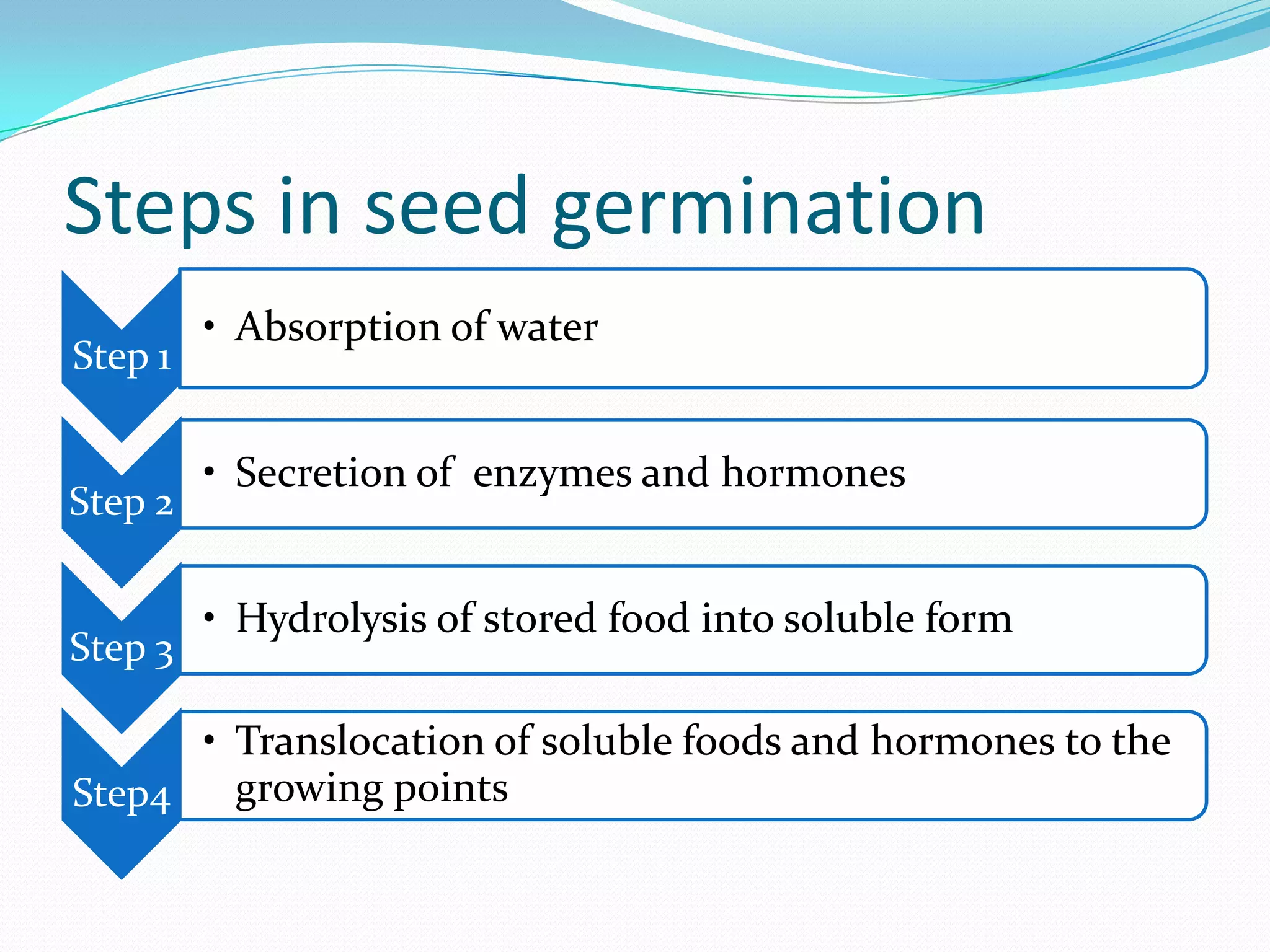
Steps in seed germination
Step 1
• Absorption of water
Step 2
• Secretion of enzymes and hormones
Step 3
• Hydrolysis of stored food into soluble form
Step4
• Translocation of soluble foods and hormones to the
growing points
Propagation
 This refers to process of creating new plants from
seeds, grafting, buddings,cuttings, tissue culture
method
Types of Plant Propagation
Sexual Propagation Asexual Propagation
Seed
Grafting
Cuttings
Tissue culture
Definition of plant propagation
 Definition of plant propagation –
 We will define propagation as production of new
individuals from a selected plant having all the
characters of the original one.
Sexual Propagation of plant
 In this method, plant propagation is done through
seeds.It is also known as seed propagation
 Seeds are produced as a result by sexual reproduction
in fruits of the plants.
 A plant grown from seed may have different
characteristics than its parent tree
 Some plants may not have seeds
Asexual Propagation in plants
 These methods are horticultural done and not by plants
 Examples: Cloning, Grafting, Tissue Culture, Propagation
by vegetative plant parts like root, stem, leaf etc
 Plants are derived from single parent thus there is no
genetic change
 Plant propagated through asexual propagation has same
characters as the parent
Importance of Plant Propagation
Plant Propagation is important because
 It multiplies the different species in large number.
 It protects the plant species which are endangered?
 It improves the characteristics and quality of the
plants.
 It produces quality and healthy plants on commercial
base.
Propagation Media
- Propagation medium is a substance in which plant parts are placed for propagation.
- Propagation medium provides initial support and favorable conditions for Plant
Propagation.
Examples of Propagation Media are
• Soil
•Sand
•Leaf Mould
•Vermiculite
•Perlite.
•Coco peat
•Farm Yard Manure(FYM)
•Saw dust
Advantages of Sexual Propagation
 This is very simple and easy method of propagation.
 Some species of trees, ornamental annuals and vegetables which
cannot be propagated by asexual means should be propagated by
this method. E.g. Papaya, Marigold, Tomato etc.
 Hybrid seeds can be developed by this method.
 New varieties of crops are developed only by sexual method of
propagation.
 Root stocks for budding and grafting can be raised by this
method.
 The plants propagated by this method are long lived and can
resistance to water stress.
 Transmission of viruses can be prevented by sexual method.
 Seed can be transported and stored for longer time for
propagation.
Disadvantages of sexual
propagation
 Characteristics of seedling propagated by this method
are not genetically true to type to that of their mother
plant.
 Plants propagated by sexual method requires long
period for fruiting.
 Plants grow very high, so they are difficult for
intercultural practices like spraying, harvesting etc.
 The plants which have no seeds cannot be propagated
by this method. E.g. Banana, fig, Jasmine, Rose etc.

Plant propogation

  • 1.
  • 2.
    Plant Propagation New plantlife starts with  Simple seed  Cuttings and Grafting  Tissue culture
  • 3.
    Seed  Seed isdefined as a dormant plant which develops into a complete plant when subjected to environmental conditions The environmental conditions are  Soil  Water  Moisture  Temperature
  • 4.
    Cuttings and grafting Cuttings It refers to cut section of plant like stem or a branch and propagating it  Example Rose branch directly cultivated in soil Grafting  It refers to combine tissues of plants similar or dissimilar  It requires a rootstock and a scion For more details on grafting, please click the link here
  • 5.
    Tissue Culture It refersto  Collection of tissues or sterile condition organs of plants on an nutrient base Example: Banana plant , Gerbera plant they are grown in a tissue culture laboratory on a glucose base Tissue culture is also called as micro propagation
  • 6.
    Germination  Germination isthe process where embryonic plant is contained in the seed leads to emergence of new plant  The embryo formed is wrapped in a seed coat  When the seeds are not subjected to environment, they remain dormant Factors affecting Germination  Water  Oxygen  Temperature and Light
  • 7.
    Diagram of seedGermination
  • 8.
    Steps in seedgermination Step 1 • Absorption of water Step 2 • Secretion of enzymes and hormones Step 3 • Hydrolysis of stored food into soluble form Step4 • Translocation of soluble foods and hormones to the growing points
  • 9.
    Propagation  This refersto process of creating new plants from seeds, grafting, buddings,cuttings, tissue culture method Types of Plant Propagation Sexual Propagation Asexual Propagation Seed Grafting Cuttings Tissue culture
  • 10.
    Definition of plantpropagation  Definition of plant propagation –  We will define propagation as production of new individuals from a selected plant having all the characters of the original one.
  • 11.
    Sexual Propagation ofplant  In this method, plant propagation is done through seeds.It is also known as seed propagation  Seeds are produced as a result by sexual reproduction in fruits of the plants.  A plant grown from seed may have different characteristics than its parent tree  Some plants may not have seeds
  • 12.
    Asexual Propagation inplants  These methods are horticultural done and not by plants  Examples: Cloning, Grafting, Tissue Culture, Propagation by vegetative plant parts like root, stem, leaf etc  Plants are derived from single parent thus there is no genetic change  Plant propagated through asexual propagation has same characters as the parent
  • 13.
    Importance of PlantPropagation Plant Propagation is important because  It multiplies the different species in large number.  It protects the plant species which are endangered?  It improves the characteristics and quality of the plants.  It produces quality and healthy plants on commercial base.
  • 14.
    Propagation Media - Propagationmedium is a substance in which plant parts are placed for propagation. - Propagation medium provides initial support and favorable conditions for Plant Propagation. Examples of Propagation Media are • Soil •Sand •Leaf Mould •Vermiculite •Perlite. •Coco peat •Farm Yard Manure(FYM) •Saw dust
  • 15.
    Advantages of SexualPropagation  This is very simple and easy method of propagation.  Some species of trees, ornamental annuals and vegetables which cannot be propagated by asexual means should be propagated by this method. E.g. Papaya, Marigold, Tomato etc.  Hybrid seeds can be developed by this method.  New varieties of crops are developed only by sexual method of propagation.  Root stocks for budding and grafting can be raised by this method.  The plants propagated by this method are long lived and can resistance to water stress.  Transmission of viruses can be prevented by sexual method.  Seed can be transported and stored for longer time for propagation.
  • 16.
    Disadvantages of sexual propagation Characteristics of seedling propagated by this method are not genetically true to type to that of their mother plant.  Plants propagated by sexual method requires long period for fruiting.  Plants grow very high, so they are difficult for intercultural practices like spraying, harvesting etc.  The plants which have no seeds cannot be propagated by this method. E.g. Banana, fig, Jasmine, Rose etc.