By- Vigyan ashram, Pabal.
Types of Fertilizers
 Straight.
 Mix.
 Complete
 Incomplete
 Organic
 Inorganic
 Soluble
 Insoluble
Straight Vs. Mix-
 Straight fertilizers contains single nutrient in it as that
of Urea contains only Nitrogen (N) @ 46 % OR Single
Super Phosphate (SSP) contains only Phosphorus (P)
@ 16 %.
 Mix fertilizers contains 2 or more nutrients as that of
Di-amonium Phosphate (DAP) contains 18 % Nitrogen
(N) and 46 % Phosphorus (P).
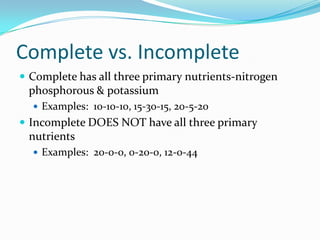
Complete vs. Incomplete
 Complete has all three primary nutrients-nitrogen
phosphorous & potassium
 Examples: 10-10-10, 15-30-15, 20-5-20
 Incomplete DOES NOT have all three primary
nutrients
 Examples: 20-0-0, 0-20-0, 12-0-44
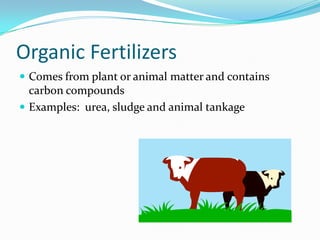
Organic Fertilizers
 Comes from plant or animal matter and contains
carbon compounds
 Examples: urea, sludge and animal tankage
Advantages of Organic
 Slow release of nutrients
 Not easily leached from the soil
 Add organic components to growing media
Disadvantages of Organic
 Hard to get
 Not sterile
 Low nutrient content
 Expensive
Inorganic Fertilizers
 Comes from sources other than animals or plants
 Chemical products
Advantages of Inorganic
 Can make the desired ratio of nutrients
 easy to get
 lower cost
Disadvantages of Inorganic
 No organic material
 possible chemical building up in growing media
Soluble Fertilizer
 Dissolve in water and are applied as a liquid solution
 Fertigation
 fertilizing through irrigation water
 big advantage
Insoluble Fertilizer
 Includes granular and slow release applied to the
growing media
Granular vs. Slow Release
 Granular
 relatively inexpensive
 easy to find
 Slow Release
 more expensive because it is coated
 more uniform release of nutrients over time period
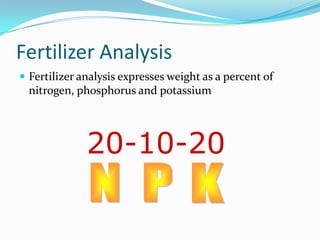
Fertilizer Analysis
 Fertilizer analysis expresses weight as a percent of
nitrogen, phosphorus and potassium
20-10-20
Fertilizer Analysis
 For Example
 A 100 kg bag of fertilizer has an analysis of 15-5-15. How
many pounds of nitrogen, phosphorus and potassium
are in the bag?
 Nitrogen: 100 X 15%=15 Kg
 Phosphorus: 100 X 5%=15 Kg
 Potassium: 100 X 15%=15 Kg
Fertilizer Ratios
 A fertilizer with a 10-10-10 analysis would have a 1:1:1
ratio
 A fertilizer with a 24-8-16 analysis would have a 3:1:2
ratio
 What would be the ratio for a fertilizer with an analysis
of 36-18-27?
4:2:3
Thank you !

Fertilizer types

  • 1.
  • 2.
    Types of Fertilizers Straight.  Mix.  Complete  Incomplete  Organic  Inorganic  Soluble  Insoluble
  • 4.
    Straight Vs. Mix- Straight fertilizers contains single nutrient in it as that of Urea contains only Nitrogen (N) @ 46 % OR Single Super Phosphate (SSP) contains only Phosphorus (P) @ 16 %.  Mix fertilizers contains 2 or more nutrients as that of Di-amonium Phosphate (DAP) contains 18 % Nitrogen (N) and 46 % Phosphorus (P).
  • 5.
    Complete vs. Incomplete Complete has all three primary nutrients-nitrogen phosphorous & potassium  Examples: 10-10-10, 15-30-15, 20-5-20  Incomplete DOES NOT have all three primary nutrients  Examples: 20-0-0, 0-20-0, 12-0-44
  • 6.
    Organic Fertilizers  Comesfrom plant or animal matter and contains carbon compounds  Examples: urea, sludge and animal tankage
  • 7.
    Advantages of Organic Slow release of nutrients  Not easily leached from the soil  Add organic components to growing media
  • 8.
    Disadvantages of Organic Hard to get  Not sterile  Low nutrient content  Expensive
  • 9.
    Inorganic Fertilizers  Comesfrom sources other than animals or plants  Chemical products
  • 10.
    Advantages of Inorganic Can make the desired ratio of nutrients  easy to get  lower cost
  • 11.
    Disadvantages of Inorganic No organic material  possible chemical building up in growing media
  • 12.
    Soluble Fertilizer  Dissolvein water and are applied as a liquid solution  Fertigation  fertilizing through irrigation water  big advantage
  • 13.
    Insoluble Fertilizer  Includesgranular and slow release applied to the growing media
  • 14.
    Granular vs. SlowRelease  Granular  relatively inexpensive  easy to find  Slow Release  more expensive because it is coated  more uniform release of nutrients over time period
  • 15.
    Fertilizer Analysis  Fertilizeranalysis expresses weight as a percent of nitrogen, phosphorus and potassium 20-10-20
  • 16.
    Fertilizer Analysis  ForExample  A 100 kg bag of fertilizer has an analysis of 15-5-15. How many pounds of nitrogen, phosphorus and potassium are in the bag?  Nitrogen: 100 X 15%=15 Kg  Phosphorus: 100 X 5%=15 Kg  Potassium: 100 X 15%=15 Kg
  • 17.
    Fertilizer Ratios  Afertilizer with a 10-10-10 analysis would have a 1:1:1 ratio  A fertilizer with a 24-8-16 analysis would have a 3:1:2 ratio  What would be the ratio for a fertilizer with an analysis of 36-18-27? 4:2:3
  • 18.