By – Vigyan Ashram , Pabal
Macro vs Micro Nutrients
Macro nutrients are required by the plant in
relatively large amounts
Micro nutrients are required only in small amounts
minor or trace elements
Macro nutrients
Non-mineral elements
carbon (C)
hydrogen (H)
oxygen (O)
Primary Nutrients
Nitrogen (N)
Phosphorus (P)
Potassium (K)
Secondary Nutrients
calcium (Ca)
magnesium (Mg)
sulfur (S)
Micro nutrients
Iron (Fe)
Copper (Cu)
Zinc (Zn)
Boron (B)
Molybdenum (Mo)
Manganese (Mn)
Chlorine (Cl)
Functions of Nitrogen
Promotes growth of leaves and stems
Gives dark green color and improves quality of foliage
Necessary to develop cell proteins and chlorophyll
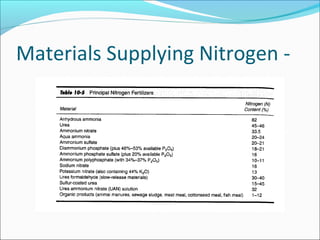
Materials Supplying Nitrogen -
Nitrogen
Deficiency symptoms
sick, yellow-green color
short stems, small leaves, pale colored leaves and
flowers
slow and dwarfed plant growth
Nitrogen deficiency
Functions of Phosphorus
Stimulates early formation and growth of roots
Provides for fast and vigorous growth and speeds
maturity
Stimulates flowering and seed development
Necessary for the enzyme action of many plant
processes
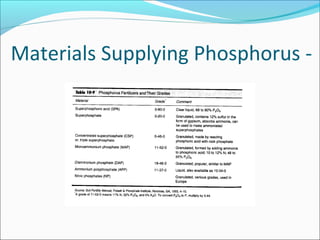
Materials Supplying Phosphorus -
Phosphorus
Deficiency symptoms
decrease in growth
slow maturity
older leaves are purplish color
Phosphorus Deficiency
Functions of Potassium
Used to form carbohydrates and proteins
Formation and transfer of starches, sugars and oils
Increases disease resistance, vigor and hardiness
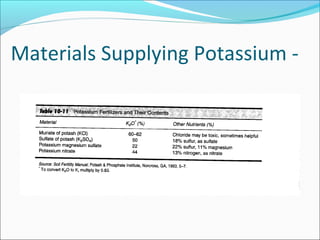
Materials Supplying Potassium -
Potassium
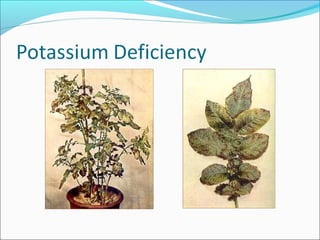
Deficiency symptoms
mottled, spotted, streaked or curled leaves
scorched, burned, dead leaf tips and margins
Functions of Calcium
Improves plant vigor
Influences intake and synthesis of other plant
nutrients
Important part of cell walls
Calcium
Deficiency symptoms
small developing leaves
wrinkled older leaves
dead stem tips
Functions of Magnesium
Influences the intake of other essential nutrients
Helps make fats
Assists in translocation of phosphorus and fats
Magnesium
Deficiency symptoms
Interveinal chlorosis-yellowing of leaves between green
veins
leaf tips curl or cup upward
slender, weak stalks
Functions of Sulfur
Promotes root growth and vigorous vegetative growth
Essential to protein formation
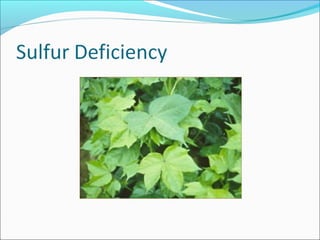
Sulfur
Deficiency symptoms
young leaves are light green with lighter color veins
yellow leaves and stunted growth
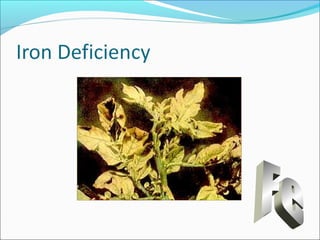
Iron
Functions of Iron
Essential for chlorophyll production
Helps carry electrons to mix oxygen with other
elements
Deficiency symptoms
mottled and interveinal chlorosis in young leaves
stunted growth and slender, short stems
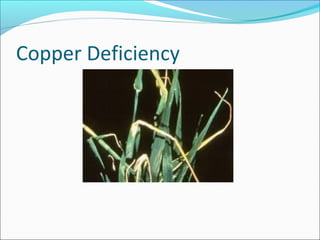
Copper
Functions
Helps in the use of Iron
Helps respiration
Deficiency symptoms
young leaves are small and permanently wilt
multiple buds at stem tip
Copper Deficiency
Zinc
Functions
plant metabolism
helps form growth hormones
reproduction
Deficiency symptoms
retarded growth between nodes (rosetted)
new leaves are thick and small
spotted between veins, discolored veins
Boron
Functions
affects water absorption by roots
translocation of sugars
Deficiency Symptoms
short, thick stem tips
young leaves of terminal buds are light green at base
leaves become twisted and die
Manganese
Functions
plant metabolism
nitrogen transformation
Deficiency symptoms
interveinal chlorosis
young leaves die
Molybdenum
Functions
plant development
reproduction
Deficiency symptoms
stunted growth
yellow leaves, upward curling leaves, leaf margins burn
Chlorine
Functions
essential to some plant processes
acts in enzyme systems
Deficiency symptoms
usually more problems with too much chlorine or
toxicity than with deficiency
Plant nutrients & its role

Plant nutrients & its role