Nursery ManagementNursery Management
Nursery
 Nursery is the place where planting materials are
raised either by seeds or by vegetative means
with care before transplanting at desired site.
 The word 'nursery' is also used sometimes for
young saplings raised by seeds.
 Often, we consider the nursery management and
the plant propagation are same, though they are
altogether different but inter-related.
 In fact, mass multiplication of quality planting
materials is the central theme of nursery
management but nursery management is a
trade-oriented dynamic process, which refers to
efficient utilization of resources for economic
returns.
The main phases of nursery
management are
Planning edaphoclimatic and socio-economic
considerations;
Demand for planting materials
Provision of mother block
Requirement of land area
Proper layout
Water supply
Working tools
Growing structures and inputs availability
Accessibility
Trained man power
Plant protection
Disposal of planting materials etc
The key elements of
nursery management are
(1) The place,
(2) The plant
(3) The person
behind.
(1) The place
i) Selection of site: In our country, less
emphasis is given on selection of site for the
nursery.
An unsatisfactory site will increase the cost of
operation and poor stock production.
However, no site is perfect in all respect,
hence site selection requires some
compromise.
Therefore, setting up of a nursery is a long-
term venture requires careful planning,
because mistake committed initially can not
be rectified easily at later stage and may
adversely affect the returns from the
investment.
ii) Layout: A perfect master plan is required
otherwise improper layout plan will cause
considerable anxiety to nursery manager in
future.
 The nursery lay out should be compact and as far
as possible, it should be in rectangular or square
shape to minimize the length of boundary for
fencing and watch and ward point of view.
 For setting up of a commercial nursery provision
of wind break/ shelter break must be done all
along the boundary not only to protect against
hot wind and wild life but also to modify the
micro-climatic situations.
 The nursery should be connected by main road
for better approach and disposal of produce.
 There should be proper provision for road and
path, irrigation and drainage channels, mother
block, nursery beds, growing structure, store,
compost pit, display site-cum-sale counter etc.
(2) The plant
 i) Plant types and propagation techniques:
The type of planting materials intended to be
multiplied are based on the agro-climatic
situations, type of nursery e.g. for fruits,
vegetables, ornamental plants or mixed plant
types and farmers demand.
 The important arid zone fruits are: datepalm, ber,
pomegranate, guava, Citrus species, phalsa,
mulberry, fig etc. which can be grown
successfully under arid zone but very little efforts
have been made so far to standardize their
nursery management practices.
 Similarly, there are vegtetables melon,cluster
bean, Capsicum spp,chilli, brinjal etc. and
ornamental plants (Bougainvillia, Vinca rosa,
annual chrysanthemum, which can withstand to
typical hot arid climate.
Normally, seed propagation is not
recommended in fruit crops owing to
variability in growth and fruiting because of
the cross pollination, long juvenile phase,
chances of transmission of seed born
diseases etc.
but, where vegetative propagation is
unsuccessful, difficult, expensive; for raising
rootstocks as clonal rootstocks are not
standardized in most of the fruits
 and multiplication of clonal materials is also
expensive and time consuming, for evolving
new varieties etc. the seed propagation is the
feasible alternative. Still, the seed
propagation is commercially practiced in case
of papaya, phalsa, etc.
Though, the availability of stock (seeds or
mother plant) of recent released varieties
are low at initial stage but by multiplying
them even at smaller quantity, one can
fetch better price in the market.
Recently, emphasis has been given for
multiplication of plants by tissue culture
technique and protocol has been
standardized in some horticultural plants
like date palm and banana.
but it has so far not been commercialized,
as setting up a hi-tech tissue culture
laboratory require high cost and
specialized skill.
 Most of the vegetables are grown by directly
sowing the seeds in the field, however some of
the vegetables are first sown in the nursery beds
where seedlings are raised and then transplanted
in the field at desired site.
 The soil of seedbed should be worked well to
break the clods.
 The weeds, stones and stubbles should be
removed.
 Height of the raised bed should be 10-15 cm with
a width of 1.25 m and length may be according
to requirement and convenience but generally, it
is to be kept 6.25 m long.
 Two parts of fine soil, one part of FYM can be
incorporated to each bed to improve aeration and
fertility of the soil.
 Before preparing the bed, soil should be drenched
with 0.4 per cent formaldehyde or 0.3 per cent
copper oxychloride to kill pathogens in the soil.
ii) Plant standard: Production of quality planting
materials is another factor, which not only
decides the establishment of plants in the field
but also useful in handling and transportation and
ultimately earning of better returns.
So far, least emphasis has been given on standard
of planting materials. There is a misconception
among the growers particularly in case of fruit
plants that while purchasing the plants from the
nursery, they demand plants of big size, thick
stem, large size leaves, straight growing etc,,
with the view that they will establish better and
come in early fruiting.
Therefore, there is need to educate the farmers
about the standard of quality planting materials,
which differ with the plant types.
(3) The person behind
The ultimate success depends upon the
person who is dealing the whole affairs of
nursery management.
The nursery manager must understand
the dynamics of business terrain.
He should always keep in touch with the
organizations working on nursery
management to understand the
innovations made in recent past.
In brief, a nursery manager should have
better understanding of
i) well defined goal,
 ii) ability to use innovations as tool,
 iii) team spirit,
iv) courage to face uncertainties,
v) ability to recognize opportunities
 vi) channelizing human resource in right
direction, and rapid response.
 Nursery manager should also consider
the provision of incentives for the
workers, as nursery management is a
teamwork. He should analyze the reasons
for success and failure, which will help in
refining of activities in subsequent year
for better outcome.
Media for raising nursery
 For satisfactory germination of seed, subsequent
seedling growth and anchorage or directly
planted vegetative part of a plant and their root
and shoot development; proper media is
required.
 The media may be solid, liquid or spongy moss.
In general; good soil, compost, Farm Yard
Manure, shredded bark, saw dust, sand, peat,
vermiculite, perlite, and sphagnum moss having
better water holding with acidic pH.
 These media are being used either alone or in
combination.
 Sometimes, the amendments like gypsum and
pyrite are also added in the beds while raising the
nursery.
 In some cases, organic media may also contain
some toxic materials to plants, especially when
fresh.
The media should have sufficient amount
of plant nutrients, which are essential for
growth and development.
 For raising seedling, soil should be friable
and should absorb water readily and dry
quickly at the surface, but it should not
become dry too early.
Loam and sandy loam soils well supplied
with organic matter are good, provided
that they are free from pathogen.
To make the soil free from soil borne
diseases especially damping off, it may be
disinfected by soil fumigant.
Sterilization of soil by steam soil
solarization by polythene cover is also
suggested. It is recommended one part of
formalin mixed with 100 parts of water
should be applied at the rate of 4.55 liter
per 0,09 square meters of surface soil so
as to saturate it up to depth of 152.40
mm.
Then the soil mixture is covered with
gunny bags or a thick paper for a day so
that fumes may penetrate the soil and kill
all fungi and insects.
The soil mixture is then uncovered and left
for a few days till the smell disappeared.
In general, the media should have
following characteristics;
 (i) The media must be sufficiently firm to
provide anchorage to seeds or cuttings.
 (ii) It should be decomposed materials with high
C/N ratio.
 (iii) Its volume must be fairly constant when
either wet or dry.
 (iv) It should have better water holding capacity.
 (v) It should be porous to drain excess water.
 (vi) It should be free from weed seeds and
harmful pathogens.
 (vii)Slightly acidic medium is preferred.
 (viii) It should be readily available, reusable and
cheaper.
Mother block
Once an superior type of material has been
identified, it should be multiplied and
maintained under conditions that prevent
recontamination and allow detection of any
significant change from the original source.
From this further stock is maintained
permanently under rigid control to be used as
primary source for all subsequent
propagation is a foundation block. It will
serve as primary repository of true-to-type of
stock and not as a direct source of
propagating material itself.
The planting stock that maintained as a
source for commercial propagation is referred
to as a mother block.
Therefore, for preservation of pathogen free
planting stock; proper isolation, sanitation,
periodical inspection and testing and
maintenance are very important.
 As far as possible mother block should be in
the close proximity of the nursery site. The
scion shoots should be taken only from
bearing plants.
There should be proper record and
certification of planting stock.
Commercial planting stock can be referred as
certified stock if it is grown under supervision
of a legally designated agency with
prescribed regulations designed to maintain
minimum standards of cleanliness and clonal
identity.
Raising of rootstocks
 The plants propagated by grafting or budding
require raising of rootstocks, upon which scion
shoot or bud of a promising cultivar is grafted or
budded. This should be planned well in advance.
 There are several activities like, collection/
purchase of seeds to be sown for rootstock
purpose, preparation of seed bed, use of poly
containers, filling mixture, type of seeds
(orthodox or recalcitrant), seed quality (boldness,
viability, germination, free from pest and
diseases), seed treatment, time and method of
sowing, irrigation, pest, disease and weed
management, thinning, removal of basal and side
branches if required, after care etc. Under arid
conditions, the sunken type (10m x 1m x 0.30 m)
of beds is recommended for raising of seedlings.
This will facilitate irrigation and prove beneficial
in well-drained sandy soils.
In general, about one-year old rootstocks
are used, which are sown in monsoon
(July-August) of previous season and
ready for grafting or budding purpose in
June-September of current year.
This practice is expensive and requires
long time. Such rootstocks invariably lose
their tap root system as a result of
repeated transplanting in the nursery and
plants raised in containers developed
coiled roots.
The plants with bigger earth ball are also
not feasible for transportation at longer
distance and any damage of earth ball
may cause of poor field survival.
 Therefore, the rootstocks must have root
structure with a strong tendency to
penetrate into deep soil horizons.
Based on the plant types, the pricking of
poly container raised plants should be
done before starting budding and grafting
operations
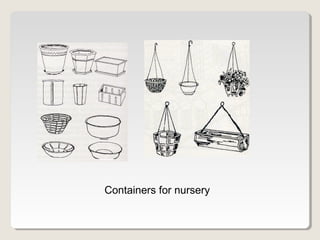
Use of containers
Use of polythene bags/ tubes is very useful
particularly under sandy soil. This is very
cheap and convenient method for raising
large-scale plantations. It is normally
transparent but black and blue coloured
polythene bags are also used some times.
The size of polythene bags should be decided
judiciously as small bags do not give large
seedling and large bags require more filling
mixture owing to more cost. The per unit
production efficiency of planting materials is
also reduced by using over size polybags,
besides difficulty in transportation.
The chief advantage of using
polybags is that the seedling can be
raised almost year the round under
controlled conditions; therefore
plantation programme will not suffer
due to dry spell or shortage of
labourers. It has suggested that the
rootstock can be raised in polythene
tubes (25x 10 cm) filled with a
mixture of FYM, sand and clay
(1:1:1).
Nursery is not raised generally in wooden
boxes, clay pans and earthen pots except
for the flowers but it is convenient to raise
particularly vegetable seedlings as it has
several advantages like;
i) it is very easy to sow and transplant
comfortably.
ii) sowing or transplanting may be
continued whatever may be the weather
outside,
iii) it is convenient to check the plant
growth during abnormal temporary weather
condition,
iv) plants raised in boxes can easily be
removed for transplanting without any
damage to their roots and
v) there is an economy of labour and space
if trays or boxes of standard size are used
for this purpose. There are different types
of pots available in the market which can
be use for growing of ornamental plants
particularly under indoor gardening.
Besides this there are fancy hanging pots
are also available for raising shallow
rooted plants
Containers for nursery
Root trainers
Beside, genetic purity and above ground
physical growth of the plants; the root
system is equally important for better
establishment under arid conditions.
Therefore, there should be a strong uncoiled
tap root system with sufficient lateral roots.
Though, the use of poly containers/ poly bags
have several advantages but if seedling or
component plant left for a longer period or
undersize poly bags used; the tap roots
coiled up, thereby poor performance after out
planting.
 In order to overcome these problems, root
trainers are used and the seedlings grown in
root trainers are vigorous and have rapid
growth rate as compared to seedlings grown
in poly bags.
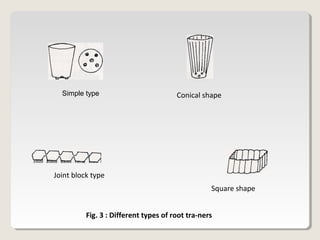
The root trainers are semi-rigid or rigid
containers with internal vertical ribs or
corrugated walls and thus roots tend to
develop straight down rather than spiral
growth. There are various types of plastic
or metal containers e.g. simple plastic
trainers, corrugated walled plastic
trainers, ISSA- pots etc. designed to
prevent root coiling. They have holes at
the bottom for aerial pruning of tap-root,
aeration and drainage. These root trainers
are generally made of black colour plastic.
Simple type Conical shape
Joint block type
Square shape
Fig. 3 : Different types of root tra-ners
Growing structures
 The environmental manipulation i.e. managing
microclimatic conditions (relative humidity,
temperature, light and gases), edaphic factors
(propagation media, mineral nutrients and soil
moisture) and biotic factors (interaction of
symbiotic mycorhiza fungi and other organisms)
is essential for better success of nursery
activities.
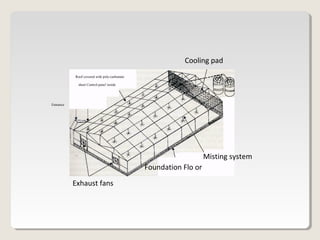
 There are several type of growing structures
based on ecological situations, requirements and
cost involvements like; plastic covered green
house, fibre glass house, Ultraviolet resistant
fibre glass house, polyhouse, shade net, lath
house etc. with or without provision of misting.
 These structures are not only for controlling
temperature, humidity and misting but also there
is photoperiod control system, heating and
cooling systems
 Mostly, partially controlled structures are used in our
country. Now a days, fully controlled automatic hi-
tech nursery green house has been developed to
regulate nursery activities year the round.
 However in some cases if rootstocks are raised inside
the shade net, the stocks are thin and long with poor
sap flow; owing to poor success when they are used
for grafting and budding.
 To overcome this problem, the photoperiodic
requirement, and optimum input supply coupled with
proper management should be standardized.
 This problem is not serious when plants are raised by
cuttings. The plants raised under control
environments also require hardening before planting
at desired site.
 The infestation of pest and diseases are also low in
controlled environments but once plants infected it is
transmitted easily.
Irrigation, weed and nutrient management
 Water is limiting factor under arid ecosystem,
meanwhile water is a essential input of any
commercial nursery; therefore every care should
be taken for judicious utilization of every drop of
water.
 No flood irrigation is recommended under sandy
soil.
 Sprinkler system of irrigation is suitable for
nursery plants. For a big nursery, irrigation
should be done in parts instead of watering whole
the nursery at a time.
 If plants are raised in beds, the bed should be
kept fresh not wet. Too much watering creates
superficial root system. The irrigation should be
done either in the morning or preferably in the
evening.
The runoff collected in the ponds can also be
used for nursery. The waste water containing
pollutants, sediments, debris and also saline
water can be recycled after necessary
treatments.
Now a days, a better but costly method of
improving water quality is available i.e.
deionization process.
 The pH of irrigation water should be 6.5 to
7.5 and free from harmful salts.
For lowering down the pH, aluminium
sulphate and for increasing calcium nitrate
can be used.
Negligence of weeding may adversely affect
the health of the plants due to competition
for nutrients, moisture, light and space.
Cooling pad
Misting system
Foundation Flo or
Exhaust fans
Roof covered with poly-carbonate
sheet Control pane! inside
Entrance
The weeds may also act as host for different
pest and disease.
Weeding in the nursery bed should be done
as early as possible. First weeding is
recommended soon after germination, when
soil is wet.
 Proper soil working and thinning out of
seedling in order to maintain desired spacing
should be done at the time of weeding.
 Use of undecomposed compost or FYM may
also cause weed infestation.
The frequency of weeding depends upon
intensity of weed population; however,
frequent weeding is required during monsoon
season.
Pre-emergence weedicide can also be
used, however post-emergence weedicide
should not be used without knowledge of
proper recommendation for a particular
plant type.
For development of healthy stocks, proper
nutrient management is essential.
Fertility of seedbeds goes on decreasing
due to repeated growing of plants in the
beds, which can be restored by following
proper rotation, mixing of decomposed
materials, green manuring and use of
inorganic fertilizers.
Important organic manures, which are used
for nursery bed as: Farm Yard Manure (FYM),
compost, leaf moulds, oil cakes and wood
ash.
 The organic manure is incorporated in to the
soil beds or as filling mixture for the
containers before sowing seeds.
Use of organic manures have added
advantages in sandy and degraded soils. In
recent years use of vermi-compost is also
becoming popular.
Application of inorganic fertilizers in nursery
is not so common but initially small amount
of N, P and K can be given for fair growth and
development of nursery plants.
These fertilizers are applied only after
irrigation because due to lack of moisture,
they will become ineffective.
Foliar feeding up to limited extent can also
be given. Even in cases of deficiency
symptoms, liquid fertilizers can be applied.
 In nursery management, there is
additional advantage that the waste
materials can be composted in a corner of
the nursery and utilized as and when
desired.
Hardening of nursery plants
 The plants raised under growing structures or
protected environments with high management
become tender and require hardening off before
planting out in the field.
 Infact, hardening off is a term applied to any
treatment that makes the tissues firm to endure
better in the unfavourable environmental
conditions.
 The techniques employed for hardening are;
 (i) by watering the plant sparingly till it is not
wilted and providing increased ventilation
 (ii) lowering of temperature also retards
growth and adds to the hardening process.
 These methods are employed according to the
kind of the plants e.g. tomato, brinjal, and chillies
are less hardy and they should not be hardened
severely.
Vegetables like cabbage and lettuce can
withstand low temperature. In hot region,
hardening is done to withstand plants against
possible burning due to sunshine, hot winds
and deposition of warm sand,
 while in cold region hardening may develop
protection against freezing. The process of
hardening should be such that there is an
assurance of high survival and slow growth
under the conditions to be expected at the
time of transplanting.
conditions, withholding watering followed by
shifting of the plants under partial shade or
lath house is the best and practical method
for hardening.
Over hardening should be avoided as it
delays renewal of growth after setting out.
 Hardening should be gradual in order to
prevent a severe check on growth or the
possible killing of plant.
 It is better to maintain a moderate rate of
growth through out the plant growing period
than to have rapid growth up to the time of
hardening and then check it suddenly.
Hardening
(i) increases the quantity and modifies the
nature of colloids in the plant cells enabling
them to resist the loss of water,
(ii) increases the percentage of dry matter
and sugars in the plant but decreases
percentage of freezable water and
transpiration per unit area of leaf,
(iii) decreases the rate of growth in the
plants,
 (iv) greater resistance to plasmolysis and
deplasmolysis due to greater resistance to
the injurious effects of the protoplasmic
strain,
 (vii) hardened plants can withstand better
against unfavourable conditions of
transplanting such as lesser intakes of
water, hot dry winds and low temperature.
They tend to be hard and stiff rather than
succulent.
Management of pest, disease and natural enemies
 The nursery activities are adversely affected if plant
protection measures are not adopted timely. In the arid
region nursery, there are several pests, diseases and
natural enemies causing significant loss at various
stages of nursery activities. Some of the major pests
and diseases and their management are as follows :
 (i) Pests
 Termite
 The termite is a major problem in arid region. The
damage by termite is under­ground and mainly in upper
workable soil depth. They damage the root portion;
affected plants turn yellowish showing wilting of leaves
and tender twigs and ultimately plant dries. The
symptom is judged by dumbbell­shaped region near the
root collar and ring barking.
 For control— keep the nursery clean, no wood debris
should be left in nursery area, do not use undecomposed
organic manures, apply chemical like chloropyriphos 20
EC (2.0 %).
 Cutworms (Agrotis ipsilon): Cutworms are
restless feeders and wander here and there in
search of food. They damage the seedlings soon
after germination. Generally, they cut the young
plants during night. They also damage bud,
leaves and tender shots. For control— remove
the weeds from the nursery, where cutworms
hide, irrigation and digging the soil also reduce
their population, seed bed should be treated by
methyl parathion dust as chemical control.
 Defoliaters: There is a group of minor pests
causing defoliation of young seedling, rolling of
leaves, feeding on leaf tissues etc. They can be
controlled by spraying of insecticides like
endosulphon (0.01%) or monocrotophos (0.03%)
at 10­15 days interval.
(ii) Diseases
 Damping-off: The plants in nursery are often
affected by this disease. A group of fungi is
responsible for damping off the seedlings. The disease
is so serious that it may destroy the entire nursery
stock in one season. Mostly damping off occurs at
tender stage of seedlings. The seedlings topple down
and dry up. For controlling damping off disease in
nursery beds, drenching of seed bed with 4%
formaldehyde or 0.3% copper oxychloride.
 Collar rot: Some times nursery plants affected by
collar rot and root rot problems. The fungus is air
borne and infects in collar region of the plants. The
disease can be controlled by soil drenching with
dithane Z­78 (0.2%).
 (iii) Others: In arid region, there is problem of rats
and birds, which should also be controlled as and
when desired
Disposal of produce
 Disposal of produce also requires skillful
management, otherwise whole efforts are futile.
It requires timely action so that users may get
quality­planting materials at proper time and at
the same time, producer may gain the desired
returns.
 Sometimes, planting materials remain unsold if
they are produced delayed in the season.
Further, keeping them for longer period in the
nursery may not only involve additional
expenditure but the quality of planting materials
reduced due to coiling of roots and over growth
of plants.
 The nursery manager must contact the users and
even he should do advance booking. The planting
stocks are delicate; hence they should be
handled carefully.
The planting materials raised either in
beds or in polybags should be lifted
properly; unwanted foliage should be
removed to minimize transpiration losses.
They should be graded based on size, age,
vigour etc. and packed in such a way that
roots remain moist.
For wrapping of the planting stocks,
grasses, straw, perforated polythene,
gunny bags, moss grass etc. are generally
used as packing materials.
Now a days wooden or perforated paper
boxes are used for long distance transit.
There should be minimum time gap
between lifting of the stock from the
nursery and planting at desired site. To
avoid exposure to sun, the planting
materials should be lifted from the
nursery in the evening and planted on the
next day.
Nursery act
 The nursery owners are not keeping any record
about their nursery activities.
 There is uncontrolled transit of planting
materials.
 There is no proper certification system.
 There is no fixed standard of quality planting
materials for the crops suitable to arid region.
 Nursery act is essentially required to check the
disposal of inferior quality seeds and planting
materials.
 Therefore, for development of arid horticulture by
quality planting materials, there should be proper
nursery act.
 nursery act is not implemented so far. There are
some areas where nursery act is there but not
implemented properly, which should be reviewed
and implemented with due modifications.
Economic viability
Besides various considerations, economic
viability is the prime concern of nursery
management. Based on prevailing local
market rates, for raising 10,000 budded
plants of ber under arid region, an
estimate of economics has been given in
table. The estimate indicated that one
could earn about 35000/­ per year from
the ber nursery under arid conditions.
Moreover, multiplying other plant types
simultaneously with the intensive
management on the same peace of land
can increase this return
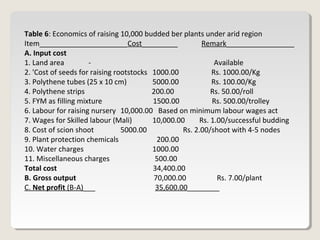
Table 6: Economics of raising 10,000 budded ber plants under arid region
Item______________________Cost_________ Remark_________________
A. Input cost
1. Land area - Available
2. 'Cost of seeds for raising rootstocks 1000.00 Rs. 1000.00/Kg
3. Polythene tubes (25 x 10 cm) 5000.00 Rs. 100.00/Kg
4. Polythene strips 200.00 Rs. 50.00/roll
5. FYM as filling mixture 1500.00 Rs. 500.00/trolley
6. Labour for raising nursery 10,000.00 Based on minimum labour wages act
7. Wages for Skilled labour (Mali) 10,000.00 Rs. 1.00/successful budding
8. Cost of scion shoot 5000.00 Rs. 2.00/shoot with 4-5 nodes
9. Plant protection chemicals 200.00
10. Water charges 1000.00
11. Miscellaneous charges 500.00
Total cost 34,400.00
B. Gross output 70,000.00 Rs. 7.00/plant
C. Net profit (B-A)___ 35,600.00________

nursery management

  • 1.
  • 2.
    Nursery  Nursery isthe place where planting materials are raised either by seeds or by vegetative means with care before transplanting at desired site.  The word 'nursery' is also used sometimes for young saplings raised by seeds.  Often, we consider the nursery management and the plant propagation are same, though they are altogether different but inter-related.  In fact, mass multiplication of quality planting materials is the central theme of nursery management but nursery management is a trade-oriented dynamic process, which refers to efficient utilization of resources for economic returns.
  • 3.
    The main phasesof nursery management are Planning edaphoclimatic and socio-economic considerations; Demand for planting materials Provision of mother block Requirement of land area Proper layout Water supply Working tools Growing structures and inputs availability Accessibility Trained man power Plant protection Disposal of planting materials etc
  • 4.
    The key elementsof nursery management are (1) The place, (2) The plant (3) The person behind.
  • 5.
    (1) The place i)Selection of site: In our country, less emphasis is given on selection of site for the nursery. An unsatisfactory site will increase the cost of operation and poor stock production. However, no site is perfect in all respect, hence site selection requires some compromise. Therefore, setting up of a nursery is a long- term venture requires careful planning, because mistake committed initially can not be rectified easily at later stage and may adversely affect the returns from the investment.
  • 6.
    ii) Layout: Aperfect master plan is required otherwise improper layout plan will cause considerable anxiety to nursery manager in future.  The nursery lay out should be compact and as far as possible, it should be in rectangular or square shape to minimize the length of boundary for fencing and watch and ward point of view.  For setting up of a commercial nursery provision of wind break/ shelter break must be done all along the boundary not only to protect against hot wind and wild life but also to modify the micro-climatic situations.  The nursery should be connected by main road for better approach and disposal of produce.  There should be proper provision for road and path, irrigation and drainage channels, mother block, nursery beds, growing structure, store, compost pit, display site-cum-sale counter etc.
  • 7.
    (2) The plant i) Plant types and propagation techniques: The type of planting materials intended to be multiplied are based on the agro-climatic situations, type of nursery e.g. for fruits, vegetables, ornamental plants or mixed plant types and farmers demand.  The important arid zone fruits are: datepalm, ber, pomegranate, guava, Citrus species, phalsa, mulberry, fig etc. which can be grown successfully under arid zone but very little efforts have been made so far to standardize their nursery management practices.  Similarly, there are vegtetables melon,cluster bean, Capsicum spp,chilli, brinjal etc. and ornamental plants (Bougainvillia, Vinca rosa, annual chrysanthemum, which can withstand to typical hot arid climate.
  • 8.
    Normally, seed propagationis not recommended in fruit crops owing to variability in growth and fruiting because of the cross pollination, long juvenile phase, chances of transmission of seed born diseases etc. but, where vegetative propagation is unsuccessful, difficult, expensive; for raising rootstocks as clonal rootstocks are not standardized in most of the fruits  and multiplication of clonal materials is also expensive and time consuming, for evolving new varieties etc. the seed propagation is the feasible alternative. Still, the seed propagation is commercially practiced in case of papaya, phalsa, etc.
  • 9.
    Though, the availabilityof stock (seeds or mother plant) of recent released varieties are low at initial stage but by multiplying them even at smaller quantity, one can fetch better price in the market. Recently, emphasis has been given for multiplication of plants by tissue culture technique and protocol has been standardized in some horticultural plants like date palm and banana. but it has so far not been commercialized, as setting up a hi-tech tissue culture laboratory require high cost and specialized skill.
  • 10.
     Most ofthe vegetables are grown by directly sowing the seeds in the field, however some of the vegetables are first sown in the nursery beds where seedlings are raised and then transplanted in the field at desired site.  The soil of seedbed should be worked well to break the clods.  The weeds, stones and stubbles should be removed.  Height of the raised bed should be 10-15 cm with a width of 1.25 m and length may be according to requirement and convenience but generally, it is to be kept 6.25 m long.  Two parts of fine soil, one part of FYM can be incorporated to each bed to improve aeration and fertility of the soil.  Before preparing the bed, soil should be drenched with 0.4 per cent formaldehyde or 0.3 per cent copper oxychloride to kill pathogens in the soil.
  • 11.
    ii) Plant standard:Production of quality planting materials is another factor, which not only decides the establishment of plants in the field but also useful in handling and transportation and ultimately earning of better returns. So far, least emphasis has been given on standard of planting materials. There is a misconception among the growers particularly in case of fruit plants that while purchasing the plants from the nursery, they demand plants of big size, thick stem, large size leaves, straight growing etc,, with the view that they will establish better and come in early fruiting. Therefore, there is need to educate the farmers about the standard of quality planting materials, which differ with the plant types.
  • 12.
    (3) The personbehind The ultimate success depends upon the person who is dealing the whole affairs of nursery management. The nursery manager must understand the dynamics of business terrain. He should always keep in touch with the organizations working on nursery management to understand the innovations made in recent past. In brief, a nursery manager should have better understanding of i) well defined goal,
  • 13.
     ii) abilityto use innovations as tool,  iii) team spirit, iv) courage to face uncertainties, v) ability to recognize opportunities  vi) channelizing human resource in right direction, and rapid response.  Nursery manager should also consider the provision of incentives for the workers, as nursery management is a teamwork. He should analyze the reasons for success and failure, which will help in refining of activities in subsequent year for better outcome.
  • 14.
    Media for raisingnursery  For satisfactory germination of seed, subsequent seedling growth and anchorage or directly planted vegetative part of a plant and their root and shoot development; proper media is required.  The media may be solid, liquid or spongy moss. In general; good soil, compost, Farm Yard Manure, shredded bark, saw dust, sand, peat, vermiculite, perlite, and sphagnum moss having better water holding with acidic pH.  These media are being used either alone or in combination.  Sometimes, the amendments like gypsum and pyrite are also added in the beds while raising the nursery.  In some cases, organic media may also contain some toxic materials to plants, especially when fresh.
  • 15.
    The media shouldhave sufficient amount of plant nutrients, which are essential for growth and development.  For raising seedling, soil should be friable and should absorb water readily and dry quickly at the surface, but it should not become dry too early. Loam and sandy loam soils well supplied with organic matter are good, provided that they are free from pathogen. To make the soil free from soil borne diseases especially damping off, it may be disinfected by soil fumigant.
  • 16.
    Sterilization of soilby steam soil solarization by polythene cover is also suggested. It is recommended one part of formalin mixed with 100 parts of water should be applied at the rate of 4.55 liter per 0,09 square meters of surface soil so as to saturate it up to depth of 152.40 mm. Then the soil mixture is covered with gunny bags or a thick paper for a day so that fumes may penetrate the soil and kill all fungi and insects. The soil mixture is then uncovered and left for a few days till the smell disappeared.
  • 17.
    In general, themedia should have following characteristics;  (i) The media must be sufficiently firm to provide anchorage to seeds or cuttings.  (ii) It should be decomposed materials with high C/N ratio.  (iii) Its volume must be fairly constant when either wet or dry.  (iv) It should have better water holding capacity.  (v) It should be porous to drain excess water.  (vi) It should be free from weed seeds and harmful pathogens.  (vii)Slightly acidic medium is preferred.  (viii) It should be readily available, reusable and cheaper.
  • 18.
    Mother block Once ansuperior type of material has been identified, it should be multiplied and maintained under conditions that prevent recontamination and allow detection of any significant change from the original source. From this further stock is maintained permanently under rigid control to be used as primary source for all subsequent propagation is a foundation block. It will serve as primary repository of true-to-type of stock and not as a direct source of propagating material itself. The planting stock that maintained as a source for commercial propagation is referred to as a mother block.
  • 19.
    Therefore, for preservationof pathogen free planting stock; proper isolation, sanitation, periodical inspection and testing and maintenance are very important.  As far as possible mother block should be in the close proximity of the nursery site. The scion shoots should be taken only from bearing plants. There should be proper record and certification of planting stock. Commercial planting stock can be referred as certified stock if it is grown under supervision of a legally designated agency with prescribed regulations designed to maintain minimum standards of cleanliness and clonal identity.
  • 20.
    Raising of rootstocks The plants propagated by grafting or budding require raising of rootstocks, upon which scion shoot or bud of a promising cultivar is grafted or budded. This should be planned well in advance.  There are several activities like, collection/ purchase of seeds to be sown for rootstock purpose, preparation of seed bed, use of poly containers, filling mixture, type of seeds (orthodox or recalcitrant), seed quality (boldness, viability, germination, free from pest and diseases), seed treatment, time and method of sowing, irrigation, pest, disease and weed management, thinning, removal of basal and side branches if required, after care etc. Under arid conditions, the sunken type (10m x 1m x 0.30 m) of beds is recommended for raising of seedlings. This will facilitate irrigation and prove beneficial in well-drained sandy soils.
  • 21.
    In general, aboutone-year old rootstocks are used, which are sown in monsoon (July-August) of previous season and ready for grafting or budding purpose in June-September of current year. This practice is expensive and requires long time. Such rootstocks invariably lose their tap root system as a result of repeated transplanting in the nursery and plants raised in containers developed coiled roots.
  • 22.
    The plants withbigger earth ball are also not feasible for transportation at longer distance and any damage of earth ball may cause of poor field survival.  Therefore, the rootstocks must have root structure with a strong tendency to penetrate into deep soil horizons. Based on the plant types, the pricking of poly container raised plants should be done before starting budding and grafting operations
  • 23.
    Use of containers Useof polythene bags/ tubes is very useful particularly under sandy soil. This is very cheap and convenient method for raising large-scale plantations. It is normally transparent but black and blue coloured polythene bags are also used some times. The size of polythene bags should be decided judiciously as small bags do not give large seedling and large bags require more filling mixture owing to more cost. The per unit production efficiency of planting materials is also reduced by using over size polybags, besides difficulty in transportation.
  • 24.
    The chief advantageof using polybags is that the seedling can be raised almost year the round under controlled conditions; therefore plantation programme will not suffer due to dry spell or shortage of labourers. It has suggested that the rootstock can be raised in polythene tubes (25x 10 cm) filled with a mixture of FYM, sand and clay (1:1:1).
  • 25.
    Nursery is notraised generally in wooden boxes, clay pans and earthen pots except for the flowers but it is convenient to raise particularly vegetable seedlings as it has several advantages like; i) it is very easy to sow and transplant comfortably. ii) sowing or transplanting may be continued whatever may be the weather outside, iii) it is convenient to check the plant growth during abnormal temporary weather condition,
  • 26.
    iv) plants raisedin boxes can easily be removed for transplanting without any damage to their roots and v) there is an economy of labour and space if trays or boxes of standard size are used for this purpose. There are different types of pots available in the market which can be use for growing of ornamental plants particularly under indoor gardening. Besides this there are fancy hanging pots are also available for raising shallow rooted plants
  • 27.
  • 28.
    Root trainers Beside, geneticpurity and above ground physical growth of the plants; the root system is equally important for better establishment under arid conditions. Therefore, there should be a strong uncoiled tap root system with sufficient lateral roots. Though, the use of poly containers/ poly bags have several advantages but if seedling or component plant left for a longer period or undersize poly bags used; the tap roots coiled up, thereby poor performance after out planting.  In order to overcome these problems, root trainers are used and the seedlings grown in root trainers are vigorous and have rapid growth rate as compared to seedlings grown in poly bags.
  • 29.
    The root trainersare semi-rigid or rigid containers with internal vertical ribs or corrugated walls and thus roots tend to develop straight down rather than spiral growth. There are various types of plastic or metal containers e.g. simple plastic trainers, corrugated walled plastic trainers, ISSA- pots etc. designed to prevent root coiling. They have holes at the bottom for aerial pruning of tap-root, aeration and drainage. These root trainers are generally made of black colour plastic.
  • 30.
    Simple type Conicalshape Joint block type Square shape Fig. 3 : Different types of root tra-ners
  • 31.
    Growing structures  Theenvironmental manipulation i.e. managing microclimatic conditions (relative humidity, temperature, light and gases), edaphic factors (propagation media, mineral nutrients and soil moisture) and biotic factors (interaction of symbiotic mycorhiza fungi and other organisms) is essential for better success of nursery activities.  There are several type of growing structures based on ecological situations, requirements and cost involvements like; plastic covered green house, fibre glass house, Ultraviolet resistant fibre glass house, polyhouse, shade net, lath house etc. with or without provision of misting.  These structures are not only for controlling temperature, humidity and misting but also there is photoperiod control system, heating and cooling systems
  • 32.
     Mostly, partiallycontrolled structures are used in our country. Now a days, fully controlled automatic hi- tech nursery green house has been developed to regulate nursery activities year the round.  However in some cases if rootstocks are raised inside the shade net, the stocks are thin and long with poor sap flow; owing to poor success when they are used for grafting and budding.  To overcome this problem, the photoperiodic requirement, and optimum input supply coupled with proper management should be standardized.  This problem is not serious when plants are raised by cuttings. The plants raised under control environments also require hardening before planting at desired site.  The infestation of pest and diseases are also low in controlled environments but once plants infected it is transmitted easily.
  • 33.
    Irrigation, weed andnutrient management  Water is limiting factor under arid ecosystem, meanwhile water is a essential input of any commercial nursery; therefore every care should be taken for judicious utilization of every drop of water.  No flood irrigation is recommended under sandy soil.  Sprinkler system of irrigation is suitable for nursery plants. For a big nursery, irrigation should be done in parts instead of watering whole the nursery at a time.  If plants are raised in beds, the bed should be kept fresh not wet. Too much watering creates superficial root system. The irrigation should be done either in the morning or preferably in the evening.
  • 34.
    The runoff collectedin the ponds can also be used for nursery. The waste water containing pollutants, sediments, debris and also saline water can be recycled after necessary treatments. Now a days, a better but costly method of improving water quality is available i.e. deionization process.  The pH of irrigation water should be 6.5 to 7.5 and free from harmful salts. For lowering down the pH, aluminium sulphate and for increasing calcium nitrate can be used. Negligence of weeding may adversely affect the health of the plants due to competition for nutrients, moisture, light and space.
  • 35.
    Cooling pad Misting system FoundationFlo or Exhaust fans Roof covered with poly-carbonate sheet Control pane! inside Entrance
  • 36.
    The weeds mayalso act as host for different pest and disease. Weeding in the nursery bed should be done as early as possible. First weeding is recommended soon after germination, when soil is wet.  Proper soil working and thinning out of seedling in order to maintain desired spacing should be done at the time of weeding.  Use of undecomposed compost or FYM may also cause weed infestation. The frequency of weeding depends upon intensity of weed population; however, frequent weeding is required during monsoon season.
  • 37.
    Pre-emergence weedicide canalso be used, however post-emergence weedicide should not be used without knowledge of proper recommendation for a particular plant type. For development of healthy stocks, proper nutrient management is essential. Fertility of seedbeds goes on decreasing due to repeated growing of plants in the beds, which can be restored by following proper rotation, mixing of decomposed materials, green manuring and use of inorganic fertilizers.
  • 38.
    Important organic manures,which are used for nursery bed as: Farm Yard Manure (FYM), compost, leaf moulds, oil cakes and wood ash.  The organic manure is incorporated in to the soil beds or as filling mixture for the containers before sowing seeds. Use of organic manures have added advantages in sandy and degraded soils. In recent years use of vermi-compost is also becoming popular. Application of inorganic fertilizers in nursery is not so common but initially small amount of N, P and K can be given for fair growth and development of nursery plants.
  • 39.
    These fertilizers areapplied only after irrigation because due to lack of moisture, they will become ineffective. Foliar feeding up to limited extent can also be given. Even in cases of deficiency symptoms, liquid fertilizers can be applied.  In nursery management, there is additional advantage that the waste materials can be composted in a corner of the nursery and utilized as and when desired.
  • 40.
    Hardening of nurseryplants  The plants raised under growing structures or protected environments with high management become tender and require hardening off before planting out in the field.  Infact, hardening off is a term applied to any treatment that makes the tissues firm to endure better in the unfavourable environmental conditions.  The techniques employed for hardening are;  (i) by watering the plant sparingly till it is not wilted and providing increased ventilation  (ii) lowering of temperature also retards growth and adds to the hardening process.  These methods are employed according to the kind of the plants e.g. tomato, brinjal, and chillies are less hardy and they should not be hardened severely.
  • 41.
    Vegetables like cabbageand lettuce can withstand low temperature. In hot region, hardening is done to withstand plants against possible burning due to sunshine, hot winds and deposition of warm sand,  while in cold region hardening may develop protection against freezing. The process of hardening should be such that there is an assurance of high survival and slow growth under the conditions to be expected at the time of transplanting. conditions, withholding watering followed by shifting of the plants under partial shade or lath house is the best and practical method for hardening.
  • 42.
    Over hardening shouldbe avoided as it delays renewal of growth after setting out.  Hardening should be gradual in order to prevent a severe check on growth or the possible killing of plant.  It is better to maintain a moderate rate of growth through out the plant growing period than to have rapid growth up to the time of hardening and then check it suddenly. Hardening (i) increases the quantity and modifies the nature of colloids in the plant cells enabling them to resist the loss of water, (ii) increases the percentage of dry matter and sugars in the plant but decreases percentage of freezable water and transpiration per unit area of leaf,
  • 43.
    (iii) decreases therate of growth in the plants,  (iv) greater resistance to plasmolysis and deplasmolysis due to greater resistance to the injurious effects of the protoplasmic strain,  (vii) hardened plants can withstand better against unfavourable conditions of transplanting such as lesser intakes of water, hot dry winds and low temperature. They tend to be hard and stiff rather than succulent.
  • 44.
    Management of pest,disease and natural enemies  The nursery activities are adversely affected if plant protection measures are not adopted timely. In the arid region nursery, there are several pests, diseases and natural enemies causing significant loss at various stages of nursery activities. Some of the major pests and diseases and their management are as follows :  (i) Pests  Termite  The termite is a major problem in arid region. The damage by termite is under­ground and mainly in upper workable soil depth. They damage the root portion; affected plants turn yellowish showing wilting of leaves and tender twigs and ultimately plant dries. The symptom is judged by dumbbell­shaped region near the root collar and ring barking.  For control— keep the nursery clean, no wood debris should be left in nursery area, do not use undecomposed organic manures, apply chemical like chloropyriphos 20 EC (2.0 %).
  • 45.
     Cutworms (Agrotisipsilon): Cutworms are restless feeders and wander here and there in search of food. They damage the seedlings soon after germination. Generally, they cut the young plants during night. They also damage bud, leaves and tender shots. For control— remove the weeds from the nursery, where cutworms hide, irrigation and digging the soil also reduce their population, seed bed should be treated by methyl parathion dust as chemical control.  Defoliaters: There is a group of minor pests causing defoliation of young seedling, rolling of leaves, feeding on leaf tissues etc. They can be controlled by spraying of insecticides like endosulphon (0.01%) or monocrotophos (0.03%) at 10­15 days interval.
  • 46.
    (ii) Diseases  Damping-off:The plants in nursery are often affected by this disease. A group of fungi is responsible for damping off the seedlings. The disease is so serious that it may destroy the entire nursery stock in one season. Mostly damping off occurs at tender stage of seedlings. The seedlings topple down and dry up. For controlling damping off disease in nursery beds, drenching of seed bed with 4% formaldehyde or 0.3% copper oxychloride.  Collar rot: Some times nursery plants affected by collar rot and root rot problems. The fungus is air borne and infects in collar region of the plants. The disease can be controlled by soil drenching with dithane Z­78 (0.2%).  (iii) Others: In arid region, there is problem of rats and birds, which should also be controlled as and when desired
  • 47.
    Disposal of produce Disposal of produce also requires skillful management, otherwise whole efforts are futile. It requires timely action so that users may get quality­planting materials at proper time and at the same time, producer may gain the desired returns.  Sometimes, planting materials remain unsold if they are produced delayed in the season. Further, keeping them for longer period in the nursery may not only involve additional expenditure but the quality of planting materials reduced due to coiling of roots and over growth of plants.  The nursery manager must contact the users and even he should do advance booking. The planting stocks are delicate; hence they should be handled carefully.
  • 48.
    The planting materialsraised either in beds or in polybags should be lifted properly; unwanted foliage should be removed to minimize transpiration losses. They should be graded based on size, age, vigour etc. and packed in such a way that roots remain moist. For wrapping of the planting stocks, grasses, straw, perforated polythene, gunny bags, moss grass etc. are generally used as packing materials. Now a days wooden or perforated paper boxes are used for long distance transit.
  • 49.
    There should beminimum time gap between lifting of the stock from the nursery and planting at desired site. To avoid exposure to sun, the planting materials should be lifted from the nursery in the evening and planted on the next day.
  • 50.
    Nursery act  Thenursery owners are not keeping any record about their nursery activities.  There is uncontrolled transit of planting materials.  There is no proper certification system.  There is no fixed standard of quality planting materials for the crops suitable to arid region.  Nursery act is essentially required to check the disposal of inferior quality seeds and planting materials.  Therefore, for development of arid horticulture by quality planting materials, there should be proper nursery act.  nursery act is not implemented so far. There are some areas where nursery act is there but not implemented properly, which should be reviewed and implemented with due modifications.
  • 51.
    Economic viability Besides variousconsiderations, economic viability is the prime concern of nursery management. Based on prevailing local market rates, for raising 10,000 budded plants of ber under arid region, an estimate of economics has been given in table. The estimate indicated that one could earn about 35000/­ per year from the ber nursery under arid conditions. Moreover, multiplying other plant types simultaneously with the intensive management on the same peace of land can increase this return
  • 52.
    Table 6: Economicsof raising 10,000 budded ber plants under arid region Item______________________Cost_________ Remark_________________ A. Input cost 1. Land area - Available 2. 'Cost of seeds for raising rootstocks 1000.00 Rs. 1000.00/Kg 3. Polythene tubes (25 x 10 cm) 5000.00 Rs. 100.00/Kg 4. Polythene strips 200.00 Rs. 50.00/roll 5. FYM as filling mixture 1500.00 Rs. 500.00/trolley 6. Labour for raising nursery 10,000.00 Based on minimum labour wages act 7. Wages for Skilled labour (Mali) 10,000.00 Rs. 1.00/successful budding 8. Cost of scion shoot 5000.00 Rs. 2.00/shoot with 4-5 nodes 9. Plant protection chemicals 200.00 10. Water charges 1000.00 11. Miscellaneous charges 500.00 Total cost 34,400.00 B. Gross output 70,000.00 Rs. 7.00/plant C. Net profit (B-A)___ 35,600.00________