
Chapter 9: Uniform Rectilinear Motion
Types of Motion
Rectilinear:

Motion in a straight
line path. E.g. an elevator.
Curvilinear: Motion in a curved
path. A ball being thrown.
Random: A combination of the
above. A leaf in the wind.
Distance and Displacement
 Distance

travelled depends on position.
 Distance is a scalar quantity.
 It is always positive.
 E.g. d = 5 km
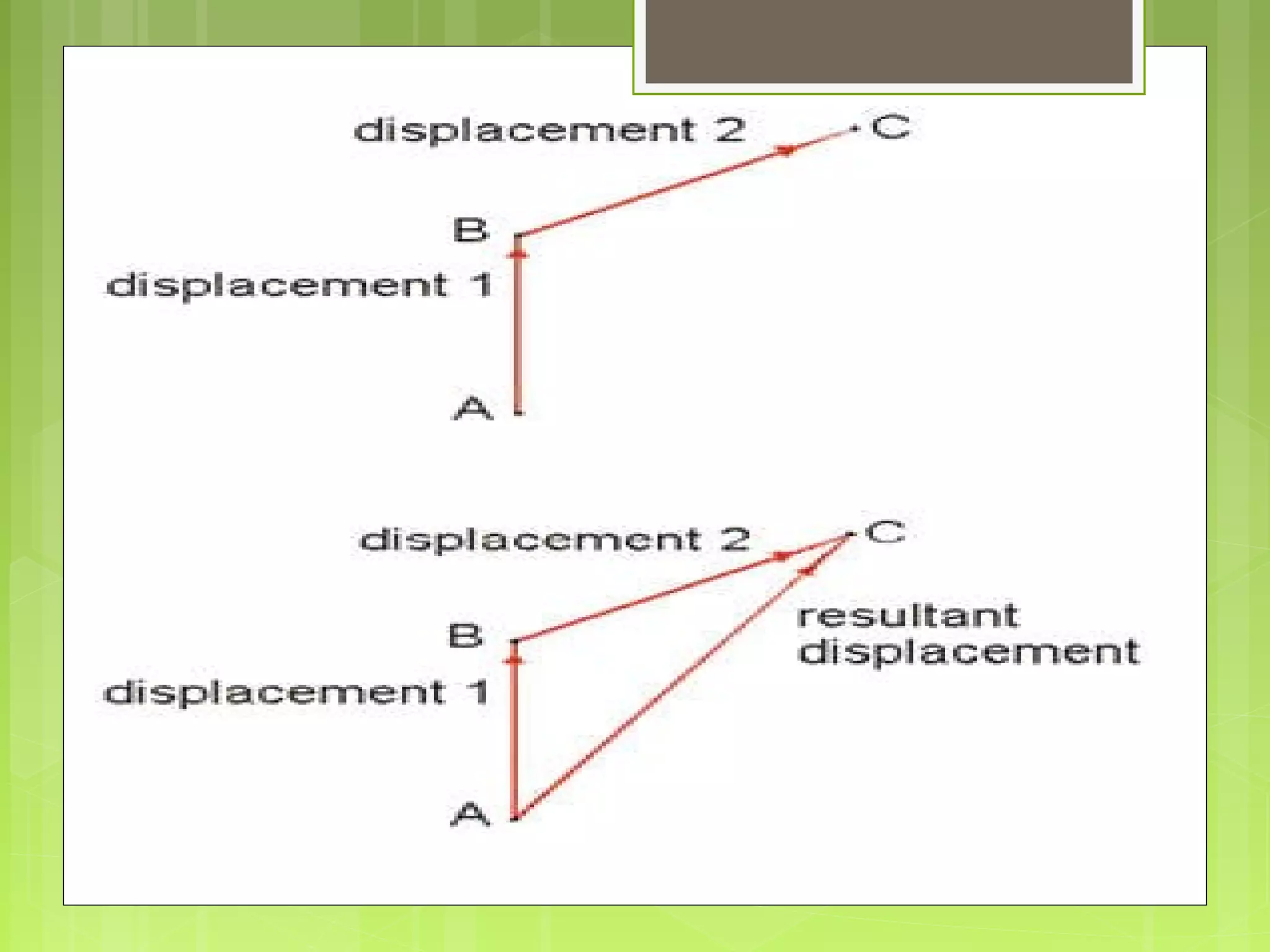
Vector Diagrams
Activity
 Page

207, Q1. Orally,
 Q. 2-5, on paper
Uniform Motion
 The

simplest motion is straight line motion in a specific
direction at a constant speed.
 When both speed and direction remain the same, it
is called uniform motion.
 Speed is a scalar quantity, = distance/time.
 Velocity is the vector quantity denoting speed and
direction.
 Velocity is the displacement of an object per unit of
time.
 V = Δd/Δt, Δd - displacement, Δt – time interval.
Random Motion
 The

motion of these particles are random
because their speed and direction
change.
 This is an example of the Kinetic Molecular
Theory (Chemistry).
Graphing Distance-Time
 Time

is independent and on the x-axis.
 Distance depends on time and is on the yaxis.
 The slope of the graph gives us the speed.
 If it was a displacement-time graph, slope
would give the velocity.
Activity
 Page
 Lab

209. Q 1 - 3

Experiment – Can You Walk in a
Uniform Way – Ticker Tape
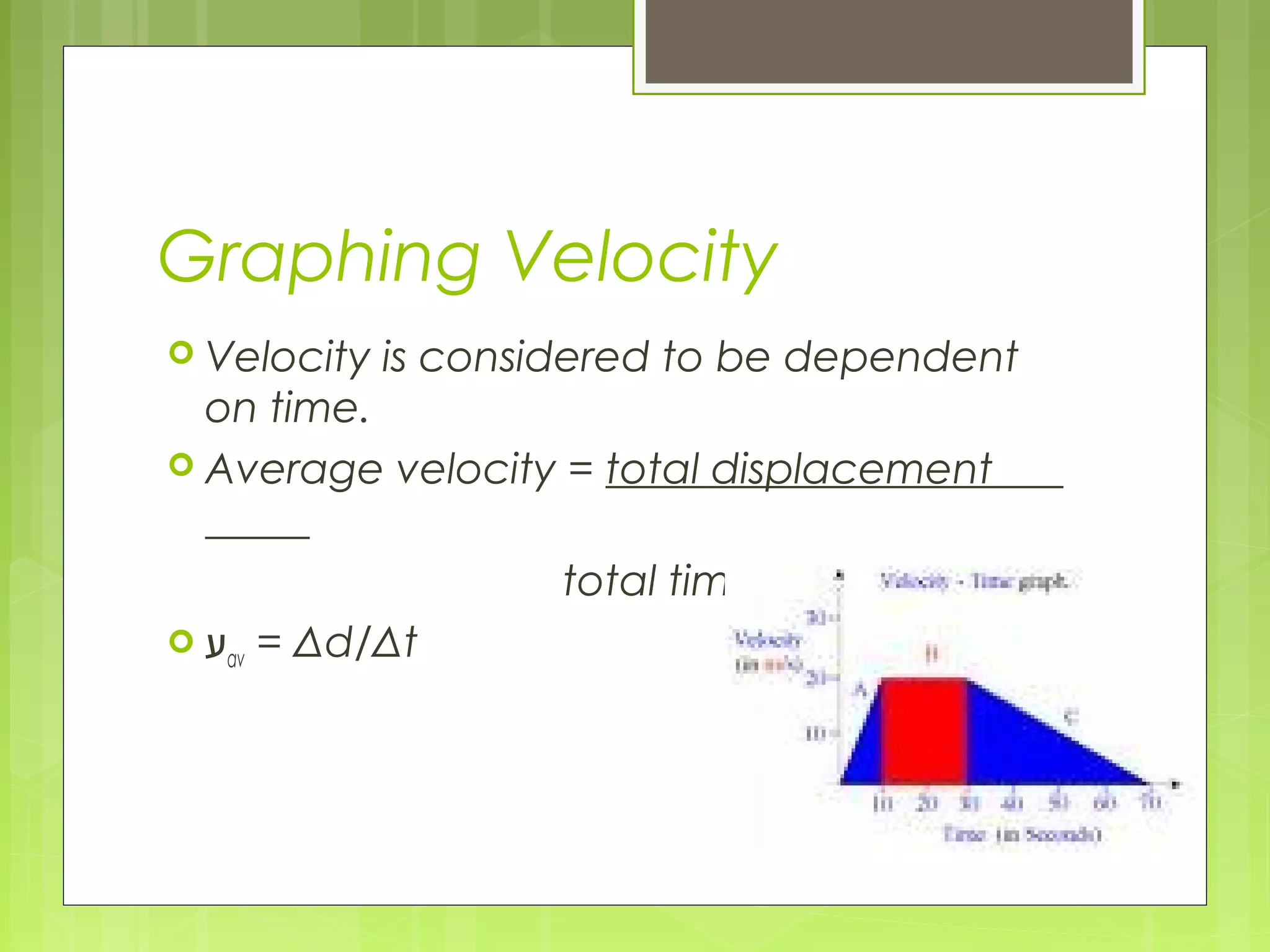
Graphing Velocity
 Velocity

is considered to be dependent

on time.
 Average velocity = total displacement
total time
 ‫ע‬av

= Δd/Δt
Average Velocity & Speed
 This

is done by taking the slope of a line at
two different points.
 Average velocity = ∆ displacement
∆ time
 Unit = m/s [direction]
 Average speed = ∆ distance
∆ time
 Unit = m/s
Average Velocity:
Uniform Acceleration
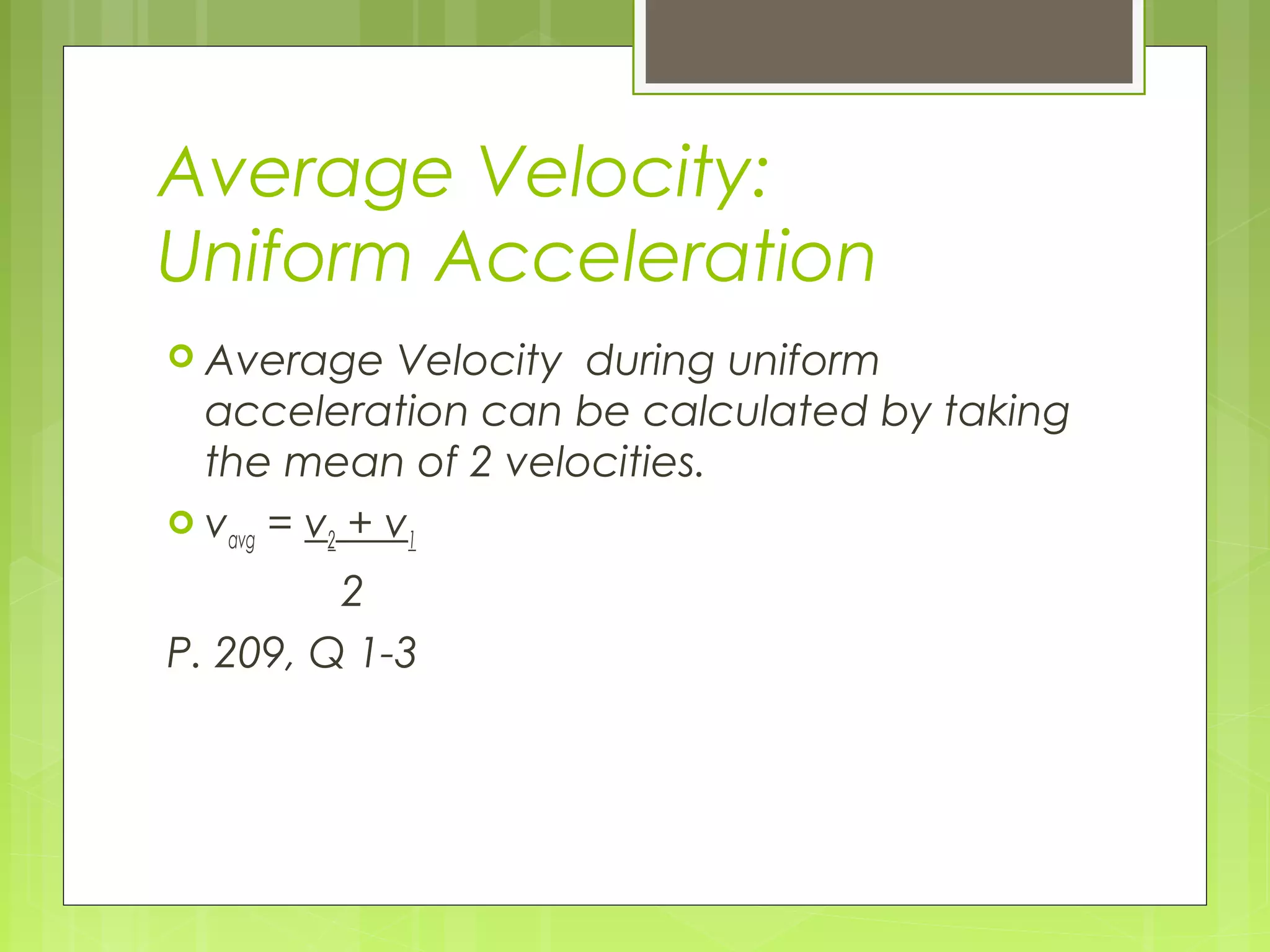
 Average

Velocity during uniform
acceleration can be calculated by taking
the mean of 2 velocities.
 vavg = v2 + v1
2
P. 209, Q 1-3
Distance & Speed
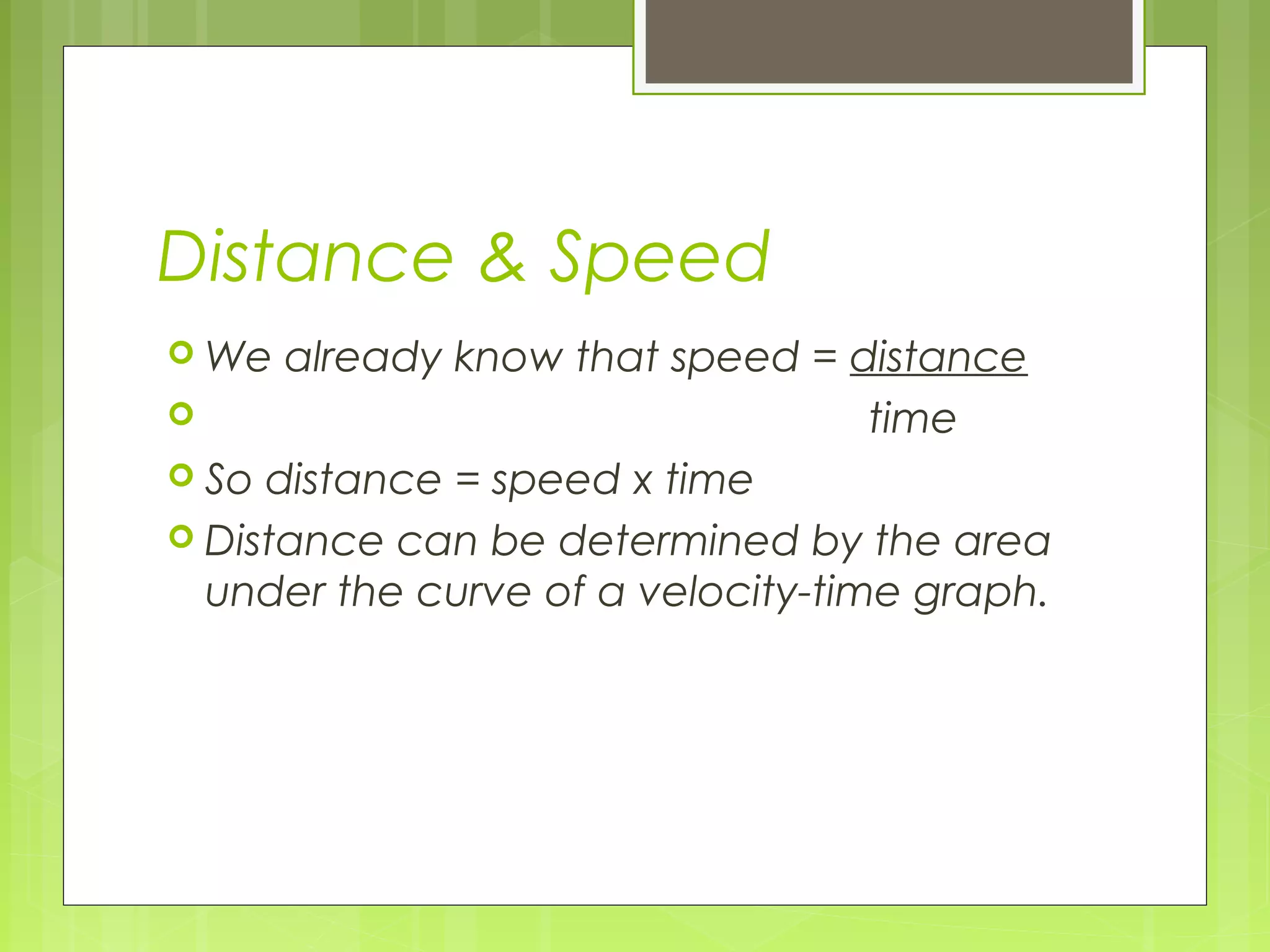
 We

already know that speed = distance

time
 So distance = speed x time
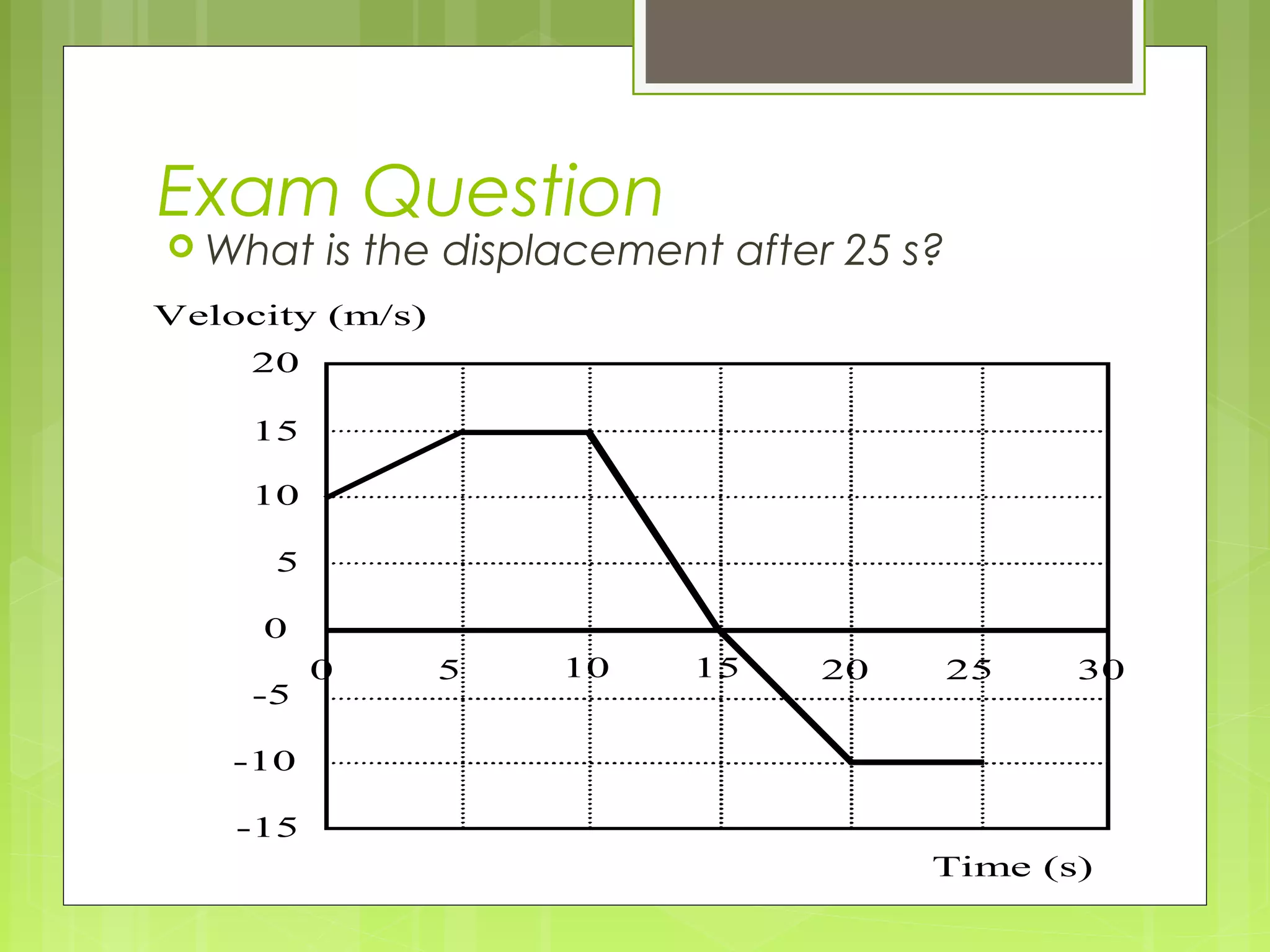
 Distance can be determined by the area
under the curve of a velocity-time graph.
Exam Question
 What

is the displacement after 25 s?

Velocity (m/s)
20
15
10
5
0
-5

0

5

10

15

20

25

30

-10
-15
Time (s)
Activity
 Page

213, Q. 1-5
 Page 215, Q 1-4
Summary
 Some

motions can be seen easily; other
motions must be observed using other
senses or devices.
 The trajectory is the path of a moving
object.

Physics 504 Chapter 9 Uniform Rectilinear Motion

  • 1.
    Chapter 9: UniformRectilinear Motion
  • 2.
    Types of Motion Rectilinear: Motionin a straight line path. E.g. an elevator. Curvilinear: Motion in a curved path. A ball being thrown. Random: A combination of the above. A leaf in the wind.
  • 3.
    Distance and Displacement Distance travelled depends on position.  Distance is a scalar quantity.  It is always positive.  E.g. d = 5 km
  • 4.
  • 5.
    Activity  Page 207, Q1.Orally,  Q. 2-5, on paper
  • 6.
    Uniform Motion  The simplestmotion is straight line motion in a specific direction at a constant speed.  When both speed and direction remain the same, it is called uniform motion.  Speed is a scalar quantity, = distance/time.  Velocity is the vector quantity denoting speed and direction.  Velocity is the displacement of an object per unit of time.  V = Δd/Δt, Δd - displacement, Δt – time interval.
  • 7.
    Random Motion  The motionof these particles are random because their speed and direction change.  This is an example of the Kinetic Molecular Theory (Chemistry).
  • 8.
    Graphing Distance-Time  Time isindependent and on the x-axis.  Distance depends on time and is on the yaxis.  The slope of the graph gives us the speed.  If it was a displacement-time graph, slope would give the velocity.
  • 9.
    Activity  Page  Lab 209.Q 1 - 3 Experiment – Can You Walk in a Uniform Way – Ticker Tape
  • 10.
    Graphing Velocity  Velocity isconsidered to be dependent on time.  Average velocity = total displacement total time  ‫ע‬av = Δd/Δt
  • 11.
    Average Velocity &Speed  This is done by taking the slope of a line at two different points.  Average velocity = ∆ displacement ∆ time  Unit = m/s [direction]  Average speed = ∆ distance ∆ time  Unit = m/s
  • 12.
    Average Velocity: Uniform Acceleration Average Velocity during uniform acceleration can be calculated by taking the mean of 2 velocities.  vavg = v2 + v1 2 P. 209, Q 1-3
  • 13.
    Distance & Speed We already know that speed = distance  time  So distance = speed x time  Distance can be determined by the area under the curve of a velocity-time graph.
  • 14.
    Exam Question  What isthe displacement after 25 s? Velocity (m/s) 20 15 10 5 0 -5 0 5 10 15 20 25 30 -10 -15 Time (s)
  • 15.
    Activity  Page 213, Q.1-5  Page 215, Q 1-4
  • 16.
    Summary  Some motions canbe seen easily; other motions must be observed using other senses or devices.  The trajectory is the path of a moving object.