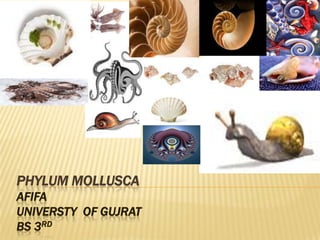

PHYLUM MOLLUSCA
AFIFA
UNIVERSTY OF GUJRAT
BS 3RD
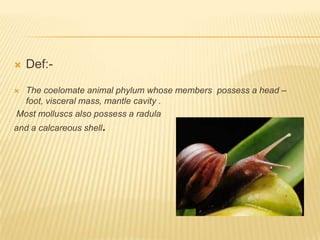
 Def:-
 The coelomate animal phylum whose members possess a head –
foot, visceral mass, mantle cavity .
Most molluscs also possess a radula
and a calcareous shell.
CHARACTERISTICS
 Body of two parts: head foot and visceral mass.
 Mantle that secretes a calcareous shell and covers the
visceral mass.
 Shell: Monovalvular or bivalvular or absent or internal
 Bilateral symmetry.
 Mantle cavity function in excreation,gas
exchange, elimination wastes products.
 Open circulatory system in all except in one class
cephalopod.
 Protostome characteristics.
 Sense organs: Eyes, statocyst, sense or touch, smell and
gustatory.
 Reproductive system: Dioecious or monoecious, gonads
with one or two ducts.
 Fertilization: External or internal.
 Excretion: By nephridia or kidney.
 Habit and habitat: Terrestrial, aquatic, marine or fresh water.
the body of molluscs has three main reagion
1) head-foot:- is elongted with an anterior head containing the
mouth ,nervous nd sensory stucture and elongated foot used
for locomotion.
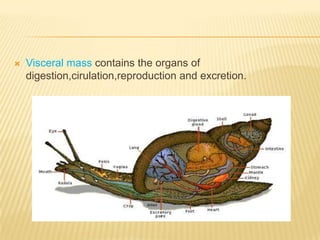
 Visceral mass contains the organs of
digestion,cirulation,reproduction and excretion.
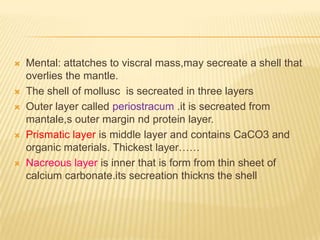
 Mental: attatches to viscral mass,may secreate a shell that
overlies the mantle.
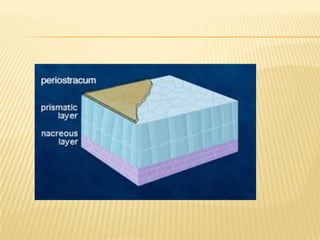
 The shell of mollusc is secreated in three layers
 Outer layer called periostracum .it is secreated from
mantale,s outer margin nd protein layer.
 Prismatic layer is middle layer and contains CaCO3 and
organic materials. Thickest layer……
 Nacreous layer is inner that is form from thin sheet of
calcium carbonate.its secreation thickns the shell
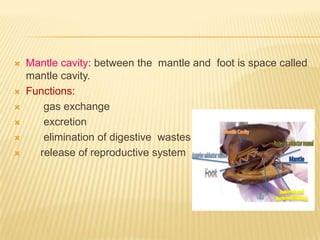
 Mantle cavity: between the mantle and foot is space called
mantle cavity.
 Functions:
 gas exchange
 excretion
 elimination of digestive wastes
 release of reproductive system
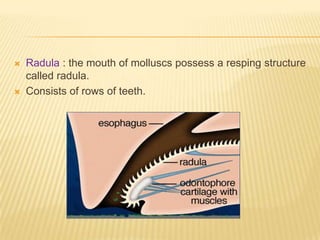
 Radula : the mouth of molluscs possess a resping structure
called radula.
 Consists of rows of teeth.

 Classification of phylum
Mollusca
 Class Aplacophora
 Class Polyplacophora
 Class Monoplacophora
 Class Scaphopoda
 Class Bivalvia
 Class Gastropoda
 Class Cephalopoda
 Class Caudofoveata
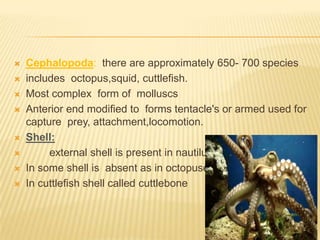
 Cephalopoda: there are approximately 650- 700 species
 includes octopus,squid, cuttlefish.
 Most complex form of molluscs
 Anterior end modified to forms tentacle's or armed used for
capture prey, attachment,locomotion.
 Shell:
 external shell is present in nautilus
 In some shell is absent as in octopuses
 In cuttlefish shell called cuttlebone
 Digestive system
The digestive tract consists of three parts:
 esophagus, which may contain a crop; stomach, which
mashes food; and caecum , where most digestion and
absorption occur.
 Locomotion in cephalopods :
 is accomplished mainly by jet propulsion
 Octopus can use their arms to "walk,“or crawl
 Reproduction:
 dioecious
 A female possess single ovidut.
one tantacles of male cephalopods called hectocotylus modify to
form spermatophor transfer.
 Nervous system:
 Cephalopods possess well-developed nervous systems and
complex sensory organs.
 Economic importance; Many species of squid and octopus are eaten.
 Nautilus shells are often used decoratively.
 The internal shell of a cuttlefish, or cuttle bone, is sold in the pet trade as
a calcium source for birds.
 Giant cephalopods such as squid and octopuses are also a great source
of sea-monster folkore.
. Class Gastropoda:
includes the snails and slugs.
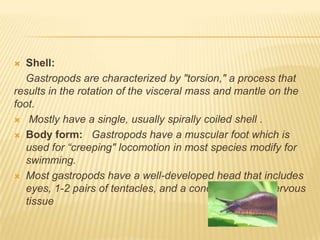
 Shell:
Gastropods are characterized by "torsion," a process that
results in the rotation of the visceral mass and mantle on the
foot.
 Mostly have a single, usually spirally coiled shell .
 Body form: Gastropods have a muscular foot which is
used for “creeping" locomotion in most species modify for
swimming.
 Most gastropods have a well-developed head that includes
eyes, 1-2 pairs of tentacles, and a concentration of nervous
tissue
 Reproduction:-Gastropods are dioecious, and some forms
are hermaphroditic.
 Marine species have veliger larva. torsion occure at that
stage.
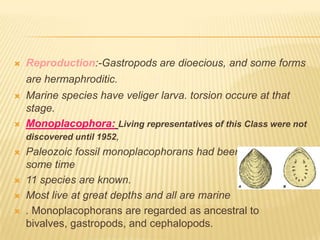
 Monoplacophora: Living representatives of this Class were not
discovered until 1952,
 Paleozoic fossil monoplacophorans had been known for
some time
 11 species are known.
 Most live at great depths and all are marine
 . Monoplacophorans are regarded as ancestral to
bivalves, gastropods, and cephalopods.
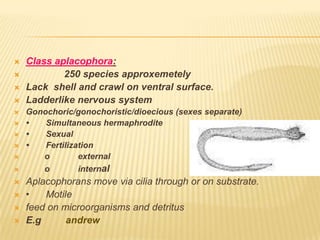
 Class aplacophora:
 250 species approxemetely
 Lack shell and crawl on ventral surface.
 Ladderlike nervous system
 Gonochoric/gonochoristic/dioecious (sexes separate)
 • Simultaneous hermaphrodite
 • Sexual
 • Fertilization
 o external
 o internal
 Aplacophorans move via cilia through or on substrate.
 • Motile
 feed on microorganisms and detritus
 E.g andrew
CLASS SCAPHOPODA
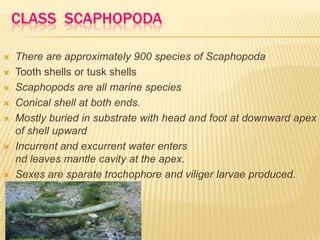
 There are approximately 900 species of Scaphopoda
 Tooth shells or tusk shells
 Scaphopods are all marine species
 Conical shell at both ends.
 Mostly buried in substrate with head and foot at downward apex
of shell upward
 Incurrent and excurrent water enters
nd leaves mantle cavity at the apex.
 Sexes are sparate trochophore and viliger larvae produced.
CLASS POLYPLACOPHORA
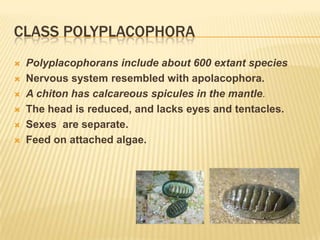
 Polyplacophorans include about 600 extant species
 Nervous system resembled with apolacophora.
 A chiton has calcareous spicules in the mantle.
 The head is reduced, and lacks eyes and tentacles.
 Sexes are separate.
 Feed on attached algae.
CLASS BIVALVIA
 There are approximetely 1500 species of bivalvia.
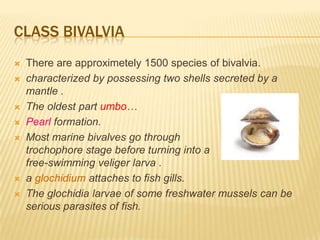
 characterized by possessing two shells secreted by a
mantle .
 The oldest part umbo…
 Pearl formation.
 Most marine bivalves go through a
trochophore stage before turning into a
free-swimming veliger larva .
 a glochidium attaches to fish gills.
 The glochidia larvae of some freshwater mussels can be
serious parasites of fish.
Phylum mollusca

Phylum mollusca

  • 1.
  • 2.
     Def:-  Thecoelomate animal phylum whose members possess a head – foot, visceral mass, mantle cavity . Most molluscs also possess a radula and a calcareous shell.
  • 3.
    CHARACTERISTICS  Body oftwo parts: head foot and visceral mass.  Mantle that secretes a calcareous shell and covers the visceral mass.  Shell: Monovalvular or bivalvular or absent or internal  Bilateral symmetry.  Mantle cavity function in excreation,gas exchange, elimination wastes products.  Open circulatory system in all except in one class cephalopod.  Protostome characteristics.  Sense organs: Eyes, statocyst, sense or touch, smell and gustatory.
  • 4.
     Reproductive system:Dioecious or monoecious, gonads with one or two ducts.  Fertilization: External or internal.  Excretion: By nephridia or kidney.  Habit and habitat: Terrestrial, aquatic, marine or fresh water. the body of molluscs has three main reagion 1) head-foot:- is elongted with an anterior head containing the mouth ,nervous nd sensory stucture and elongated foot used for locomotion.
  • 5.
     Visceral masscontains the organs of digestion,cirulation,reproduction and excretion.
  • 6.
     Mental: attatchesto viscral mass,may secreate a shell that overlies the mantle.  The shell of mollusc is secreated in three layers  Outer layer called periostracum .it is secreated from mantale,s outer margin nd protein layer.  Prismatic layer is middle layer and contains CaCO3 and organic materials. Thickest layer……  Nacreous layer is inner that is form from thin sheet of calcium carbonate.its secreation thickns the shell
  • 8.
     Mantle cavity:between the mantle and foot is space called mantle cavity.  Functions:  gas exchange  excretion  elimination of digestive wastes  release of reproductive system
  • 9.
     Radula :the mouth of molluscs possess a resping structure called radula.  Consists of rows of teeth.
  • 10.
      Classification ofphylum Mollusca  Class Aplacophora  Class Polyplacophora  Class Monoplacophora  Class Scaphopoda  Class Bivalvia  Class Gastropoda  Class Cephalopoda  Class Caudofoveata
  • 11.
     Cephalopoda: thereare approximately 650- 700 species  includes octopus,squid, cuttlefish.  Most complex form of molluscs  Anterior end modified to forms tentacle's or armed used for capture prey, attachment,locomotion.  Shell:  external shell is present in nautilus  In some shell is absent as in octopuses  In cuttlefish shell called cuttlebone
  • 12.
     Digestive system Thedigestive tract consists of three parts:  esophagus, which may contain a crop; stomach, which mashes food; and caecum , where most digestion and absorption occur.  Locomotion in cephalopods :  is accomplished mainly by jet propulsion  Octopus can use their arms to "walk,“or crawl  Reproduction:  dioecious  A female possess single ovidut. one tantacles of male cephalopods called hectocotylus modify to form spermatophor transfer.
  • 13.
     Nervous system: Cephalopods possess well-developed nervous systems and complex sensory organs.  Economic importance; Many species of squid and octopus are eaten.  Nautilus shells are often used decoratively.  The internal shell of a cuttlefish, or cuttle bone, is sold in the pet trade as a calcium source for birds.  Giant cephalopods such as squid and octopuses are also a great source of sea-monster folkore. . Class Gastropoda: includes the snails and slugs.
  • 14.
     Shell: Gastropods arecharacterized by "torsion," a process that results in the rotation of the visceral mass and mantle on the foot.  Mostly have a single, usually spirally coiled shell .  Body form: Gastropods have a muscular foot which is used for “creeping" locomotion in most species modify for swimming.  Most gastropods have a well-developed head that includes eyes, 1-2 pairs of tentacles, and a concentration of nervous tissue
  • 15.
     Reproduction:-Gastropods aredioecious, and some forms are hermaphroditic.  Marine species have veliger larva. torsion occure at that stage.  Monoplacophora: Living representatives of this Class were not discovered until 1952,  Paleozoic fossil monoplacophorans had been known for some time  11 species are known.  Most live at great depths and all are marine  . Monoplacophorans are regarded as ancestral to bivalves, gastropods, and cephalopods.
  • 16.
     Class aplacophora: 250 species approxemetely  Lack shell and crawl on ventral surface.  Ladderlike nervous system  Gonochoric/gonochoristic/dioecious (sexes separate)  • Simultaneous hermaphrodite  • Sexual  • Fertilization  o external  o internal  Aplacophorans move via cilia through or on substrate.  • Motile  feed on microorganisms and detritus  E.g andrew
  • 17.
    CLASS SCAPHOPODA  Thereare approximately 900 species of Scaphopoda  Tooth shells or tusk shells  Scaphopods are all marine species  Conical shell at both ends.  Mostly buried in substrate with head and foot at downward apex of shell upward  Incurrent and excurrent water enters nd leaves mantle cavity at the apex.  Sexes are sparate trochophore and viliger larvae produced.
  • 18.
    CLASS POLYPLACOPHORA  Polyplacophoransinclude about 600 extant species  Nervous system resembled with apolacophora.  A chiton has calcareous spicules in the mantle.  The head is reduced, and lacks eyes and tentacles.  Sexes are separate.  Feed on attached algae.
  • 19.
    CLASS BIVALVIA  Thereare approximetely 1500 species of bivalvia.  characterized by possessing two shells secreted by a mantle .  The oldest part umbo…  Pearl formation.  Most marine bivalves go through a trochophore stage before turning into a free-swimming veliger larva .  a glochidium attaches to fish gills.  The glochidia larvae of some freshwater mussels can be serious parasites of fish.