Phylum: AnnelidaPhylum: Annelida
Class: PolychaetaClass: Polychaeta
By Mr. “I have hair” ChapmanBy Mr. “I have hair” Chapman
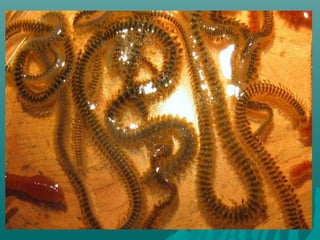
Class: PolychaetaClass: Polychaeta
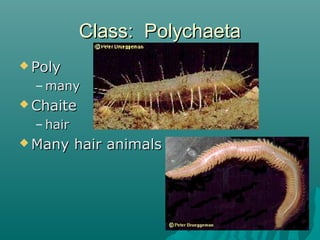
 PolyPoly
– manymany
 ChaiteChaite
– hairhair
 Many hair animalsMany hair animals
Class: PolychaetaClass: Polychaeta
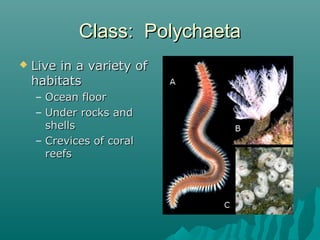
 Live in a variety ofLive in a variety of
habitatshabitats
– Ocean floorOcean floor
– Under rocks andUnder rocks and
shellsshells
– Crevices of coralCrevices of coral
reefsreefs
Polychaeta DigestionPolychaeta Digestion
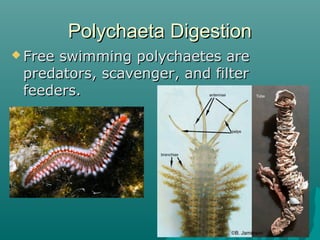
 Free swimming polychaetes areFree swimming polychaetes are
predators, scavenger, and filterpredators, scavenger, and filter
feeders.feeders.
AnnelidsAnnelids
 Earthworms and polychaetes haveEarthworms and polychaetes have
appendages growing from each ofappendages growing from each of
the annuli calledthe annuli called
 SetaeSetae
PolychaetesPolychaetes
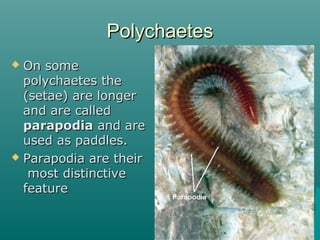
 On someOn some
polychaetes thepolychaetes the
(setae) are longer(setae) are longer
and are calledand are called
parapodiaparapodia and areand are
used as paddles.used as paddles.
 Parapodia are theirParapodia are their
most distinctivemost distinctive
featurefeature
PolychaetesPolychaetes
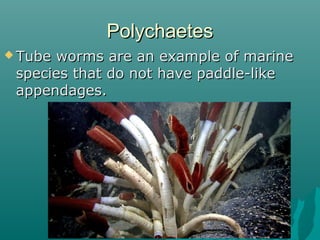
 Tube worms are an example of marineTube worms are an example of marine
species that do not have paddle-likespecies that do not have paddle-like
appendages.appendages.
PolychaetesPolychaetes
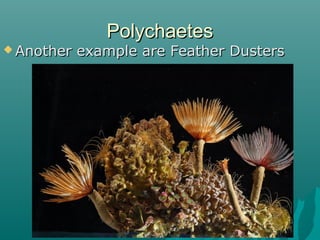
 Another example are Feather DustersAnother example are Feather Dusters
PolychaetesPolychaetes
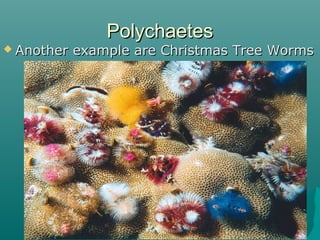
 Another example are Christmas Tree WormsAnother example are Christmas Tree Worms
PolychaetesPolychaetes
 They burrow into the bottom asThey burrow into the bottom as
larvae, but as they grow, they makelarvae, but as they grow, they make
a tube, which serves as a burrow.a tube, which serves as a burrow.
PolychaetesPolychaetes
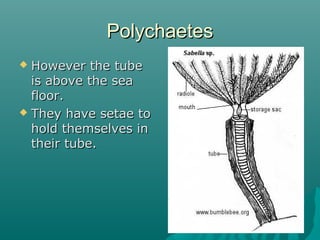
 However the tubeHowever the tube
is above the seais above the sea
floor.floor.
 They have setae toThey have setae to
hold themselves inhold themselves in
their tube.their tube.
Tube WormsTube Worms
 Tube is made ofTube is made of
sand, gravel andsand, gravel and
bits of shells thatbits of shells that
stick to the worm’sstick to the worm’s
slime. It allslime. It all
becomes tough andbecomes tough and
leathery.leathery.
Tube WormsTube Worms
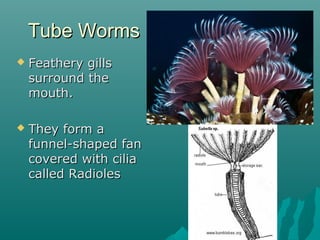
 Feathery gillsFeathery gills
surround thesurround the
mouth.mouth.
 They form aThey form a
funnel-shaped fanfunnel-shaped fan
covered with ciliacovered with cilia
called Radiolescalled Radioles
Tube WormsTube Worms
 This creates aThis creates a
feeding currentfeeding current
that draws in food.that draws in food.
 Food is anythingFood is anything
that is organic andthat is organic and
digestable.digestable.
Class Polychaeta Notes

Class Polychaeta Notes

  • 1.
    Phylum: AnnelidaPhylum: Annelida Class:PolychaetaClass: Polychaeta By Mr. “I have hair” ChapmanBy Mr. “I have hair” Chapman
  • 2.
    Class: PolychaetaClass: Polychaeta PolyPoly – manymany  ChaiteChaite – hairhair  Many hair animalsMany hair animals
  • 3.
    Class: PolychaetaClass: Polychaeta Live in a variety ofLive in a variety of habitatshabitats – Ocean floorOcean floor – Under rocks andUnder rocks and shellsshells – Crevices of coralCrevices of coral reefsreefs
  • 4.
    Polychaeta DigestionPolychaeta Digestion Free swimming polychaetes areFree swimming polychaetes are predators, scavenger, and filterpredators, scavenger, and filter feeders.feeders.
  • 6.
    AnnelidsAnnelids  Earthworms andpolychaetes haveEarthworms and polychaetes have appendages growing from each ofappendages growing from each of the annuli calledthe annuli called  SetaeSetae
  • 7.
    PolychaetesPolychaetes  On someOnsome polychaetes thepolychaetes the (setae) are longer(setae) are longer and are calledand are called parapodiaparapodia and areand are used as paddles.used as paddles.  Parapodia are theirParapodia are their most distinctivemost distinctive featurefeature
  • 8.
    PolychaetesPolychaetes  Tube wormsare an example of marineTube worms are an example of marine species that do not have paddle-likespecies that do not have paddle-like appendages.appendages.
  • 9.
    PolychaetesPolychaetes  Another exampleare Feather DustersAnother example are Feather Dusters
  • 10.
    PolychaetesPolychaetes  Another exampleare Christmas Tree WormsAnother example are Christmas Tree Worms
  • 11.
    PolychaetesPolychaetes  They burrowinto the bottom asThey burrow into the bottom as larvae, but as they grow, they makelarvae, but as they grow, they make a tube, which serves as a burrow.a tube, which serves as a burrow.
  • 12.
    PolychaetesPolychaetes  However thetubeHowever the tube is above the seais above the sea floor.floor.  They have setae toThey have setae to hold themselves inhold themselves in their tube.their tube.
  • 14.
    Tube WormsTube Worms Tube is made ofTube is made of sand, gravel andsand, gravel and bits of shells thatbits of shells that stick to the worm’sstick to the worm’s slime. It allslime. It all becomes tough andbecomes tough and leathery.leathery.
  • 15.
    Tube WormsTube Worms Feathery gillsFeathery gills surround thesurround the mouth.mouth.  They form aThey form a funnel-shaped fanfunnel-shaped fan covered with ciliacovered with cilia called Radiolescalled Radioles
  • 16.
    Tube WormsTube Worms This creates aThis creates a feeding currentfeeding current that draws in food.that draws in food.  Food is anythingFood is anything that is organic andthat is organic and digestable.digestable.