The Gastropoda [Gr. Gastros=stomach+podas=foot] is
one of the main class of phylum Mollusca including
snails, whelks, limpects etc.
Some of the Gastropos are terrestrial, some are
freshwater while all others are marine.
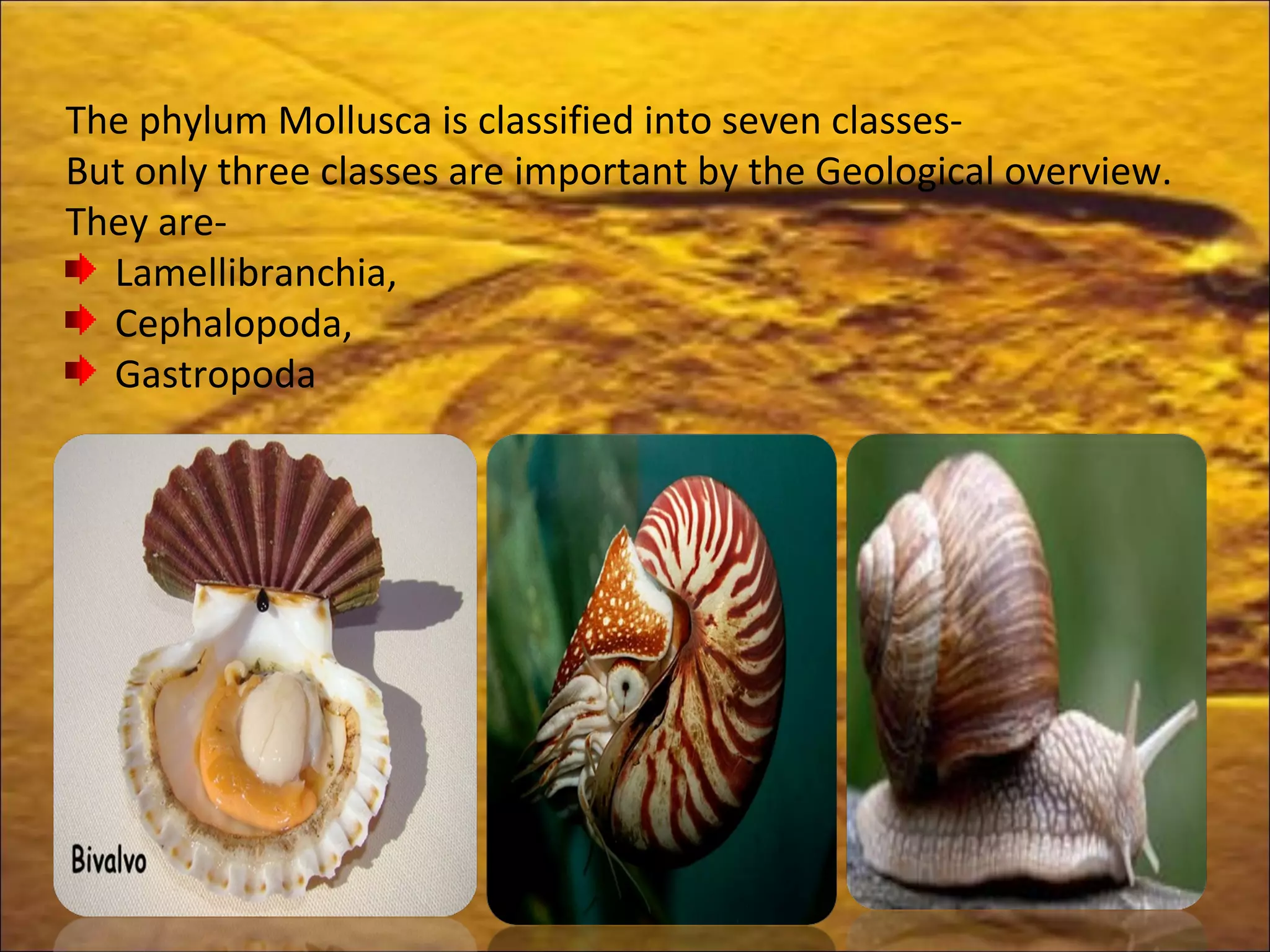
The phylum Mollusca is classified into seven classes-
But only three classes are important by the Geological overview.
They are-
Lamellibranchia,
Cephalopoda,
Gastropoda
A Gastropods shell is long, conical tube like structure
closed at one end open at the other end. The open anterior end
is known as aperture.
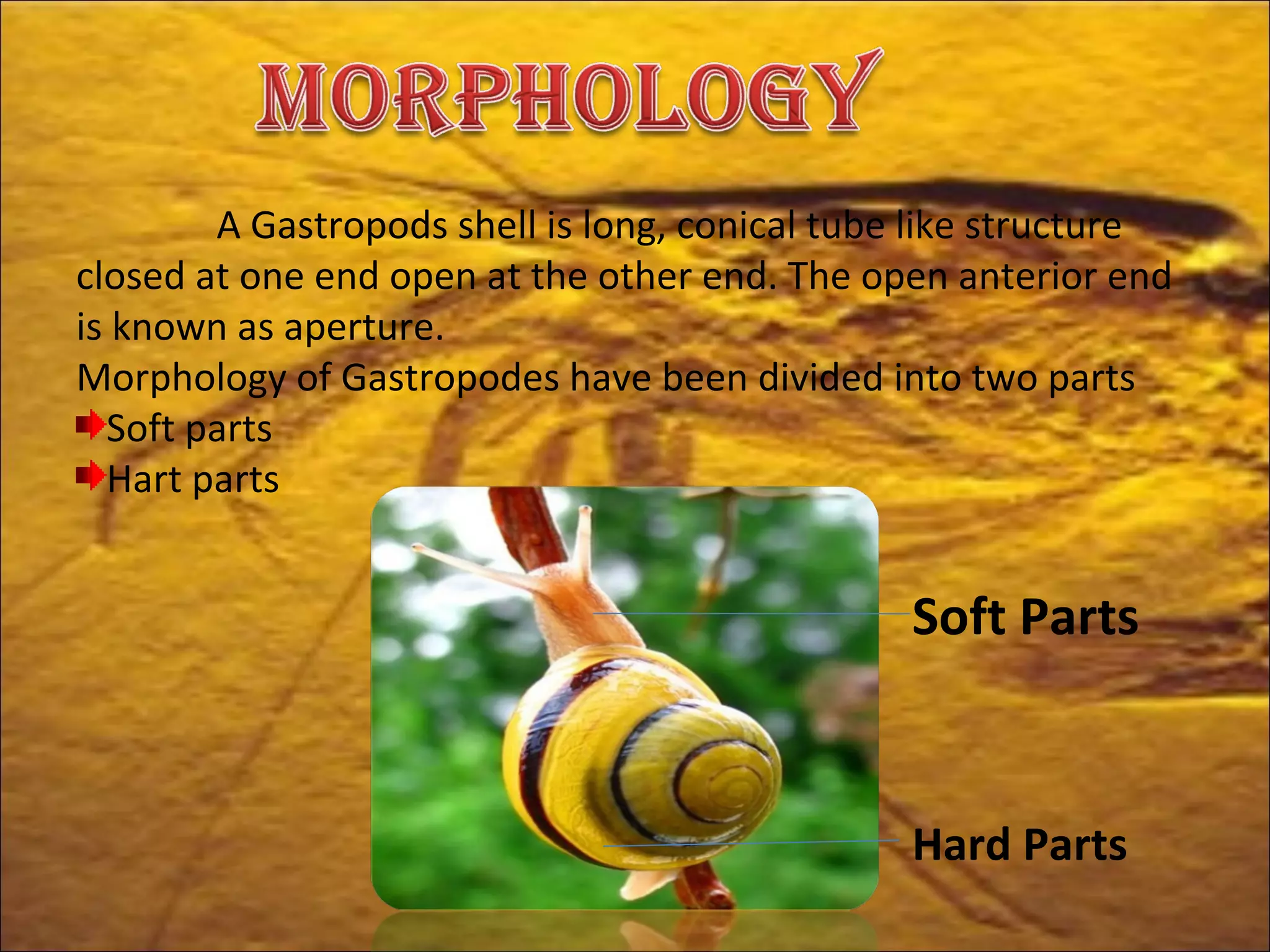
Morphology of Gastropodes have been divided into two parts
Soft parts
Hart parts
Hard Parts
Soft Parts
Head with
tantacles& eyes
Mouth cavity
Foot
Gills or lungs
Heart
Peristome
Redula
Nervous system
Mantle
Oesophagus
Stomach
Head
Tantacles
Eyes
Foot Gills
Heart
Redula
Nervous System
Mantle Peristome
Oesophagus Stomach
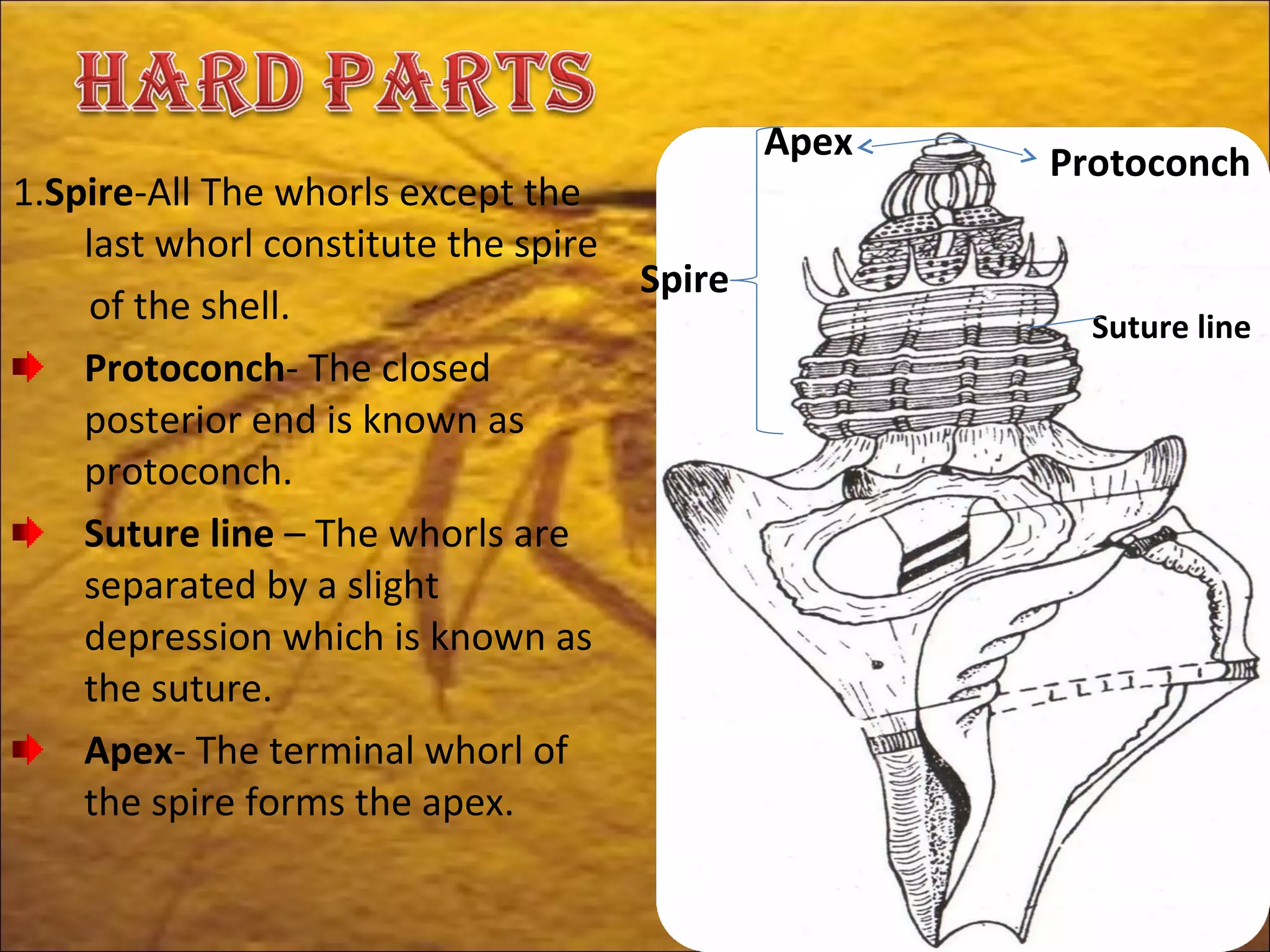
1.Spire-All The whorls except the
last whorl constitute the spire
of the shell.
Protoconch- The closed
posterior end is known as
protoconch.
Suture line – The whorls are
separated by a slight
depression which is known as
the suture.
Apex- The terminal whorl of
the spire forms the apex.
Spire
Protoconch
Apex
Suture line
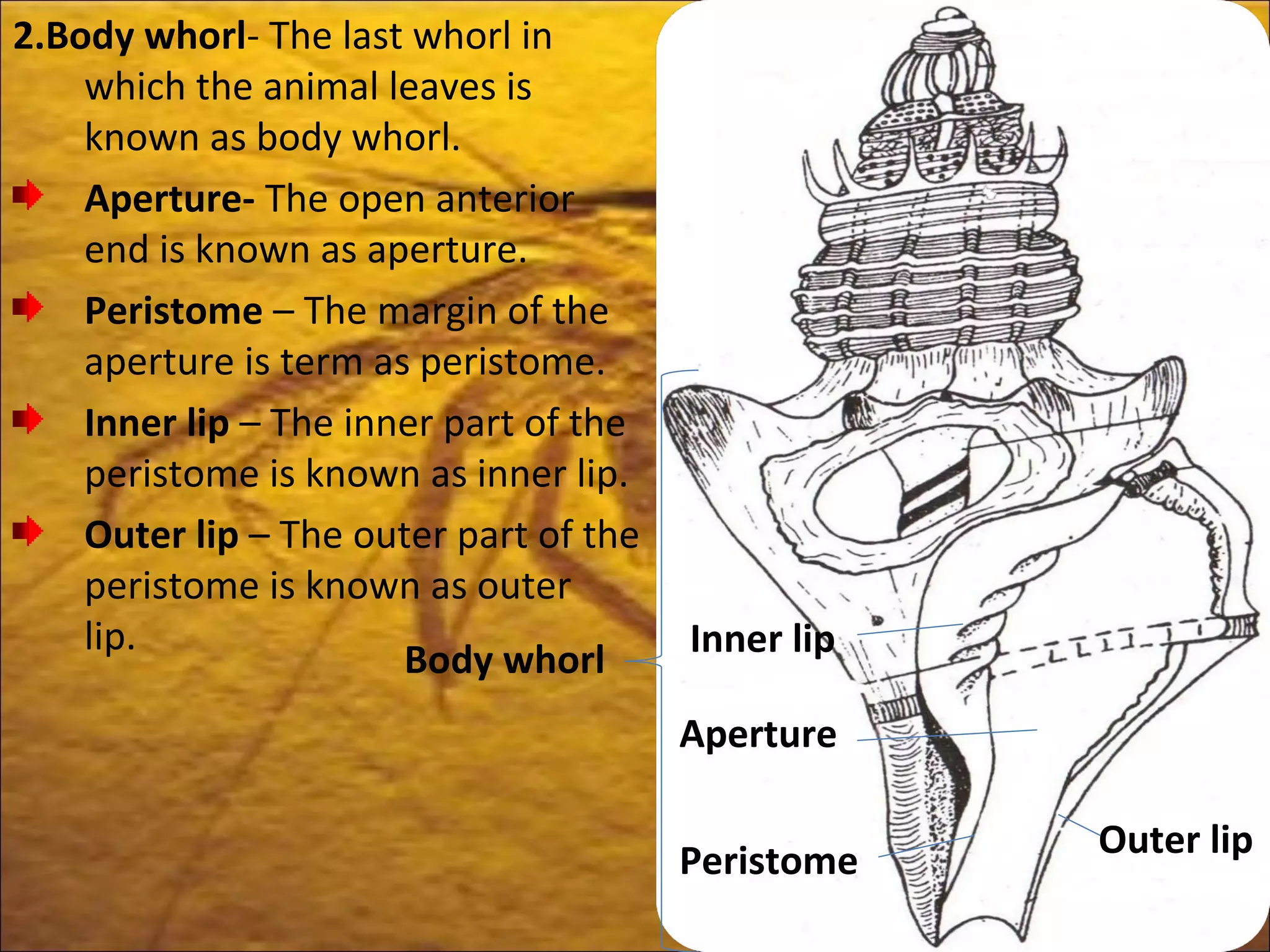
2.Body whorl- The last whorl in
which the animal leaves is
known as body whorl.
Aperture- The open anterior
end is known as aperture.
Peristome – The margin of the
aperture is term as peristome.
Inner lip – The inner part of the
peristome is known as inner lip.
Outer lip – The outer part of the
peristome is known as outer
lip.
Body whorl
Aperture
Peristome
Inner lip
Outer lip
Columella- A central pillar like
axis extending form apex to
the base of the shell called as
columella.
Siphonal canal- The anterior
tube is the anterior or siphonal
canal .
Anal canal- The posterior tube
is the posterior or anal canal.
Operculum- The aperture of
the shell may be covered by a
plate known as operculum.
Sinus-
Columella
Siphonal canal
Anal canal
Sinus-
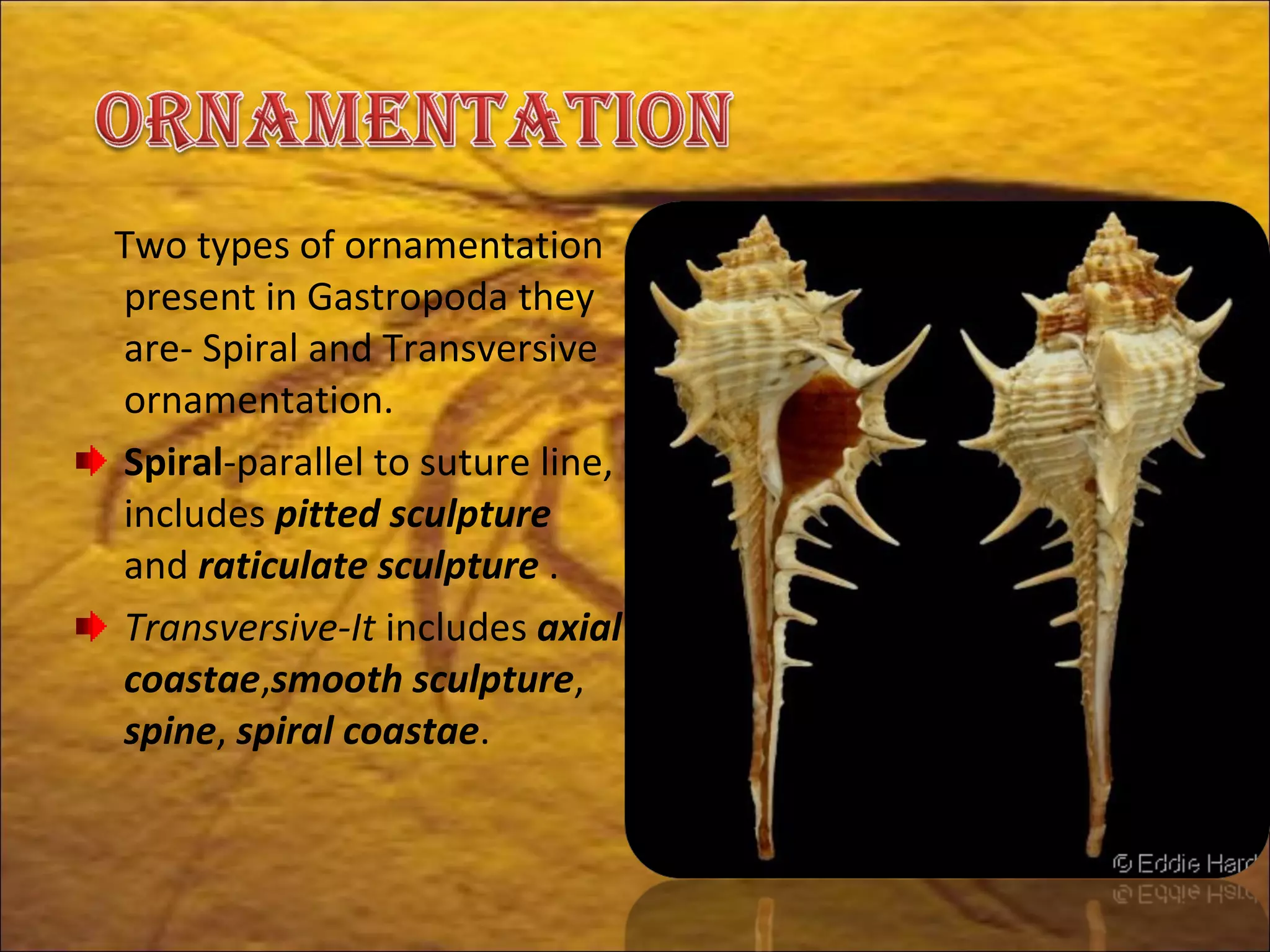
Two types of ornamentation
present in Gastropoda they
are- Spiral and Transversive
ornamentation.
Spiral-parallel to suture line,
includes pitted sculpture
and raticulate sculpture .
Transversive-It includes axial
coastae,smooth sculpture,
spine, spiral coastae.
The forms of the shell depend on the –
Spire angle,
Number the whorl
 Shape of the whorl
Size of the last whorl
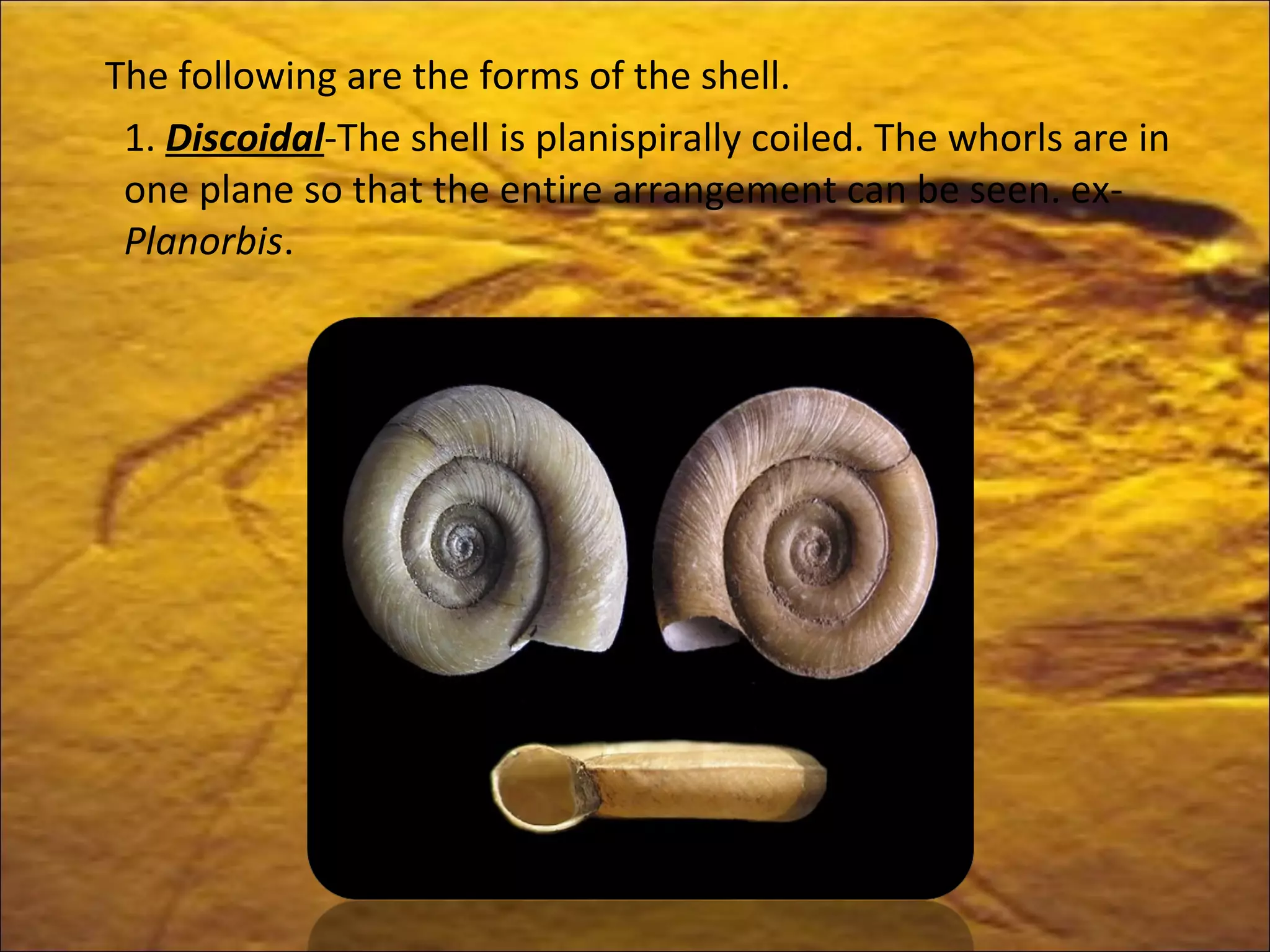
The following are the forms of the shell.
1. Discoidal-The shell is planispirally coiled. The whorls are in
one plane so that the entire arrangement can be seen. ex-
Planorbis.
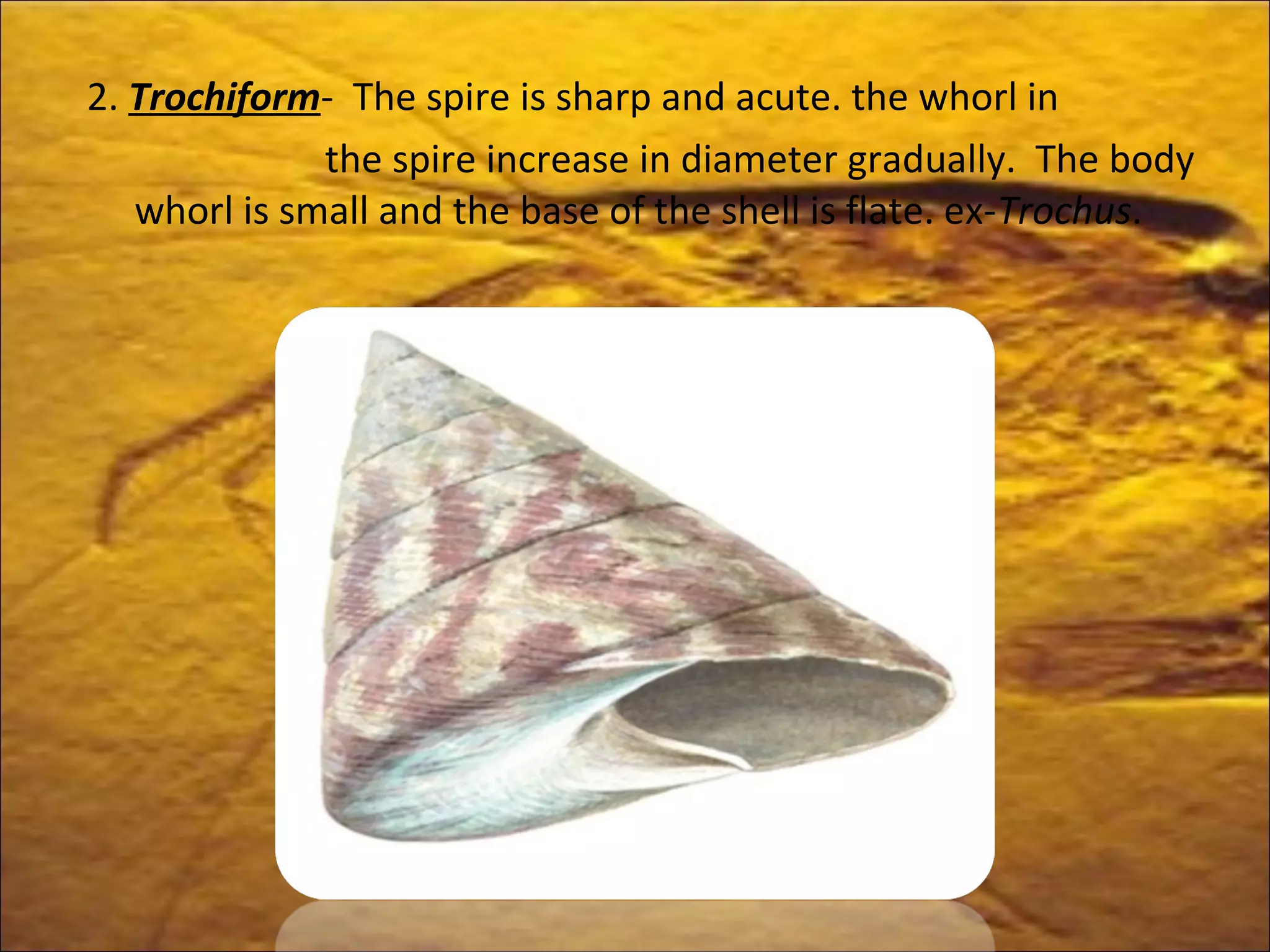
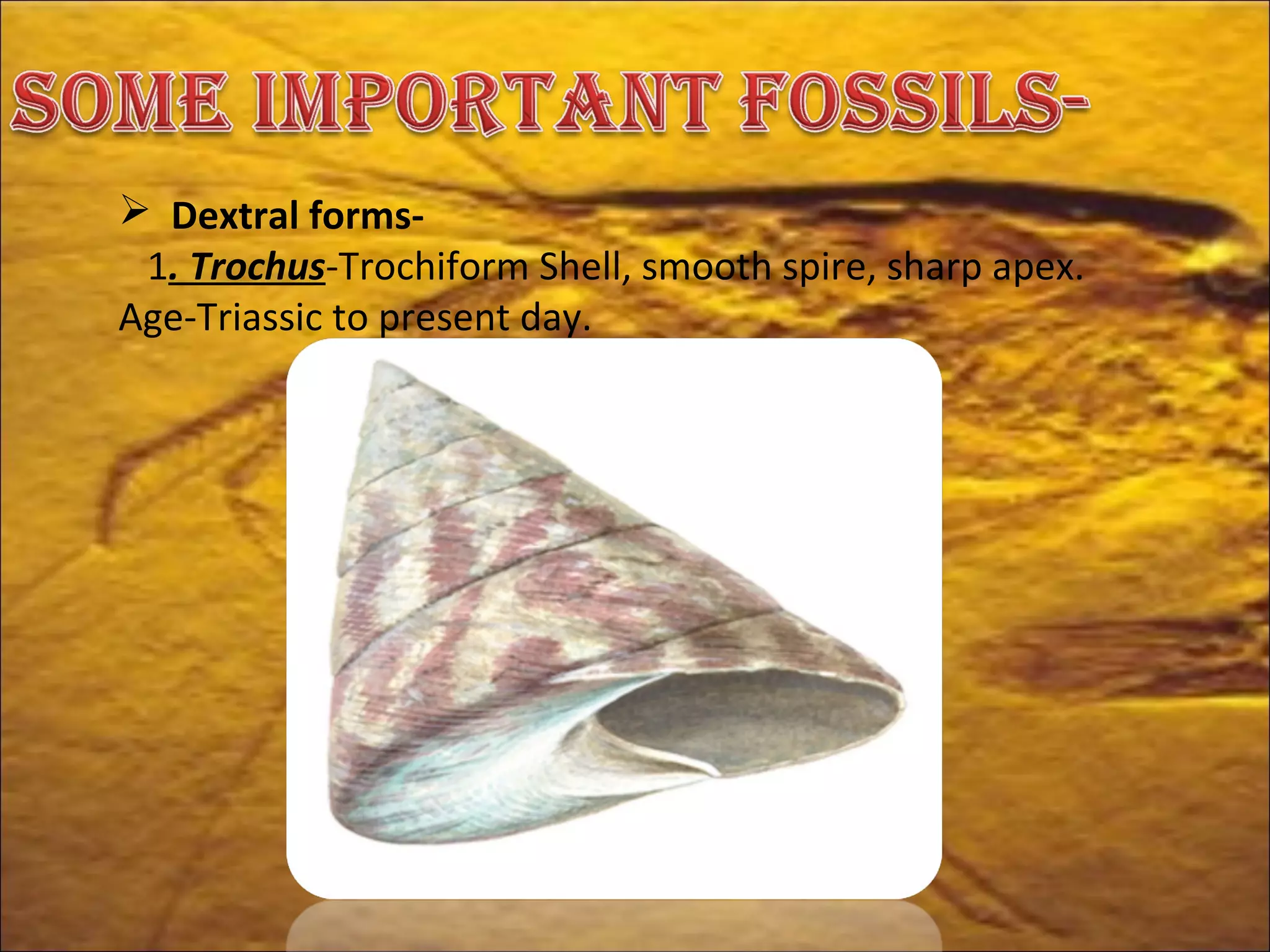
2. Trochiform- The spire is sharp and acute. the whorl in
the spire increase in diameter gradually. The body
whorl is small and the base of the shell is flate. ex-Trochus.
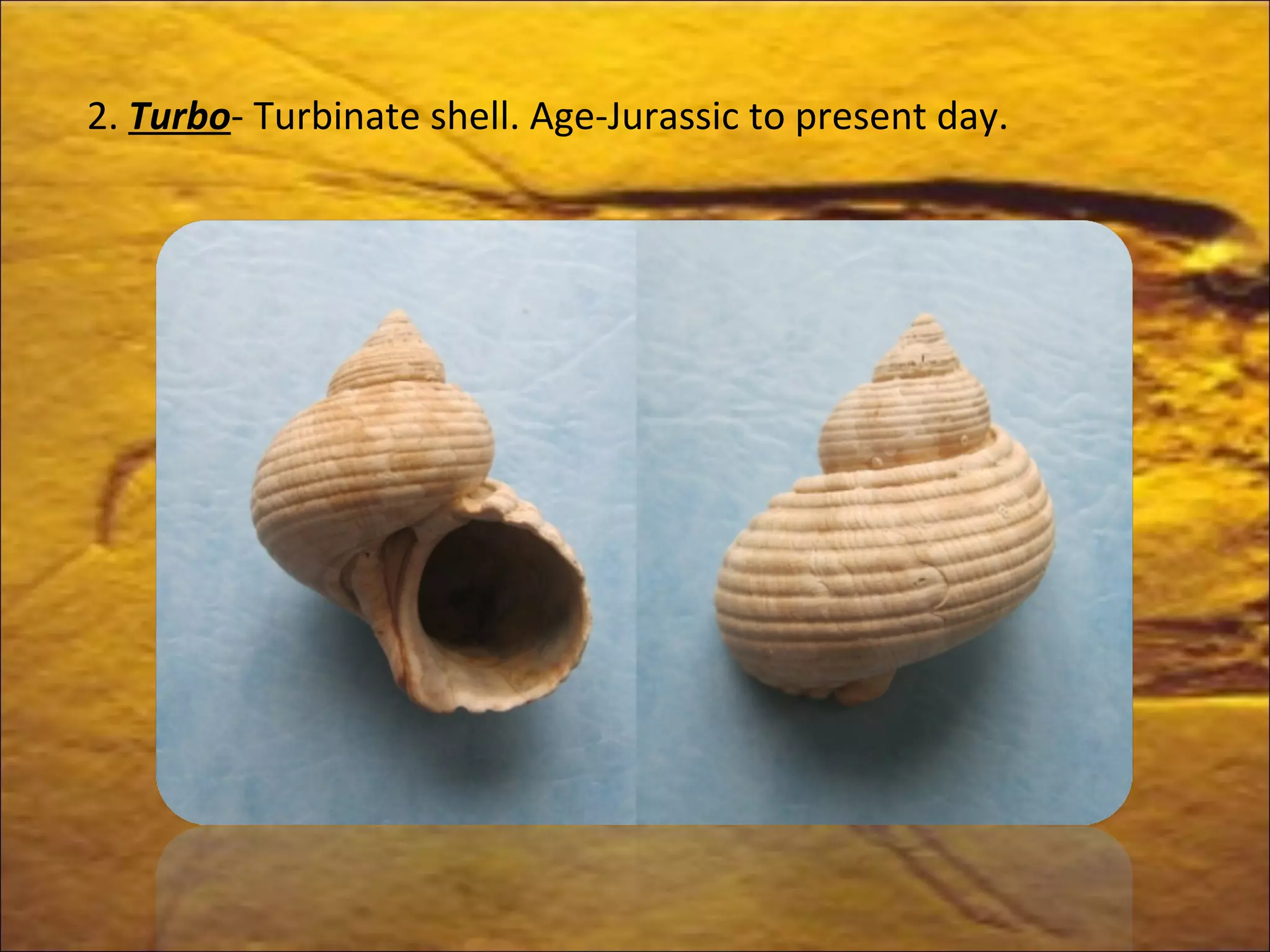
3. Turbinate- The spire is sharp and acute. the whorl in the spire
increase in diameter gradually. The base which is convex. ex-
Turbo.
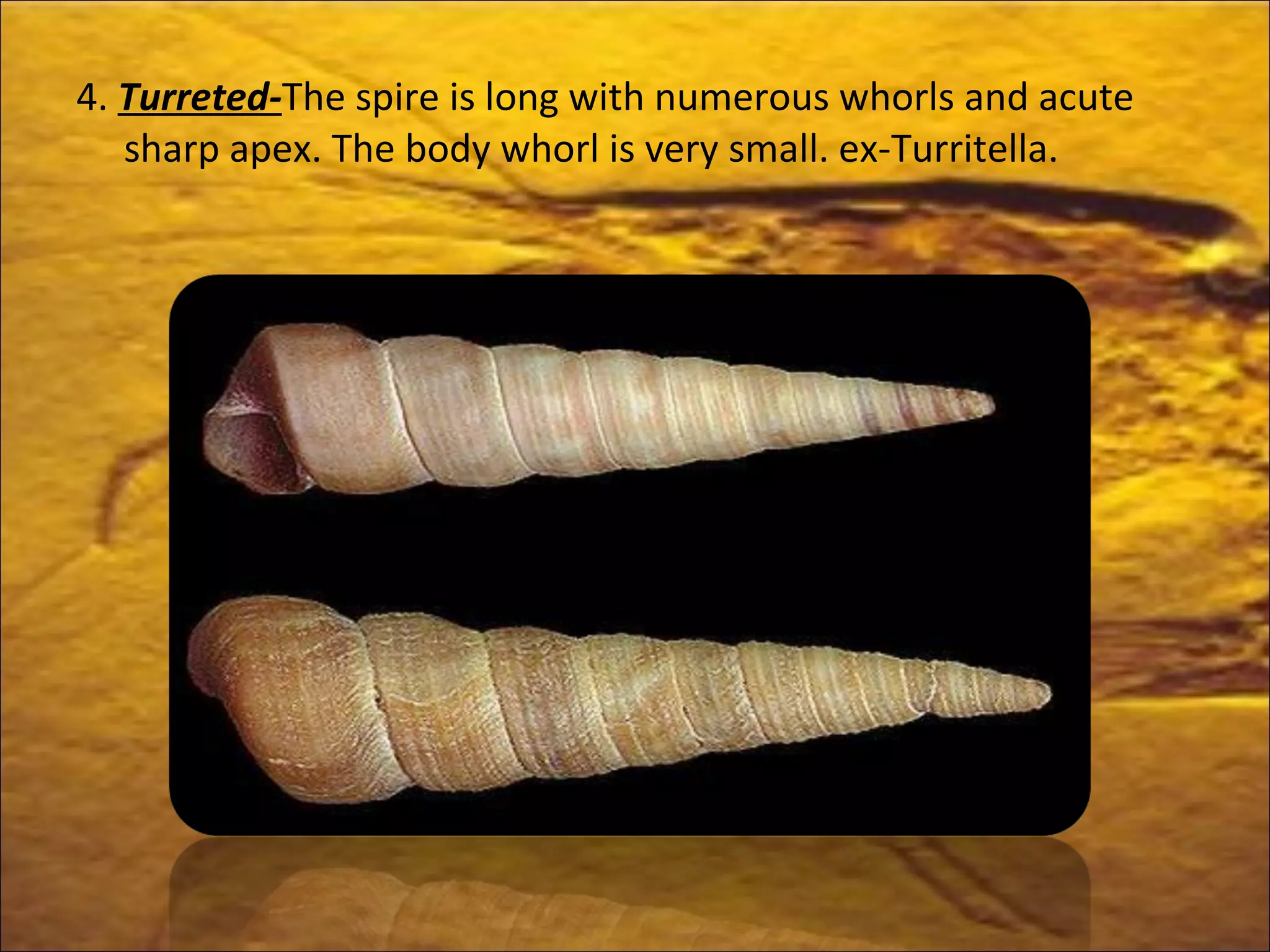
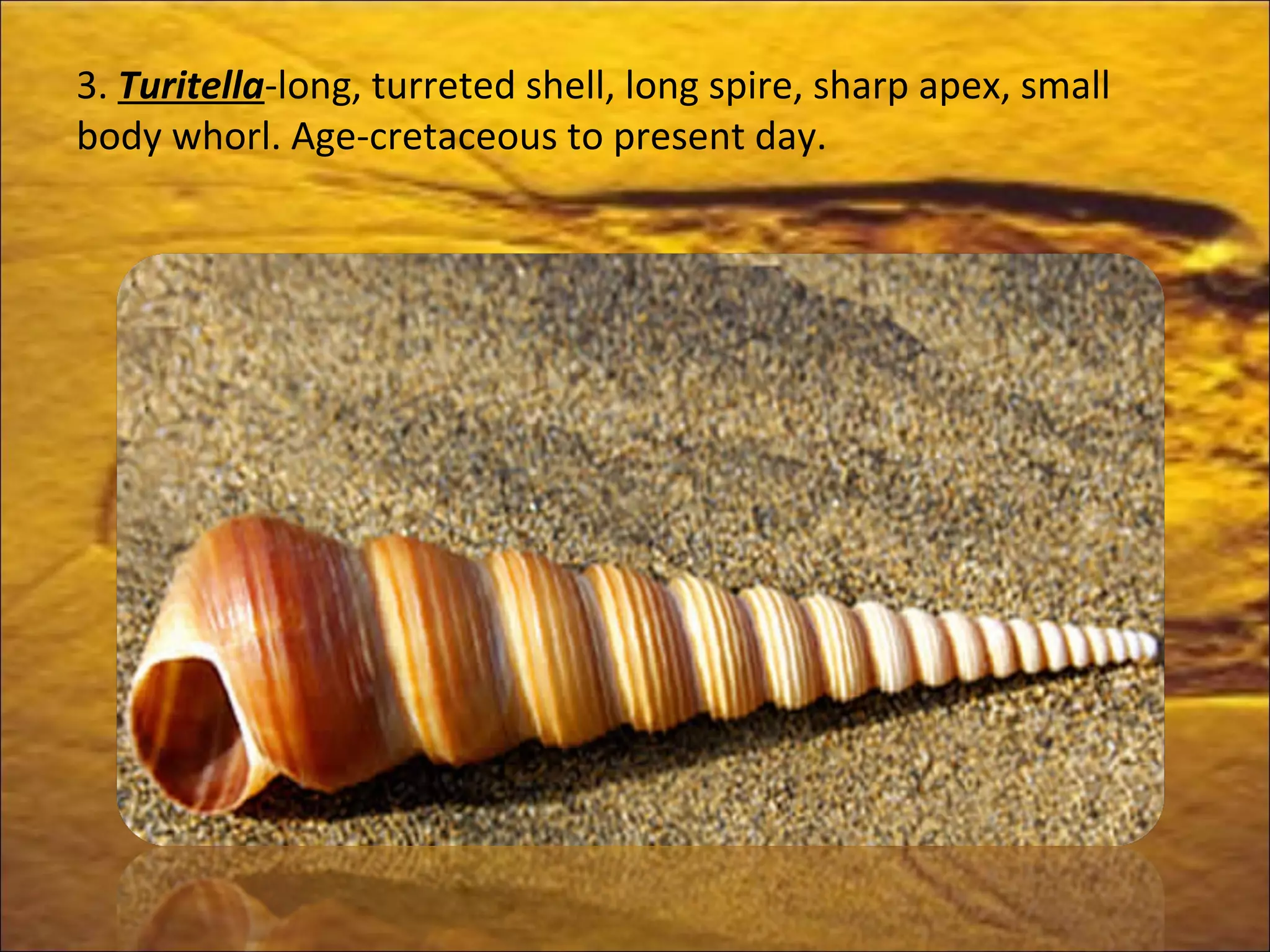
4. Turreted-The spire is long with numerous whorls and acute
sharp apex. The body whorl is very small. ex-Turritella.
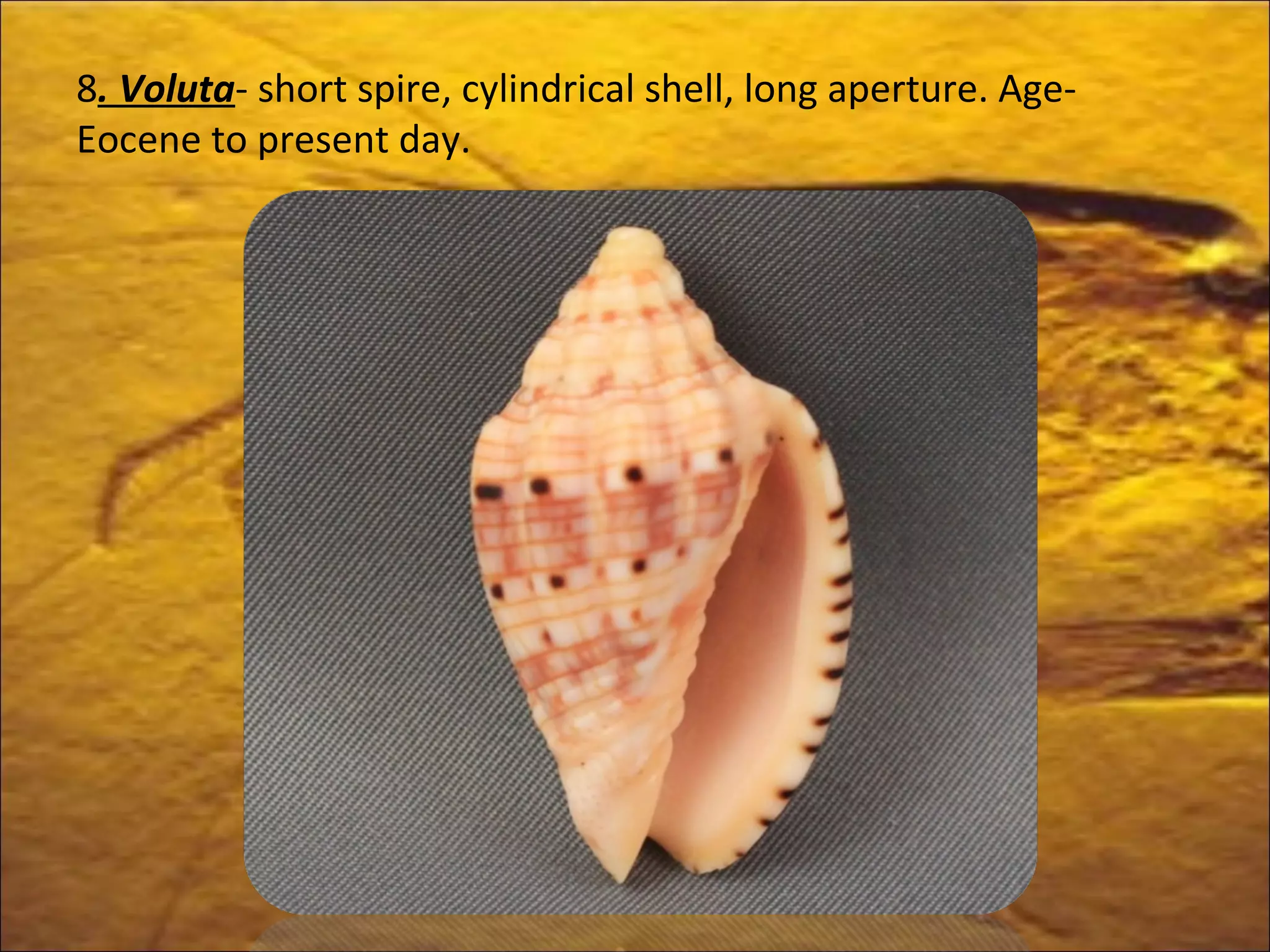
5. Cylindrical-After gradual increase in the diameter of the spire,
the diameter remains containt or it may reduce near the
base. ex-Voluta.
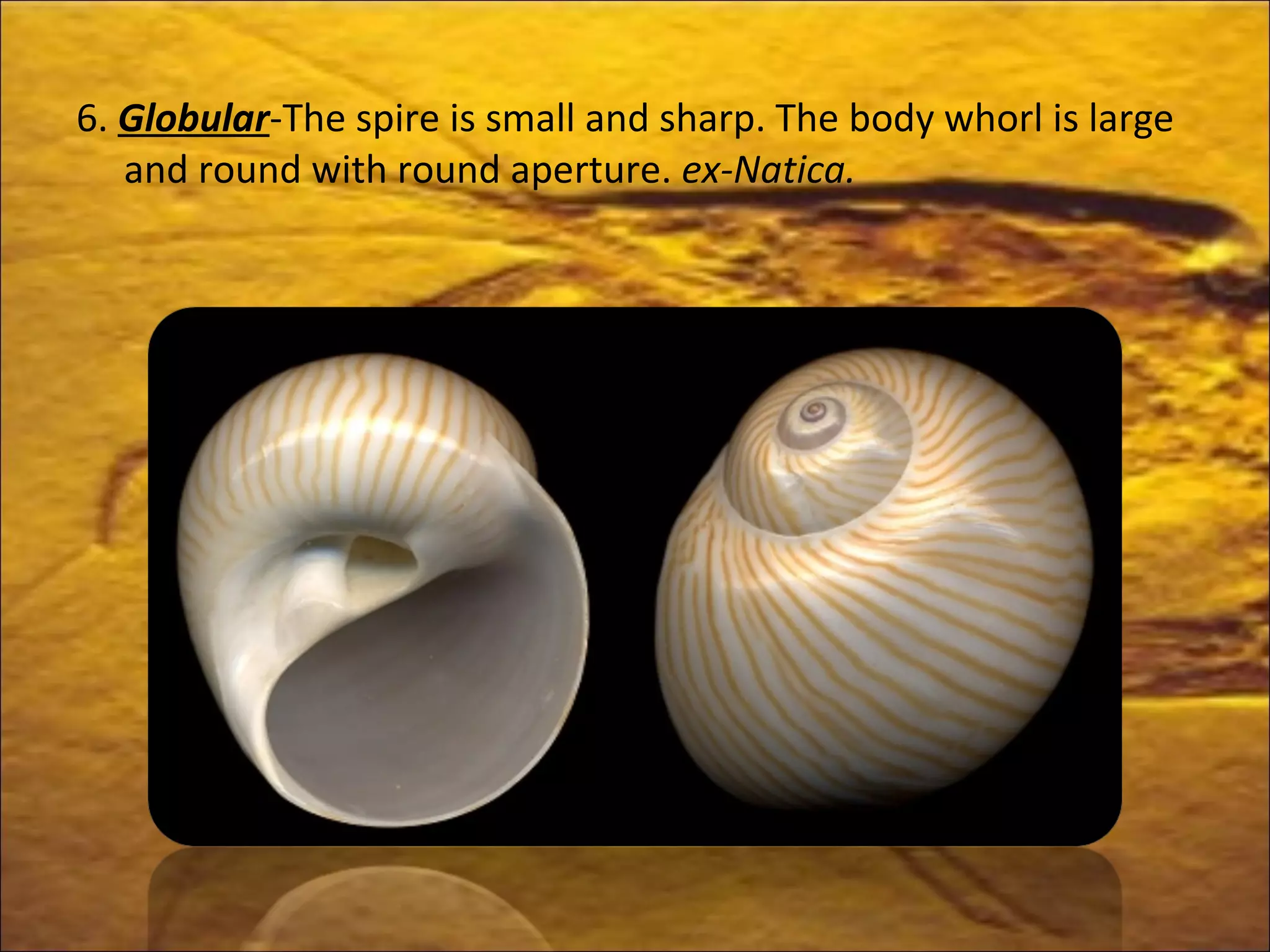
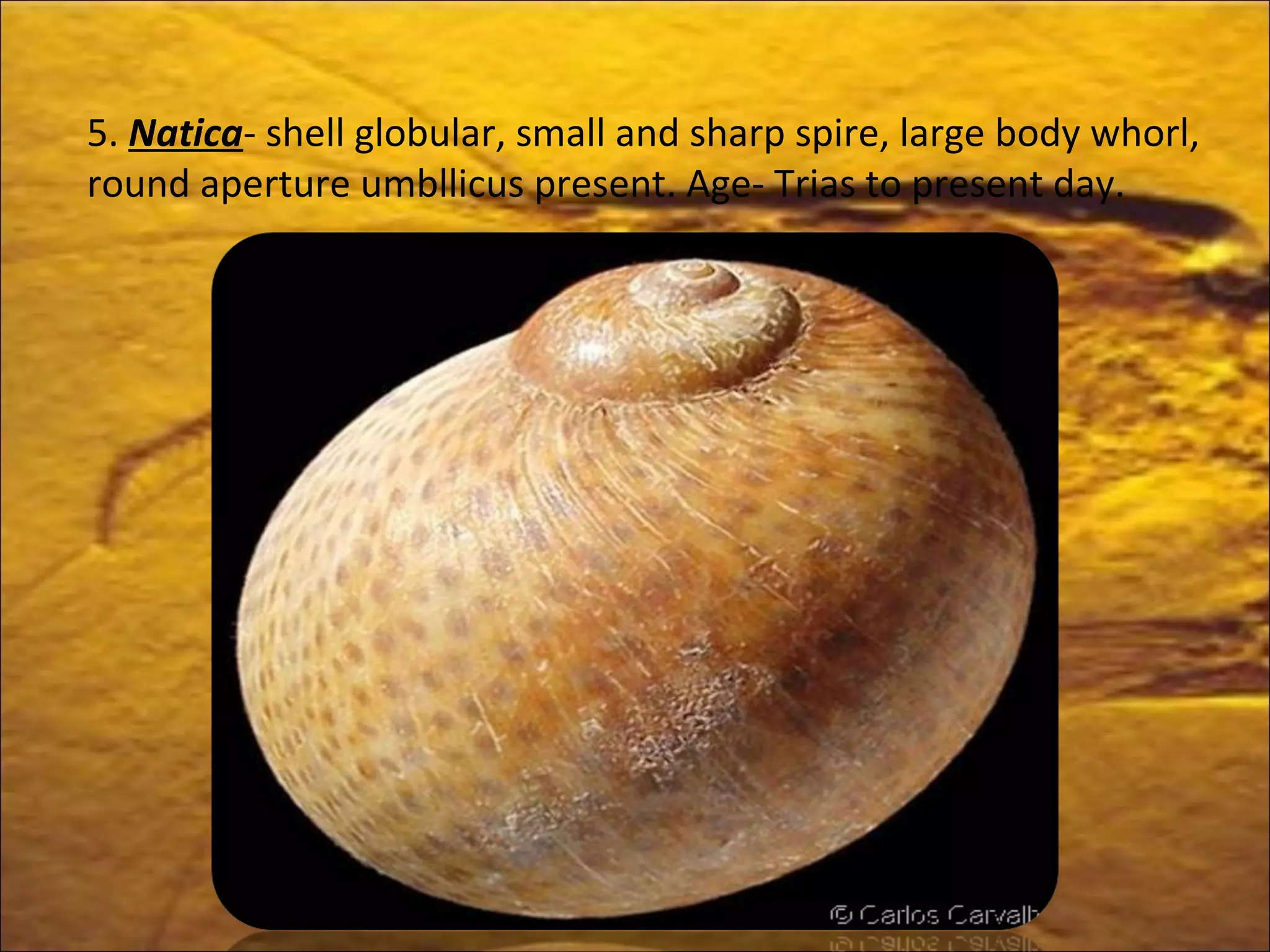
6. Globular-The spire is small and sharp. The body whorl is large
and round with round aperture. ex-Natica.
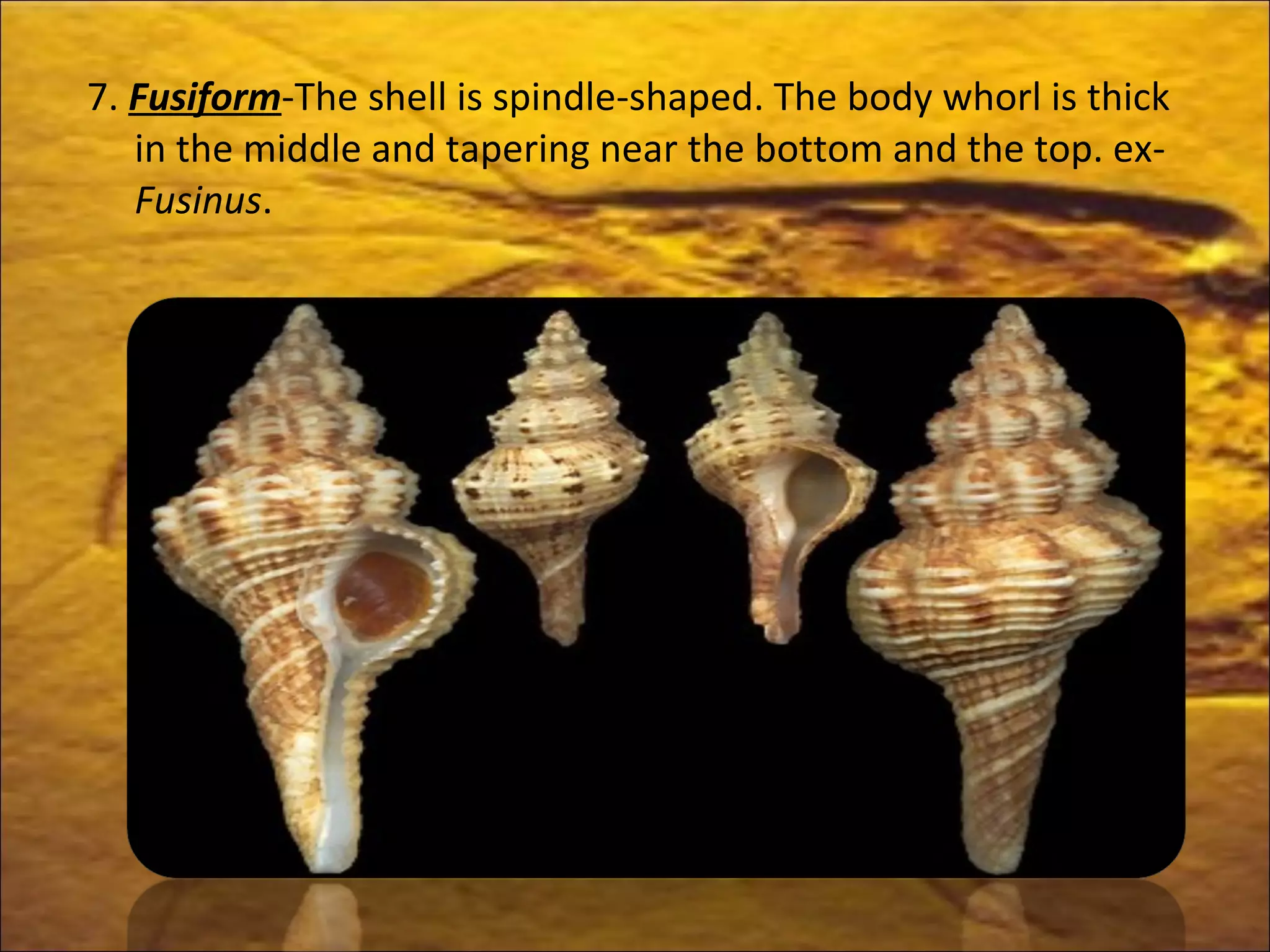
7. Fusiform-The shell is spindle-shaped. The body whorl is thick
in the middle and tapering near the bottom and the top. ex-
Fusinus.
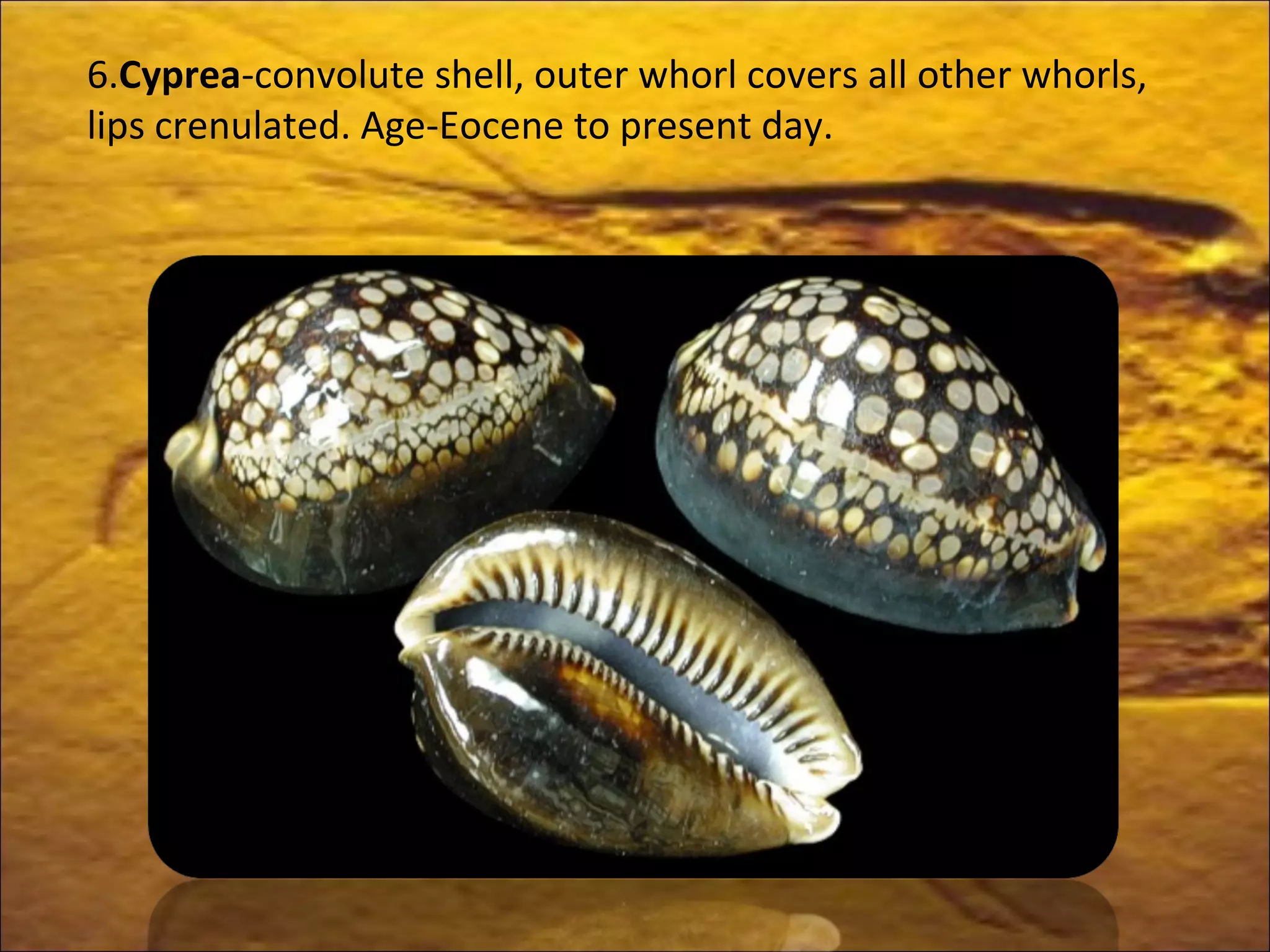
8. Convolute-The last whorl of the shell covers all the previous
whorls. The aperture, with crenulated outer lips, is a long as
the shell. ex-Cypraea.
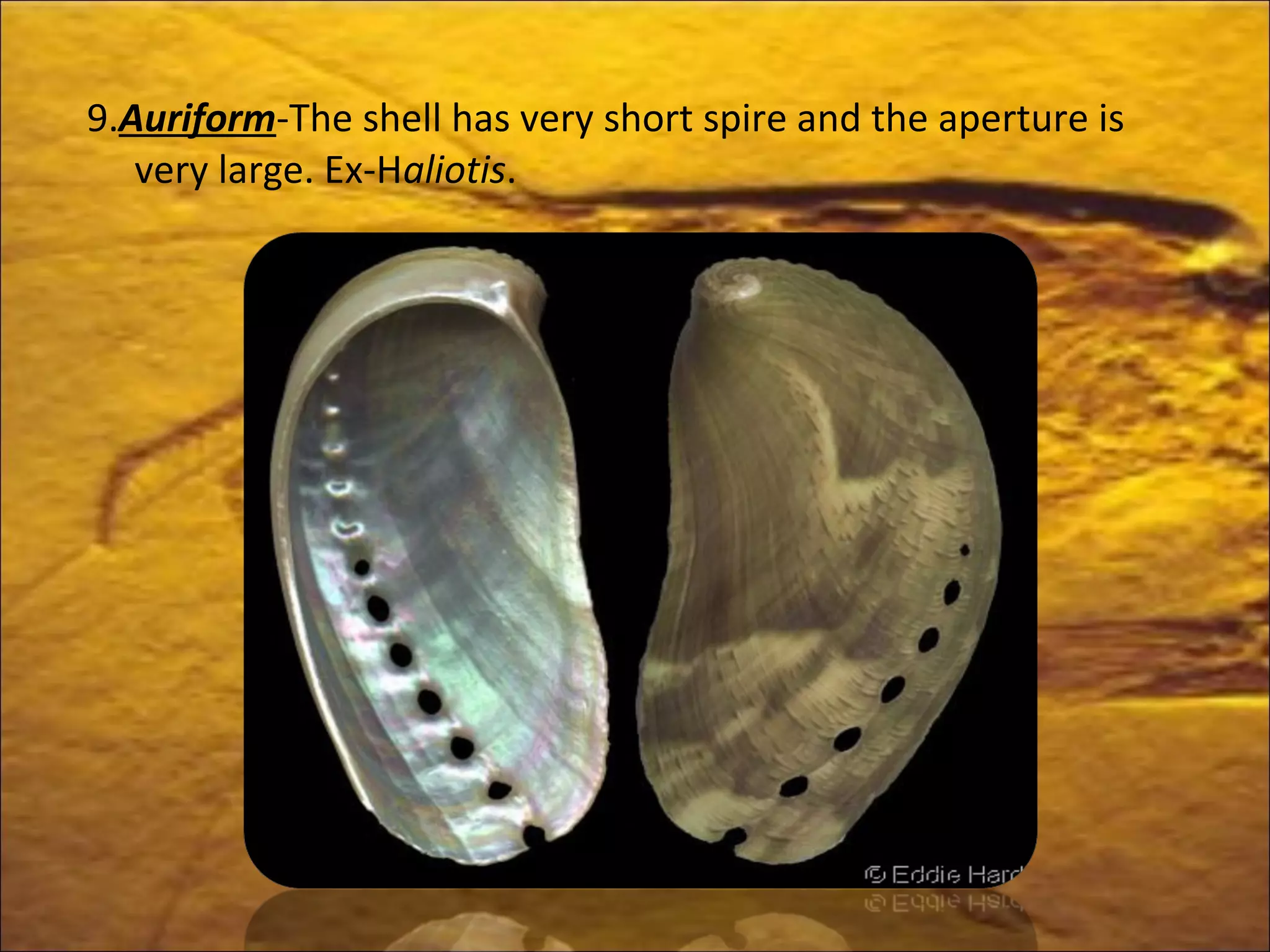
9.Auriform-The shell has very short spire and the aperture is
very large. Ex-Haliotis.
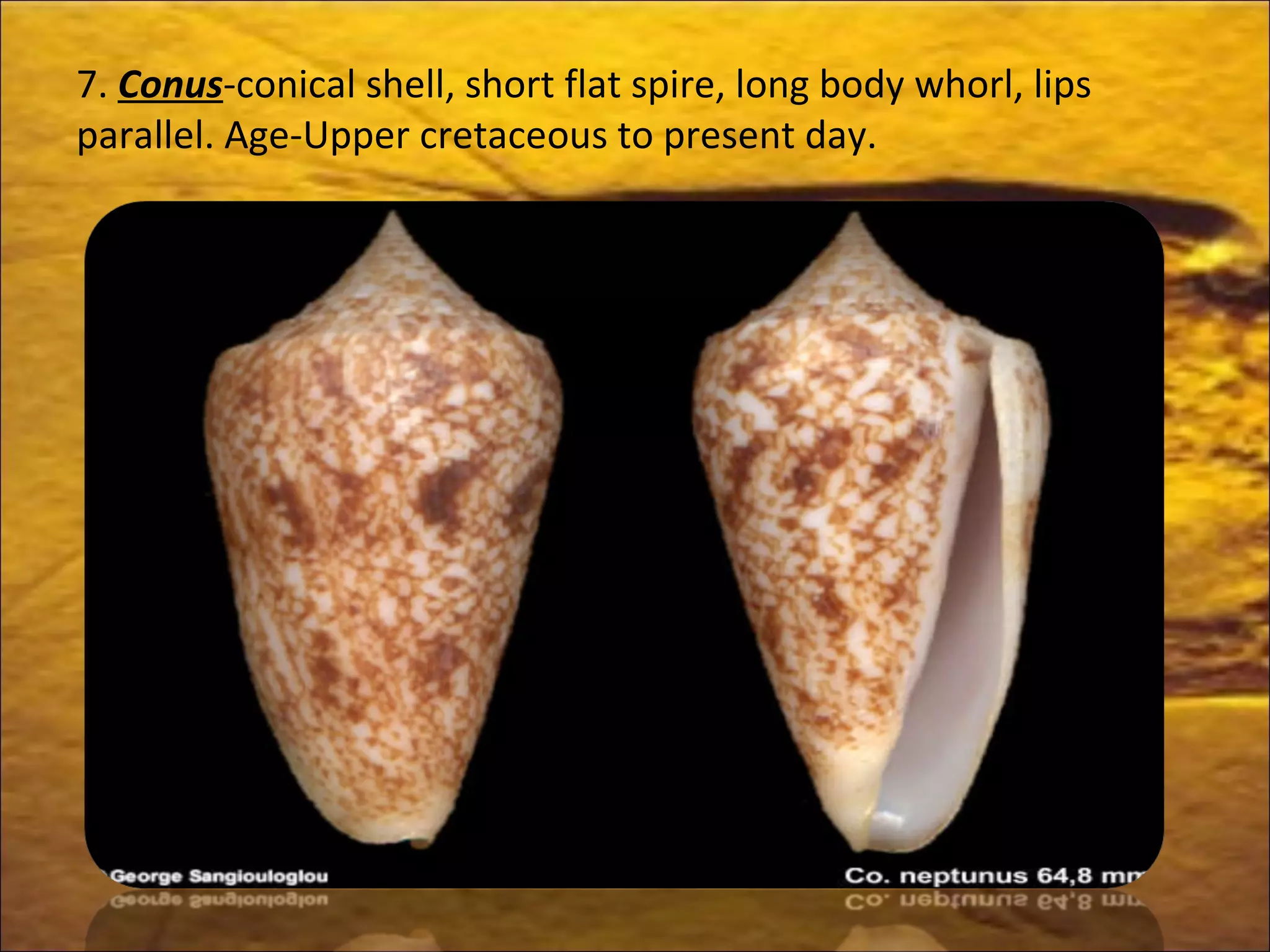
10. Conical-The spire is short, apex is sharp, the body whorl is
large. conical with parallel lips. ex-Conus.
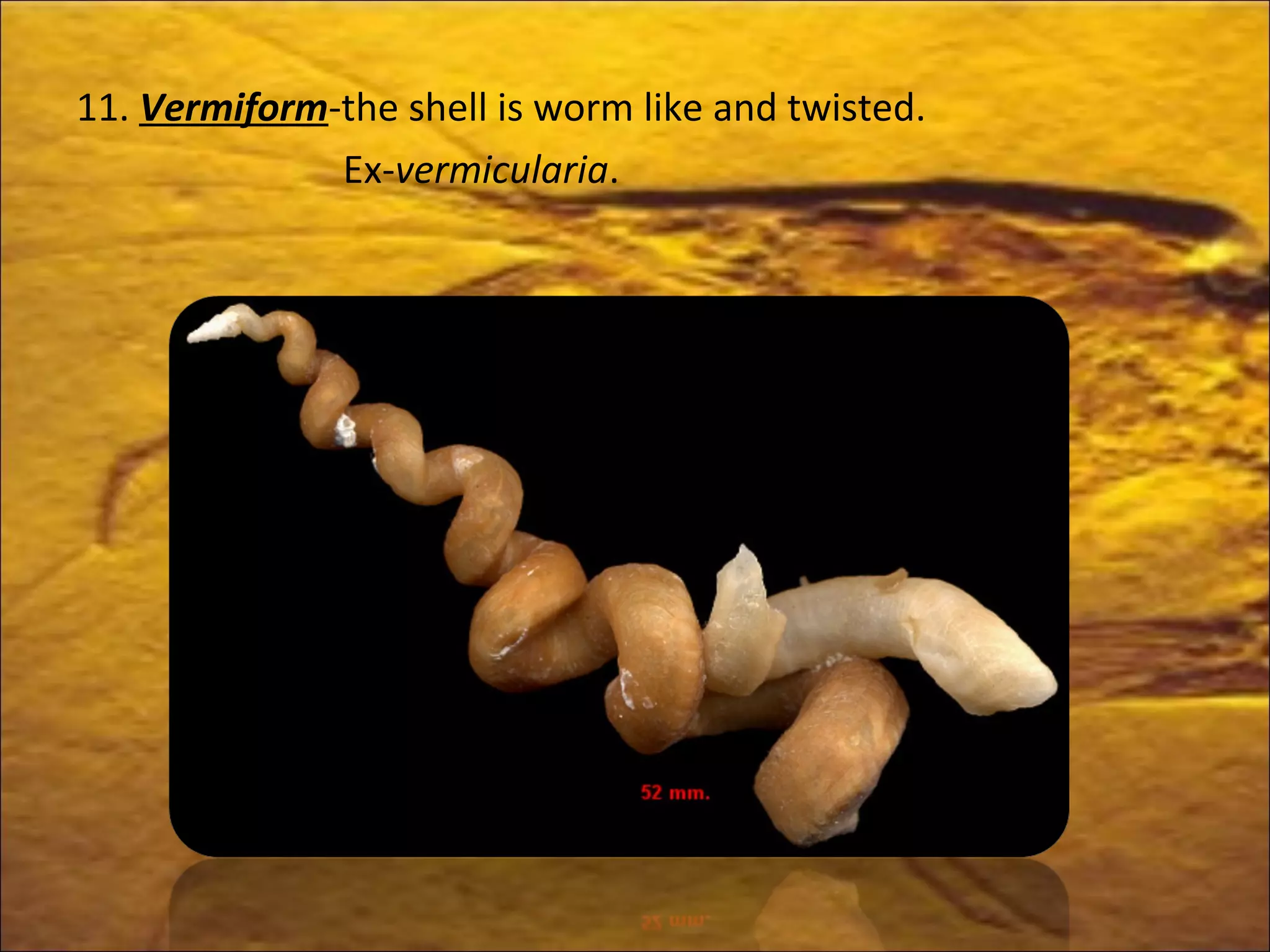
11. Vermiform-the shell is worm like and twisted.
Ex-vermicularia.
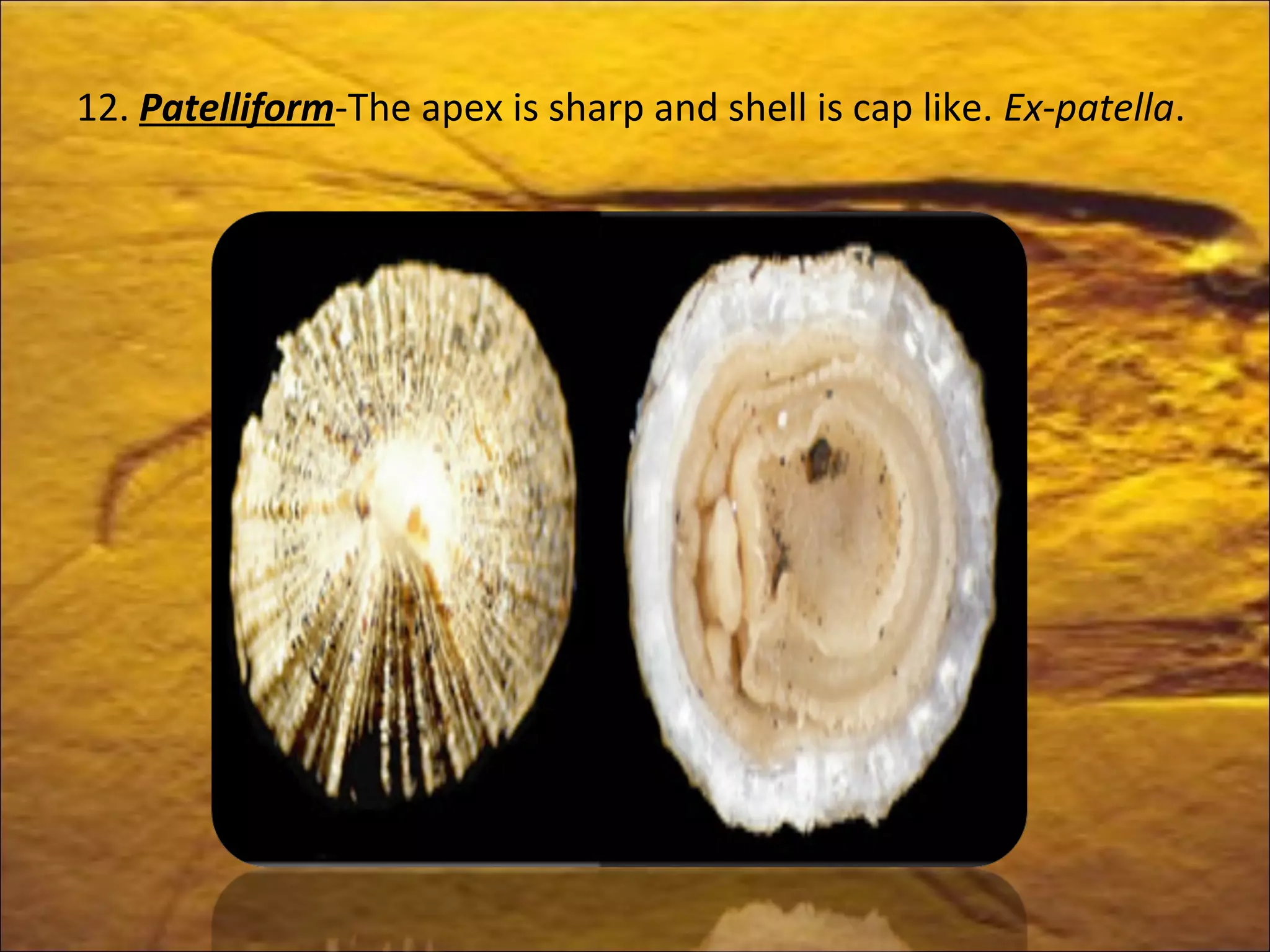
12. Patelliform-The apex is sharp and shell is cap like. Ex-patella.
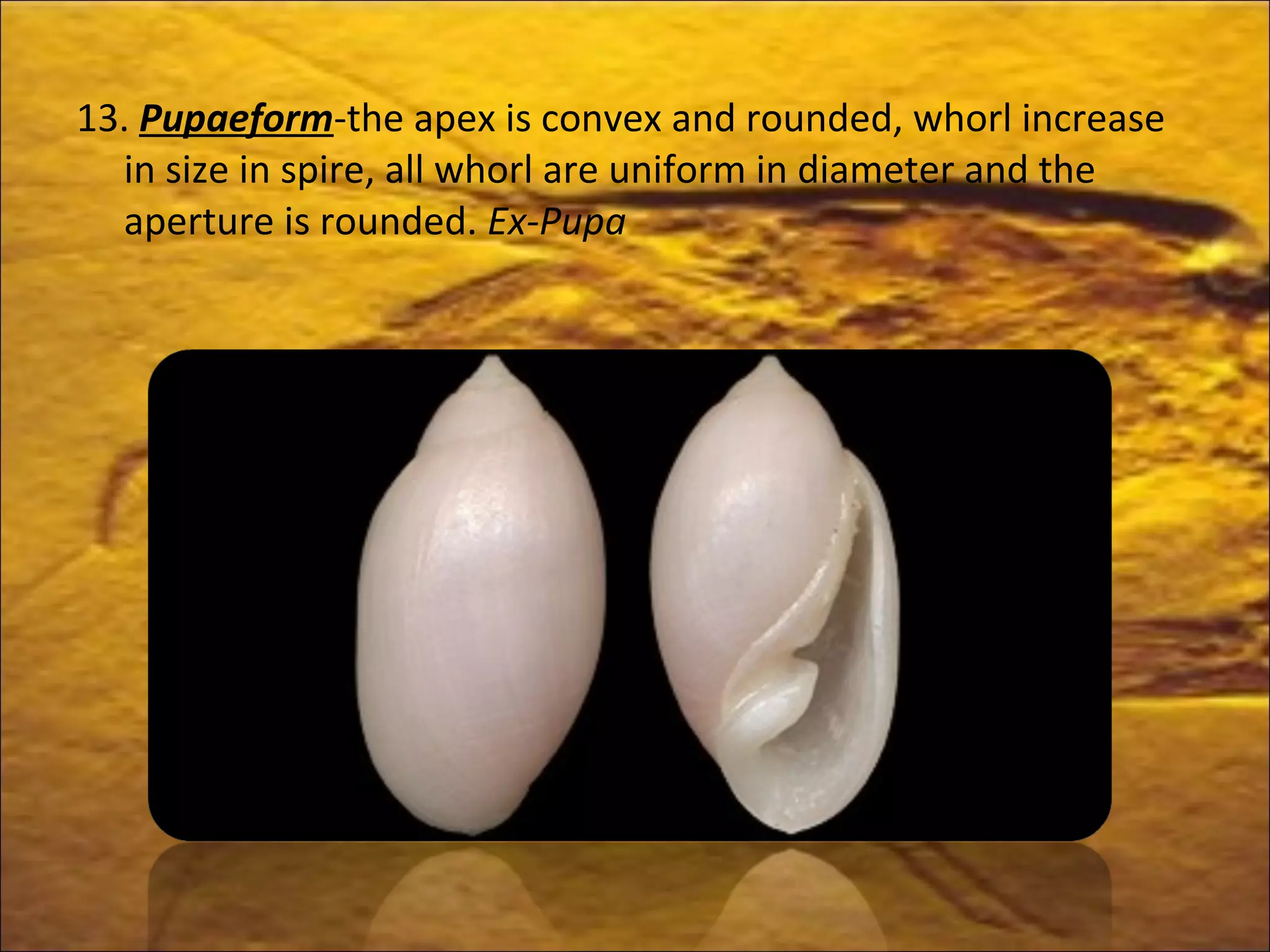
13. Pupaeform-the apex is convex and rounded, whorl increase
in size in spire, all whorl are uniform in diameter and the
aperture is rounded. Ex-Pupa
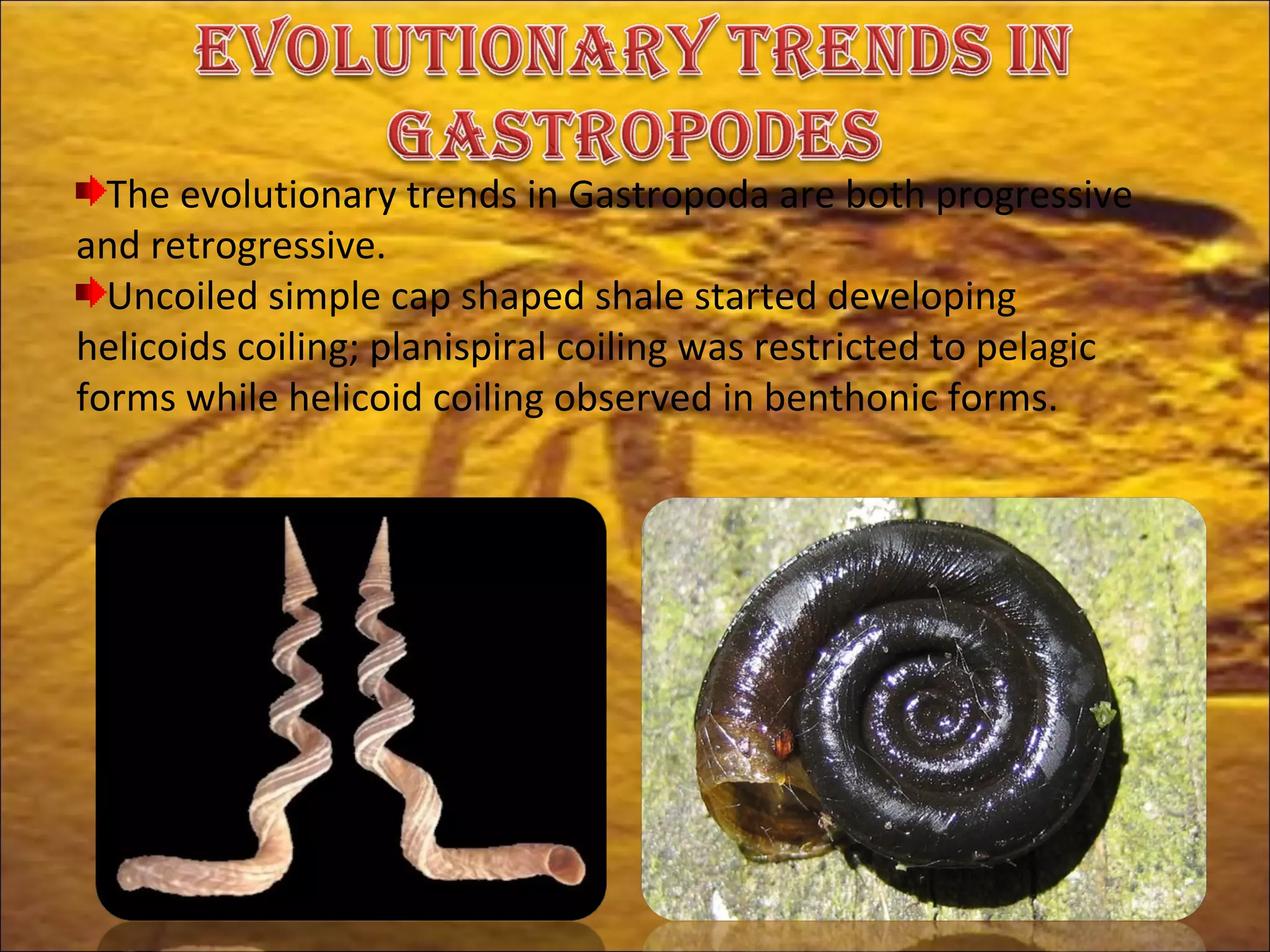
The evolutionary trends in Gastropoda are both progressive
and retrogressive.
Uncoiled simple cap shaped shale started developing
helicoids coiling; planispiral coiling was restricted to pelagic
forms while helicoid coiling observed in benthonic forms.
1. increase in tightness of coiling.
2. increase in evolution of the apex with respect to the last
whorls,
3. development of discoidal shell,
4. increase in the size of the whorls,
5. development of trochiform and biconical shells,
6. development of fusiform shells,
7. modification around the aperture,
8. development of loss of ornamentation and
9. loss of operculum.
 Dextral forms-
1. Trochus-Trochiform Shell, smooth spire, sharp apex.
Age-Triassic to present day.
2. Turbo- Turbinate shell. Age-Jurassic to present day.
3. Turitella-long, turreted shell, long spire, sharp apex, small
body whorl. Age-cretaceous to present day.
5. Natica- shell globular, small and sharp spire, large body whorl,
round aperture umbllicus present. Age- Trias to present day.
6.Cyprea-convolute shell, outer whorl covers all other whorls,
lips crenulated. Age-Eocene to present day.
7. Conus-conical shell, short flat spire, long body whorl, lips
parallel. Age-Upper cretaceous to present day.
8. Voluta- short spire, cylindrical shell, long aperture. Age-
Eocene to present day.
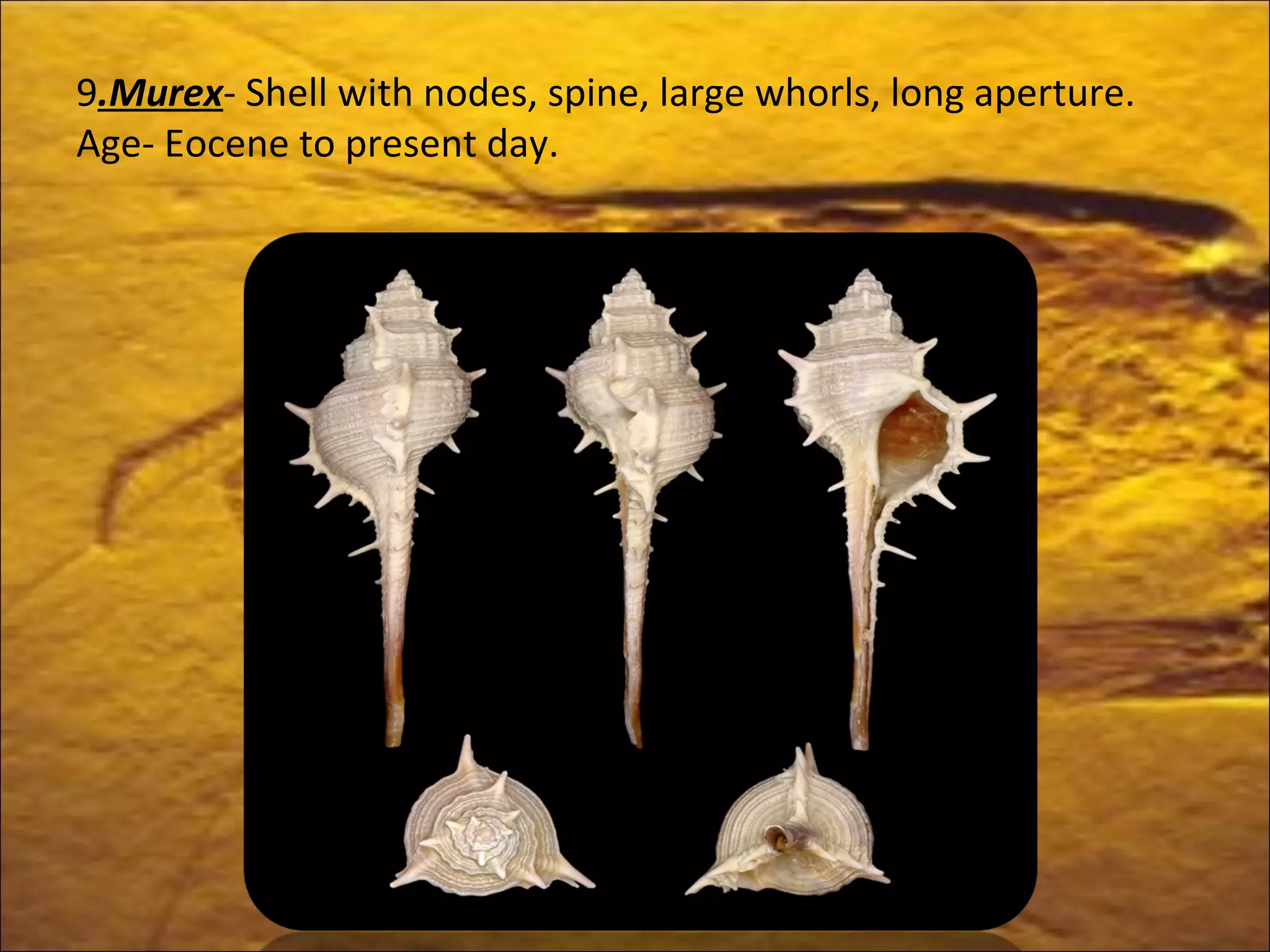
9.Murex- Shell with nodes, spine, large whorls, long aperture.
Age- Eocene to present day.
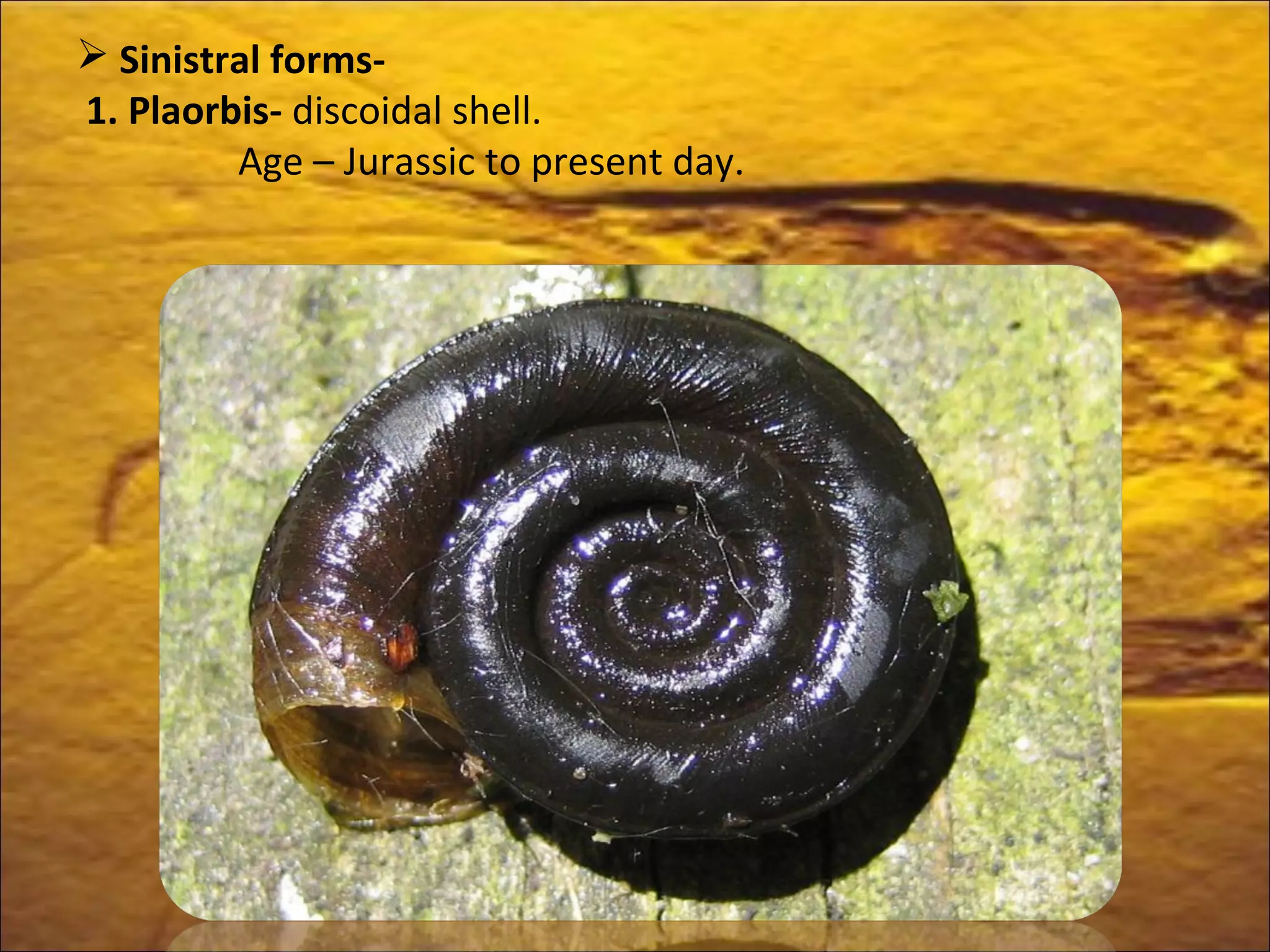
 Sinistral forms-
1. Plaorbis- discoidal shell.
Age – Jurassic to present day.
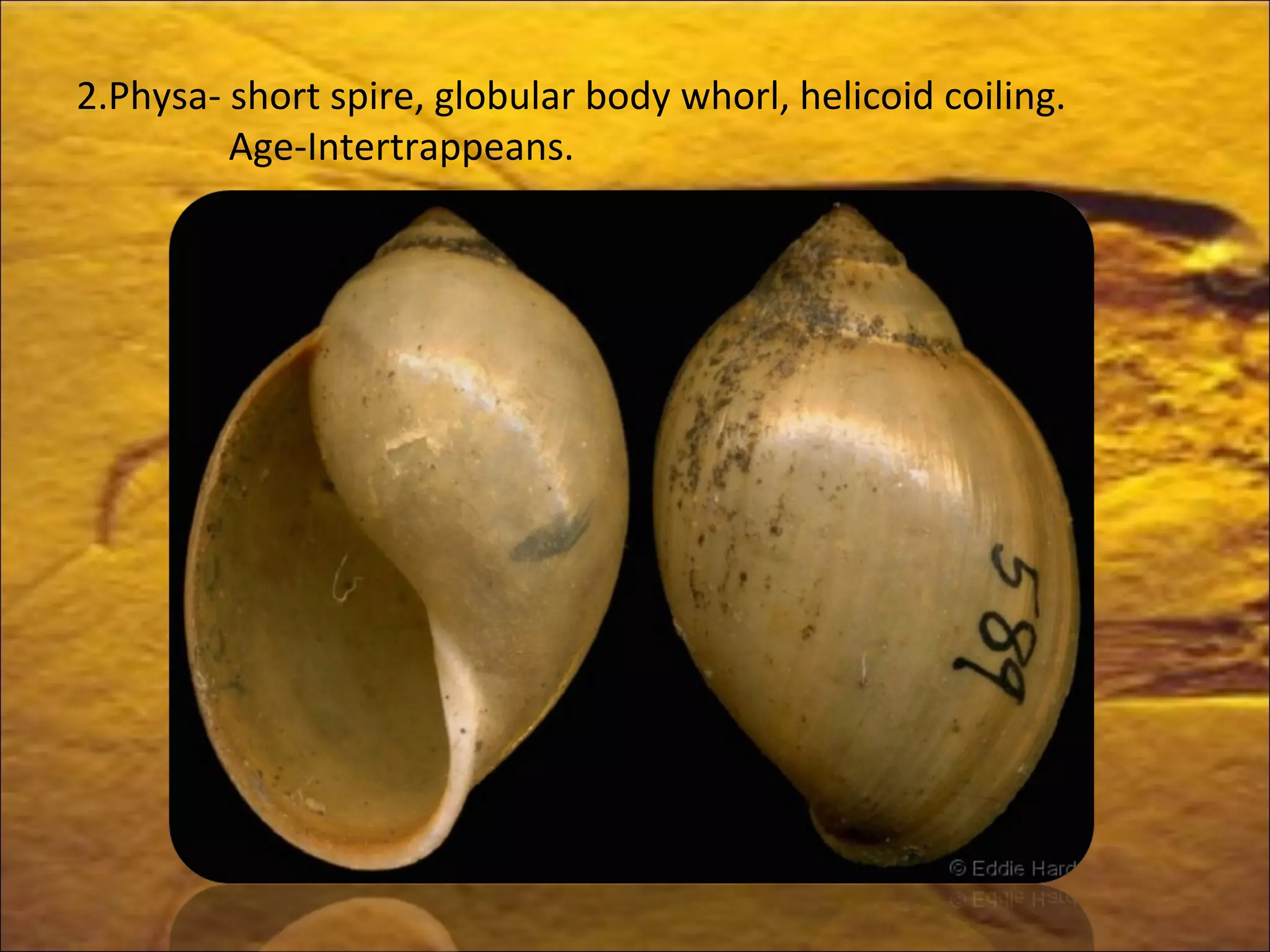
2.Physa- short spire, globular body whorl, helicoid coiling.
Age-Intertrappeans.
• Dr. P.C. Jain
• Dr. M.S. Anantharaman
• H.S. Woods
MORPHOLOGY AND EVOLUTION TREND OF GASTROPOD

MORPHOLOGY AND EVOLUTION TREND OF GASTROPOD

  • 4.
    The Gastropoda [Gr.Gastros=stomach+podas=foot] is one of the main class of phylum Mollusca including snails, whelks, limpects etc. Some of the Gastropos are terrestrial, some are freshwater while all others are marine.
  • 5.
    The phylum Molluscais classified into seven classes- But only three classes are important by the Geological overview. They are- Lamellibranchia, Cephalopoda, Gastropoda
  • 6.
    A Gastropods shellis long, conical tube like structure closed at one end open at the other end. The open anterior end is known as aperture. Morphology of Gastropodes have been divided into two parts Soft parts Hart parts Hard Parts Soft Parts
  • 7.
    Head with tantacles& eyes Mouthcavity Foot Gills or lungs Heart Peristome Redula Nervous system Mantle Oesophagus Stomach Head Tantacles Eyes Foot Gills Heart Redula Nervous System Mantle Peristome Oesophagus Stomach
  • 8.
    1.Spire-All The whorlsexcept the last whorl constitute the spire of the shell. Protoconch- The closed posterior end is known as protoconch. Suture line – The whorls are separated by a slight depression which is known as the suture. Apex- The terminal whorl of the spire forms the apex. Spire Protoconch Apex Suture line
  • 9.
    2.Body whorl- Thelast whorl in which the animal leaves is known as body whorl. Aperture- The open anterior end is known as aperture. Peristome – The margin of the aperture is term as peristome. Inner lip – The inner part of the peristome is known as inner lip. Outer lip – The outer part of the peristome is known as outer lip. Body whorl Aperture Peristome Inner lip Outer lip
  • 10.
    Columella- A centralpillar like axis extending form apex to the base of the shell called as columella. Siphonal canal- The anterior tube is the anterior or siphonal canal . Anal canal- The posterior tube is the posterior or anal canal. Operculum- The aperture of the shell may be covered by a plate known as operculum. Sinus- Columella Siphonal canal Anal canal Sinus-
  • 11.
    Two types ofornamentation present in Gastropoda they are- Spiral and Transversive ornamentation. Spiral-parallel to suture line, includes pitted sculpture and raticulate sculpture . Transversive-It includes axial coastae,smooth sculpture, spine, spiral coastae.
  • 12.
    The forms ofthe shell depend on the – Spire angle, Number the whorl  Shape of the whorl Size of the last whorl
  • 13.
    The following arethe forms of the shell. 1. Discoidal-The shell is planispirally coiled. The whorls are in one plane so that the entire arrangement can be seen. ex- Planorbis.
  • 14.
    2. Trochiform- Thespire is sharp and acute. the whorl in the spire increase in diameter gradually. The body whorl is small and the base of the shell is flate. ex-Trochus.
  • 15.
    3. Turbinate- Thespire is sharp and acute. the whorl in the spire increase in diameter gradually. The base which is convex. ex- Turbo.
  • 16.
    4. Turreted-The spireis long with numerous whorls and acute sharp apex. The body whorl is very small. ex-Turritella.
  • 17.
    5. Cylindrical-After gradualincrease in the diameter of the spire, the diameter remains containt or it may reduce near the base. ex-Voluta.
  • 18.
    6. Globular-The spireis small and sharp. The body whorl is large and round with round aperture. ex-Natica.
  • 19.
    7. Fusiform-The shellis spindle-shaped. The body whorl is thick in the middle and tapering near the bottom and the top. ex- Fusinus.
  • 20.
    8. Convolute-The lastwhorl of the shell covers all the previous whorls. The aperture, with crenulated outer lips, is a long as the shell. ex-Cypraea.
  • 21.
    9.Auriform-The shell hasvery short spire and the aperture is very large. Ex-Haliotis.
  • 22.
    10. Conical-The spireis short, apex is sharp, the body whorl is large. conical with parallel lips. ex-Conus.
  • 23.
    11. Vermiform-the shellis worm like and twisted. Ex-vermicularia.
  • 24.
    12. Patelliform-The apexis sharp and shell is cap like. Ex-patella.
  • 25.
    13. Pupaeform-the apexis convex and rounded, whorl increase in size in spire, all whorl are uniform in diameter and the aperture is rounded. Ex-Pupa
  • 26.
    The evolutionary trendsin Gastropoda are both progressive and retrogressive. Uncoiled simple cap shaped shale started developing helicoids coiling; planispiral coiling was restricted to pelagic forms while helicoid coiling observed in benthonic forms.
  • 27.
    1. increase intightness of coiling. 2. increase in evolution of the apex with respect to the last whorls, 3. development of discoidal shell, 4. increase in the size of the whorls, 5. development of trochiform and biconical shells, 6. development of fusiform shells, 7. modification around the aperture, 8. development of loss of ornamentation and 9. loss of operculum.
  • 28.
     Dextral forms- 1.Trochus-Trochiform Shell, smooth spire, sharp apex. Age-Triassic to present day.
  • 29.
    2. Turbo- Turbinateshell. Age-Jurassic to present day.
  • 30.
    3. Turitella-long, turretedshell, long spire, sharp apex, small body whorl. Age-cretaceous to present day.
  • 31.
    5. Natica- shellglobular, small and sharp spire, large body whorl, round aperture umbllicus present. Age- Trias to present day.
  • 32.
    6.Cyprea-convolute shell, outerwhorl covers all other whorls, lips crenulated. Age-Eocene to present day.
  • 33.
    7. Conus-conical shell,short flat spire, long body whorl, lips parallel. Age-Upper cretaceous to present day.
  • 34.
    8. Voluta- shortspire, cylindrical shell, long aperture. Age- Eocene to present day.
  • 35.
    9.Murex- Shell withnodes, spine, large whorls, long aperture. Age- Eocene to present day.
  • 36.
     Sinistral forms- 1.Plaorbis- discoidal shell. Age – Jurassic to present day.
  • 37.
    2.Physa- short spire,globular body whorl, helicoid coiling. Age-Intertrappeans.
  • 38.
    • Dr. P.C.Jain • Dr. M.S. Anantharaman • H.S. Woods

Editor's Notes

  • #2 Govt Holkar Science College Indore