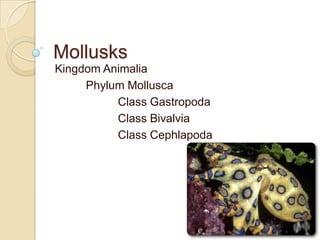
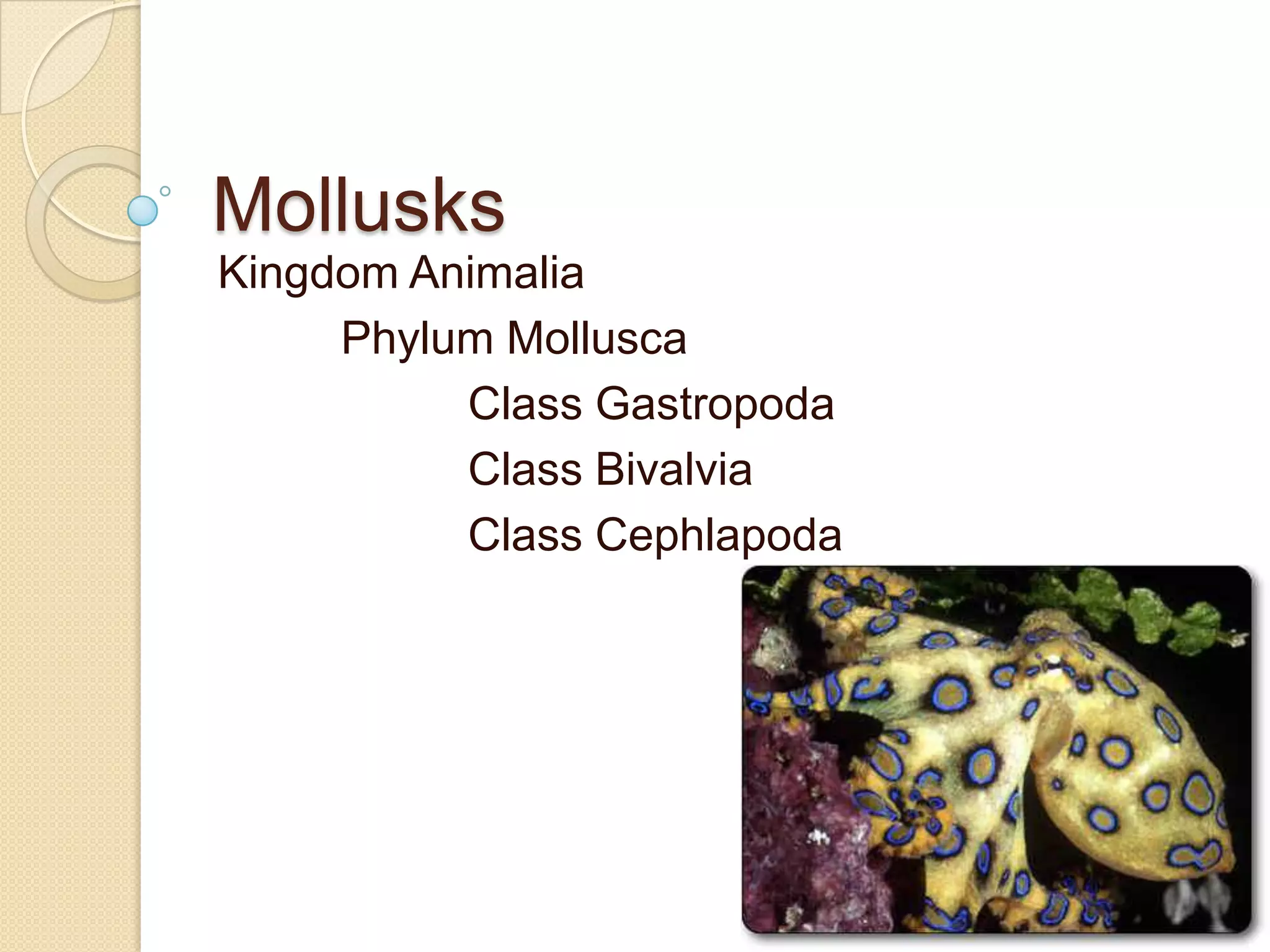
MollusksKingdom AnimaliaPhylum Mollusca	Class Gastropoda	Class Bivalvia	Class Cephlapoda
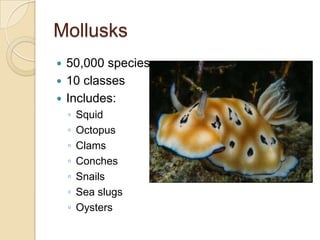
Mollusks50,000 species10 classesIncludes:SquidOctopusClamsConchesSnailsSea slugsOysters
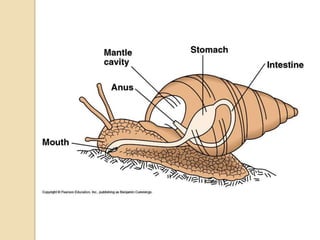
Basic Anatomical Structures:a) Mantle – muscular bag that surrounds the gills and most organs and is used to circulate water1. some use it to circulate water or jet propulsion2. secretes calcium carbonate shell
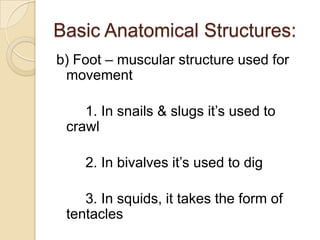
Basic Anatomical Structures:b) Foot – muscular structure used for movement		1. In snails & slugs it’s used to crawl	2. In bivalves it’s used to dig 		3. In squids, it takes the form of tentacles
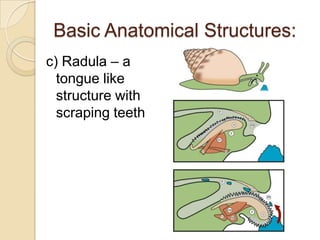
Basic Anatomical Structures:c) Radula – a tongue like structure with scraping teeth
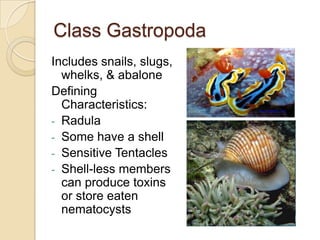
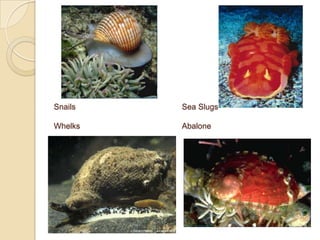
Class GastropodaIncludes snails, slugs, whelks, & abaloneDefining Characteristics:Radula
Some have a shell
Sensitive Tentacles
Shell-less members can produce toxins or store eaten nematocysts
Snails				Sea SlugsWhelks				Abalone
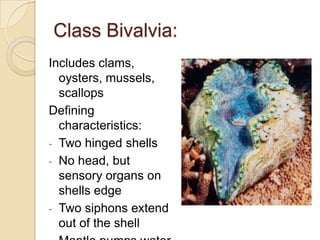
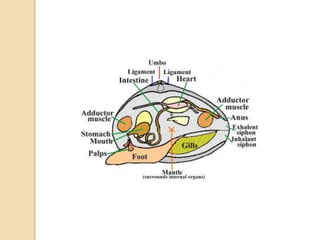
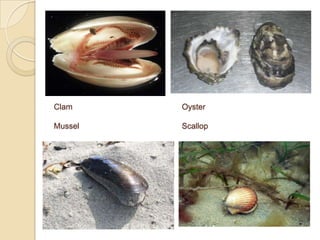
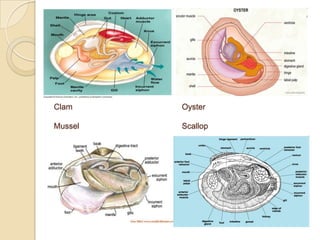
Class Bivalvia:Includes clams, oysters, mussels, scallopsDefining characteristics:Two hinged shells
No head, but sensory organs on shells edge
Two siphons extend out of the shell
Mantle pumps water
Clam				OysterMussel				Scallop
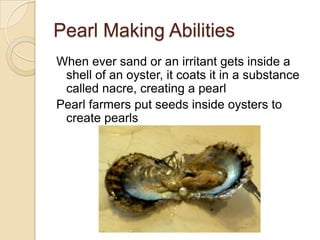
Pearl Making AbilitiesWhen ever sand or an irritant gets inside a shell of an oyster, it coats it in a substance called nacre, creating a pearlPearl farmers put seeds inside oysters to create pearls
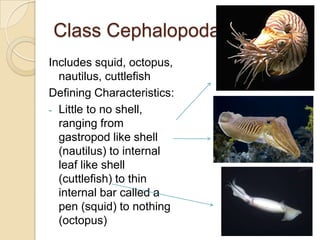
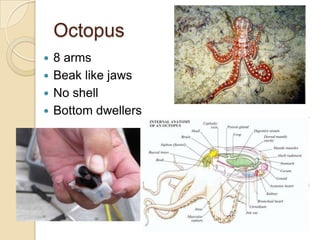
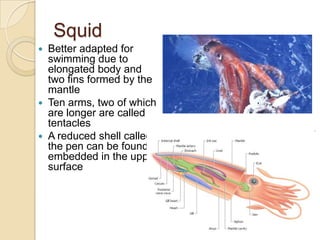
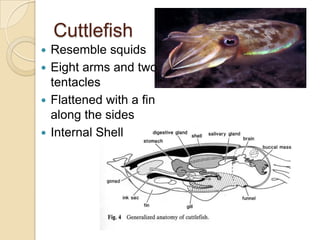
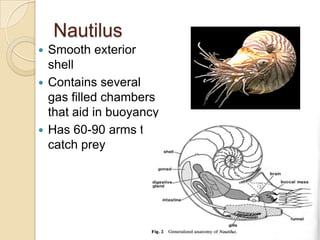
Class CephalopodaIncludes squid, octopus, nautilus, cuttlefishDefining Characteristics:Little to no shell, ranging from gastropod like shell (nautilus) to internal leaf like shell (cuttlefish) to thin internal bar called a pen (squid) to nothing (octopus)Class CephalopodaDefining Characteristics:Specialized foot called a siphon for jet propulsion
Ink sac

12. Phylum Mollusca Notes