Phylum: MolluscaPhylum: Mollusca
Class: GastropodaClass: Gastropoda
By Mr. “winter is coming” ChapmanBy Mr. “winter is coming” Chapman
Class: GastropodaClass: Gastropoda
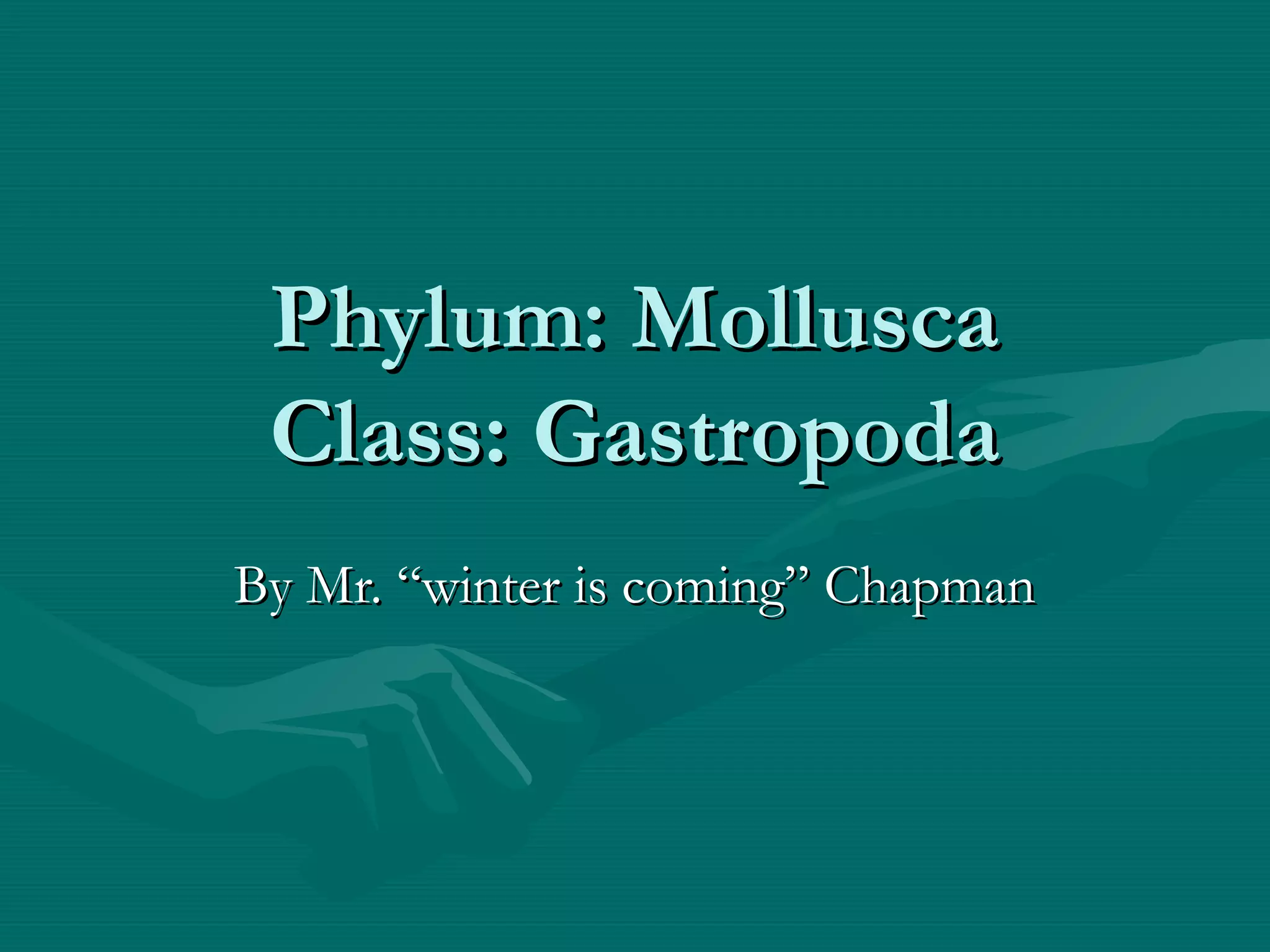
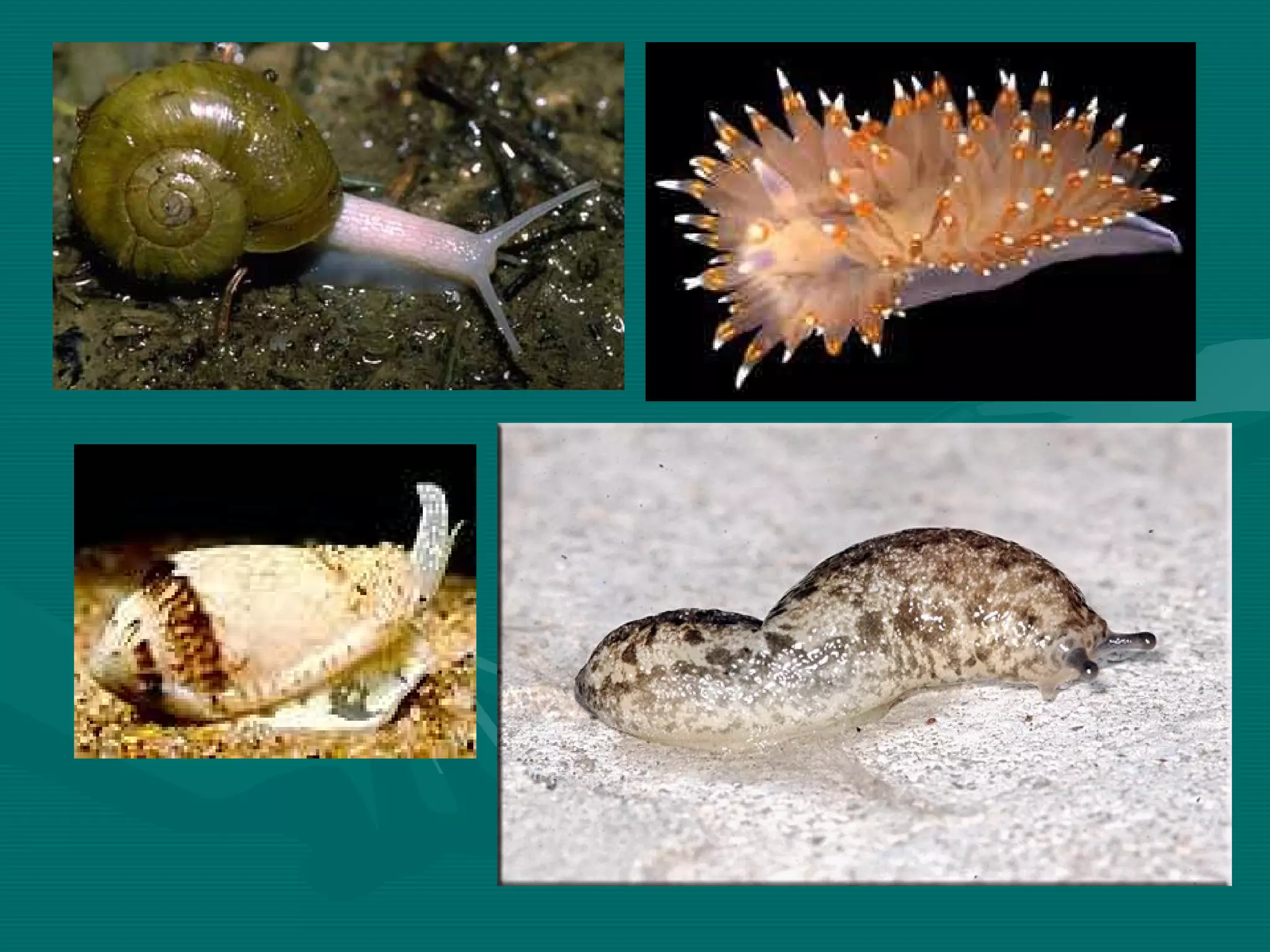
• Belly-foot mollusksBelly-foot mollusks
• Snails and SlugsSnails and Slugs
• 35,000 species35,000 species
• Is the largest and mostIs the largest and most
varied classvaried class
• Biggest impact toBiggest impact to
humans?humans?
• Intermediate host toIntermediate host to
trematodestrematodes
Most snails and other gastropods with a shell have a structure
called an operculum situated just behind the shell atop the
visceral mass. The operculum is the shape of the aperture.
When a snail pulls into its shell, the operculum closes the
aperture, completely protecting the snail’s soft body.
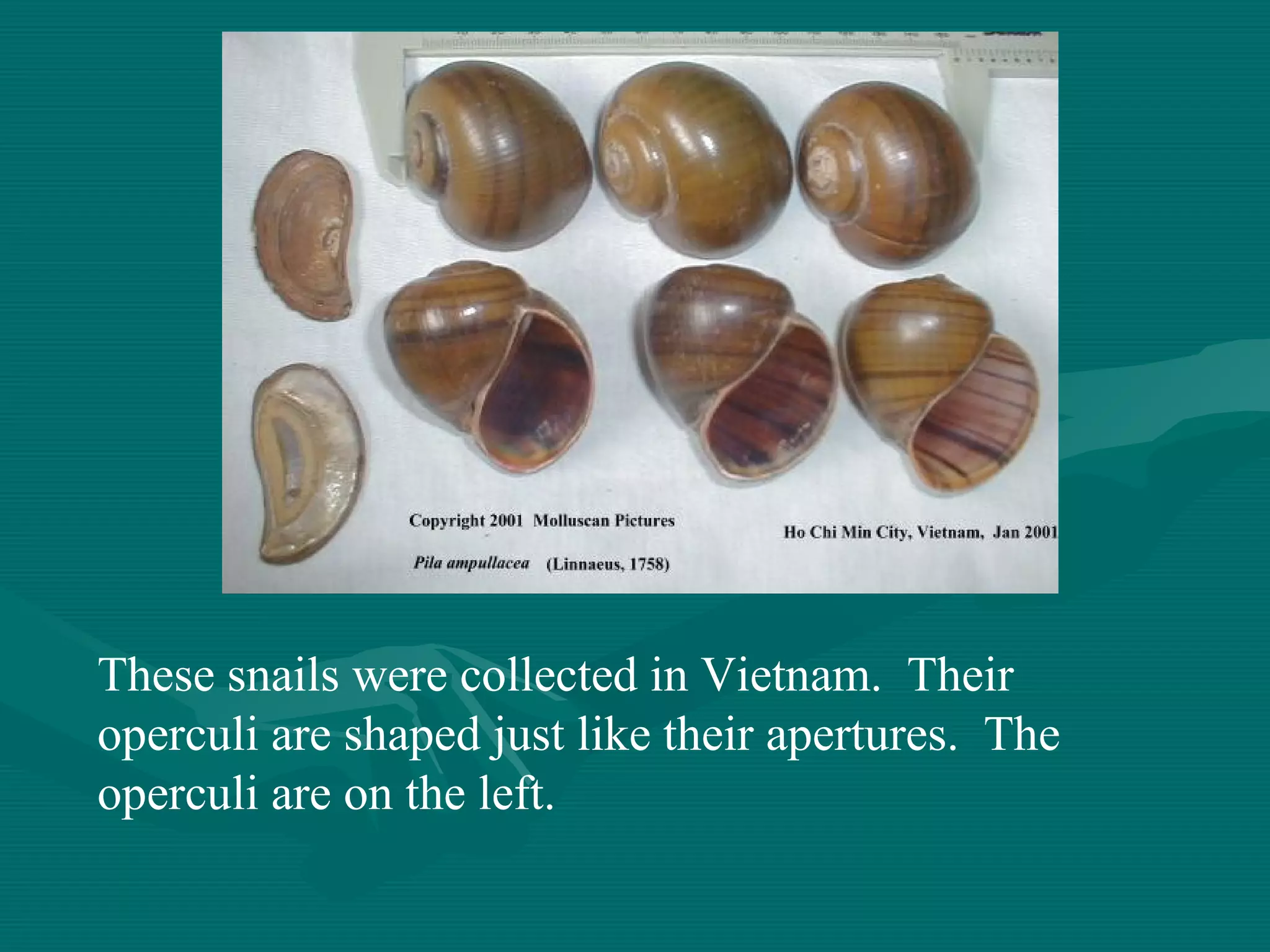
These snails were collected in Vietnam. Their
operculi are shaped just like their apertures. The
operculi are on the left.
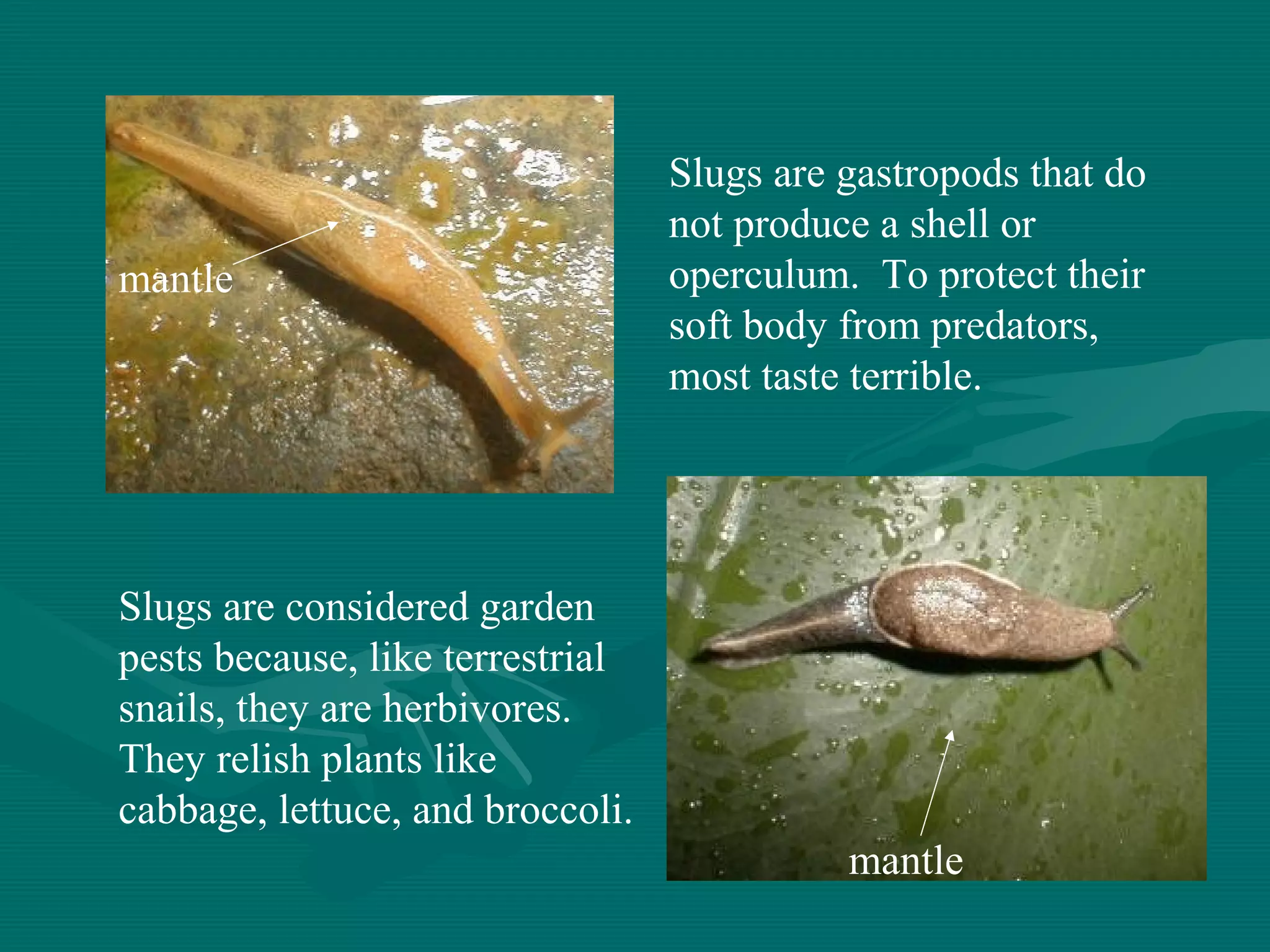
mantle
mantle
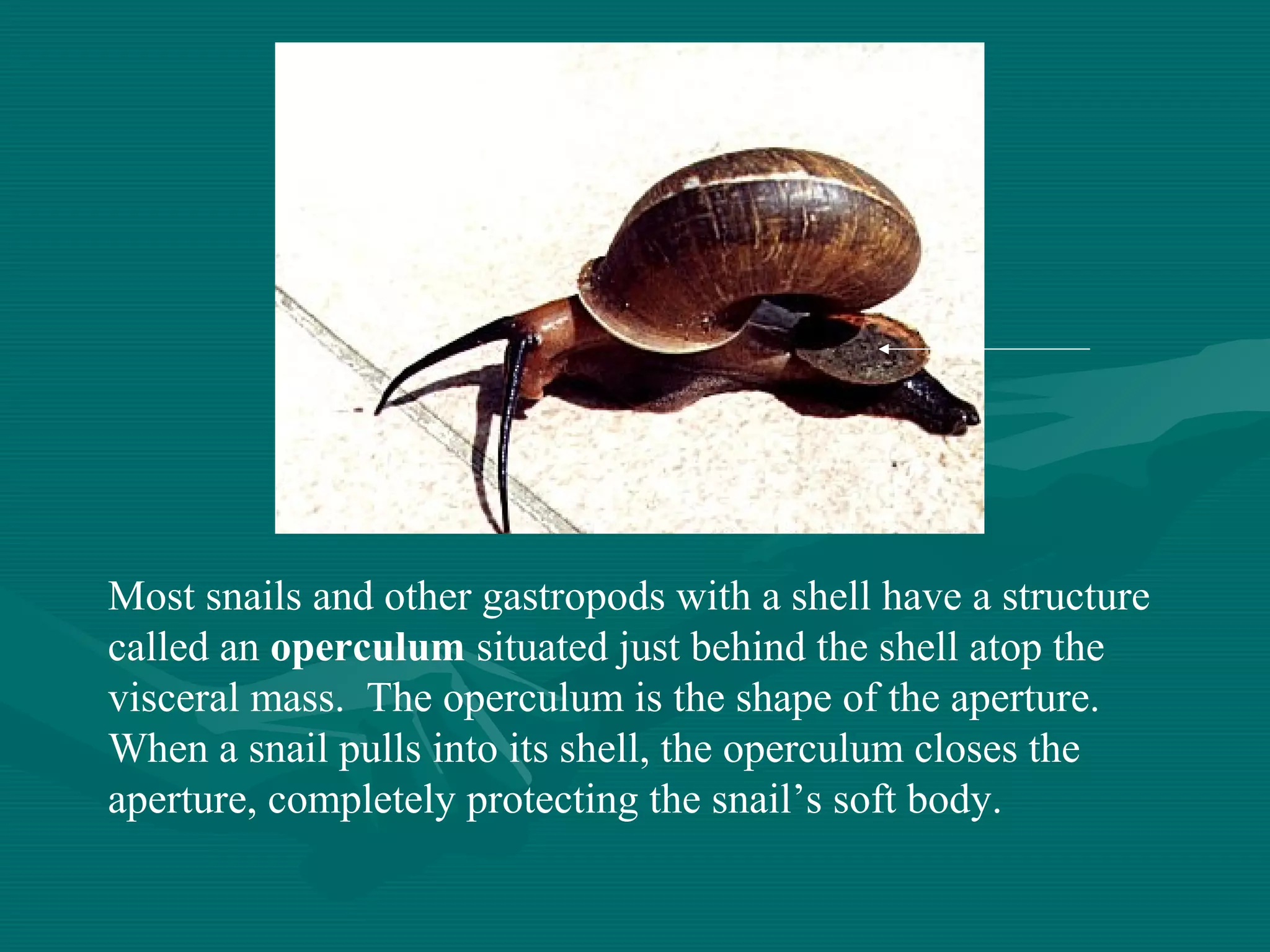
Slugs are gastropods that do
not produce a shell or
operculum. To protect their
soft body from predators,
most taste terrible.
Slugs are considered garden
pests because, like terrestrial
snails, they are herbivores.
They relish plants like
cabbage, lettuce, and broccoli.
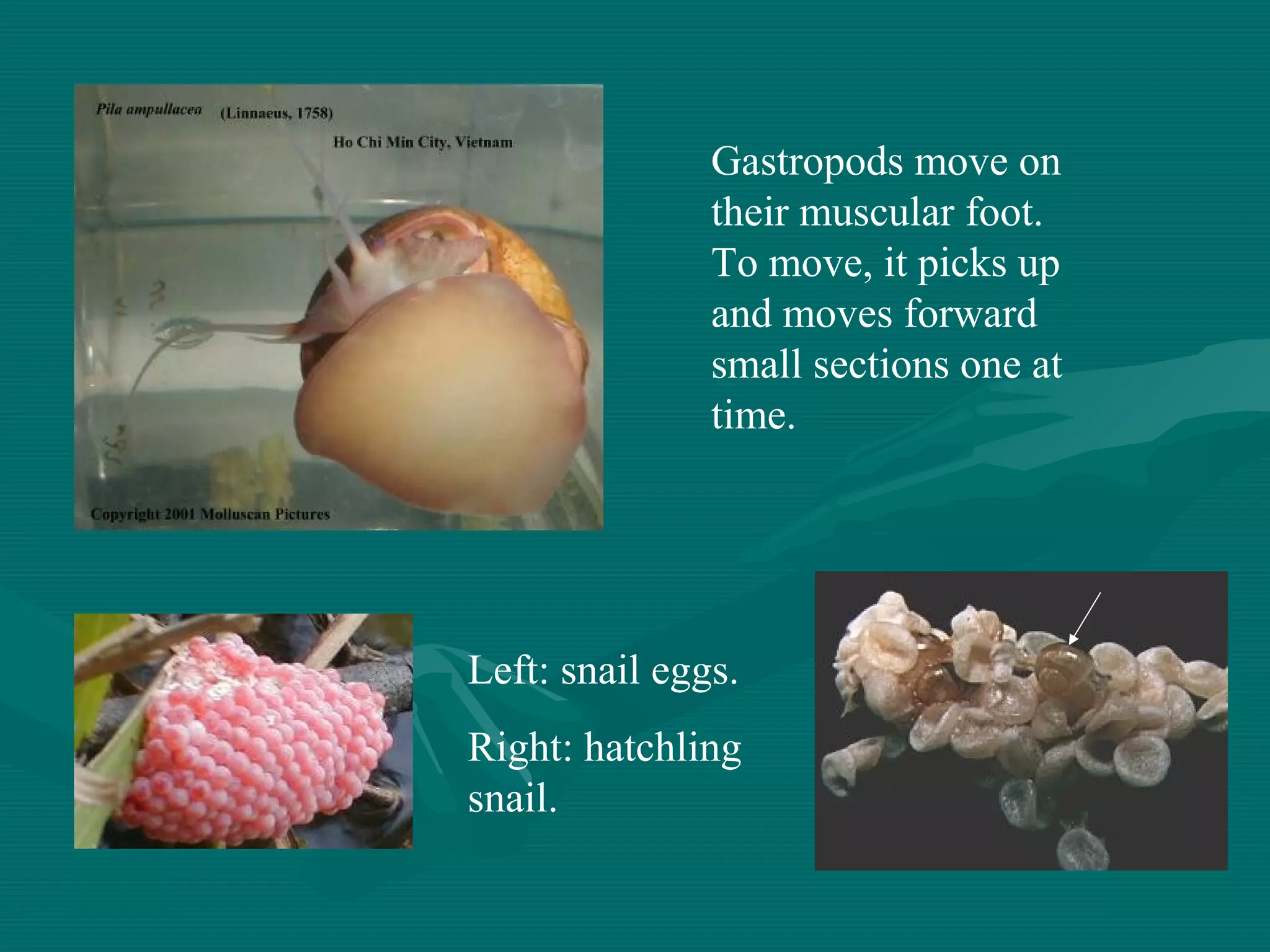
Gastropods move on
their muscular foot.
To move, it picks up
and moves forward
small sections one at
time.
Left: snail eggs.
Right: hatchling
snail.
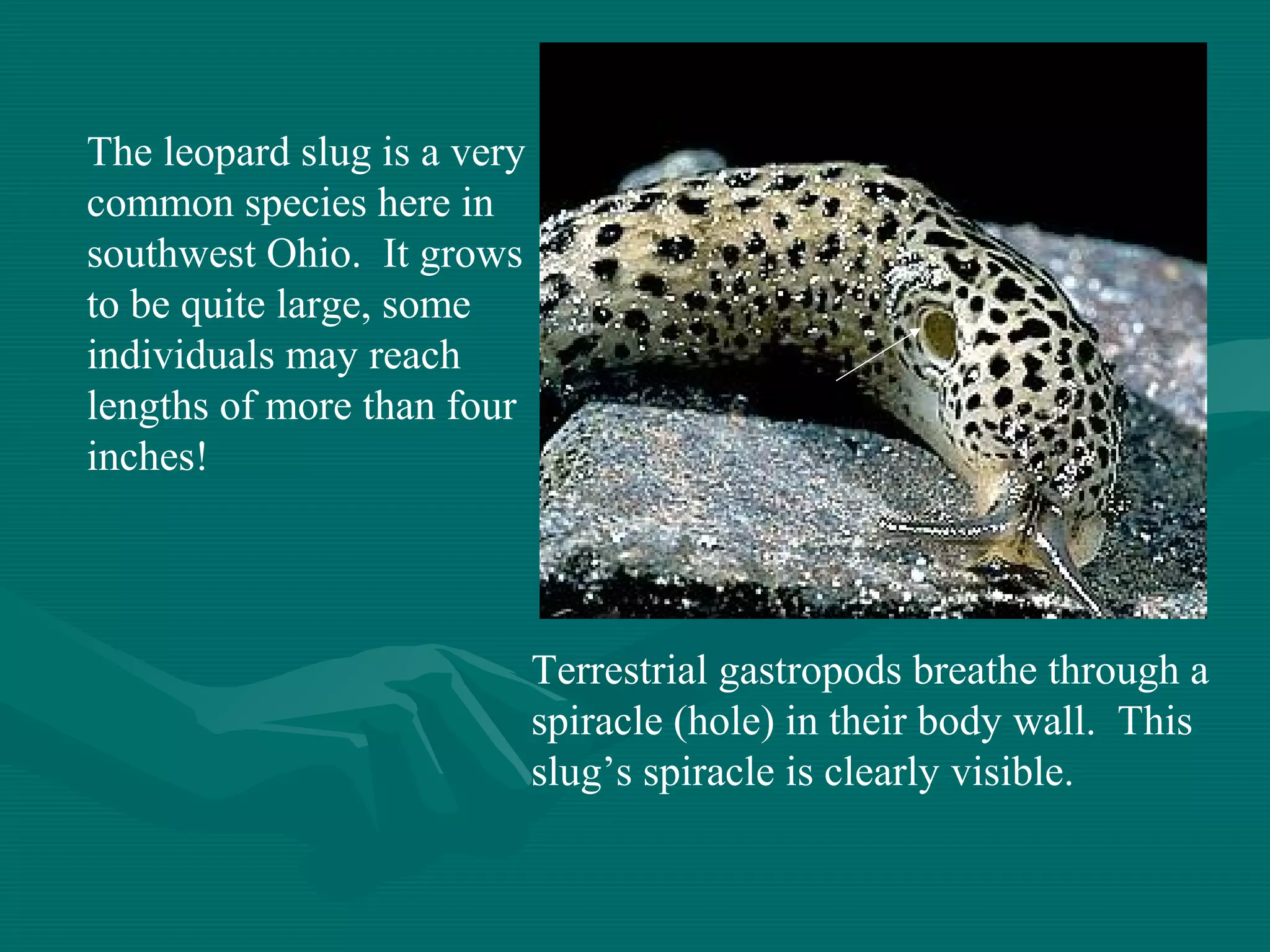
The leopard slug is a very
common species here in
southwest Ohio. It grows
to be quite large, some
individuals may reach
lengths of more than four
inches!
Terrestrial gastropods breathe through a
spiracle (hole) in their body wall. This
slug’s spiracle is clearly visible.
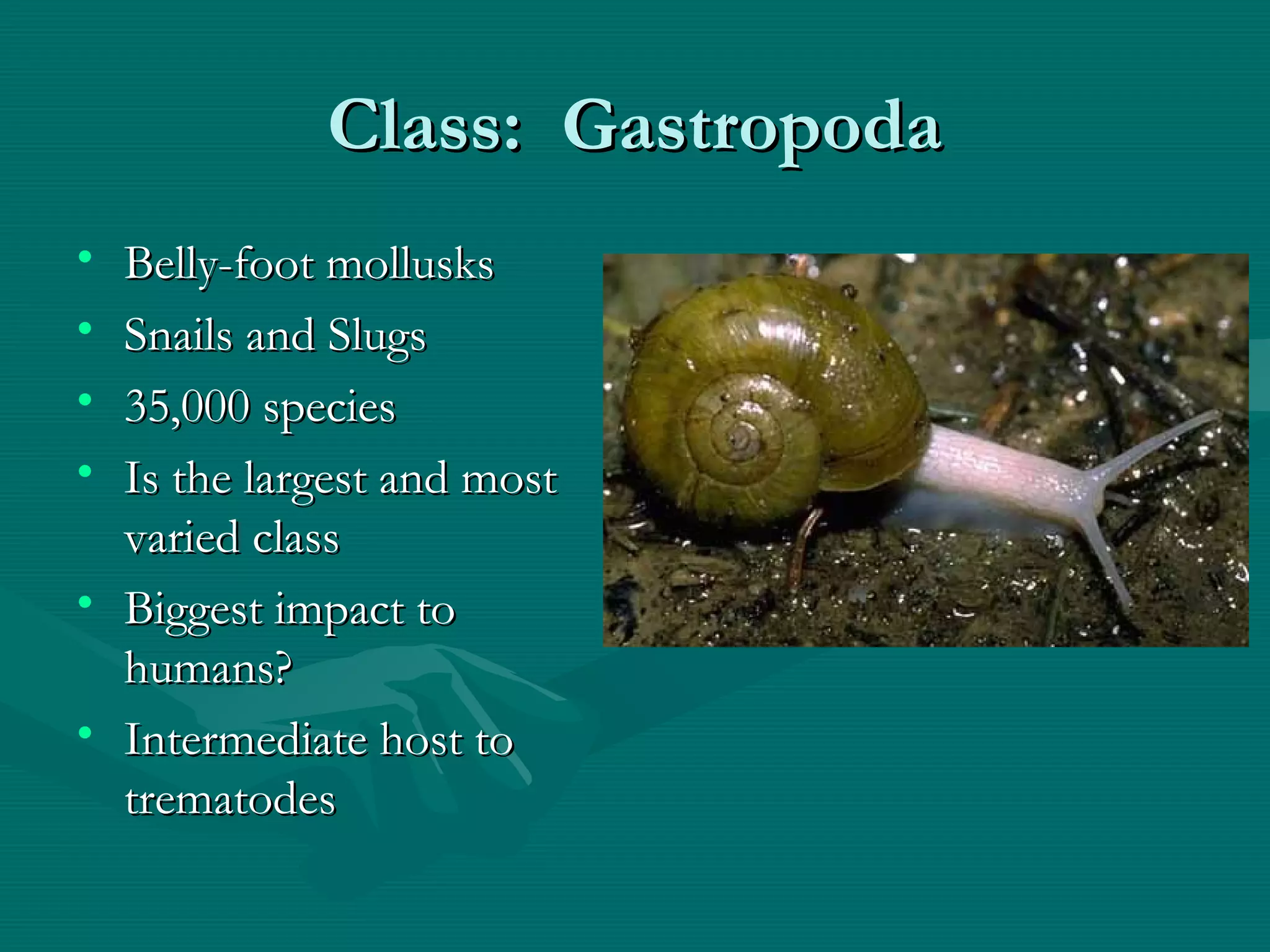
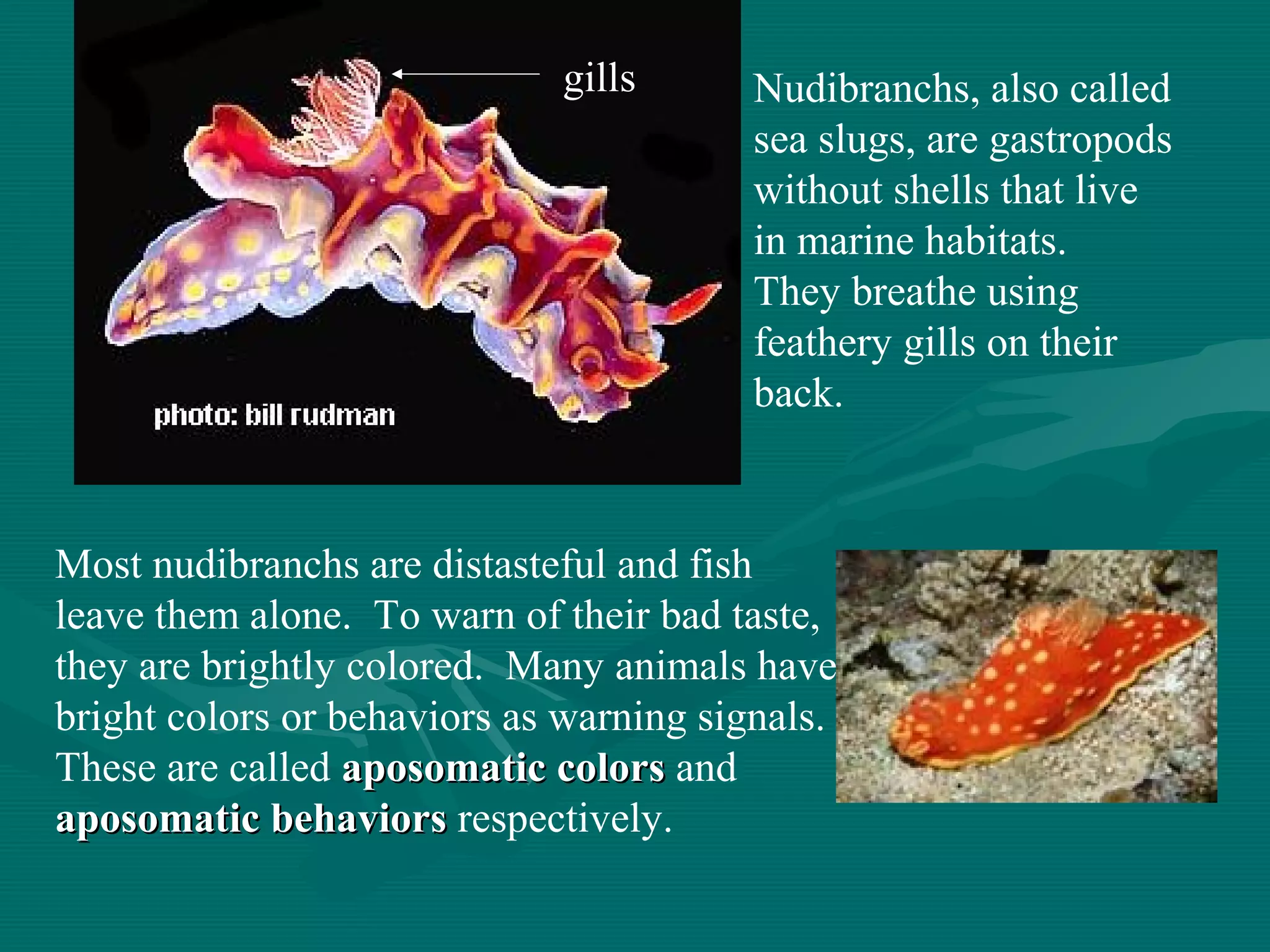
Nudibranchs, also called
sea slugs, are gastropods
without shells that live
in marine habitats.
They breathe using
feathery gills on their
back.
Most nudibranchs are distasteful and fish
leave them alone. To warn of their bad taste,
they are brightly colored. Many animals have
bright colors or behaviors as warning signals.
These are called aposomaticaposomatic colorscolors and
aposomaticaposomatic behaviorsbehaviors respectively.
gills
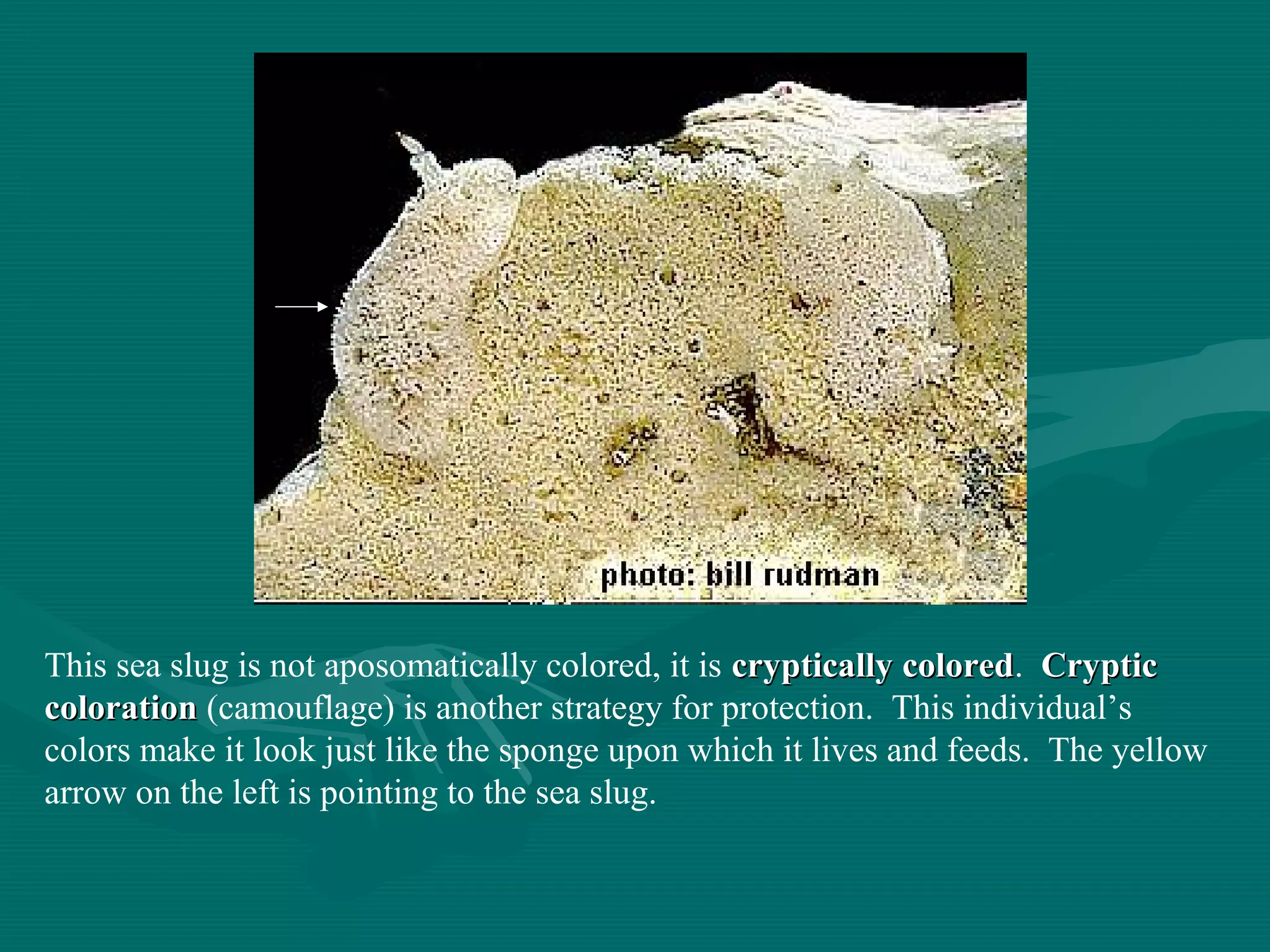
This sea slug is not aposomatically colored, it is cryptically coloredcryptically colored. CrypticCryptic
colorationcoloration (camouflage) is another strategy for protection. This individual’s
colors make it look just like the sponge upon which it lives and feeds. The yellow
arrow on the left is pointing to the sea slug.
THE
END

Class Gastropoda Notes

  • 1.
    Phylum: MolluscaPhylum: Mollusca Class:GastropodaClass: Gastropoda By Mr. “winter is coming” ChapmanBy Mr. “winter is coming” Chapman
  • 2.
    Class: GastropodaClass: Gastropoda •Belly-foot mollusksBelly-foot mollusks • Snails and SlugsSnails and Slugs • 35,000 species35,000 species • Is the largest and mostIs the largest and most varied classvaried class • Biggest impact toBiggest impact to humans?humans? • Intermediate host toIntermediate host to trematodestrematodes
  • 4.
    Most snails andother gastropods with a shell have a structure called an operculum situated just behind the shell atop the visceral mass. The operculum is the shape of the aperture. When a snail pulls into its shell, the operculum closes the aperture, completely protecting the snail’s soft body.
  • 5.
    These snails werecollected in Vietnam. Their operculi are shaped just like their apertures. The operculi are on the left.
  • 6.
    mantle mantle Slugs are gastropodsthat do not produce a shell or operculum. To protect their soft body from predators, most taste terrible. Slugs are considered garden pests because, like terrestrial snails, they are herbivores. They relish plants like cabbage, lettuce, and broccoli.
  • 7.
    Gastropods move on theirmuscular foot. To move, it picks up and moves forward small sections one at time. Left: snail eggs. Right: hatchling snail.
  • 8.
    The leopard slugis a very common species here in southwest Ohio. It grows to be quite large, some individuals may reach lengths of more than four inches! Terrestrial gastropods breathe through a spiracle (hole) in their body wall. This slug’s spiracle is clearly visible.
  • 9.
    Nudibranchs, also called seaslugs, are gastropods without shells that live in marine habitats. They breathe using feathery gills on their back. Most nudibranchs are distasteful and fish leave them alone. To warn of their bad taste, they are brightly colored. Many animals have bright colors or behaviors as warning signals. These are called aposomaticaposomatic colorscolors and aposomaticaposomatic behaviorsbehaviors respectively. gills
  • 10.
    This sea slugis not aposomatically colored, it is cryptically coloredcryptically colored. CrypticCryptic colorationcoloration (camouflage) is another strategy for protection. This individual’s colors make it look just like the sponge upon which it lives and feeds. The yellow arrow on the left is pointing to the sea slug.
  • 11.