CHOREA AND BALLISMUS
Dr PS Deb
Director Neurology
GNRC Hospitals Assam
Guwahati
CHOREA
 State of excessive, spontaneous movement,
irregularly timed, non repetitive, randomly
distributed and abnormal in character.
 It may very in severity from restlessness with mild
intermittent exaggeration of gesture and
expression, fidgeting movement of hands unstable,
movement of hands.
 Unstable gait to continuous flow of disabling violent
movement.
 Random – distribution, time, and duration
CHOREA
 Associated with
 Hypotonia – Reduced long latency reflex
 Motor impersistence → inability to sustain vol.
movement
 Pronator sign
 Milkmaids sign
 Trombone tongue
 Hung-up reflex – Prolonged contraction of stretched
muscles by late sensory provoked choric movement.
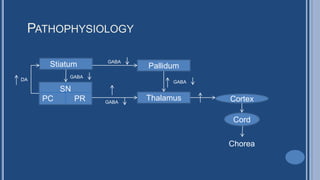
PATHOPHYSIOLOGY
Stiatum Pallidum
ThalamusPC PR
SN
Cortex
Cord
Chorea
DA
GABA
GABA
GABA
GABA
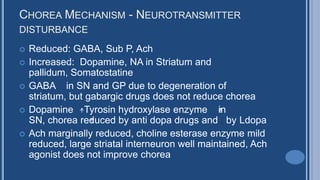
CHOREA MECHANISM - NEUROTRANSMITTER
DISTURBANCE
 Reduced: GABA, Sub P, Ach
 Increased: Dopamine, NA in Striatum and pallidum,
Somatostatine
 GABA in SN and GP due to degeneration of striatum,
but gabargic drugs does not reduce chorea
 Dopamine Tyrosin hydroxylase enzyme in SN,
chorea reduced by anti dopa drugs and by Ldopa
 Ach marginally reduced, choline esterase enzyme mild
reduced, large striatal interneuron well maintained, Ach
agonist does not improve chorea
CHOREA PATHOGENESIS
 PET -
 Histochemistry
 Drug effect
 Surgical
 Chorea reduced by Pallidotomy, Nigrotomy,
Thalamotomy
 Pathological
 Animal Model
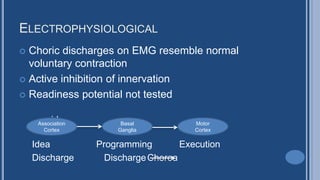
ELECTROPHYSIOLOGICAL
 Choric discharges on EMG resemble normal
voluntary contraction
 Active inhibition of innervation
 Readiness potential not tested
id
Idea Programming Execution
Discharge DischargeChorea
Association
Cortex
Basal
Ganglia
Motor
Cortex
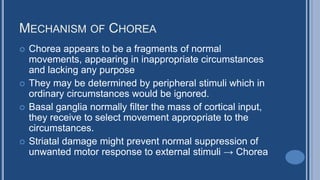
MECHANISM OF CHOREA
 Chorea appears to be a fragments of normal
movements, appearing in inappropriate circumstances
and lacking any purpose
 They may be determined by peripheral stimuli which in
ordinary circumstances would be ignored.
 Basal ganglia normally filter the mass of cortical input,
they receive to select movement appropriate to the
circumstances.
 Striatal damage might prevent normal suppression of
unwanted motor response to external stimuli → Chorea
CAUSE OF CHOREA AND CHOREO-ATHETOSIS
1. Trauma
1. Concussion
2. Neoplasm
1. Primary brain tumor
2. Metastasis
3. CNS leukemia
3. Cerebrovascular disease
1. Epidural subdural hemorrhage
2. Hemorrhage
3. Lacunar infarct
4. AVM
5. Polycythemia
6. Migraine
4. Infection
1. Post streptococcal
2. Typhoid
3. Pertusis
4. Dyphtheria
5. Neurosyphilis
6. Tuberculosis
7. Mycoplasma
5. Viral infection
1. Exanthema
2. Encephalitis
6. Collagen vascular disease
1. MSV
CAUSE OF CHOREA AND CHOREO-ATHETOSIS
CONT….
7. Metabolic
1. Electrolyte imbalance
2. Glucose metabolic disorder
3. Endocrinal – Thyroid, Adrenal
4. Copper metabolic impairment –
Wilson
5. Renal failure
6. Nutritional – thiamine, Niacin, B12
8. Intoxication
1. Alcohol
2. CO
3. Mercury
4. Manganese
5. Thallium
6. Glue sniffing
9. Drugs
1. Neurolaptics
2. Dopa agonists
3. Anti cholinergic
4. Sympathomimetics
5. Steroid, estrogen
6. Opiates
7. INH
8. Reserpine
9. Anti-histaminics
10. Tricycle antidepressants
11. Lithium
12. Metaclopromide
13. Digoxin
14. Lithium
15. Diazoxide
CAUSE OF CHOREA AND CHOREO-ATHETOSIS
CONT….
10. Hereditary
1. Aminoaciduria
2. Lipid
3. Glucose
4. Protein metabolic
5. Huntington’s chorea
6. Benign familial chorea
7. Chorea with Acanthocytosis
8. Familial inverted
choreoathetosis
9. Familial striatal necrosis
10. Familial basal ganglionic
calcification
11. Spinocerebellar degeneration
11. Other
1. Hallevorden spatz disease
2. Ataxia Telengectasia
3. Tuberous sclerosis
4. Stuge Weber Syndrome
5. Myoclonus epilepsy with
chorea
6. Paraxysmal dystonic
choreoathetosis
7. Kernicterus
8. Cerebral palsy
9. Electrical injury
10. Thalamic dementia
THERAPY
 Drugs
 Dopamine antagonist
 Haloperidol
 Tetrabenazine
 Pimozide
 Perphenazine
 Cholinergic drugs
 Lecithine → ↑ cerebral choline
 GABA agonist
 INH
 Sod. Valproate
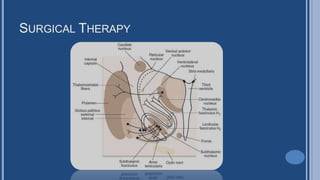
SURGICAL THERAPY
BALLISM
Proximal, flinging, violent, involuntary movement
MECHANISM OF BALLISMUS
 Surgical Pallidotomy, Nigrotomy, thalamotomy
reduces ballismus
 Animal Substantia Nigra lesion causes
hemiballismus
 Experimental destruction of Striata nigra no
ballismus, 20% destruction → hemiballismus
 Striatal dopamine increased
 Subthalamic GABA reduced
SITE OF LESION CAUSES BALLISMUS
 Sbuthalamus
 Pallidum
 Substantia nigra
 Thalamus
 Post. Central gyrus
 Superior frontal gyrus
 Precentral gyrus
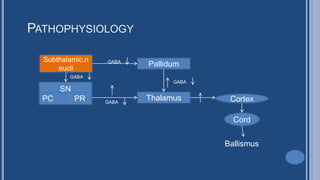
PATHOPHYSIOLOGY
Subthalamic.n
eucli
Pallidum
ThalamusPC PR
SN
Cortex
Cord
Ballismus
GABA
GABA
GABA
GABA
ETIOLOGY BALLISMUS
 Vascular – commonest
 Lacunar infarct, TIA
 Hemorrhage
 Subarachnoid hemorrhage
 AVM
 Venous angioma
 Tumor
 Secondaries
 Cyst
 Infection
 Tuberculloma, TBM
 Syphilis
 Metabolic
 Hyperglycemia
 Drugs
 Contraceptive
 L-dopa
 Truama
 Head injury
 Post surgical (Parkinson
disease)
 Multiple sclerosis
TYPES
 Monoballismus
 Hemiballismus
 Paraballismus
 Biballismus
 Prognosis
 Variable – few days to years
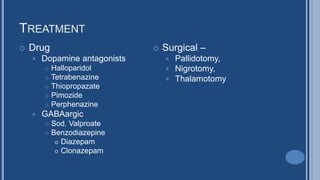
TREATMENT
 Drug
 Dopamine antagonists
 Halloparidol
 Tetrabenazine
 Thiopropazate
 Pimozide
 Perphenazine
 GABAargic
 Sod. Valproate
 Benzodiazepine
 Diazepam
 Clonazepam
 Surgical –
 Pallidotomy,
 Nigrotomy,
 Thalamotomy
THANKS

Chorea and ballismus

  • 1.
    CHOREA AND BALLISMUS DrPS Deb Director Neurology GNRC Hospitals Assam Guwahati
  • 2.
    CHOREA  State ofexcessive, spontaneous movement, irregularly timed, non repetitive, randomly distributed and abnormal in character.  It may very in severity from restlessness with mild intermittent exaggeration of gesture and expression, fidgeting movement of hands unstable, movement of hands.  Unstable gait to continuous flow of disabling violent movement.  Random – distribution, time, and duration
  • 3.
    CHOREA  Associated with Hypotonia – Reduced long latency reflex  Motor impersistence → inability to sustain vol. movement  Pronator sign  Milkmaids sign  Trombone tongue  Hung-up reflex – Prolonged contraction of stretched muscles by late sensory provoked choric movement.
  • 4.
  • 5.
    CHOREA MECHANISM -NEUROTRANSMITTER DISTURBANCE  Reduced: GABA, Sub P, Ach  Increased: Dopamine, NA in Striatum and pallidum, Somatostatine  GABA in SN and GP due to degeneration of striatum, but gabargic drugs does not reduce chorea  Dopamine Tyrosin hydroxylase enzyme in SN, chorea reduced by anti dopa drugs and by Ldopa  Ach marginally reduced, choline esterase enzyme mild reduced, large striatal interneuron well maintained, Ach agonist does not improve chorea
  • 6.
    CHOREA PATHOGENESIS  PET-  Histochemistry  Drug effect  Surgical  Chorea reduced by Pallidotomy, Nigrotomy, Thalamotomy  Pathological  Animal Model
  • 7.
    ELECTROPHYSIOLOGICAL  Choric dischargeson EMG resemble normal voluntary contraction  Active inhibition of innervation  Readiness potential not tested id Idea Programming Execution Discharge DischargeChorea Association Cortex Basal Ganglia Motor Cortex
  • 8.
    MECHANISM OF CHOREA Chorea appears to be a fragments of normal movements, appearing in inappropriate circumstances and lacking any purpose  They may be determined by peripheral stimuli which in ordinary circumstances would be ignored.  Basal ganglia normally filter the mass of cortical input, they receive to select movement appropriate to the circumstances.  Striatal damage might prevent normal suppression of unwanted motor response to external stimuli → Chorea
  • 9.
    CAUSE OF CHOREAAND CHOREO-ATHETOSIS 1. Trauma 1. Concussion 2. Neoplasm 1. Primary brain tumor 2. Metastasis 3. CNS leukemia 3. Cerebrovascular disease 1. Epidural subdural hemorrhage 2. Hemorrhage 3. Lacunar infarct 4. AVM 5. Polycythemia 6. Migraine 4. Infection 1. Post streptococcal 2. Typhoid 3. Pertusis 4. Dyphtheria 5. Neurosyphilis 6. Tuberculosis 7. Mycoplasma 5. Viral infection 1. Exanthema 2. Encephalitis 6. Collagen vascular disease 1. MSV
  • 10.
    CAUSE OF CHOREAAND CHOREO-ATHETOSIS CONT…. 7. Metabolic 1. Electrolyte imbalance 2. Glucose metabolic disorder 3. Endocrinal – Thyroid, Adrenal 4. Copper metabolic impairment – Wilson 5. Renal failure 6. Nutritional – thiamine, Niacin, B12 8. Intoxication 1. Alcohol 2. CO 3. Mercury 4. Manganese 5. Thallium 6. Glue sniffing 9. Drugs 1. Neurolaptics 2. Dopa agonists 3. Anti cholinergic 4. Sympathomimetics 5. Steroid, estrogen 6. Opiates 7. INH 8. Reserpine 9. Anti-histaminics 10. Tricycle antidepressants 11. Lithium 12. Metaclopromide 13. Digoxin 14. Lithium 15. Diazoxide
  • 11.
    CAUSE OF CHOREAAND CHOREO-ATHETOSIS CONT…. 10. Hereditary 1. Aminoaciduria 2. Lipid 3. Glucose 4. Protein metabolic 5. Huntington’s chorea 6. Benign familial chorea 7. Chorea with Acanthocytosis 8. Familial inverted choreoathetosis 9. Familial striatal necrosis 10. Familial basal ganglionic calcification 11. Spinocerebellar degeneration 11. Other 1. Hallevorden spatz disease 2. Ataxia Telengectasia 3. Tuberous sclerosis 4. Stuge Weber Syndrome 5. Myoclonus epilepsy with chorea 6. Paraxysmal dystonic choreoathetosis 7. Kernicterus 8. Cerebral palsy 9. Electrical injury 10. Thalamic dementia
  • 12.
    THERAPY  Drugs  Dopamineantagonist  Haloperidol  Tetrabenazine  Pimozide  Perphenazine  Cholinergic drugs  Lecithine → ↑ cerebral choline  GABA agonist  INH  Sod. Valproate
  • 13.
  • 14.
  • 15.
    MECHANISM OF BALLISMUS Surgical Pallidotomy, Nigrotomy, thalamotomy reduces ballismus  Animal Substantia Nigra lesion causes hemiballismus  Experimental destruction of Striata nigra no ballismus, 20% destruction → hemiballismus  Striatal dopamine increased  Subthalamic GABA reduced
  • 16.
    SITE OF LESIONCAUSES BALLISMUS  Sbuthalamus  Pallidum  Substantia nigra  Thalamus  Post. Central gyrus  Superior frontal gyrus  Precentral gyrus
  • 17.
  • 18.
    ETIOLOGY BALLISMUS  Vascular– commonest  Lacunar infarct, TIA  Hemorrhage  Subarachnoid hemorrhage  AVM  Venous angioma  Tumor  Secondaries  Cyst  Infection  Tuberculloma, TBM  Syphilis  Metabolic  Hyperglycemia  Drugs  Contraceptive  L-dopa  Truama  Head injury  Post surgical (Parkinson disease)  Multiple sclerosis
  • 19.
    TYPES  Monoballismus  Hemiballismus Paraballismus  Biballismus  Prognosis  Variable – few days to years
  • 20.
    TREATMENT  Drug  Dopamineantagonists  Halloparidol  Tetrabenazine  Thiopropazate  Pimozide  Perphenazine  GABAargic  Sod. Valproate  Benzodiazepine  Diazepam  Clonazepam  Surgical –  Pallidotomy,  Nigrotomy,  Thalamotomy
  • 21.