Guillain-Barré syndrome
Prof. Dr. Saad S Al Ani
Senior Pediatric Consultant
Head of Pediatric Department
Khorfakkan Hospital
Sharjah , UAE
saadsalani@yahoo.com
A collection of clinical syndromes that
manifests as an acute inflammatory
polyradiculoneuropathy with resultant
weakness and diminished reflexes.
Guillain-Barré syndrome (GBS)
19/08/2018
Pediatric Guillain-Barré syndrome
Prof. Dr .Saad S Al Ani
2
https://emedicine.medscape.com
Overview
The classic presentation is
characterized by an acute
monophasic, non-febrile, post-
infectious illness manifesting as
ascending weakness and areflexia
19/08/2018
Pediatric Guillain-Barré syndrome
Prof. Dr .Saad S Al Ani
3
Overview (cont.)
• Sensory, autonomic, and brainstem
abnormalities may also be seen.
• With the eradication of poliomyelitis,
GBS is the most common cause of
acute motor paralysis in children.
19/08/2018
Pediatric Guillain-Barré syndrome
Prof. Dr .Saad S Al Ani
4
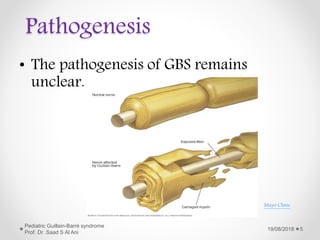
Pathogenesis
• The pathogenesis of GBS remains
unclear.
19/08/2018
Pediatric Guillain-Barré syndrome
Prof. Dr .Saad S Al Ani
5
Mayo Clinic
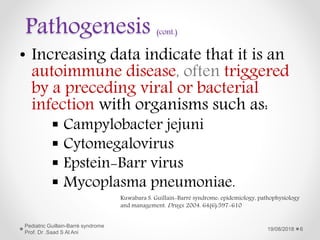
Pathogenesis (cont.)
• Increasing data indicate that it is an
autoimmune disease, often triggered
by a preceding viral or bacterial
infection with organisms such as:
 Campylobacter jejuni
 Cytomegalovirus
 Epstein-Barr virus
 Mycoplasma pneumoniae.
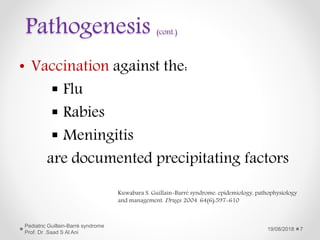
19/08/2018
Pediatric Guillain-Barré syndrome
Prof. Dr .Saad S Al Ani
6
Kuwabara S. Guillain-Barré syndrome: epidemiology, pathophysiology
and management. Drugs. 2004. 64(6):597-610
Pathogenesis (cont.)
• Vaccination against the:
 Flu
 Rabies
 Meningitis
are documented precipitating factors
19/08/2018
Pediatric Guillain-Barré syndrome
Prof. Dr .Saad S Al Ani
7
Kuwabara S. Guillain-Barré syndrome: epidemiology, pathophysiology
and management. Drugs. 2004. 64(6):597-610
Pathophysiology
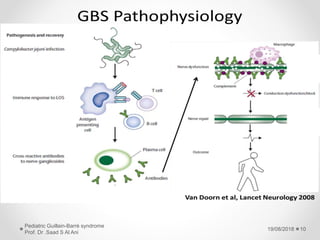
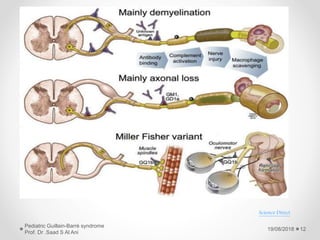
Two pathophysiological forms have been
described:
 Demyelinating form of GBS
 Axonal forms of GBS
19/08/2018
Pediatric Guillain-Barré syndrome
Prof. Dr .Saad S Al Ani
8
Pathophysiology (Cont.)
Demyelinating form of GBS :
Segmental demyelination of peripheral
nerves is due to immune mediated
involving both humoral and cell-
mediated immune mechanisms
19/08/2018
Pediatric Guillain-Barré syndrome
Prof. Dr .Saad S Al Ani
9
19/08/2018
Pediatric Guillain-Barré syndrome
Prof. Dr .Saad S Al Ani
10
Pathophysiology (Cont.)
Axonal forms of GBS
axonal degeneration may occur
without demyelination or
inflammation.
19/08/2018
Pediatric Guillain-Barré syndrome
Prof. Dr .Saad S Al Ani
11
19/08/2018
Pediatric Guillain-Barré syndrome
Prof. Dr .Saad S Al Ani
12
Science Direct
Pathophysiology (Cont.)
19/08/2018
Pediatric Guillain-Barré syndrome
Prof. Dr .Saad S Al Ani
13
of patients have a history of an
antecedent gastrointestinal or
respiratory tract infection
Pathophysiology (Cont.)
The mechanism of disease possibly
involves an abnormal T-cell response
precipitated by an infection which
activate CD4+ helper-inducer T cells
19/08/2018
Pediatric Guillain-Barré syndrome
Prof. Dr .Saad S Al Ani
14
Kimoto K, Koga M, Odaka M, Hirata K, Takahashi M, Li J, et al. Relationship of
bacterial strains to clinical syndromes of Campylobacter-associated
neuropathies. Neurology. 2006 Nov 28. 67(10):1837-43
Epidemiology
The annual incidence of GBS range
from 0.5-1.5 cases per 100,000
population in individuals younger
than 18 years
19/08/2018
Pediatric Guillain-Barré syndrome
Prof. Dr .Saad S Al Ani
15
Landaverde JM, Danovaro-Holliday MC, Trumbo SP, Pacis-Tirso CL,
Ruiz-Matus C. Guillain-Barré syndrome in children aged J Infect
Dis</i>. 2010 Mar. 201(5):746-50.
Epidemiology (Cont.)
19/08/2018
Pediatric Guillain-Barré syndrome
Prof. Dr .Saad S Al Ani
16
Korinthenberg R, Schessl J, Kirschner J. Clinical presentation and
course of childhood Guillain-Barré syndrome: a prospective
multicentre study. Neuropediatrics. 2007 Feb. 38(1):10-7.
No evidence exists for any racial
predilection
Males appear to be at greater risk
for GBS than females
Subtypes of GBS
The clinical spectrum of GBS, which includes
individual variation and variable severity of
presentation, comprises the following:
1. Acute inflammatory demyelinating
polyradiculoneuropathy (AIDP)
2. Acute motor axonal neuropathy (AMAN)
3. Acute motor and sensory axonal neuropathy
(AMSAN)
4. Miller-Fisher syndrome (MFS)
5. Polyneuritis cranialis
19/08/2018
Pediatric Guillain-Barré syndrome
Prof. Dr .Saad S Al Ani
17
Kieseier BC, Kiefer R, Gold R, Hemmer B, Willison HJ, Hartung HP. Advances in understanding and
treatment of immune-mediated disorders of the peripheral nervous system. Muscle Nerve. 2004
Aug. 30(2):131-56
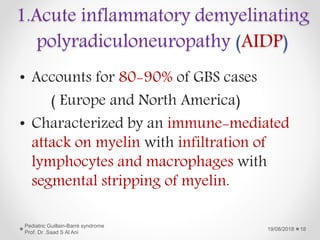
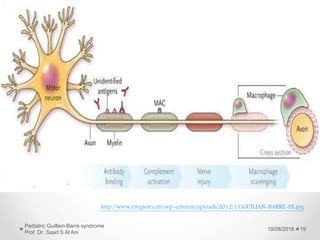
1.Acute inflammatory demyelinating
polyradiculoneuropathy (AIDP)
• Accounts for 80-90% of GBS cases
( Europe and North America)
• Characterized by an immune-mediated
attack on myelin with infiltration of
lymphocytes and macrophages with
segmental stripping of myelin.
19/08/2018
Pediatric Guillain-Barré syndrome
Prof. Dr .Saad S Al Ani
18
19/08/2018
Pediatric Guillain-Barré syndrome
Prof. Dr .Saad S Al Ani
19
http://www.emgtest.com/wp-content/uploads/2012/11/GUILIAN-BARRE-SX.jpg
1.Acute inflammatory demyelinating
polyradiculoneuropathy (AIDP) (Cont.)
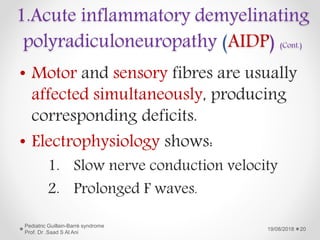
• Motor and sensory fibres are usually
affected simultaneously, producing
corresponding deficits.
• Electrophysiology shows:
1. Slow nerve conduction velocity
2. Prolonged F waves.
19/08/2018
Pediatric Guillain-Barré syndrome
Prof. Dr .Saad S Al Ani
20
2.Acute motor axonal neuropathy
(AMAN)
• Most commonly seen in China and
Japan (50-60% of cases), as apposed to
Western countries (10-20% of cases).
• In this form, axonal degeneration occurs
by immune attack within 1-2 weeks
after infection.
19/08/2018
Pediatric Guillain-Barré syndrome
Prof. Dr .Saad S Al Ani
21
2.Acute motor axonal neuropathy
(AMAN) (cont.)
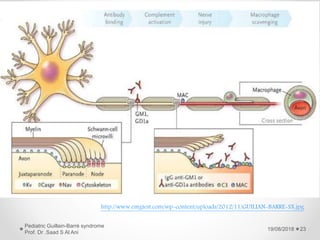
• Specific antibodies to axonal membranes
of motor fibres attack the nodes of
Ranvier.
• This, in turn, activates complement and
intrusion of macrophages into
periaxonal space, resulting in
destruction of axons.
19/08/2018
Pediatric Guillain-Barré syndrome
Prof. Dr .Saad S Al Ani
22
19/08/2018
Pediatric Guillain-Barré syndrome
Prof. Dr .Saad S Al Ani
23
http://www.emgtest.com/wp-content/uploads/2012/11/GUILIAN-BARRE-SX.jpg
2.Acute motor axonal neuropathy
(AMAN) (Cont.)
• C jejuni is the most common preceding
infection, and antiganglioside antibodies
are usually found in this type.
• Electrophysiology shows:
1. Reduction in muscle action potentials
with relatively preserved motor nerve
conduction velocity
2. Normal sensory nerve action potentials
and F waves
19/08/2018
Pediatric Guillain-Barré syndrome
Prof. Dr .Saad S Al Ani
24
Schwerer B. Antibodies against gangliosides: a link between preceding
infection and immunopathogenesis of Guillain-Barré syndrome. Microbes
Infect. 2002 Mar. 4(3):373-84
3.Acute motor and sensory axonal
neuropathy (AMSAN)
• This type is rare and resembles
AMAN except sensory nerves are
also affected.
• This type is associated with a severe
course and poor prognosis.
19/08/2018
Pediatric Guillain-Barré syndrome
Prof. Dr .Saad S Al Ani
25
Schwerer B. Antibodies against gangliosides: a link between preceding infection and
immunopathogenesis of Guillain-Barré syndrome. Microbes Infect. 2002 Mar. 4(3):373-84
4.Miller-Fisher syndrome
(MFS)
• The involvement of CNs is very
distinct in this form of GBS.
• Ocular motor nerves (oculomotor,
trochlear, and abducens) are
affected and produce a triad of
ophthalmoplegia, ataxia, and
areflexia.
19/08/2018
Pediatric Guillain-Barré syndrome
Prof. Dr .Saad S Al Ani
26
4.Miller-Fisher syndrome
(MFS) (Cont.)
• Electrophysiology is normal.
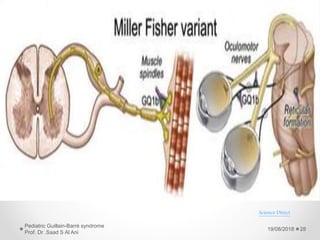
• The characteristic autoantibodies are
against gangliosides GQ1b and
GT1a.
• GQ1b plays a key role in the
pathogenesis of MFS.
19/08/2018
Pediatric Guillain-Barré syndrome
Prof. Dr .Saad S Al Ani
27
19/08/2018
Pediatric Guillain-Barré syndrome
Prof. Dr .Saad S Al Ani
28
Science Direct
Polyneuritis cranialis
• This is an acute onset of Multiple CN
palsies (usually bilateral CN VII with
sparing of CNs I and II)
o Elevated cerebrospinal fluid protein
o Slowed nerve conduction velocity
o Uncomplicated recovery.
19/08/2018
Pediatric Guillain-Barré syndrome
Prof. Dr .Saad S Al Ani
29
Physical Examination
• An ascending motor weakness is noted
along with areflexia in the classic form.
• Areflexia is a hallmark of GBS.
• Occasionally, some of the more
proximal reflexes still may be elicited
during the early phase of the disease.
19/08/2018
Pediatric Guillain-Barré syndrome
Prof. Dr .Saad S Al Ani
30
Physical Examination (Cont.)
• Of clinical value is documenting reflexes
in serial exams.
• Progression from normoreflexia /
hyporeflexia to areflexia is consistent with
acute features of GBS.
19/08/2018
Pediatric Guillain-Barré syndrome
Prof. Dr .Saad S Al Ani
31
Physical Examination (Cont.)
• Occasionally:
o Autonomic instability (26%)
o Ataxia (23%)
o Dysesthesias (20%)
o Cranial nerve findings (35-50%),
predominantly facial palsy (Children>adult)
are noted.
19/08/2018
Pediatric Guillain-Barré syndrome
Prof. Dr .Saad S Al Ani
32
Inaloo S, Katibeh P. Guillain-barre syndrome presenting with bilateral
facial nerve palsy. Iran J Child Neurol. 2014 Winter. 8(1):70-2
Physical Examination (Cont.)
• Leg weakness (i.e., foot drop) is
usually noticed first and weakness
eventually involves the calves and
thighs.
• Later, respiratory muscles and
upper extremities show involvement.
19/08/2018
Pediatric Guillain-Barré syndrome
Prof. Dr .Saad S Al Ani
33
Physical Examination (Cont.)
• Some children may become non-ambulatory.
• Weakness also may involve the respiratory
muscles, and some children need respiratory
support during the course of the disease.
• Mechanical ventilation is used until
respiratory muscle function returns.
19/08/2018
Pediatric Guillain-Barré syndrome
Prof. Dr .Saad S Al Ani
34
Physical Examination (Cont.)
• The autonomic neuropathy involves both
the sympathetic and parasympathetic
systems; manifestations include:
Orthostatic hypotension
Hypertension
Pupillary dysfunction
Sweating abnormalities
Sinus tachycardia
19/08/2018
Pediatric Guillain-Barré syndrome
Prof. Dr .Saad S Al Ani
35
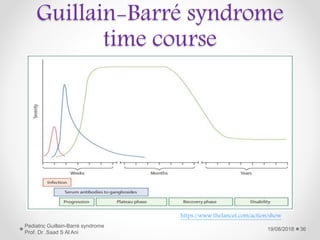
Guillain-Barré syndrome
time course
19/08/2018
Pediatric Guillain-Barré syndrome
Prof. Dr .Saad S Al Ani
36
https://www.thelancet.com/action/show
Diagnosis
The diagnosis of GBS is typically based on
the presence of :
o Progressive ascending weakness
o Areflexia
19/08/2018
Pediatric Guillain-Barré syndrome
Prof. Dr .Saad S Al Ani
37
Diagnosis (Cont.)
• Findings on :
 Lumbar puncture
 Electrodiagnostic studies
 MRI (occasionally)
Can give support for the diagnosis.
• Abnormalities on these studies do not develop
until days to weeks after onset of symptoms.
19/08/2018
Pediatric Guillain-Barré syndrome
Prof. Dr .Saad S Al Ani
38
Diagnosis (Cont.)
• Findings on :
 Lumbar puncture
 Electrodiagnostic studies
 MRI (occasionally)
Can give support for the diagnosis.
• Abnormalities on these studies do not develop
until days to weeks after onset of symptoms.
19/08/2018
Pediatric Guillain-Barré syndrome
Prof. Dr .Saad S Al Ani
39
Lumbar Puncture
Typically, the LP findings are suggestive of
demyelination (i.e., increased protein >45
mg/dL within 3 weeks of onset) without
evidence of active infection (lack of CSF
pleocytosis),
19/08/2018
Pediatric Guillain-Barré syndrome
Prof. Dr .Saad S Al Ani
40
Lumbar Puncture (cont.)
• The CSF findings may be normal within the
first 48 hours of symptoms
• Occasionally the protein may not rise for a
week.
• Usually by 10 days of symptoms, elevated CSF
protein findings will be most prominent.
19/08/2018
Pediatric Guillain-Barré syndrome
Prof. Dr .Saad S Al Ani
41
Lumbar Puncture (Cont.)
• Most patients have fewer than 10 leukocytes
per milliliter, but occasionally a mild
elevation (i.e., 10-50 cells/mL) is seen.
• Greater than 50 mononuclear cells/mL of CSF
makes the diagnosis of GBS doubtful.
19/08/2018
Pediatric Guillain-Barré syndrome
Prof. Dr .Saad S Al Ani
42
Electrodiagnostic Studies
Within the first week of the onset of symptoms,
electrodiagnostic studies in at least two limbs reveal
the following:
• A dispersed, impersistent, prolonged, or absent F
response (88%)
• Increased distal latencies (75%)
• Conduction block (58%) or temporal dispersion of
compound muscle action potential (CMAP)
• Reduced conduction velocity (50%) of motor and
sensory nerves
19/08/2018
Pediatric Guillain-Barré syndrome
Prof. Dr .Saad S Al Ani
43
Electrodiagnostic Studies (cont.)
Criteria for axonal forms include:
o Lack of neurophysiologic evidence of
demyelination
oLoss of amplitude of CMAP or sensory
nerve action potentials to at least less
than 80% of lower limit of normal
values for age
19/08/2018
Pediatric Guillain-Barré syndrome
Prof. Dr .Saad S Al Ani
44
Serum Anti-Ganglioside
Antibodies
• In adults with GBS, serum ganglioside
antibodies directed against GM1, GM1b,
GD1a, and GalNAc-GDIa have been
associated with Campylobacter
jejuni infection, acute motor axonal
neuropathy, a more severe course, and more
residual neurologic deficits.
• The value of these studies as a prognostic
marker in children is still under evaluation.
19/08/2018
Pediatric Guillain-Barré syndrome
Prof. Dr .Saad S Al Ani
45
19/08/2018
Pediatric Guillain-Barré syndrome
Prof. Dr .Saad S Al Ani
46
Diagnosis (Cont.)
Nearly 2 weeks after presentation of symptoms,
lumbosacral MRI can show enhancement of
the nerve roots with gadolinium.
 This imaging study has been described to be
83% sensitive for acute GBS, with nerve root
enhancement present in 95% of typical cases
19/08/2018
Pediatric Guillain-Barré syndrome
Prof. Dr .Saad S Al Ani
47
Gorson KC, Ropper AH, Muriello MA, Blair R. Prospective evaluation of MRI lumbosacral nerve root
enhancement in acute Guillain-Barré syndrome. Neurology. 1996 Sep. 47(3):813-7
19/08/2018
Pediatric Guillain-Barré syndrome
Prof. Dr .Saad S Al Ani
48
Spinal cord lesions may be considered in the differential
diagnosis:
• Transverse myelitis • Vascular malformations
• Epidural abscess • Cord infarctions
• Tumors • Cord compression
• Enteroviral infections of
the anterior horn cells
• Lumbosacral disk
syndromes
• Poliomyelitis • Trauma
• Hopkins syndrome
19/08/2018
Pediatric Guillain-Barré syndrome
Prof. Dr .Saad S Al Ani
49
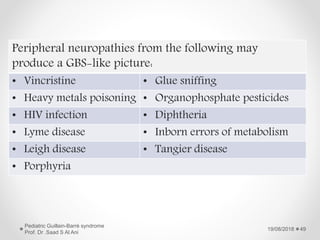
Peripheral neuropathies from the following may
produce a GBS-like picture:
• Vincristine • Glue sniffing
• Heavy metals poisoning • Organophosphate pesticides
• HIV infection • Diphtheria
• Lyme disease • Inborn errors of metabolism
• Leigh disease • Tangier disease
• Porphyria
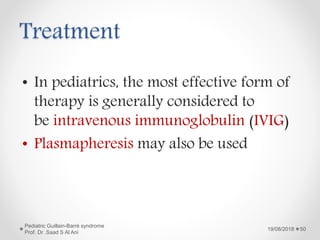
Treatment
• In pediatrics, the most effective form of
therapy is generally considered to
be intravenous immunoglobulin (IVIG)
• Plasmapheresis may also be used
19/08/2018
Pediatric Guillain-Barré syndrome
Prof. Dr .Saad S Al Ani
50
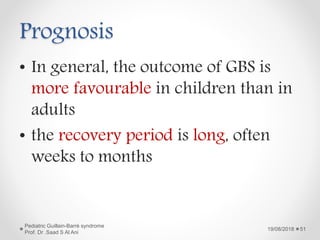
Prognosis
• In general, the outcome of GBS is
more favourable in children than in
adults
• the recovery period is long, often
weeks to months
19/08/2018
Pediatric Guillain-Barré syndrome
Prof. Dr .Saad S Al Ani
51
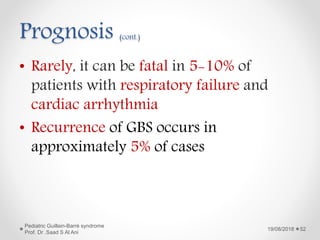
Prognosis (cont.)
• Rarely, it can be fatal in 5-10% of
patients with respiratory failure and
cardiac arrhythmia
• Recurrence of GBS occurs in
approximately 5% of cases
19/08/2018
Pediatric Guillain-Barré syndrome
Prof. Dr .Saad S Al Ani
52
Prognosis
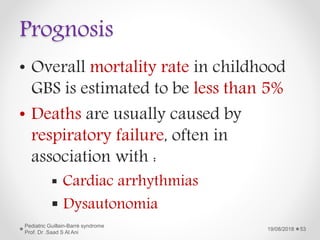
• Overall mortality rate in childhood
GBS is estimated to be less than 5%
• Deaths are usually caused by
respiratory failure, often in
association with :
 Cardiac arrhythmias
 Dysautonomia
19/08/2018
Pediatric Guillain-Barré syndrome
Prof. Dr .Saad S Al Ani
53
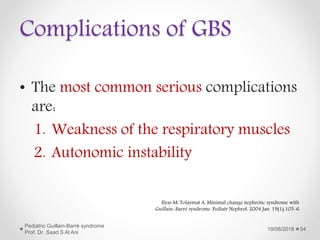
Complications of GBS
• The most common serious complications
are:
1. Weakness of the respiratory muscles
2. Autonomic instability
19/08/2018
Pediatric Guillain-Barré syndrome
Prof. Dr .Saad S Al Ani
54
Ilyas M, Tolaymat A. Minimal change nephrotic syndrome with
Guillain-Barré syndrome. Pediatr Nephrol. 2004 Jan. 19(1):105-6
Complications of GBS (Cont.)
19/08/2018
Pediatric Guillain-Barré syndrome
Prof. Dr .Saad S Al Ani
55
Ilyas M, Tolaymat A. Minimal change nephrotic syndrome with
Guillain-Barré syndrome. Pediatr Nephrol. 2004 Jan. 19(1):105-6
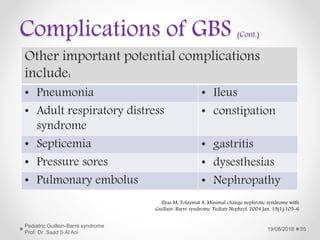
Other important potential complications
include:
• Pneumonia • Ileus
• Adult respiratory distress
syndrome
• constipation
• Septicemia • gastritis
• Pressure sores • dysesthesias
• Pulmonary embolus • Nephropathy
Clinical Summary
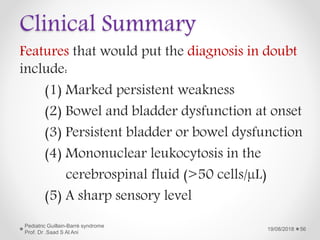
Features that would put the diagnosis in doubt
include:
(1) Marked persistent weakness
(2) Bowel and bladder dysfunction at onset
(3) Persistent bladder or bowel dysfunction
(4) Mononuclear leukocytosis in the
cerebrospinal fluid (>50 cells/µL)
(5) A sharp sensory level
19/08/2018
Pediatric Guillain-Barré syndrome
Prof. Dr .Saad S Al Ani
56
Clinical Summary (Cont.)
Features required for diagnosis are:
(1) Progressive weakness of more than one
extremity
(2) Hyporeflexia or areflexia
(3) Elevated cerebrospinal fluid protein (>45
mg/dL) after 1 week following onset of
symptoms
(4) Slow conduction velocity or prolonged F
wave on electrophysiology testing.
19/08/2018
Pediatric Guillain-Barré syndrome
Prof. Dr .Saad S Al Ani
57
Clinical Summary (Cont.)
Features that rule out the diagnosis include:
(1) A current history of hexacarbon abuse
(2) Abnormal porphyria metabolism
(3) Recent diphtheria infection
(4) Evidence of polio, botulism, toxic
neuropathy, tic paralysis, or
organophosphate poisoning.
19/08/2018
Pediatric Guillain-Barré syndrome
Prof. Dr .Saad S Al Ani
58
References
• Kuwabara S. Guillain-Barré syndrome: epidemiology, pathophysiology and management. Drugs. 2004.
64(6):597-610
• Landaverde JM, Danovaro-Holliday MC, Trumbo SP, Pacis-Tirso CL, Ruiz- Matus C. Guillain-Barré
syndrome in children aged J Infect Dis</i>. 2010 Mar. 201(5):746-50
• Kimoto K, Koga M, Odaka M, Hirata K, Takahashi M, Li J, et al. Relationship of bacterial strains to
clinical syndromes of Campylobacter-associated neuropathies. Neurology. 2006 Nov 28.
67(10):1837-43
• Korinthenberg R, Schessl J, Kirschner J. Clinical presentation and course of childhood Guillain-
Barré syndrome: a prospective multicentre study. Neuropediatrics. 2007 Feb. 38(1):10-7.
• Kieseier BC, Kiefer R, Gold R, Hemmer B, Willison HJ, Hartung HP. Advances in understanding
and treatment of immune-mediated disorders of the peripheral nervous system. Muscle Nerve.
2004 Aug. 30(2):131-56
• Schwerer B. Antibodies against gangliosides: a link between preceding infection and
immunopathogenesis of Guillain-Barré syndrome. Microbes Infect. 2002 Mar. 4(3):373-84
• Inaloo S, Katibeh P. Guillain-Barré syndrome presenting with bilateral facial nerve palsy. Iran J
Child Neurol. 2014 Winter. 8(1):70-2
• Ilyas M, Tolaymat A. Minimal change nephrotic syndrome with Guillain-Barré syndrome. Pediatr
Nephrol. 2004 Jan. 19(1):105-6
• Gorson KC, Ropper AH, Muriello MA, Blair R. Prospective evaluation of MRI lumbosacral nerve
root enhancement in acute Guillain-Barré syndrome. Neurology. 1996 Sep. 47(3):813-7
19/08/2018
Pediatric Guillain-Barré syndrome
Prof. Dr .Saad S Al Ani
59
.
19/08/2018
Pediatric Guillain-Barré syndrome
Prof. Dr .Saad S Al Ani
60

Guillain - Barré syndrome

  • 1.
    Guillain-Barré syndrome Prof. Dr.Saad S Al Ani Senior Pediatric Consultant Head of Pediatric Department Khorfakkan Hospital Sharjah , UAE saadsalani@yahoo.com
  • 2.
    A collection ofclinical syndromes that manifests as an acute inflammatory polyradiculoneuropathy with resultant weakness and diminished reflexes. Guillain-Barré syndrome (GBS) 19/08/2018 Pediatric Guillain-Barré syndrome Prof. Dr .Saad S Al Ani 2 https://emedicine.medscape.com
  • 3.
    Overview The classic presentationis characterized by an acute monophasic, non-febrile, post- infectious illness manifesting as ascending weakness and areflexia 19/08/2018 Pediatric Guillain-Barré syndrome Prof. Dr .Saad S Al Ani 3
  • 4.
    Overview (cont.) • Sensory,autonomic, and brainstem abnormalities may also be seen. • With the eradication of poliomyelitis, GBS is the most common cause of acute motor paralysis in children. 19/08/2018 Pediatric Guillain-Barré syndrome Prof. Dr .Saad S Al Ani 4
  • 5.
    Pathogenesis • The pathogenesisof GBS remains unclear. 19/08/2018 Pediatric Guillain-Barré syndrome Prof. Dr .Saad S Al Ani 5 Mayo Clinic
  • 6.
    Pathogenesis (cont.) • Increasingdata indicate that it is an autoimmune disease, often triggered by a preceding viral or bacterial infection with organisms such as:  Campylobacter jejuni  Cytomegalovirus  Epstein-Barr virus  Mycoplasma pneumoniae. 19/08/2018 Pediatric Guillain-Barré syndrome Prof. Dr .Saad S Al Ani 6 Kuwabara S. Guillain-Barré syndrome: epidemiology, pathophysiology and management. Drugs. 2004. 64(6):597-610
  • 7.
    Pathogenesis (cont.) • Vaccinationagainst the:  Flu  Rabies  Meningitis are documented precipitating factors 19/08/2018 Pediatric Guillain-Barré syndrome Prof. Dr .Saad S Al Ani 7 Kuwabara S. Guillain-Barré syndrome: epidemiology, pathophysiology and management. Drugs. 2004. 64(6):597-610
  • 8.
    Pathophysiology Two pathophysiological formshave been described:  Demyelinating form of GBS  Axonal forms of GBS 19/08/2018 Pediatric Guillain-Barré syndrome Prof. Dr .Saad S Al Ani 8
  • 9.
    Pathophysiology (Cont.) Demyelinating formof GBS : Segmental demyelination of peripheral nerves is due to immune mediated involving both humoral and cell- mediated immune mechanisms 19/08/2018 Pediatric Guillain-Barré syndrome Prof. Dr .Saad S Al Ani 9
  • 10.
  • 11.
    Pathophysiology (Cont.) Axonal formsof GBS axonal degeneration may occur without demyelination or inflammation. 19/08/2018 Pediatric Guillain-Barré syndrome Prof. Dr .Saad S Al Ani 11
  • 12.
    19/08/2018 Pediatric Guillain-Barré syndrome Prof.Dr .Saad S Al Ani 12 Science Direct
  • 13.
    Pathophysiology (Cont.) 19/08/2018 Pediatric Guillain-Barrésyndrome Prof. Dr .Saad S Al Ani 13 of patients have a history of an antecedent gastrointestinal or respiratory tract infection
  • 14.
    Pathophysiology (Cont.) The mechanismof disease possibly involves an abnormal T-cell response precipitated by an infection which activate CD4+ helper-inducer T cells 19/08/2018 Pediatric Guillain-Barré syndrome Prof. Dr .Saad S Al Ani 14 Kimoto K, Koga M, Odaka M, Hirata K, Takahashi M, Li J, et al. Relationship of bacterial strains to clinical syndromes of Campylobacter-associated neuropathies. Neurology. 2006 Nov 28. 67(10):1837-43
  • 15.
    Epidemiology The annual incidenceof GBS range from 0.5-1.5 cases per 100,000 population in individuals younger than 18 years 19/08/2018 Pediatric Guillain-Barré syndrome Prof. Dr .Saad S Al Ani 15 Landaverde JM, Danovaro-Holliday MC, Trumbo SP, Pacis-Tirso CL, Ruiz-Matus C. Guillain-Barré syndrome in children aged J Infect Dis</i>. 2010 Mar. 201(5):746-50.
  • 16.
    Epidemiology (Cont.) 19/08/2018 Pediatric Guillain-Barrésyndrome Prof. Dr .Saad S Al Ani 16 Korinthenberg R, Schessl J, Kirschner J. Clinical presentation and course of childhood Guillain-Barré syndrome: a prospective multicentre study. Neuropediatrics. 2007 Feb. 38(1):10-7. No evidence exists for any racial predilection Males appear to be at greater risk for GBS than females
  • 17.
    Subtypes of GBS Theclinical spectrum of GBS, which includes individual variation and variable severity of presentation, comprises the following: 1. Acute inflammatory demyelinating polyradiculoneuropathy (AIDP) 2. Acute motor axonal neuropathy (AMAN) 3. Acute motor and sensory axonal neuropathy (AMSAN) 4. Miller-Fisher syndrome (MFS) 5. Polyneuritis cranialis 19/08/2018 Pediatric Guillain-Barré syndrome Prof. Dr .Saad S Al Ani 17 Kieseier BC, Kiefer R, Gold R, Hemmer B, Willison HJ, Hartung HP. Advances in understanding and treatment of immune-mediated disorders of the peripheral nervous system. Muscle Nerve. 2004 Aug. 30(2):131-56
  • 18.
    1.Acute inflammatory demyelinating polyradiculoneuropathy(AIDP) • Accounts for 80-90% of GBS cases ( Europe and North America) • Characterized by an immune-mediated attack on myelin with infiltration of lymphocytes and macrophages with segmental stripping of myelin. 19/08/2018 Pediatric Guillain-Barré syndrome Prof. Dr .Saad S Al Ani 18
  • 19.
    19/08/2018 Pediatric Guillain-Barré syndrome Prof.Dr .Saad S Al Ani 19 http://www.emgtest.com/wp-content/uploads/2012/11/GUILIAN-BARRE-SX.jpg
  • 20.
    1.Acute inflammatory demyelinating polyradiculoneuropathy(AIDP) (Cont.) • Motor and sensory fibres are usually affected simultaneously, producing corresponding deficits. • Electrophysiology shows: 1. Slow nerve conduction velocity 2. Prolonged F waves. 19/08/2018 Pediatric Guillain-Barré syndrome Prof. Dr .Saad S Al Ani 20
  • 21.
    2.Acute motor axonalneuropathy (AMAN) • Most commonly seen in China and Japan (50-60% of cases), as apposed to Western countries (10-20% of cases). • In this form, axonal degeneration occurs by immune attack within 1-2 weeks after infection. 19/08/2018 Pediatric Guillain-Barré syndrome Prof. Dr .Saad S Al Ani 21
  • 22.
    2.Acute motor axonalneuropathy (AMAN) (cont.) • Specific antibodies to axonal membranes of motor fibres attack the nodes of Ranvier. • This, in turn, activates complement and intrusion of macrophages into periaxonal space, resulting in destruction of axons. 19/08/2018 Pediatric Guillain-Barré syndrome Prof. Dr .Saad S Al Ani 22
  • 23.
    19/08/2018 Pediatric Guillain-Barré syndrome Prof.Dr .Saad S Al Ani 23 http://www.emgtest.com/wp-content/uploads/2012/11/GUILIAN-BARRE-SX.jpg
  • 24.
    2.Acute motor axonalneuropathy (AMAN) (Cont.) • C jejuni is the most common preceding infection, and antiganglioside antibodies are usually found in this type. • Electrophysiology shows: 1. Reduction in muscle action potentials with relatively preserved motor nerve conduction velocity 2. Normal sensory nerve action potentials and F waves 19/08/2018 Pediatric Guillain-Barré syndrome Prof. Dr .Saad S Al Ani 24 Schwerer B. Antibodies against gangliosides: a link between preceding infection and immunopathogenesis of Guillain-Barré syndrome. Microbes Infect. 2002 Mar. 4(3):373-84
  • 25.
    3.Acute motor andsensory axonal neuropathy (AMSAN) • This type is rare and resembles AMAN except sensory nerves are also affected. • This type is associated with a severe course and poor prognosis. 19/08/2018 Pediatric Guillain-Barré syndrome Prof. Dr .Saad S Al Ani 25 Schwerer B. Antibodies against gangliosides: a link between preceding infection and immunopathogenesis of Guillain-Barré syndrome. Microbes Infect. 2002 Mar. 4(3):373-84
  • 26.
    4.Miller-Fisher syndrome (MFS) • Theinvolvement of CNs is very distinct in this form of GBS. • Ocular motor nerves (oculomotor, trochlear, and abducens) are affected and produce a triad of ophthalmoplegia, ataxia, and areflexia. 19/08/2018 Pediatric Guillain-Barré syndrome Prof. Dr .Saad S Al Ani 26
  • 27.
    4.Miller-Fisher syndrome (MFS) (Cont.) •Electrophysiology is normal. • The characteristic autoantibodies are against gangliosides GQ1b and GT1a. • GQ1b plays a key role in the pathogenesis of MFS. 19/08/2018 Pediatric Guillain-Barré syndrome Prof. Dr .Saad S Al Ani 27
  • 28.
    19/08/2018 Pediatric Guillain-Barré syndrome Prof.Dr .Saad S Al Ani 28 Science Direct
  • 29.
    Polyneuritis cranialis • Thisis an acute onset of Multiple CN palsies (usually bilateral CN VII with sparing of CNs I and II) o Elevated cerebrospinal fluid protein o Slowed nerve conduction velocity o Uncomplicated recovery. 19/08/2018 Pediatric Guillain-Barré syndrome Prof. Dr .Saad S Al Ani 29
  • 30.
    Physical Examination • Anascending motor weakness is noted along with areflexia in the classic form. • Areflexia is a hallmark of GBS. • Occasionally, some of the more proximal reflexes still may be elicited during the early phase of the disease. 19/08/2018 Pediatric Guillain-Barré syndrome Prof. Dr .Saad S Al Ani 30
  • 31.
    Physical Examination (Cont.) •Of clinical value is documenting reflexes in serial exams. • Progression from normoreflexia / hyporeflexia to areflexia is consistent with acute features of GBS. 19/08/2018 Pediatric Guillain-Barré syndrome Prof. Dr .Saad S Al Ani 31
  • 32.
    Physical Examination (Cont.) •Occasionally: o Autonomic instability (26%) o Ataxia (23%) o Dysesthesias (20%) o Cranial nerve findings (35-50%), predominantly facial palsy (Children>adult) are noted. 19/08/2018 Pediatric Guillain-Barré syndrome Prof. Dr .Saad S Al Ani 32 Inaloo S, Katibeh P. Guillain-barre syndrome presenting with bilateral facial nerve palsy. Iran J Child Neurol. 2014 Winter. 8(1):70-2
  • 33.
    Physical Examination (Cont.) •Leg weakness (i.e., foot drop) is usually noticed first and weakness eventually involves the calves and thighs. • Later, respiratory muscles and upper extremities show involvement. 19/08/2018 Pediatric Guillain-Barré syndrome Prof. Dr .Saad S Al Ani 33
  • 34.
    Physical Examination (Cont.) •Some children may become non-ambulatory. • Weakness also may involve the respiratory muscles, and some children need respiratory support during the course of the disease. • Mechanical ventilation is used until respiratory muscle function returns. 19/08/2018 Pediatric Guillain-Barré syndrome Prof. Dr .Saad S Al Ani 34
  • 35.
    Physical Examination (Cont.) •The autonomic neuropathy involves both the sympathetic and parasympathetic systems; manifestations include: Orthostatic hypotension Hypertension Pupillary dysfunction Sweating abnormalities Sinus tachycardia 19/08/2018 Pediatric Guillain-Barré syndrome Prof. Dr .Saad S Al Ani 35
  • 36.
    Guillain-Barré syndrome time course 19/08/2018 PediatricGuillain-Barré syndrome Prof. Dr .Saad S Al Ani 36 https://www.thelancet.com/action/show
  • 37.
    Diagnosis The diagnosis ofGBS is typically based on the presence of : o Progressive ascending weakness o Areflexia 19/08/2018 Pediatric Guillain-Barré syndrome Prof. Dr .Saad S Al Ani 37
  • 38.
    Diagnosis (Cont.) • Findingson :  Lumbar puncture  Electrodiagnostic studies  MRI (occasionally) Can give support for the diagnosis. • Abnormalities on these studies do not develop until days to weeks after onset of symptoms. 19/08/2018 Pediatric Guillain-Barré syndrome Prof. Dr .Saad S Al Ani 38
  • 39.
    Diagnosis (Cont.) • Findingson :  Lumbar puncture  Electrodiagnostic studies  MRI (occasionally) Can give support for the diagnosis. • Abnormalities on these studies do not develop until days to weeks after onset of symptoms. 19/08/2018 Pediatric Guillain-Barré syndrome Prof. Dr .Saad S Al Ani 39
  • 40.
    Lumbar Puncture Typically, theLP findings are suggestive of demyelination (i.e., increased protein >45 mg/dL within 3 weeks of onset) without evidence of active infection (lack of CSF pleocytosis), 19/08/2018 Pediatric Guillain-Barré syndrome Prof. Dr .Saad S Al Ani 40
  • 41.
    Lumbar Puncture (cont.) •The CSF findings may be normal within the first 48 hours of symptoms • Occasionally the protein may not rise for a week. • Usually by 10 days of symptoms, elevated CSF protein findings will be most prominent. 19/08/2018 Pediatric Guillain-Barré syndrome Prof. Dr .Saad S Al Ani 41
  • 42.
    Lumbar Puncture (Cont.) •Most patients have fewer than 10 leukocytes per milliliter, but occasionally a mild elevation (i.e., 10-50 cells/mL) is seen. • Greater than 50 mononuclear cells/mL of CSF makes the diagnosis of GBS doubtful. 19/08/2018 Pediatric Guillain-Barré syndrome Prof. Dr .Saad S Al Ani 42
  • 43.
    Electrodiagnostic Studies Within thefirst week of the onset of symptoms, electrodiagnostic studies in at least two limbs reveal the following: • A dispersed, impersistent, prolonged, or absent F response (88%) • Increased distal latencies (75%) • Conduction block (58%) or temporal dispersion of compound muscle action potential (CMAP) • Reduced conduction velocity (50%) of motor and sensory nerves 19/08/2018 Pediatric Guillain-Barré syndrome Prof. Dr .Saad S Al Ani 43
  • 44.
    Electrodiagnostic Studies (cont.) Criteriafor axonal forms include: o Lack of neurophysiologic evidence of demyelination oLoss of amplitude of CMAP or sensory nerve action potentials to at least less than 80% of lower limit of normal values for age 19/08/2018 Pediatric Guillain-Barré syndrome Prof. Dr .Saad S Al Ani 44
  • 45.
    Serum Anti-Ganglioside Antibodies • Inadults with GBS, serum ganglioside antibodies directed against GM1, GM1b, GD1a, and GalNAc-GDIa have been associated with Campylobacter jejuni infection, acute motor axonal neuropathy, a more severe course, and more residual neurologic deficits. • The value of these studies as a prognostic marker in children is still under evaluation. 19/08/2018 Pediatric Guillain-Barré syndrome Prof. Dr .Saad S Al Ani 45
  • 46.
  • 47.
    Diagnosis (Cont.) Nearly 2weeks after presentation of symptoms, lumbosacral MRI can show enhancement of the nerve roots with gadolinium.  This imaging study has been described to be 83% sensitive for acute GBS, with nerve root enhancement present in 95% of typical cases 19/08/2018 Pediatric Guillain-Barré syndrome Prof. Dr .Saad S Al Ani 47 Gorson KC, Ropper AH, Muriello MA, Blair R. Prospective evaluation of MRI lumbosacral nerve root enhancement in acute Guillain-Barré syndrome. Neurology. 1996 Sep. 47(3):813-7
  • 48.
    19/08/2018 Pediatric Guillain-Barré syndrome Prof.Dr .Saad S Al Ani 48 Spinal cord lesions may be considered in the differential diagnosis: • Transverse myelitis • Vascular malformations • Epidural abscess • Cord infarctions • Tumors • Cord compression • Enteroviral infections of the anterior horn cells • Lumbosacral disk syndromes • Poliomyelitis • Trauma • Hopkins syndrome
  • 49.
    19/08/2018 Pediatric Guillain-Barré syndrome Prof.Dr .Saad S Al Ani 49 Peripheral neuropathies from the following may produce a GBS-like picture: • Vincristine • Glue sniffing • Heavy metals poisoning • Organophosphate pesticides • HIV infection • Diphtheria • Lyme disease • Inborn errors of metabolism • Leigh disease • Tangier disease • Porphyria
  • 50.
    Treatment • In pediatrics,the most effective form of therapy is generally considered to be intravenous immunoglobulin (IVIG) • Plasmapheresis may also be used 19/08/2018 Pediatric Guillain-Barré syndrome Prof. Dr .Saad S Al Ani 50
  • 51.
    Prognosis • In general,the outcome of GBS is more favourable in children than in adults • the recovery period is long, often weeks to months 19/08/2018 Pediatric Guillain-Barré syndrome Prof. Dr .Saad S Al Ani 51
  • 52.
    Prognosis (cont.) • Rarely,it can be fatal in 5-10% of patients with respiratory failure and cardiac arrhythmia • Recurrence of GBS occurs in approximately 5% of cases 19/08/2018 Pediatric Guillain-Barré syndrome Prof. Dr .Saad S Al Ani 52
  • 53.
    Prognosis • Overall mortalityrate in childhood GBS is estimated to be less than 5% • Deaths are usually caused by respiratory failure, often in association with :  Cardiac arrhythmias  Dysautonomia 19/08/2018 Pediatric Guillain-Barré syndrome Prof. Dr .Saad S Al Ani 53
  • 54.
    Complications of GBS •The most common serious complications are: 1. Weakness of the respiratory muscles 2. Autonomic instability 19/08/2018 Pediatric Guillain-Barré syndrome Prof. Dr .Saad S Al Ani 54 Ilyas M, Tolaymat A. Minimal change nephrotic syndrome with Guillain-Barré syndrome. Pediatr Nephrol. 2004 Jan. 19(1):105-6
  • 55.
    Complications of GBS(Cont.) 19/08/2018 Pediatric Guillain-Barré syndrome Prof. Dr .Saad S Al Ani 55 Ilyas M, Tolaymat A. Minimal change nephrotic syndrome with Guillain-Barré syndrome. Pediatr Nephrol. 2004 Jan. 19(1):105-6 Other important potential complications include: • Pneumonia • Ileus • Adult respiratory distress syndrome • constipation • Septicemia • gastritis • Pressure sores • dysesthesias • Pulmonary embolus • Nephropathy
  • 56.
    Clinical Summary Features thatwould put the diagnosis in doubt include: (1) Marked persistent weakness (2) Bowel and bladder dysfunction at onset (3) Persistent bladder or bowel dysfunction (4) Mononuclear leukocytosis in the cerebrospinal fluid (>50 cells/µL) (5) A sharp sensory level 19/08/2018 Pediatric Guillain-Barré syndrome Prof. Dr .Saad S Al Ani 56
  • 57.
    Clinical Summary (Cont.) Featuresrequired for diagnosis are: (1) Progressive weakness of more than one extremity (2) Hyporeflexia or areflexia (3) Elevated cerebrospinal fluid protein (>45 mg/dL) after 1 week following onset of symptoms (4) Slow conduction velocity or prolonged F wave on electrophysiology testing. 19/08/2018 Pediatric Guillain-Barré syndrome Prof. Dr .Saad S Al Ani 57
  • 58.
    Clinical Summary (Cont.) Featuresthat rule out the diagnosis include: (1) A current history of hexacarbon abuse (2) Abnormal porphyria metabolism (3) Recent diphtheria infection (4) Evidence of polio, botulism, toxic neuropathy, tic paralysis, or organophosphate poisoning. 19/08/2018 Pediatric Guillain-Barré syndrome Prof. Dr .Saad S Al Ani 58
  • 59.
    References • Kuwabara S.Guillain-Barré syndrome: epidemiology, pathophysiology and management. Drugs. 2004. 64(6):597-610 • Landaverde JM, Danovaro-Holliday MC, Trumbo SP, Pacis-Tirso CL, Ruiz- Matus C. Guillain-Barré syndrome in children aged J Infect Dis</i>. 2010 Mar. 201(5):746-50 • Kimoto K, Koga M, Odaka M, Hirata K, Takahashi M, Li J, et al. Relationship of bacterial strains to clinical syndromes of Campylobacter-associated neuropathies. Neurology. 2006 Nov 28. 67(10):1837-43 • Korinthenberg R, Schessl J, Kirschner J. Clinical presentation and course of childhood Guillain- Barré syndrome: a prospective multicentre study. Neuropediatrics. 2007 Feb. 38(1):10-7. • Kieseier BC, Kiefer R, Gold R, Hemmer B, Willison HJ, Hartung HP. Advances in understanding and treatment of immune-mediated disorders of the peripheral nervous system. Muscle Nerve. 2004 Aug. 30(2):131-56 • Schwerer B. Antibodies against gangliosides: a link between preceding infection and immunopathogenesis of Guillain-Barré syndrome. Microbes Infect. 2002 Mar. 4(3):373-84 • Inaloo S, Katibeh P. Guillain-Barré syndrome presenting with bilateral facial nerve palsy. Iran J Child Neurol. 2014 Winter. 8(1):70-2 • Ilyas M, Tolaymat A. Minimal change nephrotic syndrome with Guillain-Barré syndrome. Pediatr Nephrol. 2004 Jan. 19(1):105-6 • Gorson KC, Ropper AH, Muriello MA, Blair R. Prospective evaluation of MRI lumbosacral nerve root enhancement in acute Guillain-Barré syndrome. Neurology. 1996 Sep. 47(3):813-7 19/08/2018 Pediatric Guillain-Barré syndrome Prof. Dr .Saad S Al Ani 59 .
  • 60.