ROHIT BACHWALA
512
CLASSIFICATION OF
PNEUMONIA
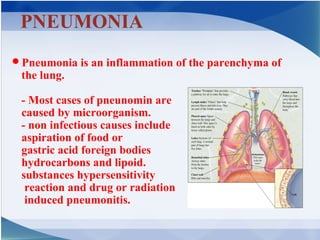
Pneumonia is an inflammation of the parenchyma of
the lung.
- Most cases of pneunomin are
caused by microorganism.
- non infectious causes include
aspiration of food or
gastric acid foreign bodies
hydrocarbons and lipoid.
substances hypersensitivity
reaction and drug or radiation
induced pneumonitis.
PNEUMONIA
• Classification .
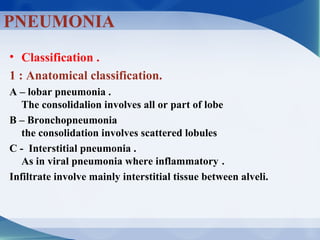
1 : Anatomical classification.
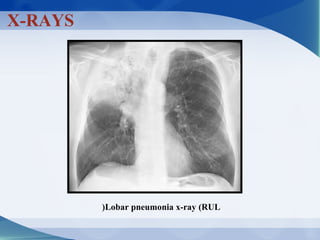
A – lobar pneumonia .
The consolidalion involves all or part of lobe
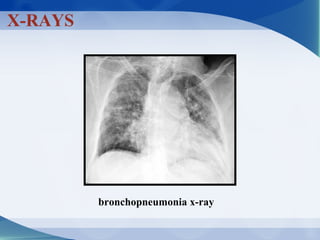
B – Bronchopneumonia
the consolidation involves scattered lobules
C - Interstitial pneumonia .
As in viral pneumonia where inflammatory .
Infiltrate involve mainly interstitial tissue between alveli.
PNEUMONIA
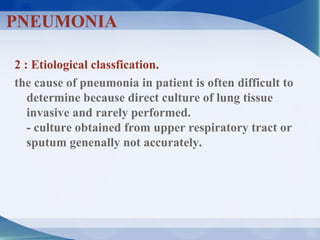
2 : Etiological classfication.
the cause of pneumonia in patient is often difficult to
determine because direct culture of lung tissue
invasive and rarely performed.
- culture obtained from upper respiratory tract or
sputum genenally not accurately.
PNEUMONIA
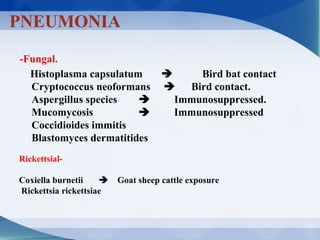
-Fungal.
Histoplasma capsulatum  Bird bat contact
Cryptococcus neoformans  Bird contact.
Aspergillus species  Immunosuppressed.
Mucomycosis  Immunosuppressed
Coccidioides immitis
Blastomyces dermatitides
PNEUMONIA
-Rickettsial
Coxiella burnetii  Goat sheep cattle exposure
Rickettsia rickettsiae
PNEUMONIA
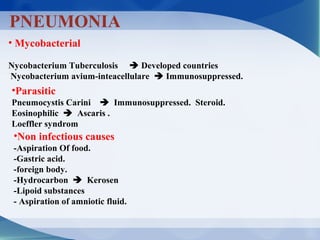
• Mycobacterial
Nycobacterium Tuberculosis  Developed countries
Nycobacterium avium-inteacellulare  Immunosuppressed.
•Parasitic
Pneumocystis Carini  Immunosuppressed. Steroid.
Eosinophilic  Ascaris .
Loeffler syndrom
•Non infectious causes
-Aspiration Of food.
-Gastric acid.
-foreign body.
-Hydrocarbon  Kerosen
-Lipoid substances
- Aspiration of amniotic fluid.
PNEUMONIA
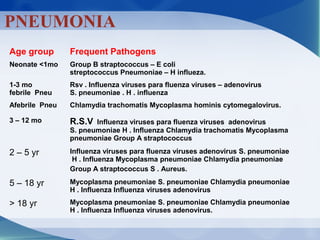
Age group Frequent Pathogens
Neonate <1mo Group B straptococcus – E coli
streptococcus Pneumoniae – H influeza.
1-3 mo
febrile Pneu
Rsv . Influenza viruses para fluenza viruses – adenovirus
S. pneumoniae . H . influenza
Afebrile Pneu Chlamydia trachomatis Mycoplasma hominis cytomegalovirus.
3 – 12 mo R.S.V Influenza viruses para fluenza viruses adenovirus
S. pneumoniae H . Influenza Chlamydia trachomatis Mycoplasma
pneumoniae Group A straptococcus
2 – 5 yr Influenza viruses para fluenza viruses adenovirus S. pneumoniae
H . Influenza Mycoplasma pneumoniae Chlamydia pneumoniae
Group A straptococcus S . Aureus.
5 – 18 yr Mycoplasma pneumoniae S. pneumoniae Chlamydia pneumoniae
H . Influenza Influenza viruses adenovirus
> 18 yr Mycoplasma pneumoniae S. pneumoniae Chlamydia pneumoniae
H . Influenza Influenza viruses adenovirus.
PNEUMONIA
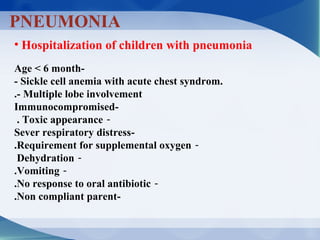
• Hospitalization of children with pneumonia
-Age < 6 month
- Sickle cell anemia with acute chest syndrom.
- Multiple lobe involvement.
-Immunocompromised
-Toxic appearance.
-Sever respiratory distress
-Requirement for supplemental oxygen.
-Dehydration
-Vomiting.
-No response to oral antibiotic.
-Non compliant parent.
PNEUMONIA
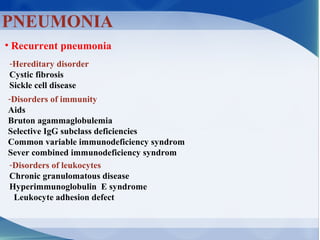
• Recurrent pneumonia
-Hereditary disorder
Cystic fibrosis
Sickle cell disease
-Disorders of immunity
Aids
Bruton agammaglobulemia
Selective IgG subclass deficiencies
Common variable immunodeficiency syndrom
Sever combined immunodeficiency syndrom
-Disorders of leukocytes
Chronic granulomatous disease
Hyperimmunoglobulin E syndrome
Leukocyte adhesion defect
PNEUMONIA
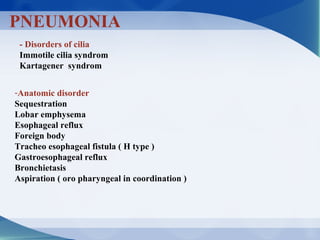
- Disorders of cilia
Immotile cilia syndrom
Kartagener syndrom
-Anatomic disorder
Sequestration
Lobar emphysema
Esophageal reflux
Foreign body
Tracheo esophageal fistula ( H type )
Gastroesophageal reflux
Bronchietasis
Aspiration ( oro pharyngeal in coordination )
PNEUMONIA
PNEUMONIA
•Viral pneumonia
usually result from spread of infection along the air way. Accompanied by
direct injury of respiratory epithelium resulting in air way obstruction from
swelling abnormal secretion and cellular debris small calibar of air way in
young infant makes them particularly susceptible to sever infection.
Viral infection predispose to secondary bacterial infection by disturbing
normal host defense mechanism altering secretion and modifying bacterial flora.
PNEUMONIA
•Bacterial infection
In bacterial infection pathologic process varies according
to the invading organism
M . Pneumoniae attaches to
the respiratory epithelium inhibit ciliary action and
Lead to cellular destruction and an inflammatory response in the submucosa
as the infection progresses sloughed cellular debris inflammatory cell and mucus
Cause airway obstruction with spread of infection occuriang along the bronchial
Tree as in viral pneumoia.
- S . Pneumoniae
Produce local edema that aids in the proliferation of organism and their spread
Into adjacent portion of lung often resulting in the characteristic focal lobar
Involvement
PNEUMONIA
-Grop A . Streptococcus
pathology Includes necrosis of tracheobronchial mucosa formation
-of large
amount of exudate edema and local hemorrhage with extension into the
Interalveolar septa and involvement of lymphatic vessel and pleura.
-S – aureus pneumonia
produces Toxin and enzymes as hemolysin coagulase and
-staphylo kinase
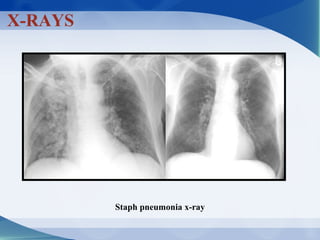
It causes broncho pneumonia often unilateral characterized by
prensence of
Hemorrhagic necrosis and irregular areas of cavitation of
lung parenchyma
Resulting in pneumatoceles empyema or broncho pulmonary fistula
Pyopneumothorax.
X-RAYS
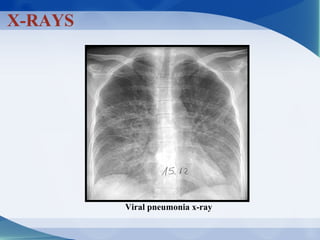
Viral pneumonia x-ray
X-RAYS
Lobar pneumonia x-ray (RUL(
X-RAYS
bronchopneumonia x-ray
X-RAYS
Staph pneumonia x-ray
THANKS ALOT

classification of pnemonia

  • 1.
  • 2.
    Pneumonia is aninflammation of the parenchyma of the lung. - Most cases of pneunomin are caused by microorganism. - non infectious causes include aspiration of food or gastric acid foreign bodies hydrocarbons and lipoid. substances hypersensitivity reaction and drug or radiation induced pneumonitis. PNEUMONIA
  • 3.
    • Classification . 1: Anatomical classification. A – lobar pneumonia . The consolidalion involves all or part of lobe B – Bronchopneumonia the consolidation involves scattered lobules C - Interstitial pneumonia . As in viral pneumonia where inflammatory . Infiltrate involve mainly interstitial tissue between alveli. PNEUMONIA
  • 4.
    2 : Etiologicalclassfication. the cause of pneumonia in patient is often difficult to determine because direct culture of lung tissue invasive and rarely performed. - culture obtained from upper respiratory tract or sputum genenally not accurately. PNEUMONIA
  • 5.
    -Fungal. Histoplasma capsulatum Bird bat contact Cryptococcus neoformans  Bird contact. Aspergillus species  Immunosuppressed. Mucomycosis  Immunosuppressed Coccidioides immitis Blastomyces dermatitides PNEUMONIA -Rickettsial Coxiella burnetii  Goat sheep cattle exposure Rickettsia rickettsiae
  • 6.
    PNEUMONIA • Mycobacterial Nycobacterium Tuberculosis Developed countries Nycobacterium avium-inteacellulare  Immunosuppressed. •Parasitic Pneumocystis Carini  Immunosuppressed. Steroid. Eosinophilic  Ascaris . Loeffler syndrom •Non infectious causes -Aspiration Of food. -Gastric acid. -foreign body. -Hydrocarbon  Kerosen -Lipoid substances - Aspiration of amniotic fluid.
  • 7.
    PNEUMONIA Age group FrequentPathogens Neonate <1mo Group B straptococcus – E coli streptococcus Pneumoniae – H influeza. 1-3 mo febrile Pneu Rsv . Influenza viruses para fluenza viruses – adenovirus S. pneumoniae . H . influenza Afebrile Pneu Chlamydia trachomatis Mycoplasma hominis cytomegalovirus. 3 – 12 mo R.S.V Influenza viruses para fluenza viruses adenovirus S. pneumoniae H . Influenza Chlamydia trachomatis Mycoplasma pneumoniae Group A straptococcus 2 – 5 yr Influenza viruses para fluenza viruses adenovirus S. pneumoniae H . Influenza Mycoplasma pneumoniae Chlamydia pneumoniae Group A straptococcus S . Aureus. 5 – 18 yr Mycoplasma pneumoniae S. pneumoniae Chlamydia pneumoniae H . Influenza Influenza viruses adenovirus > 18 yr Mycoplasma pneumoniae S. pneumoniae Chlamydia pneumoniae H . Influenza Influenza viruses adenovirus.
  • 8.
    PNEUMONIA • Hospitalization ofchildren with pneumonia -Age < 6 month - Sickle cell anemia with acute chest syndrom. - Multiple lobe involvement. -Immunocompromised -Toxic appearance. -Sever respiratory distress -Requirement for supplemental oxygen. -Dehydration -Vomiting. -No response to oral antibiotic. -Non compliant parent.
  • 9.
    PNEUMONIA • Recurrent pneumonia -Hereditarydisorder Cystic fibrosis Sickle cell disease -Disorders of immunity Aids Bruton agammaglobulemia Selective IgG subclass deficiencies Common variable immunodeficiency syndrom Sever combined immunodeficiency syndrom -Disorders of leukocytes Chronic granulomatous disease Hyperimmunoglobulin E syndrome Leukocyte adhesion defect
  • 10.
    PNEUMONIA - Disorders ofcilia Immotile cilia syndrom Kartagener syndrom -Anatomic disorder Sequestration Lobar emphysema Esophageal reflux Foreign body Tracheo esophageal fistula ( H type ) Gastroesophageal reflux Bronchietasis Aspiration ( oro pharyngeal in coordination )
  • 11.
  • 12.
    PNEUMONIA •Viral pneumonia usually resultfrom spread of infection along the air way. Accompanied by direct injury of respiratory epithelium resulting in air way obstruction from swelling abnormal secretion and cellular debris small calibar of air way in young infant makes them particularly susceptible to sever infection. Viral infection predispose to secondary bacterial infection by disturbing normal host defense mechanism altering secretion and modifying bacterial flora.
  • 13.
    PNEUMONIA •Bacterial infection In bacterialinfection pathologic process varies according to the invading organism M . Pneumoniae attaches to the respiratory epithelium inhibit ciliary action and Lead to cellular destruction and an inflammatory response in the submucosa as the infection progresses sloughed cellular debris inflammatory cell and mucus Cause airway obstruction with spread of infection occuriang along the bronchial Tree as in viral pneumoia. - S . Pneumoniae Produce local edema that aids in the proliferation of organism and their spread Into adjacent portion of lung often resulting in the characteristic focal lobar Involvement
  • 14.
    PNEUMONIA -Grop A .Streptococcus pathology Includes necrosis of tracheobronchial mucosa formation -of large amount of exudate edema and local hemorrhage with extension into the Interalveolar septa and involvement of lymphatic vessel and pleura. -S – aureus pneumonia produces Toxin and enzymes as hemolysin coagulase and -staphylo kinase It causes broncho pneumonia often unilateral characterized by prensence of Hemorrhagic necrosis and irregular areas of cavitation of lung parenchyma Resulting in pneumatoceles empyema or broncho pulmonary fistula Pyopneumothorax.
  • 16.
  • 17.
  • 18.
  • 19.
  • 20.