Virus pathogenesis and genetics www.freelivedoctor.com
Viral pathogenesis Cycle of infection  Entry  Primary site replication Spread within the host Shedding Transmission Effects on cells Effects on organism www.freelivedoctor.com
Definitions Tropism what cells within the host does the virus infect? influenced by cellular receptors, intracellular molecular restricitons, route of infection & spread Prodrome early disease symptoms which are mild or non-specific Fomite an inanimate object or substance that is capable of transmitting infectious organisms from one individual to another www.freelivedoctor.com
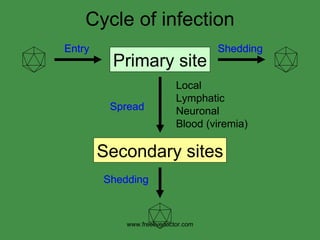
Cycle of infection Secondary sites Spread Entry Shedding Shedding Local Lymphatic Neuronal Blood (viremia) Primary site www.freelivedoctor.com
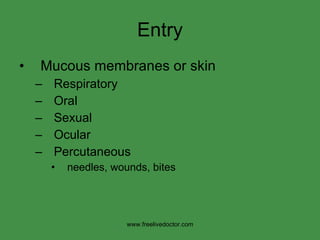
Entry Mucous membranes or skin Respiratory Oral Sexual Ocular Percutaneous needles, wounds, bites www.freelivedoctor.com
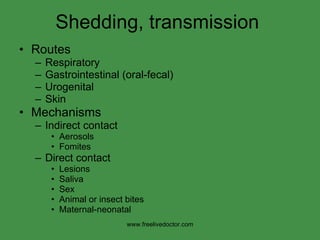
Shedding, transmission  Routes Respiratory Gastrointestinal (oral-fecal) Urogenital Skin Mechanisms Indirect contact Aerosols Fomites Direct contact Lesions Saliva Sex Animal or insect bites Maternal-neonatal www.freelivedoctor.com
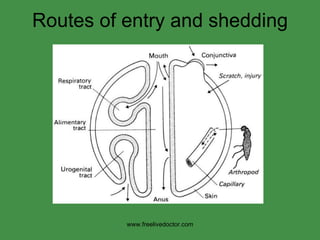
Routes of entry and shedding www.freelivedoctor.com
Effects on cells Abortive infection Lytic infection Persistence Transformation Alteration of cellular metabolism www.freelivedoctor.com
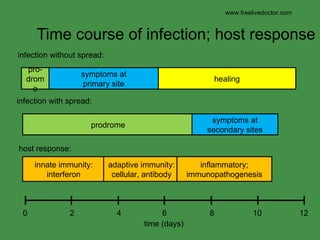
Time course of infection; host response infection without spread: infection with spread: host response: www.freelivedoctor.com prodrome symptoms at secondary sites pro-drome symptoms at primary site healing innate immunity: interferon adaptive immunity: cellular, antibody inflammatory; immunopathogenesis 0 2 4 6 8 10 12 time (days)
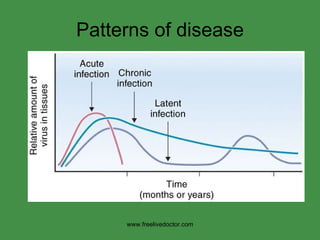
Patterns of disease www.freelivedoctor.com
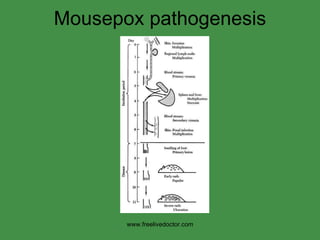
Mousepox pathogenesis www.freelivedoctor.com
Genetic principles Mutation Selection Recombination www.freelivedoctor.com
Scope of virus genetics Natural evolution of viruses Clinical management of virus infections Experimental virology www.freelivedoctor.com
Clinical significance of genetics Antigenic variation in HIV and influenza impact on vaccination Drug resistance in herpes and HIV Reversion of attenuation in polio vaccine Engineered vaccines temperature sensitive influenza (Flumist) www.freelivedoctor.com
Mutation RNA virus polymerases lack proofreading function RNA viruses mutate more frequently than DNA viruses RNA virus "quasi species" are adaptable www.freelivedoctor.com
Mutant phenotypes Conditional lethal Host range Temperature sensitive Drug dependence Drug resistance Plaque morphology www.freelivedoctor.com
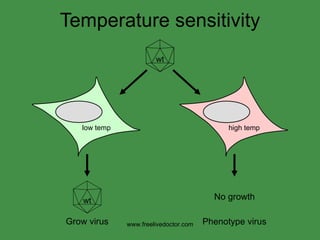
Temperature sensitivity No growth Grow virus Phenotype virus www.freelivedoctor.com wt wt wt high temp low temp
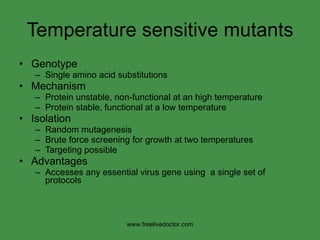
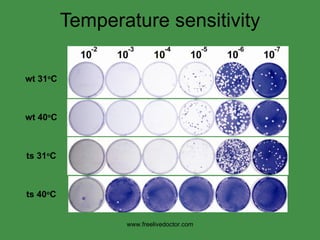
Temperature sensitive mutants Genotype Single amino acid substitutions Mechanism Protein unstable, non-functional at an high temperature Protein stable, functional at a low temperature Isolation Random mutagenesis Brute force screening for growth at two temperatures Targeting possible Advantages Accesses any essential virus gene using  a single set of protocols  www.freelivedoctor.com
Temperature sensitivity wt 31 o C wt 40 o C ts 31 o C ts 40 o C www.freelivedoctor.com
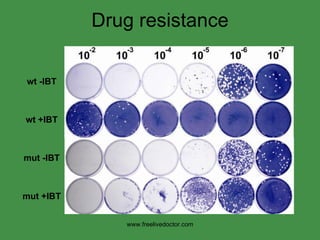
Drug resistance wt -IBT wt +IBT mut -IBT mut +IBT www.freelivedoctor.com
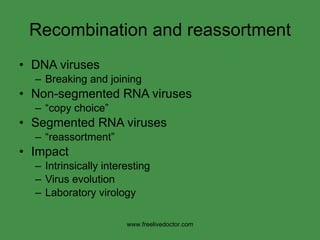
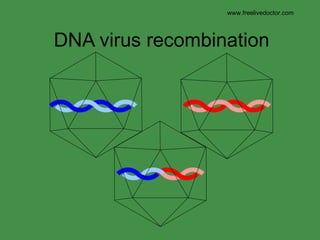
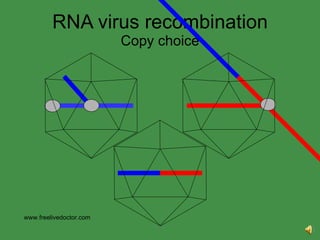
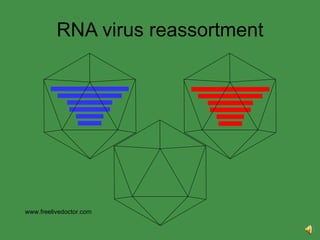
Recombination and reassortment DNA viruses Breaking and joining Non-segmented RNA viruses “ copy choice” Segmented RNA viruses “ reassortment” Impact Intrinsically interesting Virus evolution Laboratory virology www.freelivedoctor.com
DNA virus recombination www.freelivedoctor.com
RNA virus recombination Copy choice www.freelivedoctor.com
RNA virus reassortment www.freelivedoctor.com
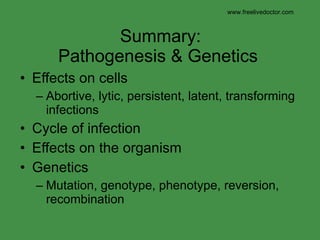
Summary: Pathogenesis & Genetics Effects on cells Abortive, lytic, persistent, latent, transforming infections Cycle of infection Effects on the organism Genetics Mutation, genotype, phenotype, reversion, recombination www.freelivedoctor.com
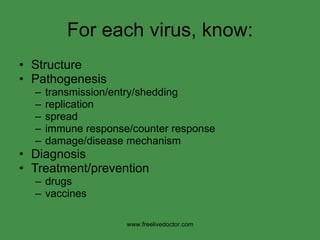
For each virus, know: Structure Pathogenesis transmission/entry/shedding replication spread immune response/counter response damage/disease mechanism Diagnosis Treatment/prevention drugs vaccines www.freelivedoctor.com

Pathogenesis Virus

  • 1.
    Virus pathogenesis andgenetics www.freelivedoctor.com
  • 2.
    Viral pathogenesis Cycleof infection Entry Primary site replication Spread within the host Shedding Transmission Effects on cells Effects on organism www.freelivedoctor.com
  • 3.
    Definitions Tropism whatcells within the host does the virus infect? influenced by cellular receptors, intracellular molecular restricitons, route of infection & spread Prodrome early disease symptoms which are mild or non-specific Fomite an inanimate object or substance that is capable of transmitting infectious organisms from one individual to another www.freelivedoctor.com
  • 4.
    Cycle of infectionSecondary sites Spread Entry Shedding Shedding Local Lymphatic Neuronal Blood (viremia) Primary site www.freelivedoctor.com
  • 5.
    Entry Mucous membranesor skin Respiratory Oral Sexual Ocular Percutaneous needles, wounds, bites www.freelivedoctor.com
  • 6.
    Shedding, transmission Routes Respiratory Gastrointestinal (oral-fecal) Urogenital Skin Mechanisms Indirect contact Aerosols Fomites Direct contact Lesions Saliva Sex Animal or insect bites Maternal-neonatal www.freelivedoctor.com
  • 7.
    Routes of entryand shedding www.freelivedoctor.com
  • 8.
    Effects on cellsAbortive infection Lytic infection Persistence Transformation Alteration of cellular metabolism www.freelivedoctor.com
  • 9.
    Time course ofinfection; host response infection without spread: infection with spread: host response: www.freelivedoctor.com prodrome symptoms at secondary sites pro-drome symptoms at primary site healing innate immunity: interferon adaptive immunity: cellular, antibody inflammatory; immunopathogenesis 0 2 4 6 8 10 12 time (days)
  • 10.
    Patterns of diseasewww.freelivedoctor.com
  • 11.
  • 12.
    Genetic principles MutationSelection Recombination www.freelivedoctor.com
  • 13.
    Scope of virusgenetics Natural evolution of viruses Clinical management of virus infections Experimental virology www.freelivedoctor.com
  • 14.
    Clinical significance ofgenetics Antigenic variation in HIV and influenza impact on vaccination Drug resistance in herpes and HIV Reversion of attenuation in polio vaccine Engineered vaccines temperature sensitive influenza (Flumist) www.freelivedoctor.com
  • 15.
    Mutation RNA viruspolymerases lack proofreading function RNA viruses mutate more frequently than DNA viruses RNA virus "quasi species" are adaptable www.freelivedoctor.com
  • 16.
    Mutant phenotypes Conditionallethal Host range Temperature sensitive Drug dependence Drug resistance Plaque morphology www.freelivedoctor.com
  • 17.
    Temperature sensitivity Nogrowth Grow virus Phenotype virus www.freelivedoctor.com wt wt wt high temp low temp
  • 18.
    Temperature sensitive mutantsGenotype Single amino acid substitutions Mechanism Protein unstable, non-functional at an high temperature Protein stable, functional at a low temperature Isolation Random mutagenesis Brute force screening for growth at two temperatures Targeting possible Advantages Accesses any essential virus gene using a single set of protocols www.freelivedoctor.com
  • 19.
    Temperature sensitivity wt31 o C wt 40 o C ts 31 o C ts 40 o C www.freelivedoctor.com
  • 20.
    Drug resistance wt-IBT wt +IBT mut -IBT mut +IBT www.freelivedoctor.com
  • 21.
    Recombination and reassortmentDNA viruses Breaking and joining Non-segmented RNA viruses “ copy choice” Segmented RNA viruses “ reassortment” Impact Intrinsically interesting Virus evolution Laboratory virology www.freelivedoctor.com
  • 22.
    DNA virus recombinationwww.freelivedoctor.com
  • 23.
    RNA virus recombinationCopy choice www.freelivedoctor.com
  • 24.
    RNA virus reassortmentwww.freelivedoctor.com
  • 25.
    Summary: Pathogenesis &Genetics Effects on cells Abortive, lytic, persistent, latent, transforming infections Cycle of infection Effects on the organism Genetics Mutation, genotype, phenotype, reversion, recombination www.freelivedoctor.com
  • 26.
    For each virus,know: Structure Pathogenesis transmission/entry/shedding replication spread immune response/counter response damage/disease mechanism Diagnosis Treatment/prevention drugs vaccines www.freelivedoctor.com