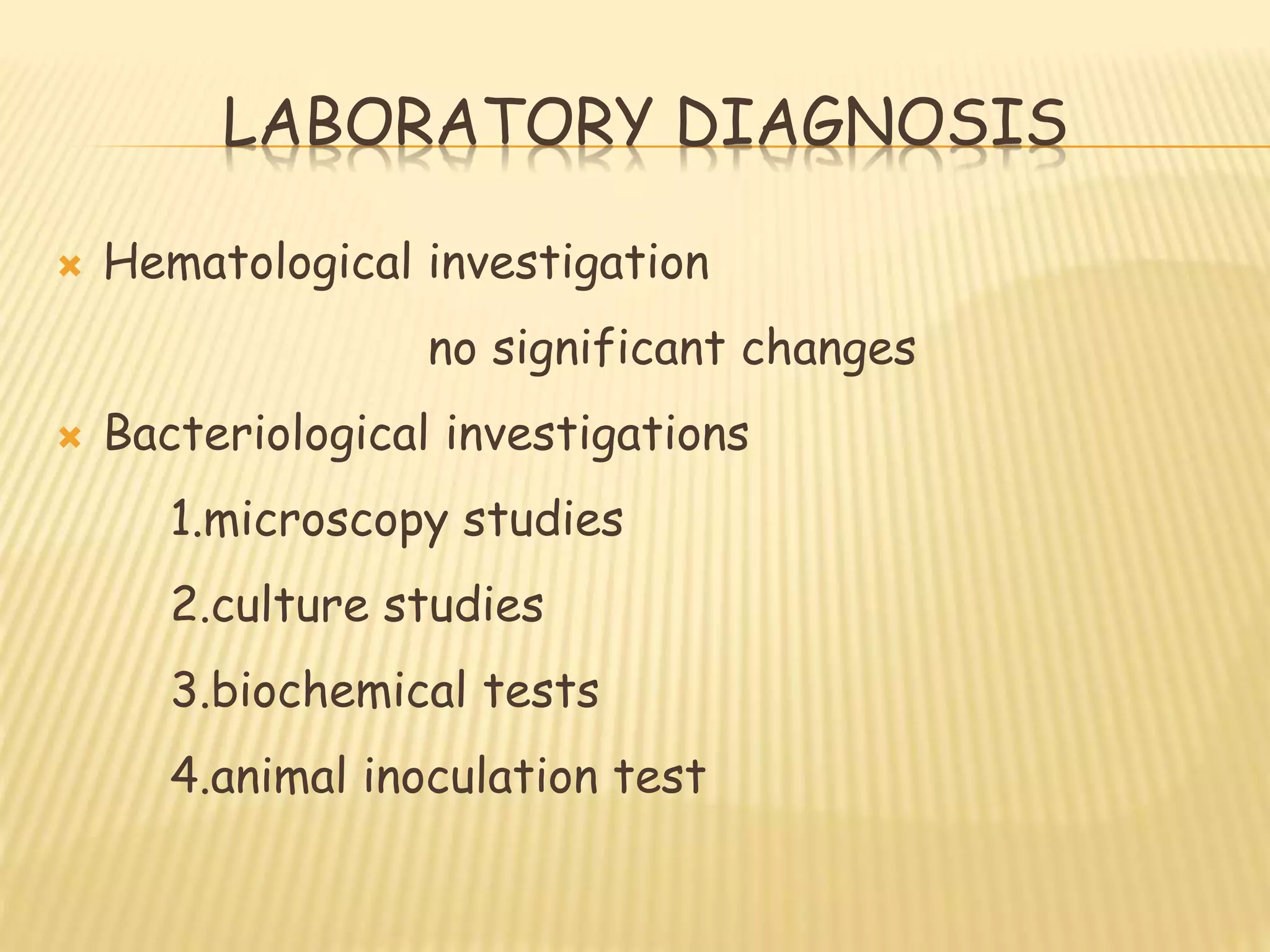
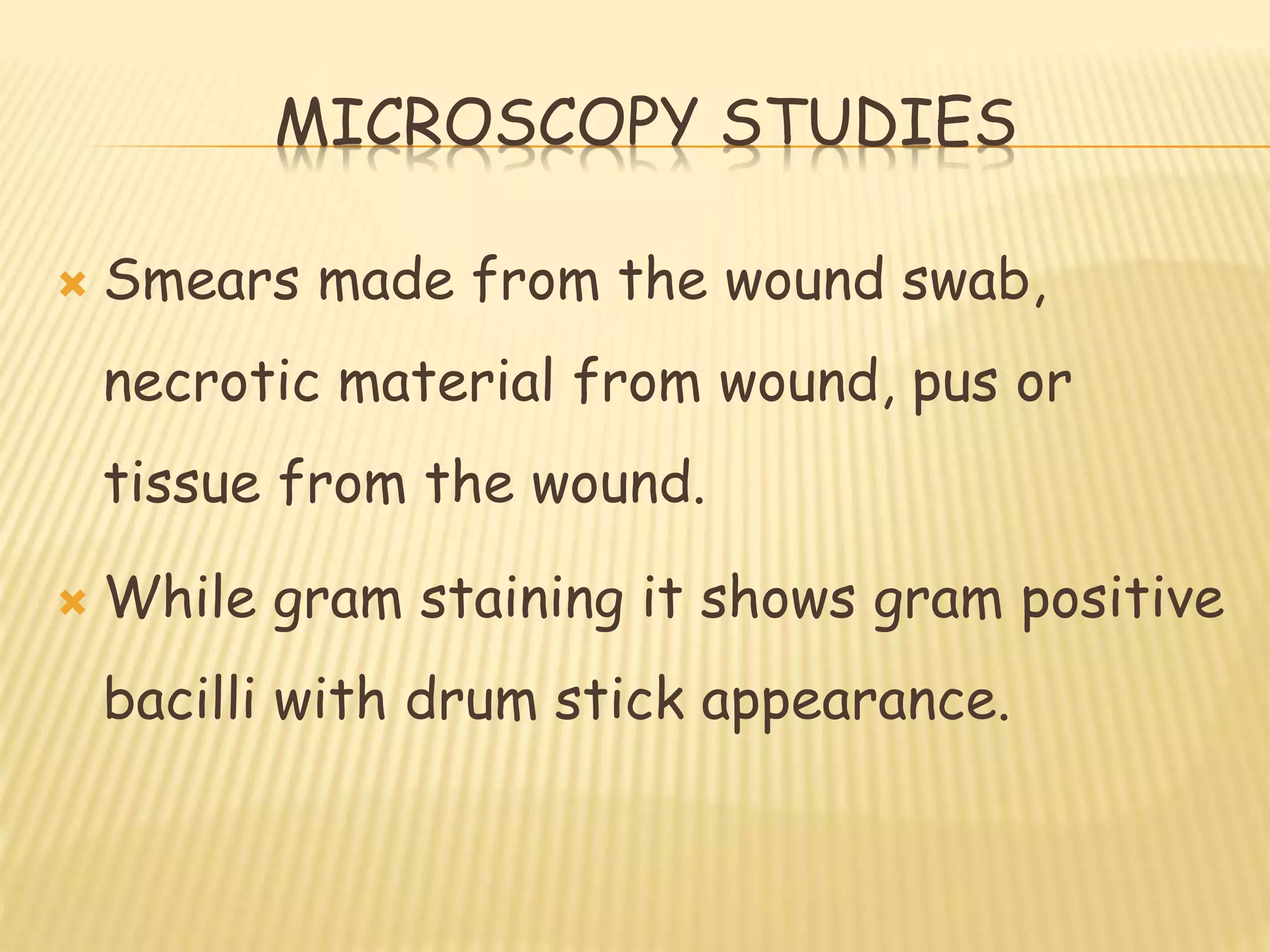
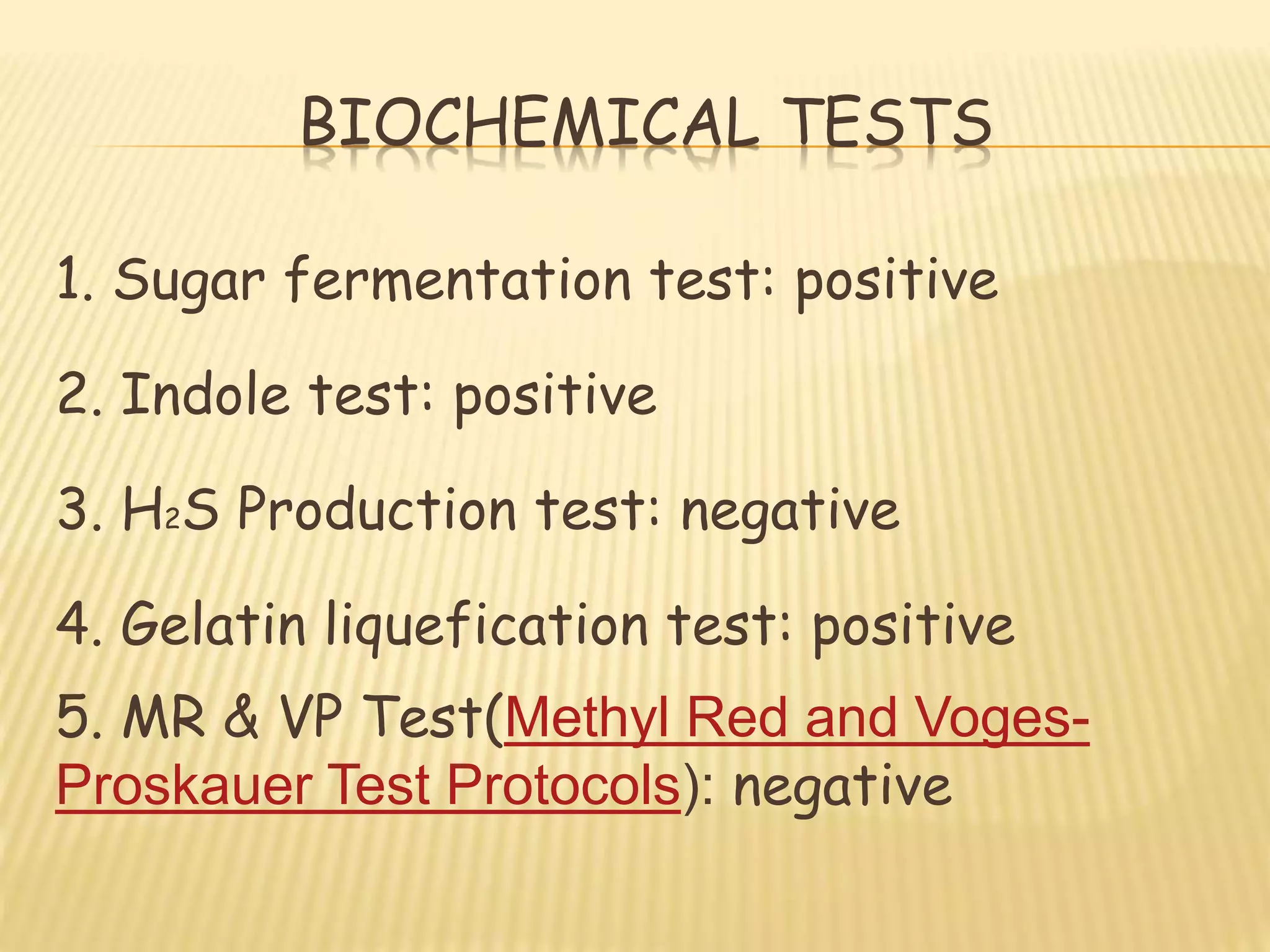
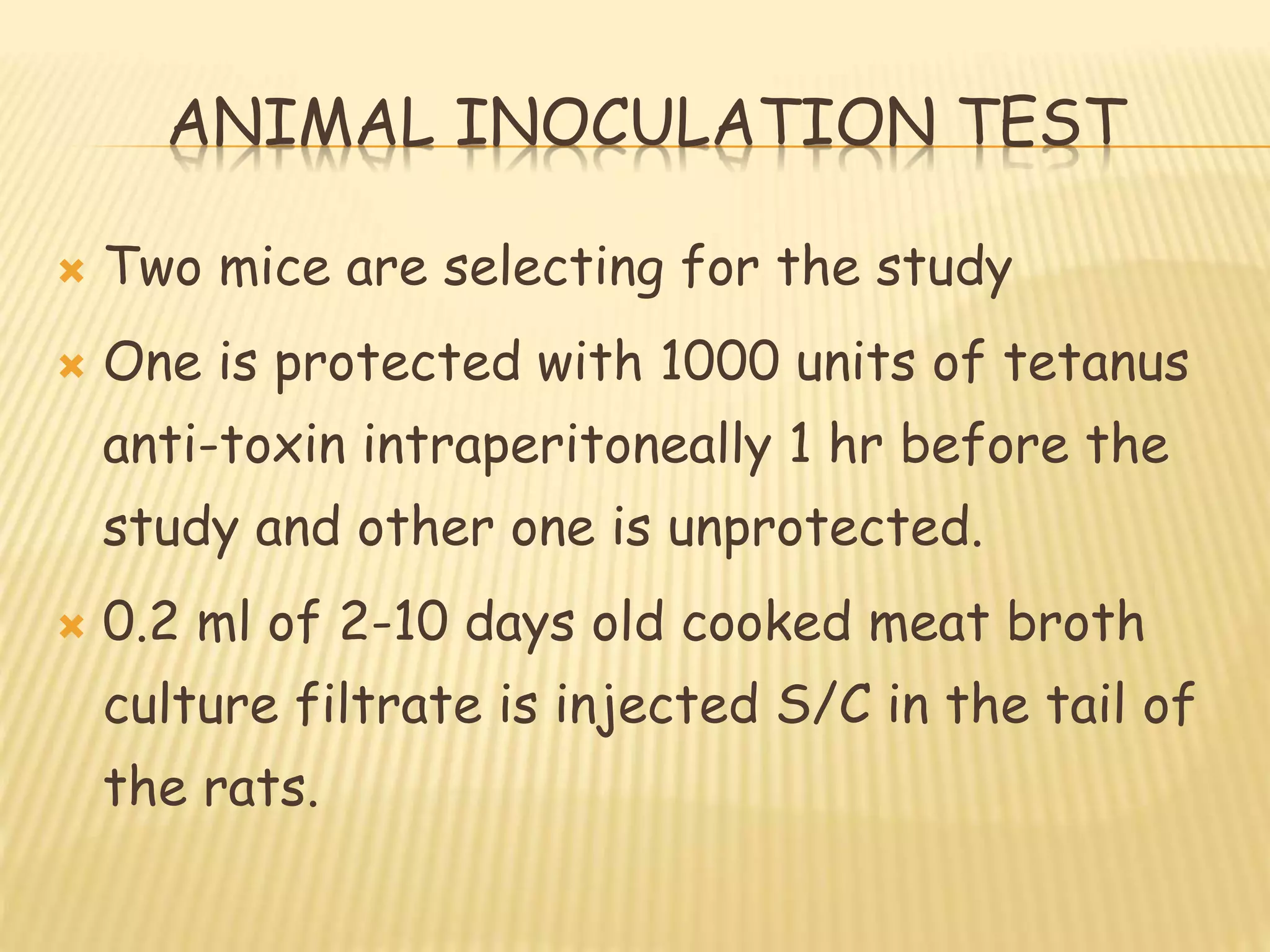
Clostridium tetani is a gram-positive, rod-shaped bacterium that causes the disease tetanus. It forms spores that allow it to survive in environments without oxygen. The spores can enter the body through wounds and germinate under anaerobic conditions, producing a toxin that travels along the nervous system to the spinal cord. This toxin blocks neurotransmitters and causes painful muscle spasms, starting with the jaw and potentially leading to death if the respiratory muscles are affected. Laboratory diagnosis involves microscopy, culture studies, and biochemical tests to identify the bacterium, as well as animal inoculation experiments. Treatment involves wound cleaning, antibiotics, and vaccines to prevent further cases.