Postpartum Mood Disorders www.freelivedoctor.com
Primary Objectives Review the range of pregnancy related mood disorders Discuss the risk factors for developing a pregnancy related disorder Identify screening strategies Review treatment options during pregnancy and postpartum www.freelivedoctor.com
Secondary Objectives Review the prevalence of mood disorders in women Investigate the etiology of pregnancy related mood disorders Discuss the familial implications of these illnesses Discuss prevention strategies www.freelivedoctor.com
Major Depressive Disorder Leading cause of disability Prevalence of 5-9% Lifetime risk of 10-25% www.freelivedoctor.com
Peripartum Depressive Disorders Antepartum Depression Postpartum Blues Postpartum Depression (PPD) Postpartum Psychosis (PPP) www.freelivedoctor.com
Antepartum Depression Symptoms often seen in non-depressed pregnant women Sleep and appetite disturbance Diminished libido Low energy   Pregnancy related conditions are associated with depressive symptoms Anemia  Gestational diabetes  Thyroid dysfunction   www.freelivedoctor.com
Postpartum Blues Aka “baby blues” Characteristics: Mild mood swings  Irritability  Anxiety  Decreased concentration  Insomnia  Tearfulness  Crying spells www.freelivedoctor.com
Postpartum Blues Occur within 2-3 days of delivery Symptoms peak on 4 th  or 5 th  postpartum day  Symptoms resolve within 2 weeks www.freelivedoctor.com
Postpartum Depression Same DSM IV criteria as for non-pregnancy related depression Symptoms usually begin in initial 12 months after delivery Symptoms often seen as “normal” for new mothers caring for a newborn www.freelivedoctor.com
Symptoms of PPD Change in somatic function Significant anxiety Intense irritability and anger Feelings of guilt www.freelivedoctor.com
Symptoms of PPD Sense of being overwhelmed  Unable to care for baby Feelings of inadequacy Not bonding with the baby www.freelivedoctor.com
Postpartum  Psychosis Usually a manifestation of bipolar disorder Typically presents within 2 weeks of delivery May develop few months after birth as delusional depression www.freelivedoctor.com
Signs and Symptoms of PPP Severe insomnia Rapid mood swings Anxiety Psychomotor restlessness Delusions and hallucinations www.freelivedoctor.com
Fetal Implications Increased rate of: Preterm birth Low birth weight Small head circumference Low APGAR scores www.freelivedoctor.com
Familial Implications Postnatal depression in men Interference with maternal-infant bonding, increases mom’s sense of shame and guilt Influences infant development www.freelivedoctor.com
Familial Implications Negative interactive patterns with infant Children exposed to maternal psychiatric illness have: Higher incidence of conduct disorders  Inappropriate aggression  Cognitive and attention deficits www.freelivedoctor.com
Prevalence Postpartum blues occur in 40 – 80% of women PPD affects 10 – 30% of women  Postpartum psychosis is rare www.freelivedoctor.com
Antepartum Depression Prevalence 10% of all pregnancies Increased risk for women with history of affective illnesses Relapses most common in the first trimester 1/3 of all cases represent first episode of depression www.freelivedoctor.com
Postpartum Depression Prevalence Up to 13% in the first year postpartum 50% higher risk of recurrent PPD in subsequent pregnancies If history of depression prior to pregnancy, risk of PPD is 25 – 30% www.freelivedoctor.com
Prevalence in Active Duty Positive depression screen Antepartum Postpartum Suicide ideation rate www.freelivedoctor.com
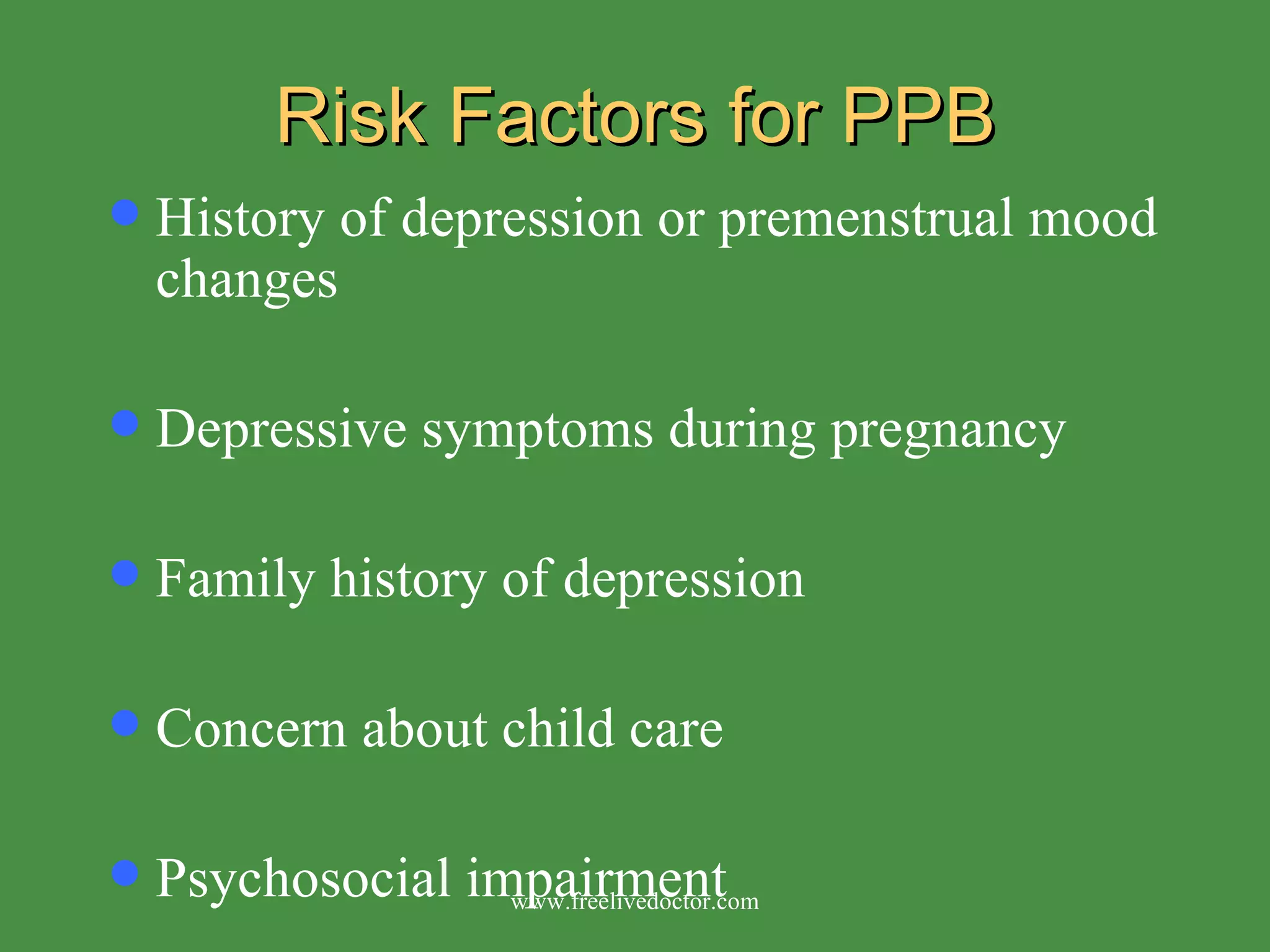
Risk Factors for PPB History of depression or premenstrual mood changes Depressive symptoms during pregnancy Family history of depression Concern about child care Psychosocial impairment www.freelivedoctor.com
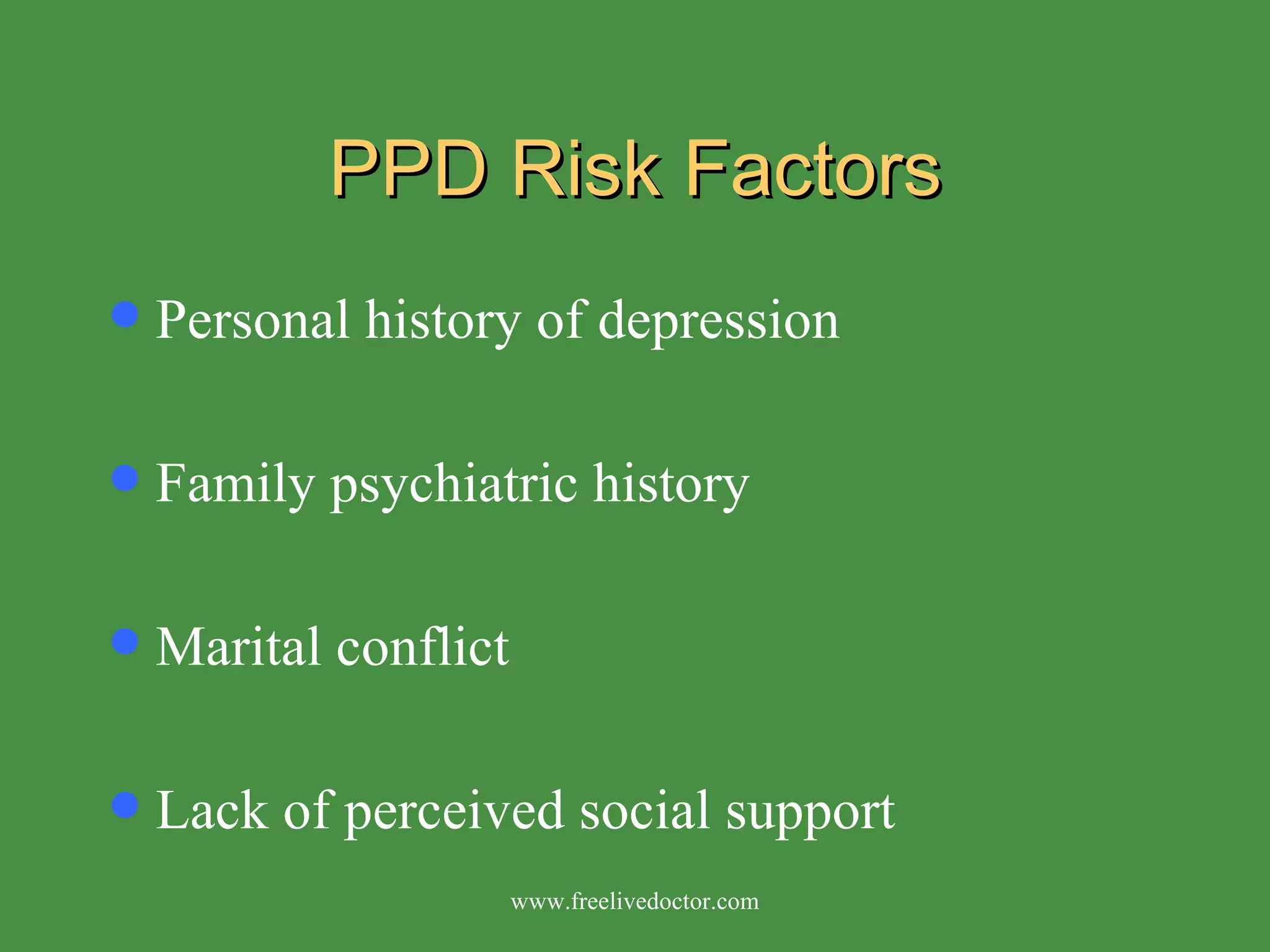
PPD Risk Factors Personal history of depression Family psychiatric history Marital conflict Lack of perceived social support www.freelivedoctor.com
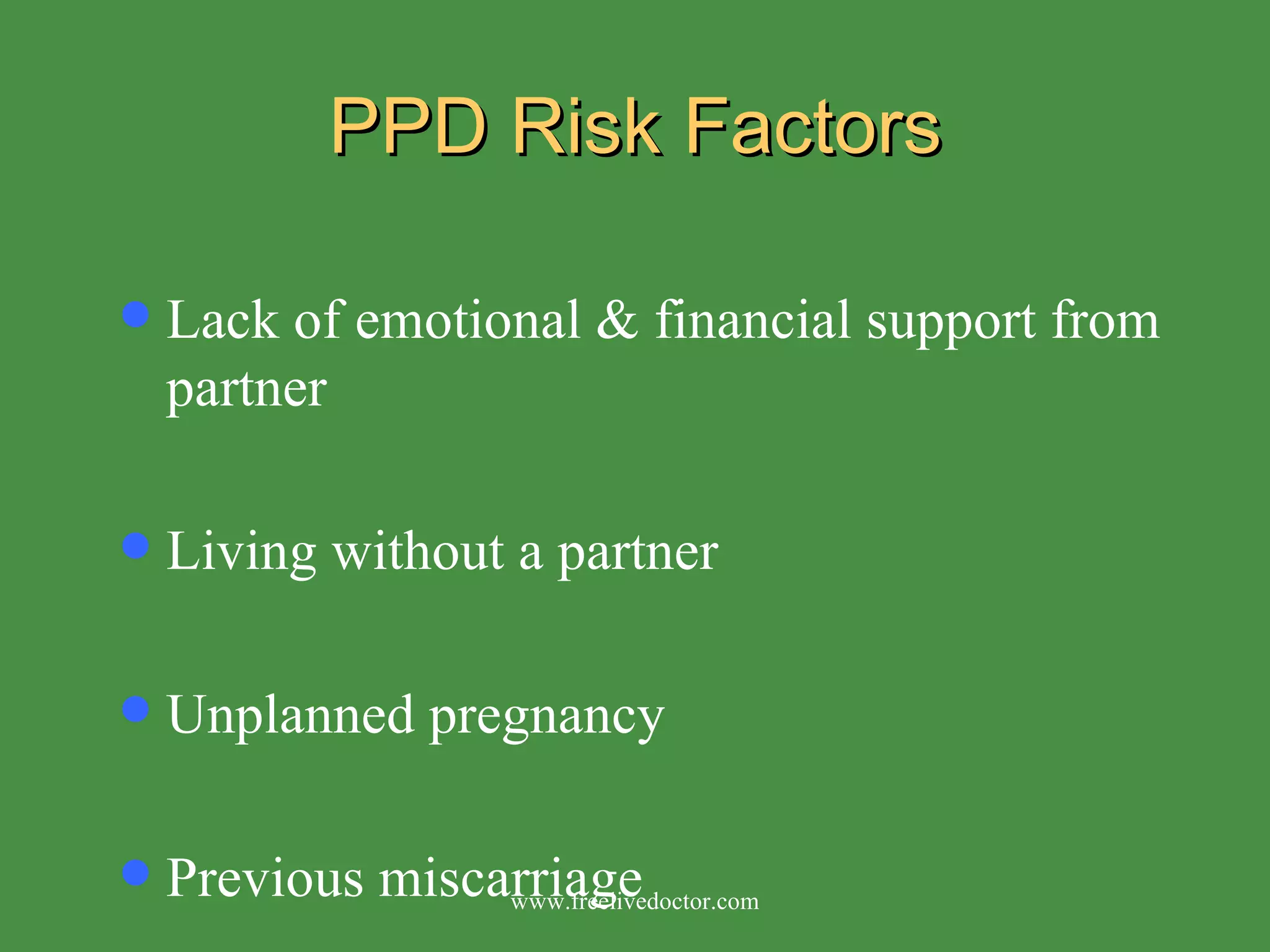
PPD Risk Factors Lack of emotional & financial support from partner Living without a partner Unplanned pregnancy Previous miscarriage www.freelivedoctor.com
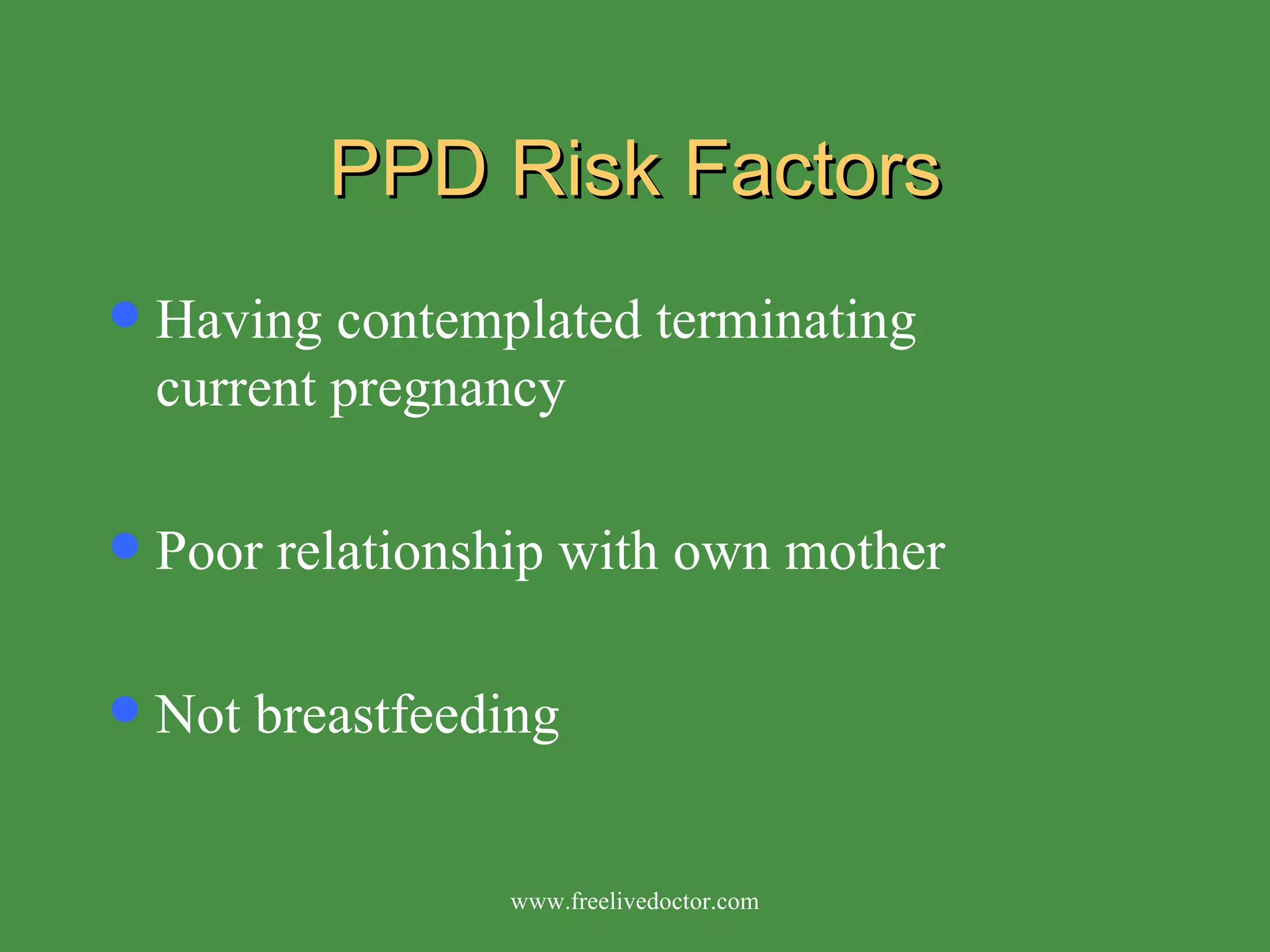
PPD Risk Factors Having contemplated terminating current pregnancy Poor relationship with own mother Not breastfeeding www.freelivedoctor.com
PPD Risk Factors Unemployment in the mother Lifetime history of depression in partner Stressful life events in previous 12 months www.freelivedoctor.com
PPD Risk Factors Child care related stressors Sick leave during pregnancy High number of prenatal visits Congenitally malformed infant www.freelivedoctor.com
Risk Factors for PPP History of bipolar disorder History of psychosis prior to pregnancy Family history of psychosis www.freelivedoctor.com
Co-morbidities Decreased weight gain during pregnancy Increased rate of tobacco use Increased rate of alcohol and illicit drug use www.freelivedoctor.com
Etiology No clear etiology Possibly due to combination of: Genetic susceptibility  Hormonal changes Major life events www.freelivedoctor.com
Etiology Investigators have examined the role of: Estrogen  Progesterone  Thyroid hormone  Testosterone  Cholesterol  Corticotropin-relasing hormone Cortisol www.freelivedoctor.com
Screening - Overview Important to identify proper timing of screening Avenues include both informal and formal techniques Various formal screening tools available www.freelivedoctor.com
Screening - Timing Antepartum visits  During hospital stay  Postpartum visits Well child visits www.freelivedoctor.com
Screening - Tools Beck’s Depression Inventory (PDI) Postpartum Depression Screening Scale (PDSS) Edinburgh Postnatal Depression Scale (EPDS) www.freelivedoctor.com
Beck’s Depression Inventory Self administered survey 21 questions scored 0 – 3 Score of over 17 indicates that patient would benefit from professional assistance 56% of postpartum women with postpartum depression identified in one study www.freelivedoctor.com
Postpartum Depression Screening Scale 94% sensitive and 96% specific in initial trials 35 item self-administered questionnaire Uses 5 point scale www.freelivedoctor.com
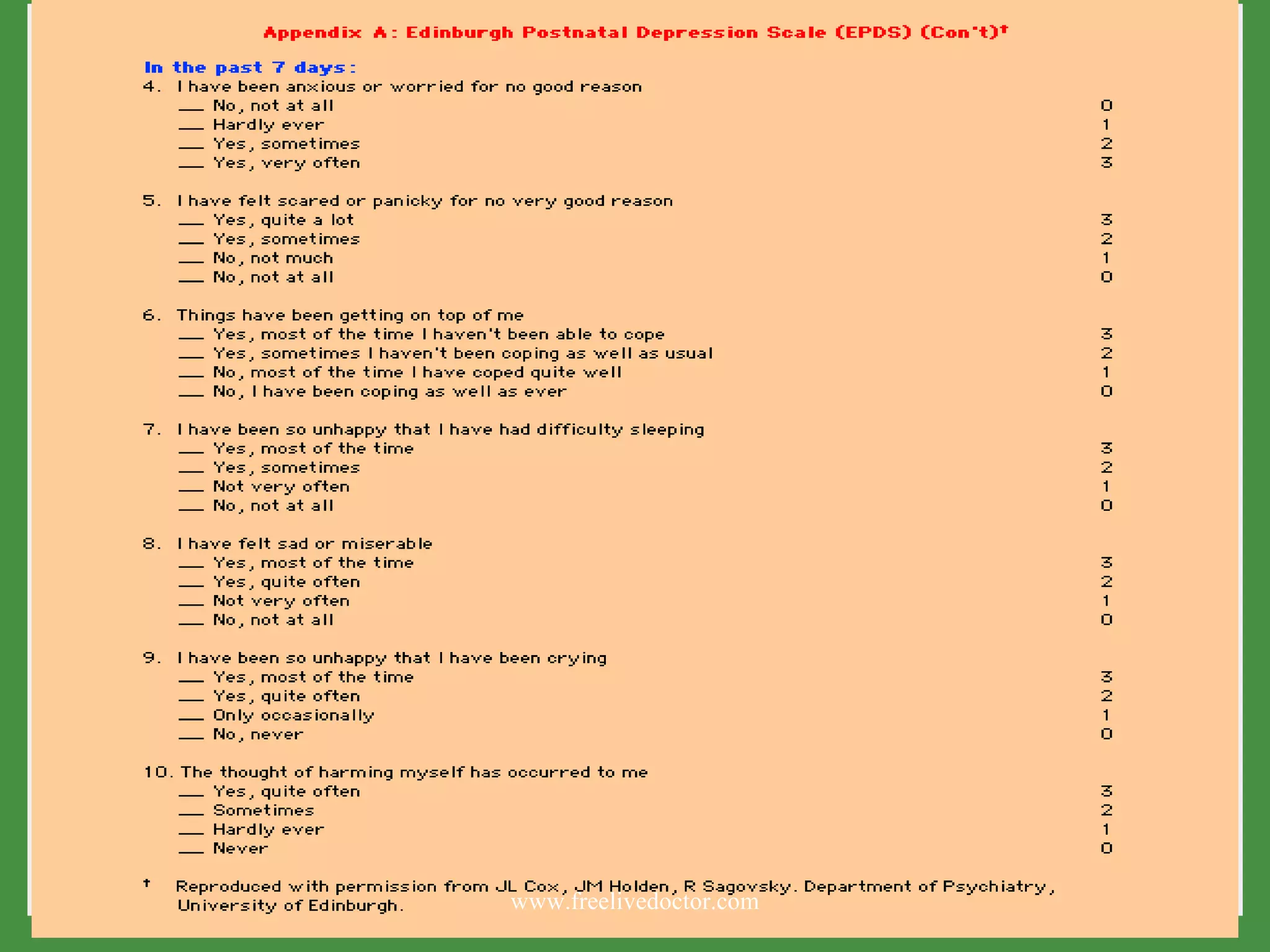
Edinburgh Postnatal Depression Scale 10 item questionnaire Each response scored 0 – 3, with total score of 30 possible Scores  >  12 or 13 identify most women with postpartum depression www.freelivedoctor.com
EPDS Score > 12 reported as 100% sensitive and 95% specific in detecting major depression Studies comparing EPDS vs PCM evaluation of patient show EPDS has a higher incidence of detecting and diagnosing postpartum depression www.freelivedoctor.com
www.freelivedoctor.com                                                                                                                                                       
Evaluation and Diagnosis Labs- CBC, TSH Consider urine drug screen if history of drug use/abuse DSM IV diagnosis criteria www.freelivedoctor.com
Diagnosis DSM IV modifier ICD coding Postpartum depression 648.4 Major depression 296 www.freelivedoctor.com
Treatment Factors to address: Biological  Psychological  Social Demonstrated maximal clinical response with biopsychosocial approach www.freelivedoctor.com
Treatment Psychosocial therapies First choice for those with mild to moderate symptoms of PPD Cognitive-behavioral therapy Interpersonal psychotherapy- focuses on patient’s interpersonal relationship and changing roles www.freelivedoctor.com
Psychosocial Therapies Group therapy Helps to increase support network Family and marital therapy More rapid recovery More appreciative of partner’s contribution Peer-support groups www.freelivedoctor.com
Psychosocial Therapies (cont) Supportive psychotherapy Groups that offer support and education Postpartum Support International www. postpartum.net Depression After Delivery www. depressionafterdelivery.com www.freelivedoctor.com
Interpersonal Therapy (IPT) Short-term, manual-driven psychotherapy Addresses four major problem domains: Grief  Interpersonal disputes  Role transitions  Interpersonal deficits Shown to reduce symptoms in pregnant women www.freelivedoctor.com
Pharmacologic Therapy No antidepressants are approved by the FDA for use during pregnancy All psychotropic drugs are transferred through the placenta and breast milk Consider prior history SSRIs and TCAs have low detection in breastfed infant serum  www.freelivedoctor.com
Concerns for Psychotropic Use Risk of pregnancy loss or miscarriage Risk of organ malformation or teratogenesis  Risk of neonatal toxicity or withdrawal syndromes Risk of longterm neurobehavioral sequelae www.freelivedoctor.com
Neonatal Withdrawal – TCAs TCA withdrawal syndrome: Jitteriness  Irritability Seizures Anticholinergic effect of TCAs include: Functional bowel obstruction urinary retention www.freelivedoctor.com
Neonatal Withdrawal - SSRIs Transient symptoms of: Irritability Excessive crying Increased muscle tone Feeding problems Sleep disruption Respiratory distress www.freelivedoctor.com
Long Term Sequelae No significant difference in: IQ Temperament Behavior Reactivity Mood Distractibility Activity level www.freelivedoctor.com
Pharmacologic Therapy Increase risk of suicide after initiation of medication If significant anxiety or insomnia present, consider adding benzodiazepine Close follow-up www.freelivedoctor.com
Antidepressant Choice TCAs Desipramine and Nortryptiline are preferred Least anti-cholinergic affects Minimize postural hypotension SSRIs Fluoxetine is the best studied www.freelivedoctor.com
Additional Considerations Doses of both SSRIs and TCAs may need to be increased in pregnancy secondary to: Increased plasma volume Increased hepatic metabolism Increased renal clearance www.freelivedoctor.com
Other Therapies Hormonal Therapy Increased risk of PPD if Depo-provera given within 48 hrs of delivery Transdermal estradiol may improve symptoms Treat severe anemia Treat poorly controlled hypothyroidism www.freelivedoctor.com
Other Therapies (cont) ECT Few adverse effects to mom or infant Good when rapid treatment is needed For severe depression with psychotic symptoms or acute mania www.freelivedoctor.com
Length of Treatment Based on patient history and severity of symptoms Continue 12 months after full remission Continue meds through pregnancy to reduce risk of relapse www.freelivedoctor.com
Referrals Consider Psychiatric referral if: Poor response to therapy  Relapse  Major functional impairment Suicidal or homicidal ideation www.freelivedoctor.com
Treatment of Postpartum Psychosis Medical emergency Patient should be hospitalized until stable While psychotic, mom cannot adequately care for self or infant www.freelivedoctor.com
Treatment of PPP (cont) Medications focused on controlling both psychosis and mood swings Combination therapy often necessary Most will not be able to continue breastfeeding ECT may be highly effective www.freelivedoctor.com
Prevention Monitor for signs in high risk women Educate women and family members before childbirth Counseling and increase social support prior to delivery Consider starting therapy during third trimester or immediately after delivery www.freelivedoctor.com
Conclusion Postpartum mood disorders are common Military population has multiple risk factors for developing postpartum depression Important to screen patients in a variety of settings. Treatment of postpartum depression important for maternal and familial well being www.freelivedoctor.com

Postpartum mood disorders

  • 1.
    Postpartum Mood Disorderswww.freelivedoctor.com
  • 2.
    Primary Objectives Reviewthe range of pregnancy related mood disorders Discuss the risk factors for developing a pregnancy related disorder Identify screening strategies Review treatment options during pregnancy and postpartum www.freelivedoctor.com
  • 3.
    Secondary Objectives Reviewthe prevalence of mood disorders in women Investigate the etiology of pregnancy related mood disorders Discuss the familial implications of these illnesses Discuss prevention strategies www.freelivedoctor.com
  • 4.
    Major Depressive DisorderLeading cause of disability Prevalence of 5-9% Lifetime risk of 10-25% www.freelivedoctor.com
  • 5.
    Peripartum Depressive DisordersAntepartum Depression Postpartum Blues Postpartum Depression (PPD) Postpartum Psychosis (PPP) www.freelivedoctor.com
  • 6.
    Antepartum Depression Symptomsoften seen in non-depressed pregnant women Sleep and appetite disturbance Diminished libido Low energy Pregnancy related conditions are associated with depressive symptoms Anemia Gestational diabetes Thyroid dysfunction www.freelivedoctor.com
  • 7.
    Postpartum Blues Aka“baby blues” Characteristics: Mild mood swings Irritability Anxiety Decreased concentration Insomnia Tearfulness Crying spells www.freelivedoctor.com
  • 8.
    Postpartum Blues Occurwithin 2-3 days of delivery Symptoms peak on 4 th or 5 th postpartum day Symptoms resolve within 2 weeks www.freelivedoctor.com
  • 9.
    Postpartum Depression SameDSM IV criteria as for non-pregnancy related depression Symptoms usually begin in initial 12 months after delivery Symptoms often seen as “normal” for new mothers caring for a newborn www.freelivedoctor.com
  • 10.
    Symptoms of PPDChange in somatic function Significant anxiety Intense irritability and anger Feelings of guilt www.freelivedoctor.com
  • 11.
    Symptoms of PPDSense of being overwhelmed Unable to care for baby Feelings of inadequacy Not bonding with the baby www.freelivedoctor.com
  • 12.
    Postpartum PsychosisUsually a manifestation of bipolar disorder Typically presents within 2 weeks of delivery May develop few months after birth as delusional depression www.freelivedoctor.com
  • 13.
    Signs and Symptomsof PPP Severe insomnia Rapid mood swings Anxiety Psychomotor restlessness Delusions and hallucinations www.freelivedoctor.com
  • 14.
    Fetal Implications Increasedrate of: Preterm birth Low birth weight Small head circumference Low APGAR scores www.freelivedoctor.com
  • 15.
    Familial Implications Postnataldepression in men Interference with maternal-infant bonding, increases mom’s sense of shame and guilt Influences infant development www.freelivedoctor.com
  • 16.
    Familial Implications Negativeinteractive patterns with infant Children exposed to maternal psychiatric illness have: Higher incidence of conduct disorders Inappropriate aggression Cognitive and attention deficits www.freelivedoctor.com
  • 17.
    Prevalence Postpartum bluesoccur in 40 – 80% of women PPD affects 10 – 30% of women Postpartum psychosis is rare www.freelivedoctor.com
  • 18.
    Antepartum Depression Prevalence10% of all pregnancies Increased risk for women with history of affective illnesses Relapses most common in the first trimester 1/3 of all cases represent first episode of depression www.freelivedoctor.com
  • 19.
    Postpartum Depression PrevalenceUp to 13% in the first year postpartum 50% higher risk of recurrent PPD in subsequent pregnancies If history of depression prior to pregnancy, risk of PPD is 25 – 30% www.freelivedoctor.com
  • 20.
    Prevalence in ActiveDuty Positive depression screen Antepartum Postpartum Suicide ideation rate www.freelivedoctor.com
  • 21.
    Risk Factors forPPB History of depression or premenstrual mood changes Depressive symptoms during pregnancy Family history of depression Concern about child care Psychosocial impairment www.freelivedoctor.com
  • 22.
    PPD Risk FactorsPersonal history of depression Family psychiatric history Marital conflict Lack of perceived social support www.freelivedoctor.com
  • 23.
    PPD Risk FactorsLack of emotional & financial support from partner Living without a partner Unplanned pregnancy Previous miscarriage www.freelivedoctor.com
  • 24.
    PPD Risk FactorsHaving contemplated terminating current pregnancy Poor relationship with own mother Not breastfeeding www.freelivedoctor.com
  • 25.
    PPD Risk FactorsUnemployment in the mother Lifetime history of depression in partner Stressful life events in previous 12 months www.freelivedoctor.com
  • 26.
    PPD Risk FactorsChild care related stressors Sick leave during pregnancy High number of prenatal visits Congenitally malformed infant www.freelivedoctor.com
  • 27.
    Risk Factors forPPP History of bipolar disorder History of psychosis prior to pregnancy Family history of psychosis www.freelivedoctor.com
  • 28.
    Co-morbidities Decreased weightgain during pregnancy Increased rate of tobacco use Increased rate of alcohol and illicit drug use www.freelivedoctor.com
  • 29.
    Etiology No clearetiology Possibly due to combination of: Genetic susceptibility Hormonal changes Major life events www.freelivedoctor.com
  • 30.
    Etiology Investigators haveexamined the role of: Estrogen Progesterone Thyroid hormone Testosterone Cholesterol Corticotropin-relasing hormone Cortisol www.freelivedoctor.com
  • 31.
    Screening - OverviewImportant to identify proper timing of screening Avenues include both informal and formal techniques Various formal screening tools available www.freelivedoctor.com
  • 32.
    Screening - TimingAntepartum visits During hospital stay Postpartum visits Well child visits www.freelivedoctor.com
  • 33.
    Screening - ToolsBeck’s Depression Inventory (PDI) Postpartum Depression Screening Scale (PDSS) Edinburgh Postnatal Depression Scale (EPDS) www.freelivedoctor.com
  • 34.
    Beck’s Depression InventorySelf administered survey 21 questions scored 0 – 3 Score of over 17 indicates that patient would benefit from professional assistance 56% of postpartum women with postpartum depression identified in one study www.freelivedoctor.com
  • 35.
    Postpartum Depression ScreeningScale 94% sensitive and 96% specific in initial trials 35 item self-administered questionnaire Uses 5 point scale www.freelivedoctor.com
  • 36.
    Edinburgh Postnatal DepressionScale 10 item questionnaire Each response scored 0 – 3, with total score of 30 possible Scores > 12 or 13 identify most women with postpartum depression www.freelivedoctor.com
  • 37.
    EPDS Score >12 reported as 100% sensitive and 95% specific in detecting major depression Studies comparing EPDS vs PCM evaluation of patient show EPDS has a higher incidence of detecting and diagnosing postpartum depression www.freelivedoctor.com
  • 38.
  • 39.
  • 40.
    Evaluation and DiagnosisLabs- CBC, TSH Consider urine drug screen if history of drug use/abuse DSM IV diagnosis criteria www.freelivedoctor.com
  • 41.
    Diagnosis DSM IVmodifier ICD coding Postpartum depression 648.4 Major depression 296 www.freelivedoctor.com
  • 42.
    Treatment Factors toaddress: Biological Psychological Social Demonstrated maximal clinical response with biopsychosocial approach www.freelivedoctor.com
  • 43.
    Treatment Psychosocial therapiesFirst choice for those with mild to moderate symptoms of PPD Cognitive-behavioral therapy Interpersonal psychotherapy- focuses on patient’s interpersonal relationship and changing roles www.freelivedoctor.com
  • 44.
    Psychosocial Therapies Grouptherapy Helps to increase support network Family and marital therapy More rapid recovery More appreciative of partner’s contribution Peer-support groups www.freelivedoctor.com
  • 45.
    Psychosocial Therapies (cont)Supportive psychotherapy Groups that offer support and education Postpartum Support International www. postpartum.net Depression After Delivery www. depressionafterdelivery.com www.freelivedoctor.com
  • 46.
    Interpersonal Therapy (IPT)Short-term, manual-driven psychotherapy Addresses four major problem domains: Grief Interpersonal disputes Role transitions Interpersonal deficits Shown to reduce symptoms in pregnant women www.freelivedoctor.com
  • 47.
    Pharmacologic Therapy Noantidepressants are approved by the FDA for use during pregnancy All psychotropic drugs are transferred through the placenta and breast milk Consider prior history SSRIs and TCAs have low detection in breastfed infant serum www.freelivedoctor.com
  • 48.
    Concerns for PsychotropicUse Risk of pregnancy loss or miscarriage Risk of organ malformation or teratogenesis Risk of neonatal toxicity or withdrawal syndromes Risk of longterm neurobehavioral sequelae www.freelivedoctor.com
  • 49.
    Neonatal Withdrawal –TCAs TCA withdrawal syndrome: Jitteriness Irritability Seizures Anticholinergic effect of TCAs include: Functional bowel obstruction urinary retention www.freelivedoctor.com
  • 50.
    Neonatal Withdrawal -SSRIs Transient symptoms of: Irritability Excessive crying Increased muscle tone Feeding problems Sleep disruption Respiratory distress www.freelivedoctor.com
  • 51.
    Long Term SequelaeNo significant difference in: IQ Temperament Behavior Reactivity Mood Distractibility Activity level www.freelivedoctor.com
  • 52.
    Pharmacologic Therapy Increaserisk of suicide after initiation of medication If significant anxiety or insomnia present, consider adding benzodiazepine Close follow-up www.freelivedoctor.com
  • 53.
    Antidepressant Choice TCAsDesipramine and Nortryptiline are preferred Least anti-cholinergic affects Minimize postural hypotension SSRIs Fluoxetine is the best studied www.freelivedoctor.com
  • 54.
    Additional Considerations Dosesof both SSRIs and TCAs may need to be increased in pregnancy secondary to: Increased plasma volume Increased hepatic metabolism Increased renal clearance www.freelivedoctor.com
  • 55.
    Other Therapies HormonalTherapy Increased risk of PPD if Depo-provera given within 48 hrs of delivery Transdermal estradiol may improve symptoms Treat severe anemia Treat poorly controlled hypothyroidism www.freelivedoctor.com
  • 56.
    Other Therapies (cont)ECT Few adverse effects to mom or infant Good when rapid treatment is needed For severe depression with psychotic symptoms or acute mania www.freelivedoctor.com
  • 57.
    Length of TreatmentBased on patient history and severity of symptoms Continue 12 months after full remission Continue meds through pregnancy to reduce risk of relapse www.freelivedoctor.com
  • 58.
    Referrals Consider Psychiatricreferral if: Poor response to therapy Relapse Major functional impairment Suicidal or homicidal ideation www.freelivedoctor.com
  • 59.
    Treatment of PostpartumPsychosis Medical emergency Patient should be hospitalized until stable While psychotic, mom cannot adequately care for self or infant www.freelivedoctor.com
  • 60.
    Treatment of PPP(cont) Medications focused on controlling both psychosis and mood swings Combination therapy often necessary Most will not be able to continue breastfeeding ECT may be highly effective www.freelivedoctor.com
  • 61.
    Prevention Monitor forsigns in high risk women Educate women and family members before childbirth Counseling and increase social support prior to delivery Consider starting therapy during third trimester or immediately after delivery www.freelivedoctor.com
  • 62.
    Conclusion Postpartum mooddisorders are common Military population has multiple risk factors for developing postpartum depression Important to screen patients in a variety of settings. Treatment of postpartum depression important for maternal and familial well being www.freelivedoctor.com

Editor's Notes

  • #5 According to Agency for Healthcare Research and Quality, depression is the leading cause of disease related disability among women. Point prevalence of major depressive disorder in women is 5-9% with lifetime risk of 10-25%
  • #6 Pregnancy related mood disorders bridge a range of conditions which vary in onset and severity. These include…. Postpartum depression occurs in as many as 1 in 8 US pregnancies. More common than gestational diabetes, preeclampsia or preterm delivery.
  • #8 Transient condition
  • #9 Transient condition
  • #10 Fatigue, being overwhelmed common symptoms of depression and often seen in new mothers.
  • #13 Usually a psychiatric emergency and will require hospitalization
  • #15 Each of which has been shown to be a predictor of poorer fetal outcome.
  • #16 Significant risk factors for development of postnatal depression in men include depression in partner during or shortly after pregnancy and personal h/o depression
  • #18 Major depressive disorder in women  5 – 9% Lifetime risk is 10 – 25% Prevalence depends on assessment method, timing of assessment, and population characteristics. Prevalence of postpartum depression is close to that in nonpregnant women, but rate of onset of new episodes of depression is 3x higher than in nonpregnant controls. Postpartum psychosis occurs in 1.1-4 cases/1000 deliveries

  • #19 AHRQ- major and minor depression 8.5 –11 % during pregnancy and 6.5 – 12.9% during 1 st postpartum year Prevalence of major depression is highest in 2 nd trimester, 2 months postpartum and 6 months postpartum
  • #20 AHRQ- major and minor depression 8.5 –11 % during pregnancy and 6.5 – 12.9% during 1 st postpartum year Prevalence of major depression is highest in 2 nd trimester, 2 months postpartum and 6 months postpartum
  • #21 Rate for + depression screen was almost 2x rate reported in nonmilitary populations, both antepartum and postpartum. OF those who screened +, 36% were considered emergent – score >20 or + answer to suicide ideation question. In postpartum period, rate of suicide ideation was triple that observed in 1 study
  • #23 Most women depressed during pregnancy will remain depressed postpartum Women who conceive less than 12 months after stillbirth are at higher risk of depression in 3 rd trimester of next pregnancy & at 1 year postpartum compared to women who conceive after 12 months
  • #24 Previous miscarriage- risk of PPD is higher among women with prior h/o depression than in those without h/o depression. Elevated risk is highest in 1 st six months after loss. Women who conceive less than 12 months after stillbirth are at higher risk of depression in 3 rd trimester of next pregnancy & at 1 year postpartum compared to women who conceive after 12 months
  • #25 Many of these occur in active duty population and dependents
  • #26 Many of these occur in active duty population and dependents
  • #27 Sick leave during pregnancy- related to hyperemesis, uterine irritability, psychiatric disorder
  • #30 One study looked at association of postpartum blues and estrogen withdrawal. Women who developed PPB had a significantly higher level of free estriol at 38 wks and a greater fall of free estriol concentration on postpartum day #1.
  • #31 One study looked at association of postpartum blues and estrogen withdrawal. Women who developed PPB had a significantly higher level of free estriol at 38 wks and a greater fall of free estriol concentration on postpartum day #1.
  • #32 AHRQ all screeners (beck depression inventory, postpartum depression screening scale, EPDS) had high specificity for major depression alone. Means the risk of a screen being a false positive is low. EPDS and PDSS more sensitive Looking at major and minor depression together, the sensitivity is much lower
  • #33 AHRQ all screeners (beck depression inventory, postpartum depression screening scale, EPDS) had high specificity for major depression alone. Means the risk of a screen being a false positive is low. EPDS and PDSS more sensitive Looking at major and minor depression together, the sensitivity is much lower
  • #34 AHRQ all screeners (beck depression inventory, postpartum depression screening scale, EPDS) had high specificity for major depression alone. Means the risk of a screen being a false positive is low. EPDS and PDSS more sensitive Looking at major and minor depression together, the sensitivity is much lower
  • #37 Developed in 1987
  • #38 Compared to spontaneous detection, 35.4 % vs 6.3% AT 6 wk postpartum visit EPDS administration in first few days postpartum can predict maternal mood 4-8 wks later
  • #39 Insert EPDS from UPTODATE here
  • #41 DSM IV criteria- 5 or more symptoms for at least 2 wks- depressed mood, fatigue, loss of energy, loss of pleasure or interest, increased sense of worthlessness or guilt, significant weight loss/gain, decreased concentration, insomnia or hypersomnia, recurrent morbid thoughts or suicidal ideations, agitation or retardation, significant distress or impairment of function, not better accounted for by bereavement
  • #42 DSM IV- uses postpartum onset modifier if occurs in first 4 wks postpartum ICD coding- if occurs in 1 st 6 wks postpartum, ICD code for postpartum depression
  • #43 British study showed that multiple home visits thru 28 days postpartum in addition to a consult at 10-12 wks had lower EPDS scores than those receiving visits only thru 10-14 days postpartum
  • #44 AHRQ reviewed 6 studies which showed significant benefit for depression outcomes with psychosocial thearpies Small study which compared women who received 6 sessions of CBT to women receiving fluoxetine showed same degree of improvement in functioning Interpersonal psychotherapy- good in tx of mood and anxiety disorders; effective in decreasing depressive symptoms and increasing social adjustment
  • #45 Family and marital therapy more rapid recovery for postpartum women more appreciative of partner’s contributions to relationship when partner is supportive
  • #47 Addresses four main problem domains with respect to human psychosocial functioning One small study of 13 women showed decrease in symptoms and induction of remission in all 13. In the 10 women followed post partum none developed post partum depression
  • #49 Several studies have shown a non-statistically significant increase in the number of miscarriages in women taking SSRIs or SRNIs – it is not clear if this is secondary to the medications or the depression itself. Two meta-analyses of ssri and tca use during pregnancy failed to show an increase in fetal anomalies. However recently - Swedish Medical birth registry has shown a 1.5 to 2 fold increased risk for cardiovascular malformations (vsd and asd) associated with 1 st trimester exposure to paroxetine Risk of neonatal toxicity of withdrawal syndromes during the acute neonatal period One study showed women who took fluoxetine in the 3 rd trimester had significantly higher rates of preterm delivery and poor neonatal adaptation. In full term infants, the mean birth weight was significantly lower. Fluoxetine is most studied of SSRIs. Could be beneficial in that it has a long half life, so one does not need to taper the dose. Zoloft shows to have one of the lowest levels in breast milk Long term effects on cognitive development and behaviour are unknown.
  • #50 Seizures have only been seen with clomipramine
  • #51 Have been seen with both fluoxetine and paroxetine Not clear if SSRIs with longer half lives have same withdraw symptoms
  • #52 Two studies by nulman of children exposed to either tcas or ssris during pregnancy demonstrated no signficant differences in…..
  • #53 Need to take into account risks of fetal exposure to medication, potential impact of untreated maternal depression during pregnancy on neonatal outcome and potential risks of neonatal syndromes associated with certain antidepressants.
  • #54 One study showed there was no difference between nortryptiline and placebo
  • #56 Small study with transdermal estradiol showed improvement in women with severe and persistent ppd
  • #57 ECT typically requires 3-9 treatments to produce an effective response. Treatments are 3x/wk Rapid treatment needed = mother at risk for suicide or infanticide In past 50 years there has been only four cases of preterm labor and none of SROM associated with ECT
  • #58 While a patient’s length of therapy is often based on their history of prior depression, recurrence rate, and severity of previous symptoms, it is often recommended that women continue medications for at least one year following full remission of symptoms. If a patient becomes pregnant while on antidepressants you should continue meds through pregnancy to reduce the risk of relapse. JAMA study in feb 1, 2006- of 201 women with h/o depression, 43% experienced relapse of major depression during pregnancy. Those who maintained meds during pregnancy only had 26% relapse vs 68% in those who stopped meds. 50% relapsed in 1 st trimester and 90% by end of 2 nd trimester Both duration of depressive illness and h/o more recurrent depressive were associated with significant increase in risk of depressive relapse during pregnancy Maintenance of euthymic mood during pregnancy is essential in reducing long term morbidity and mortality
  • #59 JAMA study in feb 1, 2006- of 201 women with h/o depression, 43% experienced relapse of major depression during pregnancy. Those who maintained meds during pregnancy only had 26% relapse vs 68% in those who stopped meds. 50% relapsed in 1 st trimester and 90% by end of 2 nd trimester Both duration of depressive illness and h/o more recurrent depressive were associated with significant increase in risk of depressive relapse during pregnancy Maintenance of euthymic mood during pregnancy is essential in reducing long term morbidity and mortality
  • #61 Combination therapy is often required, including mood stabilizers, antipsychotics, benzodiazopines, and antidepressants. Consideration should be given to discontinuing breastfeeding secondary to potential effects of medication combinations of the infant.
  • #62 Risk of ppd is 25% in women with previous h/o depression and 50% if prior h/o ppd
  • #63 It is important to screen patients during antepartum visits, while in the hospital and at postpartum and well baby visits