Downloaded 1,095 times
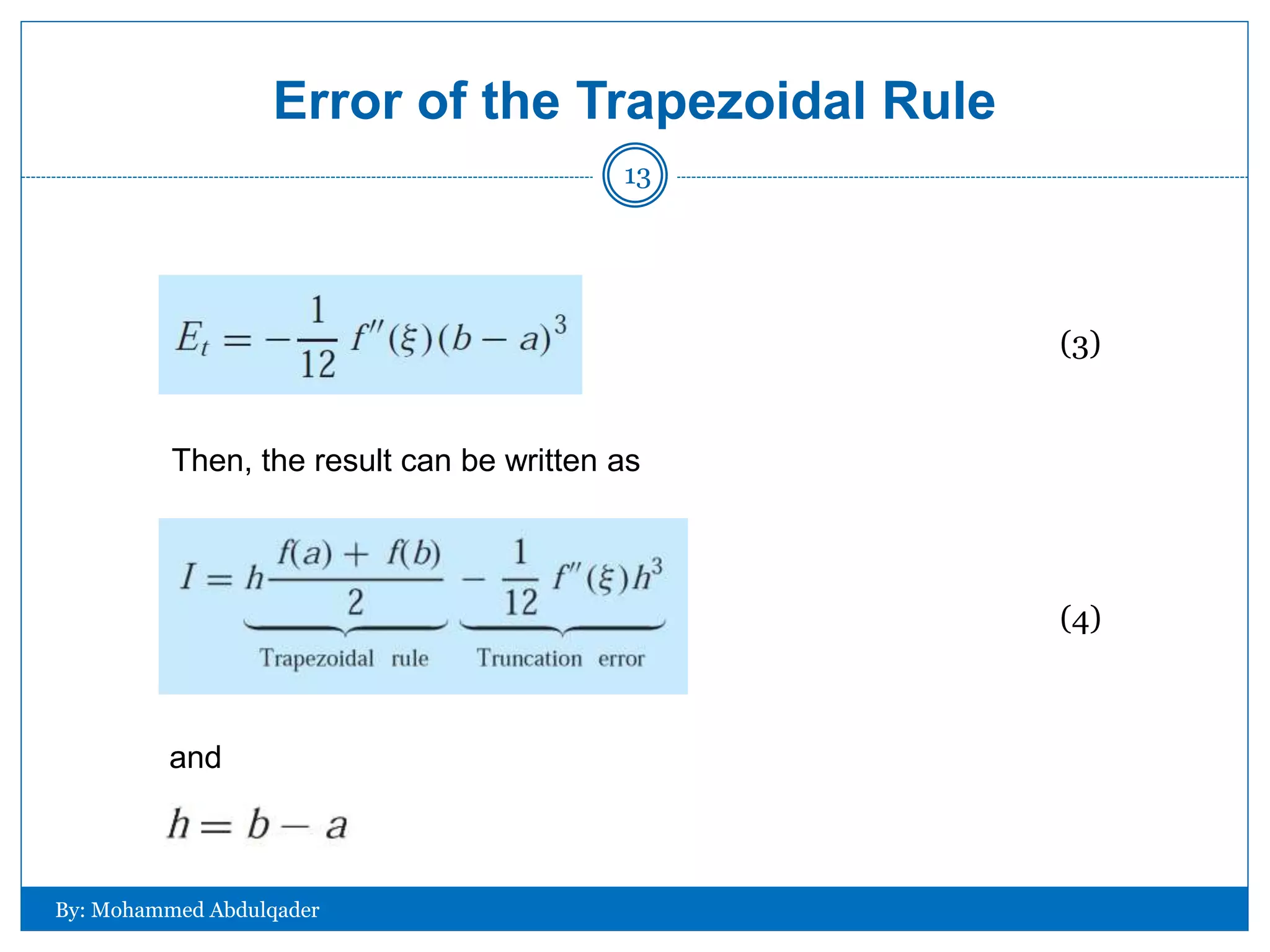
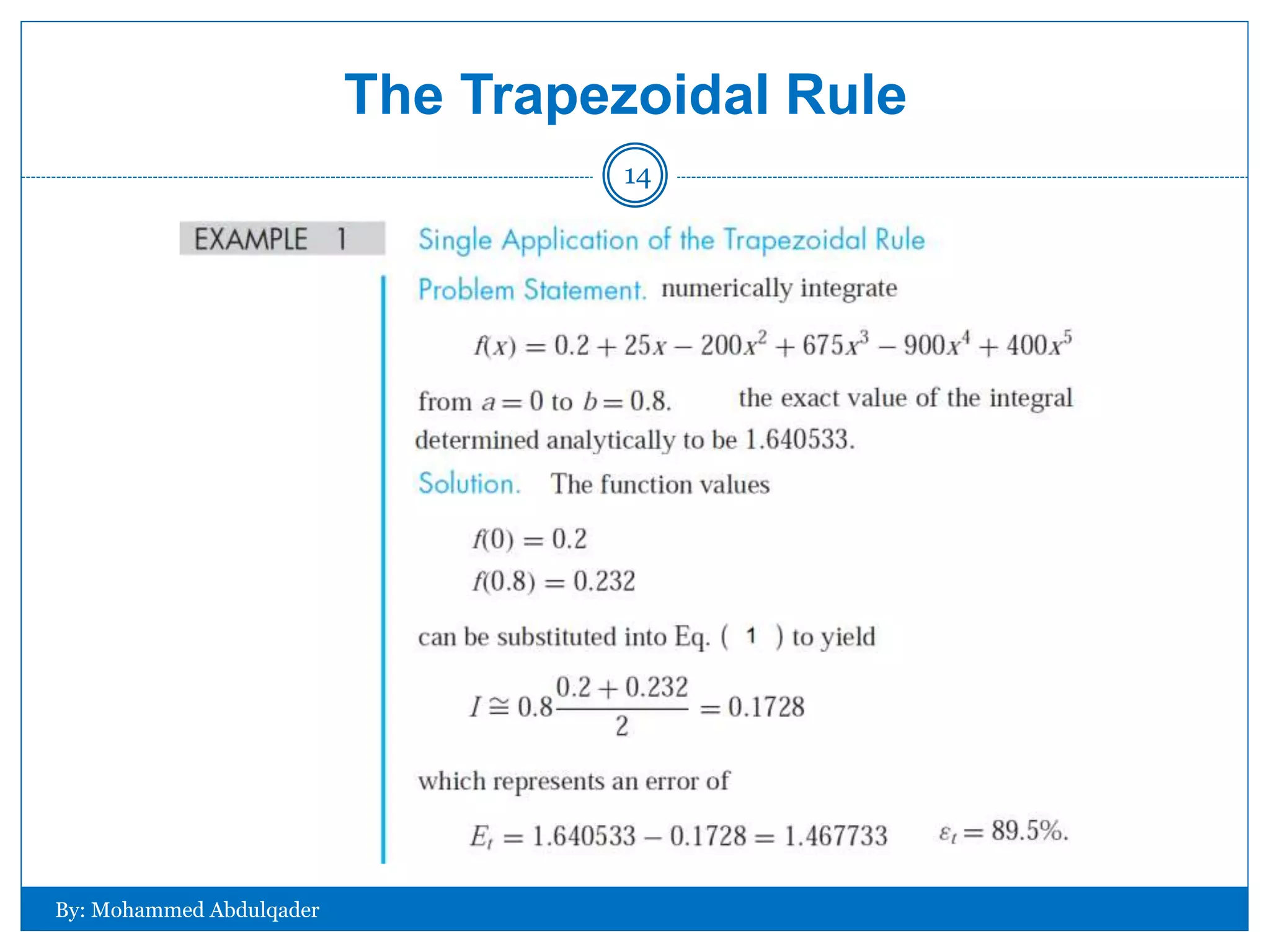
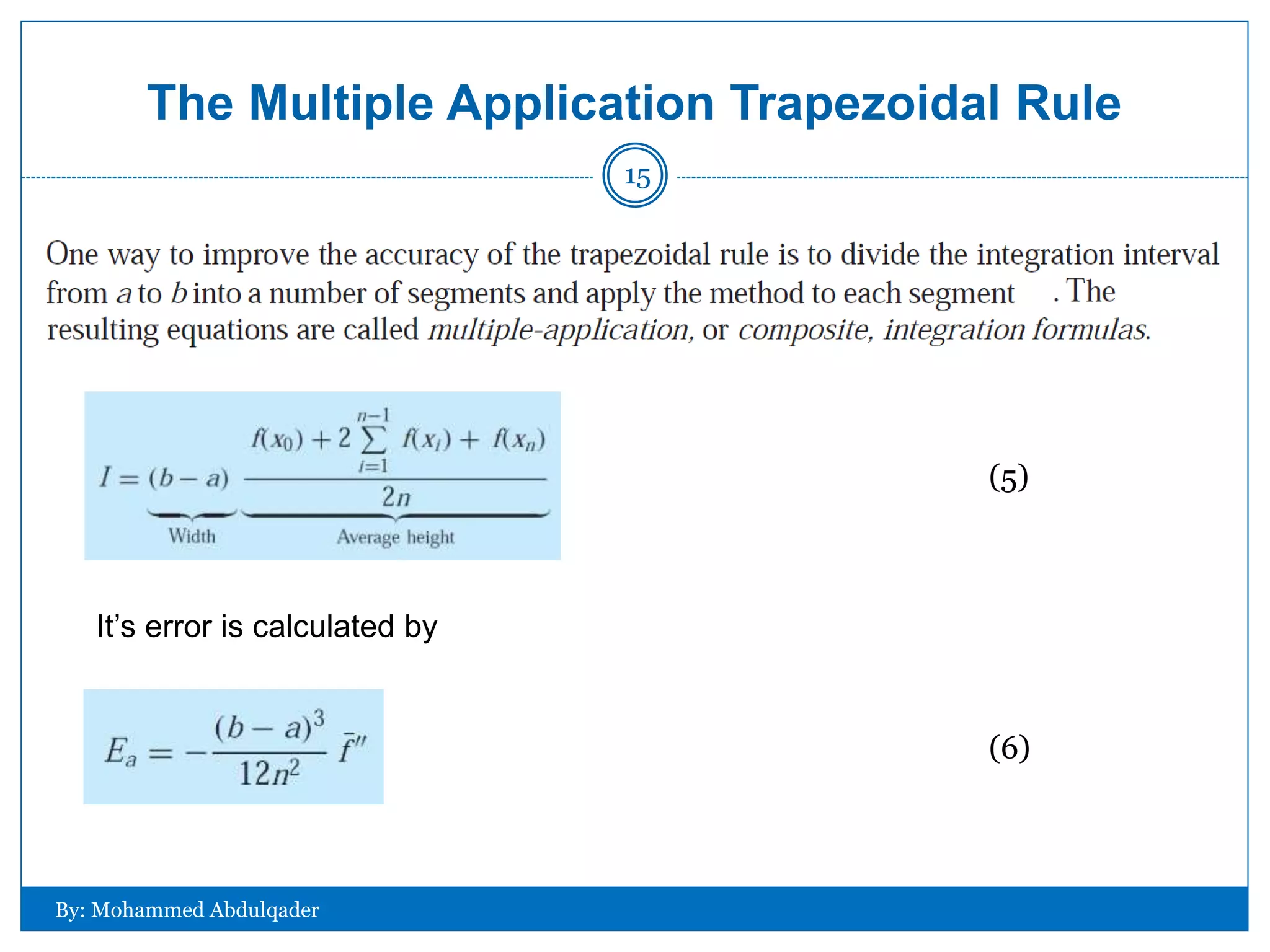
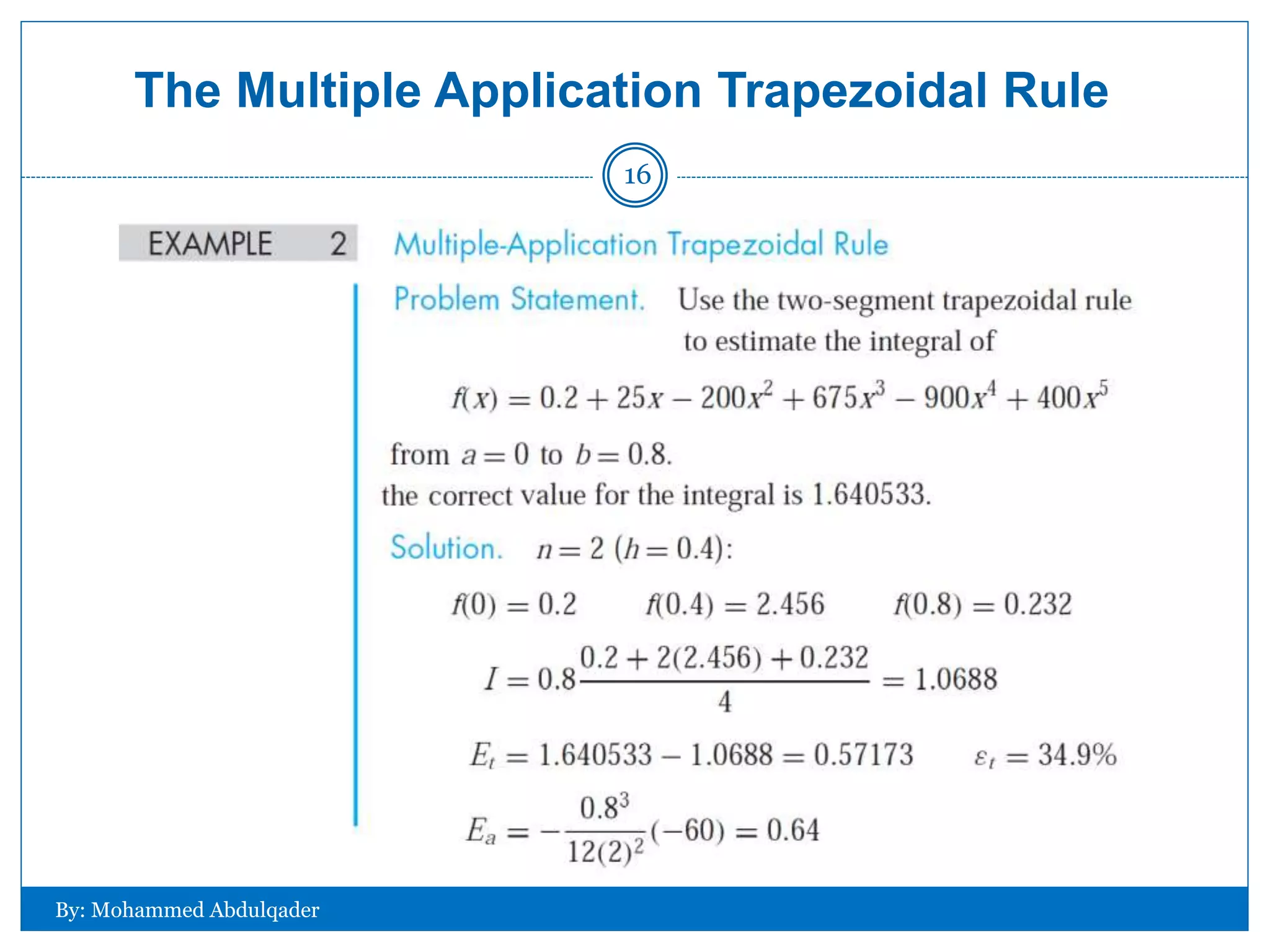

This document discusses the history and applications of integration. It provides an overview of how integration was developed over time by mathematicians like Archimedes, Gauss, Leibniz, and Newton. It also outlines real-world uses of integration in engineering projects like designing the PETRONAS Towers and Sydney Opera House. The document then explains numerical integration methods like the Trapezoidal Rule, Simpson's Rule, and their variations. It provides formulas and examples of how to apply these rules to approximate definite integrals.
Presentation by Mohammed Abdulqader.
Covers pioneers of integration: Archimedes, Gauss, Leibniz, and Newton's contributions.
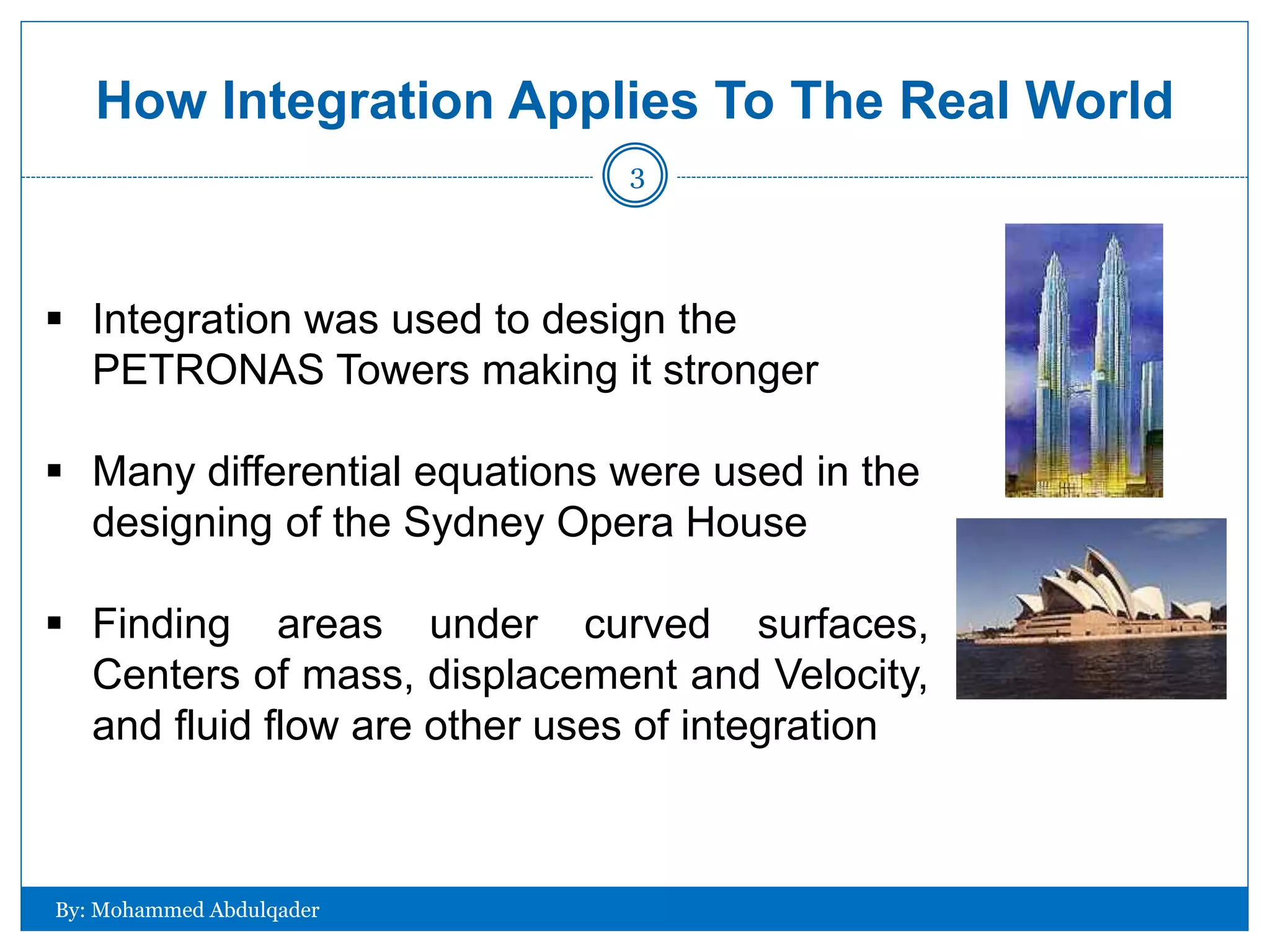
Integration applied in design of PETRONAS Towers, Sydney Opera House, and for calculating areas.
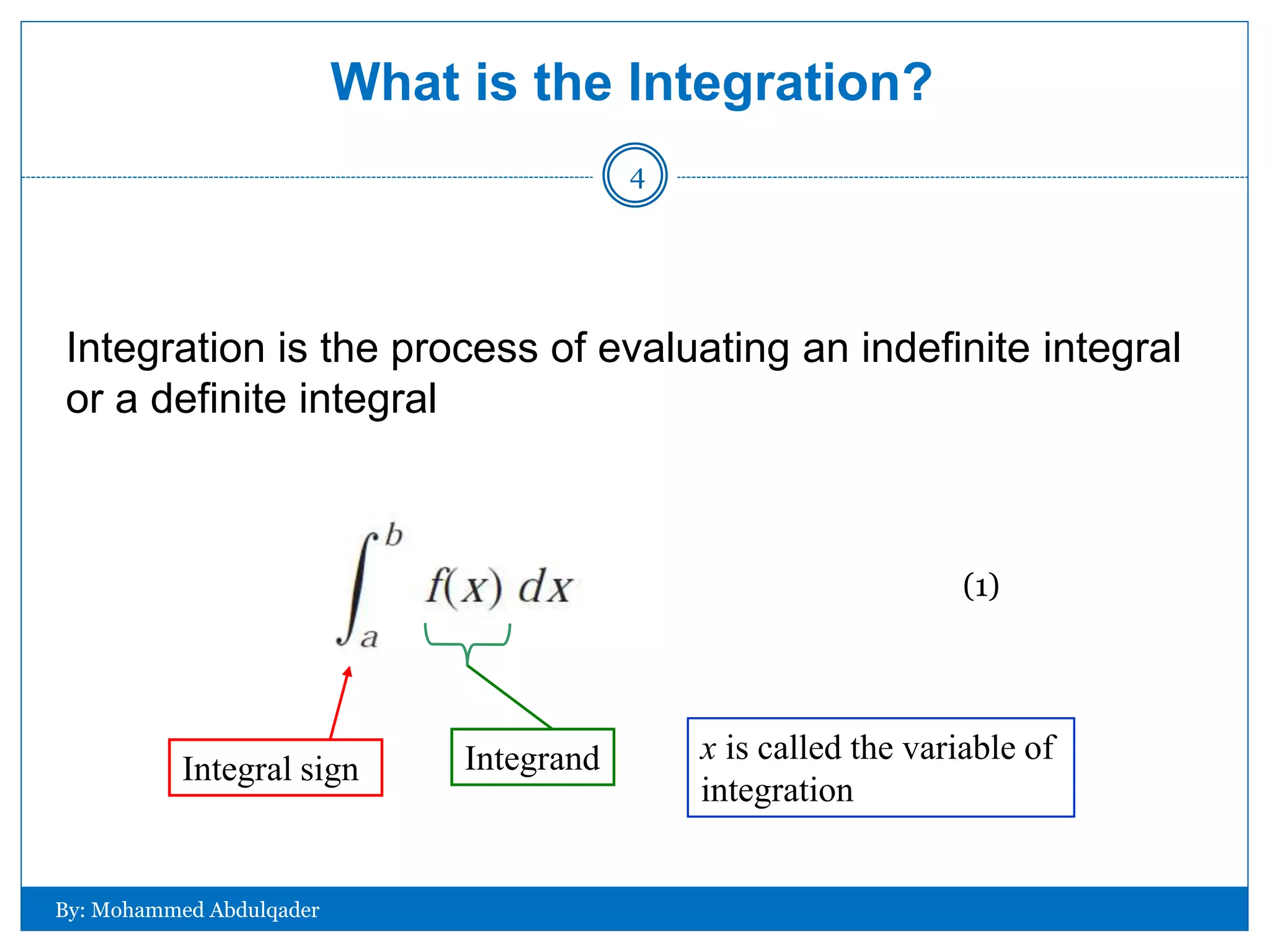
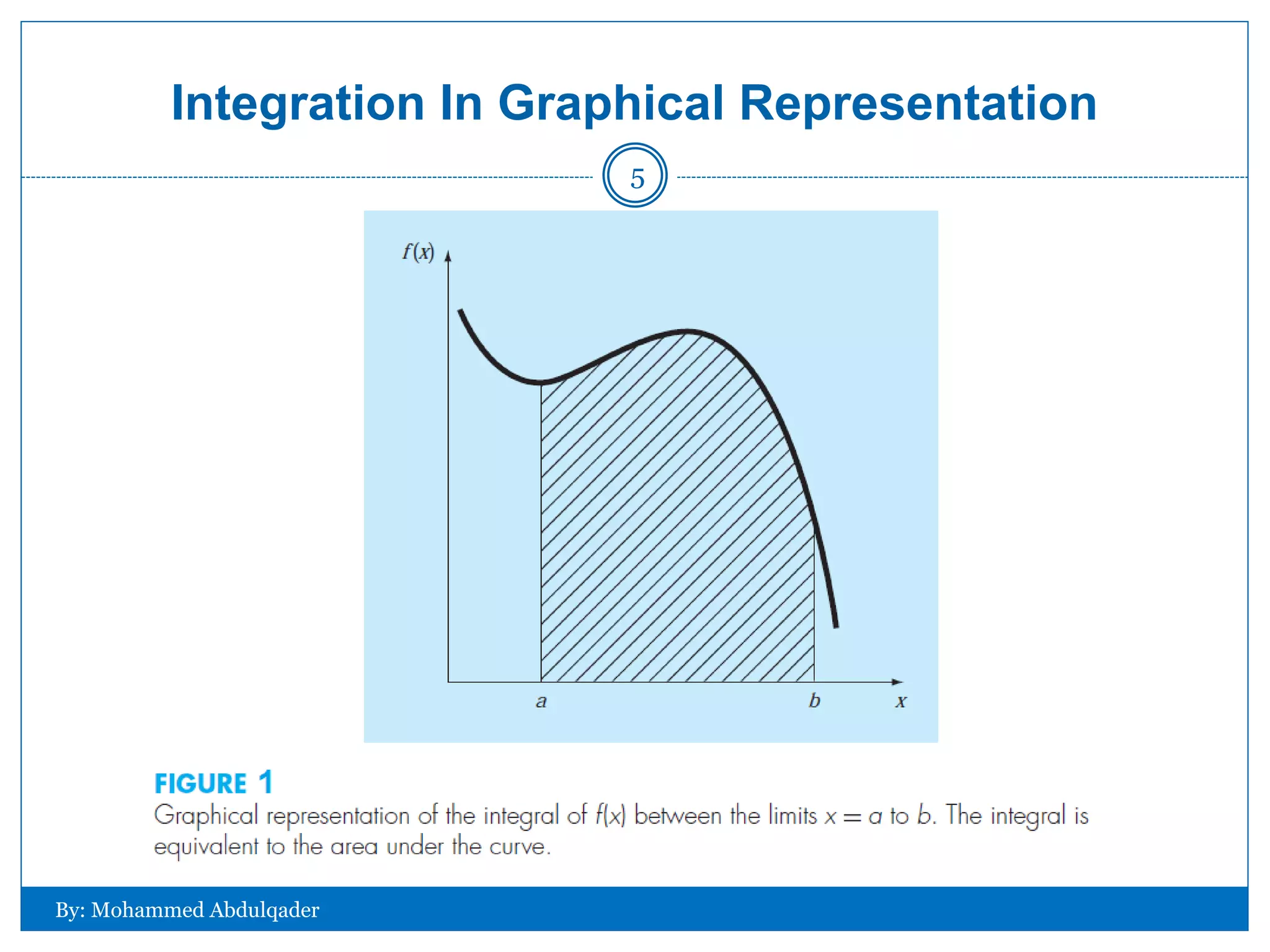
Defines integration, explaining integral signs and variables used.
Visual representation to help understand integration.
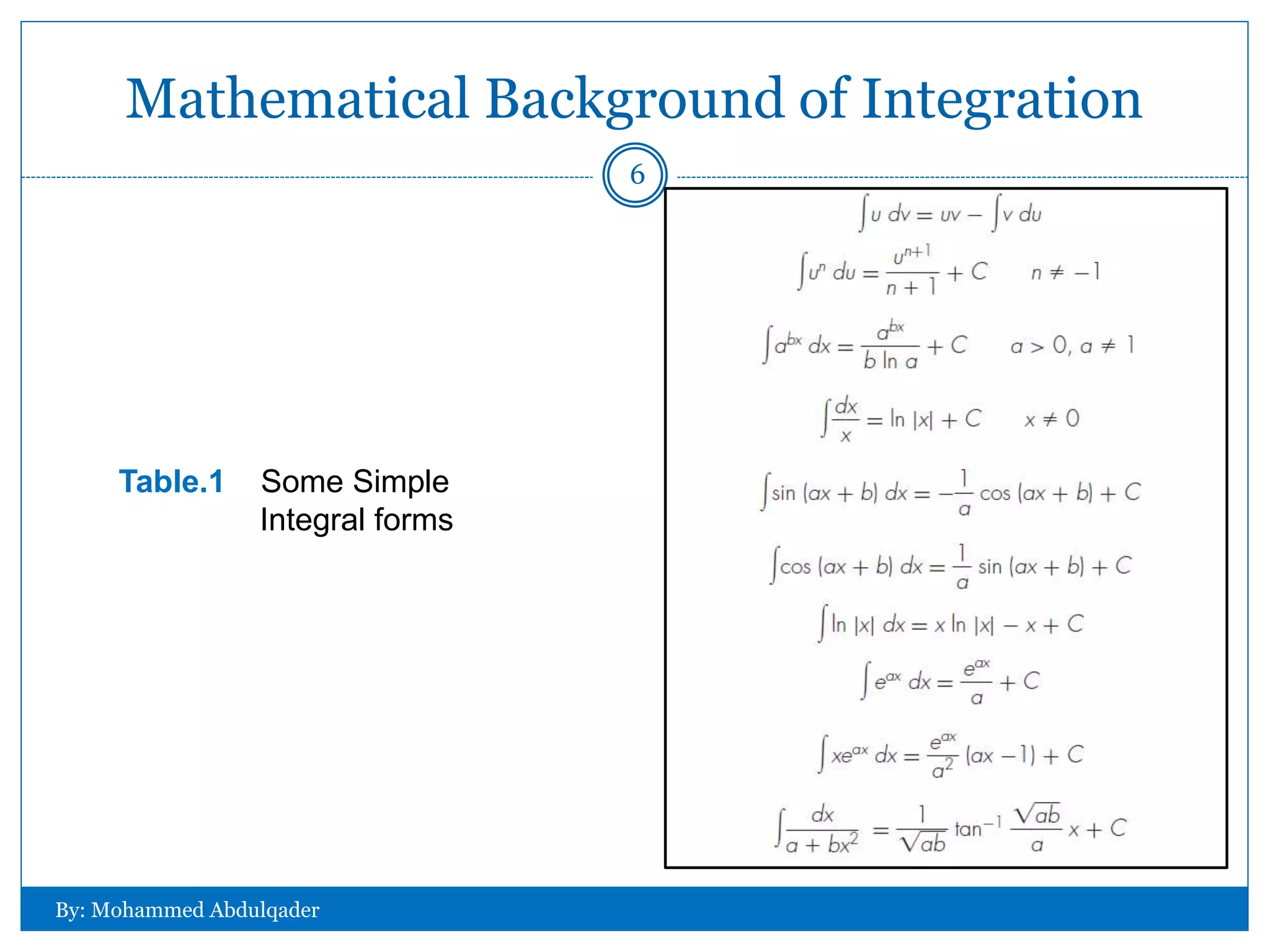
Simple integral forms and mathematical principles related to integration.
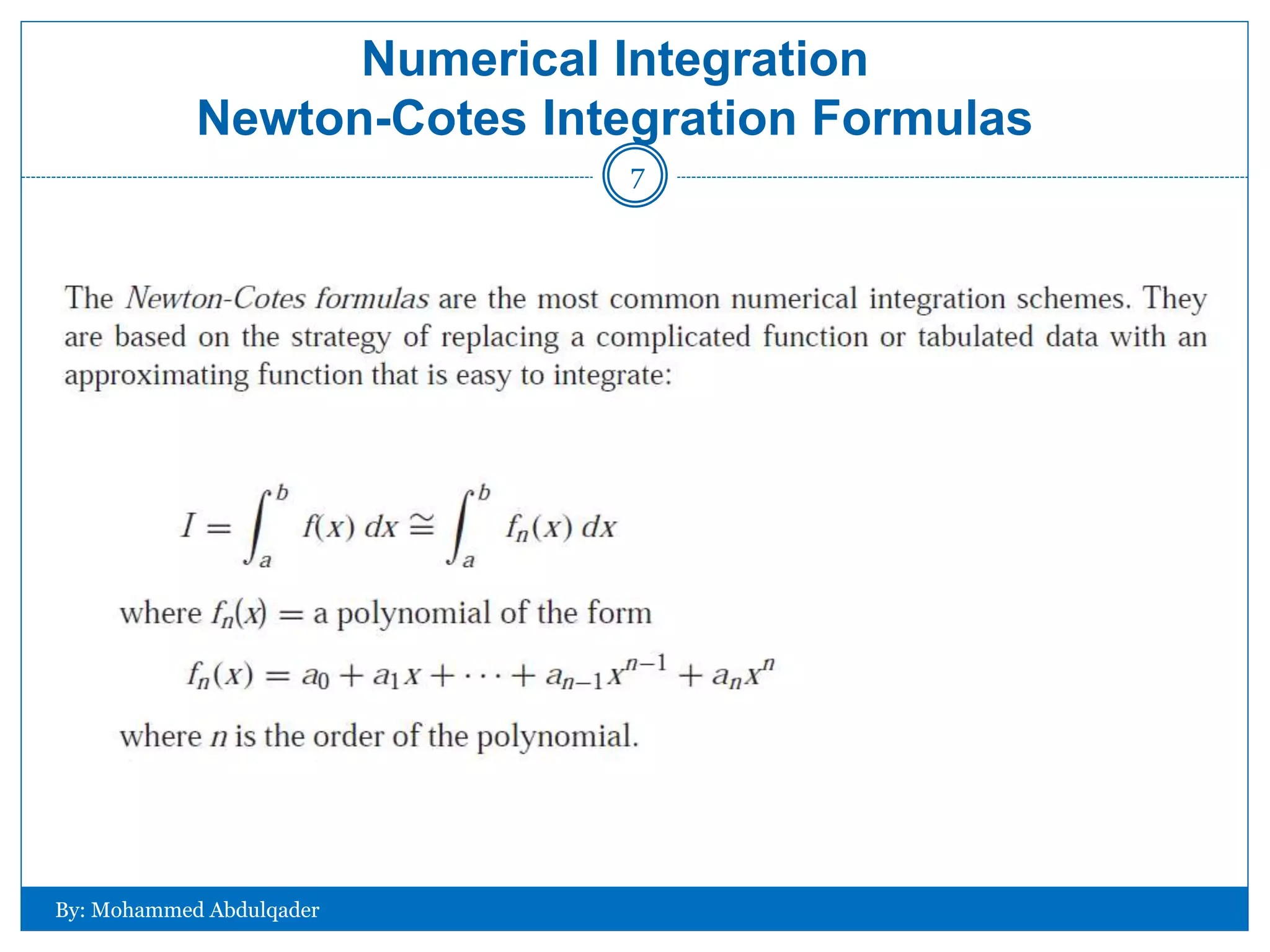
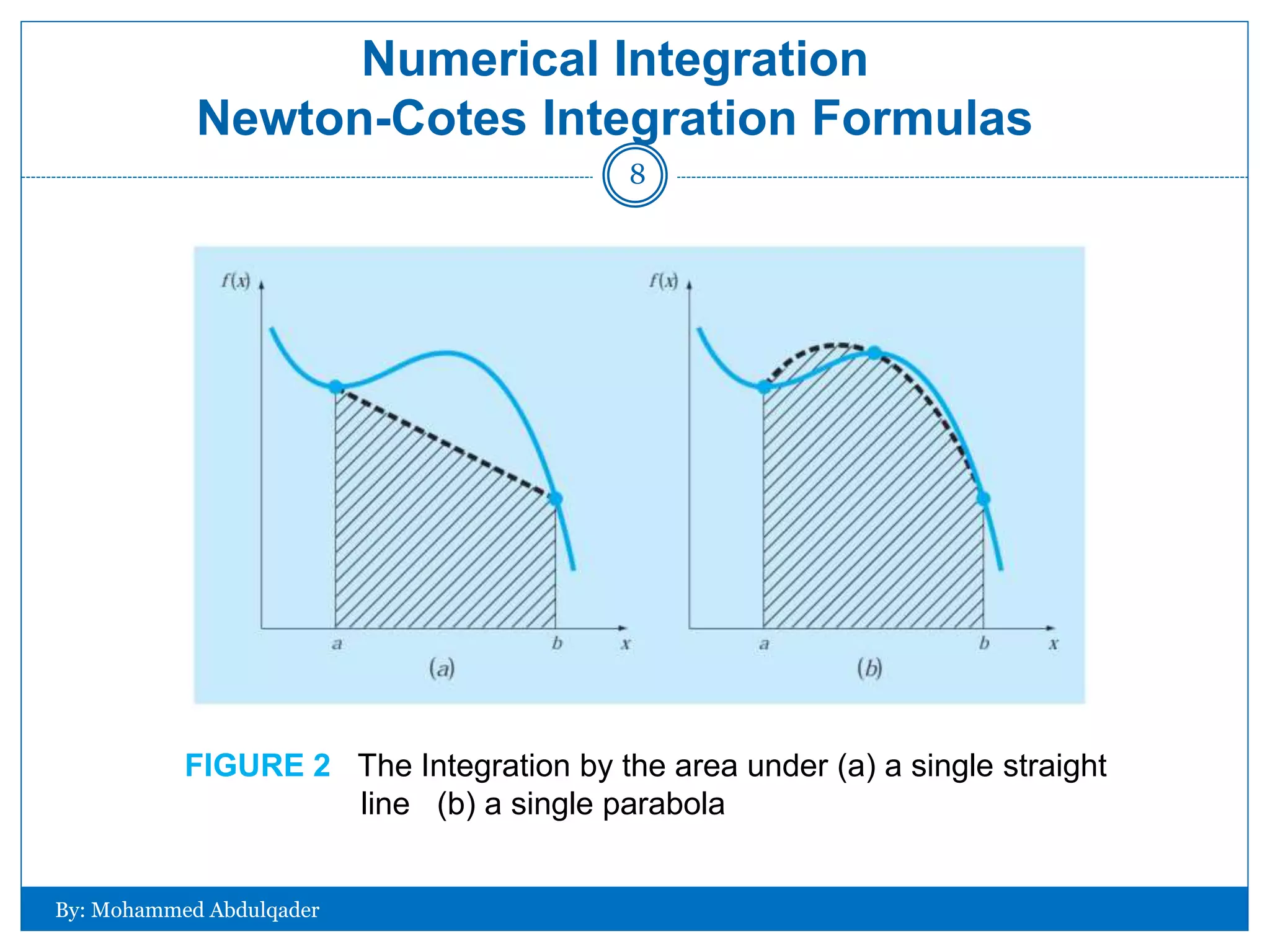
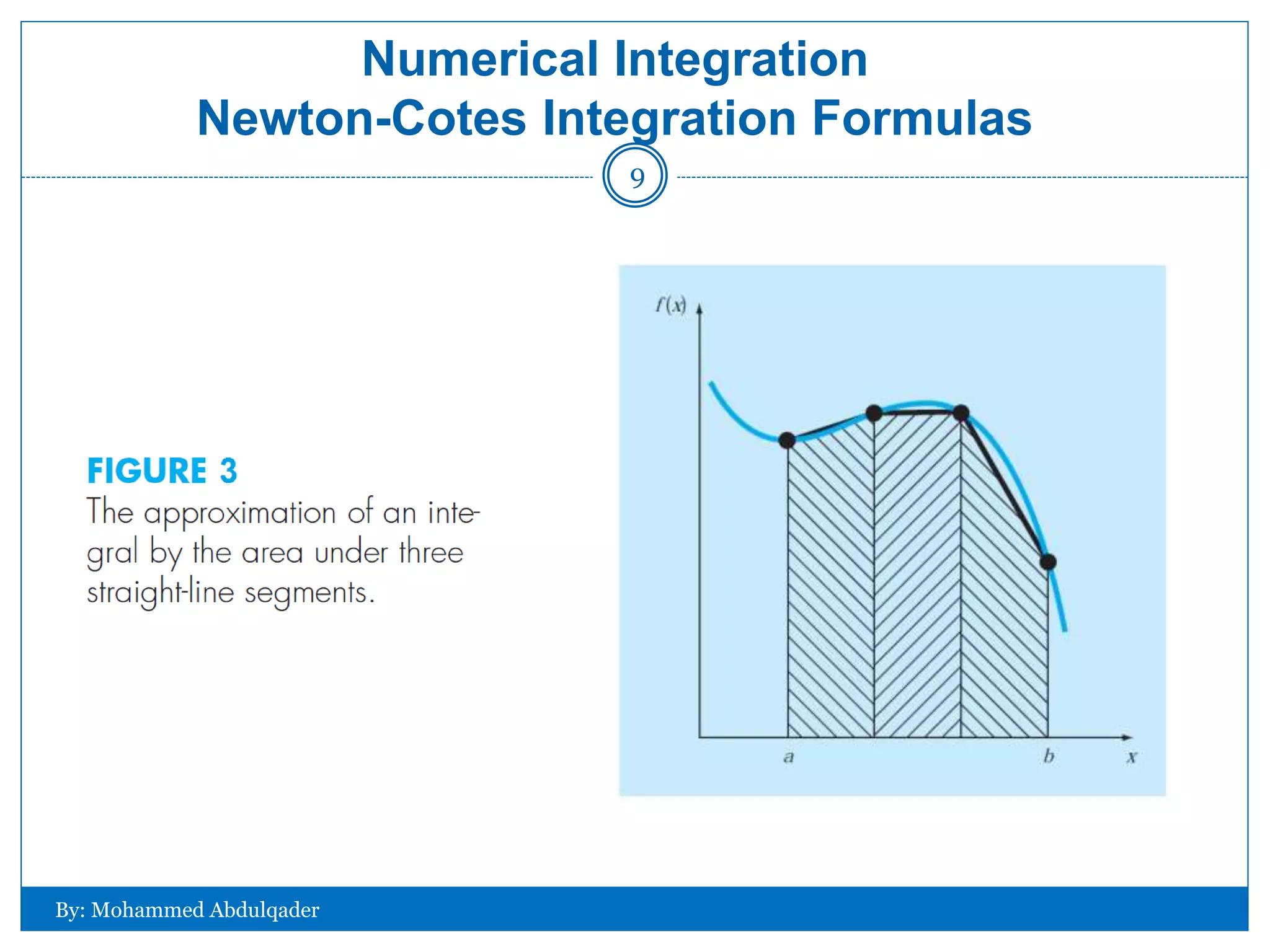
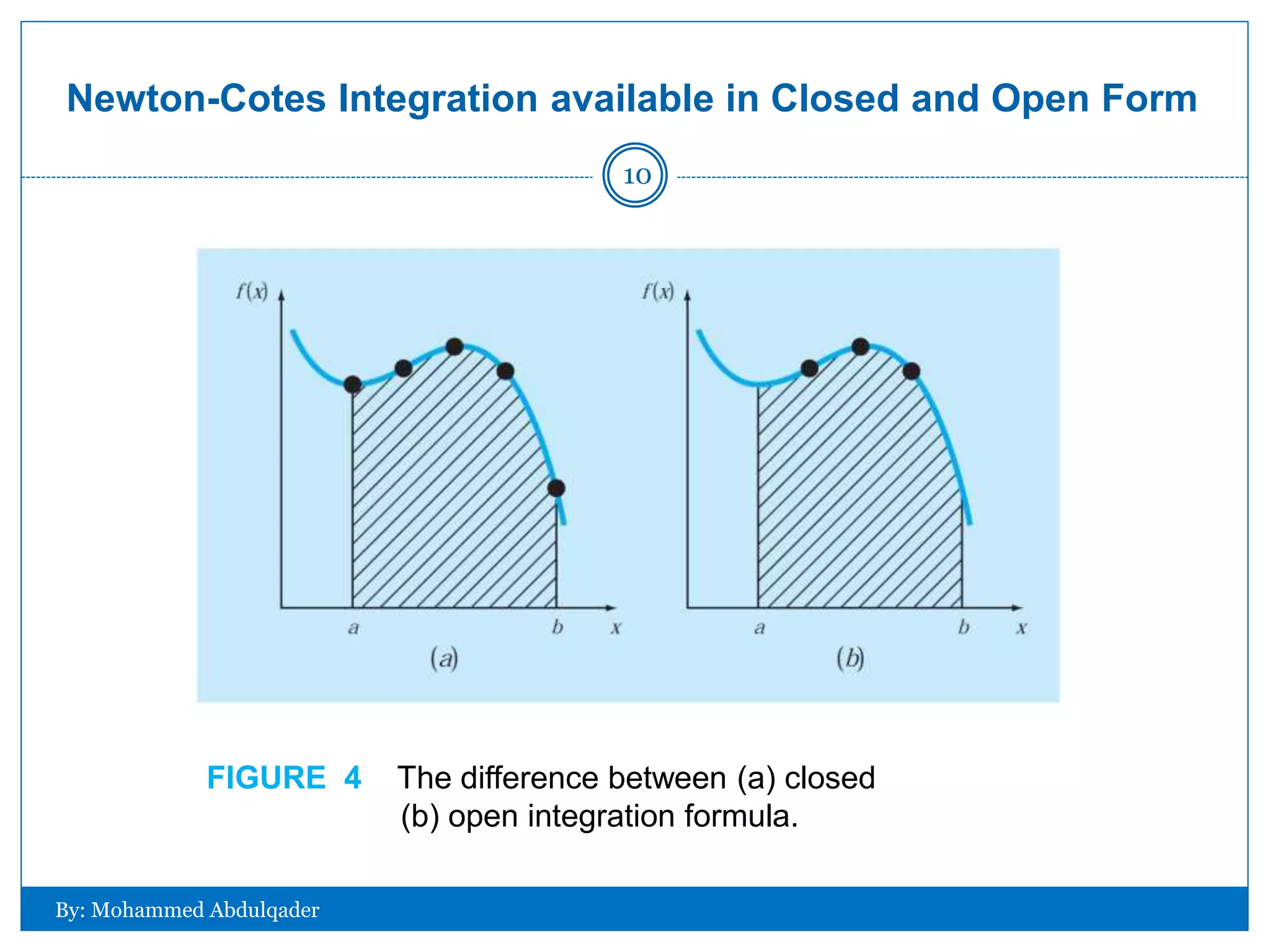
Discusses Newton-Cotes formulas, including closed and open forms of integration.
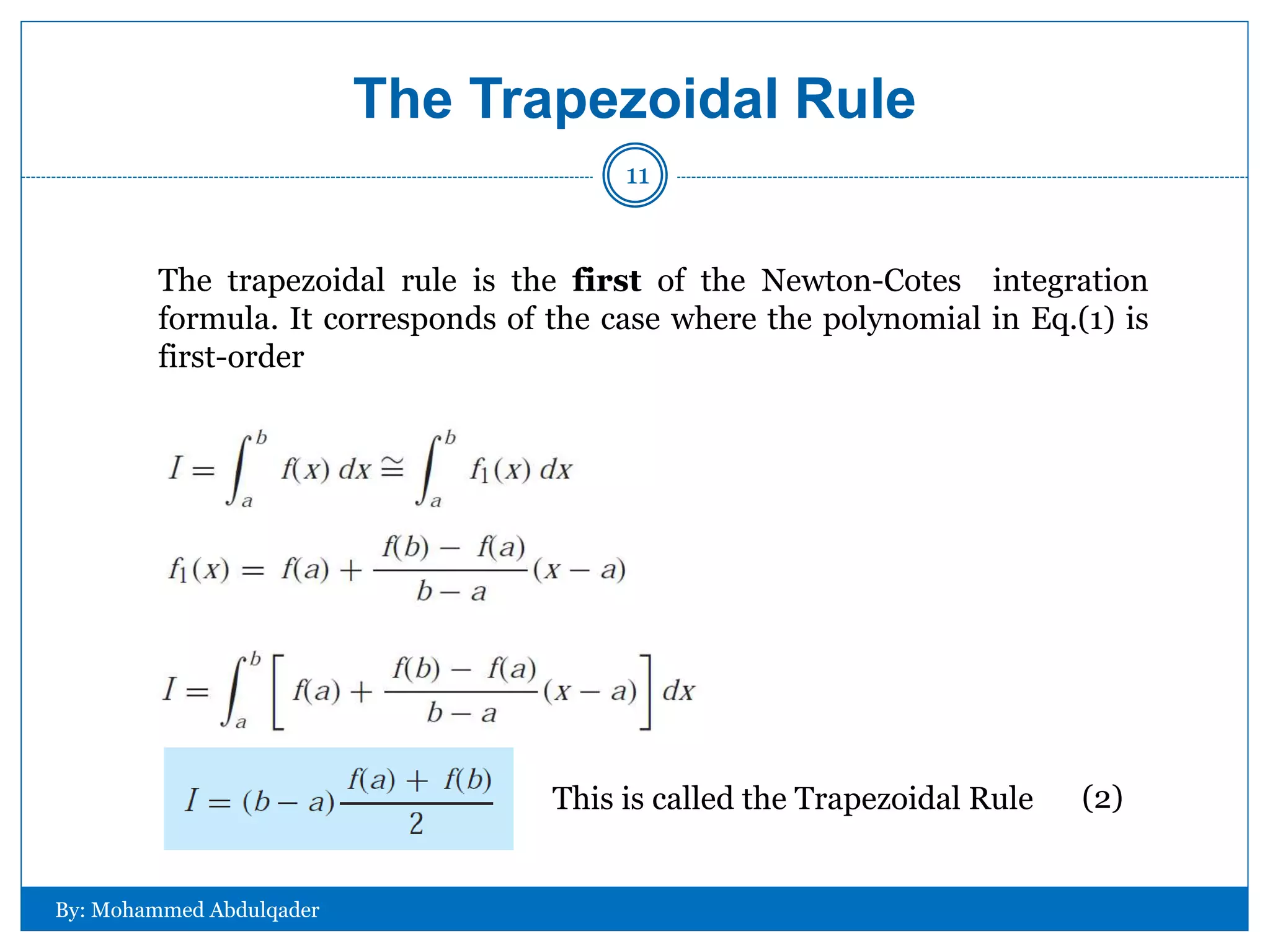
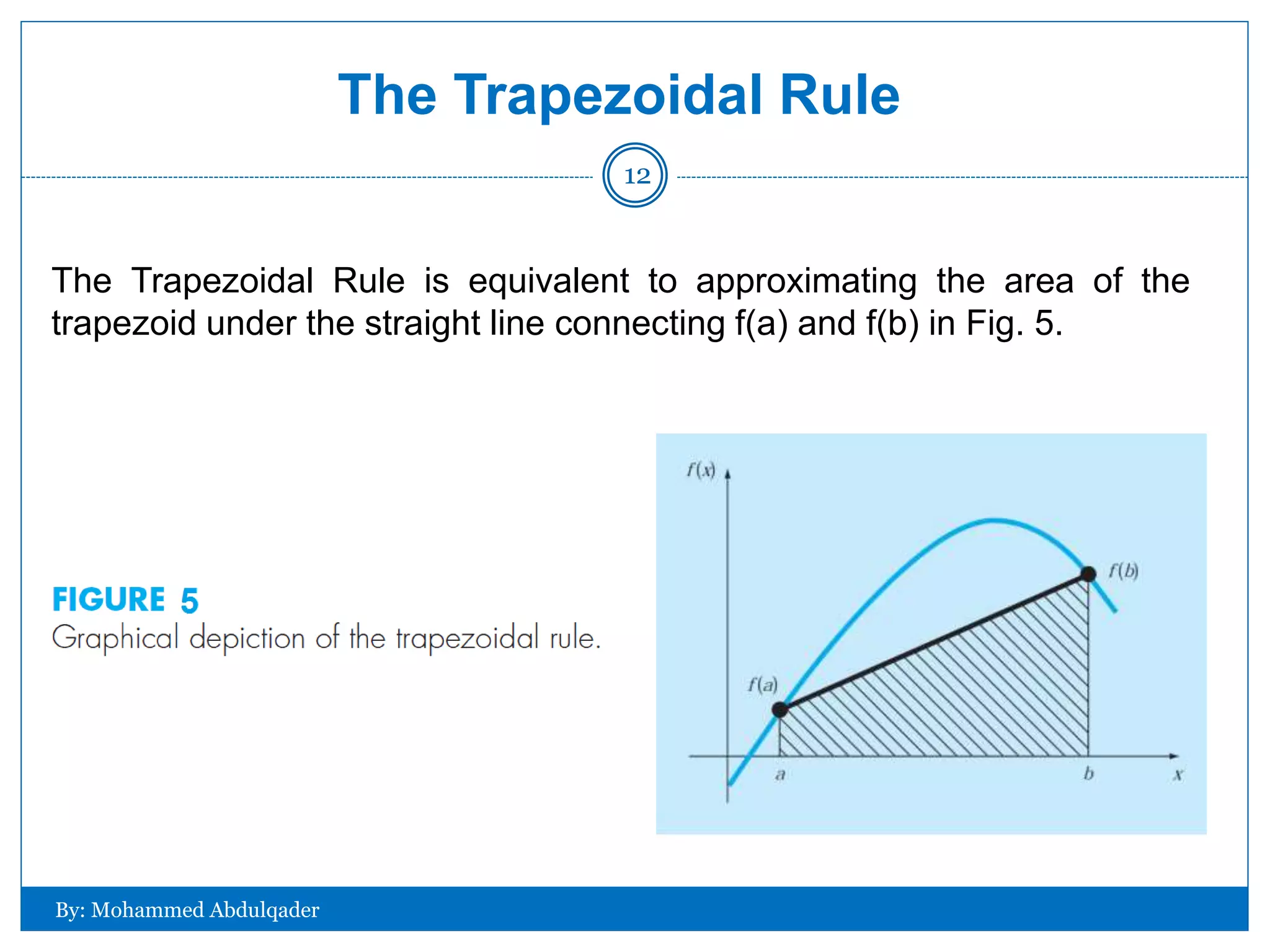
Introduction to the Trapezoidal Rule, its application, graphical representation, and error calculation.
Advanced techniques in Trapezoidal Rule with error calculations.
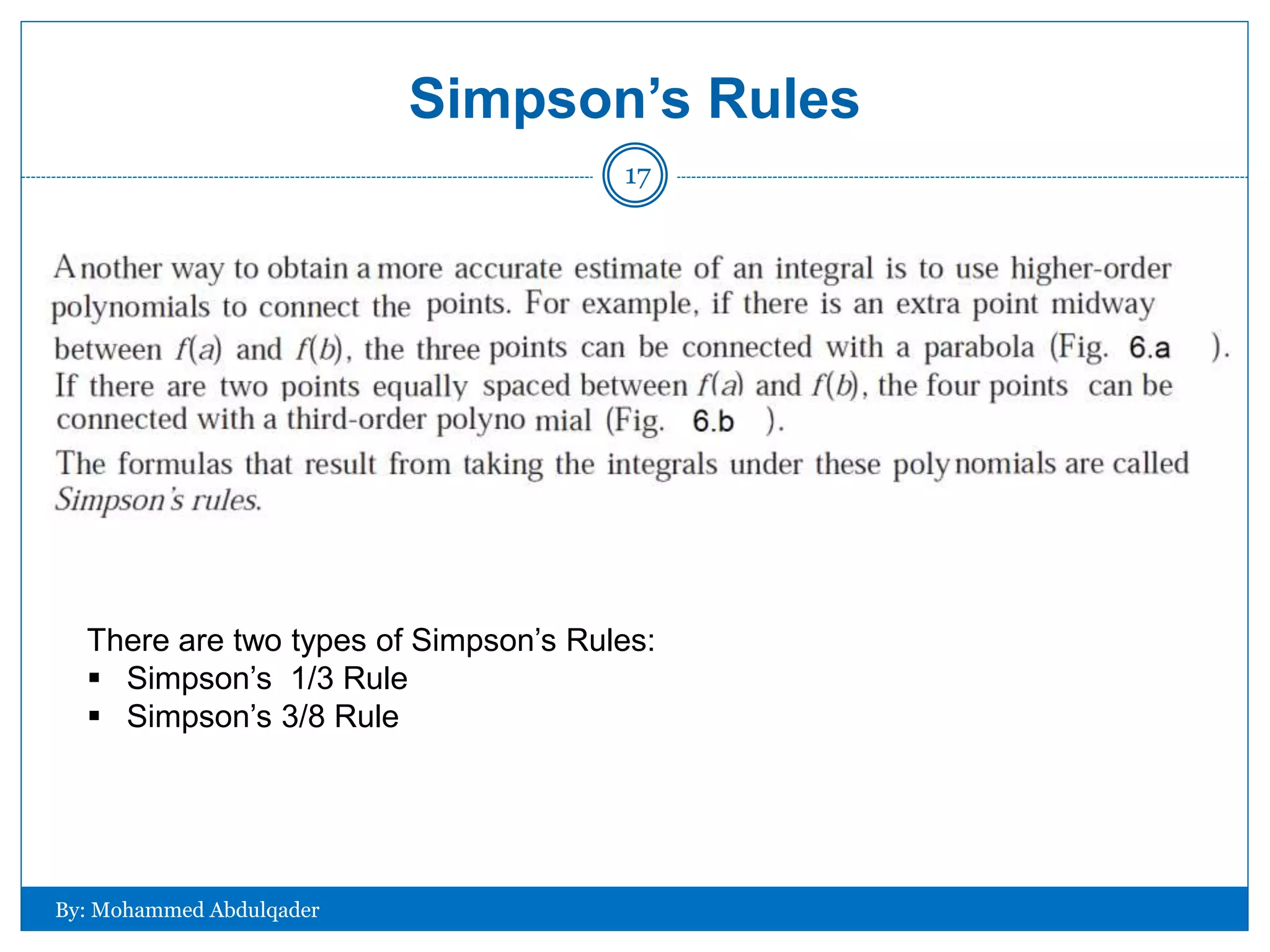
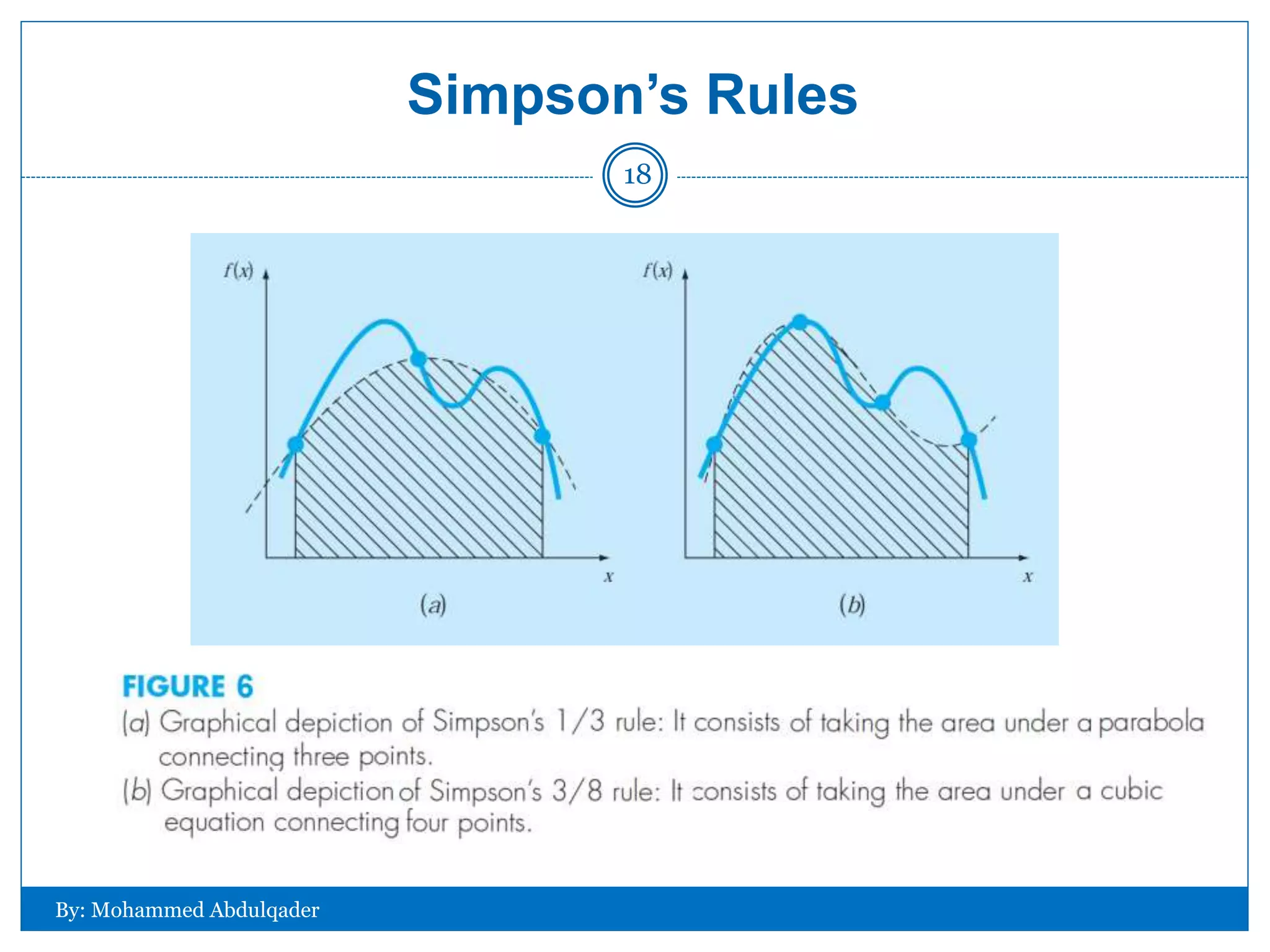
Introduction to two types of Simpson’s Rules for numerical integration.
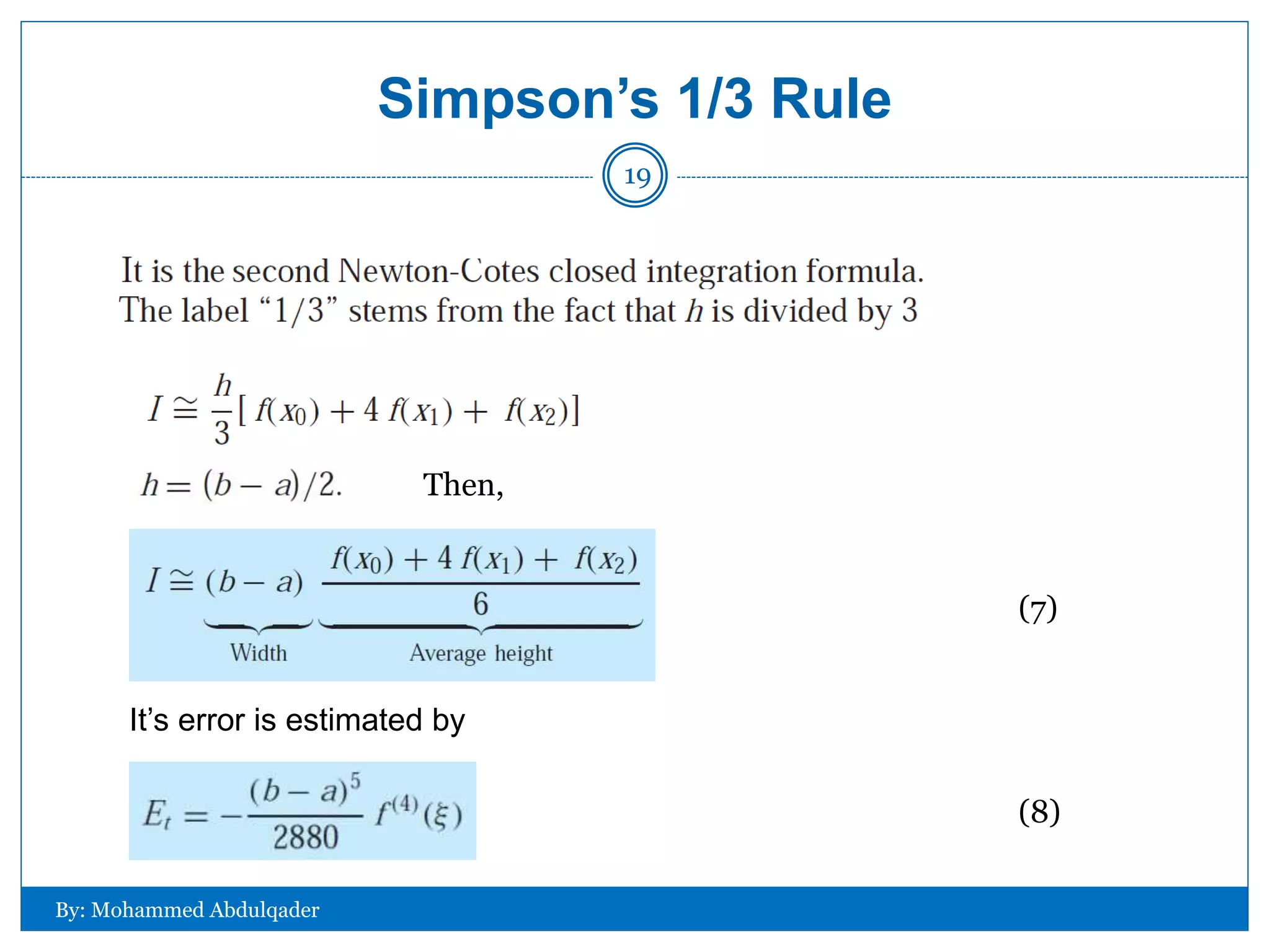
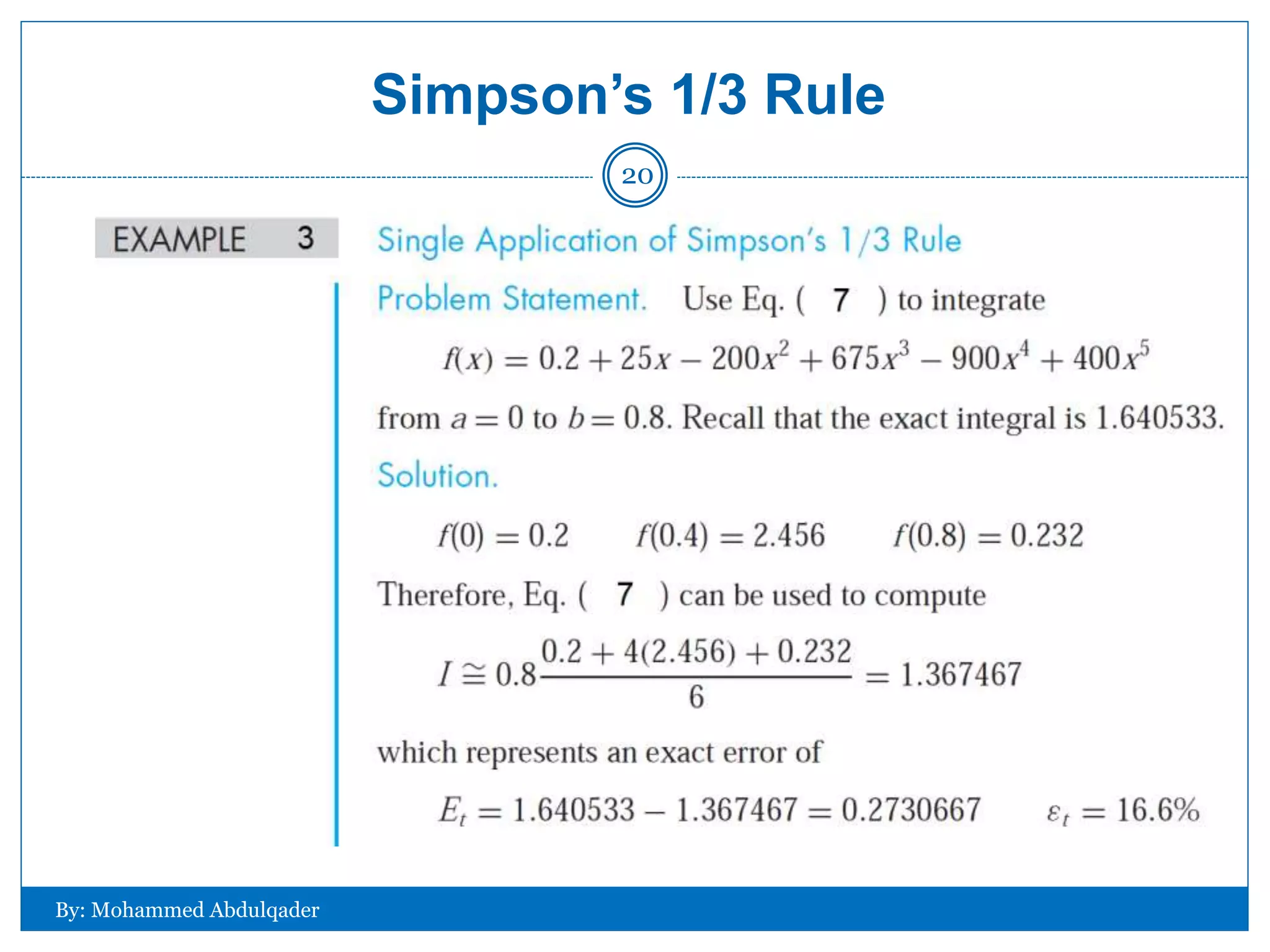
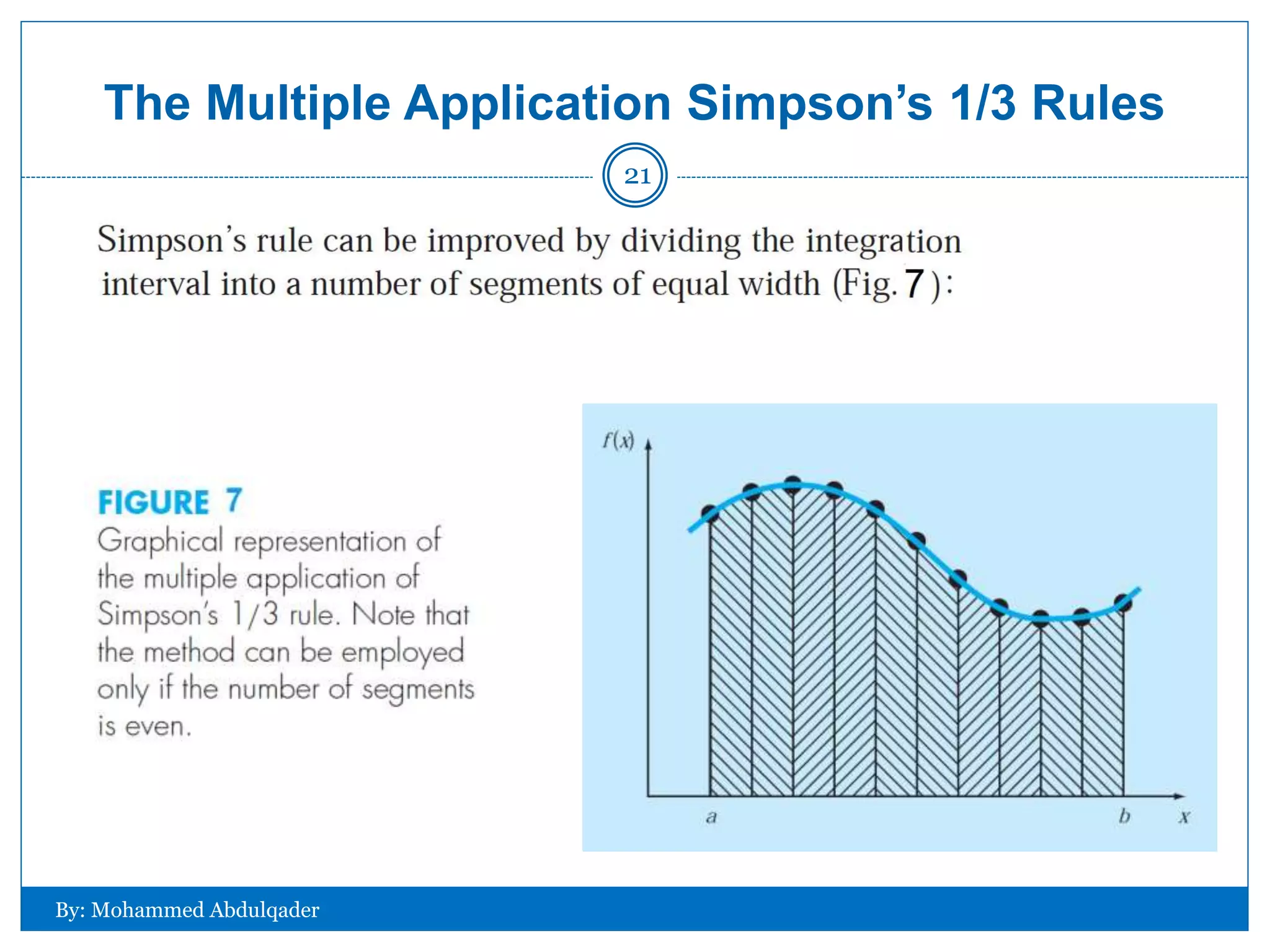
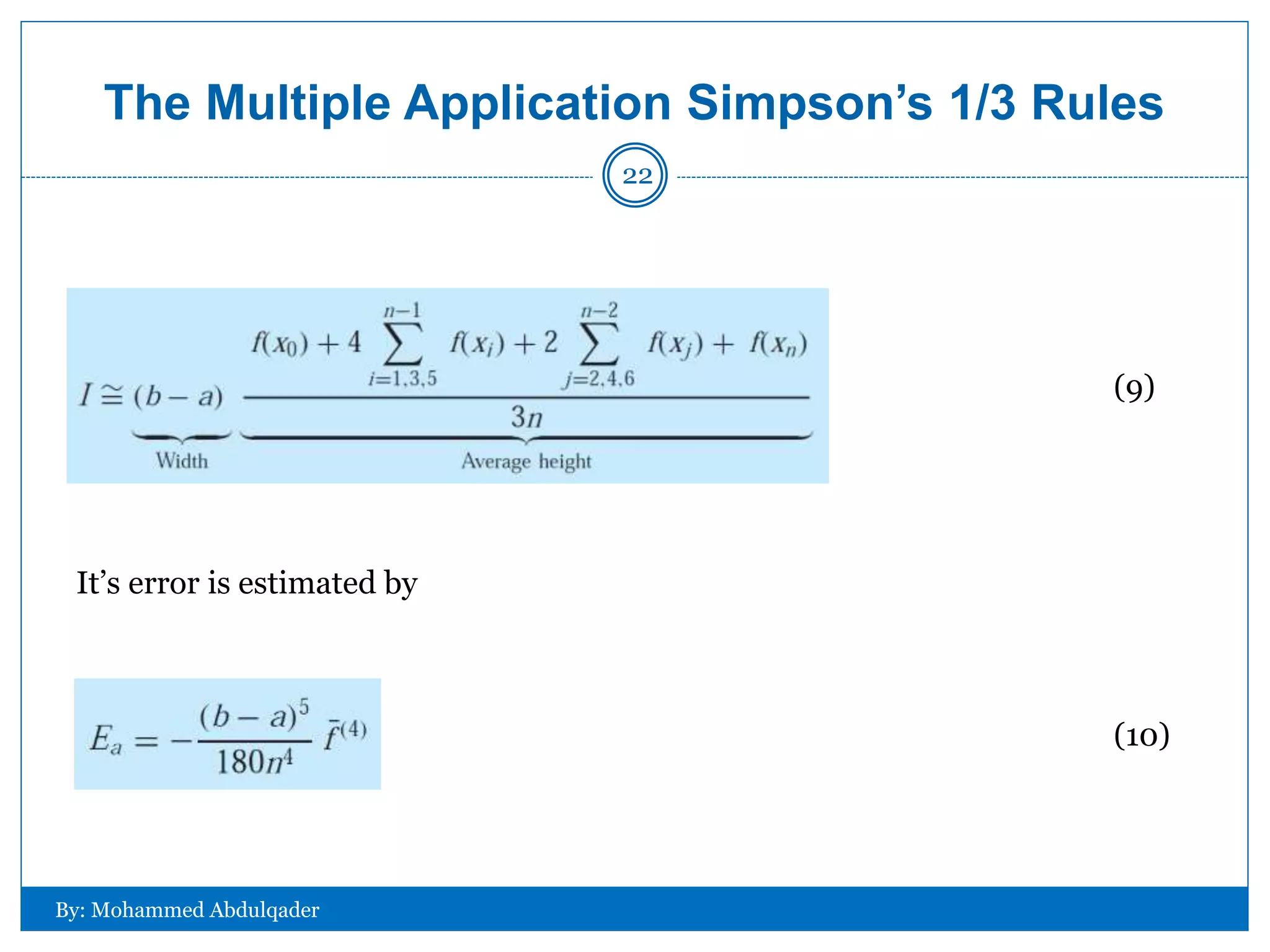
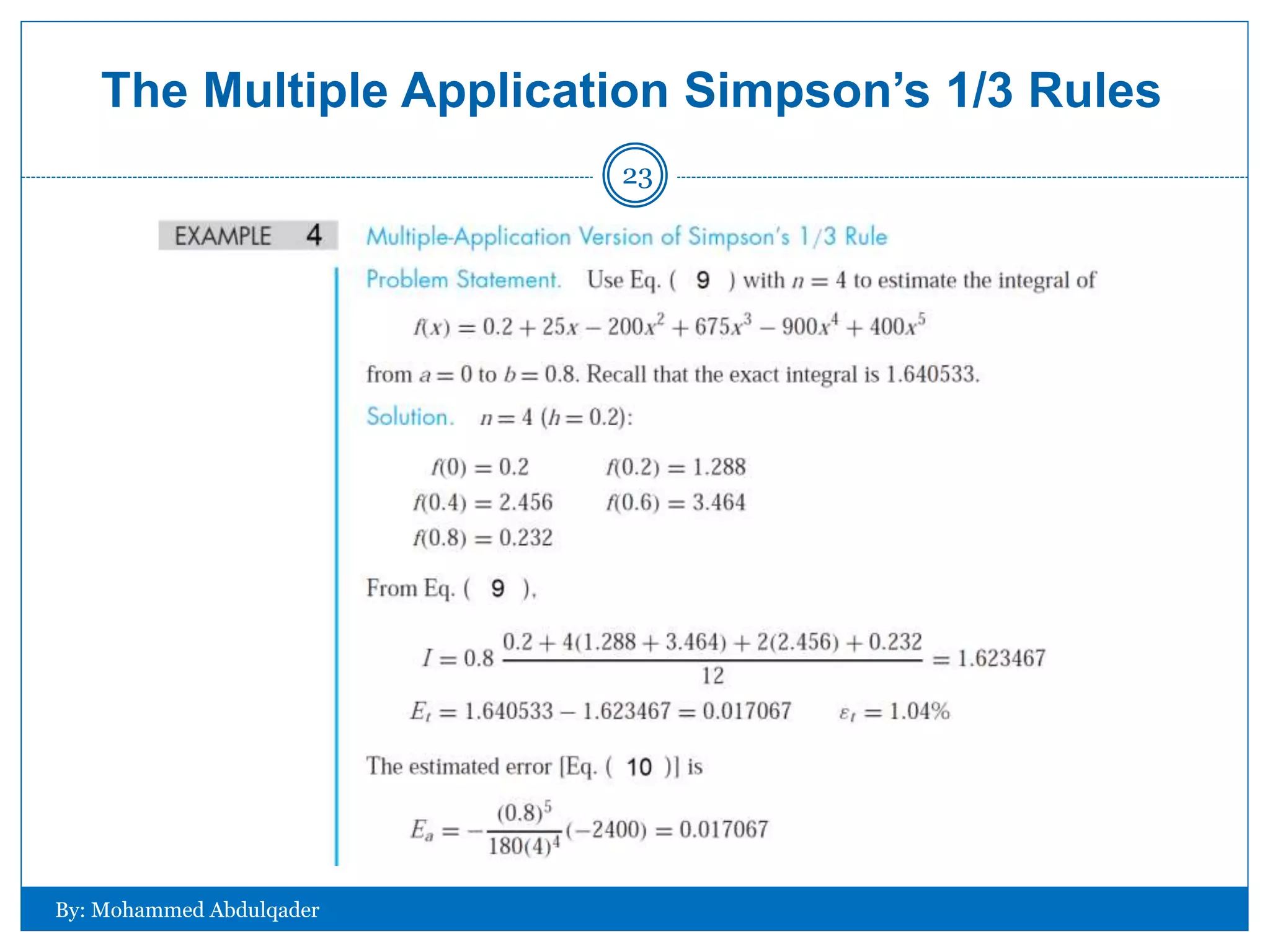
Details on Simpson’s 1/3 Rule and methods for estimating error.
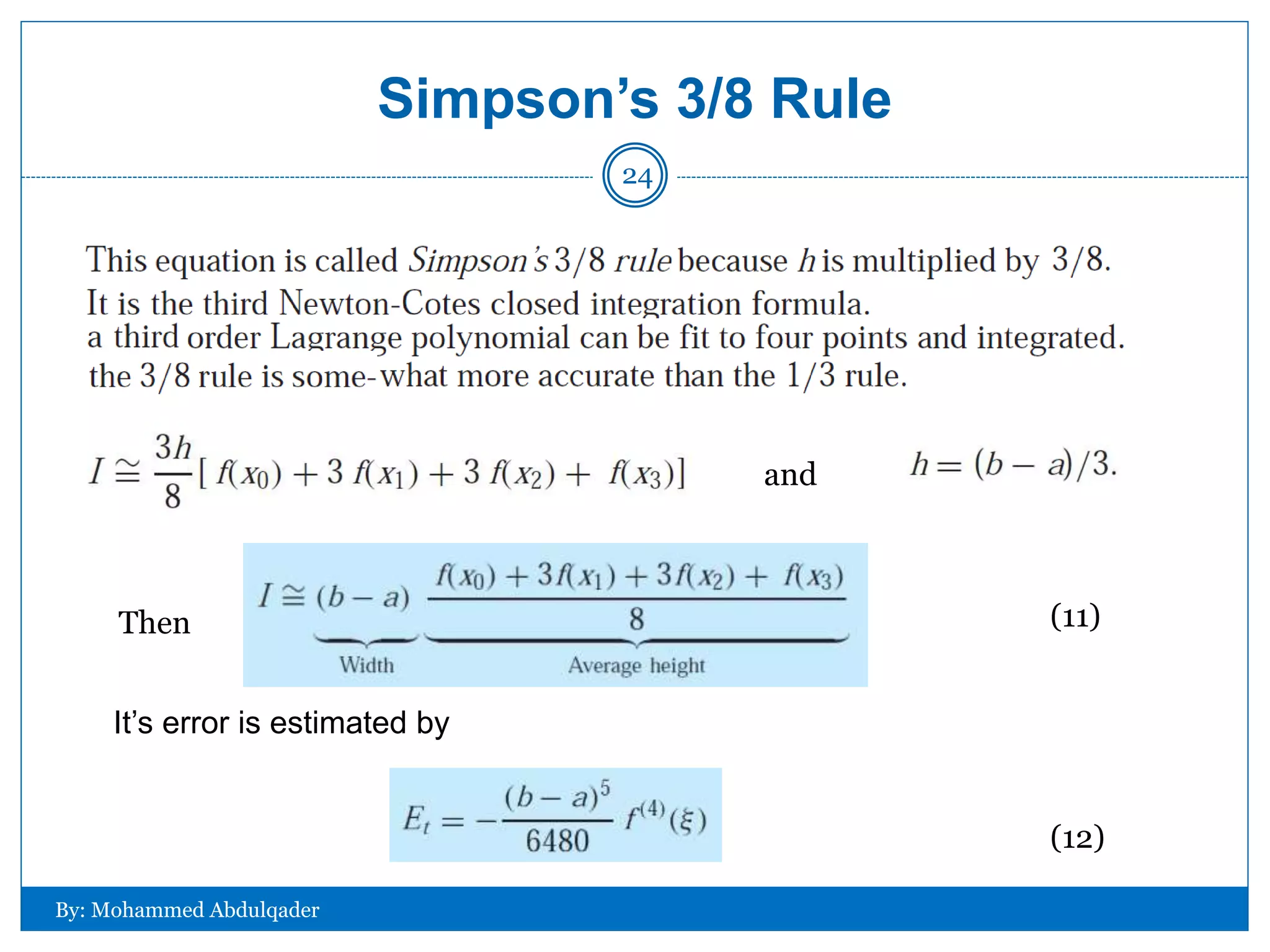
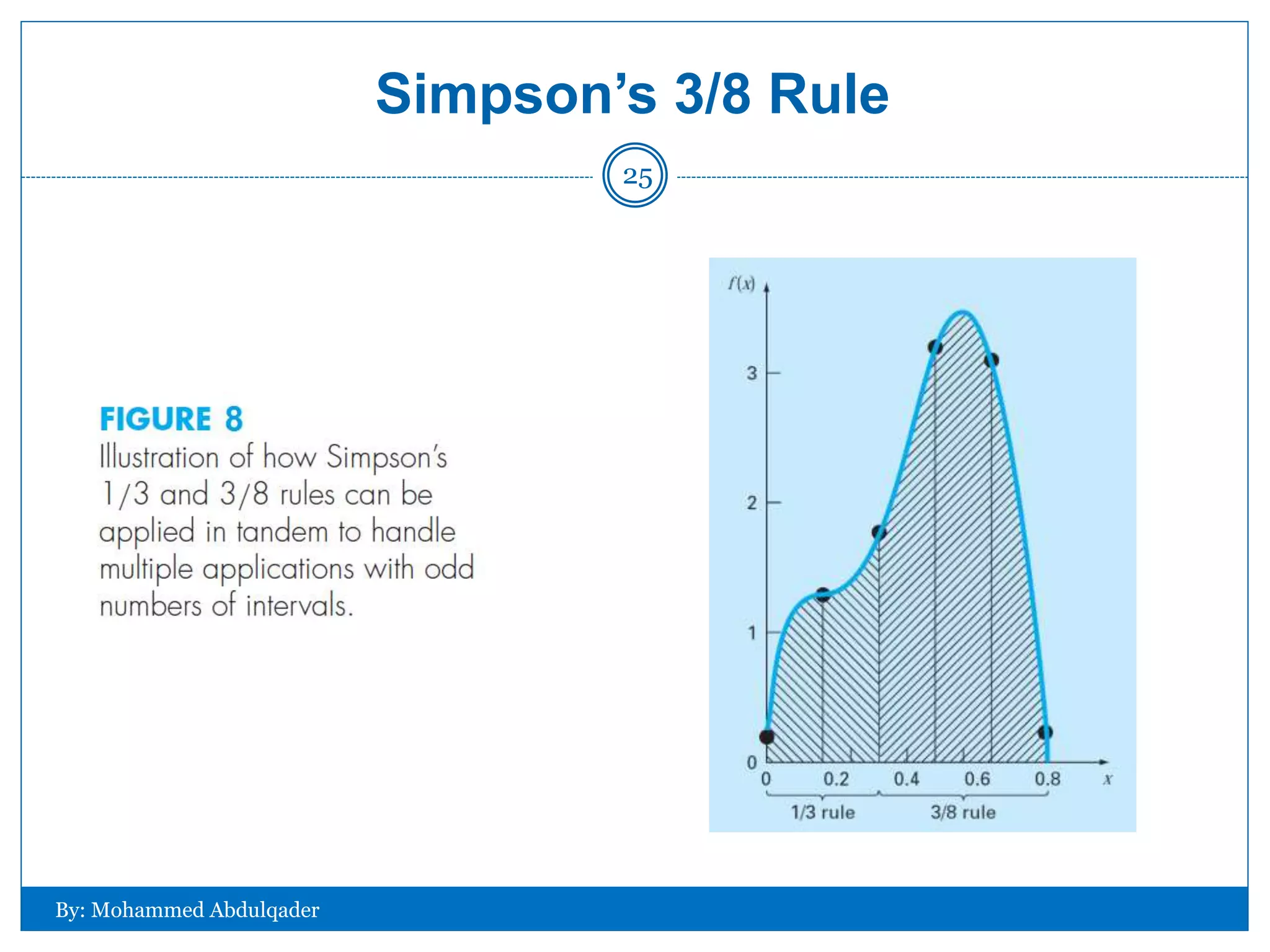
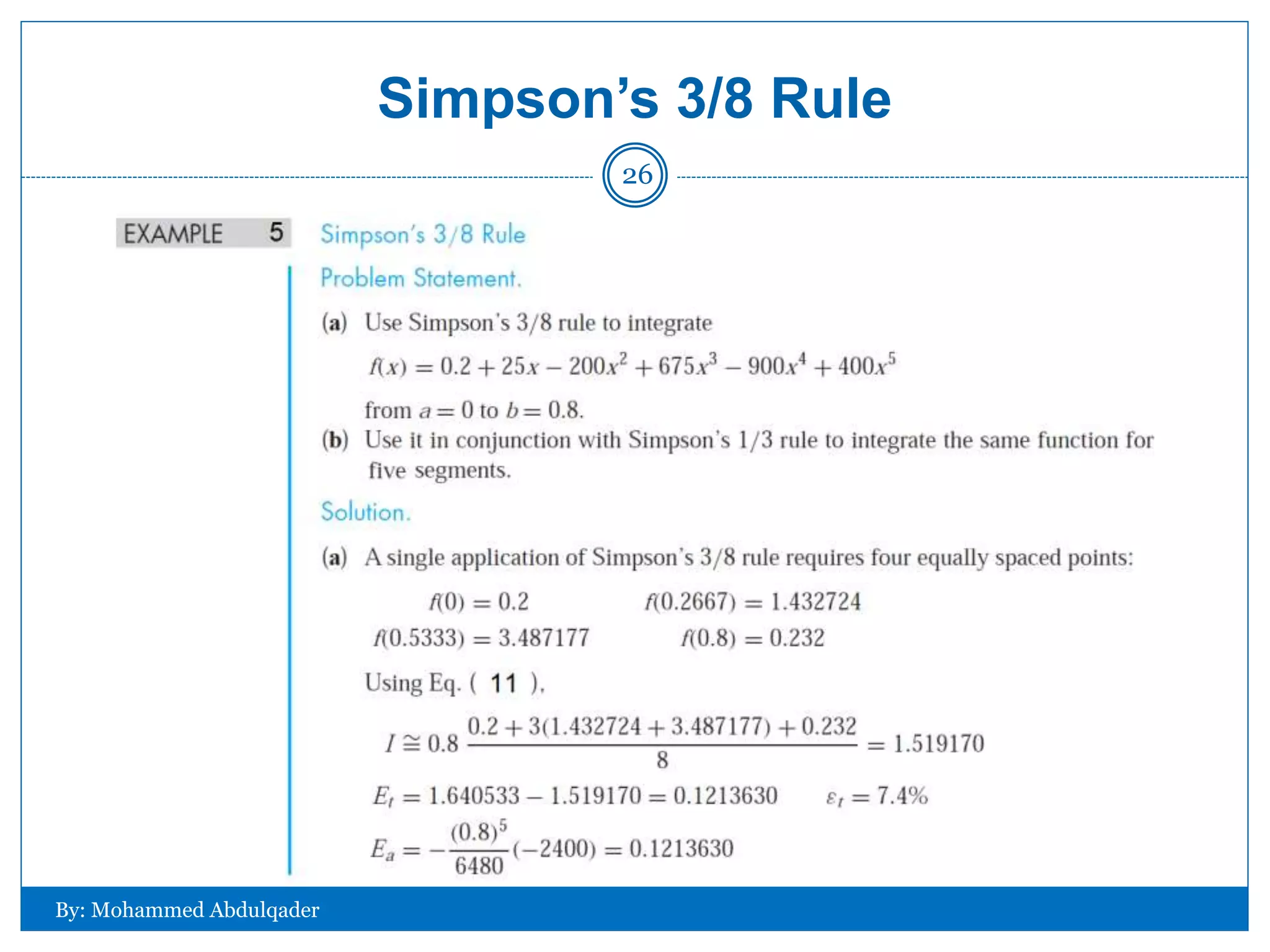
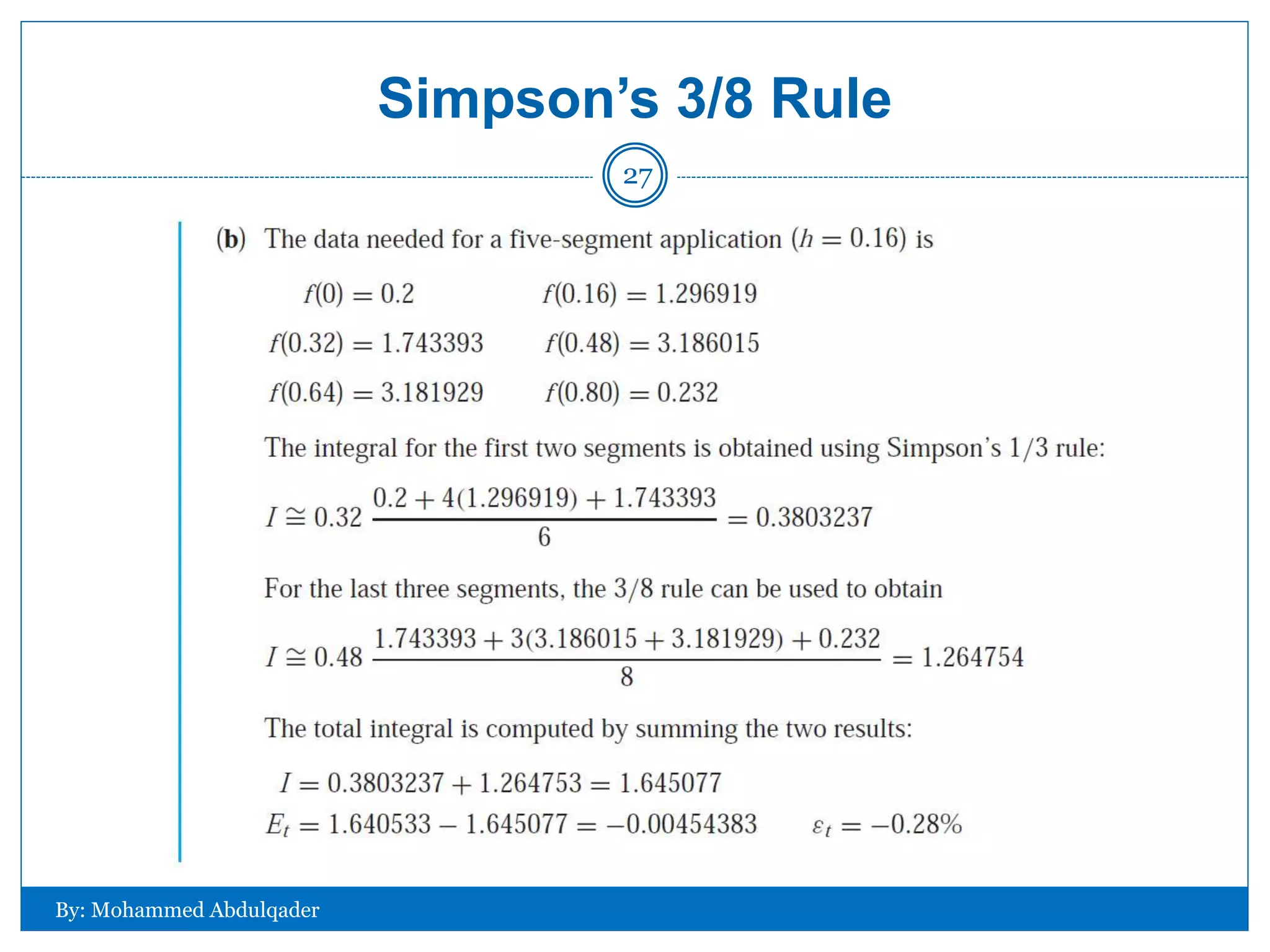
Details on Simpson’s 3/8 Rule and methods for estimating error.
Closing remarks and acknowledgment by Mohammed Abdulqader.


