Dr/Ahmed Bahnassy
 Consultant radiologist
Riyadh Military Hospital
Importance of the finding
• Most common congenital condition
  discovered by antenatal US.
• ultrasonography enables us to detect the
  correctable cause of hydronephrosis, such
  as ureteropelvic junction obstruction.
• Failure of recognizing those needing
  surgical intervention will result in
  permanent loss of the kidney.
Fetal hydronephrosis Detection
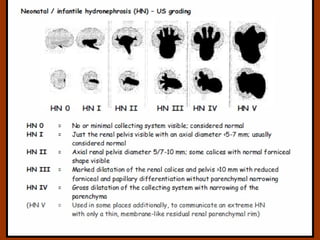
• Grignon et al developed a grading system for hydronephrosis in
  fetuses of 20 weeks gestation or greater in relation to their postnatal
  findings.
• Grade I dilatations (AP renal pelvic diameter up to 1.0 cm) were
  described as normal and physiologic because none of the affected
  patients required surgery after birth.
• Grade II (>1.0–1.5 cm) and grade III (>1.5 cm with slight dilatation of
  calices) dilatation was termed intermediate hydronephrosis; 50%
  required postnatal surgical intervention.
• All patients with grade IV dilatation (>1.5-cm pelvis, moderate
  dilatation of calices, no cortical atrophy) or grade V hydronephrosis
  (>1.5-cm pelvis, severe caliceal dilatation, atrophic renal cortex)
  required surgery.
• Their work suggests that one should be concerned with pelvic
  dilatations greater than 10 mm particularly if there is associated
  calyceal dilatation and loss of cortex.
• Clinically significant disease is more likely
  if:
• (1) a grade 3 or 4 hydronephrosis is
  present;
• (2) the renal pelvis diameter is > 10 mm;
• (3) the renal pelvis/kidney ratio is > 0.5.
Incidence:

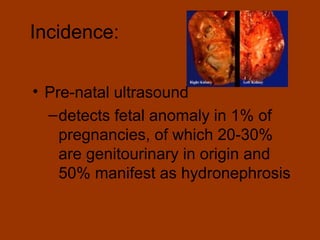
• Pre-natal ultrasound
  – detects fetal anomaly in 1% of
    pregnancies, of which 20-30%
    are genitourinary in origin and
    50% manifest as hydronephrosis
Grading of Severity of
       Hydronephrosis
Grade     Central Renal        Renal
          Complex              Parenchymal
                               Thickness
 0        Intact                Normal
 1        Slight splitting      Normal
 2        Evident splitting     Normal
 3        Wide splitting        Normal
 4        Further dilatation    Thin
Pathophysiology:
• Anatomic and functional processes
  interrupts the flow of urine.
• There is a rise in ureteral pressure
  causing stretching and dilation; if
  pressures continue to rise, leads to
  decline in renal blood flow and GFR.
• When significant obstruction is
  persistent, it affects nephrogenic tissue
  and results in varying degrees of cystic
  dysplasia and renal impairment.
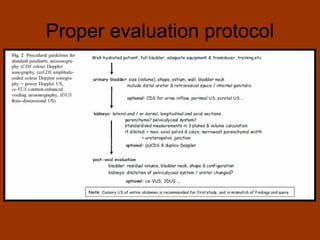
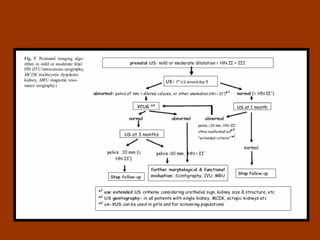
Proper evaluation protocol
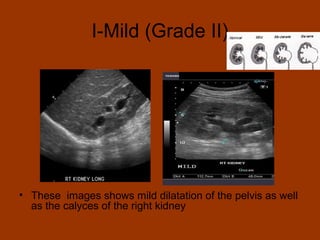
I-Mild (Grade II)


• These images shows mild dilatation of the pelvis as well
  as the calyces of the right kidney
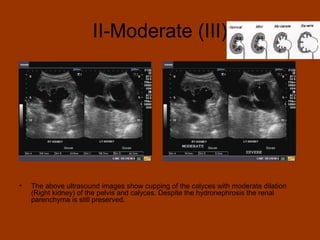
II-Moderate (III)


•   The above ultrasound images show cupping of the calyces with moderate dilation
    (Right kidney) of the pelvis and calyces. Despite the hydronephrosis the renal
    parenchyma is still preserved.
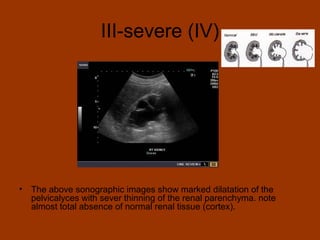
III-severe (IV)


• The above sonographic images show marked dilatation of the
  pelvicalyces with sever thinning of the renal parenchyma. note
  almost total absence of normal renal tissue (cortex).
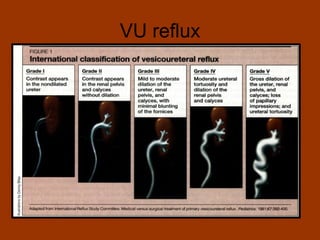
VU reflux
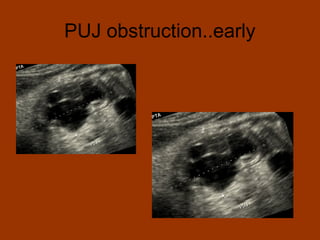
PUJ obstruction..early
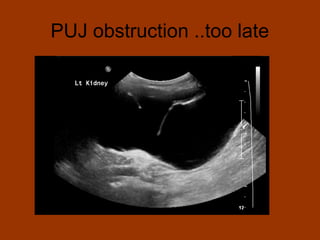
PUJ obstruction ..too late
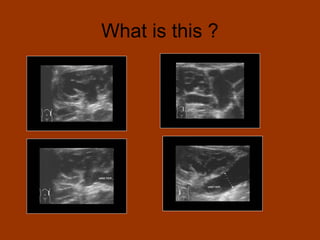
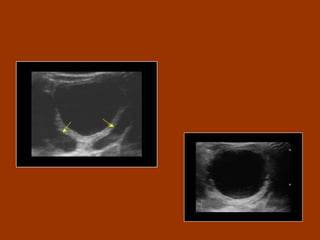
What is this ?
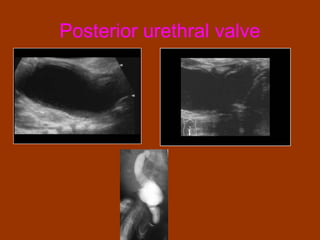
Posterior urethral valve
Neonatal hydronephrosis

Neonatal hydronephrosis

  • 1.
    Dr/Ahmed Bahnassy Consultantradiologist Riyadh Military Hospital
  • 2.
    Importance of thefinding • Most common congenital condition discovered by antenatal US. • ultrasonography enables us to detect the correctable cause of hydronephrosis, such as ureteropelvic junction obstruction. • Failure of recognizing those needing surgical intervention will result in permanent loss of the kidney.
  • 3.
    Fetal hydronephrosis Detection •Grignon et al developed a grading system for hydronephrosis in fetuses of 20 weeks gestation or greater in relation to their postnatal findings. • Grade I dilatations (AP renal pelvic diameter up to 1.0 cm) were described as normal and physiologic because none of the affected patients required surgery after birth. • Grade II (>1.0–1.5 cm) and grade III (>1.5 cm with slight dilatation of calices) dilatation was termed intermediate hydronephrosis; 50% required postnatal surgical intervention. • All patients with grade IV dilatation (>1.5-cm pelvis, moderate dilatation of calices, no cortical atrophy) or grade V hydronephrosis (>1.5-cm pelvis, severe caliceal dilatation, atrophic renal cortex) required surgery. • Their work suggests that one should be concerned with pelvic dilatations greater than 10 mm particularly if there is associated calyceal dilatation and loss of cortex.
  • 4.
    • Clinically significantdisease is more likely if: • (1) a grade 3 or 4 hydronephrosis is present; • (2) the renal pelvis diameter is > 10 mm; • (3) the renal pelvis/kidney ratio is > 0.5.
  • 5.
    Incidence: • Pre-natal ultrasound – detects fetal anomaly in 1% of pregnancies, of which 20-30% are genitourinary in origin and 50% manifest as hydronephrosis
  • 6.
    Grading of Severityof Hydronephrosis Grade Central Renal Renal Complex Parenchymal Thickness 0 Intact Normal 1 Slight splitting Normal 2 Evident splitting Normal 3 Wide splitting Normal 4 Further dilatation Thin
  • 7.
    Pathophysiology: • Anatomic andfunctional processes interrupts the flow of urine. • There is a rise in ureteral pressure causing stretching and dilation; if pressures continue to rise, leads to decline in renal blood flow and GFR. • When significant obstruction is persistent, it affects nephrogenic tissue and results in varying degrees of cystic dysplasia and renal impairment.
  • 9.
  • 11.
    I-Mild (Grade II) •These images shows mild dilatation of the pelvis as well as the calyces of the right kidney
  • 12.
    II-Moderate (III) • The above ultrasound images show cupping of the calyces with moderate dilation (Right kidney) of the pelvis and calyces. Despite the hydronephrosis the renal parenchyma is still preserved.
  • 13.
    III-severe (IV) • Theabove sonographic images show marked dilatation of the pelvicalyces with sever thinning of the renal parenchyma. note almost total absence of normal renal tissue (cortex).
  • 15.
  • 16.
  • 17.
  • 18.
  • 20.