HRCT chest in interstitial lung
diseases.
How to report like an expert
Dr/Ahmed Bahnassy
Consultant Radiologist
MBCHB-MSc-FRCR(UK)
Tribute to the pioneers
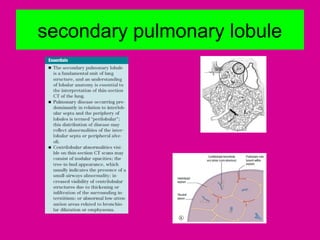
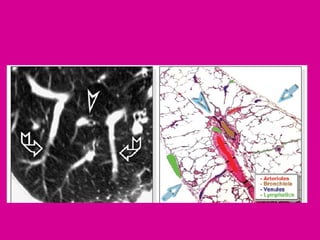
secondary pulmonary lobule
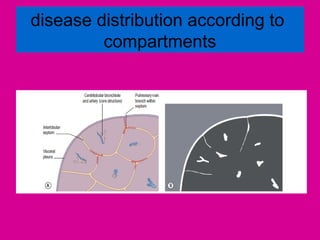
disease distribution according to
compartments
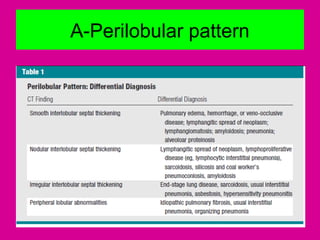
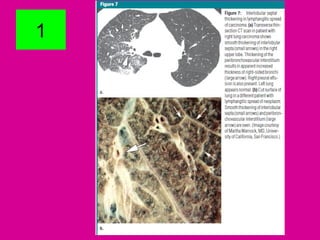
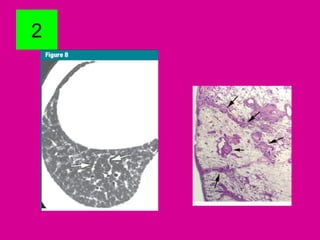
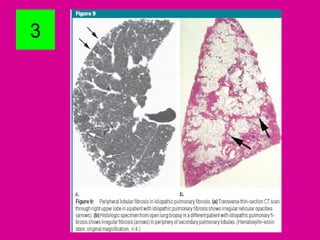
A-Perilobular pattern
1
2
3
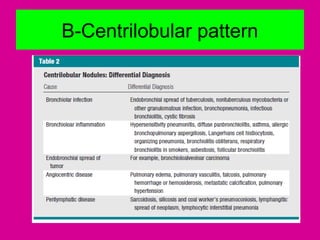
B-Centrilobular pattern
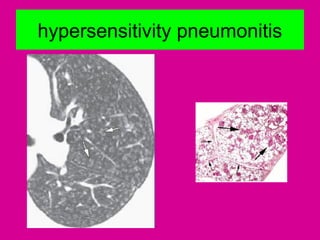
hypersensitivity pneumonitis
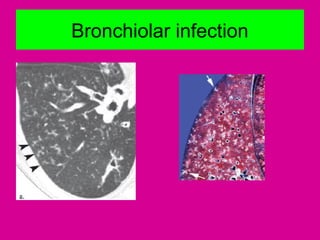
Bronchiolar infection
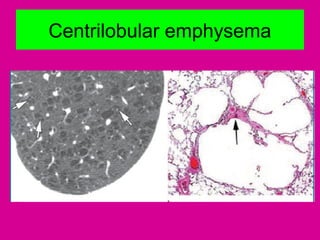
Centrilobular emphysema
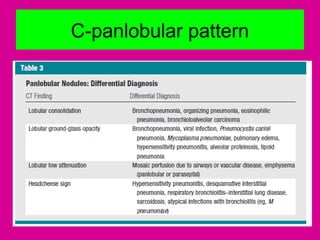
C-panlobular pattern
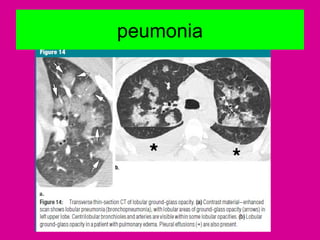
peumonia
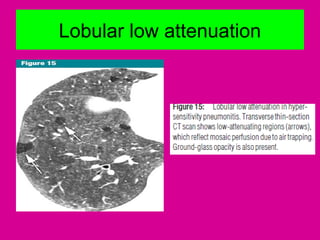
Lobular low attenuation
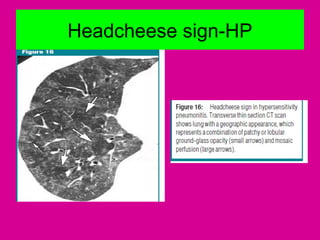
Headcheese sign-HP
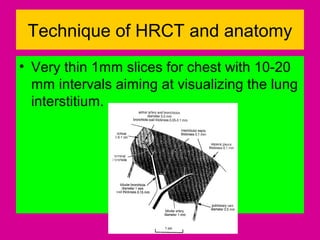
Technique of HRCT and anatomy
• Very thin 1mm slices for chest with 10-20
mm intervals aiming at visualizing the lung
interstitium.
Road map to diagnosis
1. Recognize the abnormality pattern.
2. Locate the abnormality in relation to the
lung and to the SPL
3. Evaluate its effects on lung parenchyma
HRCT patterns-4 base of pyramid
• Reticular pattern
• Nodular pattern.
• Increased lung opacity.
• Decreased lung opacity and cystic
changes
Reticular
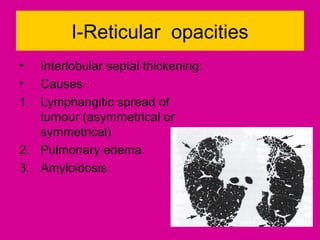
I-Reticular opacities
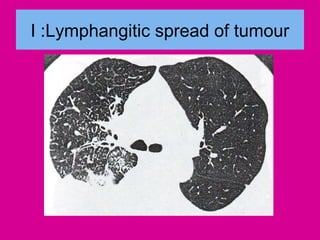
• Interlobular septal thickening:
• Causes :
1. Lymphangitic spread of
tumour (asymmetrical or
symmetrical)
2. Pulmonary edema.
3. Amyloidosis
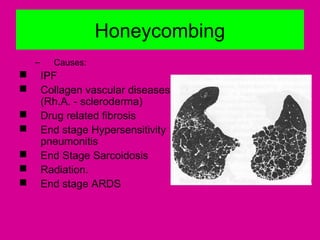
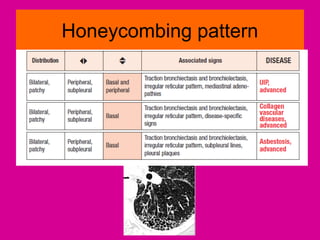
Honeycombing
– Causes:
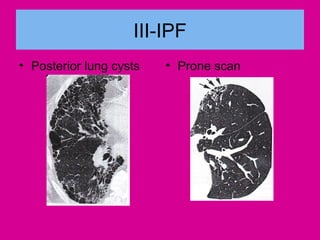
 IPF
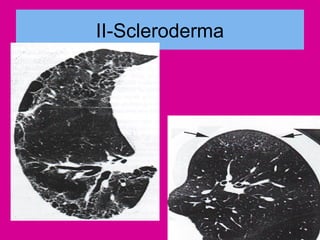
 Collagen vascular diseases
(Rh.A. - scleroderma)
 Drug related fibrosis
 End stage Hypersensitivity
pneumonitis
 End Stage Sarcoidosis
 Radiation.
 End stage ARDS
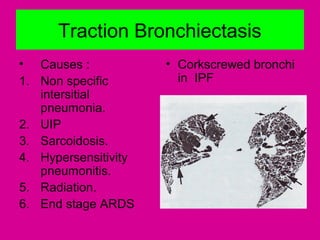
Traction Bronchiectasis
• Causes :
1. Non specific
intersitial
pneumonia.
2. UIP
3. Sarcoidosis.
4. Hypersensitivity
pneumonitis.
5. Radiation.
6. End stage ARDS
• Corkscrewed bronchi
in IPF
I :Lymphangitic spread of tumour
II-Scleroderma
III-IPF
• Posterior lung cysts • Prone scan
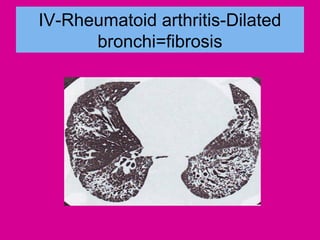
IV-Rheumatoid arthritis-Dilated
bronchi=fibrosis
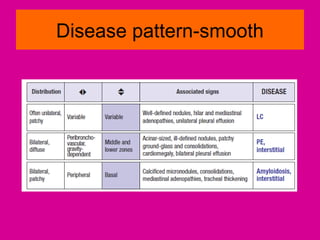
Disease pattern-smooth
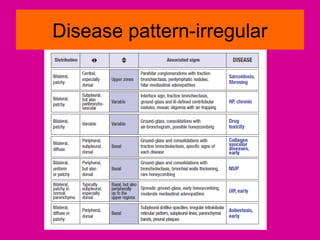
Disease pattern-irregular
Nodular
II-Nodules
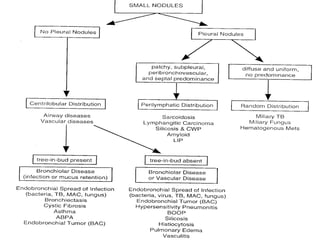
• Perilymphatic.
• Centrilobular.
• Random
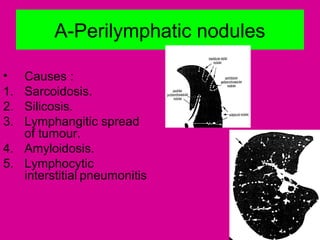
A-Perilymphatic nodules
• Causes :
1. Sarcoidosis.
2. Silicosis.
3. Lymphangitic spread
of tumour.
4. Amyloidosis.
5. Lymphocytic
interstitial pneumonitis
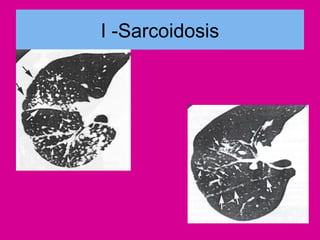
I -Sarcoidosis
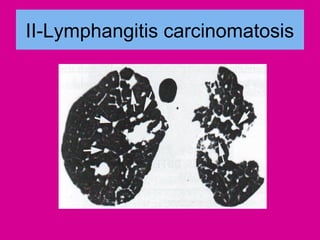
II-Lymphangitis carcinomatosis
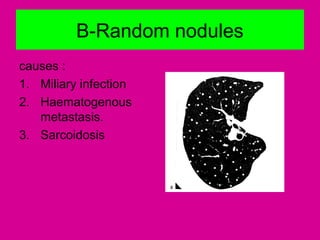
B-Random nodules
causes :
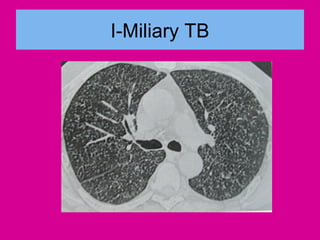
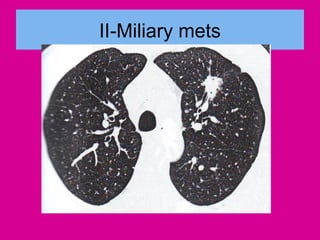
1. Miliary infection
2. Haematogenous
metastasis.
3. Sarcoidosis
I-Miliary TB
II-Miliary mets
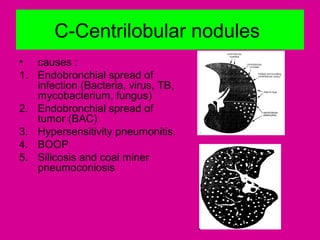
C-Centrilobular nodules
• causes :
1. Endobronchial spread of
infection (Bacteria, virus, TB,
mycobacterium, fungus)
2. Endobronchial spread of
tumor (BAC)
3. Hypersensitivity pneumonitis.
4. BOOP
5. Silicosis and coal miner
pneumoconiosis
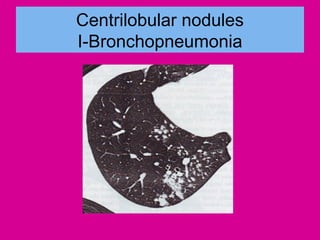
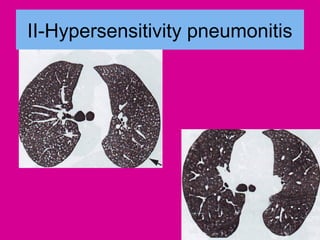
Centrilobular nodules
I-Bronchopneumonia
II-Hypersensitivity pneumonitis
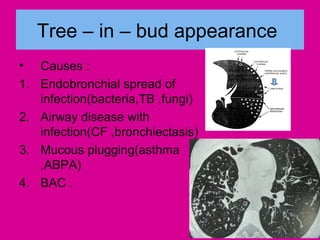
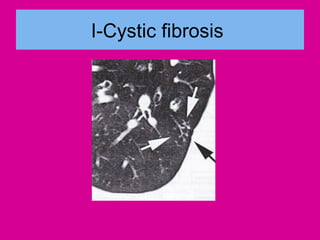
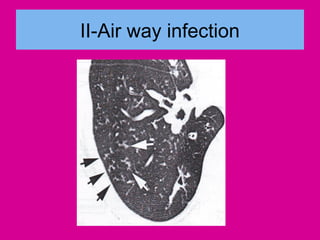
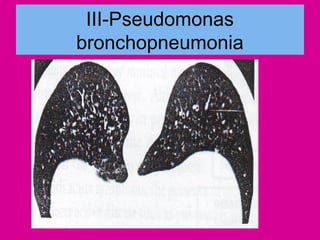
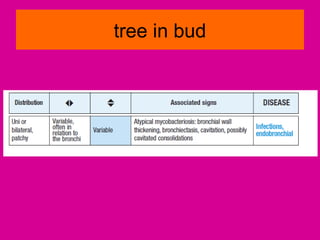
Tree – in – bud appearance
• Causes :
1. Endobronchial spread of
infection(bacteria,TB ,fungi)
2. Airway disease with
infection(CF ,bronchiectasis)
3. Mucous plugging(asthma
,ABPA)
4. BAC .
I-Cystic fibrosis
II-Air way infection
III-Pseudomonas
bronchopneumonia
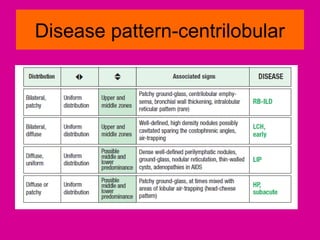
Disease pattern-centrilobular
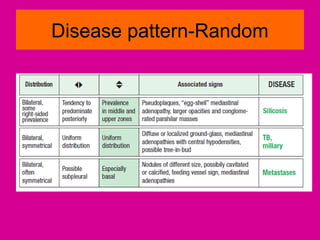
Disease pattern-Random
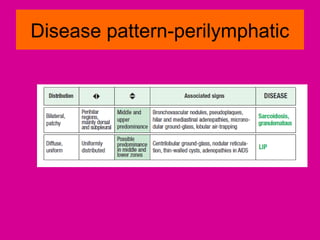
Disease pattern-perilymphatic
Alveolar opacification
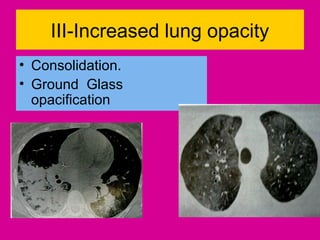
III-Increased lung opacity
• Consolidation.
• Ground Glass
opacification
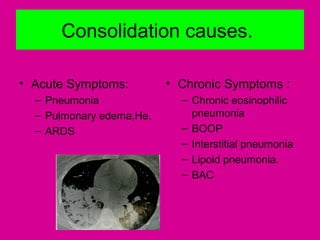
Consolidation causes.
• Acute Symptoms:
– Pneumonia
– Pulmonary edema,He.
– ARDS
• Chronic Symptoms :
– Chronic eosinophilic
pneumonia
– BOOP
– Interstitial pneumonia
– Lipoid pneumonia.
– BAC
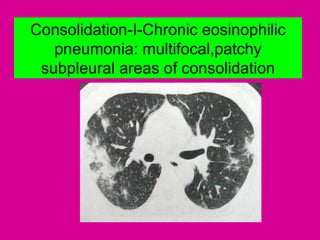
Consolidation-I-Chronic eosinophilic
pneumonia: multifocal,patchy
subpleural areas of consolidation
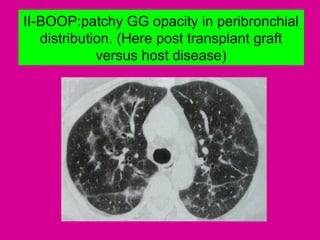
II-BOOP:patchy GG opacity in peribronchial
distribution. (Here post transplant graft
versus host disease)
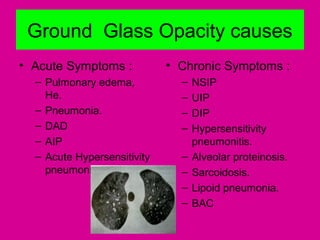
Ground Glass Opacity causes
• Acute Symptoms :
– Pulmonary edema,
He.
– Pneumonia.
– DAD
– AIP
– Acute Hypersensitivity
pneumonitis.
• Chronic Symptoms :
– NSIP
– UIP
– DIP
– Hypersensitivity
pneumonitis.
– Alveolar proteinosis.
– Sarcoidosis.
– Lipoid pneumonia.
– BAC
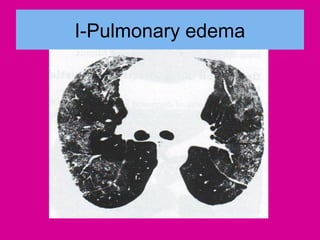
I-Pulmonary edema
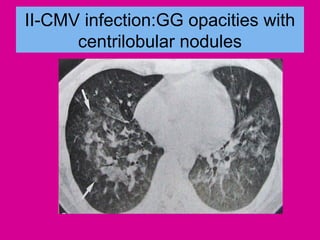
II-CMV infection:GG opacities with
centrilobular nodules
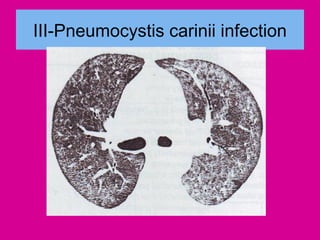
III-Pneumocystis carinii infection
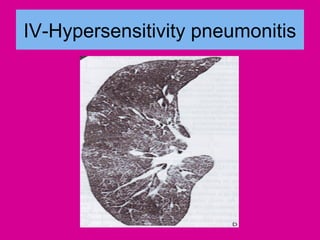
IV-Hypersensitivity pneumonitis
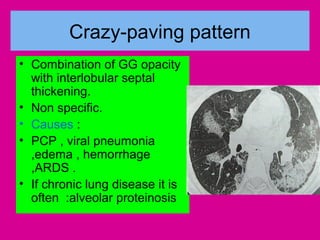
Crazy-paving pattern
• Combination of GG opacity
with interlobular septal
thickening.
• Non specific.
• Causes :
• PCP , viral pneumonia
,edema , hemorrhage
,ARDS .
• If chronic lung disease it is
often :alveolar proteinosis
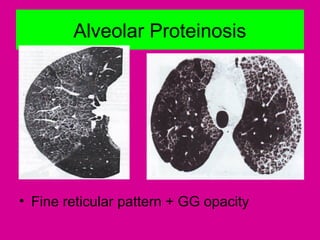
Alveolar Proteinosis
• Fine reticular pattern + GG opacity
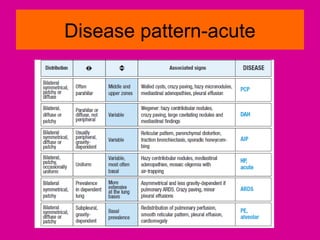
Disease pattern-acute
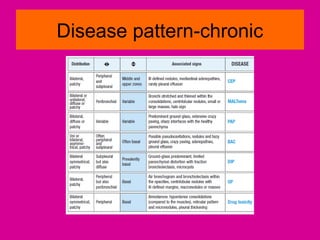
Disease pattern-chronic
tree in bud
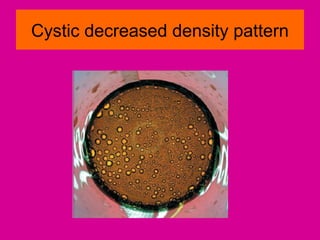
Cystic decreased density pattern
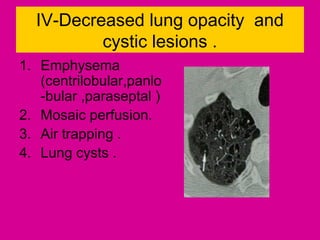
IV-Decreased lung opacity and
cystic lesions .
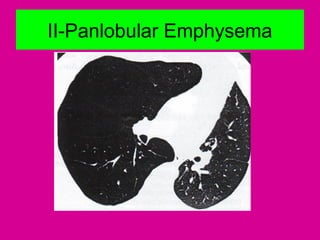
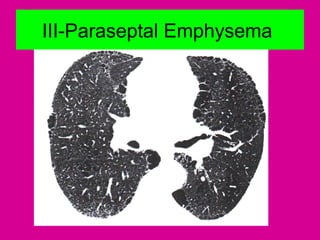
1. Emphysema
(centrilobular,panlo
-bular ,paraseptal )
2. Mosaic perfusion.
3. Air trapping .
4. Lung cysts .
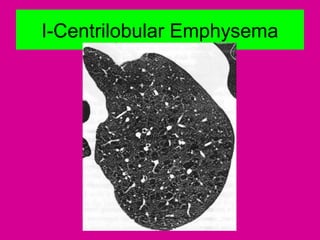
I-Centrilobular Emphysema
II-Panlobular Emphysema
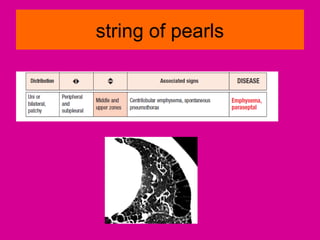
III-Paraseptal Emphysema
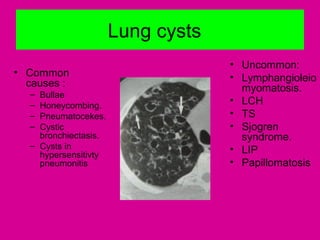
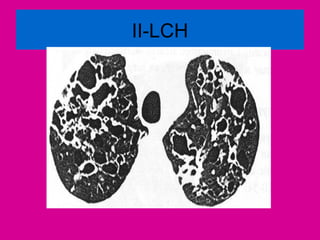
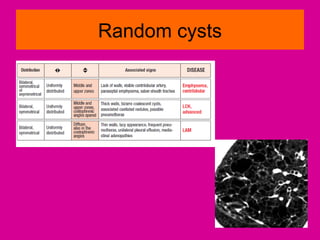
Lung cysts
• Common
causes :
– Bullae
– Honeycombing.
– Pneumatocekes.
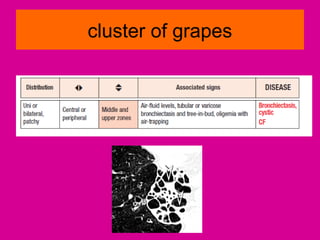
– Cystic
bronchiectasis.
– Cysts in
hypersensitivty
pneumonitis
• Uncommon:
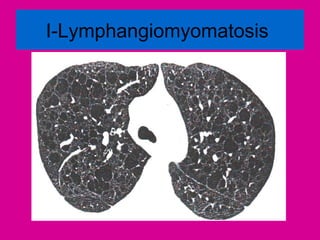
• Lymphangioleio
myomatosis.
• LCH
• TS
• Sjogren
syndrome.
• LIP
• Papillomatosis
I-Lymphangiomyomatosis
II-LCH
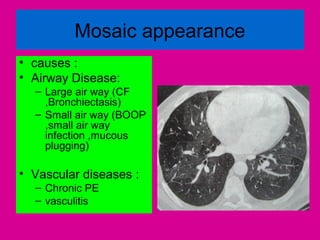
Mosaic appearance
• causes :
• Airway Disease:
– Large air way (CF
,Bronchiectasis)
– Small air way (BOOP
,small air way
infection ,mucous
plugging)
• Vascular diseases :
– Chronic PE
– vasculitis
cluster of grapes
string of pearls
Honeycombing pattern
Random cysts
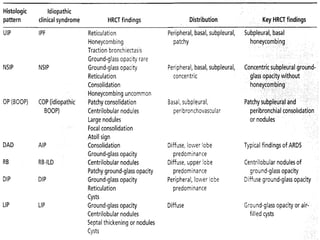
Common Interstitial lung
diseases-peak of the pyramid
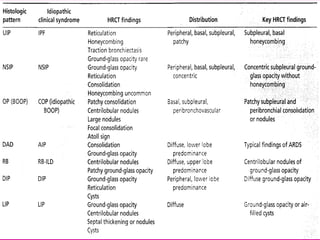
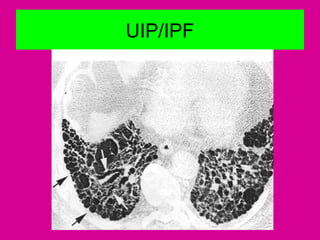
UIP/IPF
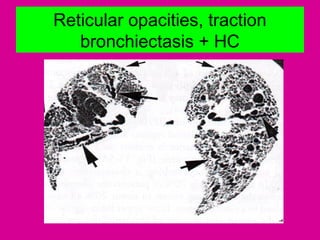
Reticular opacities, traction
bronchiectasis + HC
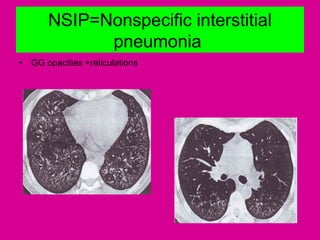
NSIP=Nonspecific interstitial
pneumonia
• GG opacities +reticulations
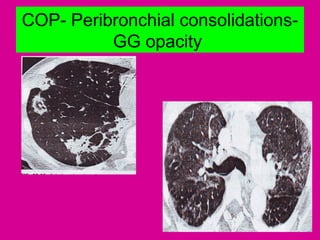
COP- Peribronchial consolidations-
GG opacity
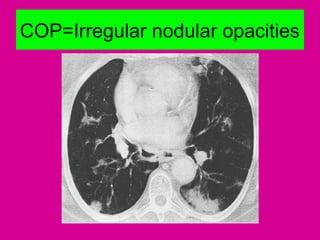
COP=Irregular nodular opacities
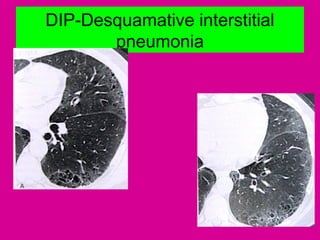
DIP-Desquamative interstitial
pneumonia
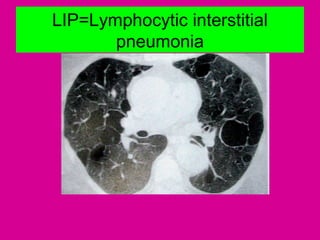
LIP=Lymphocytic interstitial
pneumonia
Golden rules for HRCT
interpretation.
• Honeycombing with a basal and subpleural redominance
is highly suggestive of UIP.Lung biopsy is rarely
performed when HRCT shows these findings.
• Concentric lower lobe GG opaity without honeycombing
suggests NSIP.In a patient with collagen vascular
disease ,biopsy is uncommoly performed.
• Patchy or noular subpleural or peribronchial
consolidation is typical of COP.
• Cystic air spaces or GG opacity may represent LIP.LIP is
usually associated with other diseases.
• Diffuse or centrilobular GG opacity in a smoker is typical
of DIP or RB-ILD
References
• 1 - HOGG JH. Chronic interstitial lung disease of unknown cause: a new classification based on
pathogenesis. A J R 1991; 156: 225-233.
• 2 - BERGIN C, ROGGLI V, COBLENTZ C, CHILES C. The secondary pulmonary lobule: normal
and abnormal CT appearances. AJR 1988; 151:21-25.
• 3 - WEBB WR, STEIN MG, FINKBEINER WE,JUNG GI I et coll. Normal and diseased isolated
lungs: high-resolution CT. Radiology 1988; 166: 81-87.
• 4 - MURATA K, ITOH H, TODO G, KANAOKA M, NOMA S et coll. Centrilobular lesions of the
lungs: demonstration by high-resolution CT and pathologic correlation. Radiology 1986; 161: 641-
645.
• 5 - REMY-JARDIN M, REMY J, GIRAUD F, WATTINNE L, GOSSELIN B. Computed tomography
assessment of ground glass opacity : Semiology and significance. J Thorac Imaging 1993; 8 :
249-264.
• 6 - BRAUNER MW, GRENIER Ph, MOMPOINT D, LENOIR S, De CREMOUX H. Pulmonary
sarcoidosis: evaluation with high-resolution CT. Radiology 1989; 172: 467-471.
• 7 - MULLER NL, MILLER RR, WEBB WR, EWANS KG, OSTROW DN. Fibrosing alveolitis:
Pathologic-CT correlation. Radiology 1986; 160: 585-588.
• 8 - WESTCOTT JL, COLE SR. Traction bronchiectasis in end-stage pulmonary fibrosis.
Radiology 1986; 161: 665-669.
• 9 - MUNK PL, MULLER NL, MILLER RR, OSTROW DN. Pulmonary lymphangitic
carcinomatosis: CT and pathologic findings. Radiology 1988; 166: 705-709.
• 10 - HANSELL DM, MOSKOVIC. High resolution computed tomography in extrinsic allergic
alveolitis. Clin Radiol 1991; 43: 8-12.
• 11 - MULLER NL, MILLER RR. State-of-the art: Computed tomography of chronic diffuse
infiltrative lung diseaseI Am Rev Respir Dis 1990; 142: 1206-1215.
Hrct chest in interstitial lung diseases

Hrct chest in interstitial lung diseases