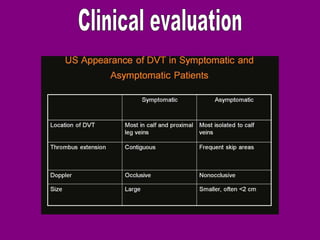
Lower limb doppler examination:
The essentials
Dr/Ahmed Bahnassy
Consultant Radiologist
MBCHB-MSc-FRCR(UK)
Aim of the lecture
• Outlining the technique of peripheral
doppler examinations.
• Diagnosing deep vein
thrombosis,without pitfalls.
• Recognizing the other causes of limb
pain.
• Understanding how doppler can
diagnose and grade arterial stenosis.
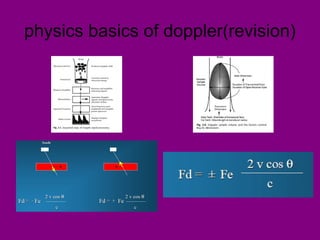
physics basics of doppler(revision)
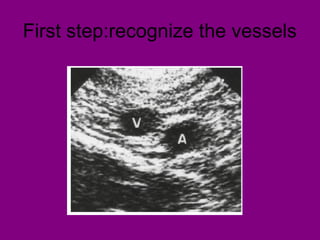
First step:recognize the vessels
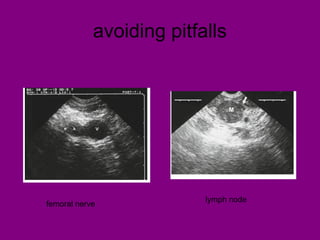
avoiding pitfalls
femoral nerve
lymph node
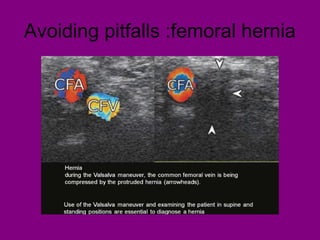
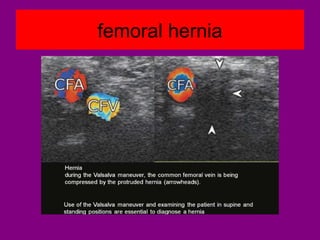
Avoiding pitfalls :femoral hernia
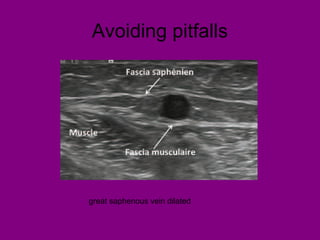
Avoiding pitfalls
great saphenous vein dilated
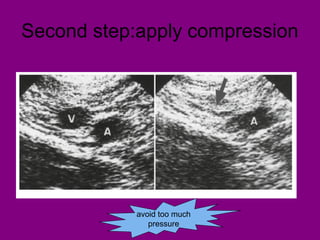
Second step:apply compression
avoid too much
pressure
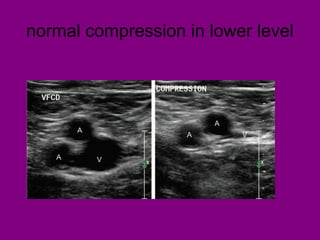
normal compression in lower level
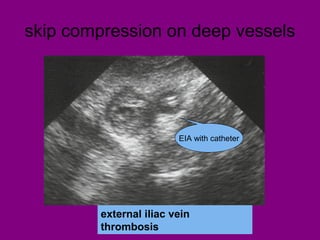
skip compression on deep vessels
external iliac vein
thrombosis
EIA with catheter
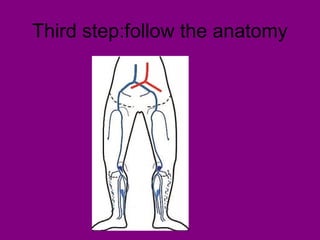
Third step:follow the anatomy
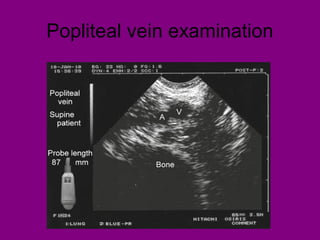
Popliteal vein examination
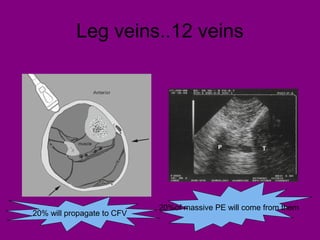
Leg veins..12 veins
20%of massive PE will come from them
20% will propagate to CFV
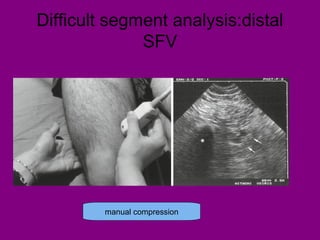
Difficult segment analysis:distal
SFV
manual compression
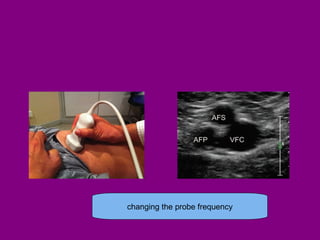
changing the probe frequency
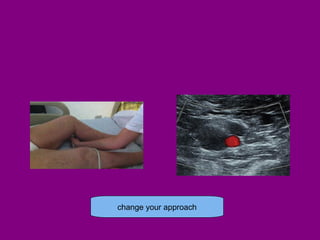
change your approach
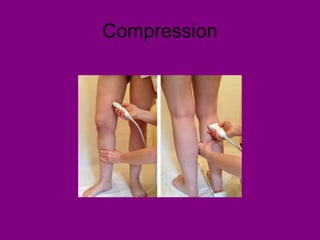
Compression
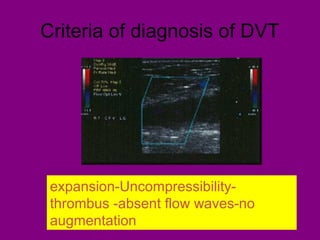
Criteria of diagnosis of DVT
expansion-Uncompressibility-
thrombus -absent flow waves-no
augmentation
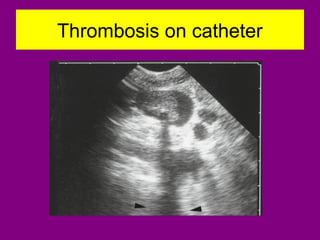
Thrombosis on catheter
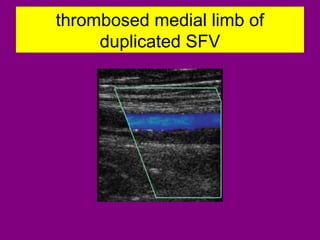
thrombosed medial limb of
duplicated SFV
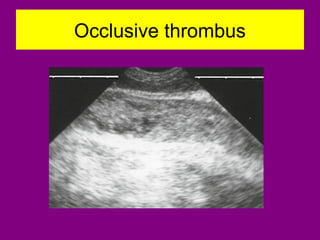
Occlusive thrombus
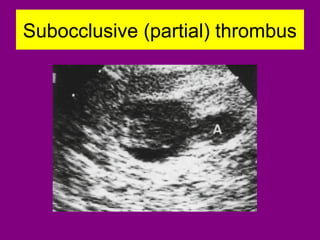
Subocclusive (partial) thrombus
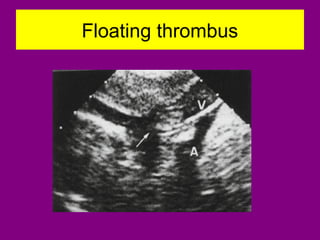
Floating thrombus
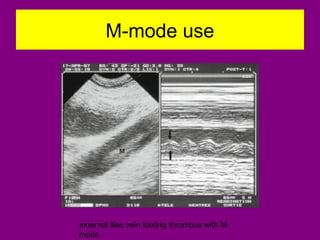
M-mode use
external iliac vein foating thrombus with M-
mode
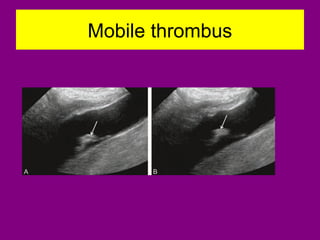
Mobile thrombus
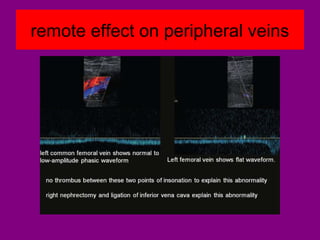
remote effect on peripheral veins
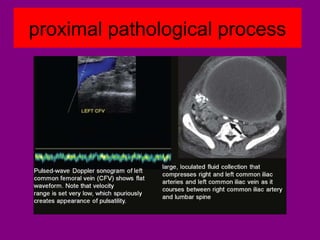
proximal pathological process
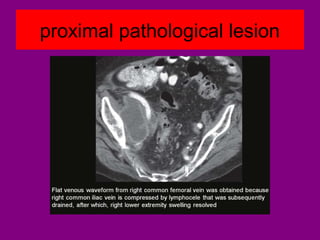
proximal pathological lesion
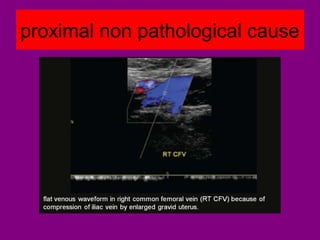
proximal non pathological cause
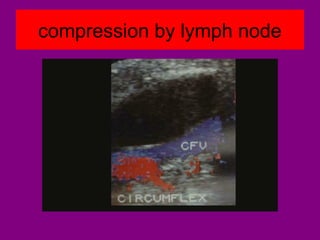
compression by lymph node
femoral hernia
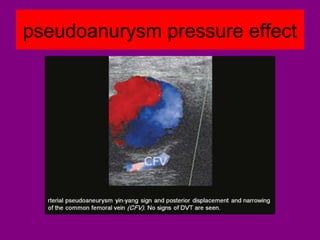
pseudoanurysm pressure effect
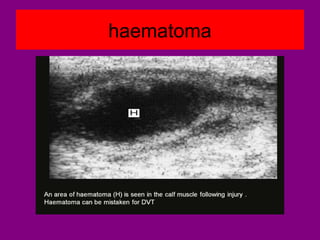
haematoma
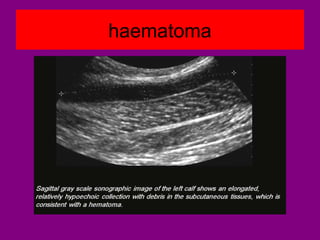
haematoma
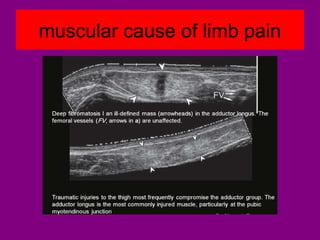
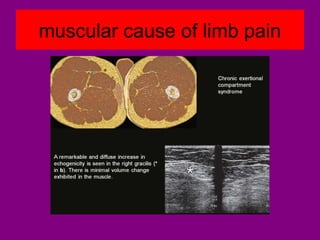
muscular cause of limb pain
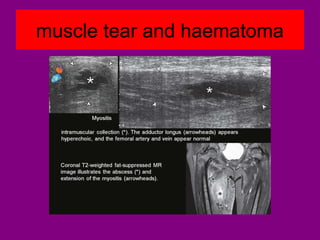
muscle tear and haematoma
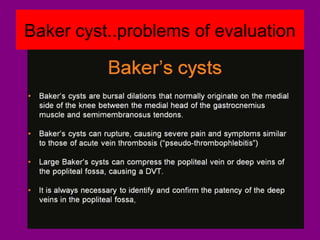
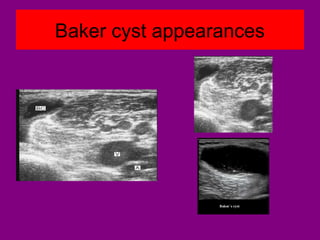
Baker cyst..problems of evaluation
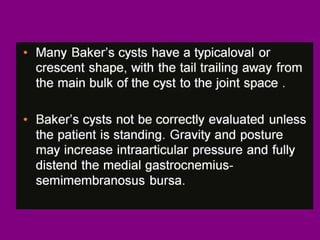
Baker cyst appearances
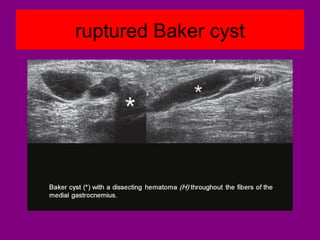
ruptured Baker cyst
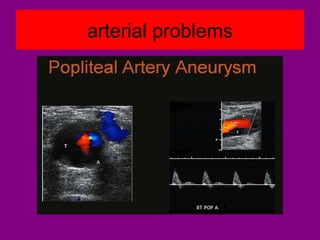
arterial problems
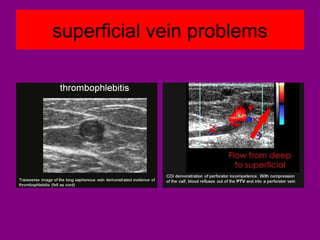
superficial vein problems
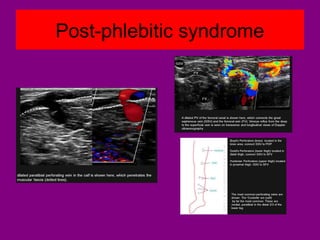
Post-phlebitic syndrome
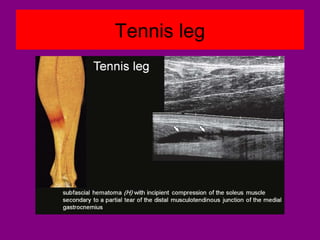
Tennis leg
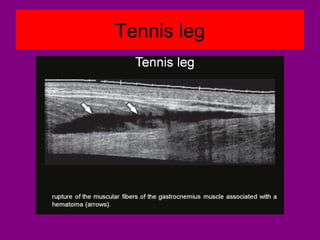
Tennis leg
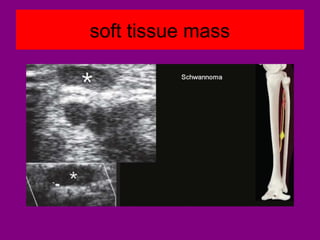
soft tissue mass
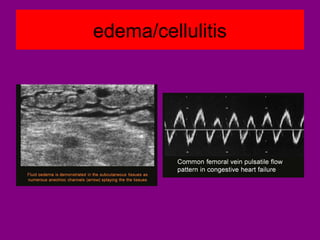
edema/cellulitis
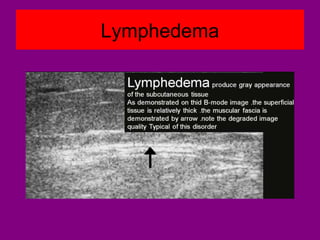
Lymphedema
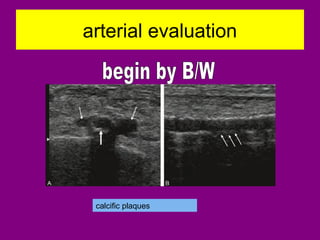
arterial evaluation
calcific plaques
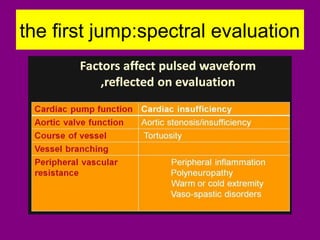
the first jump:spectral evaluation
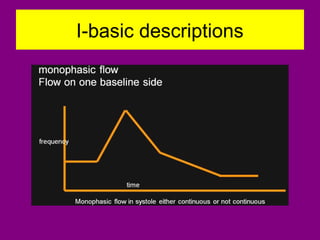
I-basic descriptions
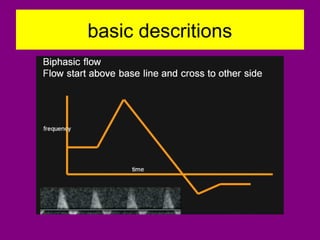
basic descritions
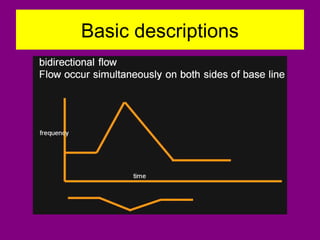
Basic descriptions
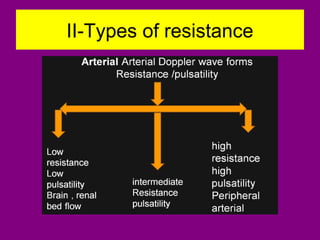
II-Types of resistance
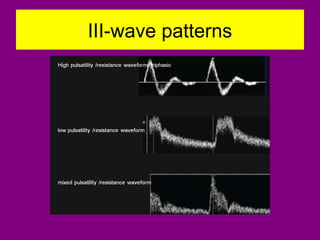
III-wave patterns
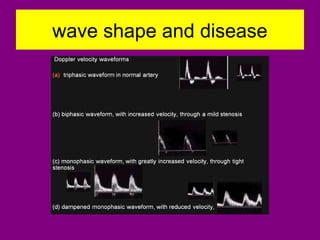
wave shape and disease
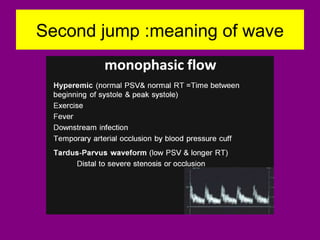
Second jump :meaning of wave
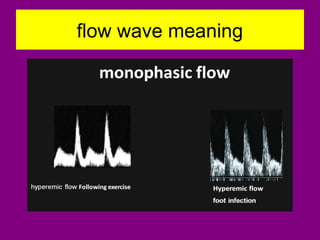
flow wave meaning
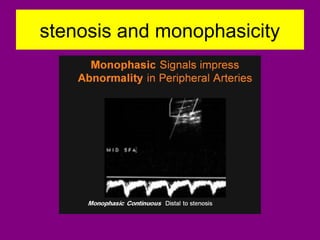
stenosis and monophasicity
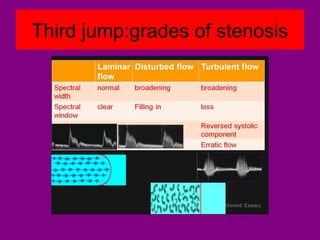
Third jump:grades of stenosis
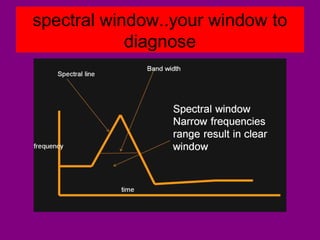
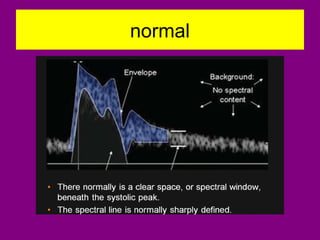
spectral window..your window to
diagnose
normal
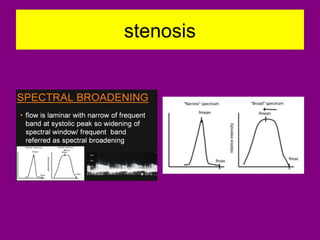
stenosis
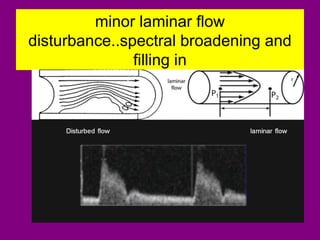
minor laminar flow
disturbance..spectral broadening and
filling in
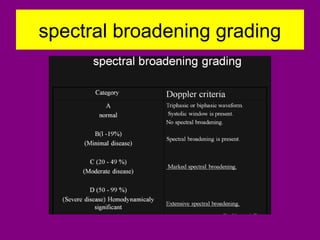
spectral broadening grading
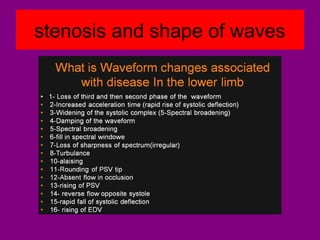
stenosis and shape of waves
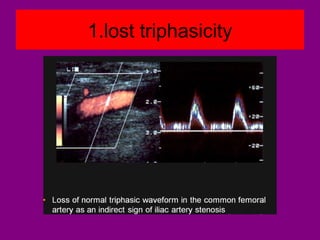
1.lost triphasicity
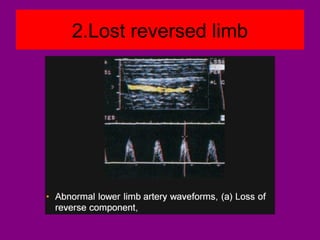
2.Lost reversed limb
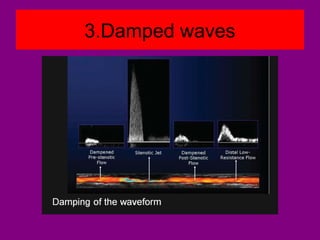
3.Damped waves
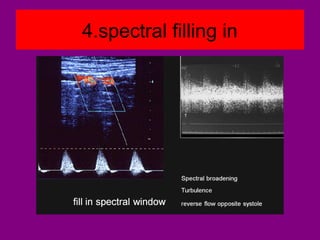
4.spectral filling in
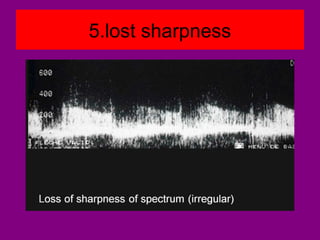
5.lost sharpness
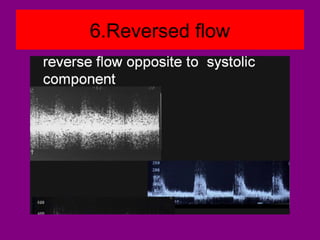
6.Reversed flow
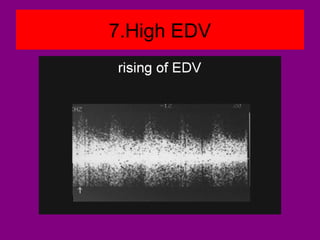
7.High EDV
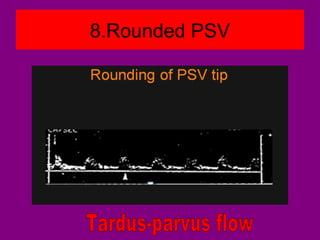
8.Rounded PSV
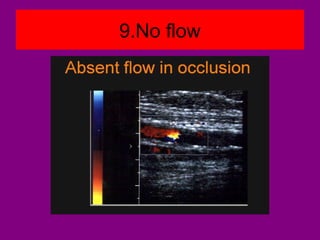
9.No flow
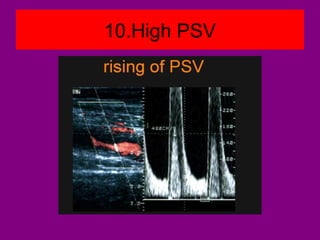
10.High PSV
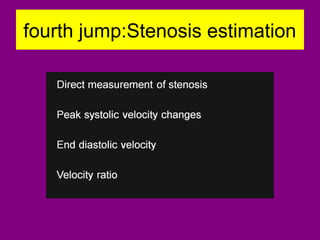
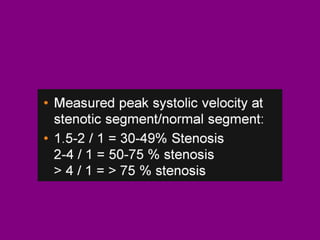
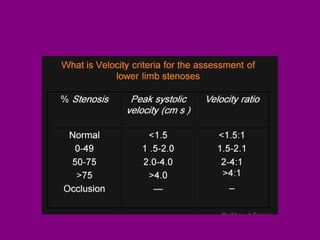
fourth jump:Stenosis estimation
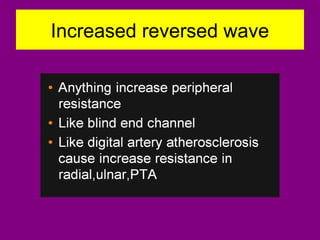
Increased reversed wave
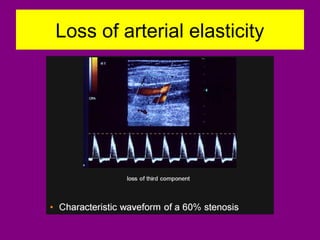
Loss of arterial elasticity
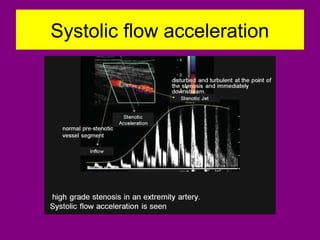
Systolic flow acceleration
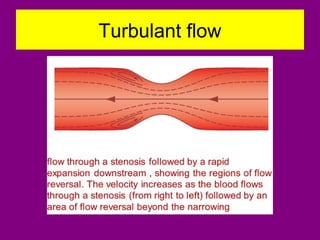
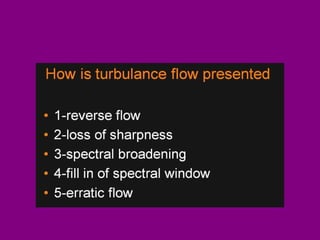
Turbulant flow
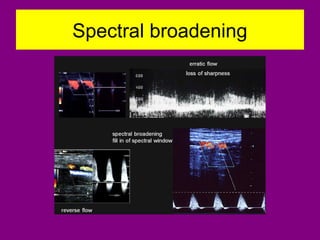
Spectral broadening
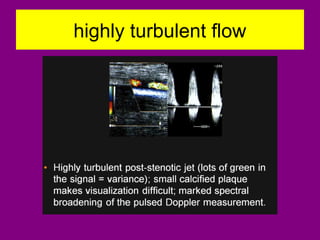
highly turbulent flow
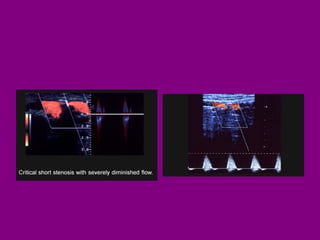
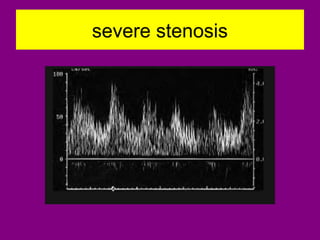
severe stenosis
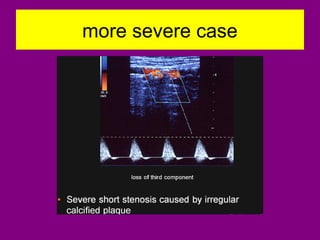
more severe case
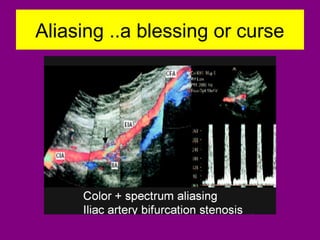
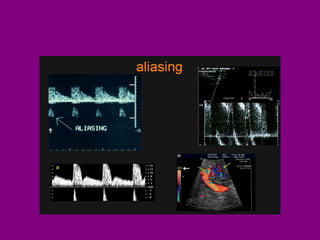
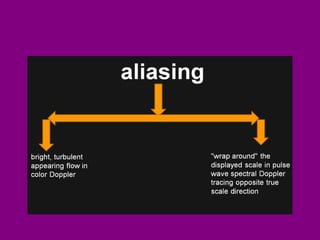
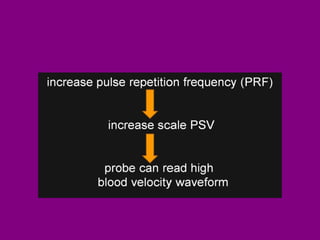
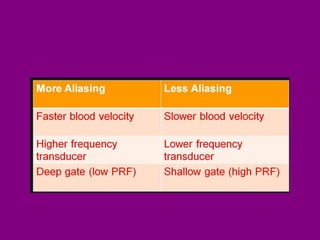
Aliasing ..a blessing or curse
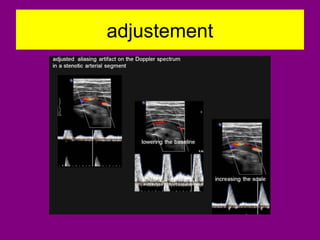
adjustement
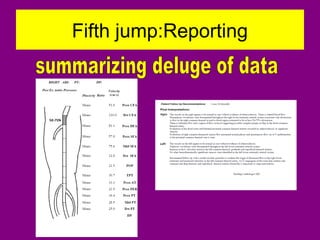
Fifth jump:Reporting
lower limb doppler examination -The essentials

lower limb doppler examination -The essentials