By: Akram Bhasha G 
1NH14MMD02 
TECHNICAL SEMINAR ON
Presentation Overview 
1. Introduction 
2. Nano-Biotechnology 
3. Appearance of Nano-robots 
4. Control over Nano-robots 
5. Navigation of Nano-robots 
6. Powering the Nano-robots 
7. Locomotion of Nano-robots 
8. Application 
9. Conclusion
Introduction 
 The term “Nanotechnology” generally refers to engineering 
& manufacturing at nanometer length scale. 
 The possibility of nanorobots was first proposed by Richard 
Feyman in 1959. 
 Nanotechnology gives us specially engineered drugs which are 
nanoscale cancer seeking missiles. 
Nanomedicine is the process of diagnosing, treating and 
preventing disease and traumatic injury of relieving pain and of 
preserving and improving human health using molecular tools and 
molecular knowledge of the human body.
Nano-biotechnology 
Nano-biotechnology is rapidly advancing technology that 
applies the tools & processes of microfabrication to build 
devices to study biosystem. 
The research and development of nanorobots with 
embedded nanobiosensors and actuators is considered a 
new possibility to provide new medical devices for 
doctors.
Appearance 
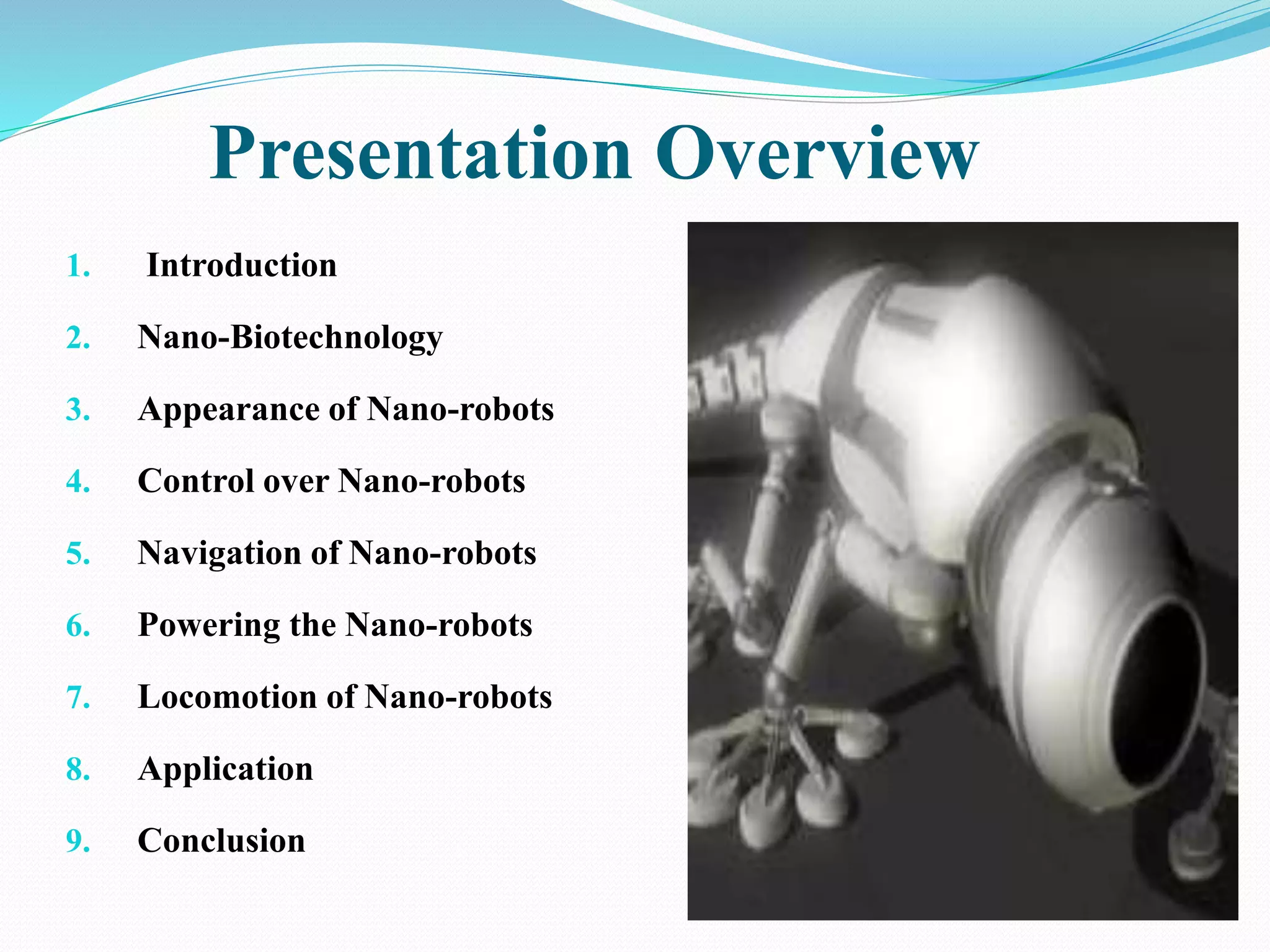
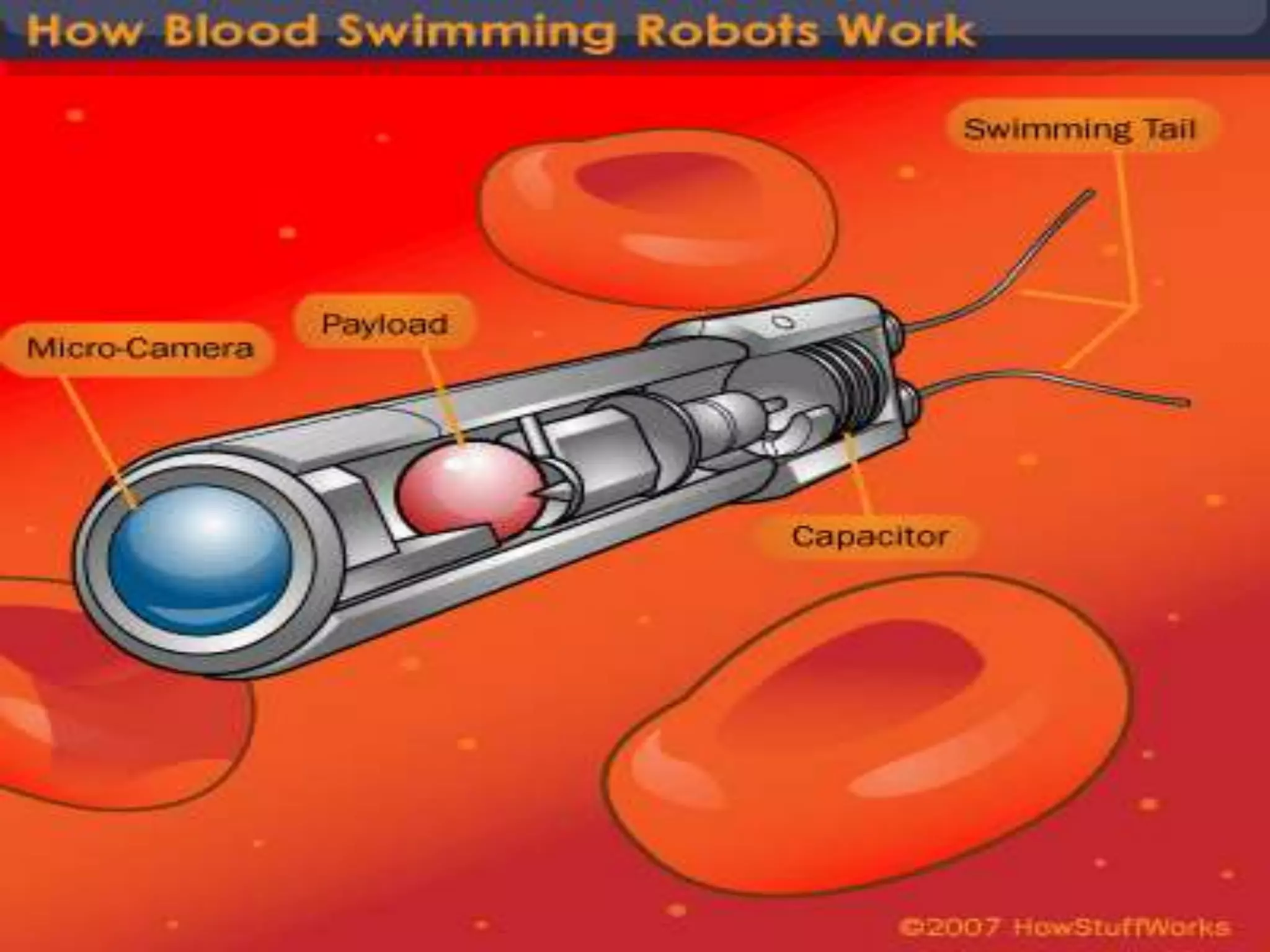
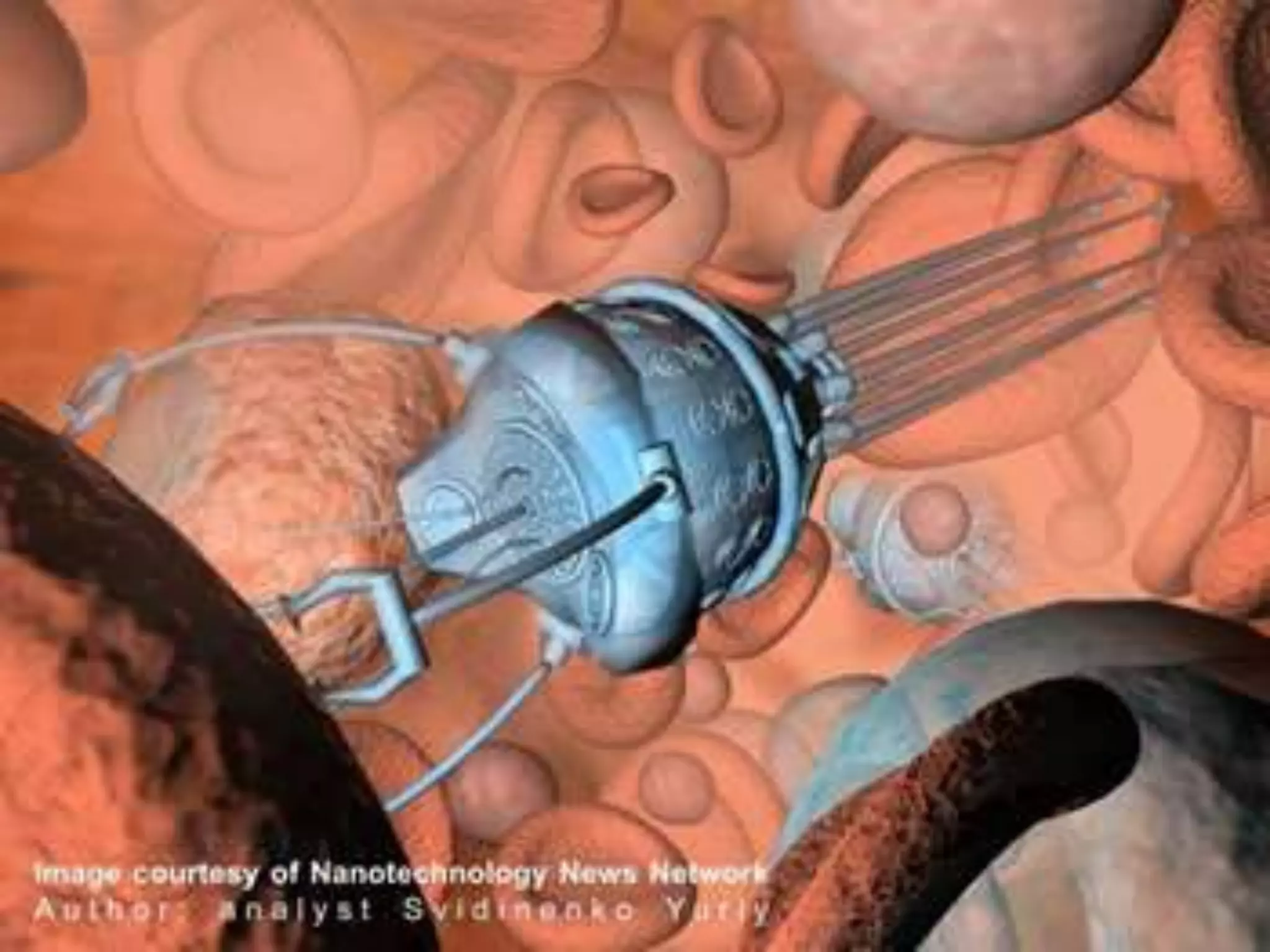
It is impossible to say exactly what a generic nanorobot 
would look like. 
Each species of medical nanorobot will be designed to 
accomplish a specific task, and many shapes and sizes are 
possible. 
Each nanorobot will be on the order of perhaps 0.5 micron 
up to perhaps 3 microns in diameter.
Control 
 Because of the small dimensions of the Nanorobots, on board 
computation will be limited. One solution to that problem is to 
do the computation on a central computer that receives sensor 
data from the Nanobots and sends them orders. 
To help control nanorobot position, a system for tracking an 
object in space can comprise a transponder device connectable 
to the object. 
 The transponder device has one or several transponder 
antennas through which a transponder circuit receives an RF 
(radio frequency) signal.
Navigation 
 External navigation systems might use a variety of different 
methods to pilot the nanorobot to the right location. One of 
these methods is to use ultrasonic signals to detect the 
nanorobot's location and direct it to the right destination. 
 Using a Magnetic Resonance Imaging (MRI) device, doctors 
could locate and track a nanorobot by detecting its magnetic 
field. 
 Doctors might also track nanorobots by injecting a radioactive 
dye into the patient's bloodstream.
Powering the Nanorobots 
 A Nanorobot with mounted electrodes could form a battery 
using the electrolytes found in blood. 
 Nanorobots could get power directly from the blood stream. 
 The Nanorobot would hold a small supply of chemicals that 
would become a fuel source when combined with blood. 
 A nanorobot could use the patient's body heat to create powe.
Locomotion 
 The scientists manipulate the arms by creating magnetic 
fields outside the patient's body. 
 The magnetic fields cause the robot’s arms to vibrate, 
pushing it further through the blood vessels. 
 Another potential way nanorobots could move around is 
by using a vibrating membrane. By alternately tightening 
and relaxing tension on a membrane, a nanorobot could 
generate small amounts of thrust.
Application 
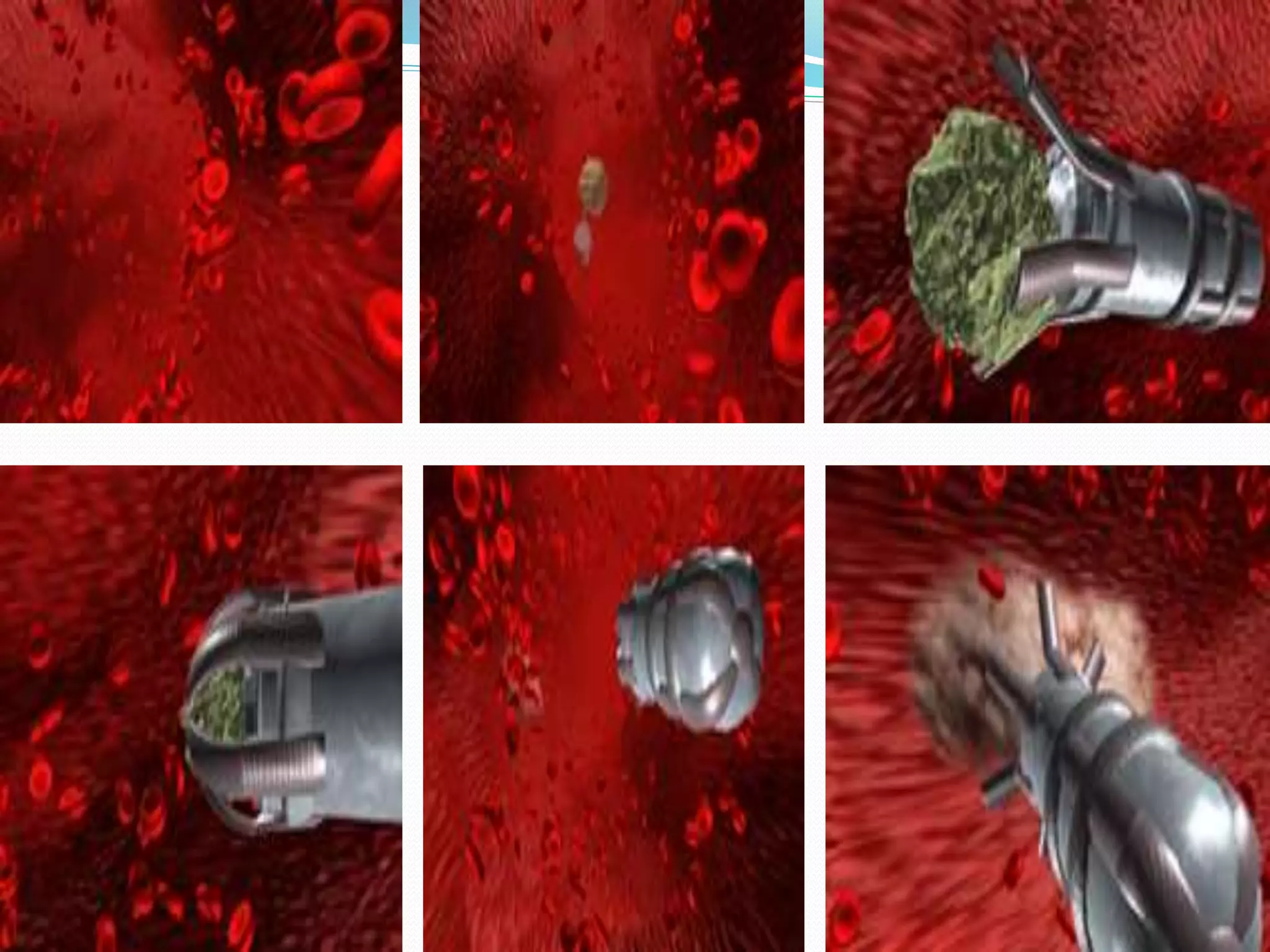
 It is clear that very "simple" medical Nano devices can have 
extremely useful abilities, even when applied in relatively 
small doses. 
 Heart attack coagulation, kills cancer cells, operates the 
tumor. 
 Kidney stones. 
 Liver stones. 
 In mechanical field these can be used to study the 
microstructure of a metal by mixing nanorobots with 
lubricating oil or required solution.
Conclusion 
Nanorobots in medicine will eliminate virtually all 
common diseases of the 20th century, virtually all 
medical pain and suffering, and allow the extension of 
human capabilities most especially our mental 
abilities.
THANK YOU

Nano robots

  • 1.
    By: Akram BhashaG 1NH14MMD02 TECHNICAL SEMINAR ON
  • 2.
    Presentation Overview 1.Introduction 2. Nano-Biotechnology 3. Appearance of Nano-robots 4. Control over Nano-robots 5. Navigation of Nano-robots 6. Powering the Nano-robots 7. Locomotion of Nano-robots 8. Application 9. Conclusion
  • 3.
    Introduction  Theterm “Nanotechnology” generally refers to engineering & manufacturing at nanometer length scale.  The possibility of nanorobots was first proposed by Richard Feyman in 1959.  Nanotechnology gives us specially engineered drugs which are nanoscale cancer seeking missiles. Nanomedicine is the process of diagnosing, treating and preventing disease and traumatic injury of relieving pain and of preserving and improving human health using molecular tools and molecular knowledge of the human body.
  • 4.
    Nano-biotechnology Nano-biotechnology israpidly advancing technology that applies the tools & processes of microfabrication to build devices to study biosystem. The research and development of nanorobots with embedded nanobiosensors and actuators is considered a new possibility to provide new medical devices for doctors.
  • 6.
    Appearance It isimpossible to say exactly what a generic nanorobot would look like. Each species of medical nanorobot will be designed to accomplish a specific task, and many shapes and sizes are possible. Each nanorobot will be on the order of perhaps 0.5 micron up to perhaps 3 microns in diameter.
  • 7.
    Control  Becauseof the small dimensions of the Nanorobots, on board computation will be limited. One solution to that problem is to do the computation on a central computer that receives sensor data from the Nanobots and sends them orders. To help control nanorobot position, a system for tracking an object in space can comprise a transponder device connectable to the object.  The transponder device has one or several transponder antennas through which a transponder circuit receives an RF (radio frequency) signal.
  • 8.
    Navigation  Externalnavigation systems might use a variety of different methods to pilot the nanorobot to the right location. One of these methods is to use ultrasonic signals to detect the nanorobot's location and direct it to the right destination.  Using a Magnetic Resonance Imaging (MRI) device, doctors could locate and track a nanorobot by detecting its magnetic field.  Doctors might also track nanorobots by injecting a radioactive dye into the patient's bloodstream.
  • 10.
    Powering the Nanorobots  A Nanorobot with mounted electrodes could form a battery using the electrolytes found in blood.  Nanorobots could get power directly from the blood stream.  The Nanorobot would hold a small supply of chemicals that would become a fuel source when combined with blood.  A nanorobot could use the patient's body heat to create powe.
  • 11.
    Locomotion  Thescientists manipulate the arms by creating magnetic fields outside the patient's body.  The magnetic fields cause the robot’s arms to vibrate, pushing it further through the blood vessels.  Another potential way nanorobots could move around is by using a vibrating membrane. By alternately tightening and relaxing tension on a membrane, a nanorobot could generate small amounts of thrust.
  • 13.
    Application  Itis clear that very "simple" medical Nano devices can have extremely useful abilities, even when applied in relatively small doses.  Heart attack coagulation, kills cancer cells, operates the tumor.  Kidney stones.  Liver stones.  In mechanical field these can be used to study the microstructure of a metal by mixing nanorobots with lubricating oil or required solution.
  • 14.
    Conclusion Nanorobots inmedicine will eliminate virtually all common diseases of the 20th century, virtually all medical pain and suffering, and allow the extension of human capabilities most especially our mental abilities.
  • 15.