NANOBOTS
PRESENTENTATION BY
SHAIKH NASIMA KHATUN
B.PHARM 4TH YEAR
SRI VENKATESHWARA COLLEGE OF PHARMACY
CONTENTS
 DEFINITION
 INTRODUCTION
 TYPES OF NANOBOTS
 NANOBOTS IN CHEMOTHERAPY
 MECHANISM
 ADVANTAGES
 DRAWBACKS
 CONCLUSION
 REFERENCE
DEFINITION
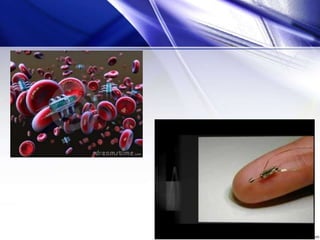
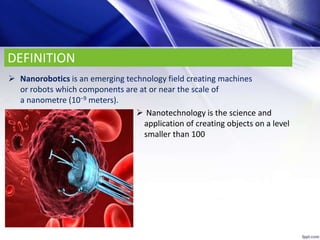
 Nanorobotics is an emerging technology field creating machines
or robots which components are at or near the scale of
a nanometre (10−9 meters).
 Nanotechnology is the science and
application of creating objects on a level
smaller than 100
INTRODUTION
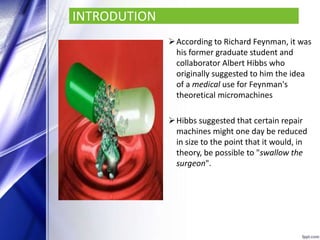
According to Richard Feynman, it was
his former graduate student and
collaborator Albert Hibbs who
originally suggested to him the idea
of a medical use for Feynman's
theoretical micromachines
Hibbs suggested that certain repair
machines might one day be reduced
in size to the point that it would, in
theory, be possible to "swallow the
surgeon".
TYPES OF NANOBOTS
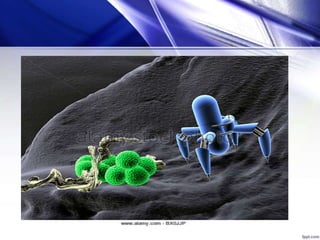
 Microbivore nanorobots
 Respirocyte nanorobots
 Clottocyte nanorobots
 Cellular repair nanorobots
 Microbivore nanorobots
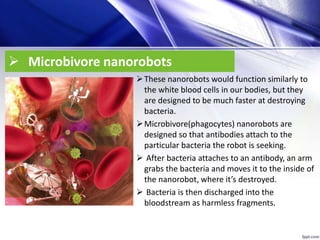
These nanorobots would function similarly to
the white blood cells in our bodies, but they
are designed to be much faster at destroying
bacteria.
Microbivore(phagocytes) nanorobots are
designed so that antibodies attach to the
particular bacteria the robot is seeking.
 After bacteria attaches to an antibody, an arm
grabs the bacteria and moves it to the inside of
the nanorobot, where it’s destroyed.
 Bacteria is then discharged into the
bloodstream as harmless fragments.
 Respirocyte nanorobots
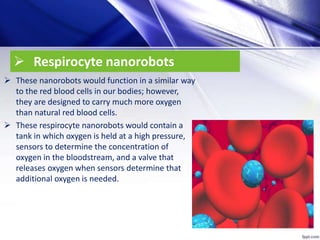
 These nanorobots would function in a similar way
to the red blood cells in our bodies; however,
they are designed to carry much more oxygen
than natural red blood cells.
 These respirocyte nanorobots would contain a
tank in which oxygen is held at a high pressure,
sensors to determine the concentration of
oxygen in the bloodstream, and a valve that
releases oxygen when sensors determine that
additional oxygen is needed.
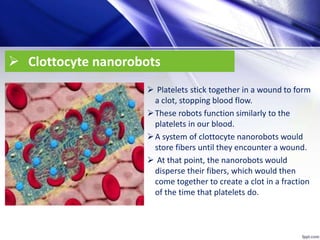
 Clottocyte nanorobots
 Platelets stick together in a wound to form
a clot, stopping blood flow.
These robots function similarly to the
platelets in our blood.
A system of clottocyte nanorobots would
store fibers until they encounter a wound.
 At that point, the nanorobots would
disperse their fibers, which would then
come together to create a clot in a fraction
of the time that platelets do.
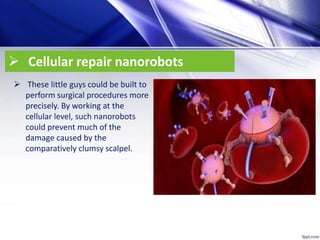
 Cellular repair nanorobots
 These little guys could be built to
perform surgical procedures more
precisely. By working at the
cellular level, such nanorobots
could prevent much of the
damage caused by the
comparatively clumsy scalpel.
OTHER TYPES
 NANOCARS
 NANOROCKETS
 MICROROCKETS
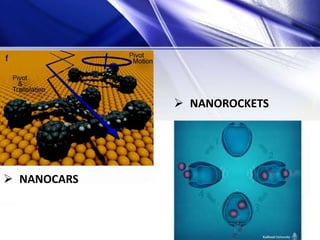
 NANOCARS
 NANOROCKETS
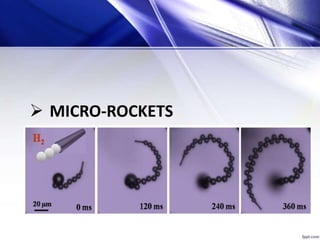
 MICRO-ROCKETS
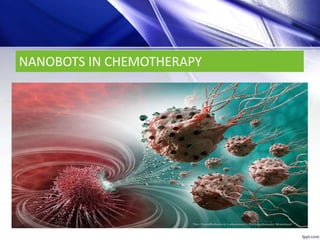
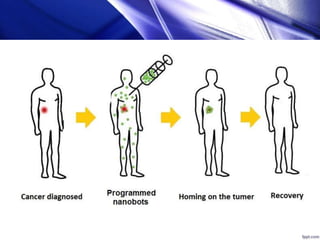
NANOBOTS IN CHEMOTHERAPY
 Chemotherapy kills cancer, but it also attacks healthy cells.
 This unfortunate phenomenon makes us sick and can cause permanent
damage to our bodies.
 Delivering medicine directly where it's needed not only minimizes side effects
but also makes the drugs more effective.
 That's why researchers are designing tiny robots to precisely carry drugs to
cancerous cells while leaving nearby healthy cells alone.
 Imagine armies of millions of miniature robots traveling through blood streams to
sneak up on cancerous cells.
 Despite admirable efforts by scientists, many technological challenges still need to
be overcome.
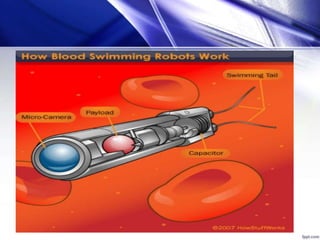
 To deliver drugs to cancerous cells, nanobots must: be small enough to penetrate a
tumor through blood vessels, be able to propel themselves and navigate while
avoiding obstacles, have a mechanism for detecting oxygen levels (which indicate
active cancer cells), be biocompatible, able to carry drugs, and have on onboard
power source.
MECHANISM OF NANOBOTS
 surgical nanobots could be introduced into the body through the vascular
system.
 after injection,each nanobot would travel to its target cell,enter the nucleus and
replace the chromosomes,then exit the cell and leave the body.
 inherited defective genes could be replaced with non-defectivebase pair.
 The function of the nanobots came from the the structure of e.coli bacteria
,which use flagella kind of filaments for the movement
 Flagella kind of particales are take and suspended in a magnetic field to swim
 It is manufactured in ultra clean rooms with not a single bacteria
 Can be moved to any loaction when it sits, at the asite it releases the drug in a
particular location
ADVANTAGES
 Can be used in the treatment of cancer.
 Rapid elimination of disease
 Cost of surgery is low
 No operation failure
 Faster and more precious diagnosis
 It might also produce copies of themselves to replace
worn out
 Speed up medical treatments
DRAWBACKS
 Replication may be out of control.
 Complicated maintenance.
 Very costly for installation.
 Nanobots should be programmed accurate otherwise may
result in harmful effects.
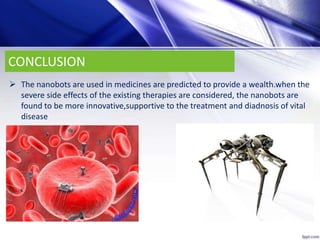
CONCLUSION
 The nanobots are used in medicines are predicted to provide a wealth.when the
severe side effects of the existing therapies are considered, the nanobots are
found to be more innovative,supportive to the treatment and diadnosis of vital
disease
 REFERENCES
 https://en.wikipedia.org/wiki/Nanorobotics
 http://www.dummies.com/education/science/nanotechnology/types-of-
nanorobots-being-developed-for-use-in-healthcare/
 http://www.slideshare.net/KrishnaMoorthy126/nanobots-
68429467?qid=1e75aa54-98c3-4f89-8292-
fae06ecd6c41&v=&b=&from_search=1
 http://fusion.net/story/337232/nanorobots-treat-cancer/
 https://www.youtube.com/watch?v=bOcOiwBFgZw
 https://www.youtube.com/watch?v=BxJPceCV51g
ANY QUESTIONS
Nanobots

Nanobots

  • 1.
    NANOBOTS PRESENTENTATION BY SHAIKH NASIMAKHATUN B.PHARM 4TH YEAR SRI VENKATESHWARA COLLEGE OF PHARMACY
  • 2.
    CONTENTS  DEFINITION  INTRODUCTION TYPES OF NANOBOTS  NANOBOTS IN CHEMOTHERAPY  MECHANISM  ADVANTAGES  DRAWBACKS  CONCLUSION  REFERENCE
  • 4.
    DEFINITION  Nanorobotics isan emerging technology field creating machines or robots which components are at or near the scale of a nanometre (10−9 meters).  Nanotechnology is the science and application of creating objects on a level smaller than 100
  • 5.
    INTRODUTION According to RichardFeynman, it was his former graduate student and collaborator Albert Hibbs who originally suggested to him the idea of a medical use for Feynman's theoretical micromachines Hibbs suggested that certain repair machines might one day be reduced in size to the point that it would, in theory, be possible to "swallow the surgeon".
  • 6.
    TYPES OF NANOBOTS Microbivore nanorobots  Respirocyte nanorobots  Clottocyte nanorobots  Cellular repair nanorobots
  • 7.
     Microbivore nanorobots Thesenanorobots would function similarly to the white blood cells in our bodies, but they are designed to be much faster at destroying bacteria. Microbivore(phagocytes) nanorobots are designed so that antibodies attach to the particular bacteria the robot is seeking.  After bacteria attaches to an antibody, an arm grabs the bacteria and moves it to the inside of the nanorobot, where it’s destroyed.  Bacteria is then discharged into the bloodstream as harmless fragments.
  • 8.
     Respirocyte nanorobots These nanorobots would function in a similar way to the red blood cells in our bodies; however, they are designed to carry much more oxygen than natural red blood cells.  These respirocyte nanorobots would contain a tank in which oxygen is held at a high pressure, sensors to determine the concentration of oxygen in the bloodstream, and a valve that releases oxygen when sensors determine that additional oxygen is needed.
  • 9.
     Clottocyte nanorobots Platelets stick together in a wound to form a clot, stopping blood flow. These robots function similarly to the platelets in our blood. A system of clottocyte nanorobots would store fibers until they encounter a wound.  At that point, the nanorobots would disperse their fibers, which would then come together to create a clot in a fraction of the time that platelets do.
  • 10.
     Cellular repairnanorobots  These little guys could be built to perform surgical procedures more precisely. By working at the cellular level, such nanorobots could prevent much of the damage caused by the comparatively clumsy scalpel.
  • 11.
    OTHER TYPES  NANOCARS NANOROCKETS  MICROROCKETS
  • 12.
  • 13.
  • 14.
  • 15.
     Chemotherapy killscancer, but it also attacks healthy cells.  This unfortunate phenomenon makes us sick and can cause permanent damage to our bodies.  Delivering medicine directly where it's needed not only minimizes side effects but also makes the drugs more effective.  That's why researchers are designing tiny robots to precisely carry drugs to cancerous cells while leaving nearby healthy cells alone.
  • 16.
     Imagine armiesof millions of miniature robots traveling through blood streams to sneak up on cancerous cells.  Despite admirable efforts by scientists, many technological challenges still need to be overcome.  To deliver drugs to cancerous cells, nanobots must: be small enough to penetrate a tumor through blood vessels, be able to propel themselves and navigate while avoiding obstacles, have a mechanism for detecting oxygen levels (which indicate active cancer cells), be biocompatible, able to carry drugs, and have on onboard power source.
  • 18.
    MECHANISM OF NANOBOTS surgical nanobots could be introduced into the body through the vascular system.  after injection,each nanobot would travel to its target cell,enter the nucleus and replace the chromosomes,then exit the cell and leave the body.  inherited defective genes could be replaced with non-defectivebase pair.  The function of the nanobots came from the the structure of e.coli bacteria ,which use flagella kind of filaments for the movement  Flagella kind of particales are take and suspended in a magnetic field to swim  It is manufactured in ultra clean rooms with not a single bacteria  Can be moved to any loaction when it sits, at the asite it releases the drug in a particular location
  • 21.
    ADVANTAGES  Can beused in the treatment of cancer.  Rapid elimination of disease  Cost of surgery is low  No operation failure  Faster and more precious diagnosis  It might also produce copies of themselves to replace worn out  Speed up medical treatments
  • 22.
    DRAWBACKS  Replication maybe out of control.  Complicated maintenance.  Very costly for installation.  Nanobots should be programmed accurate otherwise may result in harmful effects.
  • 23.
    CONCLUSION  The nanobotsare used in medicines are predicted to provide a wealth.when the severe side effects of the existing therapies are considered, the nanobots are found to be more innovative,supportive to the treatment and diadnosis of vital disease
  • 24.
     REFERENCES  https://en.wikipedia.org/wiki/Nanorobotics http://www.dummies.com/education/science/nanotechnology/types-of- nanorobots-being-developed-for-use-in-healthcare/  http://www.slideshare.net/KrishnaMoorthy126/nanobots- 68429467?qid=1e75aa54-98c3-4f89-8292- fae06ecd6c41&v=&b=&from_search=1  http://fusion.net/story/337232/nanorobots-treat-cancer/  https://www.youtube.com/watch?v=bOcOiwBFgZw  https://www.youtube.com/watch?v=BxJPceCV51g
  • 25.