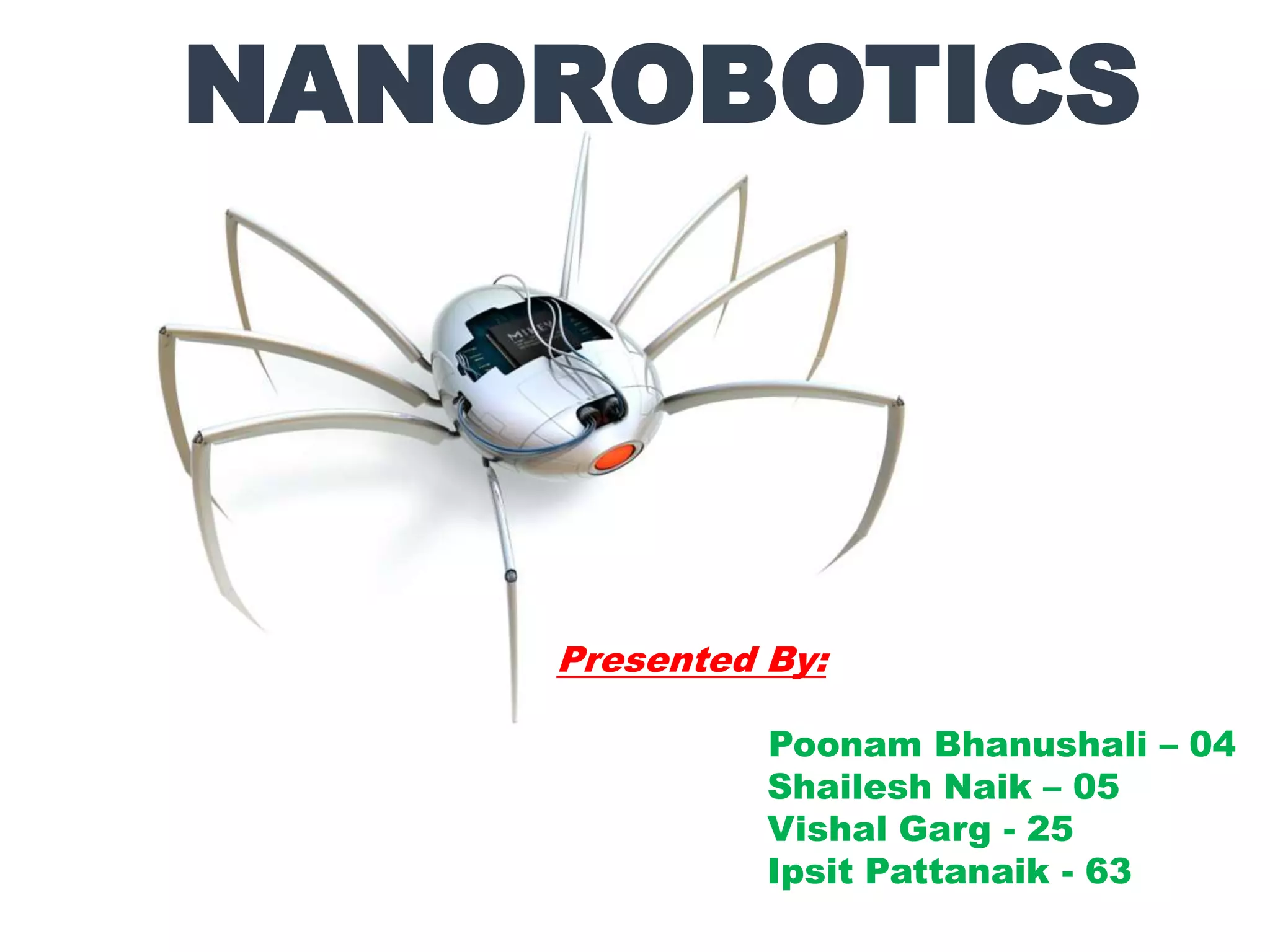
NANOROBOTICS
Presented By:
Poonam Bhanushali – 04
Shailesh Naik – 05
Vishal Garg - 25
Ipsit Pattanaik - 63
ROBOTICS ????
Engineering branch deals with design ,
construction, operation, and application
of robots, as well as computer systems for
their control, sensory feedback, and
information processing.
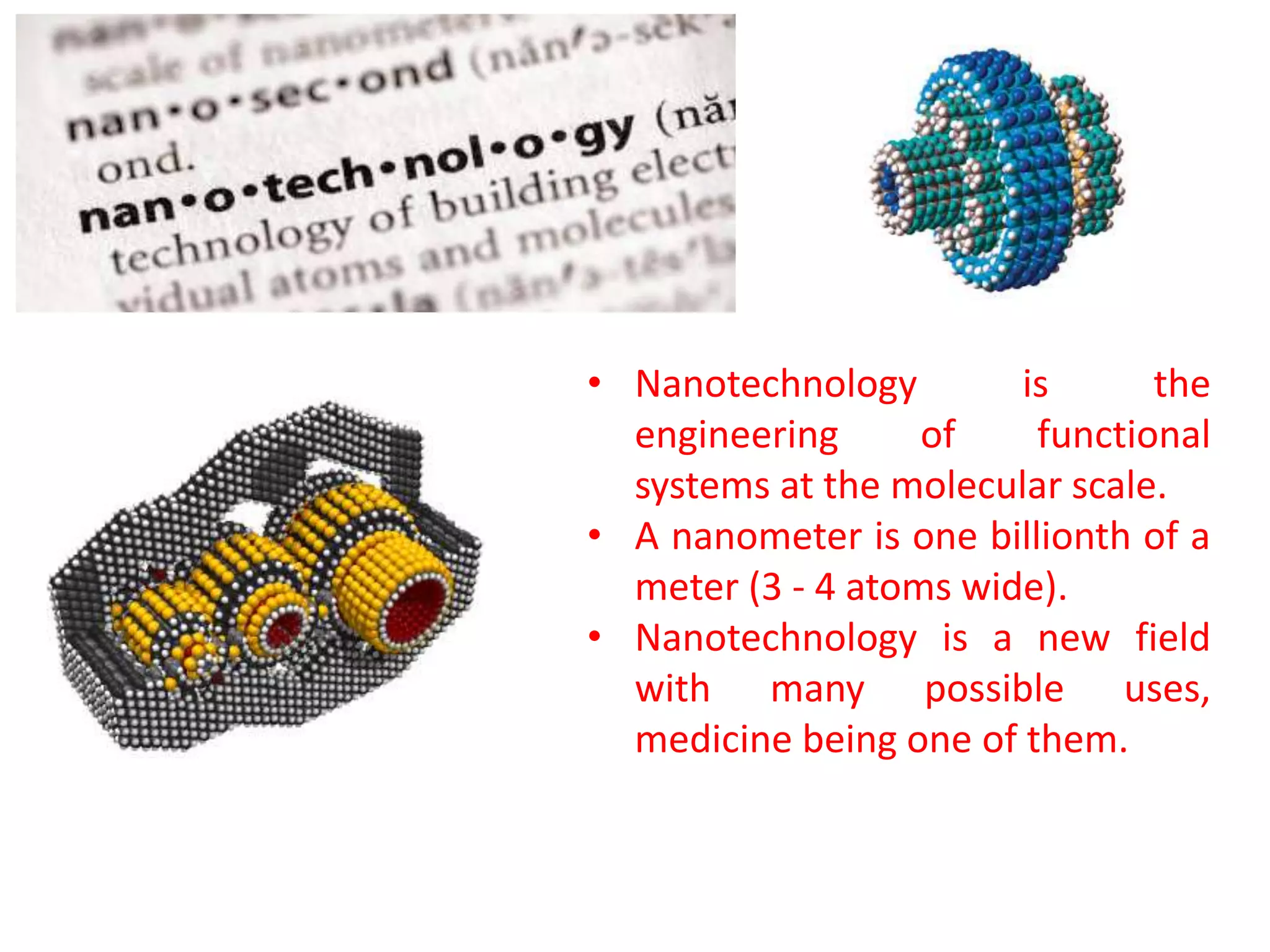
• Nanotechnology is the
engineering of functional
systems at the molecular scale.
• A nanometer is one billionth of a
meter (3 - 4 atoms wide).
• Nanotechnology is a new field
with many possible uses,
medicine being one of them.
NANOROBOTICS??
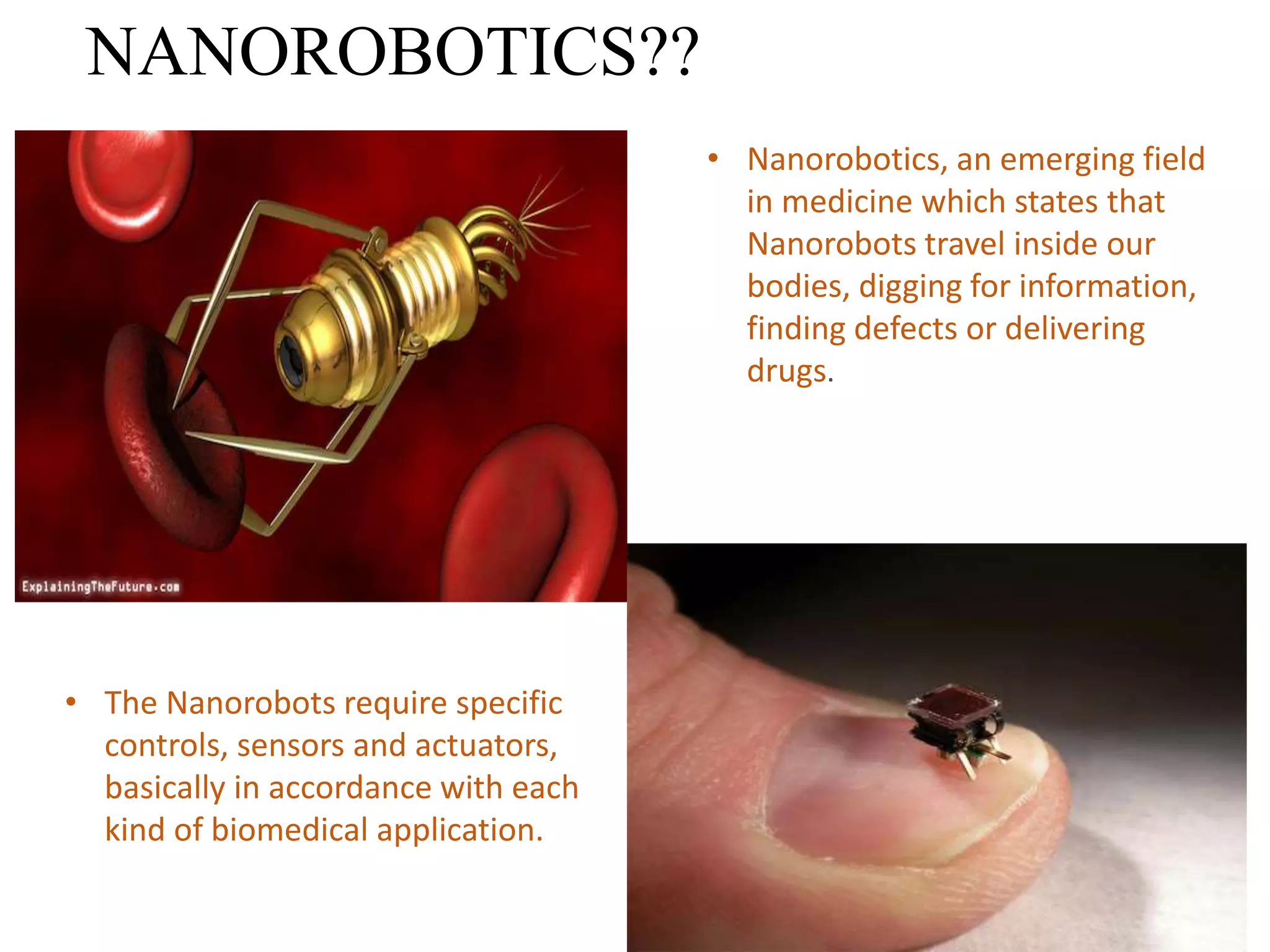
• Nanorobotics, an emerging field
in medicine which states that
Nanorobots travel inside our
bodies, digging for information,
finding defects or delivering
drugs.
• The Nanorobots require specific
controls, sensors and actuators,
basically in accordance with each
kind of biomedical application.
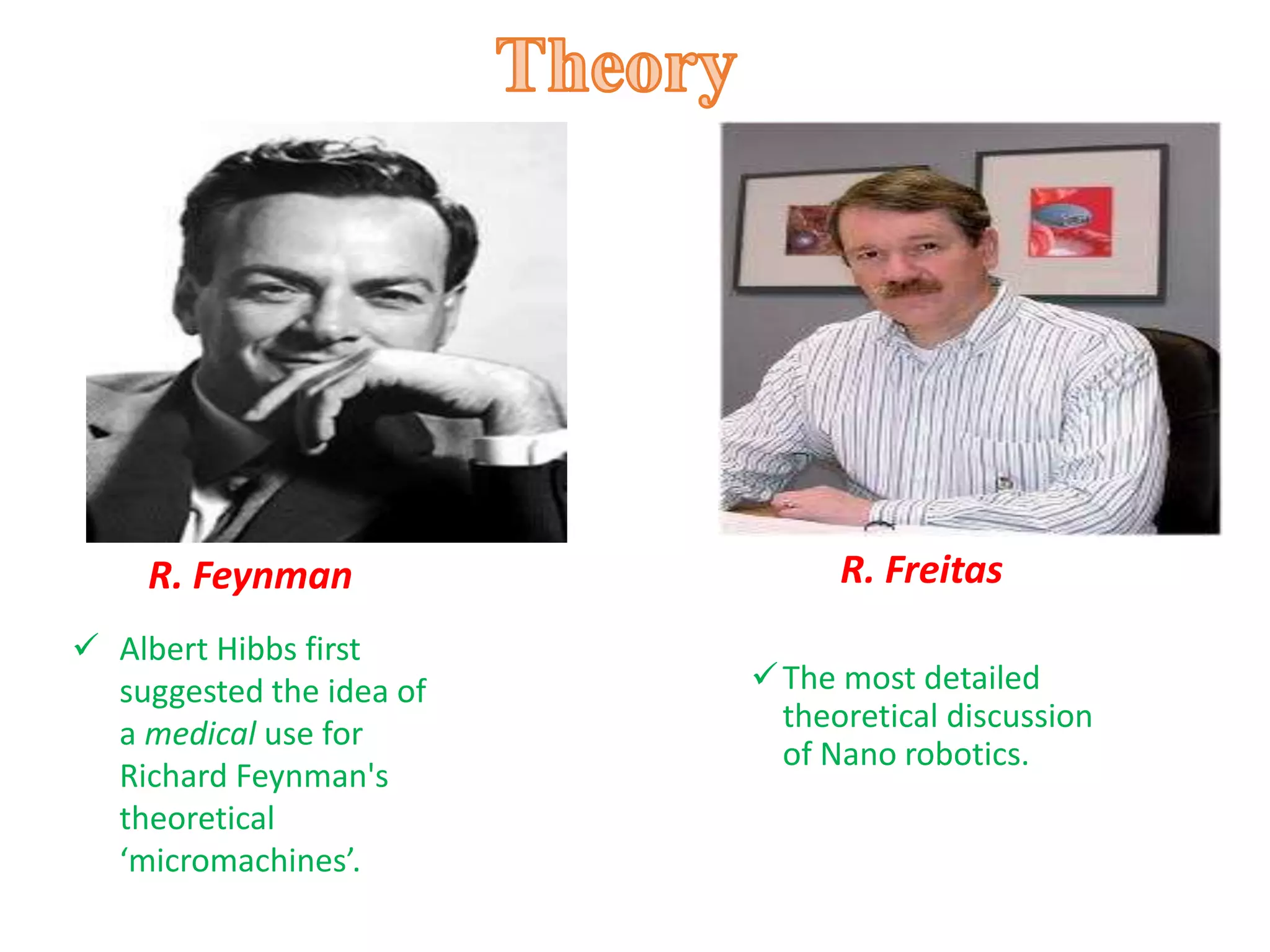
The most detailed
theoretical discussion
of Nano robotics.
R. FreitasR. Feynman
 Albert Hibbs first
suggested the idea of
a medical use for
Richard Feynman's
theoretical
‘micromachines’.
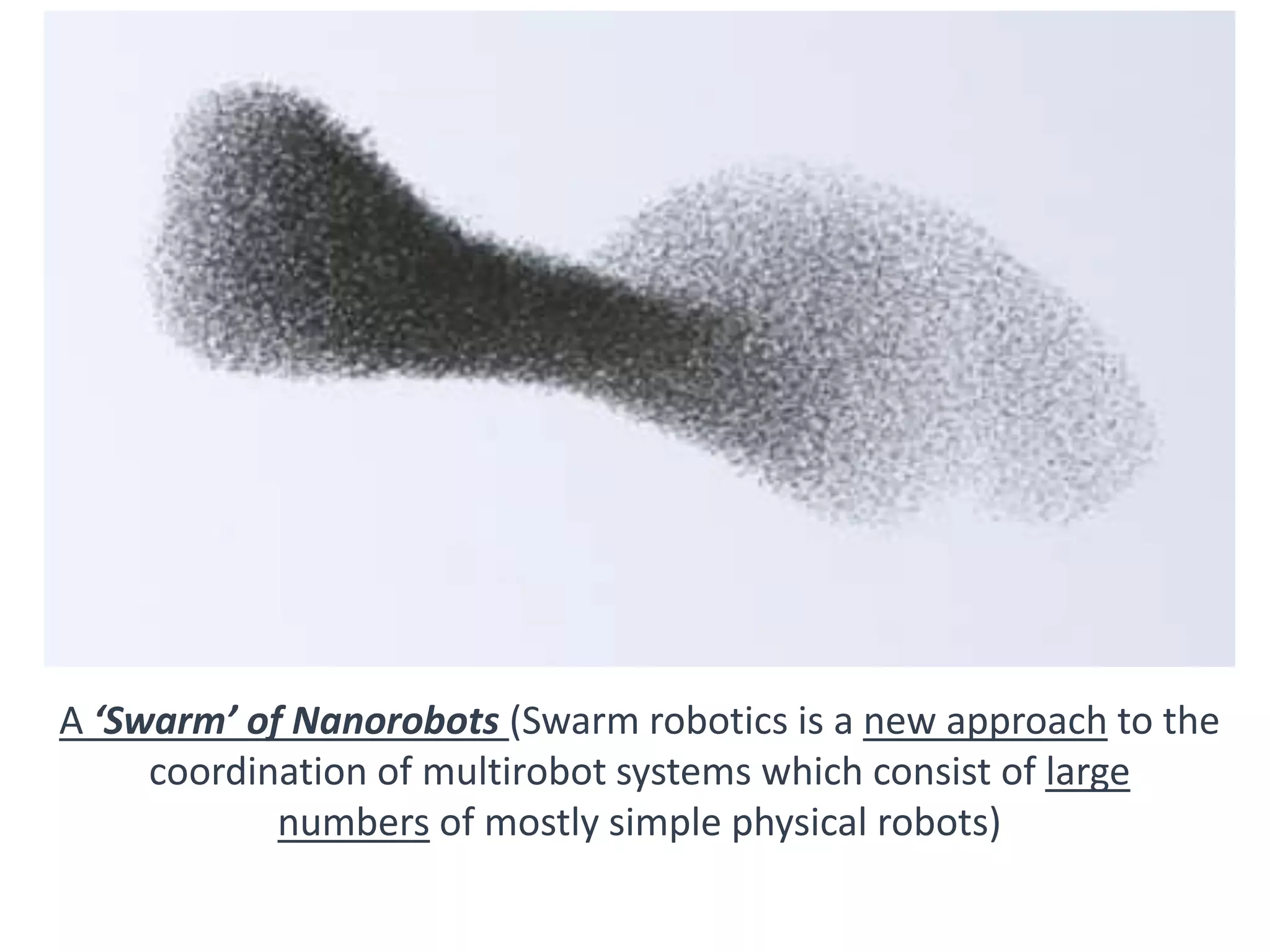
A ‘Swarm’ of Nanorobots (Swarm robotics is a new approach to the
coordination of multirobot systems which consist of large
numbers of mostly simple physical robots)
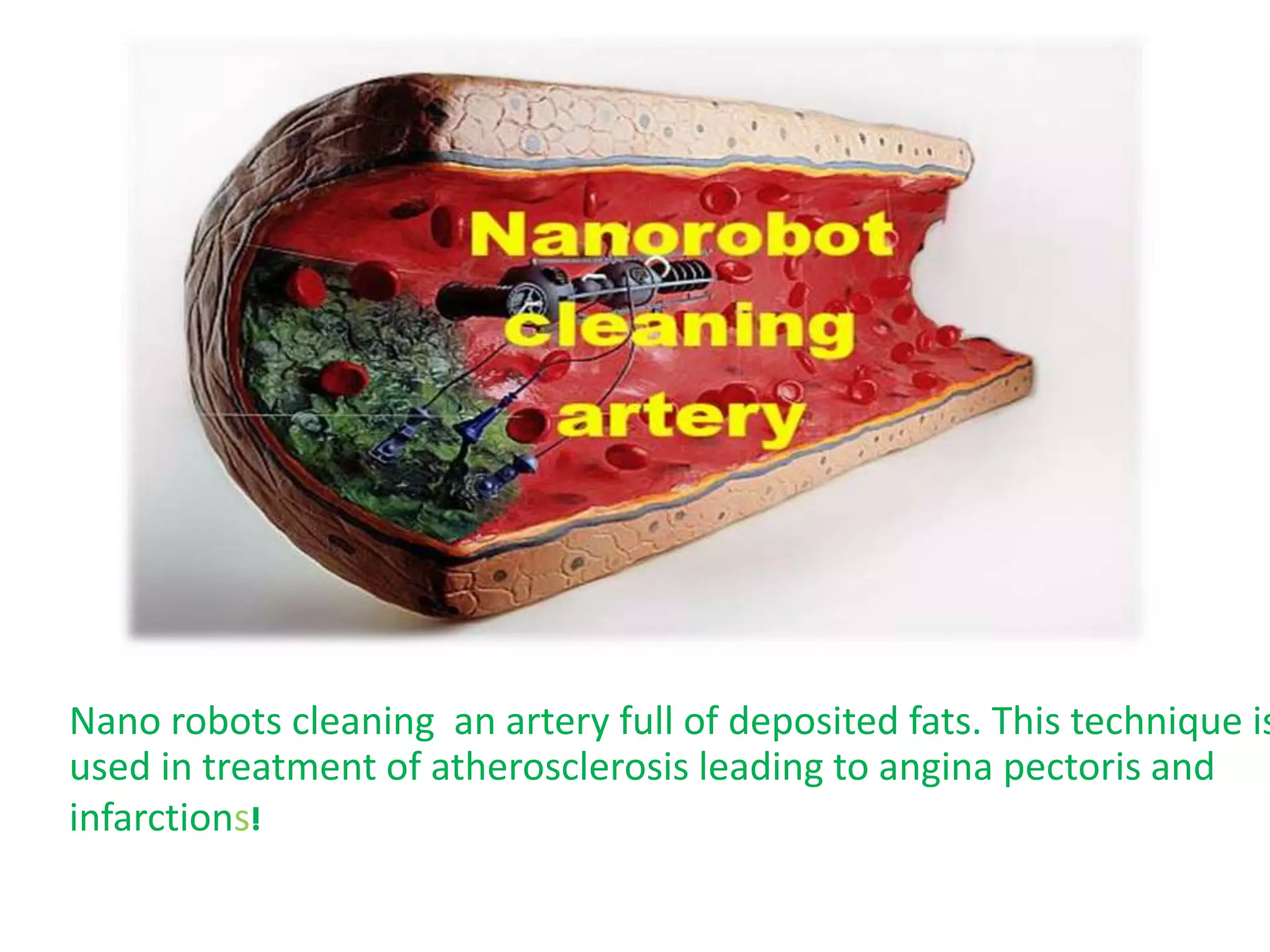
Nano robots cleaning an artery full of deposited fats. This technique is
used in treatment of atherosclerosis leading to angina pectoris and
infarctions!
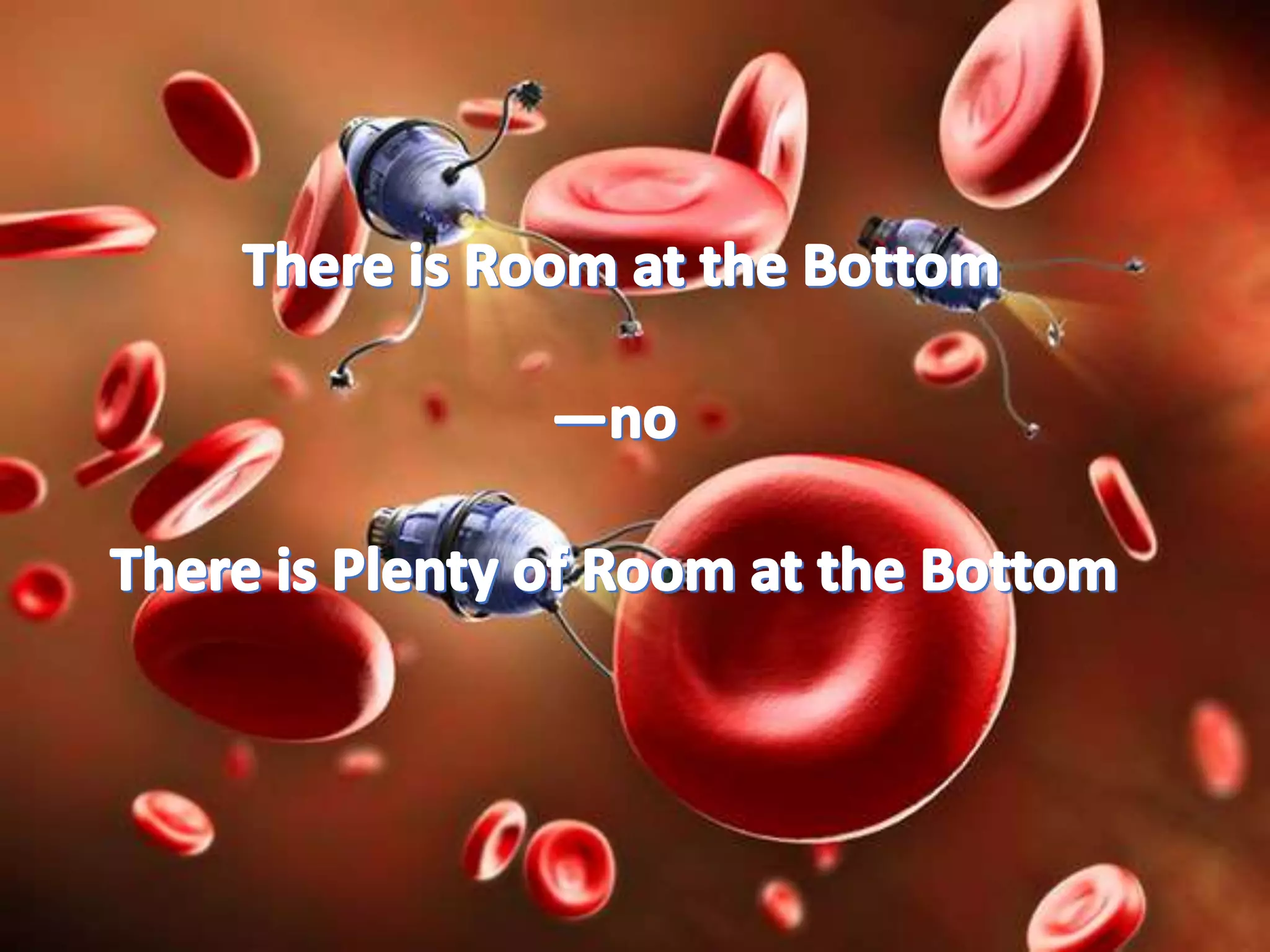
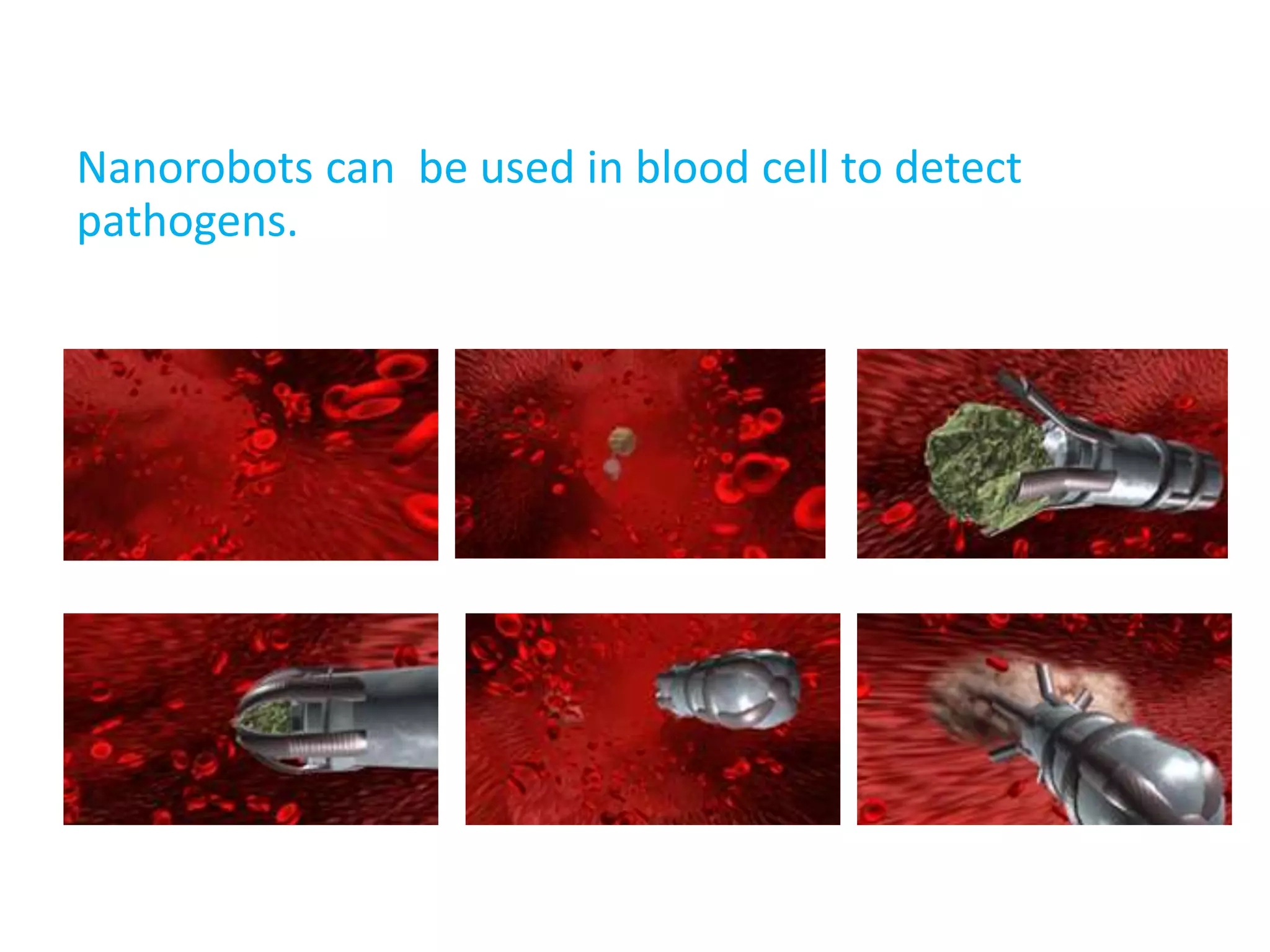
Nanorobots can be used in blood cell to detect
pathogens.
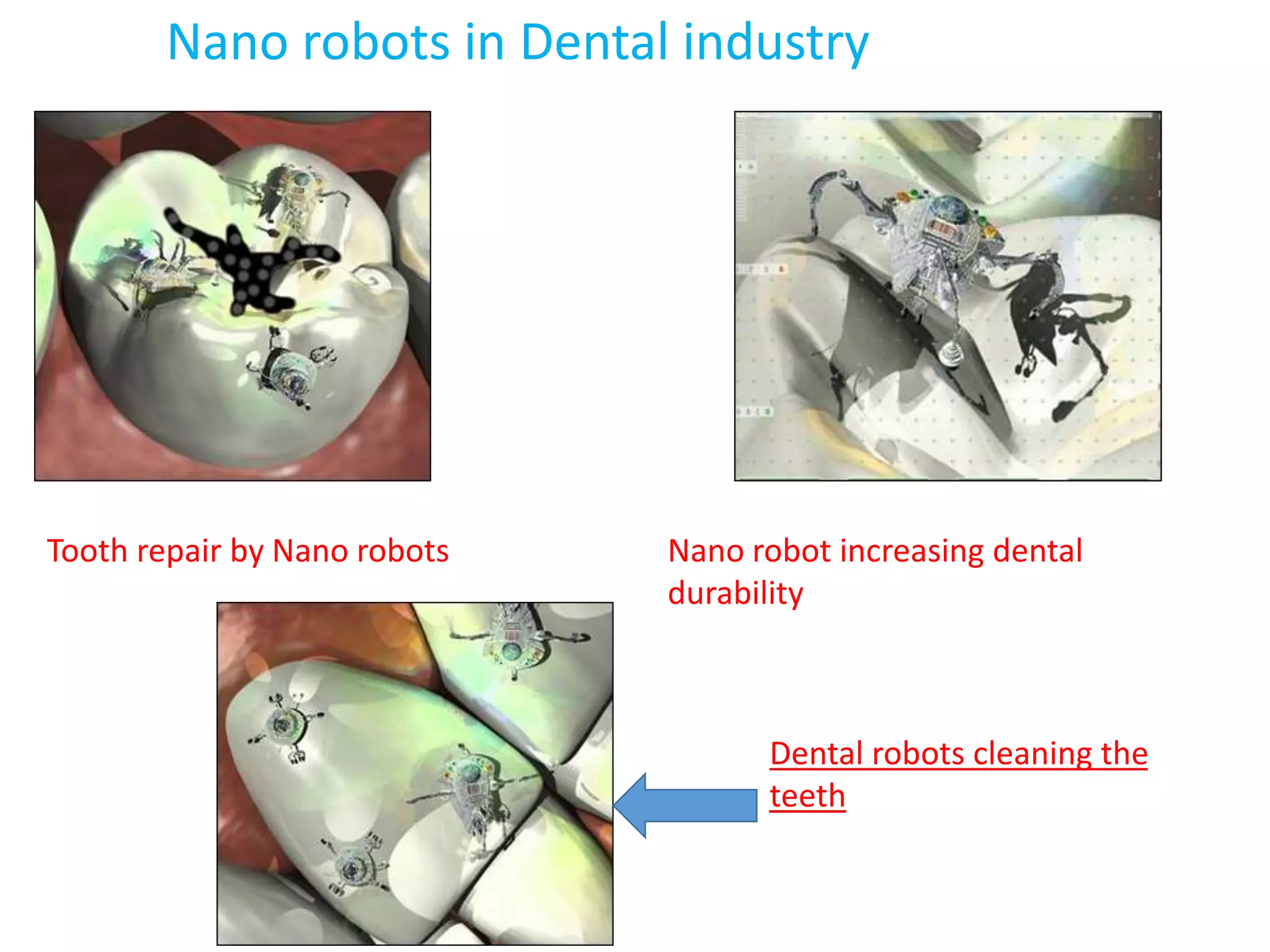
Nano robots in Dental industry
Tooth repair by Nano robots Nano robot increasing dental
durability
Dental robots cleaning the
teeth
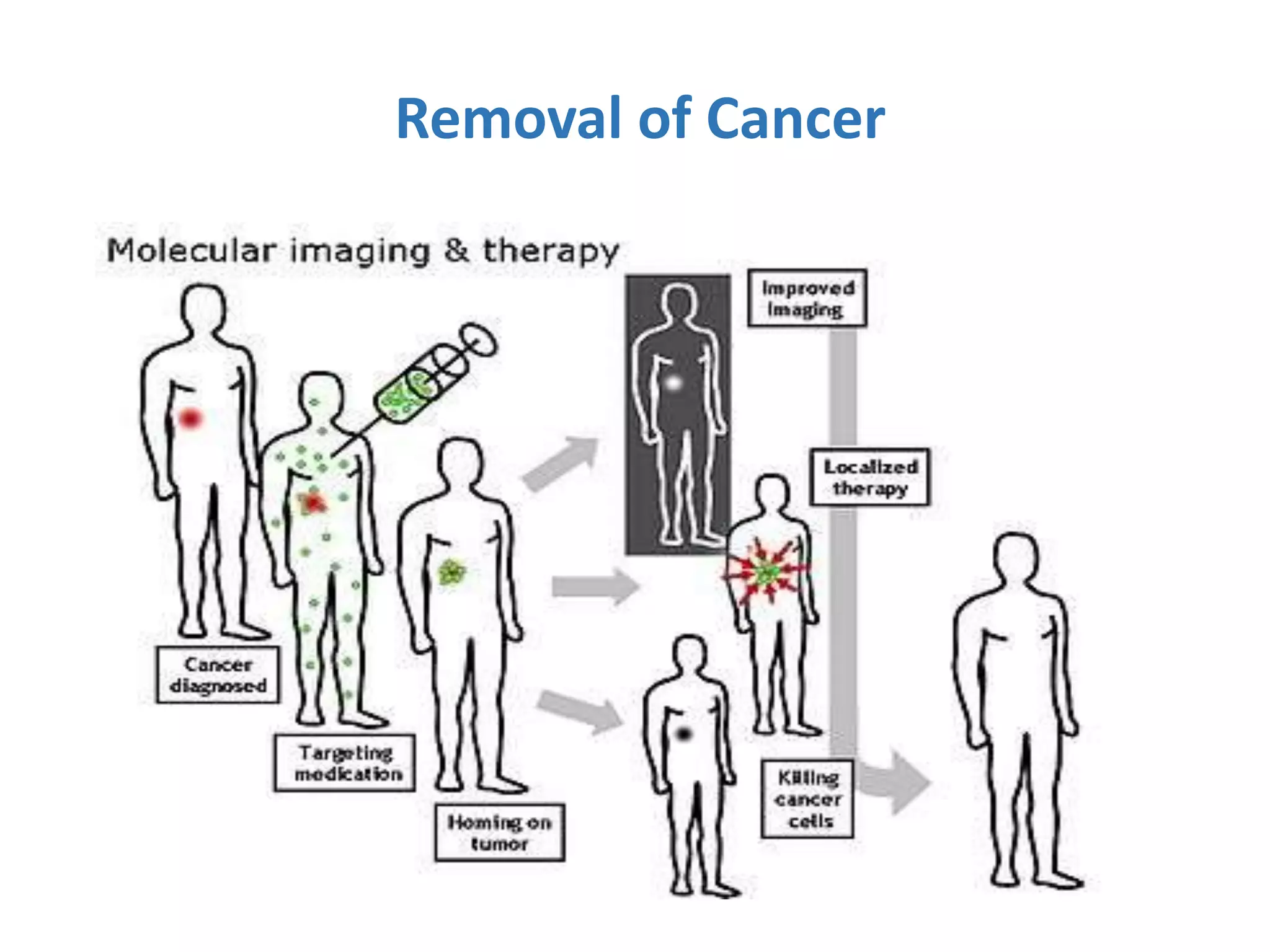
Application of nanobot in
treatment of cancer
Removal of Cancer
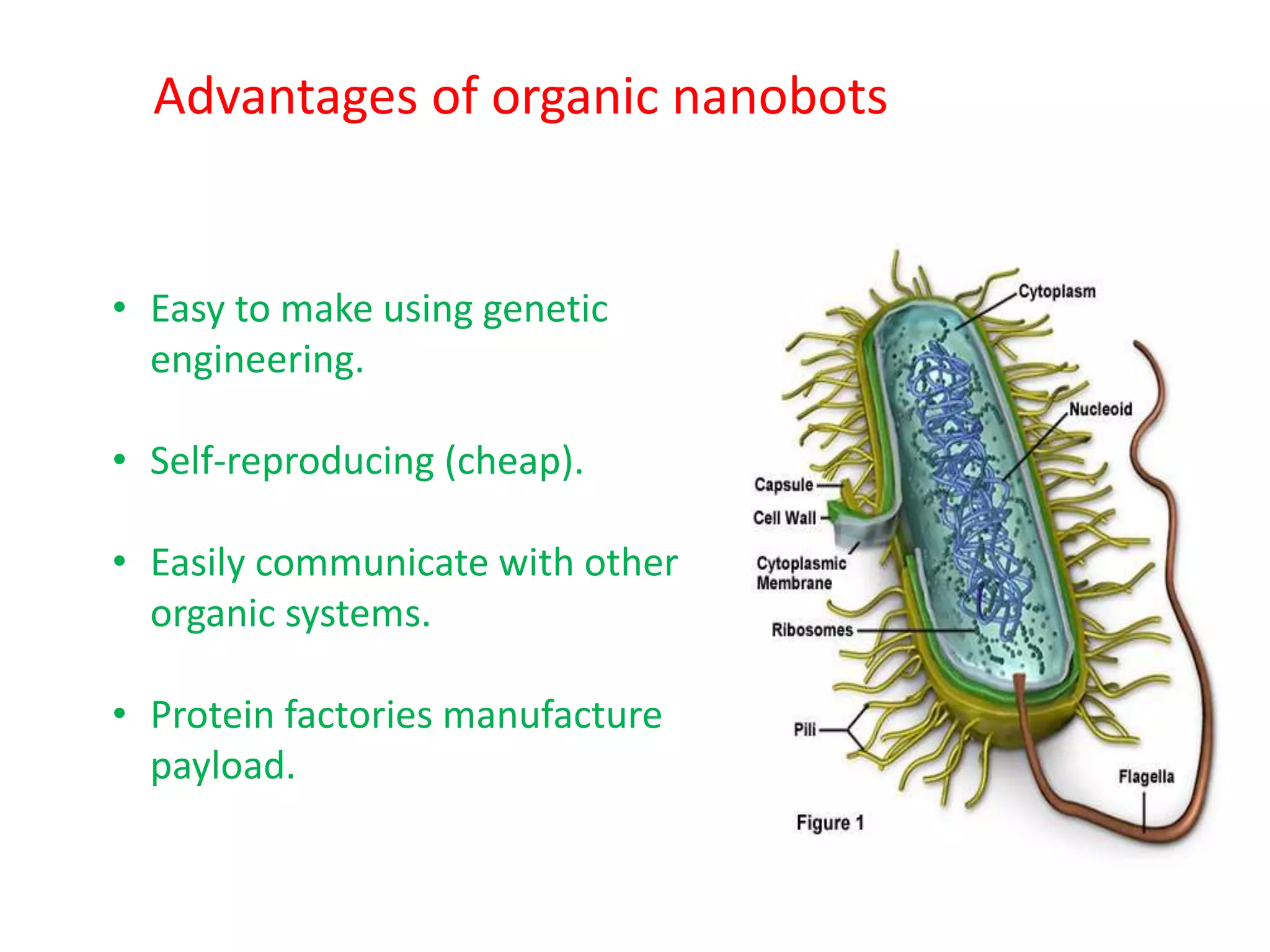
Advantages of organic nanobots
• Easy to make using genetic
engineering.
• Self-reproducing (cheap).
• Easily communicate with other
organic systems.
• Protein factories manufacture
payload.
Disadvantages of organic nanobots
• Poorly understood component behavior
(proteins).
• Hard to program.
• Limited external control mechanisms.
Conclusions
Ray Kurzweil said in
an interview with The
wall Street Journal that
AMAZING FACT!!
Nanorobotics in healthcare

Nanorobotics in healthcare

  • 2.
    NANOROBOTICS Presented By: Poonam Bhanushali– 04 Shailesh Naik – 05 Vishal Garg - 25 Ipsit Pattanaik - 63
  • 3.
    ROBOTICS ???? Engineering branchdeals with design , construction, operation, and application of robots, as well as computer systems for their control, sensory feedback, and information processing.
  • 4.
    • Nanotechnology isthe engineering of functional systems at the molecular scale. • A nanometer is one billionth of a meter (3 - 4 atoms wide). • Nanotechnology is a new field with many possible uses, medicine being one of them.
  • 5.
    NANOROBOTICS?? • Nanorobotics, anemerging field in medicine which states that Nanorobots travel inside our bodies, digging for information, finding defects or delivering drugs. • The Nanorobots require specific controls, sensors and actuators, basically in accordance with each kind of biomedical application.
  • 6.
    The most detailed theoreticaldiscussion of Nano robotics. R. FreitasR. Feynman  Albert Hibbs first suggested the idea of a medical use for Richard Feynman's theoretical ‘micromachines’.
  • 8.
    A ‘Swarm’ ofNanorobots (Swarm robotics is a new approach to the coordination of multirobot systems which consist of large numbers of mostly simple physical robots)
  • 9.
    Nano robots cleaningan artery full of deposited fats. This technique is used in treatment of atherosclerosis leading to angina pectoris and infarctions!
  • 10.
    Nanorobots can beused in blood cell to detect pathogens.
  • 11.
    Nano robots inDental industry Tooth repair by Nano robots Nano robot increasing dental durability Dental robots cleaning the teeth
  • 12.
    Application of nanobotin treatment of cancer
  • 13.
  • 14.
    Advantages of organicnanobots • Easy to make using genetic engineering. • Self-reproducing (cheap). • Easily communicate with other organic systems. • Protein factories manufacture payload.
  • 15.
    Disadvantages of organicnanobots • Poorly understood component behavior (proteins). • Hard to program. • Limited external control mechanisms.
  • 16.
  • 17.
    Ray Kurzweil saidin an interview with The wall Street Journal that AMAZING FACT!!