
Nanomedicine
DR. ASHUTOSH TIWARI
2ND YEAR PG RESIDENT
PHARMACOLOGY DEPARTMENT
SAIMS
2
Outline
• Introduction to nanomedicine
• History & Timeline
• Applications of nanomedicine
• Advantages and disadvantages
• Challenges
• Conclusion
3
Nanomedicine: an interdisciplinary field
of science
Nanomedicine
Biology
ChemistryNanotechnology
4
Introduction
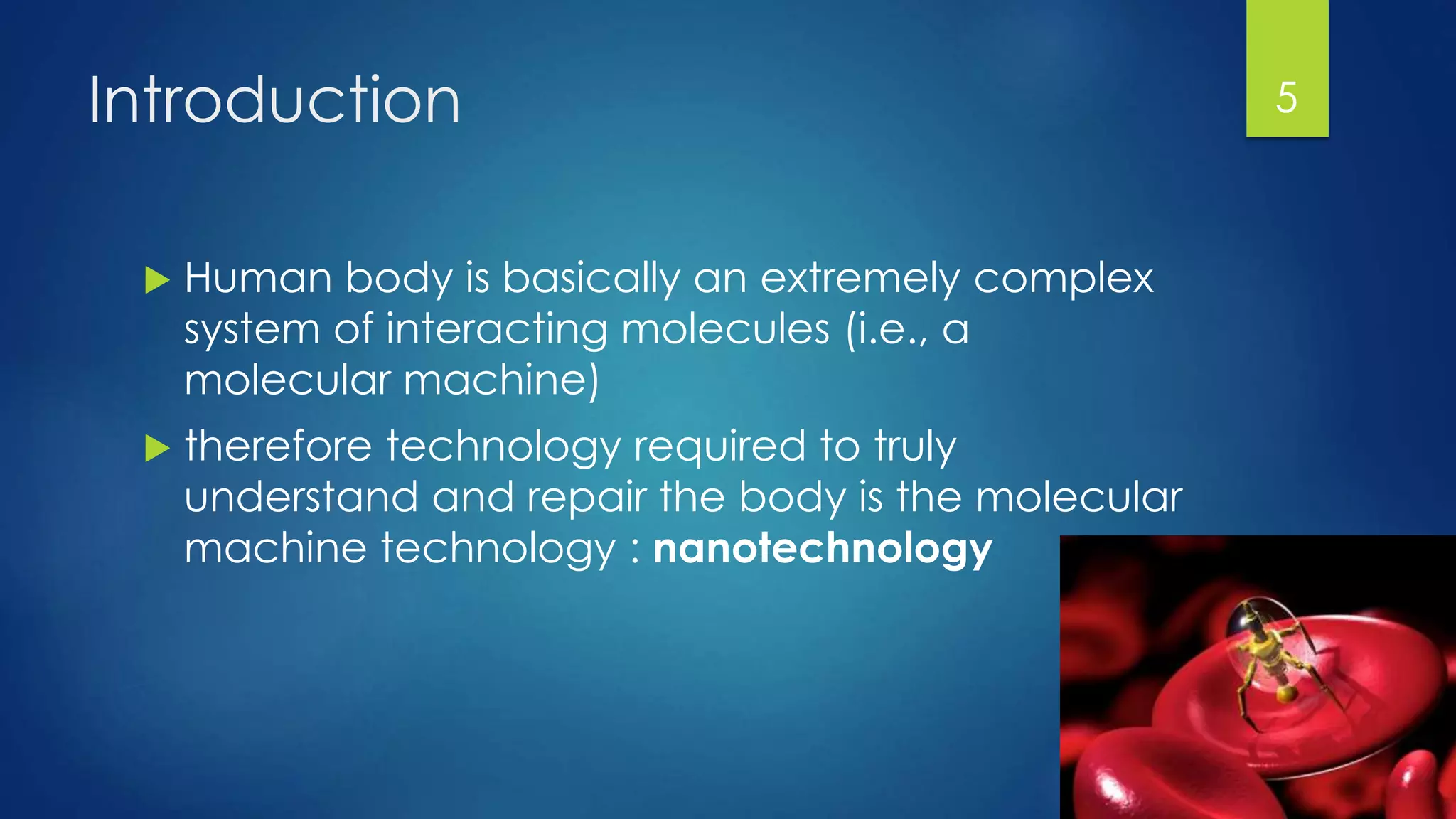
 Human body is basically an extremely complex
system of interacting molecules (i.e., a
molecular machine)
 therefore technology required to truly
understand and repair the body is the molecular
machine technology : nanotechnology
5
Nanoscale
 Nanoscience: involves research and
technology development at 1 nm to 100
nm range (nanoscale)
 “nano” indicates 10-9
 A nanometre is 10-9 meter.
 one nanometre is a billionth of a metre
or a millionth of a millimetre
 a single human hair is around 80,000 nanometres
thick
 A typical protein size lies between 3 to 10
nanometres (nm)
 red blood cells are a standard size of about
6000‐8000 nm
6
Nanomedicine: Definition
 The official definition of the US National Nanotechnology
Initiative says that
 nanotechnology involves ‘research and technology
development at the atomic, molecular, or
macromolecular levels, in the length scale of
approximately 1 to 100 nm range.
 European Science Foundation (ESF) has defined
nanomedicine as
 ‘the science and technology of diagnosing, treating and
preventing disease and traumatic injuries, of relieving pain,
and improving human health, using molecular tools and
molecular knowledge of human body
7
Aim of Nanomedicine
 comprehensive monitoring, control,
construction, repair, defence and improvement
of all human biological systems, working from
the molecular level
using engineered devices and nanostructures,
ultimately to achieve medical benefit.
8
History
 On December 29, 1959, physicist
Richard Feynman gave a radical
lecture at an American Physical
Society meeting at Caltech titled
“There’s Plenty of Room at the Bottom”.
 Feynman suggested that it should be
possible to make machines at a nano-
scale that "arrange the atoms the way
we want", and do chemical synthesis
by mechanical manipulation.
 This lecture was the birth of the idea
and study of nanotechnology.
9
History
 Professor Norio Taniguchi of the Tokyo
Science University, introduced the
term “nanotechnology”, in 1974
 He described nanotechnology as the
processing of, separation,
consolidation, and deformation of
materials by one atom or by one
molecule."
10
History
 In the 1980s, Dr. K. Eric Drexler, promoted nanoscale
phenomena through books:
 Engines of Creation: The Coming Era of
Nanotechnology
 Nanosystems: Molecular Machinery,
Manufacturing, and Computation
 He was ultimately responsible for the term
nanotechnology to acquire its current sense.
 he was presented the first PhD in nanotechnology.
11
History
 Hollywood provided the
public with a glimpse of
the future of nano-
science with the release
of the film Fantastic
Voyage in 1966,
 which depicted a
surgical team that was
miniaturized and injected
into a man to operate on
a blood clot in his brain
12
History
 Bhasma, is a ayurvedic metallic/mineral
preparation, treated with herbal juices or
decoction and exposed for certain quantum of
heat as per puta system of Ayurveda
 Bhasma are claimed to be biologically
produced nanoparticles (ethno-nanomedicine)
13
Nanotechnology: Timeline
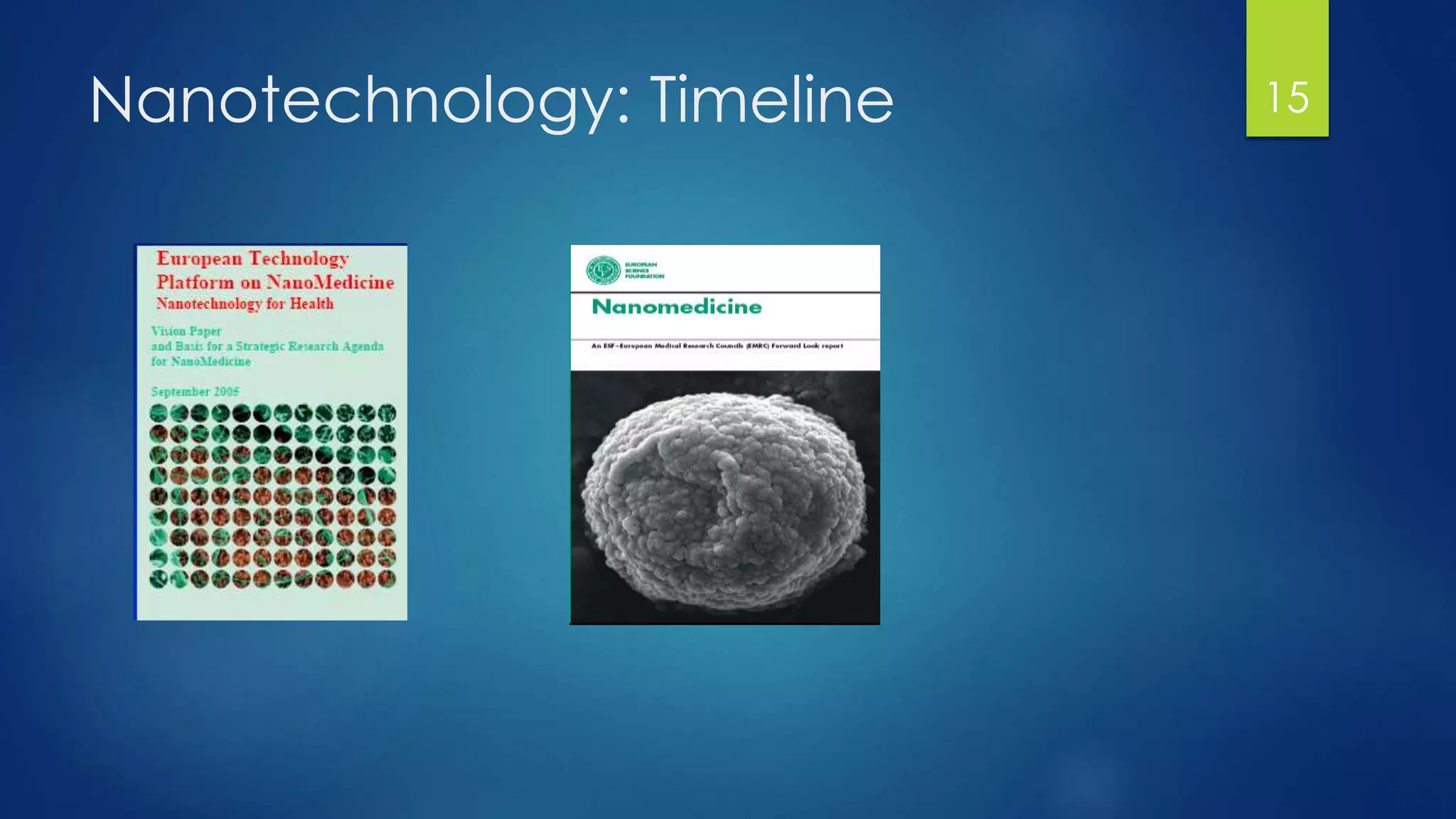
 In early 2003, the European Science Foundation launched its
Forward look on nanomedicine; a policy briefing was published on
23rd February 2005 which summarised the recommendations of the
Forward Look.
 In 2004 High Level Group European Technology Platform
Nanomedicine was launched
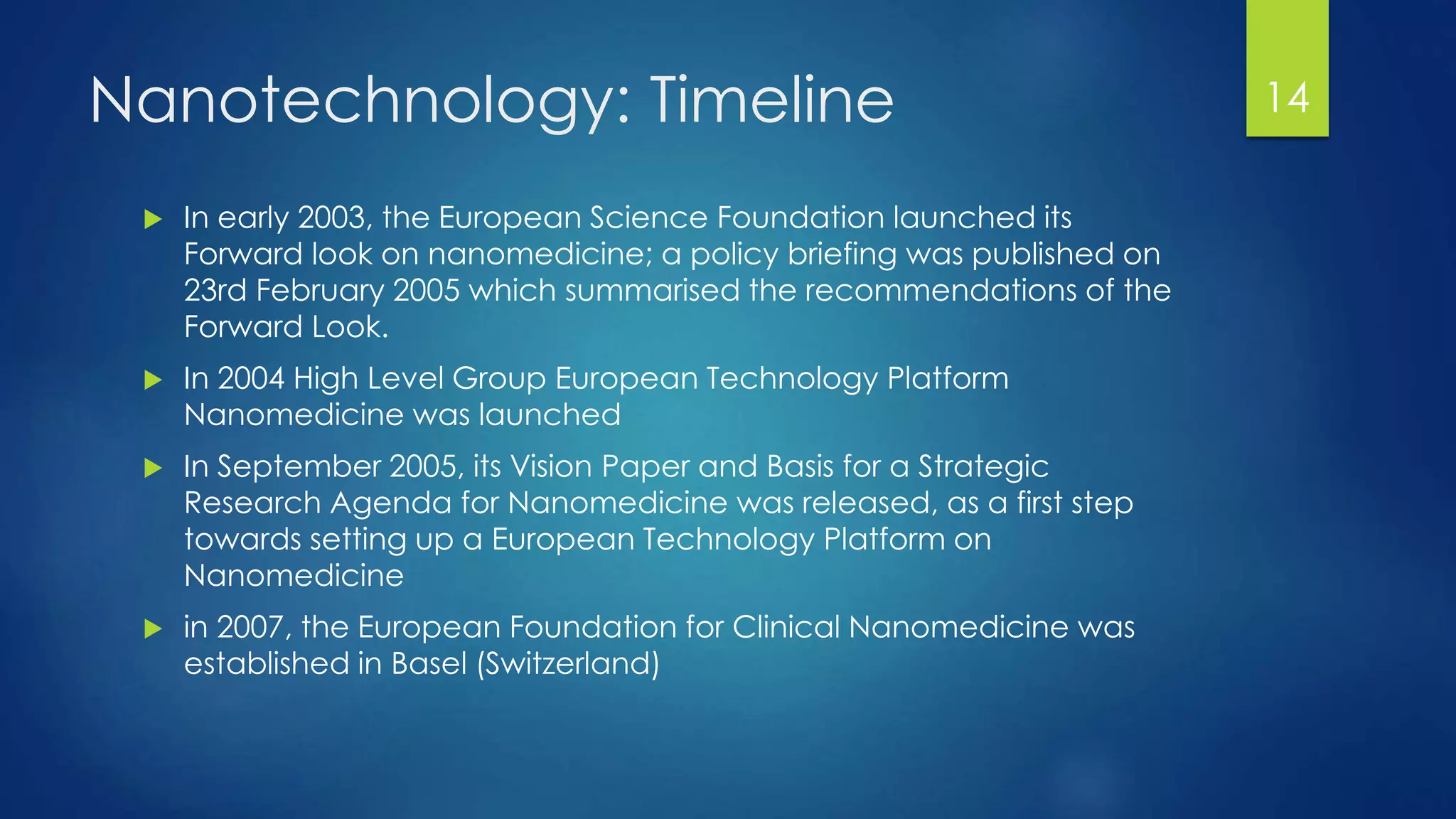
 In September 2005, its Vision Paper and Basis for a Strategic
Research Agenda for Nanomedicine was released, as a first step
towards setting up a European Technology Platform on
Nanomedicine
 in 2007, the European Foundation for Clinical Nanomedicine was
established in Basel (Switzerland)
14
Nanotechnology: Timeline 15
Nanotechnology: Timeline
 The US National Institutes of Health (NIH) released their
first roadmap on nanomedicine in 2004
 In 2004, the National Cancer Institute (NCI), as part of
NIH, launched the Cancer Nanotechnology Plan, a
strategic initiative to transform clinical oncology and
basic research through the directed application of
nanotechnology
16
First successful nanomedicine: Abraxane 17
Current status
 The market analysis reported that market for the
nanomedicine is continuously growing at the rate
of 28 % with a 35% increase in the revenues
generated
 The National Science Foundation estimated the
market for all nanotechnologies to be $1 trillion.
 Huge investments are being made in
nanomedicine to develop novel therapeutic
deliveries.
 Currently more than 38 nanomedicine based
products are on the market with estimated sales of
$6.8 billion and the efforts to bring them on the
market are increasing continuously
18
19
Application of Nanomedicine
• Diagnostic
Imaging and identification
• Therapeutic
Delivering medication to the exact location.
Killing of bacteria, viruses & cancer cells
Repair of damaged tissues.
20
21
Diagnostic use: Imaging
 Nanomaterials are being used extensively as contrast
agents in non-invasive medical imaging tools, including
computed tomography, magnetic resonance, positron
emission tomography, single photon- emission computed
tomography, ultrasound, and optical imaging
 The contrast agents used: nanosized metal oxides,
dendrimers, quantum dots, etc.
22
Diagnostic Use: Imaging using
Quantum dots
 Quantum dots Nano crystals (nano
cadmium & nano zinc) are
semiconductors used to tag biological
molecules
 have applications in medical
diagnostics, targeted therapeutics,
and high-throughput drug screening
 tiny crystals, produce sequence of
colours when subjected to
ultraviolet rays
23
Diagnostic use
 Currently in vitro diagnostics are costly and
it is hoped that new generation nanoscale “lab-on- a-
chip” will offer advantages including reduced costs,
portability, and shorter and faster analysis.
 Applications may include measurements of saliva for
periodontitis, heart disease, insulin detection and
improving healthcare accessibility
24
Diagnostic tools
 a lab-on-a- chip with the size of a postage stamp is already
commercially available and is used to monitor lithium medication
levels for manic depressive patients at home at much lower cost
and with greater convenience
 Other diagnostic applications using nanotechnology and already
on the market include:
 colloidal gold particles which, due to their stability, have been widely
used to rapidly test for pregnancy, ovulation, HIV and other indications
 magnetic nanoparticles used for cell sorting applications in clinical
diagnostics
 superparamagnetic iron oxide nanoparticles for magnetic resonance
imaging – first approved in Europe in 1993
 Magnetic iron oxide nanoparticles also show great promise in the
detection of Alzheimer plaques
25
Medical instruments
 Medical instruments are also being increasingly
miniaturised, with nanomaterials for increased efficiency
 carbon nanotubes may be used instead of glass
pipettes for delivery into cells
 Nanosilver is increasingly incorporated into catheters
and other instruments as a coater because of its
antimicrobial effects
 Wound dressings may also incorporate some sort of
nanosilver, for the same purpose
26
Therapeutic uses: Drug delivery
using Nanoparticles
 Nanopharmacology: an application of nanotechnology to the
development and discovery of drug delivery methods.
 Application
 to deliver Medication to the exact location.
 Lesser side effects & high efficacy
 Improves bio-availability
 Molecular targeting by nano engineered devices
27
Therapeutic uses: Drug delivery
using Nanoparticles
 Nanoformulations of existing drugs can overcome common
pharmaceutical problems by increasing solubility, limiting systemic
toxicities, increasing bioavailability and improving immuno-
compatibility and cellular uptake
 Nanotechnology has also been used for targeted drug delivery
which will allow
 controlled drug release at just the right place and dose, improving
patient safety and compliance and reducing side effects.
 Drug delivery vehicles under investigation include:
 polymeric particles, dendrimers, nanoshells, liposomes, micelles and
magnetic nanoparticles
28
Therapeutic uses: Drug delivery
using Nanoparticles
 Advantages & of a targeted drug delivery system
 Encapsulation of a drug (such as in a liposome or micelle) can avoid
local irritation and decrease local and systemic toxicity,
 Disadvantages
 The drug delivery mechanisms may also introduce toxicities of their own
and have unintended side effects.
29
Therapeutic uses: Drug delivery
using Nanoparticles
 Metal-based nanoparticles – Au, Ag, Cd-Se, Zn-S etc
 Lipid-based nanoparticles – Liposome & Neosome based
 Polymer-based nanoparticles – Dendrimer, chitosen, micelle based
 Biological nanoparticles – arginylglycylaspartic acid (RGD) peptides
based
30
Liposomes
 Liposomes are small spherical vesicles, composed of lipid
bilayers surrounding aqueous inner phase
 Liposomes are usually composed of phospholipids or
cholesterol, which are used to encapsulate various active
drugs.
 At the target site liposomes fuse with the cell membranes
and deliver the molecules
 Liposomes are 200 nm or smaller
 Applications
 targeted drug delivery
 cancer treatment
 Some liposome based pharmaceuticals:
 Amphotericin B, Daunorubicin, Doxorubicin, Amikacin
31
PEGylated Liposomes
 PEG (polyethylene glycol) makes the liposome less vulnerable to immune
system
 PEGylation, by increasing the molecular weight of a molecule, can impart
several significant pharmacological advantages over the unmodified form,
such as:
 Improved drug solubility
 Enhanced protection from proteolytic degradation
 Increased drug stability
 Extended circulating life
 Reduced dosage frequency, without diminished efficacy with potentially
reduced toxicity
32
Niosomes
 Niosomes, non-ionic surfactant vesicles,
widely studied as an alternative to
liposomes
 similar to liposomes in terms of their
physical properties
 Niosomes alleviate the disadvantages
associated with liposomes, such as
chemical instability, variable purity of
phospholipids and high cost.
 They have the potential for controlled
and targated drug delivery
 Niosomes enhance the penetration of
drugs
33
Dendrimers
 Dendrimers are manmade molecules
having a tree like structure having number
of small branching molecules around a
central core molecule.
 Dendrimers measure between 2-20
nanometers across and are branching
molecules with the branching beginning at
the core.
 Nano devices based on dendrimers may
be used for cancer cell recognition,
diagnosis of cancer cause, drug delivery,
reporting drug levels in tumors and
reporting cancer cell death.
34
Nano shells
 Nano shells have a core of silica and a metallic outer layer.
 Nano shells can be linked to antibodies that can recognize tumor
cells
 Once the cancer cells take them up, by applying a near infra red
light that is absorbed by the Nano shells, it is possible to create
intense heat that selectively kills the tumor cells and not the
neighboring healthy cells
35
Carbon nanotubes
 Single-wall carbon nanotubes are tiny
hollow rods that are one-atom-thick
 10,000 times smaller in diameter than a
human hair
 extraordinary optical, mechanical, thermal
and electronic properties
 being used to produce lightweight and
extremely strong materials, which enhance
the capabilities of devices such as sensors,
and provide a novel means of delivering
drugs with great specificity.
36
Nanodrugs: Dendrimers 37
Nanodrugs: Liposomes 38
Nanodrugs: Solid lipid
nanoparticles
39
Nanodrugs: Micelles 40
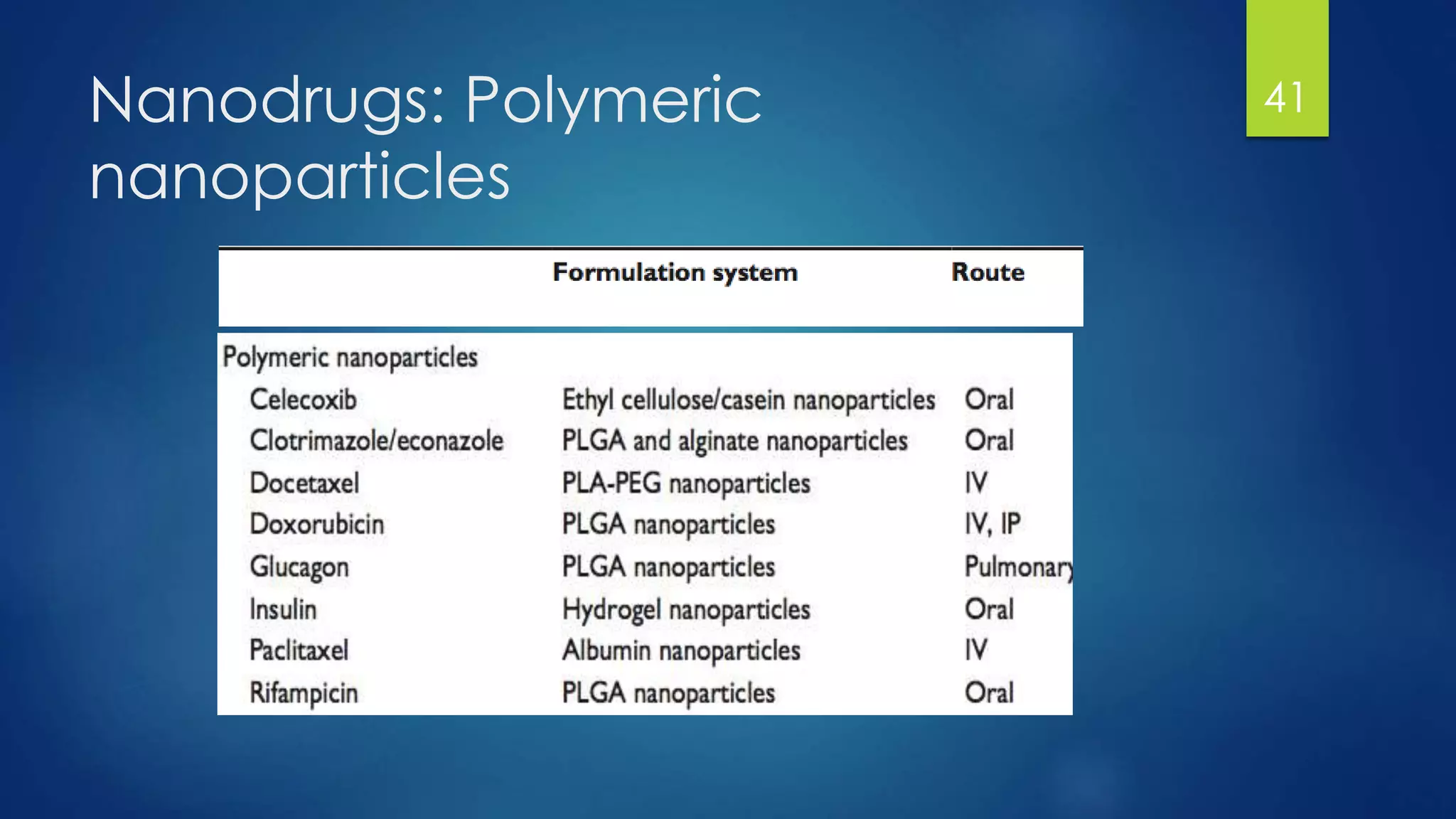
Nanodrugs: Polymeric
nanoparticles
41
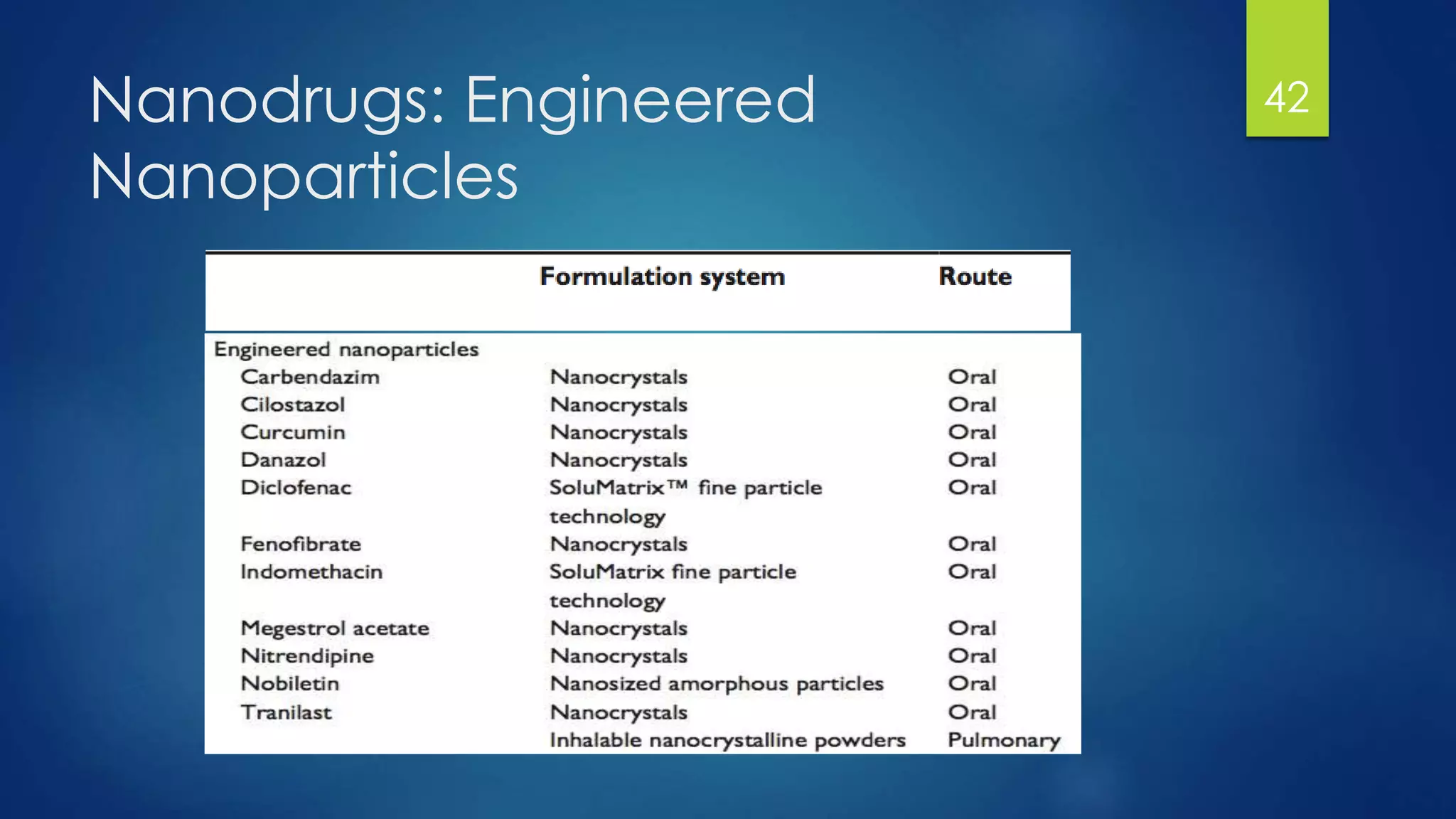
Nanodrugs: Engineered
Nanoparticles
42
Nanodrugs: Nanocrystals 43
FDA Approved nanodrugs
 Liposomes:
 Amphotericin B, Daunorubucin, Doxorubicin, Cytarabine, Morphine,
Amikacin
 Emulsions:
 Cyclosporin A
 Engineered nanoparticales:
 Diclofenac
 Polymeric nanoparticles:
 Paclitaxel
 Nanocrystals:
 Rapamycin, Aprepitant, Fenofibrate, Megestrol, Fenofibrate
44
Drug discovery
 Nano and micro technologies are part of the latest
advanced solutions for decreasing the discovery and
development times for new drugs, and potentially
reducing the development costs.
 High-throughput arrays and ultra-sensitive labeling and
detection technologies are being used to increase the
speed and accuracy of identifying genes and genetic
materials for drug discovery and development.
45
Therapeutic uses: Cancer
treatment
 Thermotherapy, a form of cancer treatment that uses
heat to destroy cancer cells.
 By using nanoparticles to generate the heat, the
treatment can be more successfully localised and result
in fewer side effects.
 The devices use a number of different nanomaterials
including nanosized iron oxides, gold-coated silica
nanoparticles and hafnium oxide nanoparticles
46
Tissue repair & replacement
 Implant coatings:
 biocompatible nanomaterials and coatings to
increase the adhesion, durability and lifespan of
implants.
 For example, nanopolymers such as polyvinyl alcohol
(PVA) can be used to coat implantable devices that
are in contact with blood (e.g. artificial hearts,
vascular grafts, catheters) for dispersing clots or
preventing their formation
47
Tissue repair & replacement
 Tissue Regeneration Scaffolds
 Nanostructures are being researched for the preparation and
improvement of tissue regeneration scaffolds
 For example, PVA is also being investigated for the cornea by having
corneal epithelia cells seeded in a PVA hydro gel structure.
 Structure implant materials for
 Bone repair: e.g. High strength nanoceramic materials, such as calcium
phosphate apatite (CPA) and hydroxyapatite (HAP)
48
Nanorobots – A future vision
• Nanorobots are nanodevices.
• Potential applications include
• To repair or detect targeted damages and
infections.
• early diagnosis and targeted drug delivery
for cancer,
• biomedical instrumentation, surgery
49
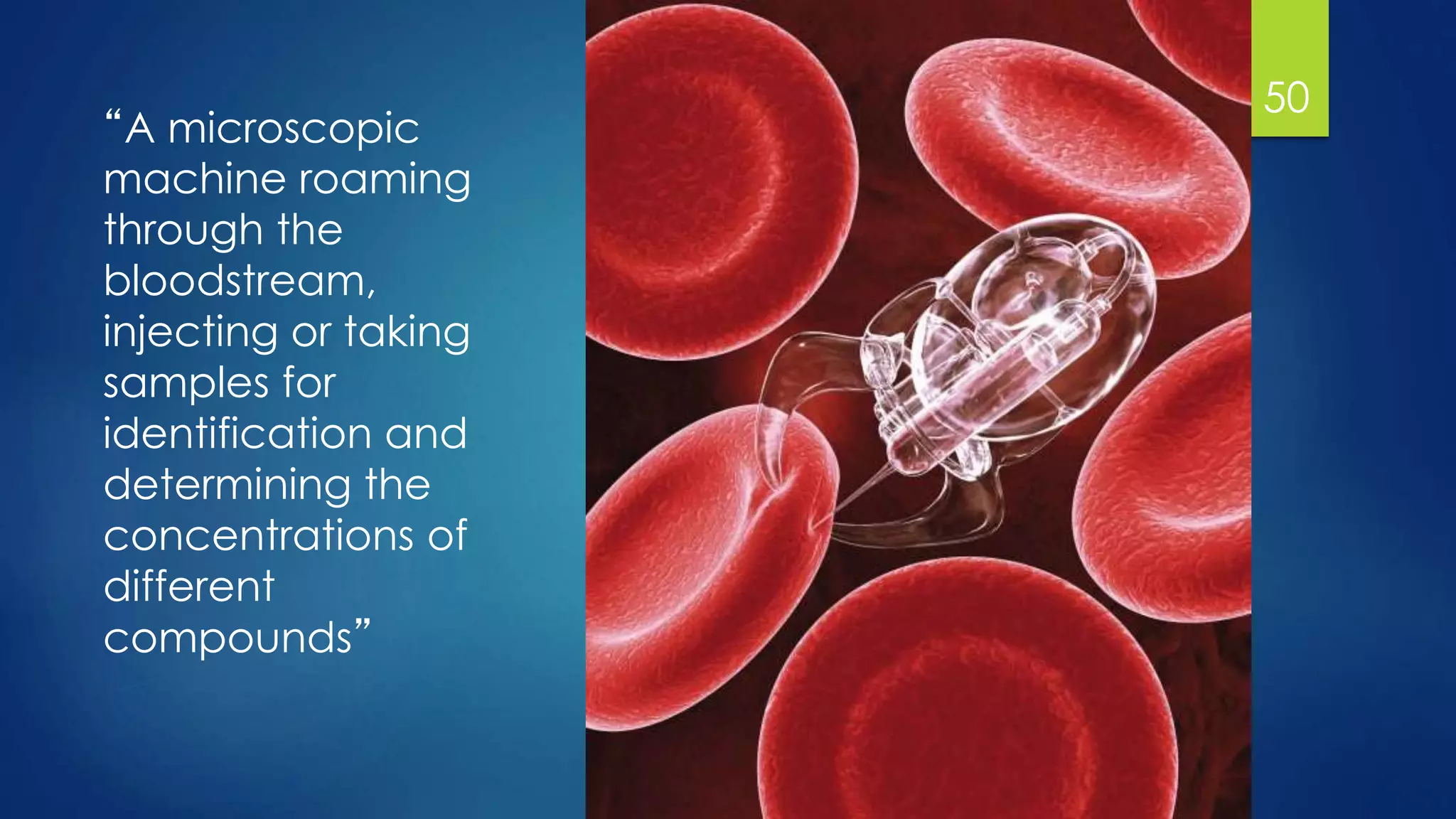
“A microscopic
machine roaming
through the
bloodstream,
injecting or taking
samples for
identification and
determining the
concentrations of
different
compounds”
50
“A single
inhaled
Nanorobot
reaches,
deeply
inspired into
the lungs and
attaches to
the tissue
surface”
51
“Mechanical
drilling of a
small tumor
mass by a
nanorobot”
52
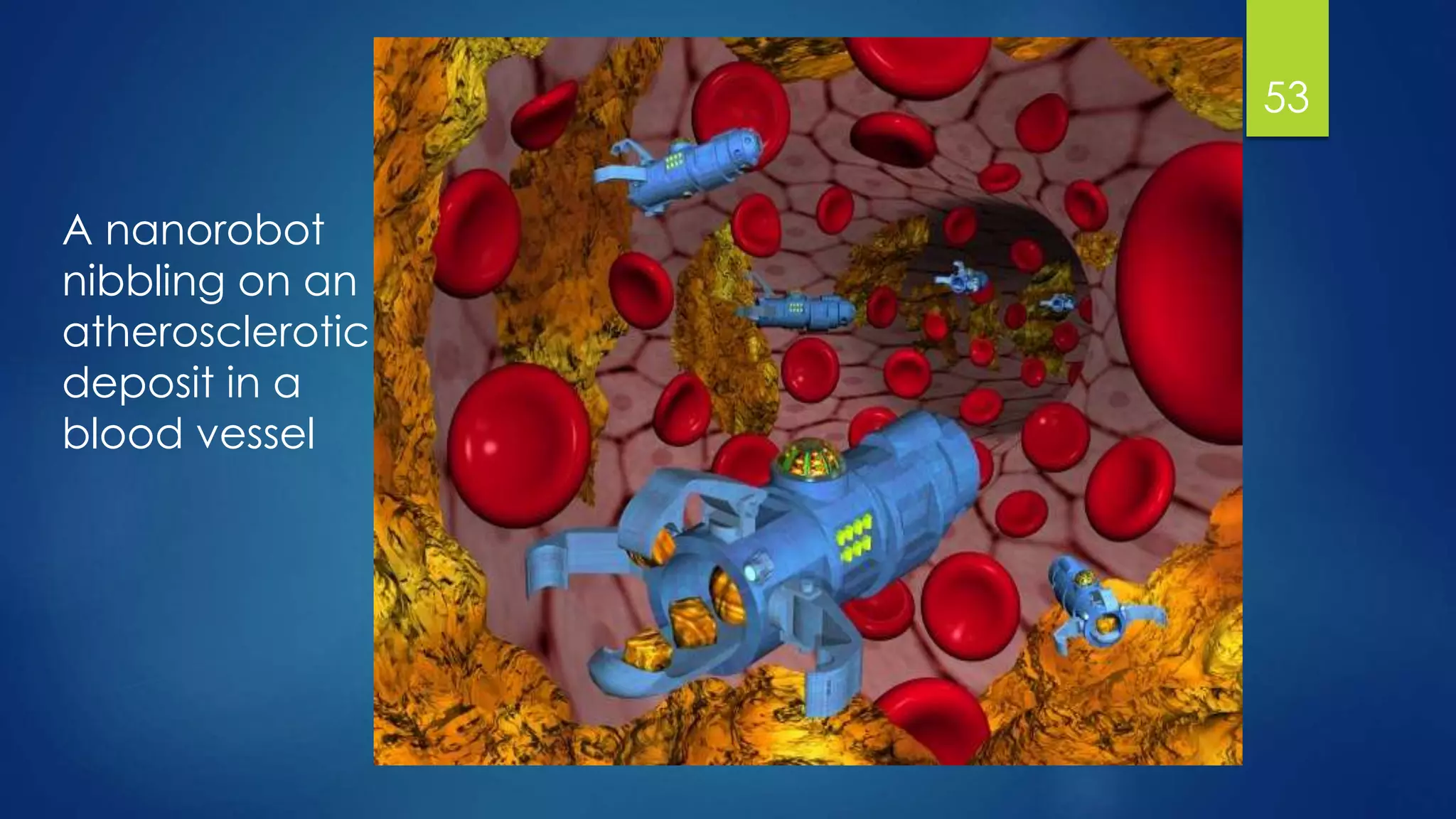
A nanorobot
nibbling on an
atherosclerotic
deposit in a
blood vessel
53
Advantages of nano medicine
• Drug delivery to the exact location.
• Lesser side effects, high efficacy
• Molecular targeting by nano engineered devices
• Detection / Diagnosis of diseases relatively easy & fast
• No surgery required.
• Diseases can be easily cured.
54
Disadvantages
• Not practical yet.
• High cost.
• Implementation difficulties.
• Nanotoxicity
55
Nanotoxicity
 The nanoparticles can have off target effects such as
triggering an immune response, crossing blood brain
barrier and affecting CNS or can cause tissue toxicity if not
properly eliminated
 Several toxicological responses of nanomedicine based
on in-vivo characterization have been reported such as
hypersensitivity reactions, element specific toxicity and
generation of reactive oxygen species
 for example multiwalled carbon nanotubes (MWCNT)
were found to cause asbestos- like effects on the
mesothelium following intracavitary injection of high doses
in rodents.
56
Nanotoxicity
 In 2006, there was a disaster during the clinical trial phase-I
study;
 6 healthy volunteers were recruited and administered with
TGN 1412 (CD 28 MAB) intended for the treatment of
rheumatoid arthritis and lymphocytic leukaemia. It was
humanised monoclonal antibody and CD 28 receptor
agonist.
 The drug was administered as intravenous infusion and within
half an hour all the subjects suffered from life threatening
conditions.
 So it was concluded that in-vivo behaviour in animals is not a
true representation of humans and more work is need to be
done to reduce the risks involved in the clinical trials
57
Nanotoxicity
 There is a need for a detailed examination of the
physico- chemical properties of nanoparticles
such as size, shape and surface chemistry and
correlating them with their in-vivo behaviour
could help in understanding the most important
technical issues and also for the development
suitable models for studying nanotoxicity
58
Challenges posed by
Nanomedicine
 Regulatory issues
 Environmental issues
 Social Issues
 Ethical issues
59
Regulatory issues
 There are two primary regulatory problems posed by nanomedicine:
 classification difficulties
 lack of scientific expertise
 The FDA classifies medical products for regulatory purposes as drugs,
devices, biologics, or combination products
 In the long run, sophisticated nanomedical products will blur the
distinction between “mechanical”, “chemical”, and “biological”
and make it difficult to determine if a product is a drug, device,
biologic, or combination product.
 Effective regulation requires that the FDA maintain expertise in
cutting edge technologies and scientific advances
60
Environmental risks
 National Science Foundation and Environmental Protection Agency
have raised concerns over potential impact of nanomaterials on
the environment and the adverse effects have been reported
 The possible excretion mechanisms are suggesting that it would be
mainly disposed in water and air.
 The excretory materials would mostly be suspended in air for longer
times due to their small size which can cause respiratory disorders
and affect the health of individuals
61
Social issues
 Firstly, the prices would be very high and the patients from the
low income groups would be deprived of these novel
therapeutics and the developing nations would be affected
most.
 Nanomedicine will generate social and ethical debates
regarding issues such as whether implantable nano-devices
that can constantly monitor for illness compromise privacy
rights and risk abuse
 whether neurobiochips that stimulate brain function give
humans machine-like qualities and steer society on a path
toward mental manipulation through implantable devices in
the brain
62
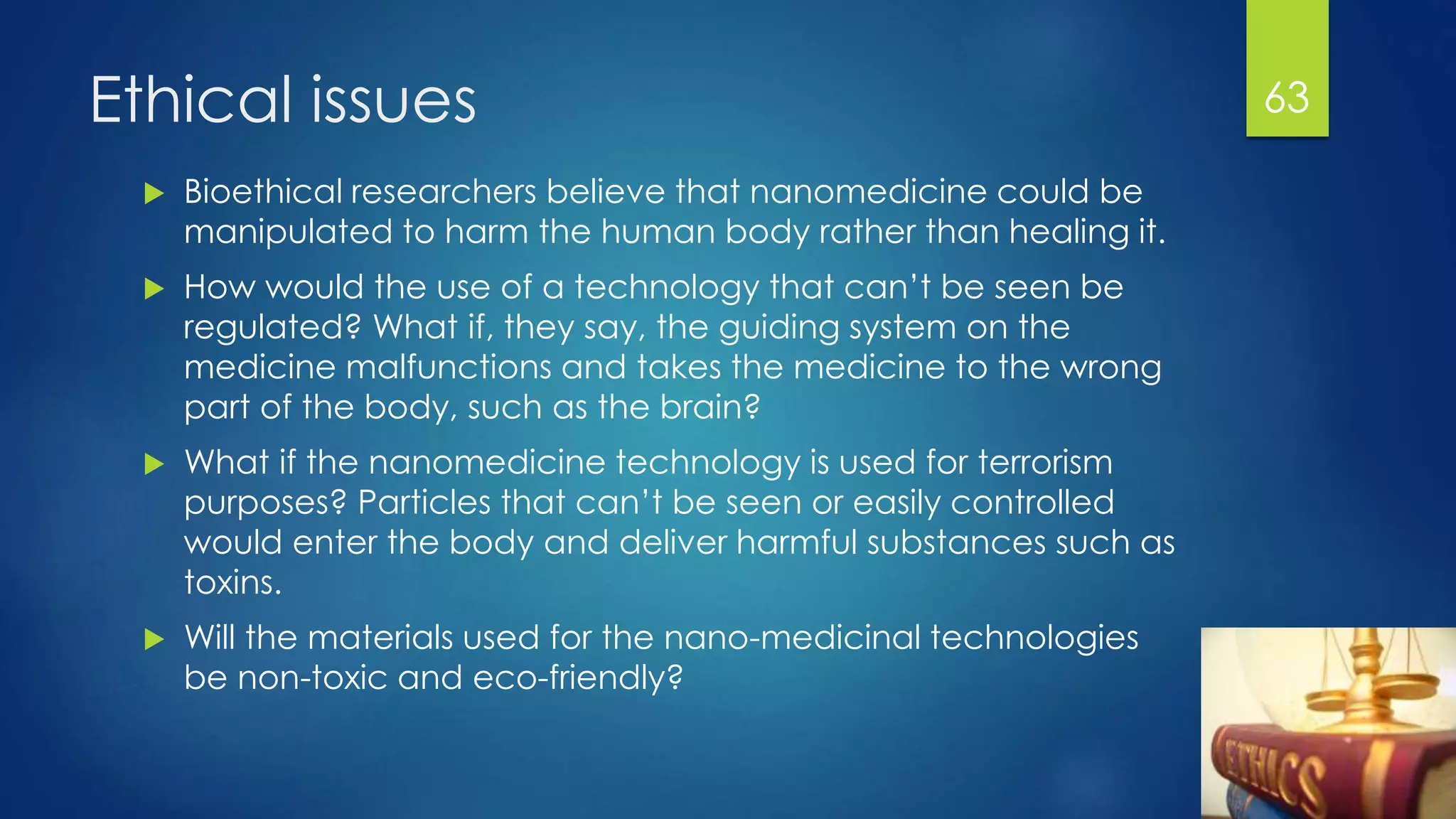
Ethical issues
 Bioethical researchers believe that nanomedicine could be
manipulated to harm the human body rather than healing it.
 How would the use of a technology that can’t be seen be
regulated? What if, they say, the guiding system on the
medicine malfunctions and takes the medicine to the wrong
part of the body, such as the brain?
 What if the nanomedicine technology is used for terrorism
purposes? Particles that can’t be seen or easily controlled
would enter the body and deliver harmful substances such as
toxins.
 Will the materials used for the nano-medicinal technologies
be non-toxic and eco-friendly?
63
Conclusion
• Although realization of the full potential of nanomedicine
may be years or decades away, recent advances in
nanotechnology-related drug delivery, diagnosis, and drug
development are beginning to change the landscape
medicine.
• The possibilities are endless, but will take time to develop.
• Nano therapies could, in the long term, be much more
economical, effective and safe and could greatly reduce
the cost of current medical procedures.
• So, Nanomedicine is the future medicine.
64
To conclude …..
Richard E. Smalley, PhD, 1996 Nobel Laureate,
once said,
“Human health has always been determined on
the nanometer scale; this is where the structure
and properties of the machines of life work in
every one of the cells in every living thing. The
practical impact of nanoscience on human
health will be huge.”
65
Thank You
66
67
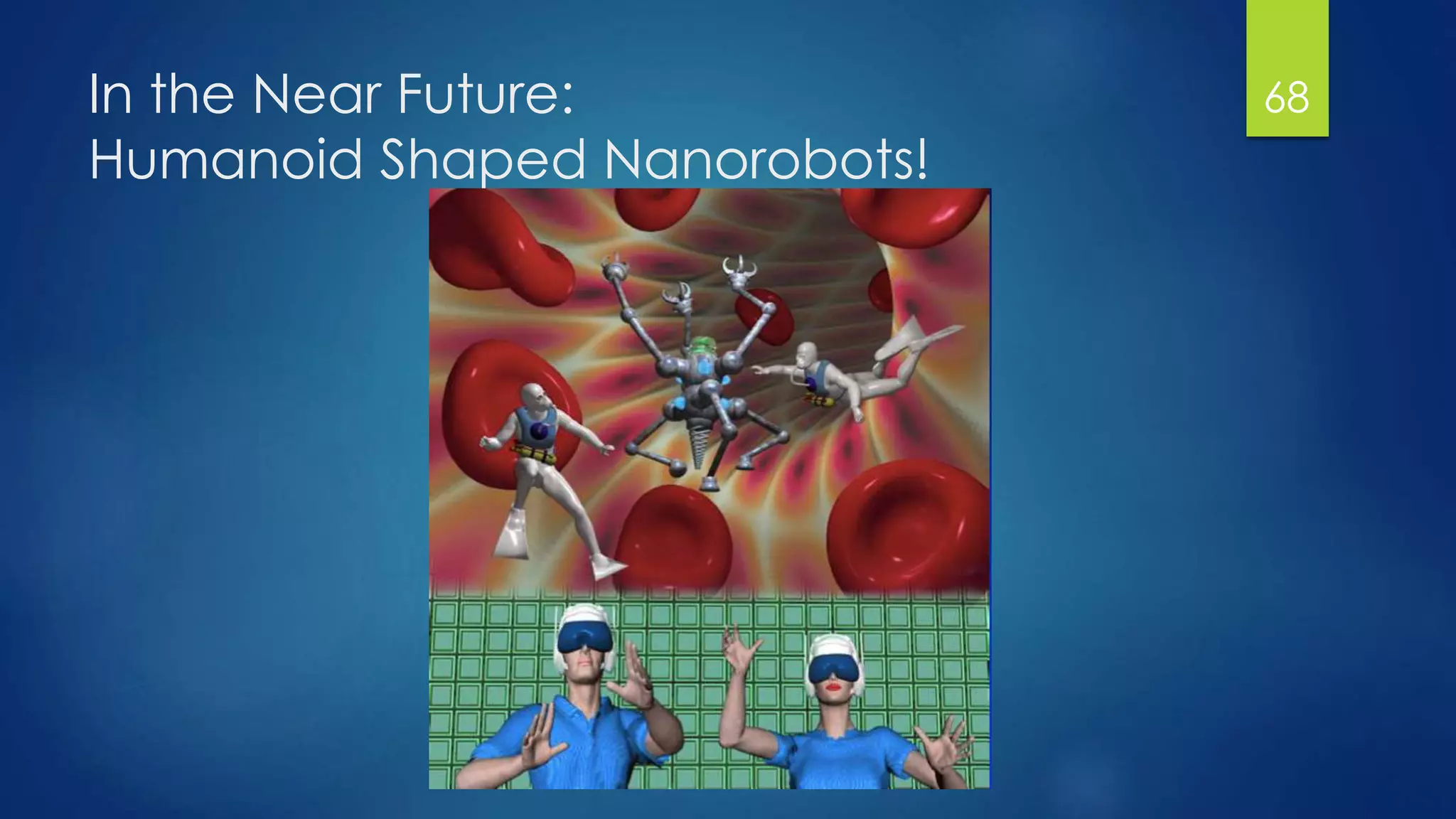
In the Near Future:
Humanoid Shaped Nanorobots!
68

Nanomedicine

  • 2.
    Nanomedicine DR. ASHUTOSH TIWARI 2NDYEAR PG RESIDENT PHARMACOLOGY DEPARTMENT SAIMS 2
  • 3.
    Outline • Introduction tonanomedicine • History & Timeline • Applications of nanomedicine • Advantages and disadvantages • Challenges • Conclusion 3
  • 4.
    Nanomedicine: an interdisciplinaryfield of science Nanomedicine Biology ChemistryNanotechnology 4
  • 5.
    Introduction  Human bodyis basically an extremely complex system of interacting molecules (i.e., a molecular machine)  therefore technology required to truly understand and repair the body is the molecular machine technology : nanotechnology 5
  • 6.
    Nanoscale  Nanoscience: involvesresearch and technology development at 1 nm to 100 nm range (nanoscale)  “nano” indicates 10-9  A nanometre is 10-9 meter.  one nanometre is a billionth of a metre or a millionth of a millimetre  a single human hair is around 80,000 nanometres thick  A typical protein size lies between 3 to 10 nanometres (nm)  red blood cells are a standard size of about 6000‐8000 nm 6
  • 7.
    Nanomedicine: Definition  Theofficial definition of the US National Nanotechnology Initiative says that  nanotechnology involves ‘research and technology development at the atomic, molecular, or macromolecular levels, in the length scale of approximately 1 to 100 nm range.  European Science Foundation (ESF) has defined nanomedicine as  ‘the science and technology of diagnosing, treating and preventing disease and traumatic injuries, of relieving pain, and improving human health, using molecular tools and molecular knowledge of human body 7
  • 8.
    Aim of Nanomedicine comprehensive monitoring, control, construction, repair, defence and improvement of all human biological systems, working from the molecular level using engineered devices and nanostructures, ultimately to achieve medical benefit. 8
  • 9.
    History  On December29, 1959, physicist Richard Feynman gave a radical lecture at an American Physical Society meeting at Caltech titled “There’s Plenty of Room at the Bottom”.  Feynman suggested that it should be possible to make machines at a nano- scale that "arrange the atoms the way we want", and do chemical synthesis by mechanical manipulation.  This lecture was the birth of the idea and study of nanotechnology. 9
  • 10.
    History  Professor NorioTaniguchi of the Tokyo Science University, introduced the term “nanotechnology”, in 1974  He described nanotechnology as the processing of, separation, consolidation, and deformation of materials by one atom or by one molecule." 10
  • 11.
    History  In the1980s, Dr. K. Eric Drexler, promoted nanoscale phenomena through books:  Engines of Creation: The Coming Era of Nanotechnology  Nanosystems: Molecular Machinery, Manufacturing, and Computation  He was ultimately responsible for the term nanotechnology to acquire its current sense.  he was presented the first PhD in nanotechnology. 11
  • 12.
    History  Hollywood providedthe public with a glimpse of the future of nano- science with the release of the film Fantastic Voyage in 1966,  which depicted a surgical team that was miniaturized and injected into a man to operate on a blood clot in his brain 12
  • 13.
    History  Bhasma, isa ayurvedic metallic/mineral preparation, treated with herbal juices or decoction and exposed for certain quantum of heat as per puta system of Ayurveda  Bhasma are claimed to be biologically produced nanoparticles (ethno-nanomedicine) 13
  • 14.
    Nanotechnology: Timeline  Inearly 2003, the European Science Foundation launched its Forward look on nanomedicine; a policy briefing was published on 23rd February 2005 which summarised the recommendations of the Forward Look.  In 2004 High Level Group European Technology Platform Nanomedicine was launched  In September 2005, its Vision Paper and Basis for a Strategic Research Agenda for Nanomedicine was released, as a first step towards setting up a European Technology Platform on Nanomedicine  in 2007, the European Foundation for Clinical Nanomedicine was established in Basel (Switzerland) 14
  • 15.
  • 16.
    Nanotechnology: Timeline  TheUS National Institutes of Health (NIH) released their first roadmap on nanomedicine in 2004  In 2004, the National Cancer Institute (NCI), as part of NIH, launched the Cancer Nanotechnology Plan, a strategic initiative to transform clinical oncology and basic research through the directed application of nanotechnology 16
  • 17.
  • 18.
    Current status  Themarket analysis reported that market for the nanomedicine is continuously growing at the rate of 28 % with a 35% increase in the revenues generated  The National Science Foundation estimated the market for all nanotechnologies to be $1 trillion.  Huge investments are being made in nanomedicine to develop novel therapeutic deliveries.  Currently more than 38 nanomedicine based products are on the market with estimated sales of $6.8 billion and the efforts to bring them on the market are increasing continuously 18
  • 19.
  • 20.
    Application of Nanomedicine •Diagnostic Imaging and identification • Therapeutic Delivering medication to the exact location. Killing of bacteria, viruses & cancer cells Repair of damaged tissues. 20
  • 21.
  • 22.
    Diagnostic use: Imaging Nanomaterials are being used extensively as contrast agents in non-invasive medical imaging tools, including computed tomography, magnetic resonance, positron emission tomography, single photon- emission computed tomography, ultrasound, and optical imaging  The contrast agents used: nanosized metal oxides, dendrimers, quantum dots, etc. 22
  • 23.
    Diagnostic Use: Imagingusing Quantum dots  Quantum dots Nano crystals (nano cadmium & nano zinc) are semiconductors used to tag biological molecules  have applications in medical diagnostics, targeted therapeutics, and high-throughput drug screening  tiny crystals, produce sequence of colours when subjected to ultraviolet rays 23
  • 24.
    Diagnostic use  Currentlyin vitro diagnostics are costly and it is hoped that new generation nanoscale “lab-on- a- chip” will offer advantages including reduced costs, portability, and shorter and faster analysis.  Applications may include measurements of saliva for periodontitis, heart disease, insulin detection and improving healthcare accessibility 24
  • 25.
    Diagnostic tools  alab-on-a- chip with the size of a postage stamp is already commercially available and is used to monitor lithium medication levels for manic depressive patients at home at much lower cost and with greater convenience  Other diagnostic applications using nanotechnology and already on the market include:  colloidal gold particles which, due to their stability, have been widely used to rapidly test for pregnancy, ovulation, HIV and other indications  magnetic nanoparticles used for cell sorting applications in clinical diagnostics  superparamagnetic iron oxide nanoparticles for magnetic resonance imaging – first approved in Europe in 1993  Magnetic iron oxide nanoparticles also show great promise in the detection of Alzheimer plaques 25
  • 26.
    Medical instruments  Medicalinstruments are also being increasingly miniaturised, with nanomaterials for increased efficiency  carbon nanotubes may be used instead of glass pipettes for delivery into cells  Nanosilver is increasingly incorporated into catheters and other instruments as a coater because of its antimicrobial effects  Wound dressings may also incorporate some sort of nanosilver, for the same purpose 26
  • 27.
    Therapeutic uses: Drugdelivery using Nanoparticles  Nanopharmacology: an application of nanotechnology to the development and discovery of drug delivery methods.  Application  to deliver Medication to the exact location.  Lesser side effects & high efficacy  Improves bio-availability  Molecular targeting by nano engineered devices 27
  • 28.
    Therapeutic uses: Drugdelivery using Nanoparticles  Nanoformulations of existing drugs can overcome common pharmaceutical problems by increasing solubility, limiting systemic toxicities, increasing bioavailability and improving immuno- compatibility and cellular uptake  Nanotechnology has also been used for targeted drug delivery which will allow  controlled drug release at just the right place and dose, improving patient safety and compliance and reducing side effects.  Drug delivery vehicles under investigation include:  polymeric particles, dendrimers, nanoshells, liposomes, micelles and magnetic nanoparticles 28
  • 29.
    Therapeutic uses: Drugdelivery using Nanoparticles  Advantages & of a targeted drug delivery system  Encapsulation of a drug (such as in a liposome or micelle) can avoid local irritation and decrease local and systemic toxicity,  Disadvantages  The drug delivery mechanisms may also introduce toxicities of their own and have unintended side effects. 29
  • 30.
    Therapeutic uses: Drugdelivery using Nanoparticles  Metal-based nanoparticles – Au, Ag, Cd-Se, Zn-S etc  Lipid-based nanoparticles – Liposome & Neosome based  Polymer-based nanoparticles – Dendrimer, chitosen, micelle based  Biological nanoparticles – arginylglycylaspartic acid (RGD) peptides based 30
  • 31.
    Liposomes  Liposomes aresmall spherical vesicles, composed of lipid bilayers surrounding aqueous inner phase  Liposomes are usually composed of phospholipids or cholesterol, which are used to encapsulate various active drugs.  At the target site liposomes fuse with the cell membranes and deliver the molecules  Liposomes are 200 nm or smaller  Applications  targeted drug delivery  cancer treatment  Some liposome based pharmaceuticals:  Amphotericin B, Daunorubicin, Doxorubicin, Amikacin 31
  • 32.
    PEGylated Liposomes  PEG(polyethylene glycol) makes the liposome less vulnerable to immune system  PEGylation, by increasing the molecular weight of a molecule, can impart several significant pharmacological advantages over the unmodified form, such as:  Improved drug solubility  Enhanced protection from proteolytic degradation  Increased drug stability  Extended circulating life  Reduced dosage frequency, without diminished efficacy with potentially reduced toxicity 32
  • 33.
    Niosomes  Niosomes, non-ionicsurfactant vesicles, widely studied as an alternative to liposomes  similar to liposomes in terms of their physical properties  Niosomes alleviate the disadvantages associated with liposomes, such as chemical instability, variable purity of phospholipids and high cost.  They have the potential for controlled and targated drug delivery  Niosomes enhance the penetration of drugs 33
  • 34.
    Dendrimers  Dendrimers aremanmade molecules having a tree like structure having number of small branching molecules around a central core molecule.  Dendrimers measure between 2-20 nanometers across and are branching molecules with the branching beginning at the core.  Nano devices based on dendrimers may be used for cancer cell recognition, diagnosis of cancer cause, drug delivery, reporting drug levels in tumors and reporting cancer cell death. 34
  • 35.
    Nano shells  Nanoshells have a core of silica and a metallic outer layer.  Nano shells can be linked to antibodies that can recognize tumor cells  Once the cancer cells take them up, by applying a near infra red light that is absorbed by the Nano shells, it is possible to create intense heat that selectively kills the tumor cells and not the neighboring healthy cells 35
  • 36.
    Carbon nanotubes  Single-wallcarbon nanotubes are tiny hollow rods that are one-atom-thick  10,000 times smaller in diameter than a human hair  extraordinary optical, mechanical, thermal and electronic properties  being used to produce lightweight and extremely strong materials, which enhance the capabilities of devices such as sensors, and provide a novel means of delivering drugs with great specificity. 36
  • 37.
  • 38.
  • 39.
  • 40.
  • 41.
  • 42.
  • 43.
  • 44.
    FDA Approved nanodrugs Liposomes:  Amphotericin B, Daunorubucin, Doxorubicin, Cytarabine, Morphine, Amikacin  Emulsions:  Cyclosporin A  Engineered nanoparticales:  Diclofenac  Polymeric nanoparticles:  Paclitaxel  Nanocrystals:  Rapamycin, Aprepitant, Fenofibrate, Megestrol, Fenofibrate 44
  • 45.
    Drug discovery  Nanoand micro technologies are part of the latest advanced solutions for decreasing the discovery and development times for new drugs, and potentially reducing the development costs.  High-throughput arrays and ultra-sensitive labeling and detection technologies are being used to increase the speed and accuracy of identifying genes and genetic materials for drug discovery and development. 45
  • 46.
    Therapeutic uses: Cancer treatment Thermotherapy, a form of cancer treatment that uses heat to destroy cancer cells.  By using nanoparticles to generate the heat, the treatment can be more successfully localised and result in fewer side effects.  The devices use a number of different nanomaterials including nanosized iron oxides, gold-coated silica nanoparticles and hafnium oxide nanoparticles 46
  • 47.
    Tissue repair &replacement  Implant coatings:  biocompatible nanomaterials and coatings to increase the adhesion, durability and lifespan of implants.  For example, nanopolymers such as polyvinyl alcohol (PVA) can be used to coat implantable devices that are in contact with blood (e.g. artificial hearts, vascular grafts, catheters) for dispersing clots or preventing their formation 47
  • 48.
    Tissue repair &replacement  Tissue Regeneration Scaffolds  Nanostructures are being researched for the preparation and improvement of tissue regeneration scaffolds  For example, PVA is also being investigated for the cornea by having corneal epithelia cells seeded in a PVA hydro gel structure.  Structure implant materials for  Bone repair: e.g. High strength nanoceramic materials, such as calcium phosphate apatite (CPA) and hydroxyapatite (HAP) 48
  • 49.
    Nanorobots – Afuture vision • Nanorobots are nanodevices. • Potential applications include • To repair or detect targeted damages and infections. • early diagnosis and targeted drug delivery for cancer, • biomedical instrumentation, surgery 49
  • 50.
    “A microscopic machine roaming throughthe bloodstream, injecting or taking samples for identification and determining the concentrations of different compounds” 50
  • 51.
    “A single inhaled Nanorobot reaches, deeply inspired into thelungs and attaches to the tissue surface” 51
  • 52.
    “Mechanical drilling of a smalltumor mass by a nanorobot” 52
  • 53.
    A nanorobot nibbling onan atherosclerotic deposit in a blood vessel 53
  • 54.
    Advantages of nanomedicine • Drug delivery to the exact location. • Lesser side effects, high efficacy • Molecular targeting by nano engineered devices • Detection / Diagnosis of diseases relatively easy & fast • No surgery required. • Diseases can be easily cured. 54
  • 55.
    Disadvantages • Not practicalyet. • High cost. • Implementation difficulties. • Nanotoxicity 55
  • 56.
    Nanotoxicity  The nanoparticlescan have off target effects such as triggering an immune response, crossing blood brain barrier and affecting CNS or can cause tissue toxicity if not properly eliminated  Several toxicological responses of nanomedicine based on in-vivo characterization have been reported such as hypersensitivity reactions, element specific toxicity and generation of reactive oxygen species  for example multiwalled carbon nanotubes (MWCNT) were found to cause asbestos- like effects on the mesothelium following intracavitary injection of high doses in rodents. 56
  • 57.
    Nanotoxicity  In 2006,there was a disaster during the clinical trial phase-I study;  6 healthy volunteers were recruited and administered with TGN 1412 (CD 28 MAB) intended for the treatment of rheumatoid arthritis and lymphocytic leukaemia. It was humanised monoclonal antibody and CD 28 receptor agonist.  The drug was administered as intravenous infusion and within half an hour all the subjects suffered from life threatening conditions.  So it was concluded that in-vivo behaviour in animals is not a true representation of humans and more work is need to be done to reduce the risks involved in the clinical trials 57
  • 58.
    Nanotoxicity  There isa need for a detailed examination of the physico- chemical properties of nanoparticles such as size, shape and surface chemistry and correlating them with their in-vivo behaviour could help in understanding the most important technical issues and also for the development suitable models for studying nanotoxicity 58
  • 59.
    Challenges posed by Nanomedicine Regulatory issues  Environmental issues  Social Issues  Ethical issues 59
  • 60.
    Regulatory issues  Thereare two primary regulatory problems posed by nanomedicine:  classification difficulties  lack of scientific expertise  The FDA classifies medical products for regulatory purposes as drugs, devices, biologics, or combination products  In the long run, sophisticated nanomedical products will blur the distinction between “mechanical”, “chemical”, and “biological” and make it difficult to determine if a product is a drug, device, biologic, or combination product.  Effective regulation requires that the FDA maintain expertise in cutting edge technologies and scientific advances 60
  • 61.
    Environmental risks  NationalScience Foundation and Environmental Protection Agency have raised concerns over potential impact of nanomaterials on the environment and the adverse effects have been reported  The possible excretion mechanisms are suggesting that it would be mainly disposed in water and air.  The excretory materials would mostly be suspended in air for longer times due to their small size which can cause respiratory disorders and affect the health of individuals 61
  • 62.
    Social issues  Firstly,the prices would be very high and the patients from the low income groups would be deprived of these novel therapeutics and the developing nations would be affected most.  Nanomedicine will generate social and ethical debates regarding issues such as whether implantable nano-devices that can constantly monitor for illness compromise privacy rights and risk abuse  whether neurobiochips that stimulate brain function give humans machine-like qualities and steer society on a path toward mental manipulation through implantable devices in the brain 62
  • 63.
    Ethical issues  Bioethicalresearchers believe that nanomedicine could be manipulated to harm the human body rather than healing it.  How would the use of a technology that can’t be seen be regulated? What if, they say, the guiding system on the medicine malfunctions and takes the medicine to the wrong part of the body, such as the brain?  What if the nanomedicine technology is used for terrorism purposes? Particles that can’t be seen or easily controlled would enter the body and deliver harmful substances such as toxins.  Will the materials used for the nano-medicinal technologies be non-toxic and eco-friendly? 63
  • 64.
    Conclusion • Although realizationof the full potential of nanomedicine may be years or decades away, recent advances in nanotechnology-related drug delivery, diagnosis, and drug development are beginning to change the landscape medicine. • The possibilities are endless, but will take time to develop. • Nano therapies could, in the long term, be much more economical, effective and safe and could greatly reduce the cost of current medical procedures. • So, Nanomedicine is the future medicine. 64
  • 65.
    To conclude ….. RichardE. Smalley, PhD, 1996 Nobel Laureate, once said, “Human health has always been determined on the nanometer scale; this is where the structure and properties of the machines of life work in every one of the cells in every living thing. The practical impact of nanoscience on human health will be huge.” 65
  • 66.
  • 67.
  • 68.
    In the NearFuture: Humanoid Shaped Nanorobots! 68