Download as PDF, PPTX
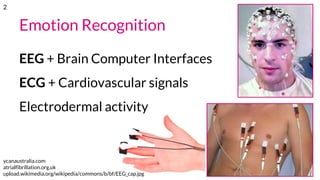
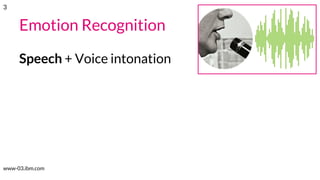
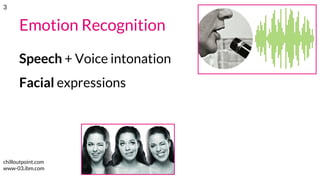
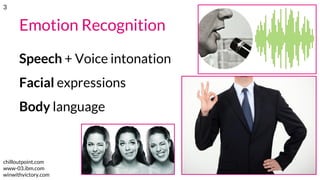

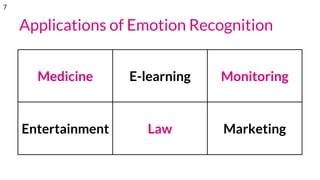
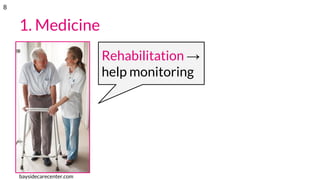
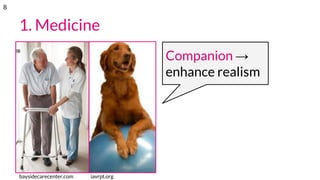


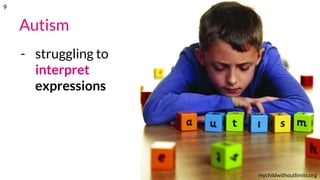
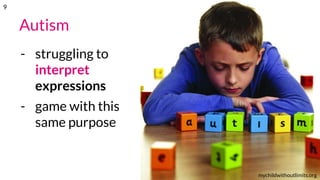
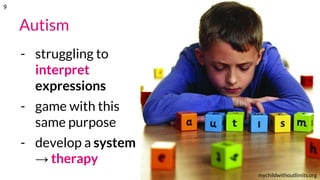
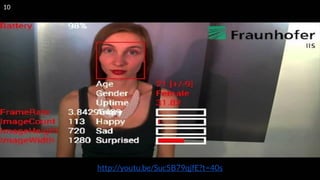








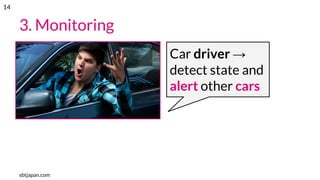
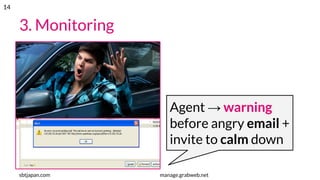
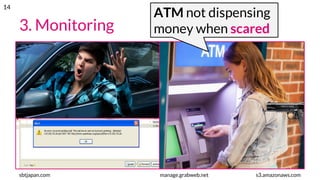



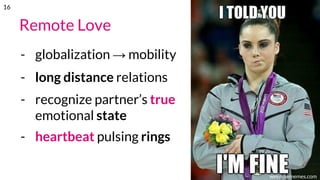
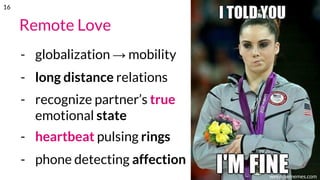










This document discusses applications of emotion recognition technology across several domains: 1) Medicine - To help monitor patients and enhance healthcare like rehabilitation, companion robots, and counseling. It could also help with autism therapy and music therapy. 2) E-learning - To adjust an online tutor's presentation based on a learner's emotions, making the tutoring experience more interactive and effective. 3) Monitoring - Such as detecting emotions in car drivers to alert other cars, warning employees before angry emails, and prioritizing angry calls at call centers. 4) Entertainment - Like music players that satisfy users based on recognized moods. 5) Marketing - To improve advertising by understanding emotional impacts and engagement


