Mutation & Genetic Variation
I. MUTATION & GENETIC VARIATION
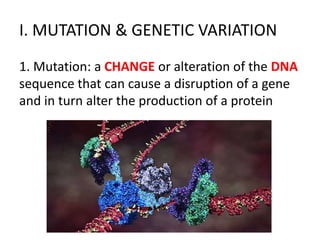
1. Mutation: a CHANGE or alteration of the DNA
sequence that can cause a disruption of a gene
and in turn alter the production of a protein
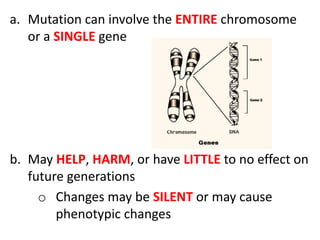
a. Mutation can involve the ENTIRE chromosome
   or a SINGLE gene


b. May HELP, HARM, or have LITTLE to no effect on
   future generations
     o Changes may be SILENT or may cause
        phenotypic changes
c. Can occur during SEXUAL and ASEXUAL
   reproduction

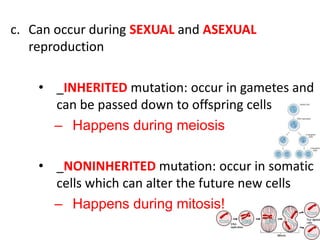
    • _INHERITED mutation: occur in gametes and
      can be passed down to offspring cells
      – Happens during meiosis

    • _NONINHERITED mutation: occur in somatic
      cells which can alter the future new cells
      – Happens during mitosis!
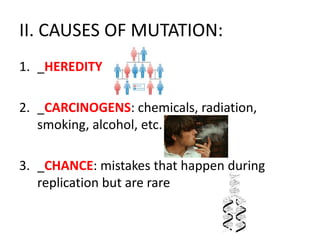
II. CAUSES OF MUTATION:
1. _HEREDITY

2. _CARCINOGENS: chemicals, radiation,
   smoking, alcohol, etc.

3. _CHANCE: mistakes that happen during
   replication but are rare
III. MAJOR EXAMPLES THAT CAUSE
MUTATIONS:
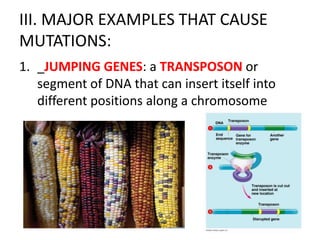
1. _JUMPING GENES: a TRANSPOSON or
   segment of DNA that can insert itself into
   different positions along a chromosome
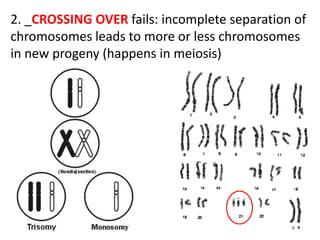
2. _CROSSING OVER fails: incomplete separation of
chromosomes leads to more or less chromosomes
in new progeny (happens in meiosis)
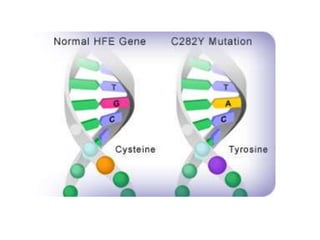
3. SINGLE GENE MUTATIONS
a. SUBSTITUTION: ONE or MORE nucleotides are
   REPLACED by a different nucleotide in the gene
   sequence ex: AGA copied as AGG
   Results in a NEW CODON (mRNA)
   If codon is the same as the original, the
     protein will not be affected
     ex: UCU and UCC both code for same amino acid
   If codon is a “stop” or different amino acid the
    protein will be altered
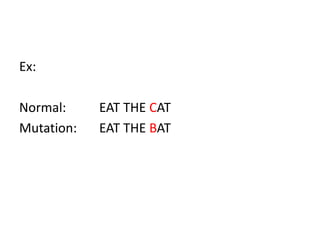
Ex:

Normal:     EAT THE CAT
Mutation:   EAT THE BAT
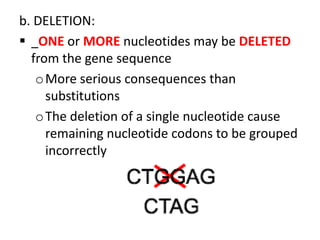
b. DELETION:
 _ONE or MORE nucleotides may be DELETED
  from the gene sequence
   o More serious consequences than
     substitutions
   o The deletion of a single nucleotide cause
     remaining nucleotide codons to be grouped
     incorrectly
IV. RESULTS OF MUTATIONS
• CHANGES TO DNA CAN INCREASE CHANCES OF GENETIC
  VARIATION THAT MAY OR MAY NOT BE HARMFUL
1. Hereditary disorders: inherited mutation
  a. _SICKLE CELL ANEMIA
  b. _PKU: phenylketonuria
  c. _CYSTIC FIBROSIS

2. Cancer: non-inherited mutation

Mutation notes

  • 1.
  • 2.
    I. MUTATION &GENETIC VARIATION 1. Mutation: a CHANGE or alteration of the DNA sequence that can cause a disruption of a gene and in turn alter the production of a protein
  • 3.
    a. Mutation caninvolve the ENTIRE chromosome or a SINGLE gene b. May HELP, HARM, or have LITTLE to no effect on future generations o Changes may be SILENT or may cause phenotypic changes
  • 4.
    c. Can occurduring SEXUAL and ASEXUAL reproduction • _INHERITED mutation: occur in gametes and can be passed down to offspring cells – Happens during meiosis • _NONINHERITED mutation: occur in somatic cells which can alter the future new cells – Happens during mitosis!
  • 5.
    II. CAUSES OFMUTATION: 1. _HEREDITY 2. _CARCINOGENS: chemicals, radiation, smoking, alcohol, etc. 3. _CHANCE: mistakes that happen during replication but are rare
  • 6.
    III. MAJOR EXAMPLESTHAT CAUSE MUTATIONS: 1. _JUMPING GENES: a TRANSPOSON or segment of DNA that can insert itself into different positions along a chromosome
  • 7.
    2. _CROSSING OVERfails: incomplete separation of chromosomes leads to more or less chromosomes in new progeny (happens in meiosis)
  • 8.
    3. SINGLE GENEMUTATIONS a. SUBSTITUTION: ONE or MORE nucleotides are REPLACED by a different nucleotide in the gene sequence ex: AGA copied as AGG  Results in a NEW CODON (mRNA)  If codon is the same as the original, the protein will not be affected ex: UCU and UCC both code for same amino acid  If codon is a “stop” or different amino acid the protein will be altered
  • 10.
    Ex: Normal: EAT THE CAT Mutation: EAT THE BAT
  • 11.
    b. DELETION:  _ONEor MORE nucleotides may be DELETED from the gene sequence o More serious consequences than substitutions o The deletion of a single nucleotide cause remaining nucleotide codons to be grouped incorrectly
  • 12.
    IV. RESULTS OFMUTATIONS • CHANGES TO DNA CAN INCREASE CHANCES OF GENETIC VARIATION THAT MAY OR MAY NOT BE HARMFUL 1. Hereditary disorders: inherited mutation a. _SICKLE CELL ANEMIA b. _PKU: phenylketonuria c. _CYSTIC FIBROSIS 2. Cancer: non-inherited mutation