Evidence of Evolution
I. Biological Evolution:
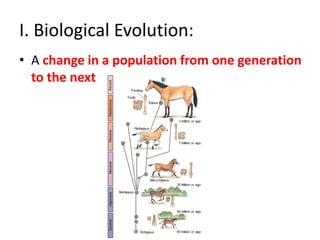
• A change in a population from one generation
  to the next
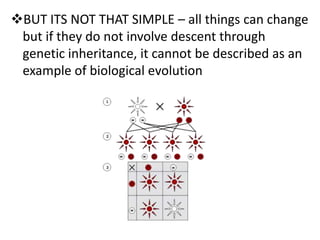
BUT ITS NOT THAT SIMPLE – all things can change
 but if they do not involve descent through
 genetic inheritance, it cannot be described as an
 example of biological evolution
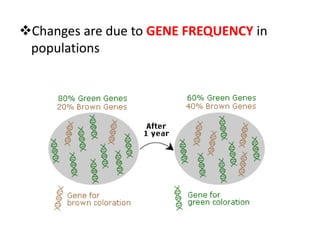
Changes are due to GENE FREQUENCY in
 populations
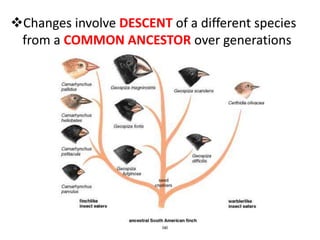
Changes involve DESCENT of a different species
 from a COMMON ANCESTOR over generations
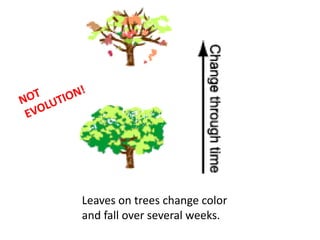
Leaves on trees change color
and fall over several weeks.
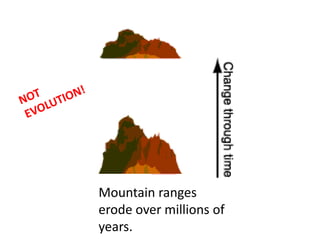
Mountain ranges
erode over millions of
years.
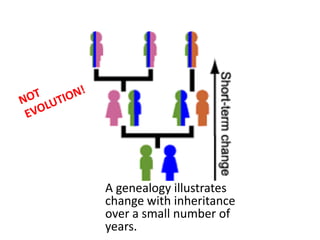
A genealogy illustrates
change with inheritance
over a small number of
years.
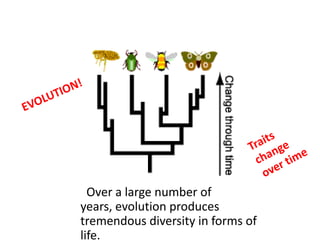
Over a large number of
years, evolution produces
tremendous diversity in forms of
life.
II. Evidence of Evolution
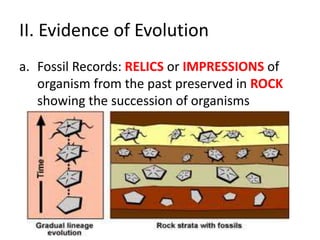
a. Fossil Records: RELICS or IMPRESSIONS of
   organism from the past preserved in ROCK
   showing the succession of organisms
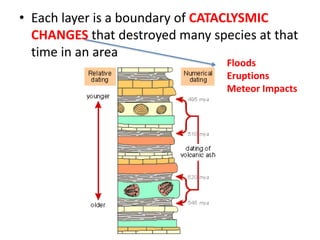
• Each layer is a boundary of CATACLYSMIC
  CHANGES that destroyed many species at that
  time in an area
                                 Floods
                                 Eruptions
                                 Meteor Impacts
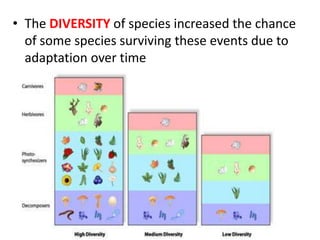
• The DIVERSITY of species increased the chance
  of some species surviving these events due to
  adaptation over time
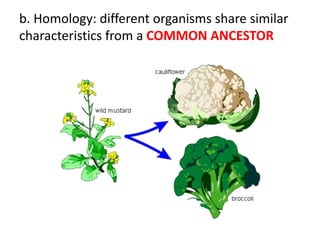
b. Homology: different organisms share similar
characteristics from a COMMON ANCESTOR
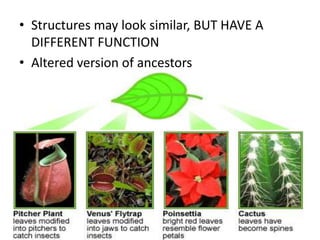
• Structures may look similar, BUT HAVE A
  DIFFERENT FUNCTION
• Altered version of ancestors
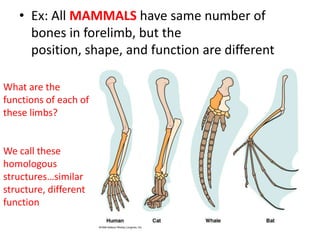
• Ex: All MAMMALS have same number of
     bones in forelimb, but the
     position, shape, and function are different

What are the
functions of each of
these limbs?


We call these
homologous
structures…similar
structure, different
function
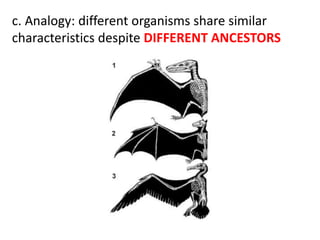
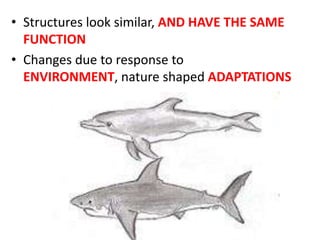
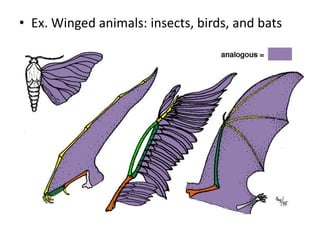
c. Analogy: different organisms share similar
characteristics despite DIFFERENT ANCESTORS
• Structures look similar, AND HAVE THE SAME
  FUNCTION
• Changes due to response to
  ENVIRONMENT, nature shaped ADAPTATIONS
• Ex. Winged animals: insects, birds, and bats
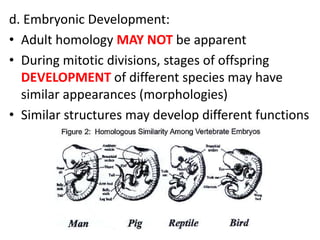
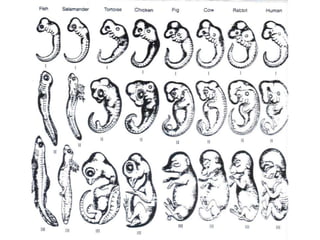
d. Embryonic Development:
• Adult homology MAY NOT be apparent
• During mitotic divisions, stages of offspring
  DEVELOPMENT of different species may have
  similar appearances (morphologies)
• Similar structures may develop different functions
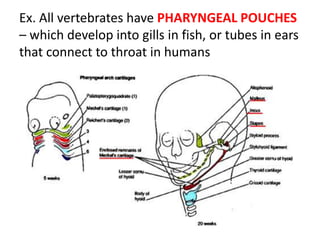
Ex. All vertebrates have PHARYNGEAL POUCHES
– which develop into gills in fish, or tubes in ears
that connect to throat in humans
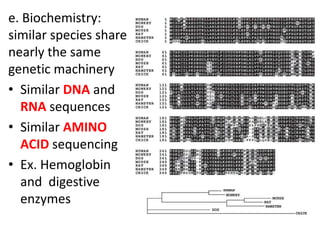
e. Biochemistry:
similar species share
nearly the same
genetic machinery
• Similar DNA and
  RNA sequences
• Similar AMINO
  ACID sequencing
• Ex. Hemoglobin
  and digestive
  enzymes
Learning Check
Answer the following questions based on the
information covered in your notes.
Example:
1. Humans, chimpanzees, whales, and bats all have the same bones
in their arms, fins, or wings.
a. What type of evidence is this? homologous structures

b. Why is this evidence of evolution?
This is evidence of evolution because if all these animals have
the same bones, they probably all evolved from one creature
that had those bones a very long time ago. Some of its
children evolved (or changed) into humans, and other evolved
into whales or bats or chimpanzees.
2. Scientists find fossilized bones of a huge
animal that doesn’t exist today.

a. What type of evidence is this?

b. Why is this evidence of evolution?
3. The human gene for your muscle protein is
different from monkey muscle protein in 4
places and different from a chicken’s gene in 25
places.

a. What type of evidence is this?

b. Why is this evidence of evolution?
4. Honey possums lick nectar from flowers using
a long tongue made of soft muscle. Butterflies
lick nectar from flowers using a long tongue
made of hard protein.

a. What type of evidence is this?

b. Why is this evidence of evolution?
5. Humans, rabbits, and zebras all have an
appendix, an extra piece in their digestive
system, although in humans it’s much smaller.

a. What type of evidence is this?

b. Why is this evidence of evolution?
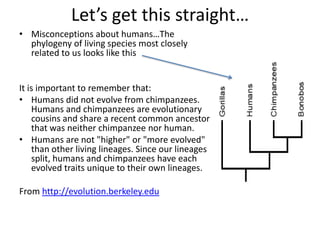
Let’s get this straight…
• Misconceptions about humans…The
  phylogeny of living species most closely
  related to us looks like this


It is important to remember that:
• Humans did not evolve from chimpanzees.
    Humans and chimpanzees are evolutionary
    cousins and share a recent common ancestor
    that was neither chimpanzee nor human.
• Humans are not "higher" or "more evolved"
    than other living lineages. Since our lineages
    split, humans and chimpanzees have each
    evolved traits unique to their own lineages.

From http://evolution.berkeley.edu

Evidence of evolution ss

  • 1.
  • 2.
    I. Biological Evolution: •A change in a population from one generation to the next
  • 3.
    BUT ITS NOTTHAT SIMPLE – all things can change but if they do not involve descent through genetic inheritance, it cannot be described as an example of biological evolution
  • 4.
    Changes are dueto GENE FREQUENCY in populations
  • 5.
    Changes involve DESCENTof a different species from a COMMON ANCESTOR over generations
  • 6.
    Leaves on treeschange color and fall over several weeks.
  • 7.
    Mountain ranges erode overmillions of years.
  • 8.
    A genealogy illustrates changewith inheritance over a small number of years.
  • 9.
    Over a largenumber of years, evolution produces tremendous diversity in forms of life.
  • 10.
    II. Evidence ofEvolution a. Fossil Records: RELICS or IMPRESSIONS of organism from the past preserved in ROCK showing the succession of organisms
  • 11.
    • Each layeris a boundary of CATACLYSMIC CHANGES that destroyed many species at that time in an area Floods Eruptions Meteor Impacts
  • 12.
    • The DIVERSITYof species increased the chance of some species surviving these events due to adaptation over time
  • 13.
    b. Homology: differentorganisms share similar characteristics from a COMMON ANCESTOR
  • 14.
    • Structures maylook similar, BUT HAVE A DIFFERENT FUNCTION • Altered version of ancestors
  • 15.
    • Ex: AllMAMMALS have same number of bones in forelimb, but the position, shape, and function are different What are the functions of each of these limbs? We call these homologous structures…similar structure, different function
  • 16.
    c. Analogy: differentorganisms share similar characteristics despite DIFFERENT ANCESTORS
  • 17.
    • Structures looksimilar, AND HAVE THE SAME FUNCTION • Changes due to response to ENVIRONMENT, nature shaped ADAPTATIONS
  • 18.
    • Ex. Wingedanimals: insects, birds, and bats
  • 19.
    d. Embryonic Development: •Adult homology MAY NOT be apparent • During mitotic divisions, stages of offspring DEVELOPMENT of different species may have similar appearances (morphologies) • Similar structures may develop different functions
  • 21.
    Ex. All vertebrateshave PHARYNGEAL POUCHES – which develop into gills in fish, or tubes in ears that connect to throat in humans
  • 22.
    e. Biochemistry: similar speciesshare nearly the same genetic machinery • Similar DNA and RNA sequences • Similar AMINO ACID sequencing • Ex. Hemoglobin and digestive enzymes
  • 23.
    Learning Check Answer thefollowing questions based on the information covered in your notes. Example: 1. Humans, chimpanzees, whales, and bats all have the same bones in their arms, fins, or wings. a. What type of evidence is this? homologous structures b. Why is this evidence of evolution? This is evidence of evolution because if all these animals have the same bones, they probably all evolved from one creature that had those bones a very long time ago. Some of its children evolved (or changed) into humans, and other evolved into whales or bats or chimpanzees.
  • 24.
    2. Scientists findfossilized bones of a huge animal that doesn’t exist today. a. What type of evidence is this? b. Why is this evidence of evolution?
  • 25.
    3. The humangene for your muscle protein is different from monkey muscle protein in 4 places and different from a chicken’s gene in 25 places. a. What type of evidence is this? b. Why is this evidence of evolution?
  • 26.
    4. Honey possumslick nectar from flowers using a long tongue made of soft muscle. Butterflies lick nectar from flowers using a long tongue made of hard protein. a. What type of evidence is this? b. Why is this evidence of evolution?
  • 27.
    5. Humans, rabbits,and zebras all have an appendix, an extra piece in their digestive system, although in humans it’s much smaller. a. What type of evidence is this? b. Why is this evidence of evolution?
  • 28.
    Let’s get thisstraight… • Misconceptions about humans…The phylogeny of living species most closely related to us looks like this It is important to remember that: • Humans did not evolve from chimpanzees. Humans and chimpanzees are evolutionary cousins and share a recent common ancestor that was neither chimpanzee nor human. • Humans are not "higher" or "more evolved" than other living lineages. Since our lineages split, humans and chimpanzees have each evolved traits unique to their own lineages. From http://evolution.berkeley.edu