Five Poor Listening Styles
Spacing Out
Your mind is
in another
place and you
are caught up
in your own
thoughts
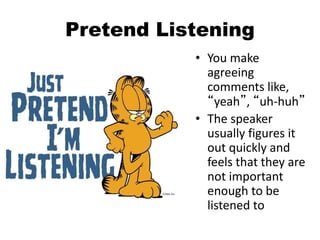
Pretend Listening
• You make
agreeing
comments like,
“yeah”, “uh-huh”
• The speaker
usually figures it
out quickly and
feels that they are
not important
enough to be
listened to
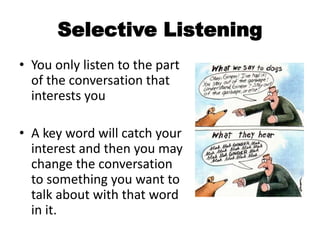
Selective Listening
• You only listen to the part
of the conversation that
interests you
• A key word will catch your
interest and then you may
change the conversation
to something you want to
talk about with that word
in it.
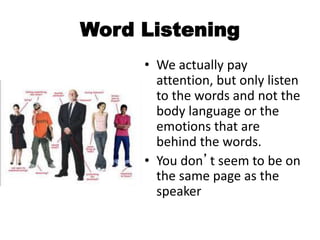
Word Listening
• We actually pay
attention, but only listen
to the words and not the
body language or the
emotions that are
behind the words.
• You don’t seem to be on
the same page as the
speaker
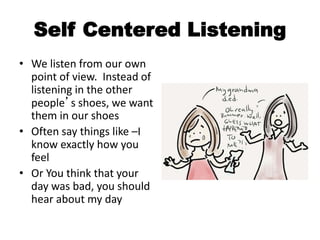
Self Centered Listening
• We listen from our own
point of view. Instead of
listening in the other
people’s shoes, we want
them in our shoes
• Often say things like –I
know exactly how you
feel
• Or You think that your
day was bad, you should
hear about my day
Common Listening
Responses
• Judging
• Advising
• Probing
• Which listening styles are you guilty of?
• What does that say about you?
• How do you think people talking to you feel?
• What can you do to change and improve your
listening skills?

5 poor listening styles

  • 1.
  • 2.
    Spacing Out Your mindis in another place and you are caught up in your own thoughts
  • 3.
    Pretend Listening • Youmake agreeing comments like, “yeah”, “uh-huh” • The speaker usually figures it out quickly and feels that they are not important enough to be listened to
  • 4.
    Selective Listening • Youonly listen to the part of the conversation that interests you • A key word will catch your interest and then you may change the conversation to something you want to talk about with that word in it.
  • 5.
    Word Listening • Weactually pay attention, but only listen to the words and not the body language or the emotions that are behind the words. • You don’t seem to be on the same page as the speaker
  • 6.
    Self Centered Listening •We listen from our own point of view. Instead of listening in the other people’s shoes, we want them in our shoes • Often say things like –I know exactly how you feel • Or You think that your day was bad, you should hear about my day
  • 7.
  • 8.
    • Which listeningstyles are you guilty of? • What does that say about you? • How do you think people talking to you feel? • What can you do to change and improve your listening skills?