Mendelian Genetics
I. History
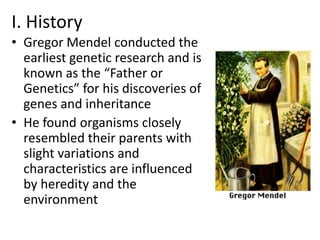
• Gregor Mendel conducted the
  earliest genetic research and is
  known as the “Father or
  Genetics” for his discoveries of
  genes and inheritance
• He found organisms closely
  resembled their parents with
  slight variations and
  characteristics are influenced
  by heredity and the
  environment
II. Genetics
• The branch of biology that studies HEREDITY,
  which is the passing on of characteristics from
  parent to offspring during sexual reproduction
III. Conclusions Made by Mendel
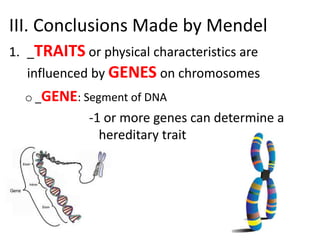
1. _TRAITS or physical characteristics are
   influenced by GENES on chromosomes
  o _GENE: Segment of DNA
             -1 or more genes can determine a
               hereditary trait
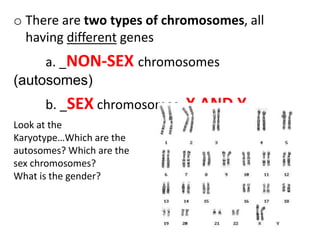
o There are two types of chromosomes, all
  having different genes
     a. _NON-SEX chromosomes
(autosomes)
      b. _SEX chromosomes: X AND Y
Look at the
Karyotype…Which are the
autosomes? Which are the
sex chromosomes?
What is the gender?
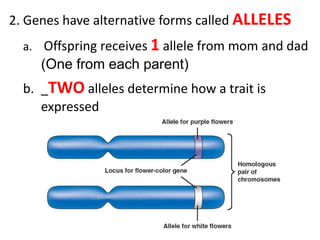
2. Genes have alternative forms called ALLELES
  a. Offspring receives 1 allele from mom and dad
     (One from each parent)
  b. _TWO alleles determine how a trait is
     expressed
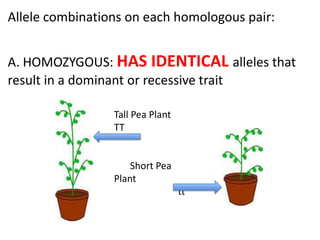
Allele combinations on each homologous pair:


A. HOMOZYGOUS: HAS IDENTICAL alleles that
result in a dominant or recessive trait

                 Tall Pea Plant
                 TT


                     Short Pea
                 Plant
                                  tt
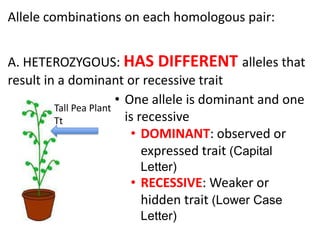
Allele combinations on each homologous pair:


A. HETEROZYGOUS: HAS DIFFERENT alleles that
result in a dominant or recessive trait
                        • One allele is dominant and one
         Tall Pea Plant
         Tt               is recessive
                           • DOMINANT: observed or
                              expressed trait (Capital
                         Letter)
                       • RECESSIVE: Weaker or
                         hidden trait (Lower Case
                         Letter)
Skip to Bottom of next page…
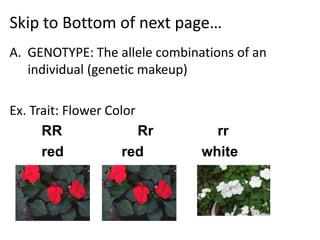
A. GENOTYPE: The allele combinations of an
   individual (genetic makeup)

Ex. Trait: Flower Color
      RR                Rr       rr
      red            red       white
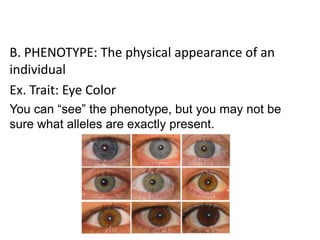
B. PHENOTYPE: The physical appearance of an
individual
Ex. Trait: Eye Color
You can “see” the phenotype, but you may not be
sure what alleles are exactly present.

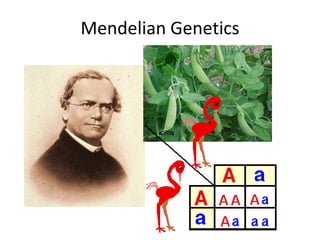
Mendelian genetics

  • 1.
  • 2.
    I. History • GregorMendel conducted the earliest genetic research and is known as the “Father or Genetics” for his discoveries of genes and inheritance • He found organisms closely resembled their parents with slight variations and characteristics are influenced by heredity and the environment
  • 3.
    II. Genetics • Thebranch of biology that studies HEREDITY, which is the passing on of characteristics from parent to offspring during sexual reproduction
  • 4.
    III. Conclusions Madeby Mendel 1. _TRAITS or physical characteristics are influenced by GENES on chromosomes o _GENE: Segment of DNA -1 or more genes can determine a hereditary trait
  • 5.
    o There aretwo types of chromosomes, all having different genes a. _NON-SEX chromosomes (autosomes) b. _SEX chromosomes: X AND Y Look at the Karyotype…Which are the autosomes? Which are the sex chromosomes? What is the gender?
  • 6.
    2. Genes havealternative forms called ALLELES a. Offspring receives 1 allele from mom and dad (One from each parent) b. _TWO alleles determine how a trait is expressed
  • 7.
    Allele combinations oneach homologous pair: A. HOMOZYGOUS: HAS IDENTICAL alleles that result in a dominant or recessive trait Tall Pea Plant TT Short Pea Plant tt
  • 8.
    Allele combinations oneach homologous pair: A. HETEROZYGOUS: HAS DIFFERENT alleles that result in a dominant or recessive trait • One allele is dominant and one Tall Pea Plant Tt is recessive • DOMINANT: observed or expressed trait (Capital Letter) • RECESSIVE: Weaker or hidden trait (Lower Case Letter)
  • 9.
    Skip to Bottomof next page… A. GENOTYPE: The allele combinations of an individual (genetic makeup) Ex. Trait: Flower Color RR Rr rr red red white
  • 10.
    B. PHENOTYPE: Thephysical appearance of an individual Ex. Trait: Eye Color You can “see” the phenotype, but you may not be sure what alleles are exactly present.