
 Changes   in the nucleotide
  sequence of DNA
 May occur in somatic cells
  (aren’t passed to offspring)
 May occur in gametes
  (eggs & sperm) and be
  passed to offspring
 Mutations  happen regularly
 Almost all mutations are
  neutral
 Chemicals & UV radiation
  cause mutations
 Many mutations are repaired
  by enzymes
 Some  type of skin cancers and
  leukemia result from somatic
  mutations
 Some mutations may improve
  an organism’s survival
  (beneficial)
 SPONTANEOUS   MUTATION

 INDUCED   MUTATION
SPONTANEOUS MUTATION

  they are mainly caused
   during dna replication or
   by incorporation of
   incorrect nucleotide in the
   growing dna chain .
  They occur naturally by
   changes in DNA sequence
   during replication.
 Induced  mutation are caused
  by the changes in DNA
  brought about by some
  environmental factor called
  mutagens.
 E.g.- UV light,x-rays,gamma
  rays etc…,
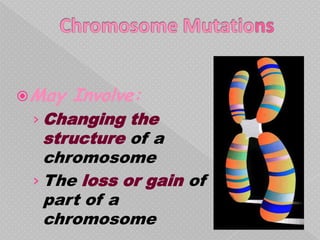
 May   Involve:
 › Changing the
   structure of a
   chromosome
 › The loss or gain of
   part of a
   chromosome
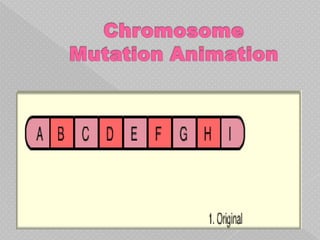
 Five   types exist:
  › Deletion
  › Inversion
  › Translocation
  › Nondisjunction
  › Duplication
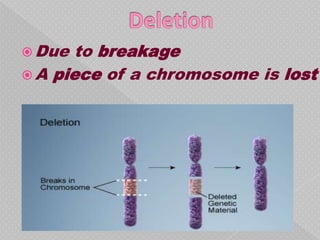
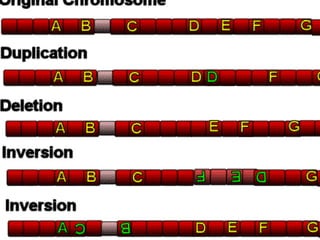
 Due to breakage
 A piece of a chromosome is lost
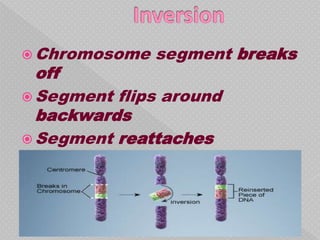
 Chromosome   segment breaks
  off
 Segment flips around
  backwards
 Segment reattaches
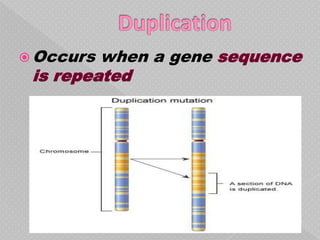
 Occurs when a gene sequence
 is repeated
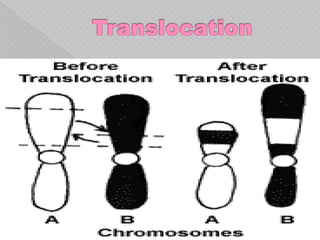
 Involvestwo chromosomes that
 aren’t homologous

 Partof one chromosome is
 transferred to another
 chromosomes
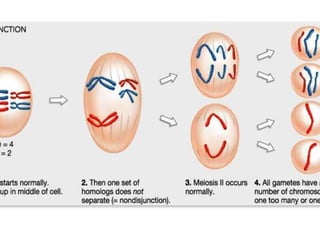
 Failure   of chromosomes to separate during
  meiosis
 Causes gamete to have too many or too few
  chromosomes
 Disorders:
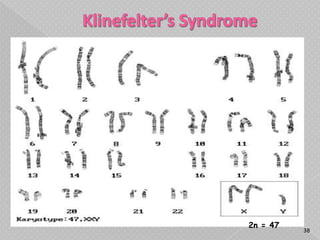
 Klinefelter’s Syndrome – XXY
  chromosomes
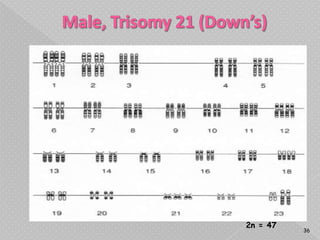
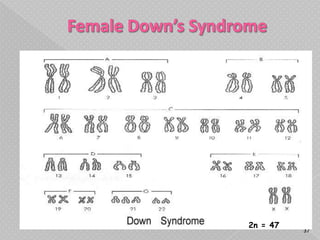
  › Down Syndrome – three 21st
    chromosomes
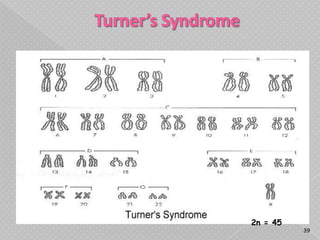
  › Turner Syndrome – single X chromosome
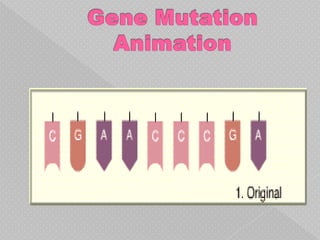
 Change   in the nucleotide
  sequence of a gene
 May only involve a single
  nucleotide
 May be due to copying
  errors, chemicals, viruses,
  etc.
 Include:
 › Point Mutations
 › Substitutions
 › Insertions
 › Deletions
 › Frameshift
 Change of a single
 nucleotide

 Includesthe deletion,
 insertion, or substitution of
 ONE nucleotide in a gene
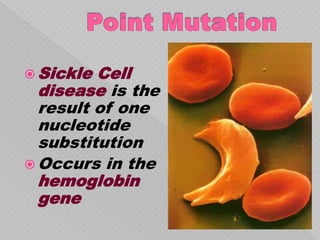
 Sickle Cell
  disease is the
  result of one
  nucleotide
  substitution
 Occurs in the
  hemoglobin
  gene
 Inserting
          or deleting one or
 more nucleotides

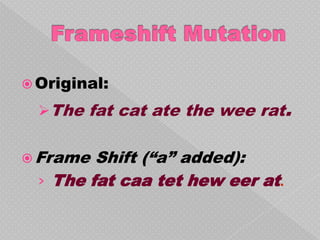
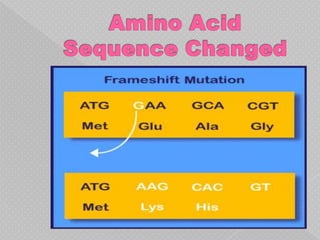
 Changes the “reading frame”
 like changing a sentence


 Proteins   built incorrectly
 Original:

  The fat cat ate the wee rat.


 Frame  Shift (“a” added):
  › The fat caa tet hew eer at.
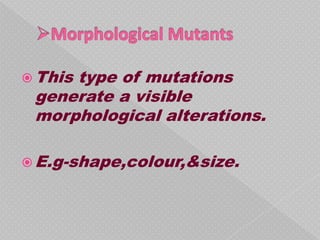
 This
     type of mutations
 generate a visible
 morphological alterations.

 E.g-shape,colour,&size.
 They are fatal in nature
 leading to the death of
 individuals .
 Conditional mutations are normal
  under one condition (permissive),
  but abnormal under another
  (restrictive).
 These are extremely useful for
  studying processes such as
  development and DNA replication.
 These  mutations cause loss
 or of some biochemical or
 nutritional function in the cell.
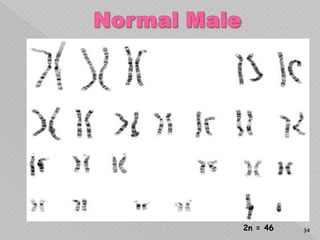
2n = 46   34
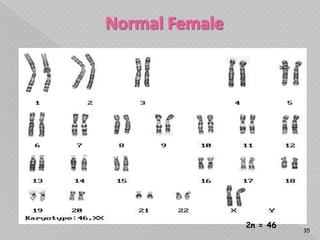
2n = 46
          35
2n = 47
          36
2n = 47
          37
2n = 47
          38
2n = 45
          39

Mutations powerpoint

  • 2.
     Changes in the nucleotide sequence of DNA  May occur in somatic cells (aren’t passed to offspring)  May occur in gametes (eggs & sperm) and be passed to offspring
  • 3.
     Mutations happen regularly  Almost all mutations are neutral  Chemicals & UV radiation cause mutations  Many mutations are repaired by enzymes
  • 4.
     Some type of skin cancers and leukemia result from somatic mutations  Some mutations may improve an organism’s survival (beneficial)
  • 5.
     SPONTANEOUS MUTATION  INDUCED MUTATION
  • 6.
    SPONTANEOUS MUTATION they are mainly caused during dna replication or by incorporation of incorrect nucleotide in the growing dna chain . They occur naturally by changes in DNA sequence during replication.
  • 7.
     Induced mutation are caused by the changes in DNA brought about by some environmental factor called mutagens.  E.g.- UV light,x-rays,gamma rays etc…,
  • 9.
     May Involve: › Changing the structure of a chromosome › The loss or gain of part of a chromosome
  • 10.
     Five types exist: › Deletion › Inversion › Translocation › Nondisjunction › Duplication
  • 11.
     Due tobreakage  A piece of a chromosome is lost
  • 12.
     Chromosome segment breaks off  Segment flips around backwards  Segment reattaches
  • 13.
     Occurs whena gene sequence is repeated
  • 14.
     Involvestwo chromosomesthat aren’t homologous  Partof one chromosome is transferred to another chromosomes
  • 16.
     Failure of chromosomes to separate during meiosis  Causes gamete to have too many or too few chromosomes  Disorders:  Klinefelter’s Syndrome – XXY chromosomes › Down Syndrome – three 21st chromosomes › Turner Syndrome – single X chromosome
  • 20.
     Change in the nucleotide sequence of a gene  May only involve a single nucleotide  May be due to copying errors, chemicals, viruses, etc.
  • 21.
     Include: ›Point Mutations › Substitutions › Insertions › Deletions › Frameshift
  • 22.
     Change ofa single nucleotide  Includesthe deletion, insertion, or substitution of ONE nucleotide in a gene
  • 23.
     Sickle Cell disease is the result of one nucleotide substitution  Occurs in the hemoglobin gene
  • 24.
     Inserting or deleting one or more nucleotides  Changes the “reading frame” like changing a sentence  Proteins built incorrectly
  • 25.
     Original: The fat cat ate the wee rat.  Frame Shift (“a” added): › The fat caa tet hew eer at.
  • 27.
     This type of mutations generate a visible morphological alterations.  E.g-shape,colour,&size.
  • 28.
     They arefatal in nature leading to the death of individuals .
  • 29.
     Conditional mutationsare normal under one condition (permissive), but abnormal under another (restrictive).  These are extremely useful for studying processes such as development and DNA replication.
  • 30.
     These mutations cause loss or of some biochemical or nutritional function in the cell.
  • 34.
  • 35.
  • 36.
  • 37.
  • 38.
  • 39.