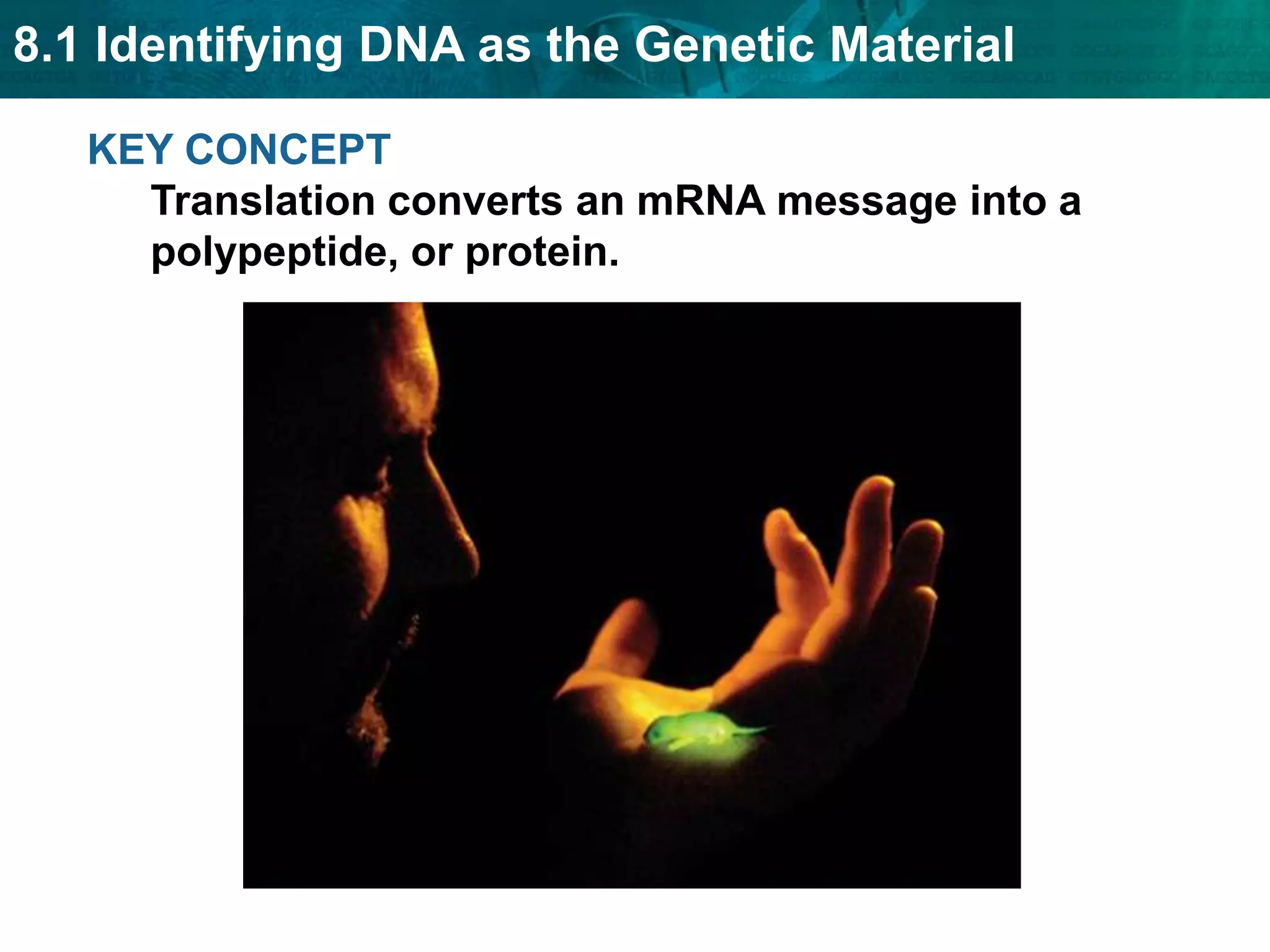
KEY CONCEPT Translation converts an mRNA message into a polypeptide, or protein.
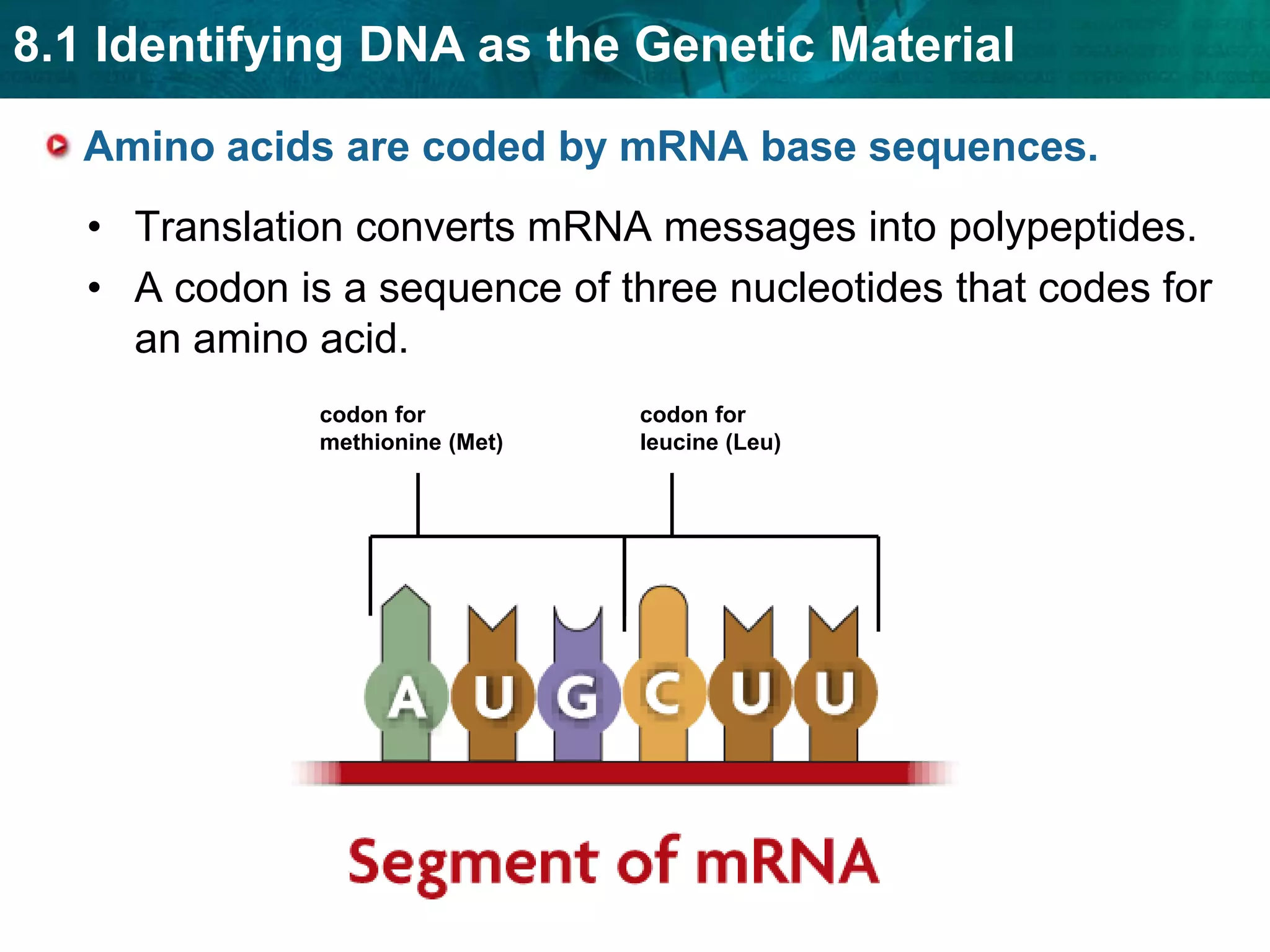
codon formethionine (Met)codon forleucine (Leu)Amino acids are coded by mRNA base sequences. Translation converts mRNA messages into polypeptides.A codon is a sequence of three nucleotides that codes for an amino acid.
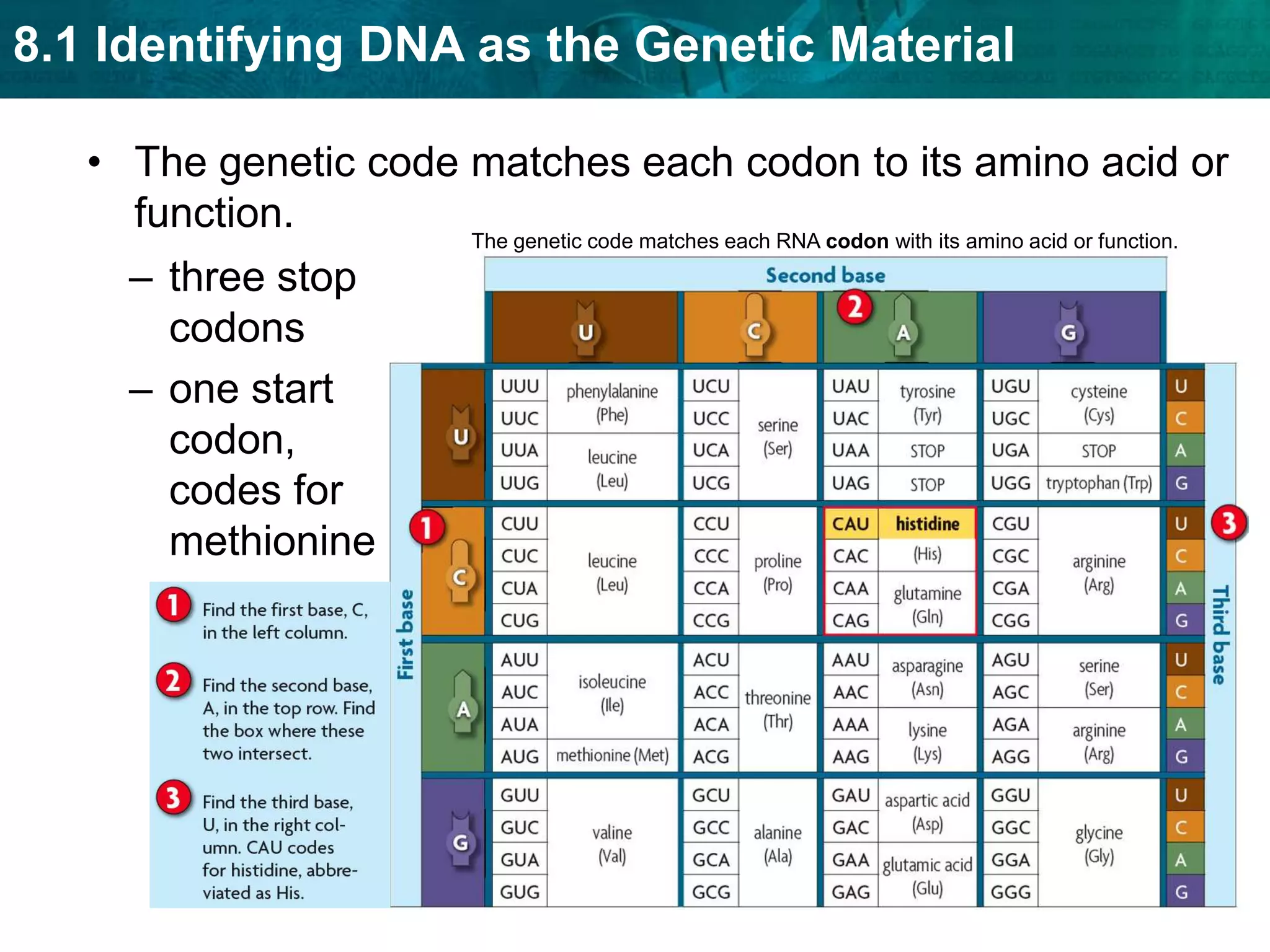
The genetic code matches each RNA codon with its amino acid or function.The genetic code matches each codon to its amino acid or function.
three stop codons
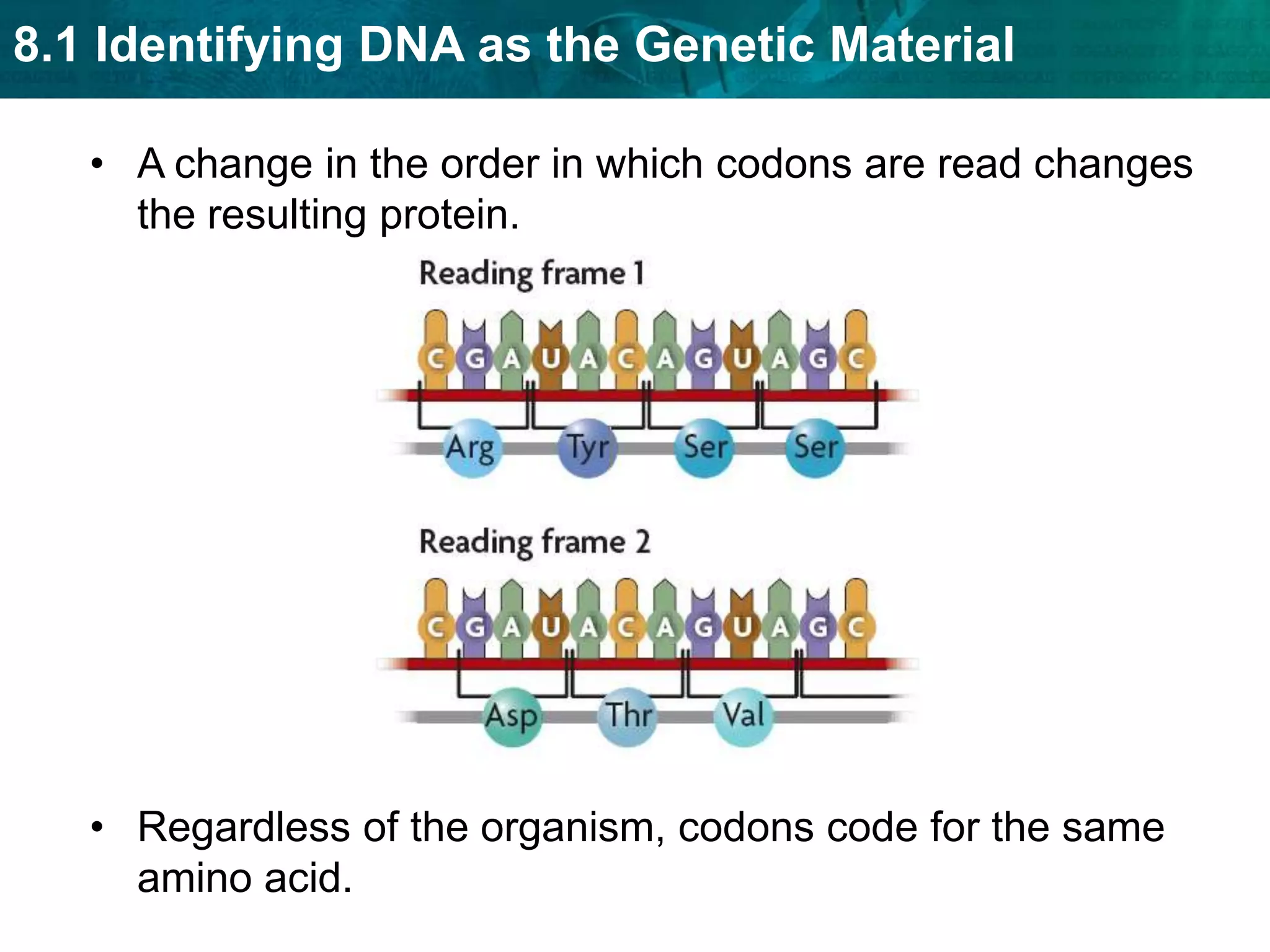
one start codon, codes for methionineA change in the order in which codons are read changes the resulting protein.
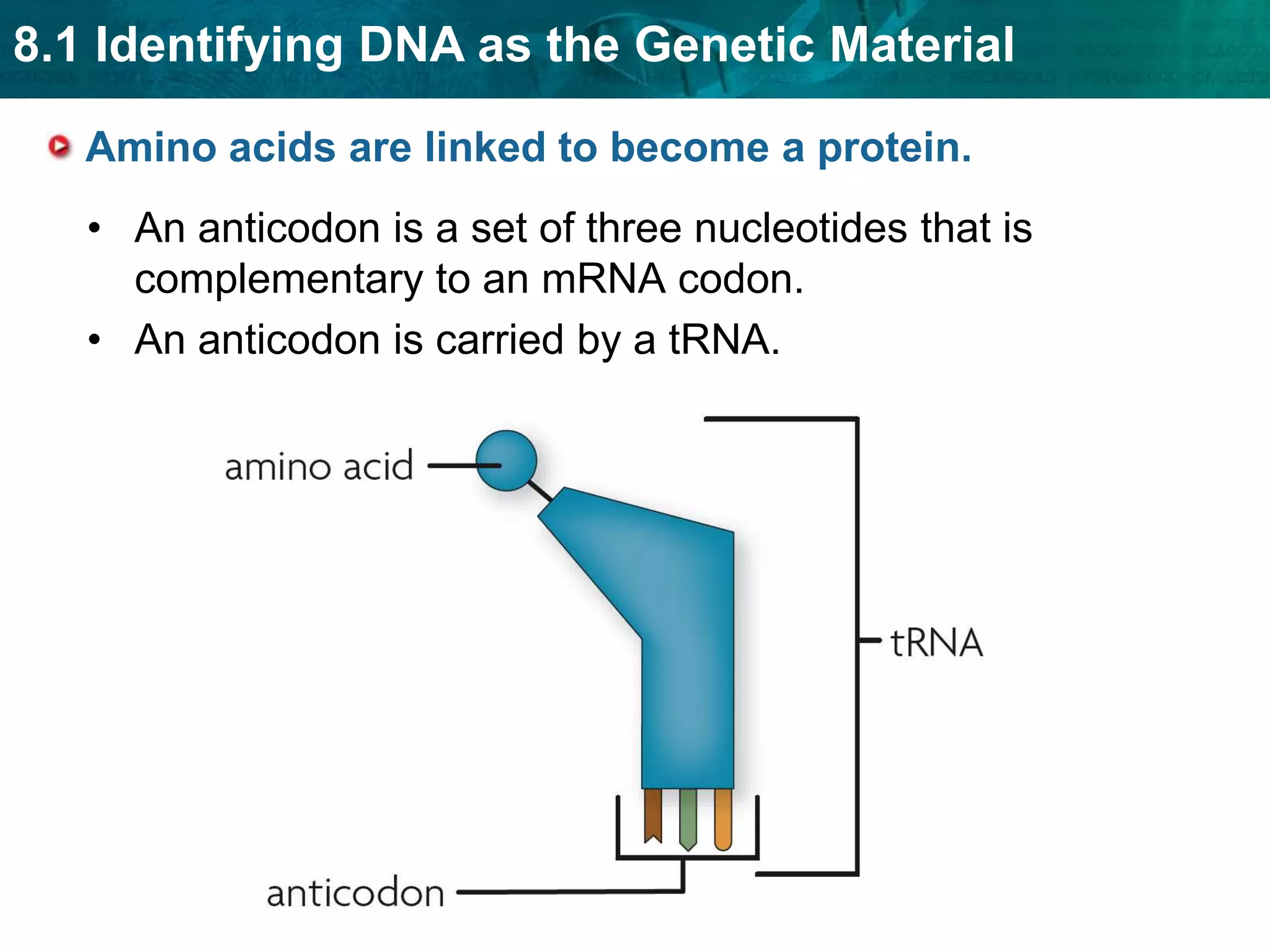
Regardless of the organism, codons code for the same amino acid.Amino acids are linked to become a protein. An anticodon is a set of three nucleotides that is complementary to an mRNA codon.An anticodon is carried by a tRNA.
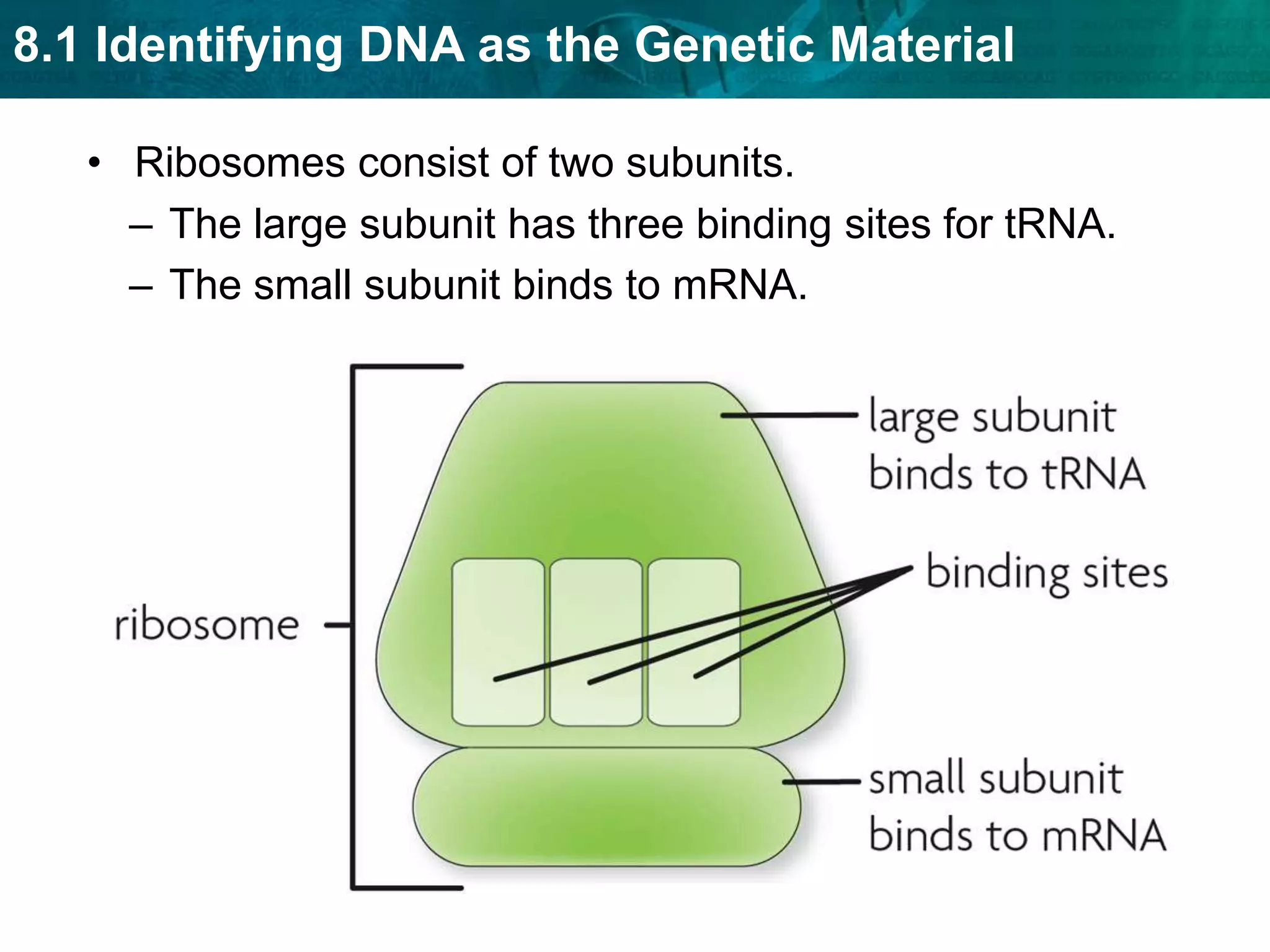
Ribosomes consist of two subunits.
The large subunit has three binding sites for tRNA.
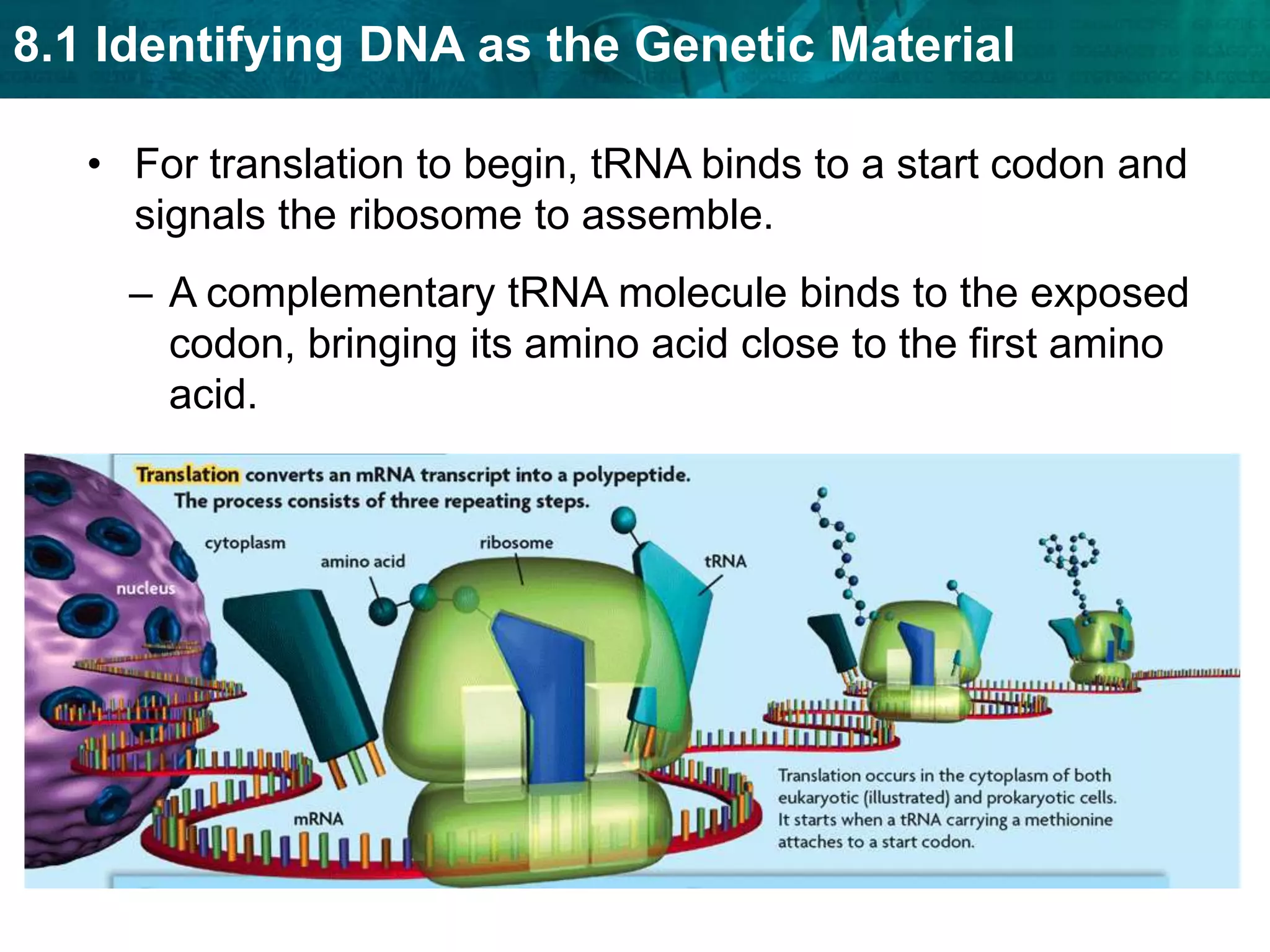
The small subunit binds to mRNA.For translation to begin, tRNA binds to a start codon and signals the ribosome to assemble.
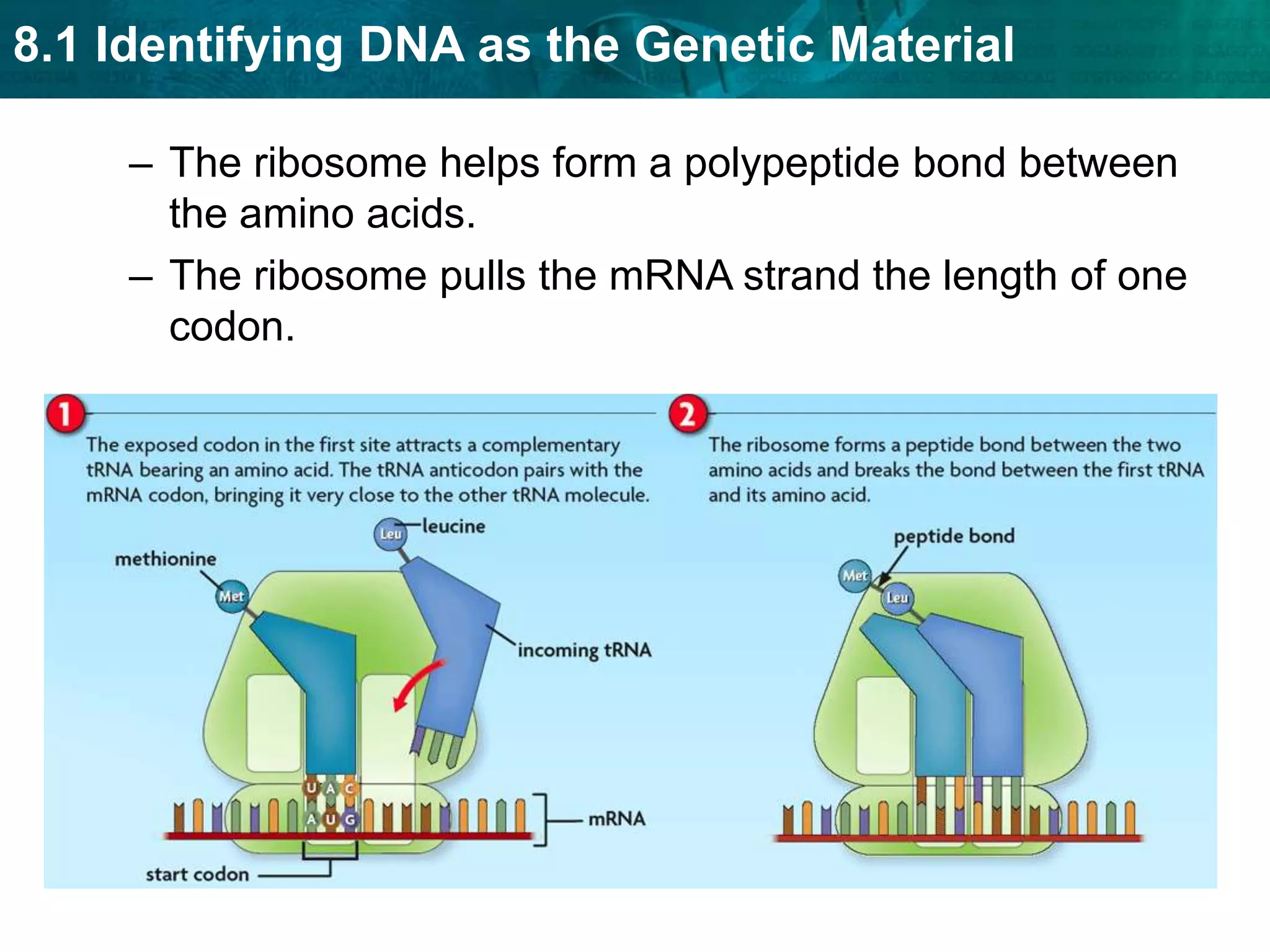
A complementary tRNA molecule binds to the exposed codon, bringing its amino acid close to the first amino acid.The ribosome helps form a polypeptide bond between the amino acids.
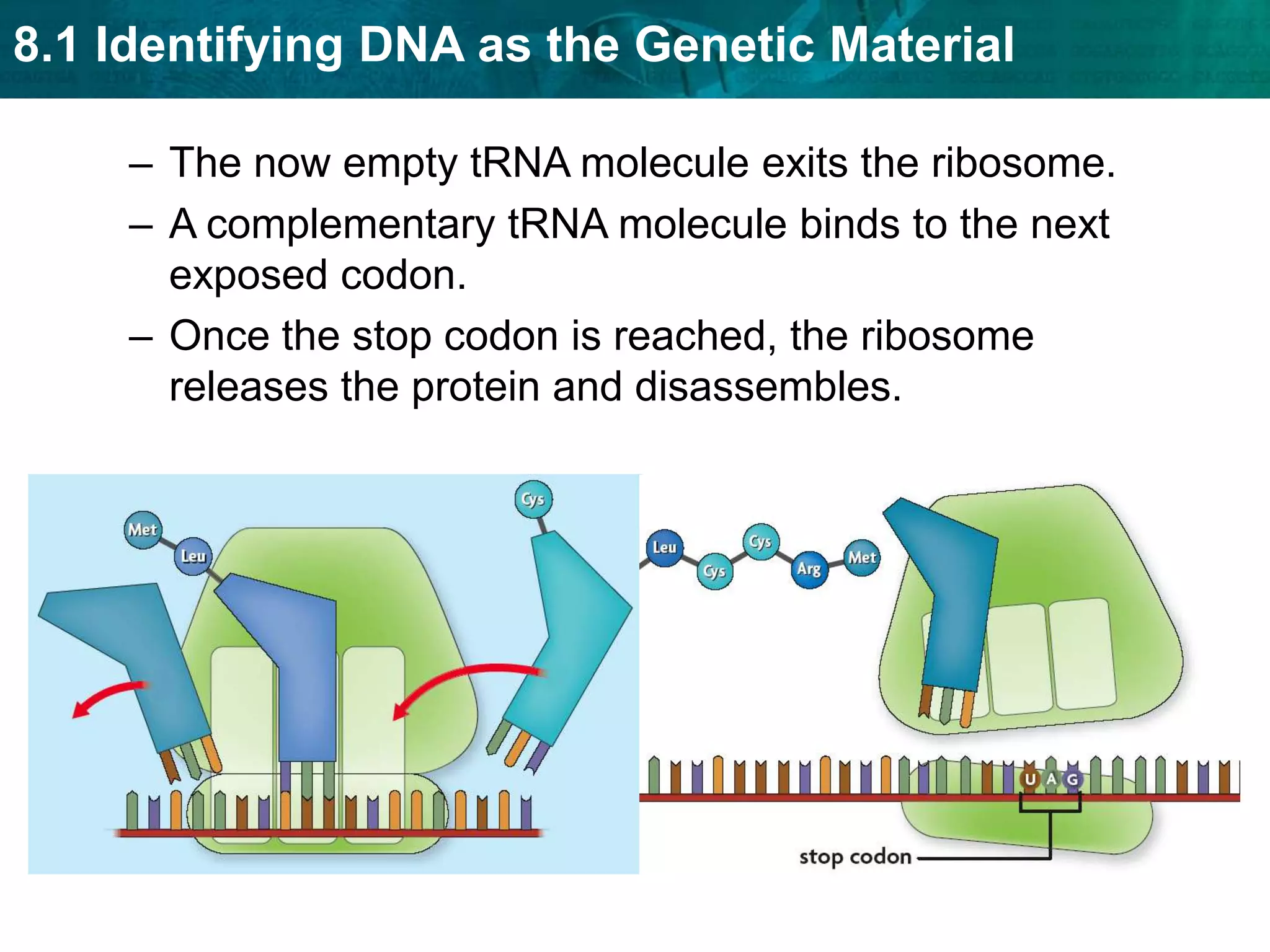
The ribosome pulls the mRNA strand the length of one codon.The now empty tRNA molecule exits the ribosome.
A complementary tRNA molecule binds to the next exposed codon.
Once the stop codon is reached, the ribosome releases the protein and disassembles.KEY CONCEPT Gene expression is carefully regulated in both prokaryotic and eukaryotic cells.
Prokaryotic cells turn genes on and off by controlling transcription.A promotor is a DNA segment that allows a gene to be transcribed.An operator is a part of DNA that turns a gene “on” or ”off.”An operon includes a promoter, an operator, and one or more structural genes that code for all the proteins needed to do a job.Operons are most common in prokaryotes.The lac operon was one of the first examples of gene regulation to be discovered.The lac operon has three genes that code for enzymes that break down lactose.
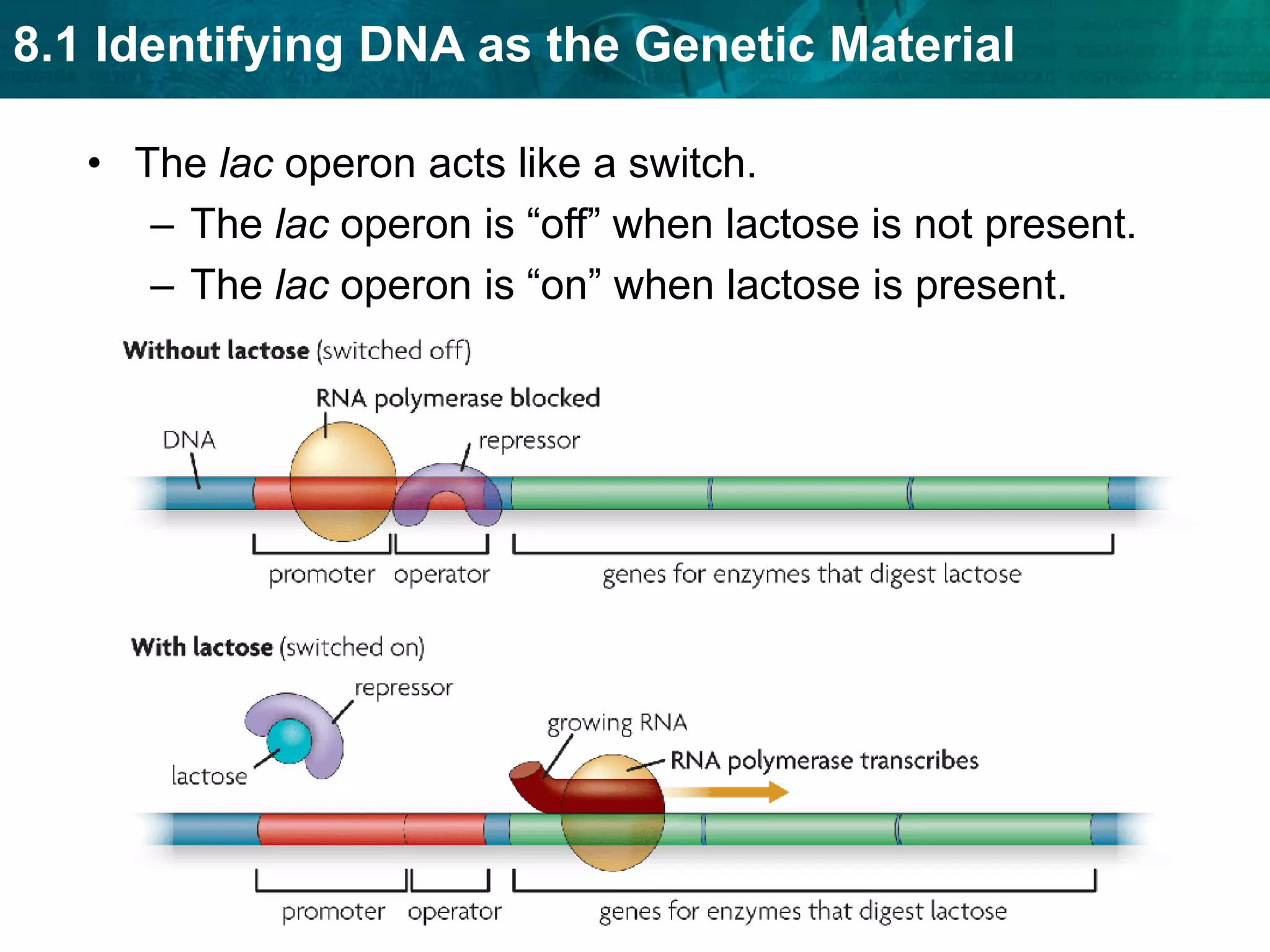
The lac operon acts like a switch.
The lac operon is “off” when lactose is not present.
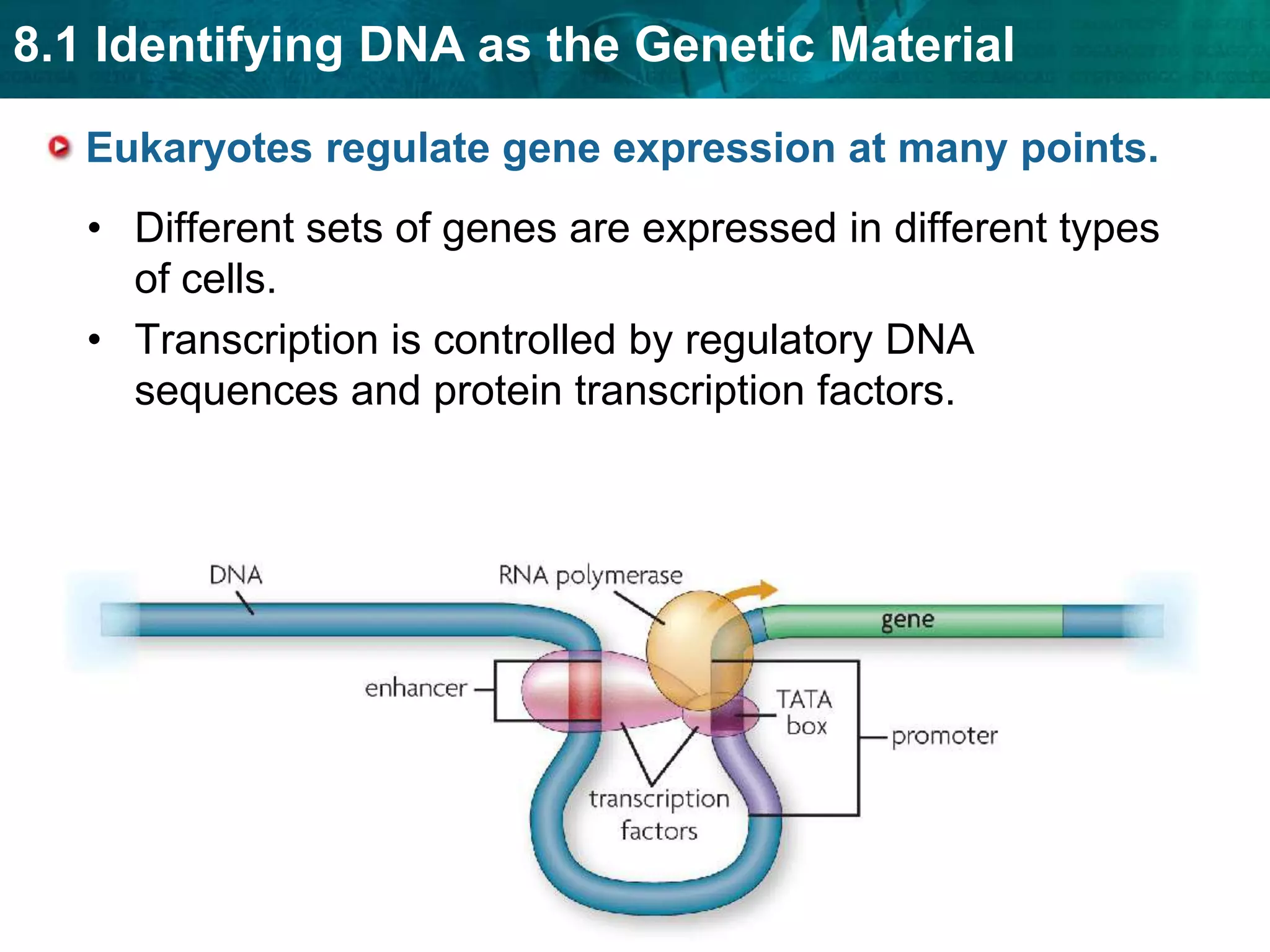
The lac operon is “on” when lactose is present.Eukaryotes regulate gene expression at many points.Different sets of genes are expressed in different types of cells.Transcription is controlled by regulatory DNA sequences and protein transcription factors.
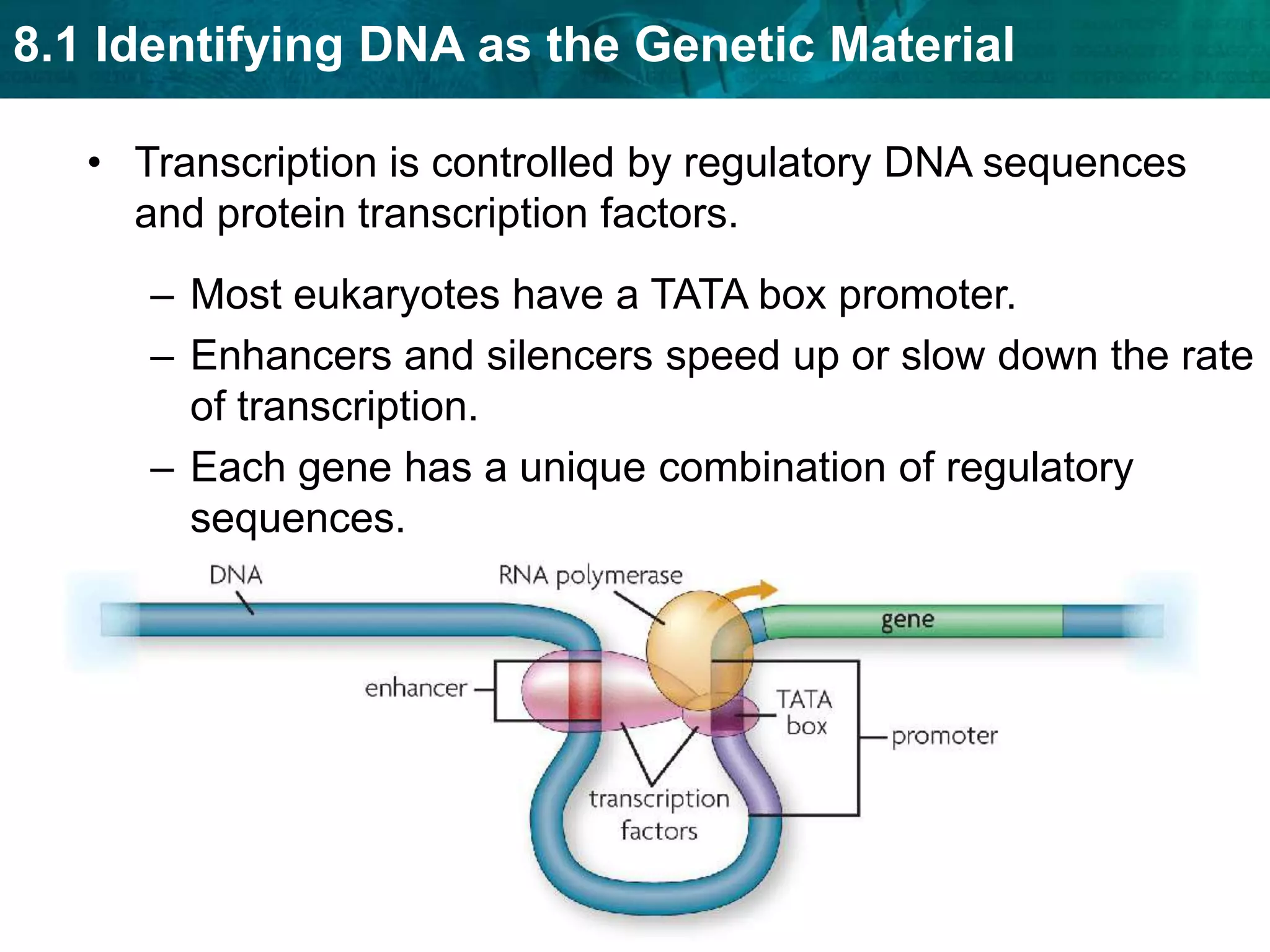
Transcription is controlled by regulatory DNA sequences and protein transcription factors.
Most eukaryotes have a TATA box promoter.
Enhancers and silencers speed up or slow down the rate of transcription.
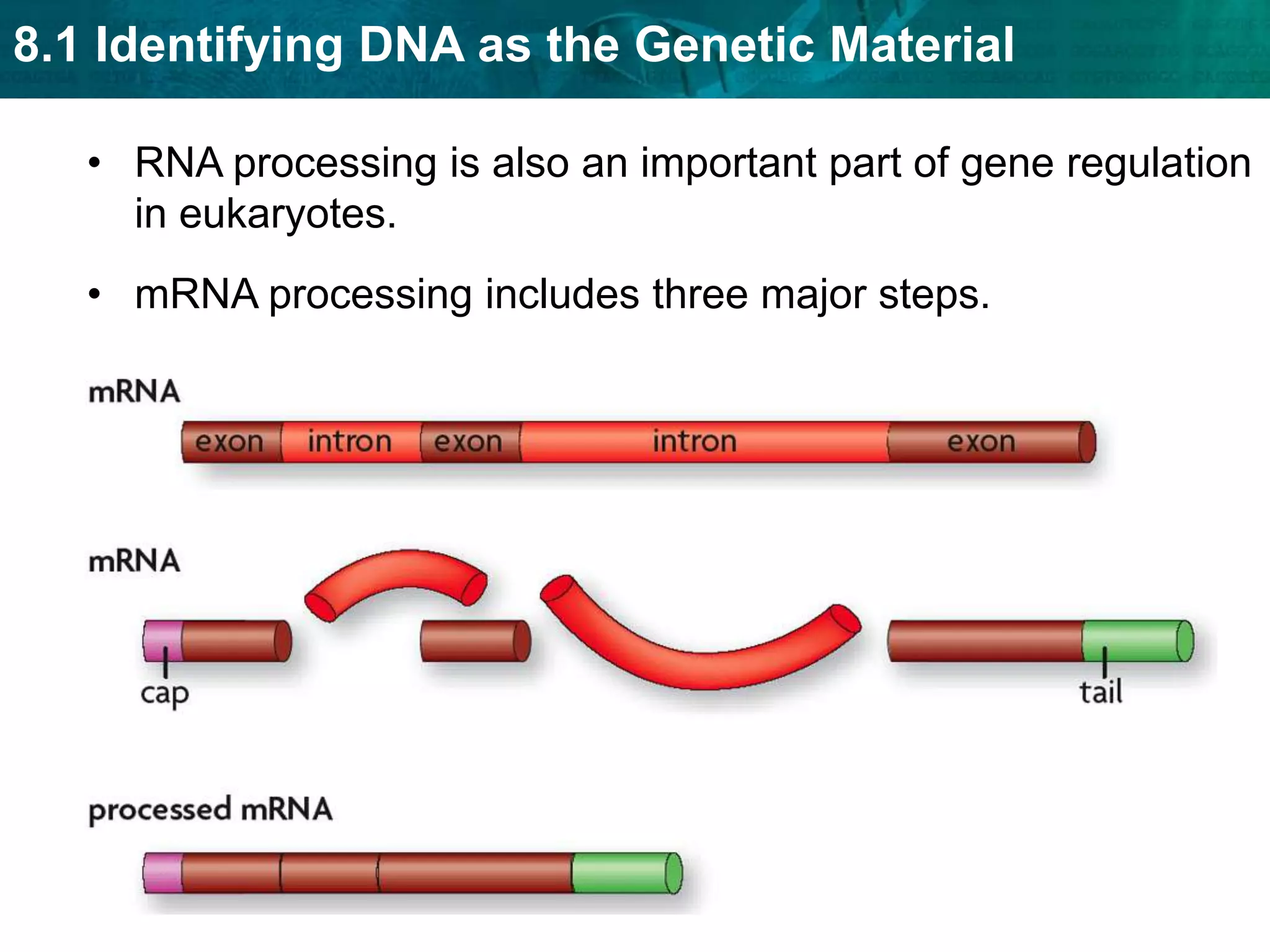
Each gene has a unique combination of regulatory sequences.RNA processing is also an important part of gene regulation in eukaryotes.
mRNA processing includes three major steps.mRNA processing includes three major steps.
Introns are removed and exons are spliced together.
A cap is added.
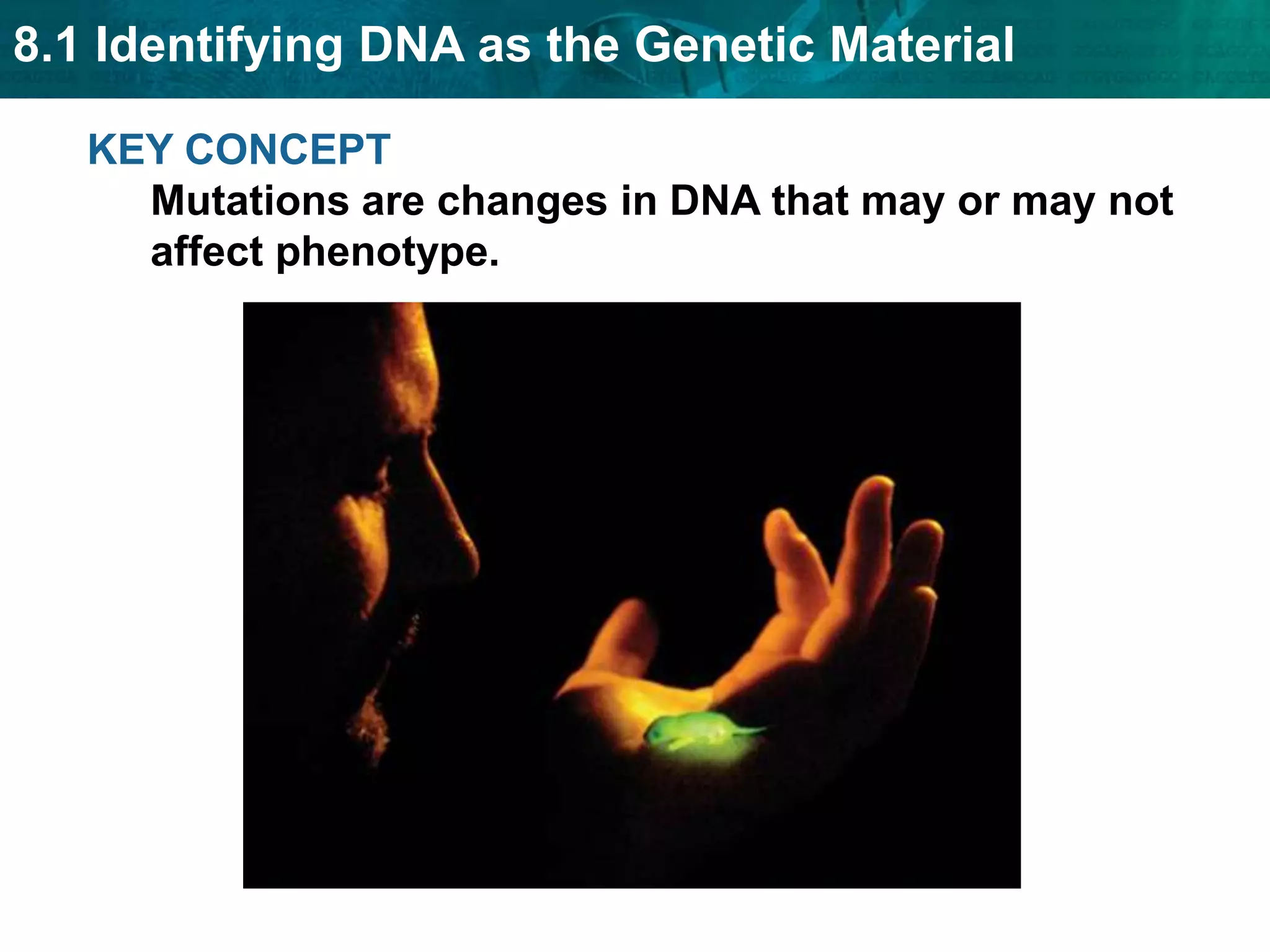
A tail is added.KEY CONCEPT Mutations are changes in DNA that may or may not affect phenotype.

Unit 9 Dna Translation And Mutation

  • 1.
    KEY CONCEPT Translationconverts an mRNA message into a polypeptide, or protein.
  • 2.
    codon formethionine (Met)codonforleucine (Leu)Amino acids are coded by mRNA base sequences. Translation converts mRNA messages into polypeptides.A codon is a sequence of three nucleotides that codes for an amino acid.
  • 3.
    The genetic codematches each RNA codon with its amino acid or function.The genetic code matches each codon to its amino acid or function.
  • 4.
  • 5.
    one start codon,codes for methionineA change in the order in which codons are read changes the resulting protein.
  • 6.
    Regardless of theorganism, codons code for the same amino acid.Amino acids are linked to become a protein. An anticodon is a set of three nucleotides that is complementary to an mRNA codon.An anticodon is carried by a tRNA.
  • 7.
  • 8.
    The large subunithas three binding sites for tRNA.
  • 9.
    The small subunitbinds to mRNA.For translation to begin, tRNA binds to a start codon and signals the ribosome to assemble.
  • 10.
    A complementary tRNAmolecule binds to the exposed codon, bringing its amino acid close to the first amino acid.The ribosome helps form a polypeptide bond between the amino acids.
  • 11.
    The ribosome pullsthe mRNA strand the length of one codon.The now empty tRNA molecule exits the ribosome.
  • 12.
    A complementary tRNAmolecule binds to the next exposed codon.
  • 13.
    Once the stopcodon is reached, the ribosome releases the protein and disassembles.KEY CONCEPT Gene expression is carefully regulated in both prokaryotic and eukaryotic cells.
  • 14.
    Prokaryotic cells turngenes on and off by controlling transcription.A promotor is a DNA segment that allows a gene to be transcribed.An operator is a part of DNA that turns a gene “on” or ”off.”An operon includes a promoter, an operator, and one or more structural genes that code for all the proteins needed to do a job.Operons are most common in prokaryotes.The lac operon was one of the first examples of gene regulation to be discovered.The lac operon has three genes that code for enzymes that break down lactose.
  • 15.
    The lac operonacts like a switch.
  • 16.
    The lac operonis “off” when lactose is not present.
  • 17.
    The lac operonis “on” when lactose is present.Eukaryotes regulate gene expression at many points.Different sets of genes are expressed in different types of cells.Transcription is controlled by regulatory DNA sequences and protein transcription factors.
  • 18.
    Transcription is controlledby regulatory DNA sequences and protein transcription factors.
  • 19.
    Most eukaryotes havea TATA box promoter.
  • 20.
    Enhancers and silencersspeed up or slow down the rate of transcription.
  • 21.
    Each gene hasa unique combination of regulatory sequences.RNA processing is also an important part of gene regulation in eukaryotes.
  • 22.
    mRNA processing includesthree major steps.mRNA processing includes three major steps.
  • 23.
    Introns are removedand exons are spliced together.
  • 24.
    A cap isadded.
  • 25.
    A tail isadded.KEY CONCEPT Mutations are changes in DNA that may or may not affect phenotype.
  • 26.
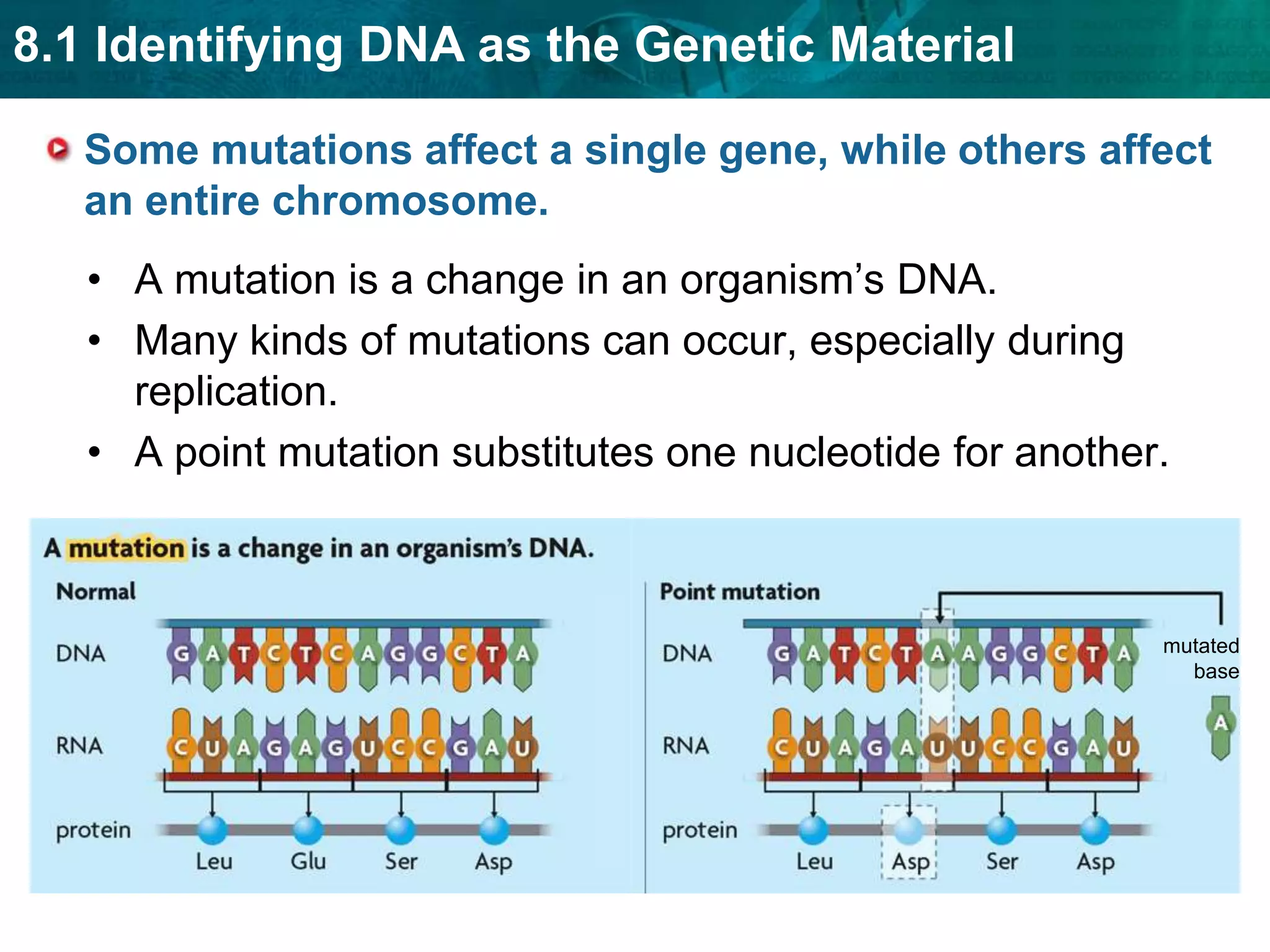
    mutatedbaseSome mutations affecta single gene, while others affect an entire chromosome. A mutation is a change in an organism’s DNA.Many kinds of mutations can occur, especially during replication.A point mutation substitutes one nucleotide for another.
  • 27.
    Many kinds ofmutations can occur, especially during replication.
  • 28.
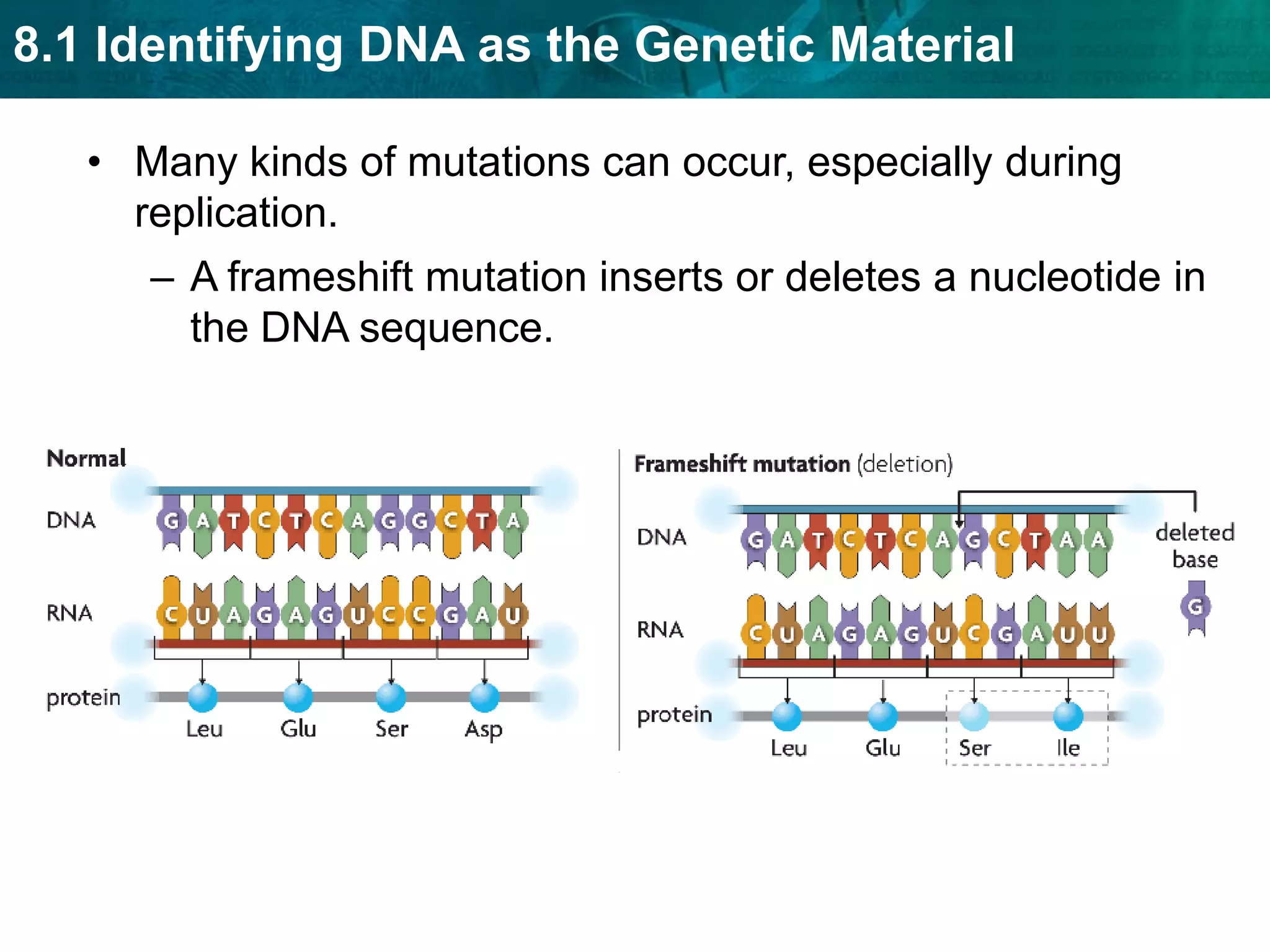
    A frameshift mutationinserts or deletes a nucleotide in the DNA sequence.Chromosomal mutations affect many genes.
  • 29.
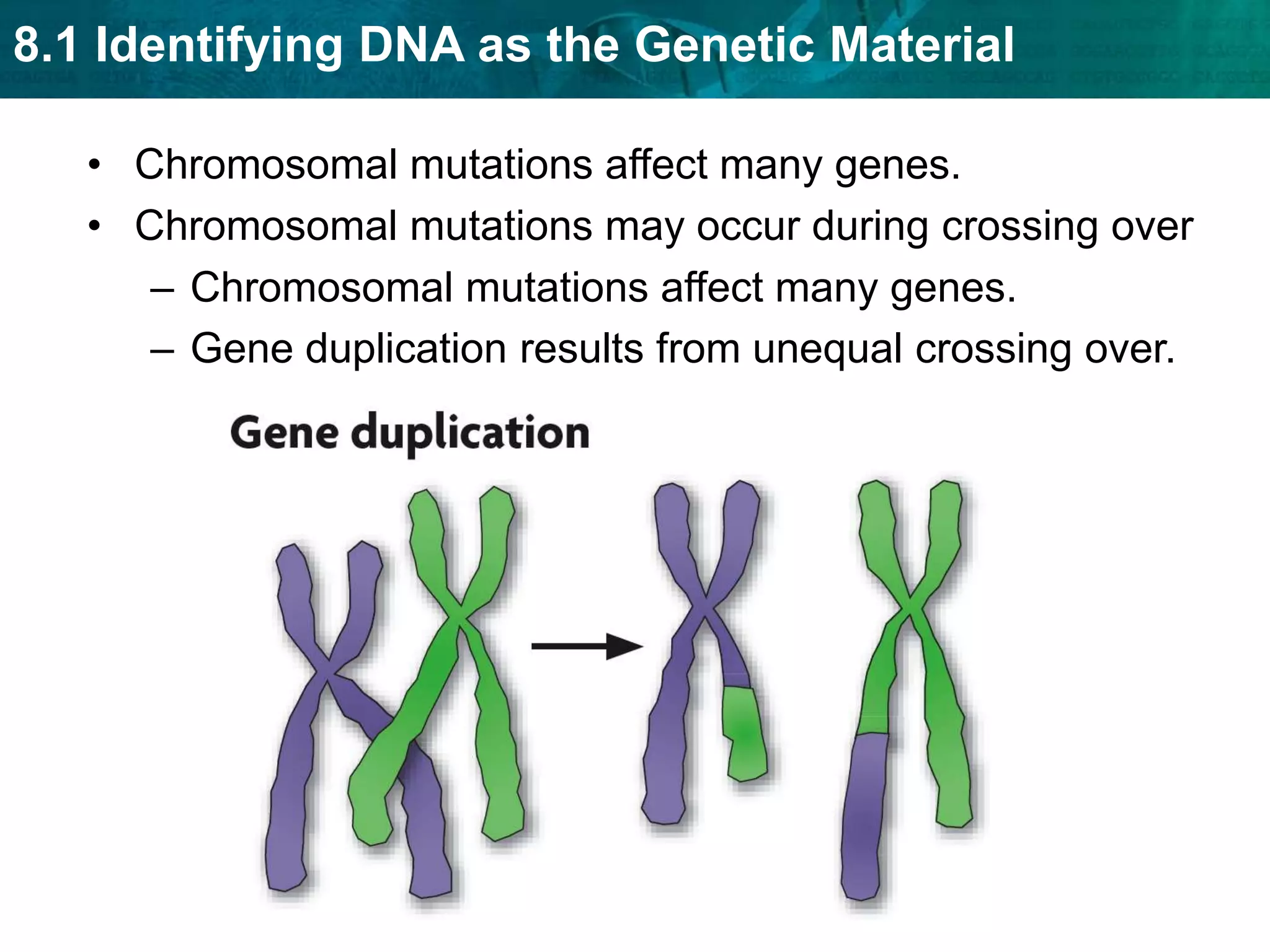
    Chromosomal mutations mayoccur during crossing over
  • 30.
  • 31.
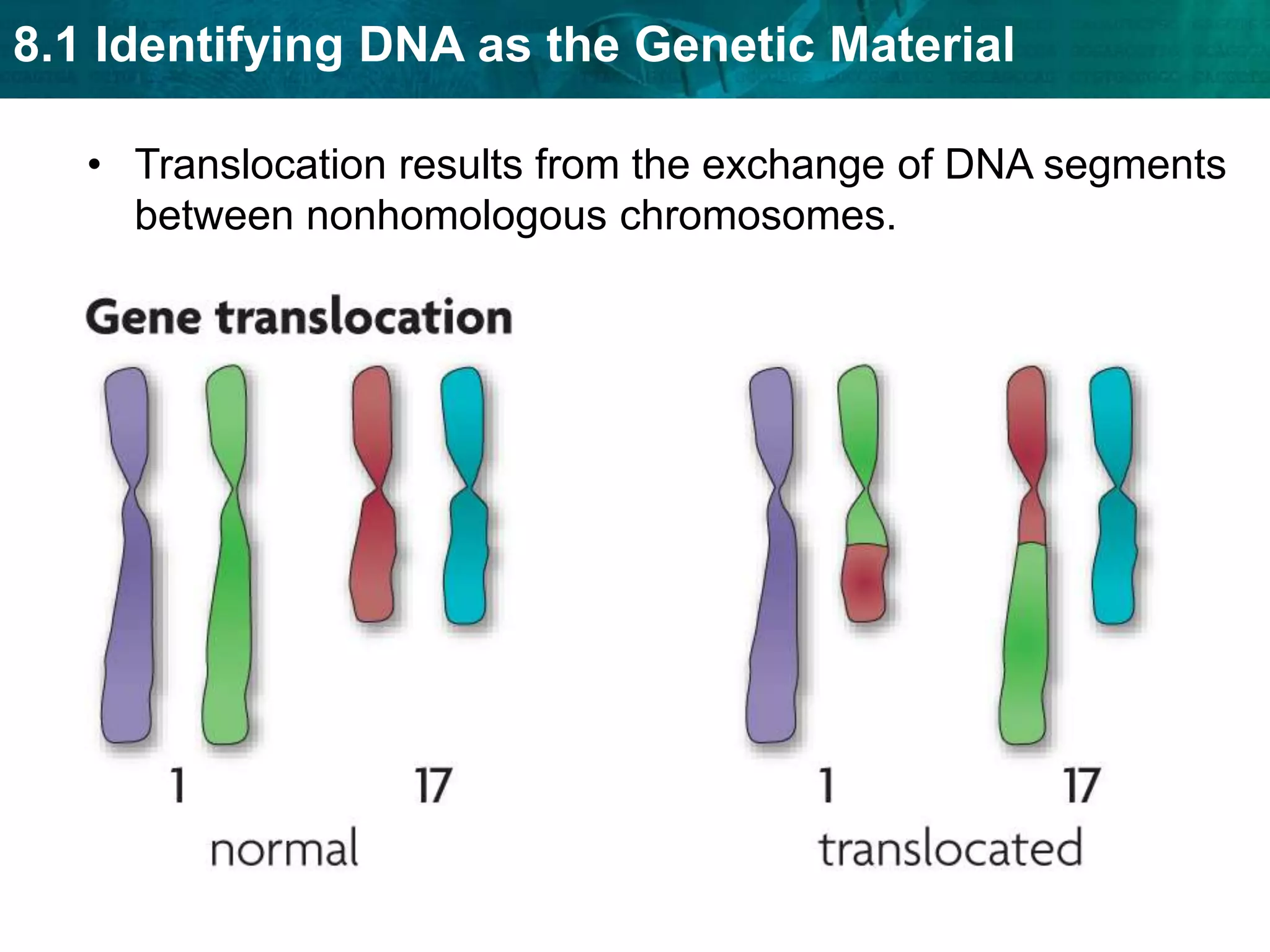
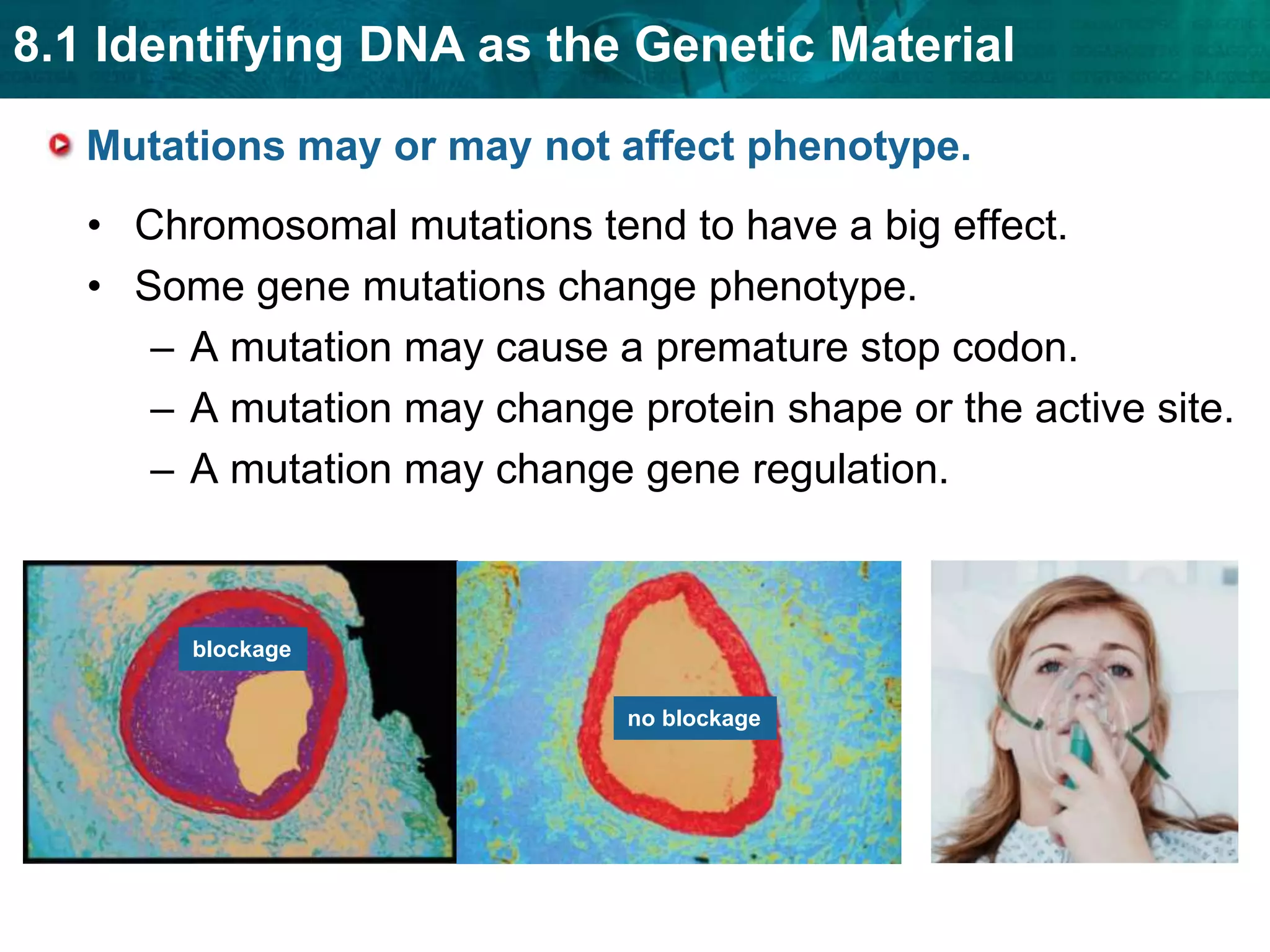
    Gene duplication resultsfrom unequal crossing over.Translocation results from the exchange of DNA segments between nonhomologous chromosomes.blockageno blockageMutations may or may not affect phenotype.Chromosomal mutations tend to have a big effect. Some gene mutations change phenotype.A mutation may cause a premature stop codon.A mutation may change protein shape or the active site.A mutation may change gene regulation.
  • 32.
    Some gene mutationsdo not affect phenotype.
  • 33.
    A mutation maybe silent.
  • 34.
    A mutation mayoccur in a noncoding region.
  • 35.
    A mutation maynot affect protein folding or the active site.Mutations in body cells do not affect offspring.
  • 36.
    Mutations in sexcells can be harmful or beneficial to offspring.
  • 37.
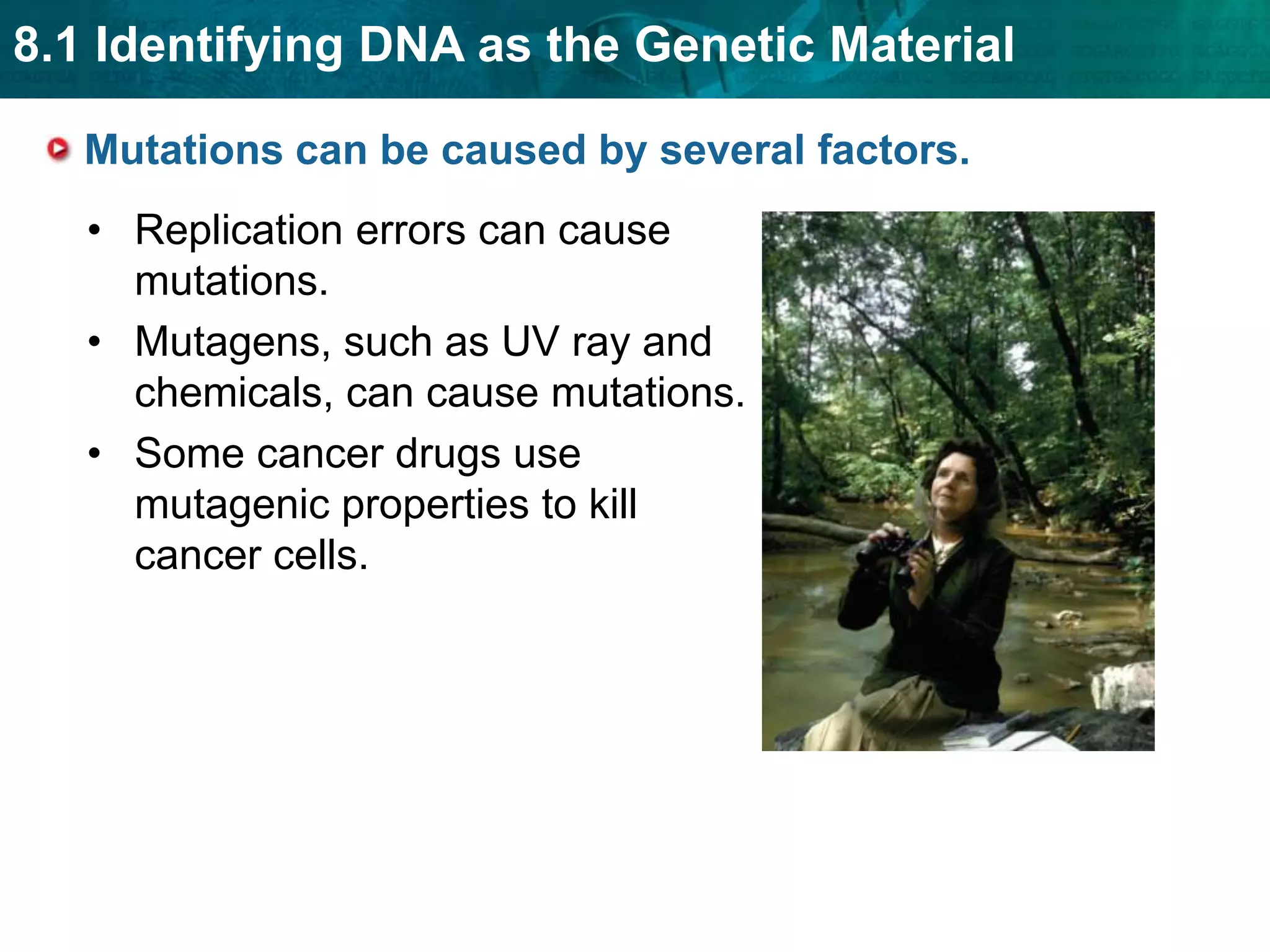
    Natural selection oftenremoves mutant alleles from a population when they are less adaptive.Mutations can be caused by several factors. Replication errors can cause mutations. Mutagens, such as UV ray and chemicals, can cause mutations.Some cancer drugs use mutagenic properties to kill cancer cells.