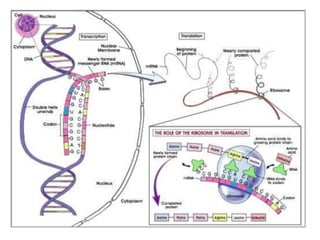
From Gene to Protein

Transcription & Translation
I. PROTEINS:
 The NUCLEUS controls the ACTIVITIES in the
  cell and the DNA inside is composed of genes
  that code for certain proteins
 _PROTEIN codes for a particular trait or helps
  perform various activities within the cell or
  body
 The processes explained here will show how
  the genetic message of DNA is able to leave
  the nucleus and reach ribosomes which
  assemble all the proteins
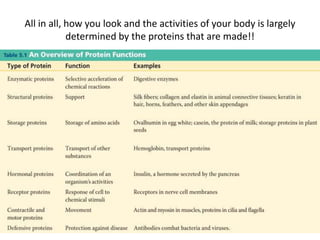
All in all, how you look and the activities of your body is largely
            determined by the proteins that are made!!
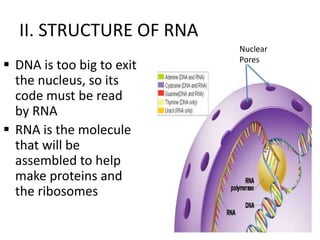
II. STRUCTURE OF RNA
                           Nuclear
                           Pores
 DNA is too big to exit
  the nucleus, so its
  code must be read
  by RNA
 RNA is the molecule
  that will be
  assembled to help
  make proteins and
  the ribosomes
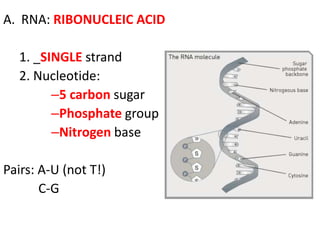
A. RNA: RIBONUCLEIC ACID

  1. _SINGLE strand
  2. Nucleotide:
        –5 carbon sugar
        –Phosphate group
        –Nitrogen base

Pairs: A-U (not T!)
       C-G
B. 3 Types of RNA:
1. Messenger RNA (mRNA)
• Reads DNA code and carries the MESSAGE for
  making proteins out of the nucleus to the
  ribosome
B. 3 Types of RNA: (cont.)
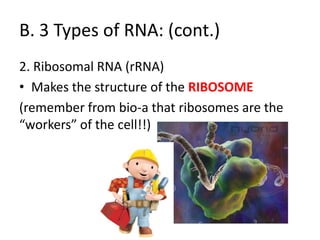
2. Ribosomal RNA (rRNA)
• Makes the structure of the RIBOSOME
(remember from bio-a that ribosomes are the
“workers” of the cell!!)
B. 3 Types of RNA: (cont.)
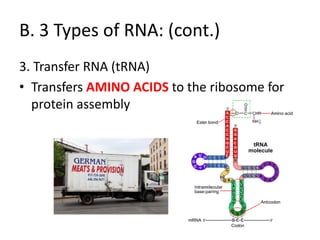
3. Transfer RNA (tRNA)
• Transfers AMINO ACIDS to the ribosome for
  protein assembly
III. DIRECTIONS FOR MAKING PROTEINS

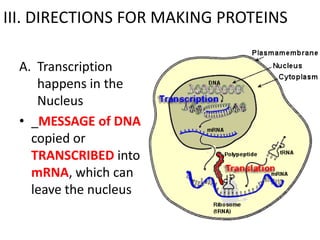
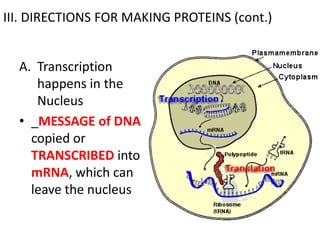
 A. Transcription
    happens in the
    Nucleus
 • _MESSAGE of DNA is
   copied or
   TRANSCRIBED into
   mRNA, which can
   leave the nucleus
III. DIRECTIONS FOR MAKING PROTEINS (cont.)


  A. Transcription
     happens in the
     Nucleus
  • _MESSAGE of DNA is
    copied or
    TRANSCRIBED into
    mRNA, which can
    leave the nucleus
III. DIRECTIONS FOR MAKING PROTEINS (cont.)


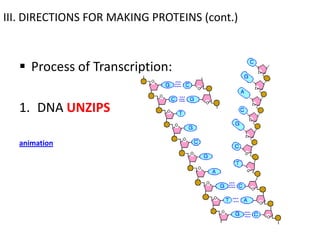
   Process of Transcription:

  1. DNA UNZIPS

  animation
III. DIRECTIONS FOR MAKING PROTEINS (cont.)
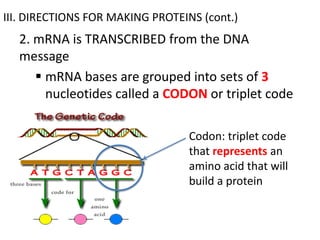
  2. mRNA is TRANSCRIBED from the DNA
  message
      mRNA bases are grouped into sets of 3
       nucleotides called a CODON or triplet code

                                  Codon: triplet code
                                  that represents an
                                  amino acid that will
                                  build a protein
III. DIRECTIONS FOR MAKING PROTEINS (cont.)


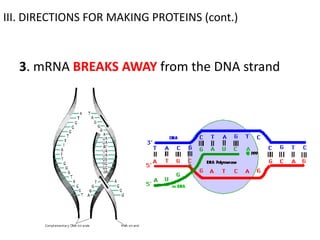
  3. mRNA BREAKS AWAY from the DNA strand
III. DIRECTIONS FOR MAKING PROTEINS (cont.)


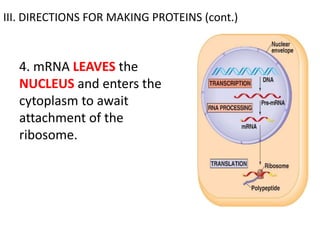
  4. mRNA LEAVES the
  NUCLEUS and enters the
  cytoplasm to await
  attachment of the
  ribosome.
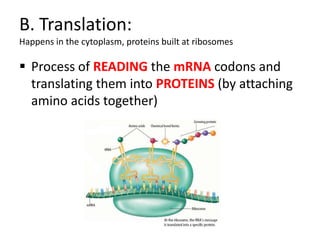
B. Translation:
Happens in the cytoplasm, proteins built at ribosomes

 Process of READING the mRNA codons and
  translating them into PROTEINS (by attaching
  amino acids together)
B. Translation (cont.):
Happens in the cytoplasm, proteins built at ribosomes

 Process of translation: mRNA leaves the nucleus
  to the cytoplasm

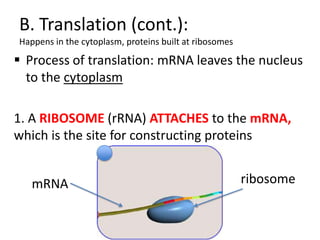
1. A RIBOSOME (rRNA) ATTACHES to the mRNA,
which is the site for constructing proteins


   mRNA                                                 ribosome
B. Translation (cont.):
Happens in the cytoplasm, proteins built at ribosomes

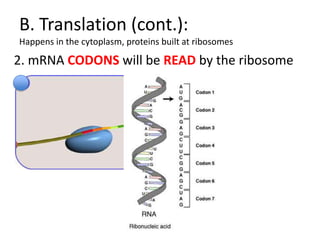
2. mRNA CODONS will be READ by the ribosome
B. Translation (cont.):
Happens in the cytoplasm, proteins built at ribosomes

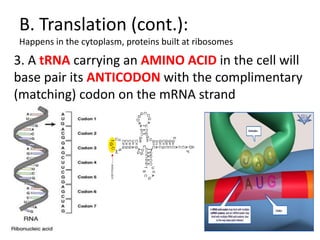
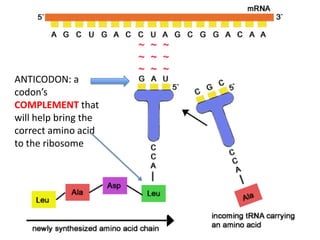
3. A tRNA carrying an AMINO ACID in the cell will
base pair its ANTICODON with the complimentary
(matching) codon on the mRNA strand
ANTICODON: a
codon’s
COMPLEMENT that
will help bring the
correct amino acid
to the ribosome
B. Translation (cont.):
Happens in the cytoplasm, proteins built at ribosomes

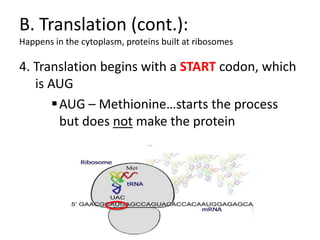
4. Translation begins with a START codon, which
   is AUG
       AUG – Methionine…starts the process
        but does not make the protein
B. Translation (cont.):
Happens in the cytoplasm, proteins built at ribosomes

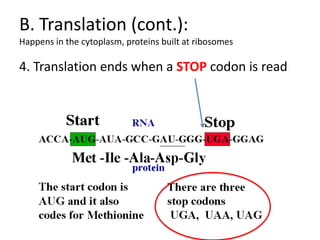
4. Translation ends when a STOP codon is read
B. Translation (cont.):
Happens in the cytoplasm, proteins built at ribosomes

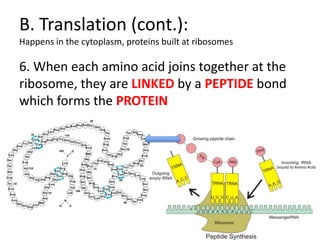
6. When each amino acid joins together at the
ribosome, they are LINKED by a PEPTIDE bond
which forms the PROTEIN
Gene to protein ss

Gene to protein ss

  • 1.
    From Gene toProtein Transcription & Translation
  • 2.
    I. PROTEINS:  TheNUCLEUS controls the ACTIVITIES in the cell and the DNA inside is composed of genes that code for certain proteins  _PROTEIN codes for a particular trait or helps perform various activities within the cell or body  The processes explained here will show how the genetic message of DNA is able to leave the nucleus and reach ribosomes which assemble all the proteins
  • 3.
    All in all,how you look and the activities of your body is largely determined by the proteins that are made!!
  • 4.
    II. STRUCTURE OFRNA Nuclear Pores  DNA is too big to exit the nucleus, so its code must be read by RNA  RNA is the molecule that will be assembled to help make proteins and the ribosomes
  • 5.
    A. RNA: RIBONUCLEICACID 1. _SINGLE strand 2. Nucleotide: –5 carbon sugar –Phosphate group –Nitrogen base Pairs: A-U (not T!) C-G
  • 6.
    B. 3 Typesof RNA: 1. Messenger RNA (mRNA) • Reads DNA code and carries the MESSAGE for making proteins out of the nucleus to the ribosome
  • 7.
    B. 3 Typesof RNA: (cont.) 2. Ribosomal RNA (rRNA) • Makes the structure of the RIBOSOME (remember from bio-a that ribosomes are the “workers” of the cell!!)
  • 8.
    B. 3 Typesof RNA: (cont.) 3. Transfer RNA (tRNA) • Transfers AMINO ACIDS to the ribosome for protein assembly
  • 9.
    III. DIRECTIONS FORMAKING PROTEINS A. Transcription happens in the Nucleus • _MESSAGE of DNA is copied or TRANSCRIBED into mRNA, which can leave the nucleus
  • 10.
    III. DIRECTIONS FORMAKING PROTEINS (cont.) A. Transcription happens in the Nucleus • _MESSAGE of DNA is copied or TRANSCRIBED into mRNA, which can leave the nucleus
  • 11.
    III. DIRECTIONS FORMAKING PROTEINS (cont.)  Process of Transcription: 1. DNA UNZIPS animation
  • 12.
    III. DIRECTIONS FORMAKING PROTEINS (cont.) 2. mRNA is TRANSCRIBED from the DNA message  mRNA bases are grouped into sets of 3 nucleotides called a CODON or triplet code Codon: triplet code that represents an amino acid that will build a protein
  • 13.
    III. DIRECTIONS FORMAKING PROTEINS (cont.) 3. mRNA BREAKS AWAY from the DNA strand
  • 14.
    III. DIRECTIONS FORMAKING PROTEINS (cont.) 4. mRNA LEAVES the NUCLEUS and enters the cytoplasm to await attachment of the ribosome.
  • 15.
    B. Translation: Happens inthe cytoplasm, proteins built at ribosomes  Process of READING the mRNA codons and translating them into PROTEINS (by attaching amino acids together)
  • 16.
    B. Translation (cont.): Happensin the cytoplasm, proteins built at ribosomes  Process of translation: mRNA leaves the nucleus to the cytoplasm 1. A RIBOSOME (rRNA) ATTACHES to the mRNA, which is the site for constructing proteins mRNA ribosome
  • 17.
    B. Translation (cont.): Happensin the cytoplasm, proteins built at ribosomes 2. mRNA CODONS will be READ by the ribosome
  • 18.
    B. Translation (cont.): Happensin the cytoplasm, proteins built at ribosomes 3. A tRNA carrying an AMINO ACID in the cell will base pair its ANTICODON with the complimentary (matching) codon on the mRNA strand
  • 19.
    ANTICODON: a codon’s COMPLEMENT that willhelp bring the correct amino acid to the ribosome
  • 20.
    B. Translation (cont.): Happensin the cytoplasm, proteins built at ribosomes 4. Translation begins with a START codon, which is AUG  AUG – Methionine…starts the process but does not make the protein
  • 21.
    B. Translation (cont.): Happensin the cytoplasm, proteins built at ribosomes 4. Translation ends when a STOP codon is read
  • 22.
    B. Translation (cont.): Happensin the cytoplasm, proteins built at ribosomes 6. When each amino acid joins together at the ribosome, they are LINKED by a PEPTIDE bond which forms the PROTEIN