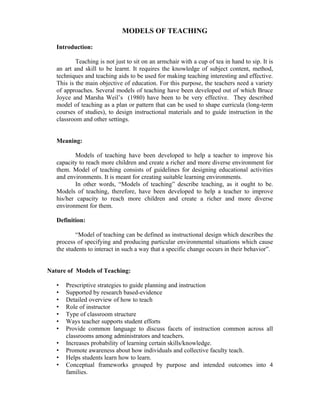
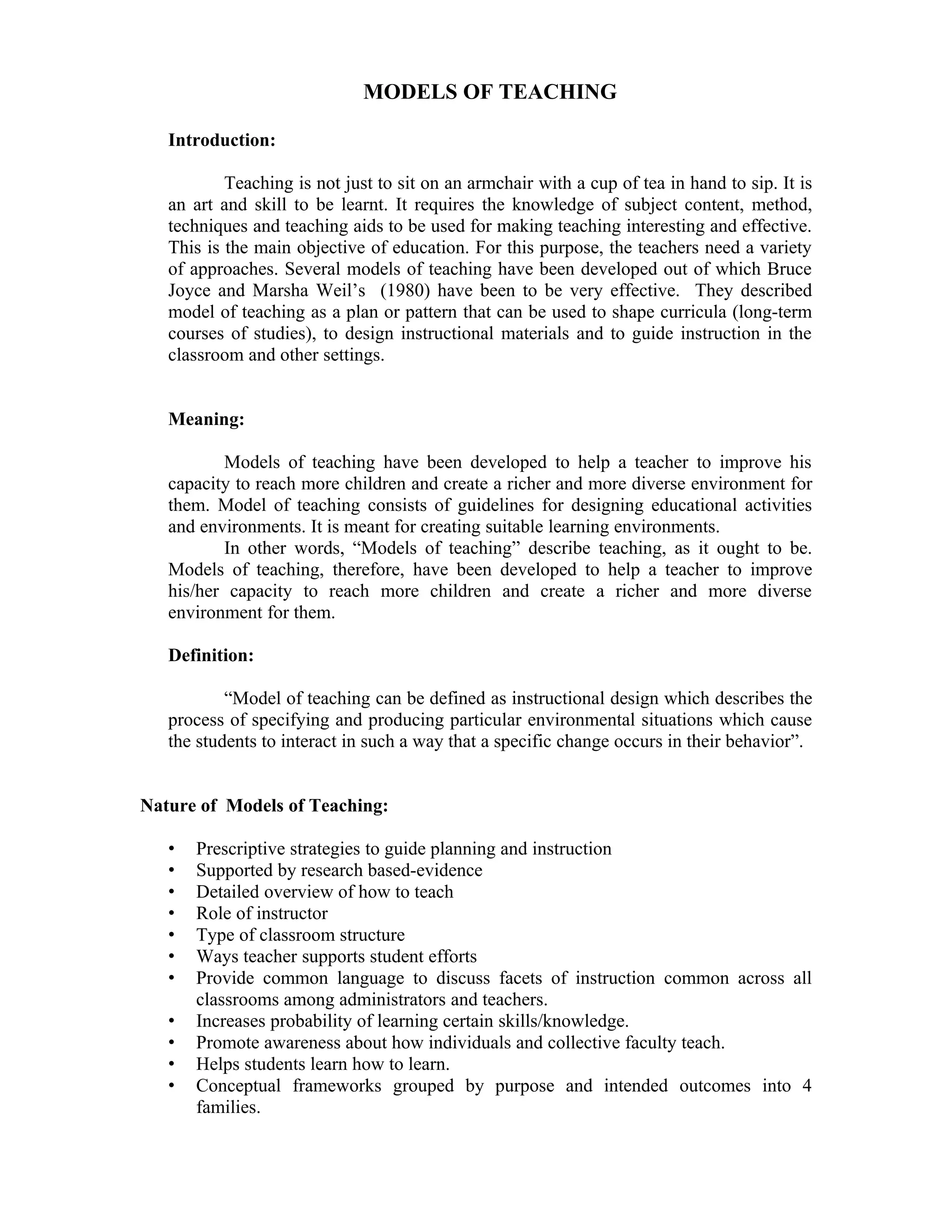
MODELS OF TEACHING

   Introduction:

           Teaching is not just to sit on an armchair with a cup of tea in hand to sip. It is
   an art and skill to be learnt. It requires the knowledge of subject content, method,
   techniques and teaching aids to be used for making teaching interesting and effective.
   This is the main objective of education. For this purpose, the teachers need a variety
   of approaches. Several models of teaching have been developed out of which Bruce
   Joyce and Marsha Weil’s (1980) have been to be very effective. They described
   model of teaching as a plan or pattern that can be used to shape curricula (long-term
   courses of studies), to design instructional materials and to guide instruction in the
   classroom and other settings.


   Meaning:

          Models of teaching have been developed to help a teacher to improve his
   capacity to reach more children and create a richer and more diverse environment for
   them. Model of teaching consists of guidelines for designing educational activities
   and environments. It is meant for creating suitable learning environments.
          In other words, “Models of teaching” describe teaching, as it ought to be.
   Models of teaching, therefore, have been developed to help a teacher to improve
   his/her capacity to reach more children and create a richer and more diverse
   environment for them.

   Definition:

           “Model of teaching can be defined as instructional design which describes the
   process of specifying and producing particular environmental situations which cause
   the students to interact in such a way that a specific change occurs in their behavior”.


Nature of Models of Teaching:

   •   Prescriptive strategies to guide planning and instruction
   •   Supported by research based-evidence
   •   Detailed overview of how to teach
   •   Role of instructor
   •   Type of classroom structure
   •   Ways teacher supports student efforts
   •   Provide common language to discuss facets of instruction common across all
       classrooms among administrators and teachers.
   •   Increases probability of learning certain skills/knowledge.
   •   Promote awareness about how individuals and collective faculty teach.
   •   Helps students learn how to learn.
   •   Conceptual frameworks grouped by purpose and intended outcomes into 4
       families.
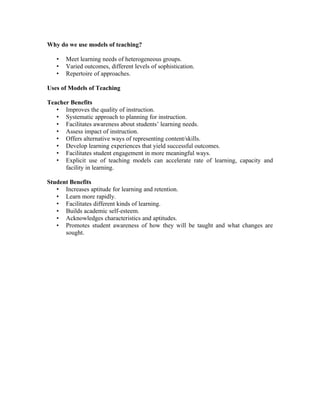
Why do we use models of teaching?

   •   Meet learning needs of heterogeneous groups.
   •   Varied outcomes, different levels of sophistication.
   •   Repertoire of approaches.

Uses of Models of Teaching

Teacher Benefits
   • Improves the quality of instruction.
   • Systematic approach to planning for instruction.
   • Facilitates awareness about students’ learning needs.
   • Assess impact of instruction.
   • Offers alternative ways of representing content/skills.
   • Develop learning experiences that yield successful outcomes.
   • Facilitates student engagement in more meaningful ways.
   • Explicit use of teaching models can accelerate rate of learning, capacity and
      facility in learning.

Student Benefits
   • Increases aptitude for learning and retention.
   • Learn more rapidly.
   • Facilitates different kinds of learning.
   • Builds academic self-esteem.
   • Acknowledges characteristics and aptitudes.
   • Promotes student awareness of how they will be taught and what changes are
      sought.

models of teaching

  • 1.
    MODELS OF TEACHING Introduction: Teaching is not just to sit on an armchair with a cup of tea in hand to sip. It is an art and skill to be learnt. It requires the knowledge of subject content, method, techniques and teaching aids to be used for making teaching interesting and effective. This is the main objective of education. For this purpose, the teachers need a variety of approaches. Several models of teaching have been developed out of which Bruce Joyce and Marsha Weil’s (1980) have been to be very effective. They described model of teaching as a plan or pattern that can be used to shape curricula (long-term courses of studies), to design instructional materials and to guide instruction in the classroom and other settings. Meaning: Models of teaching have been developed to help a teacher to improve his capacity to reach more children and create a richer and more diverse environment for them. Model of teaching consists of guidelines for designing educational activities and environments. It is meant for creating suitable learning environments. In other words, “Models of teaching” describe teaching, as it ought to be. Models of teaching, therefore, have been developed to help a teacher to improve his/her capacity to reach more children and create a richer and more diverse environment for them. Definition: “Model of teaching can be defined as instructional design which describes the process of specifying and producing particular environmental situations which cause the students to interact in such a way that a specific change occurs in their behavior”. Nature of Models of Teaching: • Prescriptive strategies to guide planning and instruction • Supported by research based-evidence • Detailed overview of how to teach • Role of instructor • Type of classroom structure • Ways teacher supports student efforts • Provide common language to discuss facets of instruction common across all classrooms among administrators and teachers. • Increases probability of learning certain skills/knowledge. • Promote awareness about how individuals and collective faculty teach. • Helps students learn how to learn. • Conceptual frameworks grouped by purpose and intended outcomes into 4 families.
  • 2.
    Why do weuse models of teaching? • Meet learning needs of heterogeneous groups. • Varied outcomes, different levels of sophistication. • Repertoire of approaches. Uses of Models of Teaching Teacher Benefits • Improves the quality of instruction. • Systematic approach to planning for instruction. • Facilitates awareness about students’ learning needs. • Assess impact of instruction. • Offers alternative ways of representing content/skills. • Develop learning experiences that yield successful outcomes. • Facilitates student engagement in more meaningful ways. • Explicit use of teaching models can accelerate rate of learning, capacity and facility in learning. Student Benefits • Increases aptitude for learning and retention. • Learn more rapidly. • Facilitates different kinds of learning. • Builds academic self-esteem. • Acknowledges characteristics and aptitudes. • Promotes student awareness of how they will be taught and what changes are sought.