INFORMATION PROCESSING MODEL V. Kamatchi M.Ed. (2010-11) School of Education Pondicherry University
Meaning: Information processing refers to the way people handle stimuli from environment, organize data, sense problems, generate concepts and solutions to problems and employ verbal and non-verbal symbols.
Types of Information Processing Model   Concept Attainment model  Scientific Inquiry Method Synectics model Advance Organizer model Inductive thinking
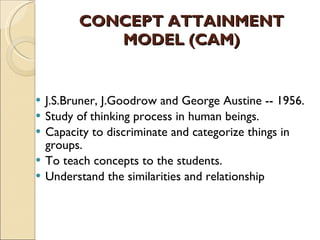
CONCEPT ATTAINMENT MODEL (CAM) J.S.Bruner, J.Goodrow and George Austine -- 1956. Study of thinking process in human beings.  Capacity to discriminate and categorize things in groups.  To teach concepts to the students.  Understand the similarities and relationship
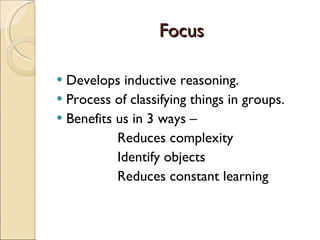
Focus Develops inductive reasoning. Process of classifying things in groups. Benefits us in 3 ways – Reduces complexity Identify objects  Reduces constant learning
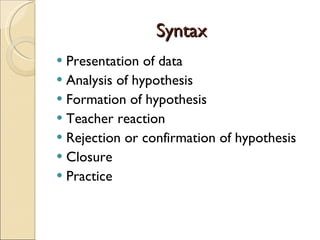
Syntax Presentation of data Analysis of hypothesis Formation of hypothesis Teacher reaction Rejection or confirmation of hypothesis Closure Practice
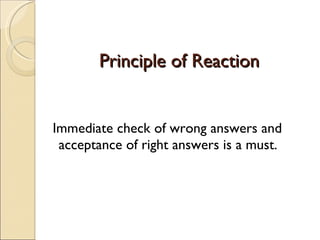
Principle of Reaction Immediate check of wrong answers and acceptance of right answers is a must.
Social System The teaching situation is moderately structured.  The teacher has to control all actions of the class-room, but reasonable freedom is given for discussion within different phases of teaching.  Ensures co-operation
Support System The lessons require concepts which can be arranged so that concept may be drawn from the material
Application Concept attainment model is very useful in teaching the concepts through inductive reasoning. Example: teaching Maths formula, grammar
Merits Natural way of teaching and learning. Helpful in developing imagination power. Development of reasoning power. Analyze things systematically. Students are actively engaged in the classroom activity. It helps in making the student good observers. It encourages the habit of self study in the students. Apply their knowledge in different situations. Busy classroom work.
Limitations It makes high demand on the students as well as teachers. All the students of the class may not be able to participate in the teaching-learning process Some students, on account of their shyness, fail to derive the requisite advantage of this model.
Scientific Inquiry Model It was built by J. Richard Suchman for developing scientific inquiry training skills in the students.
Suchman Beliefs of this model All knowledge is tentative. There is no one particular answer to a problem. Inquiry is natural.  Co-operative effort. Analyze thinking strategies.
Focus Children are curious by nature and this model attempts to satisfy their urge of curiosity by providing systematic training in inquiry.
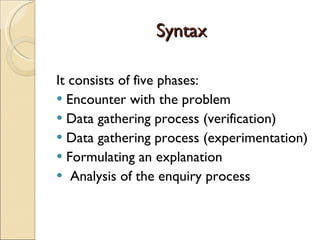
Syntax It consists of five phases: Encounter with the problem Data gathering process (verification) Data gathering process (experimentation) Formulating an explanation Analysis of the enquiry process
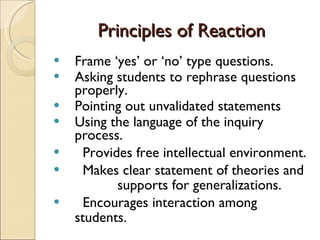
Principles of Reaction Frame ‘yes’ or ‘no’ type questions. Asking students to rephrase questions properly. Pointing out unvalidated statements Using the language of the inquiry process.  Provides free intellectual environment. Makes clear statement of theories and  supports for generalizations. Encourages interaction among students.
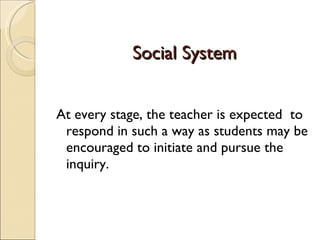
Social System At every stage, the teacher is expected  to respond in such a way as students may be encouraged to initiate and pursue the inquiry.
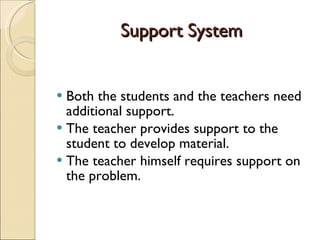
Support System Both the students and the teachers need additional support.  The teacher provides support to the student to develop material.  The teacher himself requires support on the problem.
Application Context Provides training to solve the problem in a systematic way.  As observed by Weil and Joyce the teacher cannot be too concerned with subject matter coverage or correctness.
Merits Develops imagination power. Trains to analyze things systematically. Develops reasoning power. Trains students to put suitable questions. Imparts training to go deep into the problem. Prepares for solving problems of life systematically. Demands continuous attention of the teacher as well as the students. Students hardly can afford to be absent minded.
Limitations Works well only in the hands of very intelligent and resourceful teachers. An average teacher can hardly make use of this model. Shy students lag behind. It puts a lot of premium on the speaking ability of the students.

Information processing model file 1

  • 1.
    INFORMATION PROCESSING MODELV. Kamatchi M.Ed. (2010-11) School of Education Pondicherry University
  • 2.
    Meaning: Information processingrefers to the way people handle stimuli from environment, organize data, sense problems, generate concepts and solutions to problems and employ verbal and non-verbal symbols.
  • 3.
    Types of InformationProcessing Model Concept Attainment model Scientific Inquiry Method Synectics model Advance Organizer model Inductive thinking
  • 4.
    CONCEPT ATTAINMENT MODEL(CAM) J.S.Bruner, J.Goodrow and George Austine -- 1956. Study of thinking process in human beings. Capacity to discriminate and categorize things in groups. To teach concepts to the students. Understand the similarities and relationship
  • 5.
    Focus Develops inductivereasoning. Process of classifying things in groups. Benefits us in 3 ways – Reduces complexity Identify objects Reduces constant learning
  • 6.
    Syntax Presentation ofdata Analysis of hypothesis Formation of hypothesis Teacher reaction Rejection or confirmation of hypothesis Closure Practice
  • 7.
    Principle of ReactionImmediate check of wrong answers and acceptance of right answers is a must.
  • 8.
    Social System Theteaching situation is moderately structured. The teacher has to control all actions of the class-room, but reasonable freedom is given for discussion within different phases of teaching. Ensures co-operation
  • 9.
    Support System Thelessons require concepts which can be arranged so that concept may be drawn from the material
  • 10.
    Application Concept attainmentmodel is very useful in teaching the concepts through inductive reasoning. Example: teaching Maths formula, grammar
  • 11.
    Merits Natural wayof teaching and learning. Helpful in developing imagination power. Development of reasoning power. Analyze things systematically. Students are actively engaged in the classroom activity. It helps in making the student good observers. It encourages the habit of self study in the students. Apply their knowledge in different situations. Busy classroom work.
  • 12.
    Limitations It makeshigh demand on the students as well as teachers. All the students of the class may not be able to participate in the teaching-learning process Some students, on account of their shyness, fail to derive the requisite advantage of this model.
  • 13.
    Scientific Inquiry ModelIt was built by J. Richard Suchman for developing scientific inquiry training skills in the students.
  • 14.
    Suchman Beliefs ofthis model All knowledge is tentative. There is no one particular answer to a problem. Inquiry is natural. Co-operative effort. Analyze thinking strategies.
  • 15.
    Focus Children arecurious by nature and this model attempts to satisfy their urge of curiosity by providing systematic training in inquiry.
  • 16.
    Syntax It consistsof five phases: Encounter with the problem Data gathering process (verification) Data gathering process (experimentation) Formulating an explanation Analysis of the enquiry process
  • 17.
    Principles of ReactionFrame ‘yes’ or ‘no’ type questions. Asking students to rephrase questions properly. Pointing out unvalidated statements Using the language of the inquiry process. Provides free intellectual environment. Makes clear statement of theories and supports for generalizations. Encourages interaction among students.
  • 18.
    Social System Atevery stage, the teacher is expected to respond in such a way as students may be encouraged to initiate and pursue the inquiry.
  • 19.
    Support System Boththe students and the teachers need additional support. The teacher provides support to the student to develop material. The teacher himself requires support on the problem.
  • 20.
    Application Context Providestraining to solve the problem in a systematic way. As observed by Weil and Joyce the teacher cannot be too concerned with subject matter coverage or correctness.
  • 21.
    Merits Develops imaginationpower. Trains to analyze things systematically. Develops reasoning power. Trains students to put suitable questions. Imparts training to go deep into the problem. Prepares for solving problems of life systematically. Demands continuous attention of the teacher as well as the students. Students hardly can afford to be absent minded.
  • 22.
    Limitations Works wellonly in the hands of very intelligent and resourceful teachers. An average teacher can hardly make use of this model. Shy students lag behind. It puts a lot of premium on the speaking ability of the students.