LOW POWER VLSI
    DESIGN

  Vinchip Systems
  (a Design and Verification Company)

           Chennai.
Introduction
   Due to integration of components increased the power
    comes in lime light
   It is much important that handheld devices must possess
    low power devices
   For better performance
   For long run time (Battery time)
Definition

 Power   Dissipation:
    The rate of energy which is taken from the source and
     converted into heat
Types of Power Dissipation
   Static power dissipation
       Due to leakage current
   Dynamic Power dissipation
       Due to switching activities of transistor
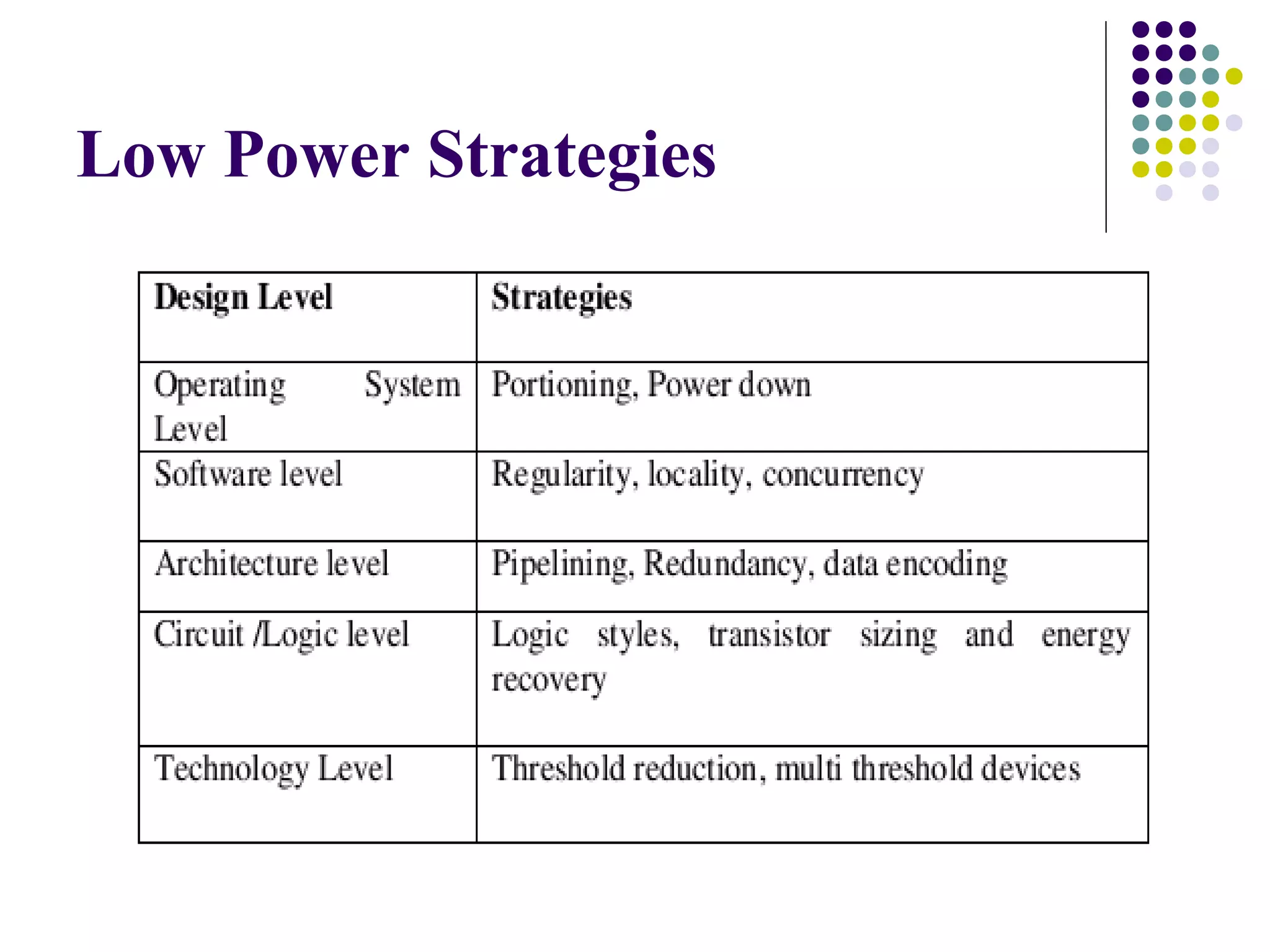
Low Power Strategies
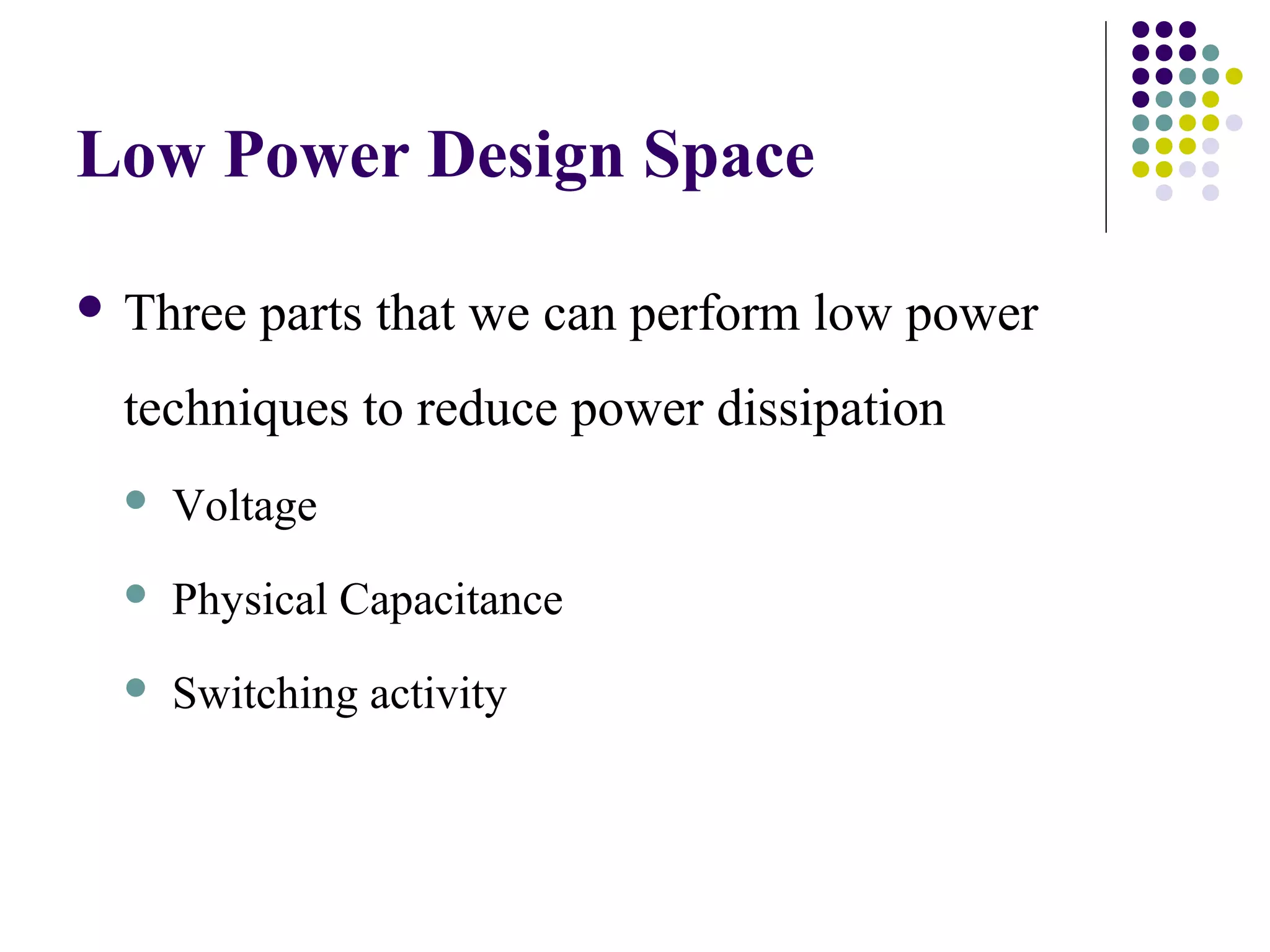
Low Power Design Space

 Three   parts that we can perform low power
 techniques to reduce power dissipation
    Voltage
    Physical Capacitance
    Switching activity
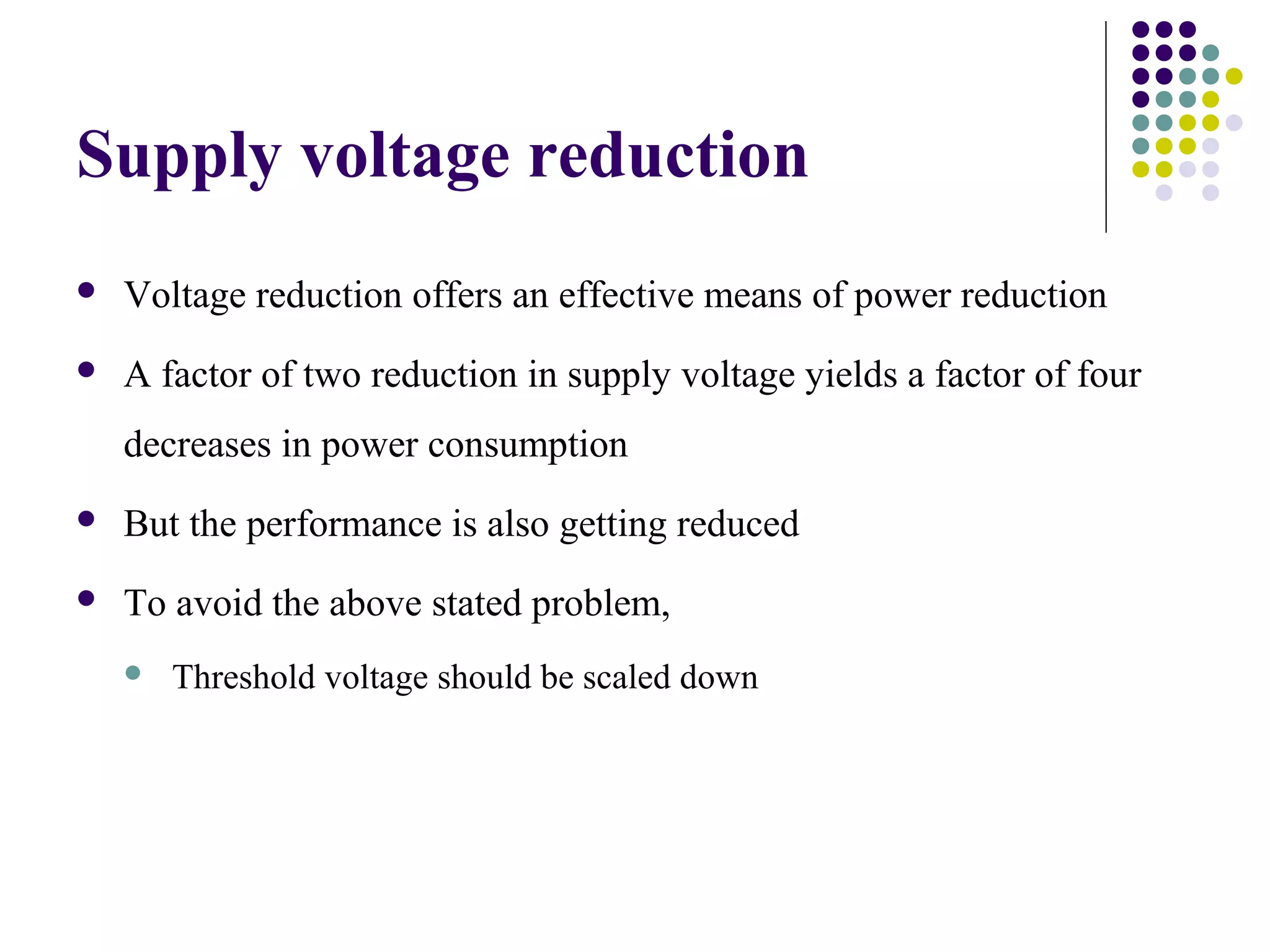
Supply voltage reduction
   Voltage reduction offers an effective means of power reduction
   A factor of two reduction in supply voltage yields a factor of four
    decreases in power consumption
   But the performance is also getting reduced
   To avoid the above stated problem,
       Threshold voltage should be scaled down
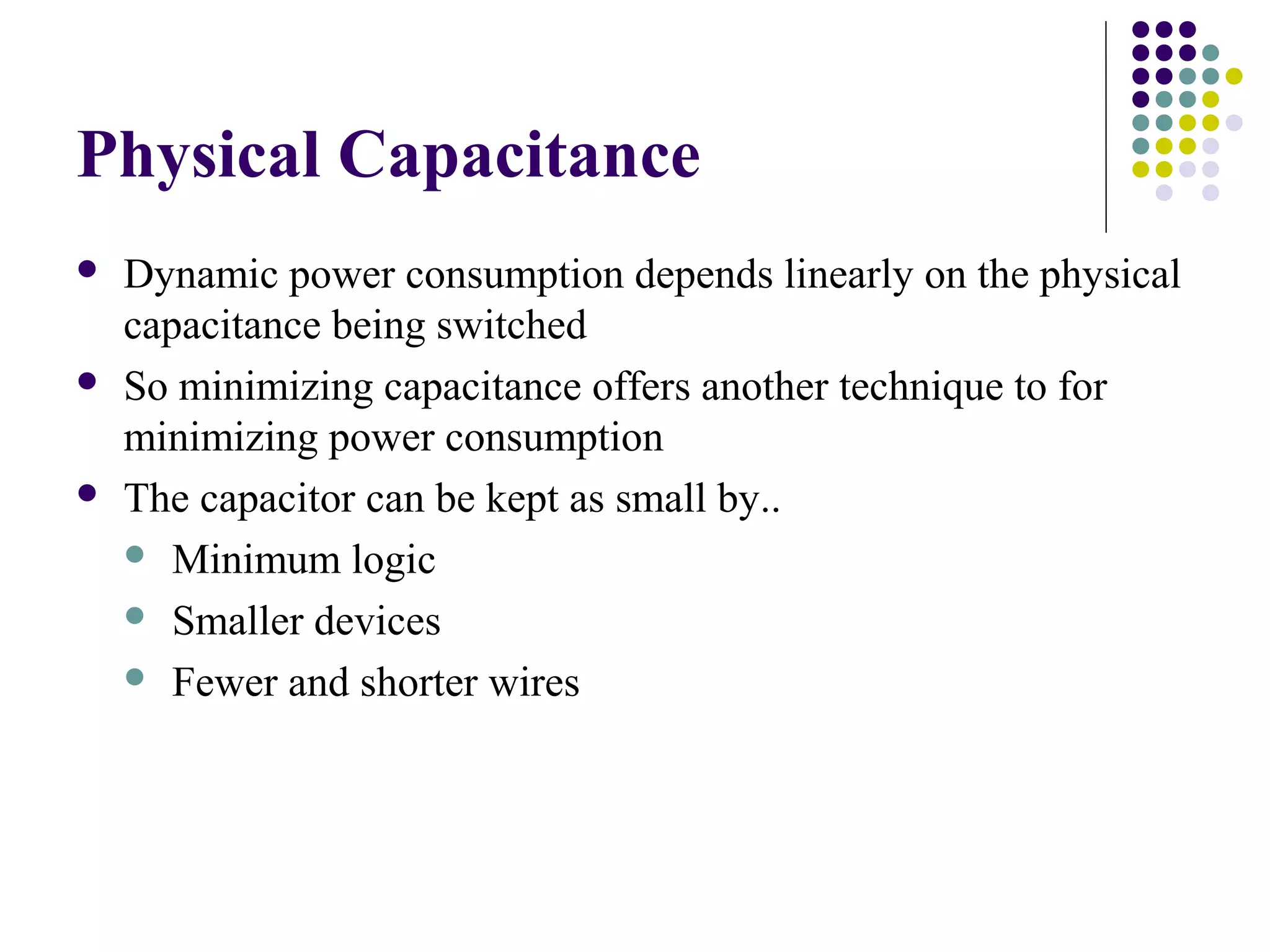
Physical Capacitance
   Dynamic power consumption depends linearly on the physical
    capacitance being switched
   So minimizing capacitance offers another technique to for
    minimizing power consumption
   The capacitor can be kept as small by..
     Minimum logic

     Smaller devices

     Fewer and shorter wires
Switching Activity
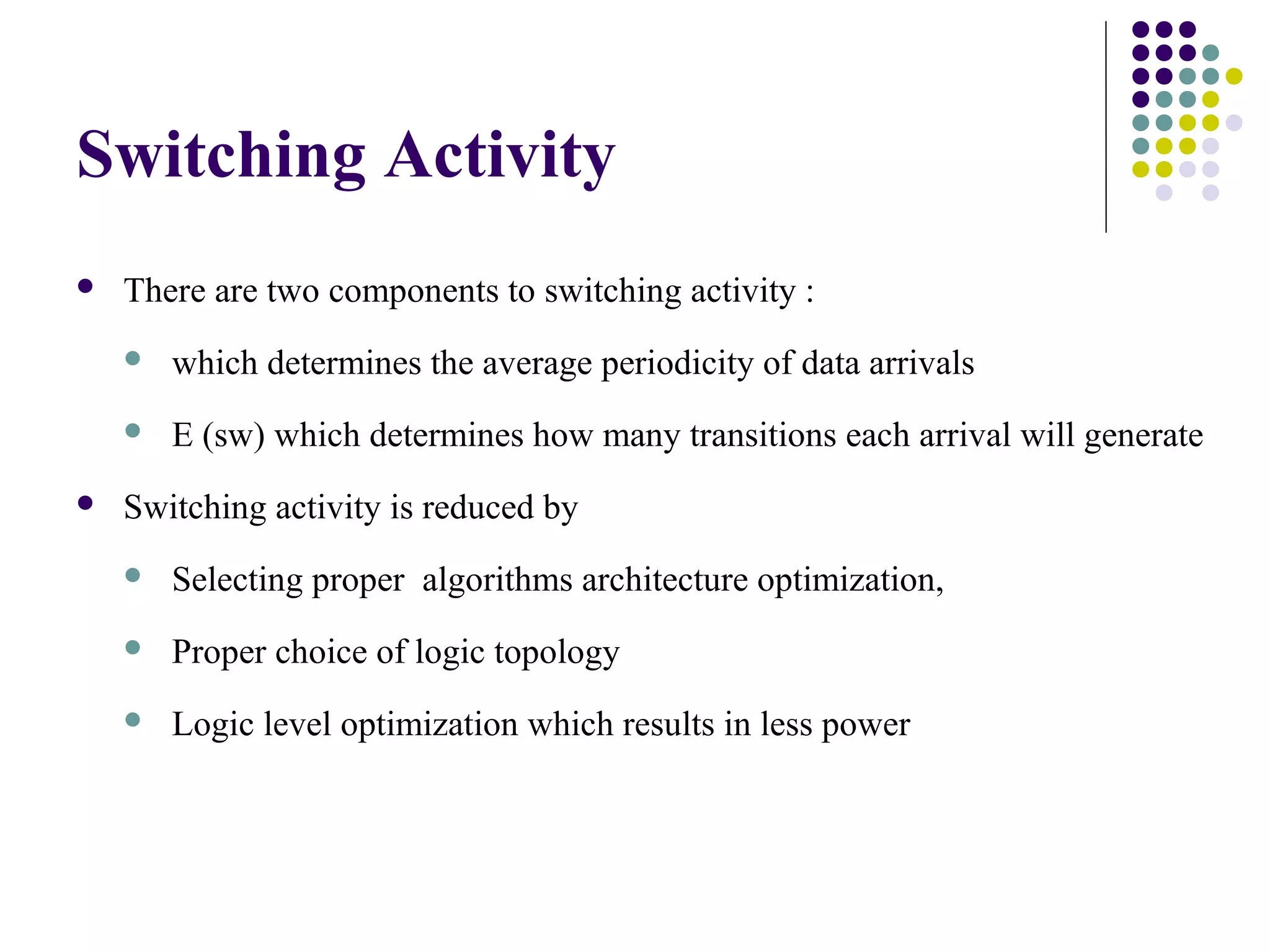
   There are two components to switching activity :
       which determines the average periodicity of data arrivals
       E (sw) which determines how many transitions each arrival will generate
   Switching activity is reduced by
       Selecting proper algorithms architecture optimization,
       Proper choice of logic topology
       Logic level optimization which results in less power
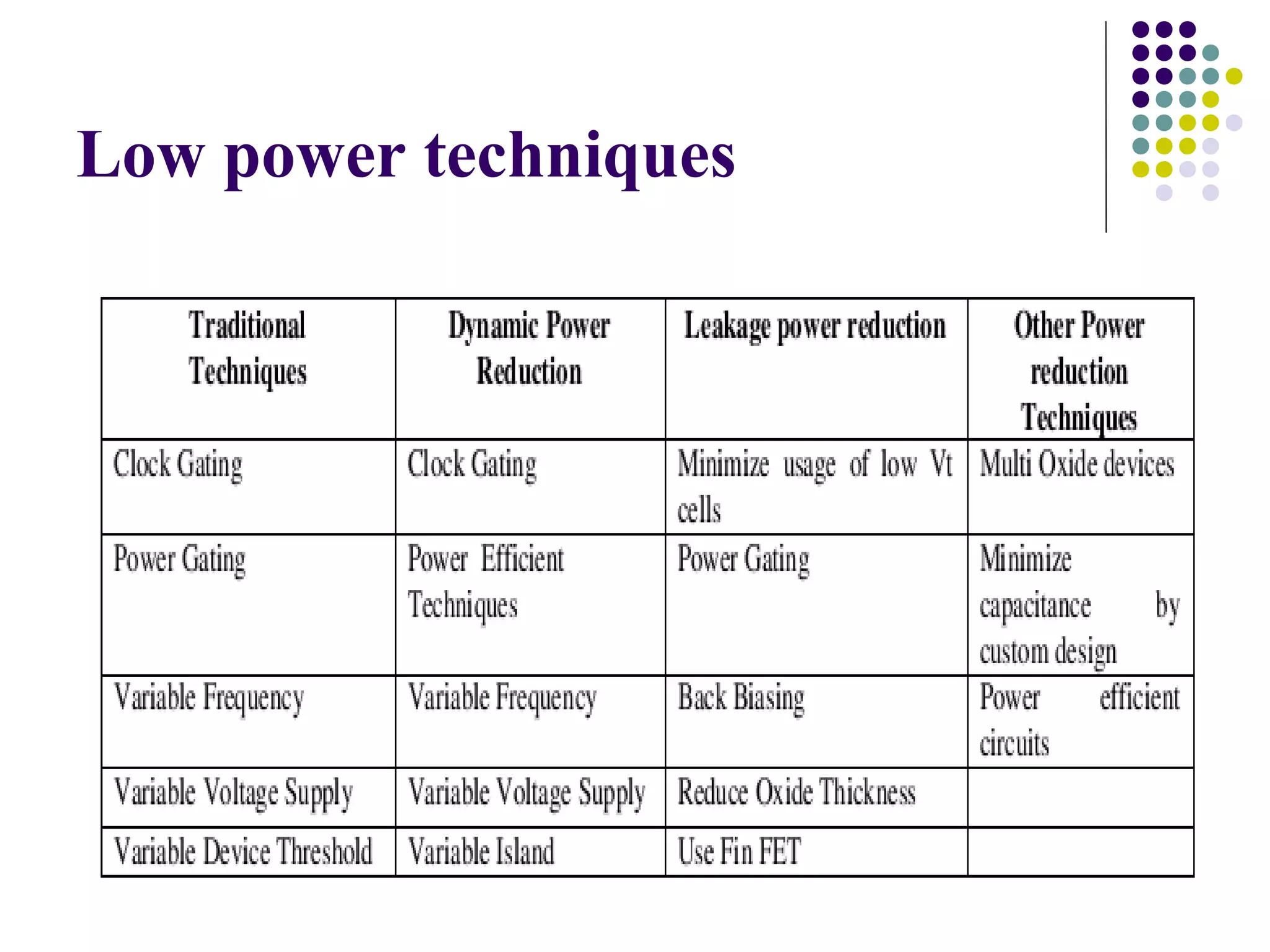
Low power techniques
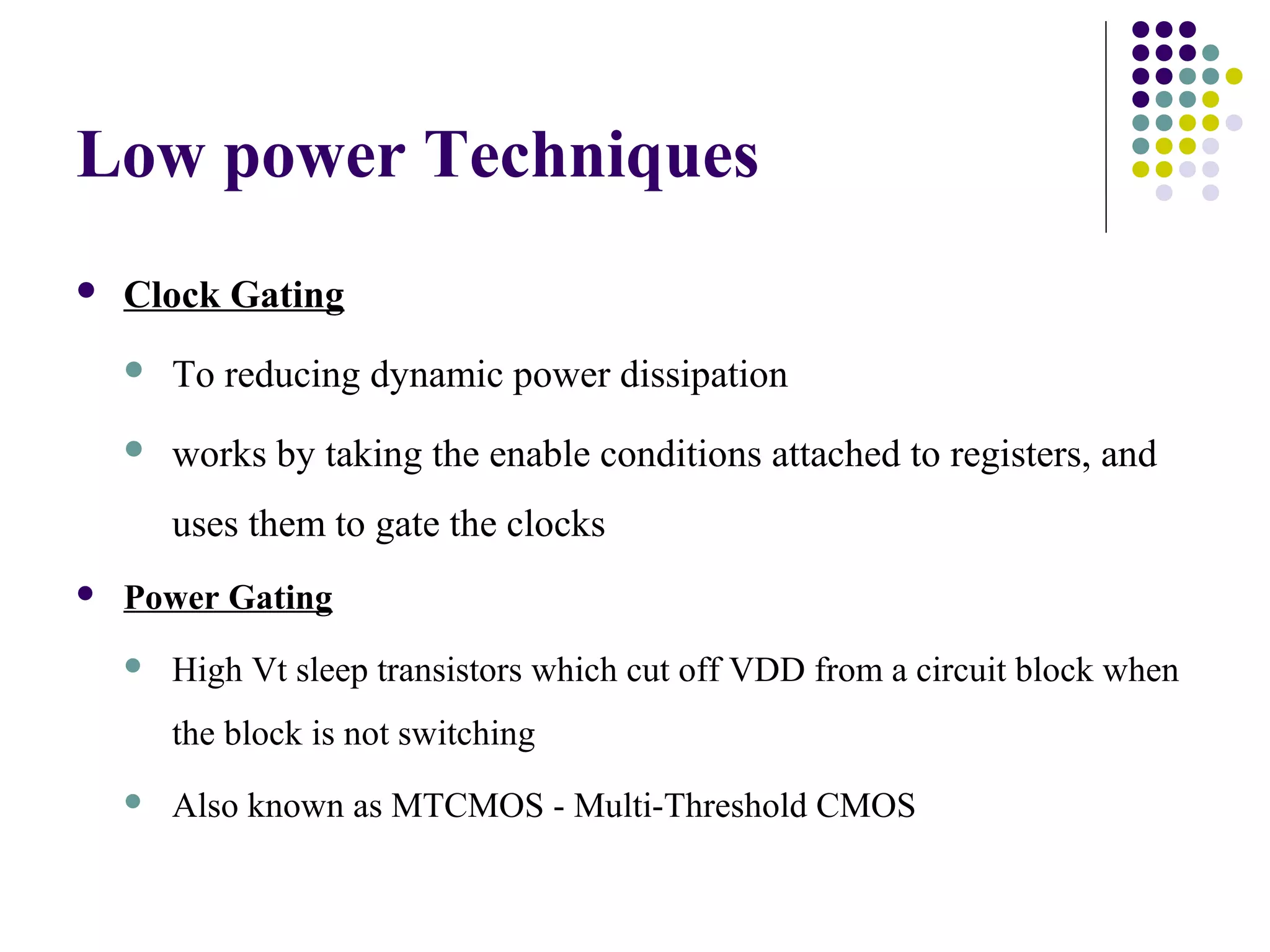
Low power Techniques
   Clock Gating
       To reducing dynamic power dissipation
       works by taking the enable conditions attached to registers, and
        uses them to gate the clocks
   Power Gating
       High Vt sleep transistors which cut off VDD from a circuit block when
        the block is not switching
       Also known as MTCMOS - Multi-Threshold CMOS
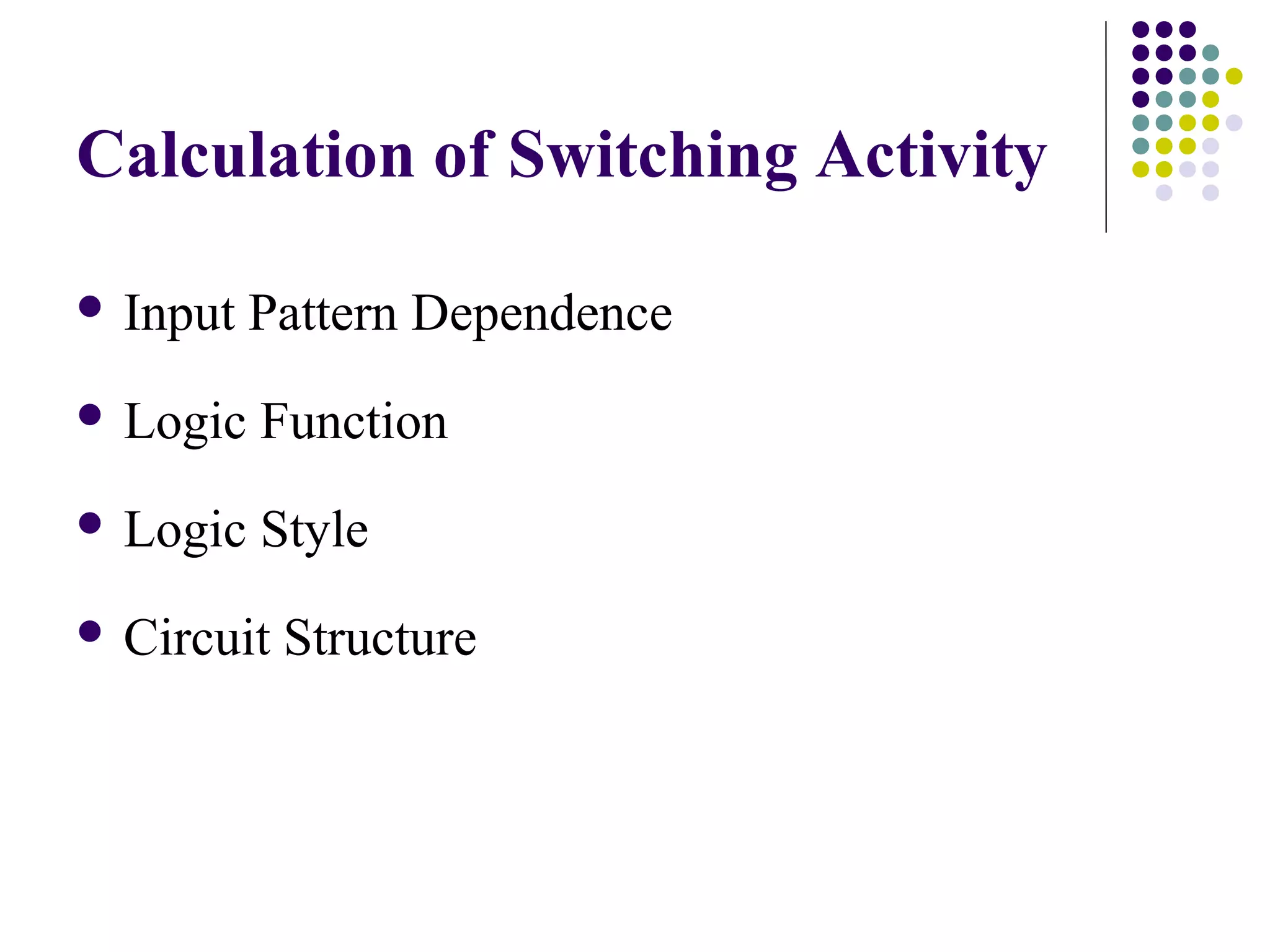
Calculation of Switching Activity

 Input   Pattern Dependence
 Logic   Function
 Logic   Style
 Circuit   Structure
Power Minimization Techniques
   Reducing chip and package capacitance
       Process development such as SOI with partially or fully depleted wells
       Advanced interconnect substrates such as Multi-Chip Modules (MCM).
   Scaling the supply voltage
       Very effective
       But often requires process technologies
   Employing better design techniques
       The investment to reduce power by design is relatively small
   Using power management strategies
       Various static and dynamic power management techniques
CAD Methodologies and Techniques

   Low power VLSI design can be achieved at various levels of the design process
   System Design
       inactive hardware modules may be automatically turned off to save power
   Behavioral Synthesis
       The behavioral synthesis process consists of three steps:
           Allocation
           Assignment and scheduling
       These steps determine how many instances of each resource are needed
   Logic Synthesis
   Physical Design
Conclusion

 Low   power VLSI is needed
    Increasing of handheld devices
    Increasing of complex device structure
    Long battery life
    Long device life
Low power vlsi design

Low power vlsi design

  • 1.
    LOW POWER VLSI DESIGN Vinchip Systems (a Design and Verification Company) Chennai.
  • 2.
    Introduction  Due to integration of components increased the power comes in lime light  It is much important that handheld devices must possess low power devices  For better performance  For long run time (Battery time)
  • 3.
    Definition  Power Dissipation:  The rate of energy which is taken from the source and converted into heat
  • 4.
    Types of PowerDissipation  Static power dissipation  Due to leakage current  Dynamic Power dissipation  Due to switching activities of transistor
  • 5.
  • 6.
    Low Power DesignSpace  Three parts that we can perform low power techniques to reduce power dissipation  Voltage  Physical Capacitance  Switching activity
  • 7.
    Supply voltage reduction  Voltage reduction offers an effective means of power reduction  A factor of two reduction in supply voltage yields a factor of four decreases in power consumption  But the performance is also getting reduced  To avoid the above stated problem,  Threshold voltage should be scaled down
  • 8.
    Physical Capacitance  Dynamic power consumption depends linearly on the physical capacitance being switched  So minimizing capacitance offers another technique to for minimizing power consumption  The capacitor can be kept as small by..  Minimum logic  Smaller devices  Fewer and shorter wires
  • 9.
    Switching Activity  There are two components to switching activity :  which determines the average periodicity of data arrivals  E (sw) which determines how many transitions each arrival will generate  Switching activity is reduced by  Selecting proper algorithms architecture optimization,  Proper choice of logic topology  Logic level optimization which results in less power
  • 10.
  • 11.
    Low power Techniques  Clock Gating  To reducing dynamic power dissipation  works by taking the enable conditions attached to registers, and uses them to gate the clocks  Power Gating  High Vt sleep transistors which cut off VDD from a circuit block when the block is not switching  Also known as MTCMOS - Multi-Threshold CMOS
  • 12.
    Calculation of SwitchingActivity  Input Pattern Dependence  Logic Function  Logic Style  Circuit Structure
  • 13.
    Power Minimization Techniques  Reducing chip and package capacitance  Process development such as SOI with partially or fully depleted wells  Advanced interconnect substrates such as Multi-Chip Modules (MCM).  Scaling the supply voltage  Very effective  But often requires process technologies  Employing better design techniques  The investment to reduce power by design is relatively small  Using power management strategies  Various static and dynamic power management techniques
  • 14.
    CAD Methodologies andTechniques  Low power VLSI design can be achieved at various levels of the design process  System Design  inactive hardware modules may be automatically turned off to save power  Behavioral Synthesis  The behavioral synthesis process consists of three steps:  Allocation  Assignment and scheduling  These steps determine how many instances of each resource are needed  Logic Synthesis  Physical Design
  • 15.
    Conclusion  Low power VLSI is needed  Increasing of handheld devices  Increasing of complex device structure  Long battery life  Long device life