Starch, Glycogen and Cellulose
• To be able to relate the structure and function
of the carbohydrates starch, glycogena dn
cellulose
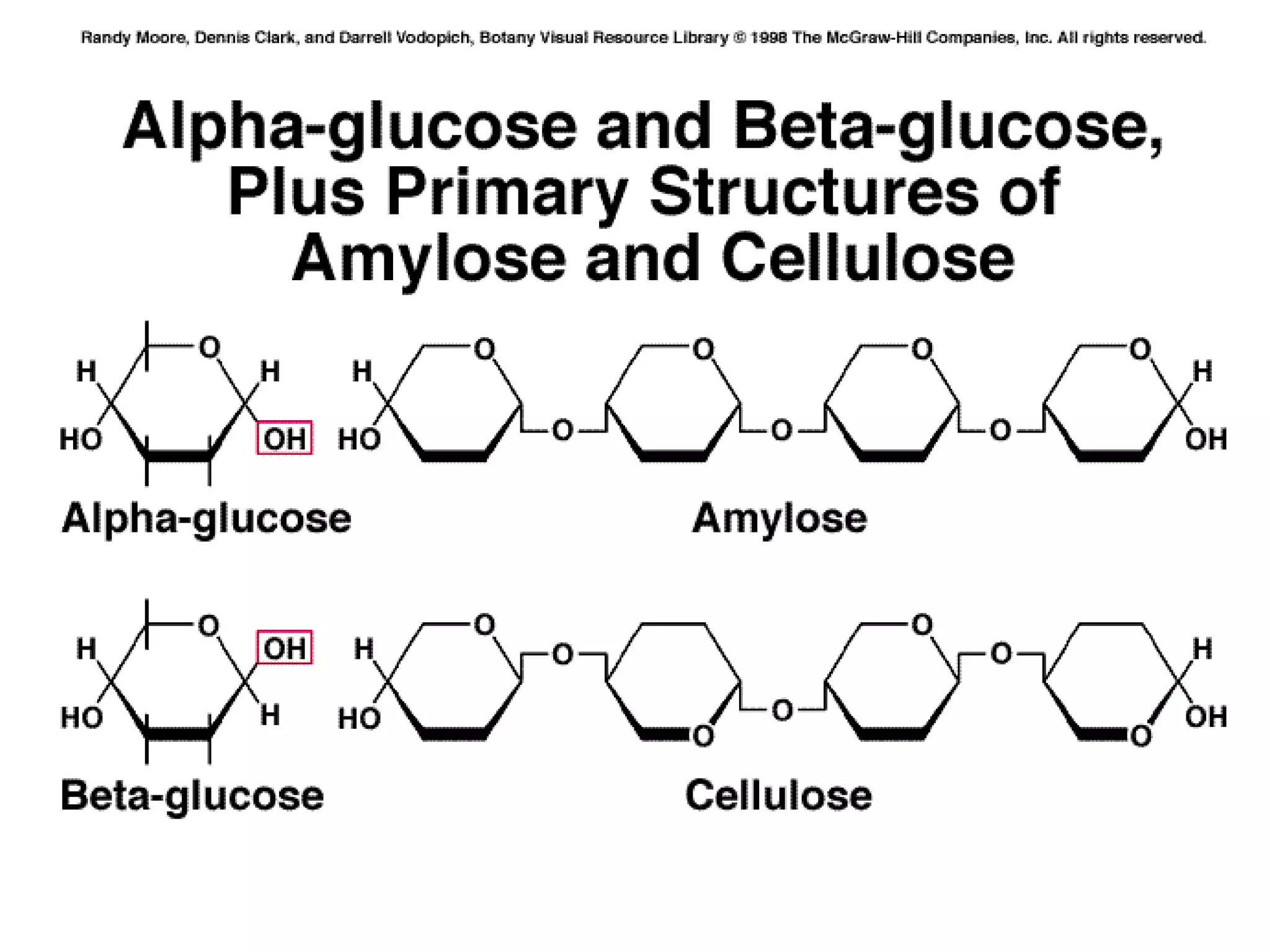
Polysaccharides…
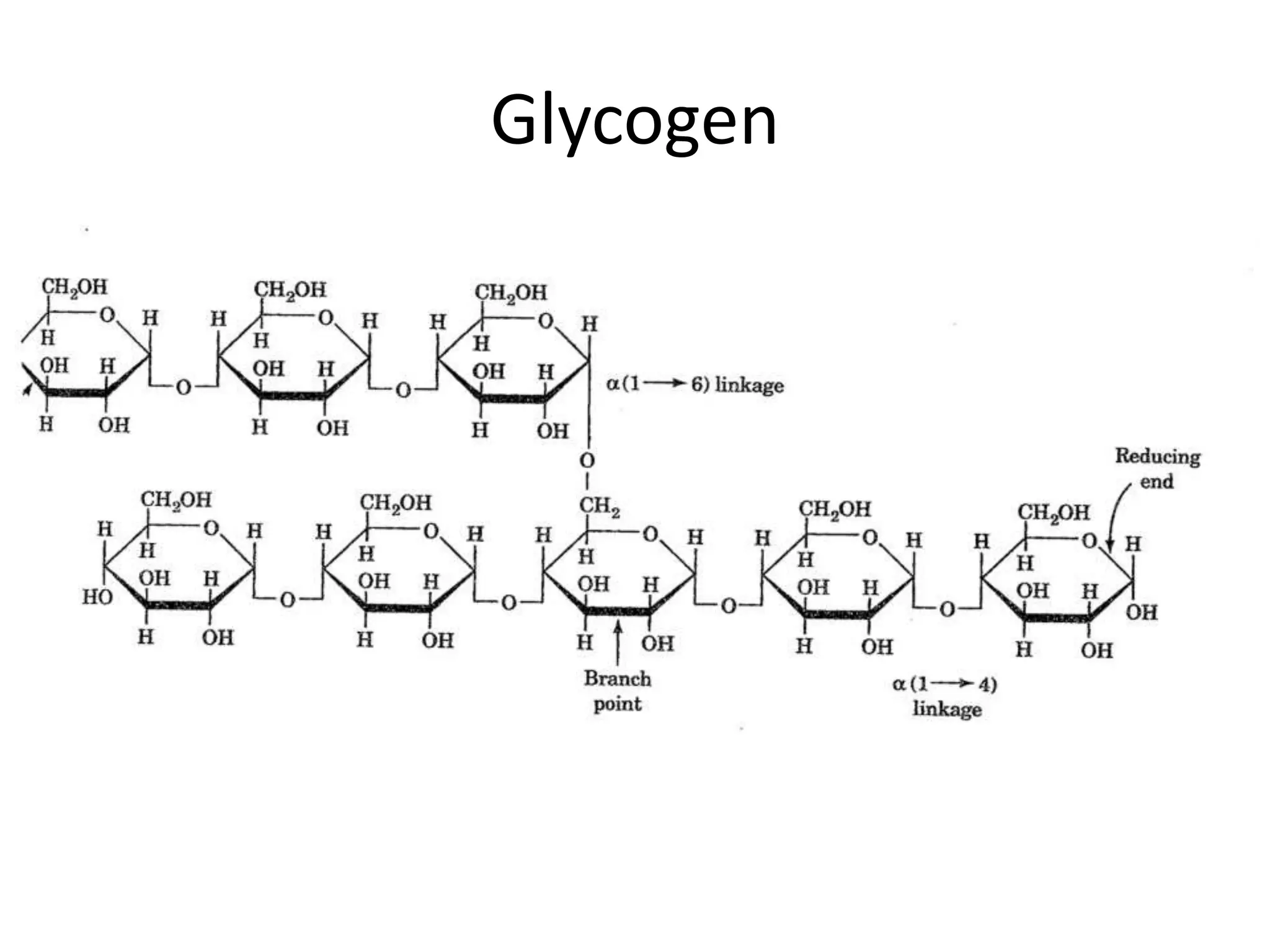
Glycogen
Starch Vs Glycogen…
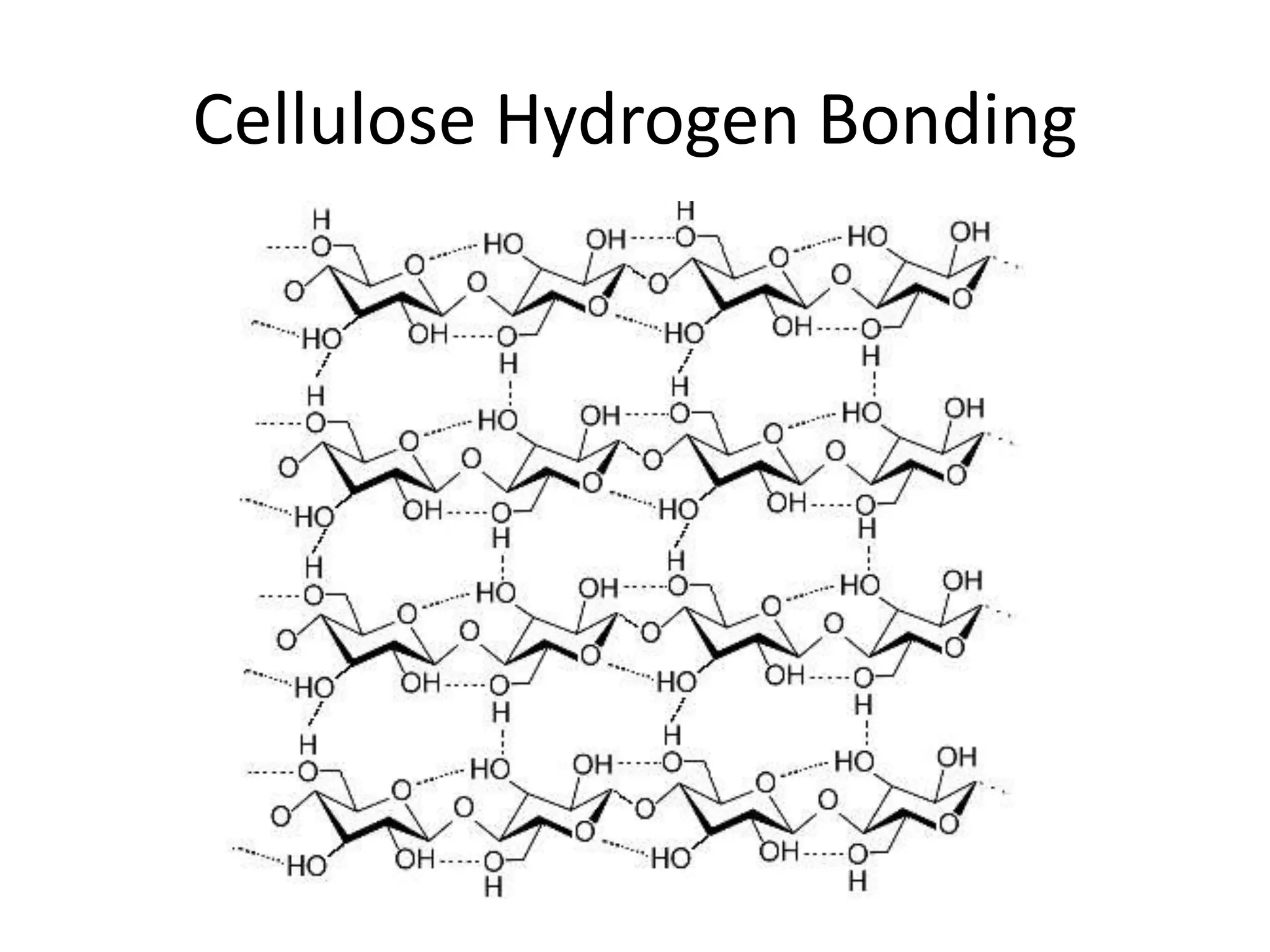
Cellulose Hydrogen Bonding
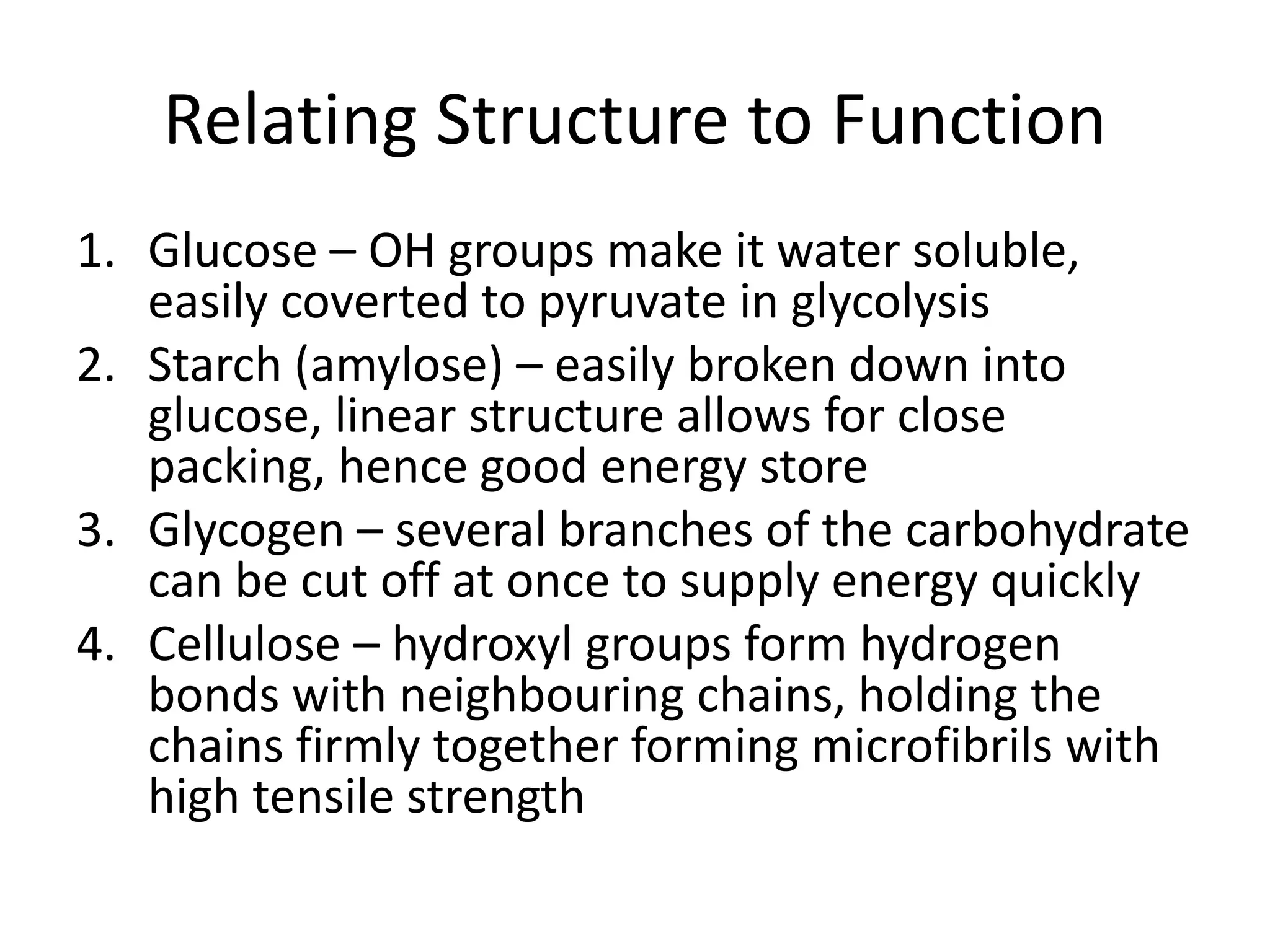
Relating Structure to Function
1. Glucose – OH groups make it water soluble,
easily coverted to pyruvate in glycolysis
2. Starch (amylose) – easily broken down into
glucose, linear structure allows for close
packing, hence good energy store
3. Glycogen – several branches of the carbohydrate
can be cut off at once to supply energy quickly
4. Cellulose – hydroxyl groups form hydrogen
bonds with neighbouring chains, holding the
chains firmly together forming microfibrils with
high tensile strength
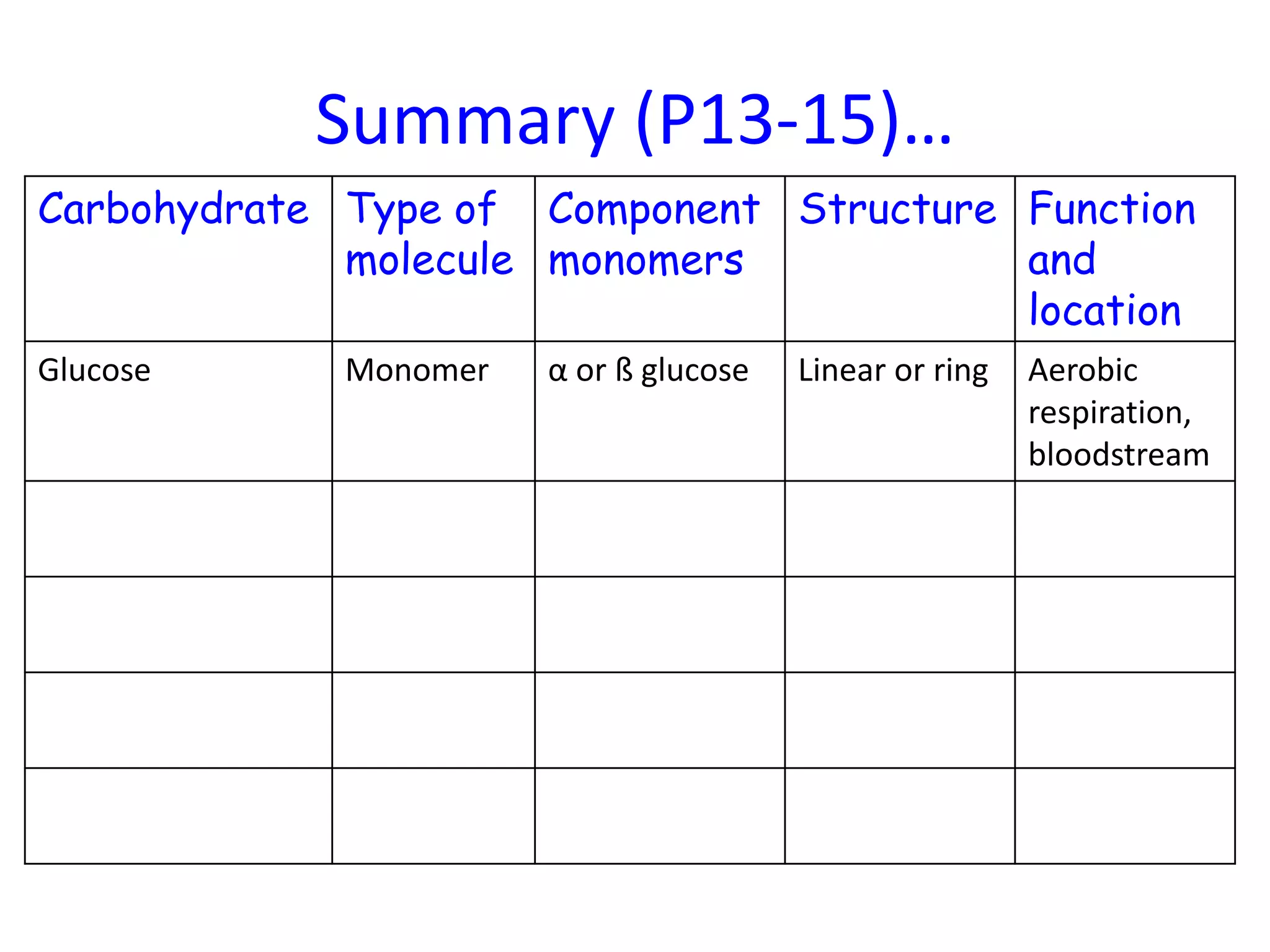
Summary (P13-15)…
Carbohydrate Type of
molecule
Component
monomers
Structure Function
and
location
Glucose Monomer α or ß glucose Linear or ring Aerobic
respiration,
bloodstream
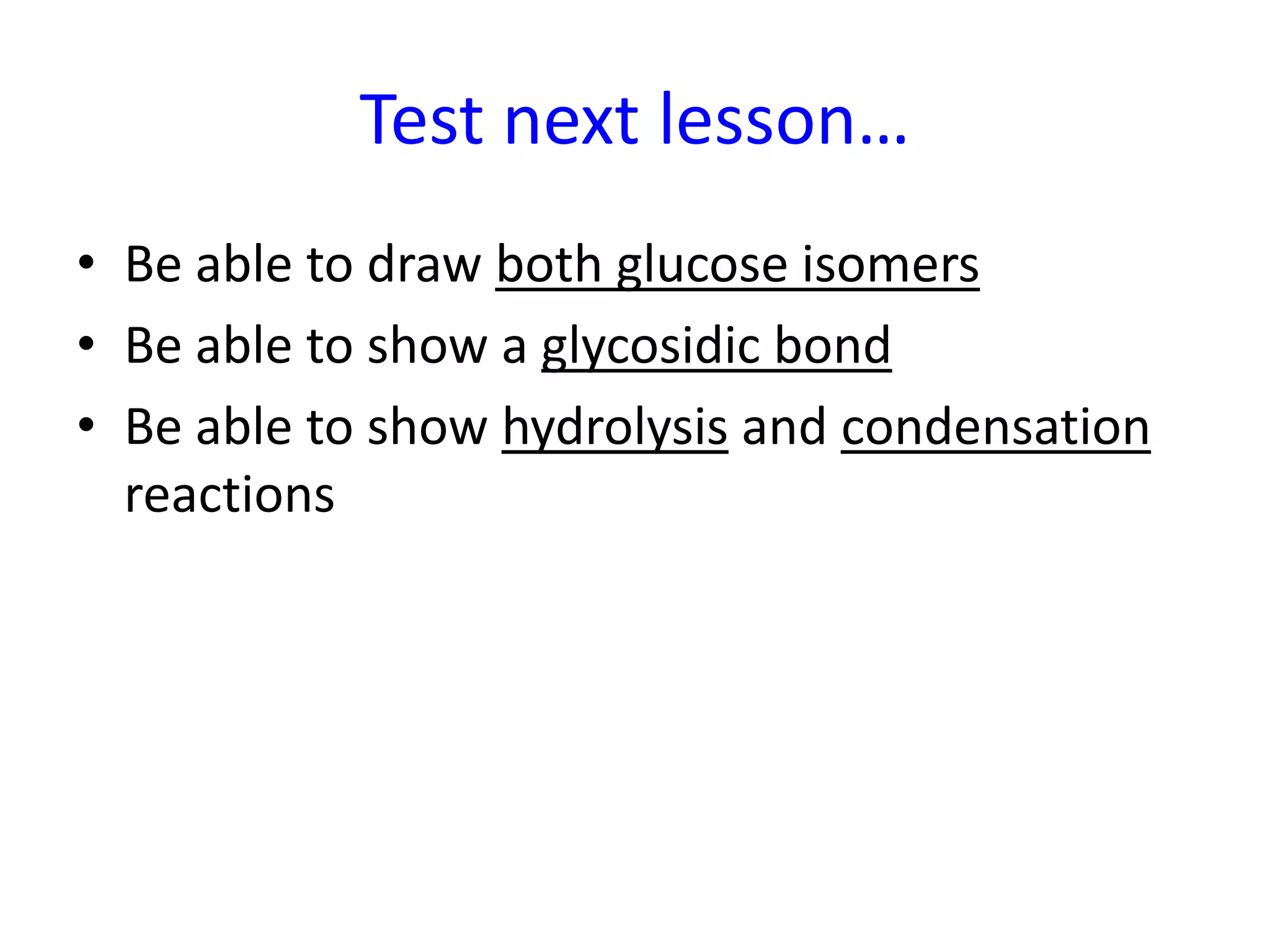
Test next lesson…
• Be able to draw both glucose isomers
• Be able to show a glycosidic bond
• Be able to show hydrolysis and condensation
reactions
1) Choose colours for C, H , O
• Make 2 molecules of alpha glucose
• Join together by a glycosidic bond
• Join a 3rd alpha glucose to make AMYLOSE
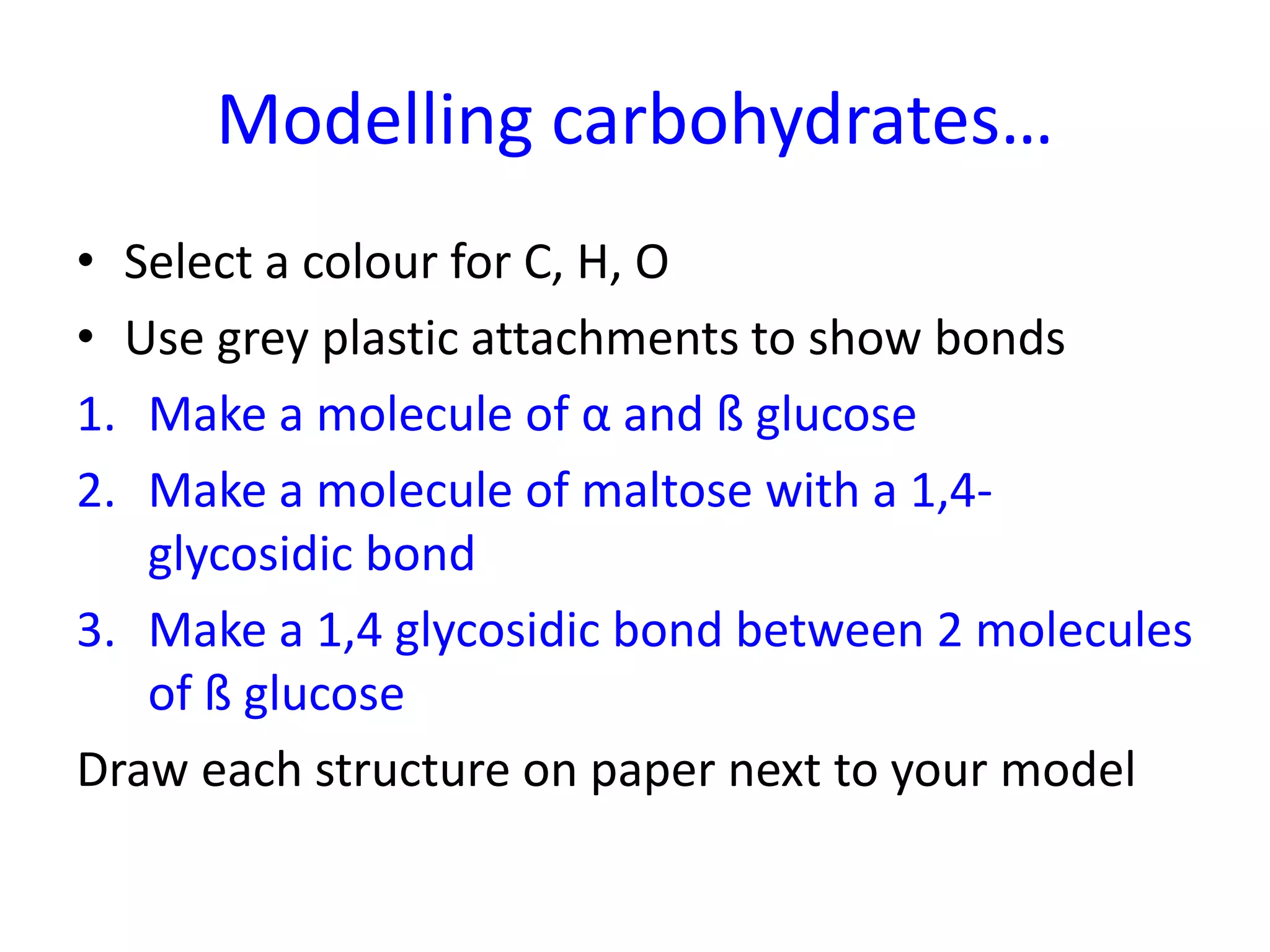
Modelling carbohydrates…
• Select a colour for C, H, O
• Use grey plastic attachments to show bonds
1. Make a molecule of α and ß glucose
2. Make a molecule of maltose with a 1,4-
glycosidic bond
3. Make a 1,4 glycosidic bond between 2 molecules
of ß glucose
Draw each structure on paper next to your model
Specification Points

Lesson 3 starch, glycogen and cellulose

  • 1.
    Starch, Glycogen andCellulose • To be able to relate the structure and function of the carbohydrates starch, glycogena dn cellulose
  • 4.
  • 6.
  • 7.
  • 8.
  • 9.
    Relating Structure toFunction 1. Glucose – OH groups make it water soluble, easily coverted to pyruvate in glycolysis 2. Starch (amylose) – easily broken down into glucose, linear structure allows for close packing, hence good energy store 3. Glycogen – several branches of the carbohydrate can be cut off at once to supply energy quickly 4. Cellulose – hydroxyl groups form hydrogen bonds with neighbouring chains, holding the chains firmly together forming microfibrils with high tensile strength
  • 10.
    Summary (P13-15)… Carbohydrate Typeof molecule Component monomers Structure Function and location Glucose Monomer α or ß glucose Linear or ring Aerobic respiration, bloodstream
  • 11.
    Test next lesson… •Be able to draw both glucose isomers • Be able to show a glycosidic bond • Be able to show hydrolysis and condensation reactions
  • 12.
    1) Choose coloursfor C, H , O • Make 2 molecules of alpha glucose • Join together by a glycosidic bond • Join a 3rd alpha glucose to make AMYLOSE
  • 13.
    Modelling carbohydrates… • Selecta colour for C, H, O • Use grey plastic attachments to show bonds 1. Make a molecule of α and ß glucose 2. Make a molecule of maltose with a 1,4- glycosidic bond 3. Make a 1,4 glycosidic bond between 2 molecules of ß glucose Draw each structure on paper next to your model
  • 14.