Lesson 3
 Know about polysaccharides
 Describe the structure of starch (amylose &
amylopectin), glycogen and cellulose
 Explain how the structure and properties of
glucose, starch, glycogen and cellulose relate
to their functions in living organisms
 Describe how to carry out the non-reducing
sugars test
 Make an information sheet on carbohydrates
to include the following:
 Compare and contrast the structure and function
of glucose, starch, cellulose and glycogen
 Carbohydrates as energy stores
 E.g. Starch and Glycogen
 Don’t dissolve
 Don’t effect water potential
 Branched molecules
 Glucose can be easily broken off
 Used in respiration (brain cannot use
anything else) to release energy and cause
the formation of ATP
 Easily converted into glycogen for storage
 Soluble in water, lowers water potential,
causes osmotic problems.
- Explain how the structure and properties of glucose, starch, glycogen
and cellulose relate to their functions in living organisms
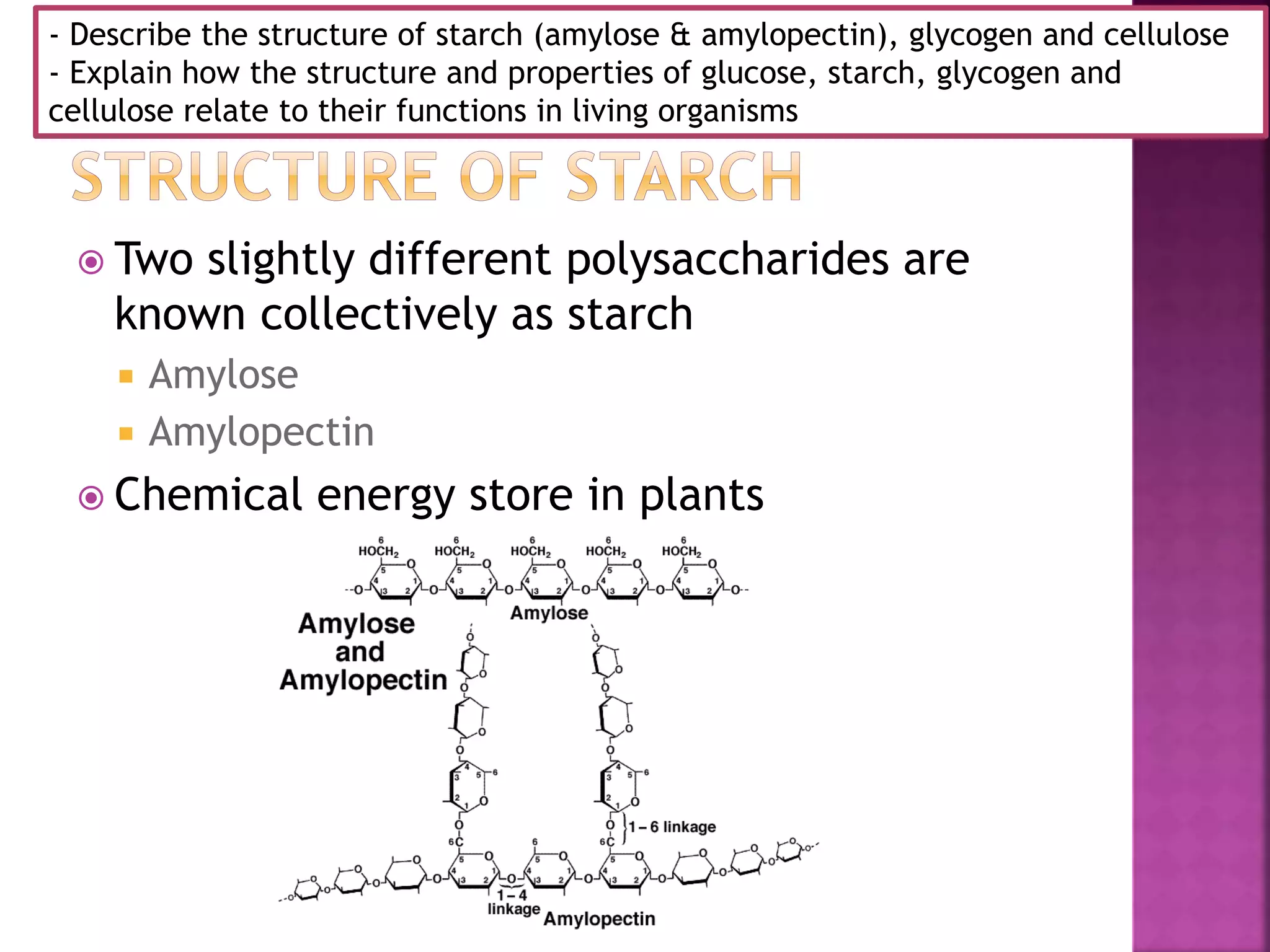
 Two slightly different polysaccharides are
known collectively as starch
 Amylose
 Amylopectin
 Chemical energy store in plants
- Describe the structure of starch (amylose & amylopectin), glycogen and cellulose
- Explain how the structure and properties of glucose, starch, glycogen and
cellulose relate to their functions in living organisms
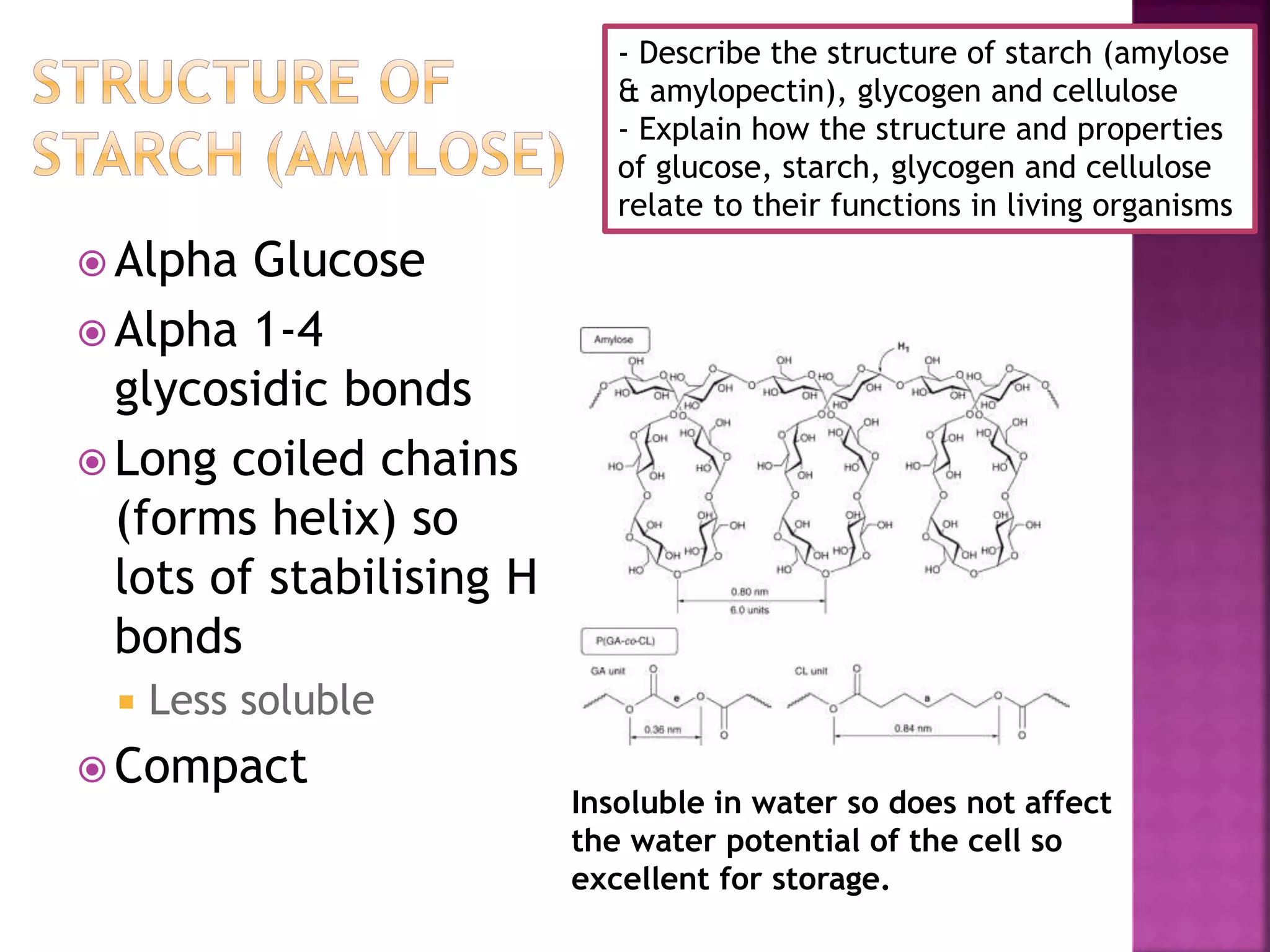
 Alpha Glucose
 Alpha 1-4
glycosidic bonds
 Long coiled chains
(forms helix) so
lots of stabilising H
bonds
 Less soluble
 Compact
Insoluble in water so does not affect
the water potential of the cell so
excellent for storage.
- Describe the structure of starch (amylose
& amylopectin), glycogen and cellulose
- Explain how the structure and properties
of glucose, starch, glycogen and cellulose
relate to their functions in living organisms
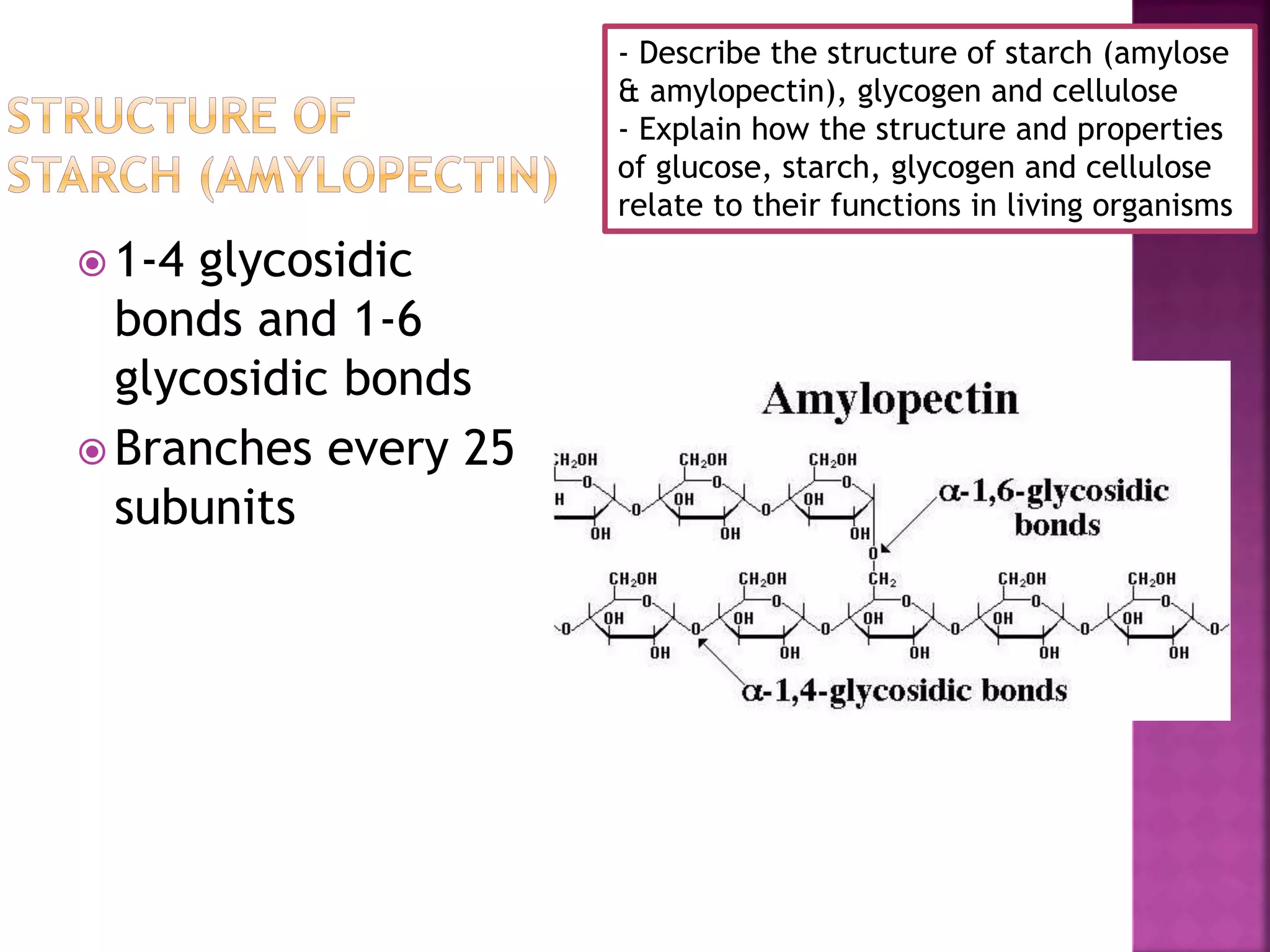
 1-4 glycosidic
bonds and 1-6
glycosidic bonds
 Branches every 25
subunits
- Describe the structure of starch (amylose
& amylopectin), glycogen and cellulose
- Explain how the structure and properties
of glucose, starch, glycogen and cellulose
relate to their functions in living organisms
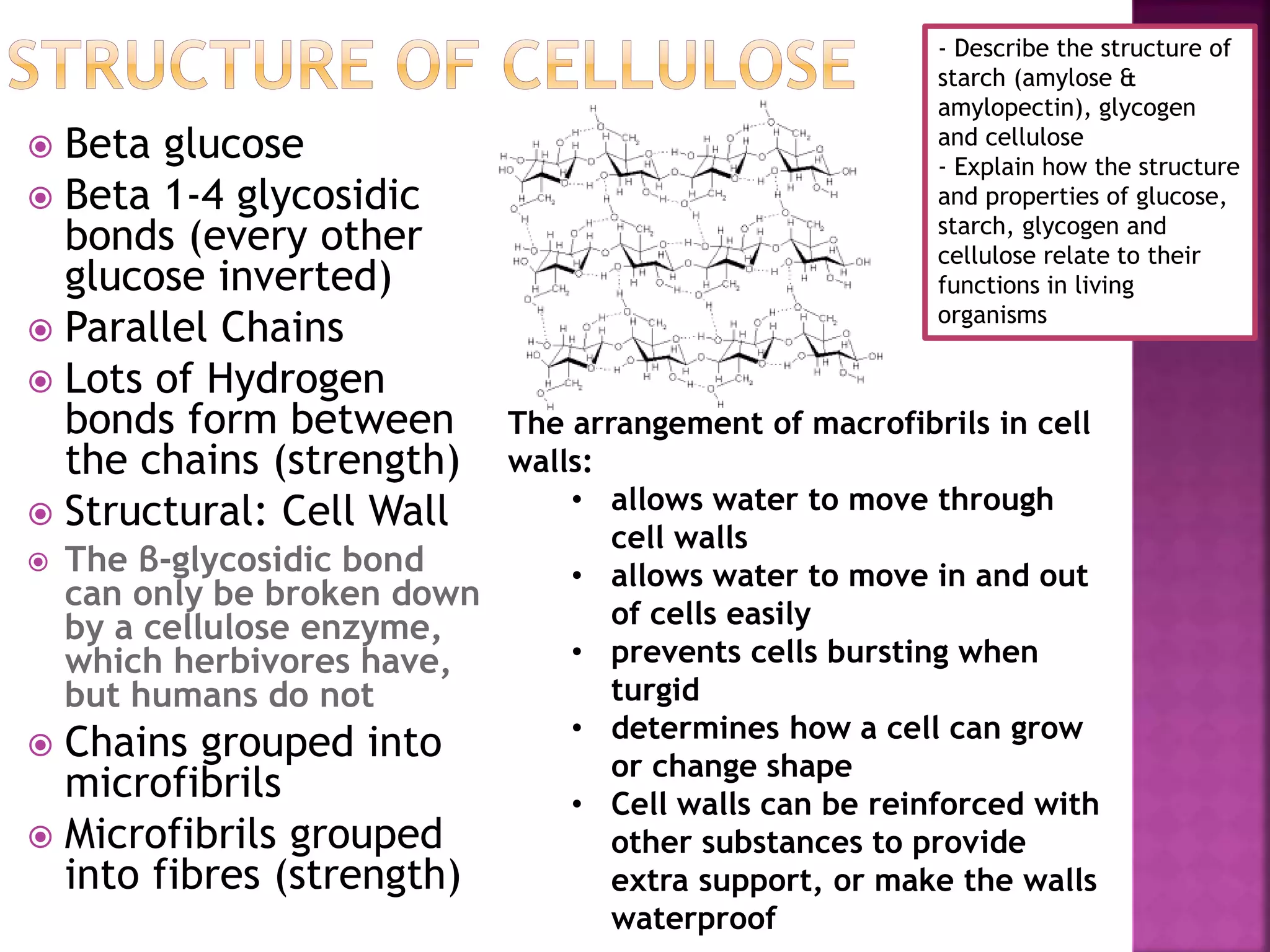
 Beta glucose
 Beta 1-4 glycosidic
bonds (every other
glucose inverted)
 Parallel Chains
 Lots of Hydrogen
bonds form between
the chains (strength)
 Structural: Cell Wall
 The β-glycosidic bond
can only be broken down
by a cellulose enzyme,
which herbivores have,
but humans do not
 Chains grouped into
microfibrils
 Microfibrils grouped
into fibres (strength)
The arrangement of macrofibrils in cell
walls:
• allows water to move through
cell walls
• allows water to move in and out
of cells easily
• prevents cells bursting when
turgid
• determines how a cell can grow
or change shape
• Cell walls can be reinforced with
other substances to provide
extra support, or make the walls
waterproof
- Describe the structure of
starch (amylose &
amylopectin), glycogen
and cellulose
- Explain how the structure
and properties of glucose,
starch, glycogen and
cellulose relate to their
functions in living
organisms
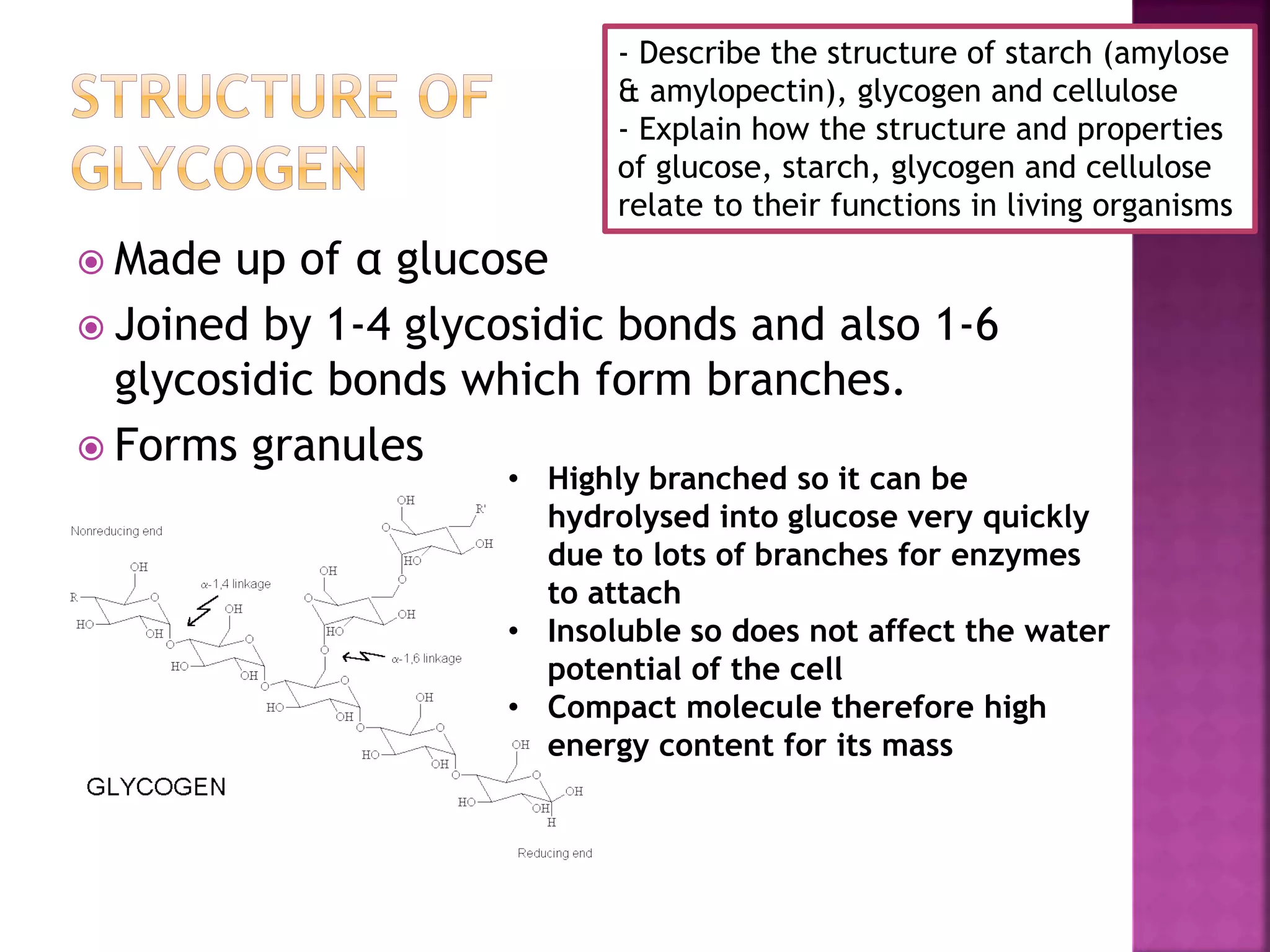
 Made up of α glucose
 Joined by 1-4 glycosidic bonds and also 1-6
glycosidic bonds which form branches.
 Forms granules
• Highly branched so it can be
hydrolysed into glucose very quickly
due to lots of branches for enzymes
to attach
• Insoluble so does not affect the water
potential of the cell
• Compact molecule therefore high
energy content for its mass
- Describe the structure of starch (amylose
& amylopectin), glycogen and cellulose
- Explain how the structure and properties
of glucose, starch, glycogen and cellulose
relate to their functions in living organisms

Starch presentation

  • 1.
  • 2.
     Know aboutpolysaccharides  Describe the structure of starch (amylose & amylopectin), glycogen and cellulose  Explain how the structure and properties of glucose, starch, glycogen and cellulose relate to their functions in living organisms  Describe how to carry out the non-reducing sugars test
  • 3.
     Make aninformation sheet on carbohydrates to include the following:  Compare and contrast the structure and function of glucose, starch, cellulose and glycogen
  • 4.
     Carbohydrates asenergy stores  E.g. Starch and Glycogen  Don’t dissolve  Don’t effect water potential  Branched molecules  Glucose can be easily broken off
  • 5.
     Used inrespiration (brain cannot use anything else) to release energy and cause the formation of ATP  Easily converted into glycogen for storage  Soluble in water, lowers water potential, causes osmotic problems. - Explain how the structure and properties of glucose, starch, glycogen and cellulose relate to their functions in living organisms
  • 6.
     Two slightlydifferent polysaccharides are known collectively as starch  Amylose  Amylopectin  Chemical energy store in plants - Describe the structure of starch (amylose & amylopectin), glycogen and cellulose - Explain how the structure and properties of glucose, starch, glycogen and cellulose relate to their functions in living organisms
  • 7.
     Alpha Glucose Alpha 1-4 glycosidic bonds  Long coiled chains (forms helix) so lots of stabilising H bonds  Less soluble  Compact Insoluble in water so does not affect the water potential of the cell so excellent for storage. - Describe the structure of starch (amylose & amylopectin), glycogen and cellulose - Explain how the structure and properties of glucose, starch, glycogen and cellulose relate to their functions in living organisms
  • 8.
     1-4 glycosidic bondsand 1-6 glycosidic bonds  Branches every 25 subunits - Describe the structure of starch (amylose & amylopectin), glycogen and cellulose - Explain how the structure and properties of glucose, starch, glycogen and cellulose relate to their functions in living organisms
  • 9.
     Beta glucose Beta 1-4 glycosidic bonds (every other glucose inverted)  Parallel Chains  Lots of Hydrogen bonds form between the chains (strength)  Structural: Cell Wall  The β-glycosidic bond can only be broken down by a cellulose enzyme, which herbivores have, but humans do not  Chains grouped into microfibrils  Microfibrils grouped into fibres (strength) The arrangement of macrofibrils in cell walls: • allows water to move through cell walls • allows water to move in and out of cells easily • prevents cells bursting when turgid • determines how a cell can grow or change shape • Cell walls can be reinforced with other substances to provide extra support, or make the walls waterproof - Describe the structure of starch (amylose & amylopectin), glycogen and cellulose - Explain how the structure and properties of glucose, starch, glycogen and cellulose relate to their functions in living organisms
  • 10.
     Made upof α glucose  Joined by 1-4 glycosidic bonds and also 1-6 glycosidic bonds which form branches.  Forms granules • Highly branched so it can be hydrolysed into glucose very quickly due to lots of branches for enzymes to attach • Insoluble so does not affect the water potential of the cell • Compact molecule therefore high energy content for its mass - Describe the structure of starch (amylose & amylopectin), glycogen and cellulose - Explain how the structure and properties of glucose, starch, glycogen and cellulose relate to their functions in living organisms