Photosynthesis #1 
Learning objectives... 
•Link leaf structure to efficiency in photosynthesis 
•Review chloroplast structure 
•Describe and explain the role of photosynthetic 
pigments in light harvesting
Photosynthesis overview and 
chloroplast structure 
• (d) state that in plants photosynthesis is a 
two-stage process taking place in chloroplasts; 
• (e) explain, with the aid of diagrams and 
electron micrographs, how the structure of 
chloroplasts enables them to carry out their 
functions;
Stages of photosynthesis... 
• Light harvesting 
• Light independent 
• Light dependent 
(d) state that in plants photosynthesis is a 
two-stage process taking place in 
chloroplasts
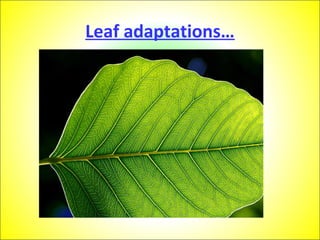
Leaf adaptations…
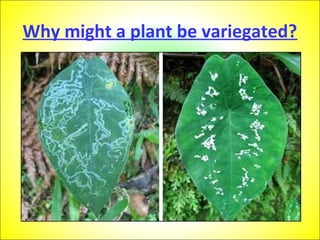
Why might a plant be variegated?
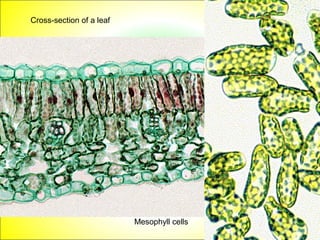
Cross-section of a leaf 
100 mm 
Mesophyll cells
How are chloroplasts positioned? 
• http://www.saps.org.uk/secondary/teaching-resources/
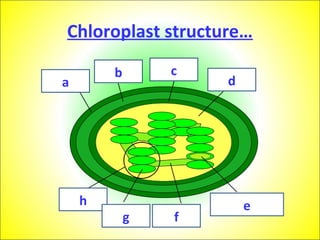
Chloroplast structure… 
a 
h 
g f 
e 
d 
b c
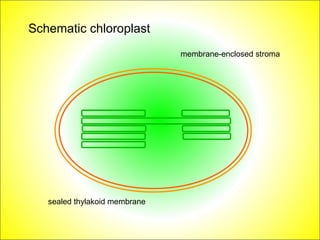
Schematic chloroplast 
sealed thylakoid membrane 
membrane-enclosed stroma
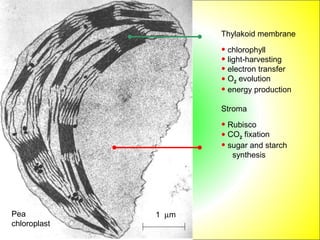
Thylakoid membrane 
• chlorophyll 
• light-harvesting 
• electron transfer 
• O2 evolution 
• energy production 
Stroma 
• Rubisco 
• CO2 fixation 
• sugar and starch 
synthesis 
Pea 
chloroplast 
1 mm
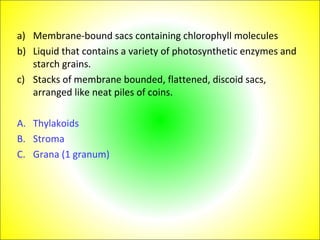
a) Membrane-bound sacs containing chlorophyll molecules 
b) Liquid that contains a variety of photosynthetic enzymes and 
starch grains. 
c) Stacks of membrane bounded, flattened, discoid sacs, 
arranged like neat piles of coins. 
A. Thylakoids 
B. Stroma 
C. Grana (1 granum)
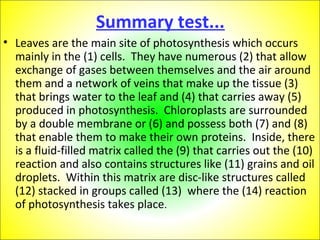
Summary test... 
• Leaves are the main site of photosynthesis which occurs 
mainly in the (1) cells. They have numerous (2) that allow 
exchange of gases between themselves and the air around 
them and a network of veins that make up the tissue (3) 
that brings water to the leaf and (4) that carries away (5) 
produced in photosynthesis. Chloroplasts are surrounded 
by a double membrane or (6) and possess both (7) and (8) 
that enable them to make their own proteins. Inside, there 
is a fluid-filled matrix called the (9) that carries out the (10) 
reaction and also contains structures like (11) grains and oil 
droplets. Within this matrix are disc-like structures called 
(12) stacked in groups called (13) where the (14) reaction 
of photosynthesis takes place.
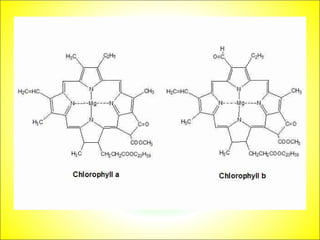
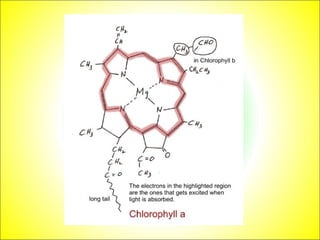
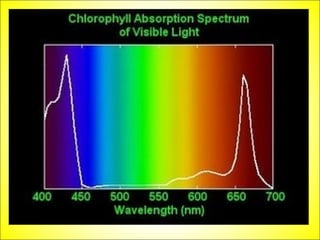
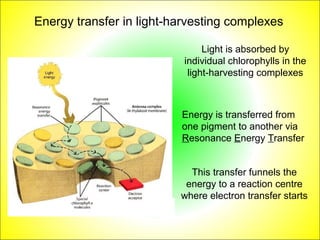
Energy transfer in light-harvesting complexes 
Light is absorbed by 
individual chlorophylls in the 
light-harvesting complexes 
Energy is transferred from 
one pigment to another via 
Resonance Energy Transfer 
This transfer funnels the 
energy to a reaction centre 
where electron transfer starts

Lesson 2 chloroplast structure and leaf adaptations

  • 1.
    Photosynthesis #1 Learningobjectives... •Link leaf structure to efficiency in photosynthesis •Review chloroplast structure •Describe and explain the role of photosynthetic pigments in light harvesting
  • 2.
    Photosynthesis overview and chloroplast structure • (d) state that in plants photosynthesis is a two-stage process taking place in chloroplasts; • (e) explain, with the aid of diagrams and electron micrographs, how the structure of chloroplasts enables them to carry out their functions;
  • 3.
    Stages of photosynthesis... • Light harvesting • Light independent • Light dependent (d) state that in plants photosynthesis is a two-stage process taking place in chloroplasts
  • 4.
  • 5.
    Why might aplant be variegated?
  • 6.
    Cross-section of aleaf 100 mm Mesophyll cells
  • 7.
    How are chloroplastspositioned? • http://www.saps.org.uk/secondary/teaching-resources/
  • 8.
  • 9.
    Schematic chloroplast sealedthylakoid membrane membrane-enclosed stroma
  • 10.
    Thylakoid membrane •chlorophyll • light-harvesting • electron transfer • O2 evolution • energy production Stroma • Rubisco • CO2 fixation • sugar and starch synthesis Pea chloroplast 1 mm
  • 11.
    a) Membrane-bound sacscontaining chlorophyll molecules b) Liquid that contains a variety of photosynthetic enzymes and starch grains. c) Stacks of membrane bounded, flattened, discoid sacs, arranged like neat piles of coins. A. Thylakoids B. Stroma C. Grana (1 granum)
  • 15.
    Summary test... •Leaves are the main site of photosynthesis which occurs mainly in the (1) cells. They have numerous (2) that allow exchange of gases between themselves and the air around them and a network of veins that make up the tissue (3) that brings water to the leaf and (4) that carries away (5) produced in photosynthesis. Chloroplasts are surrounded by a double membrane or (6) and possess both (7) and (8) that enable them to make their own proteins. Inside, there is a fluid-filled matrix called the (9) that carries out the (10) reaction and also contains structures like (11) grains and oil droplets. Within this matrix are disc-like structures called (12) stacked in groups called (13) where the (14) reaction of photosynthesis takes place.
  • 16.
    Energy transfer inlight-harvesting complexes Light is absorbed by individual chlorophylls in the light-harvesting complexes Energy is transferred from one pigment to another via Resonance Energy Transfer This transfer funnels the energy to a reaction centre where electron transfer starts