Protein Structure Review
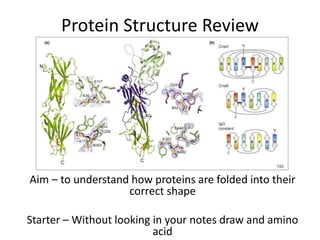
Aim – to understand how proteins are folded into their
correct shape
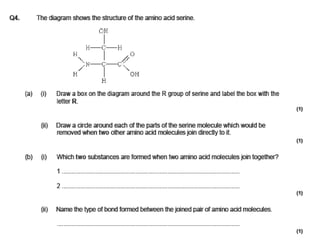
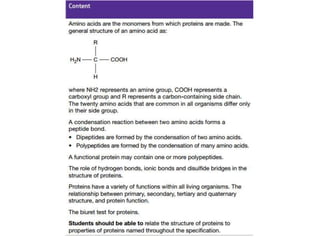
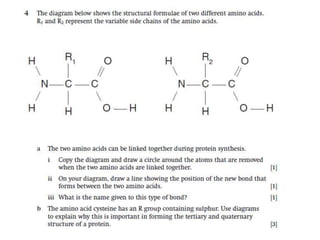
Starter – Without looking in your notes draw and amino
acid
Why are proteins so useful?
They have many different purposes.
1. They serve as enzymatic catalysts, eg pepsin which breaks
down protein.
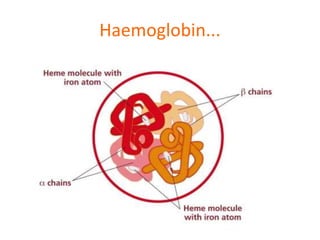
2. They serve to transport, eg haemoglobin transports
oxygen.
3. They serve as storage, eg iron is stored in the liver as a
complex with the protein ferritin.
4. They are used in movement. Proteins are the major
component of muscles.
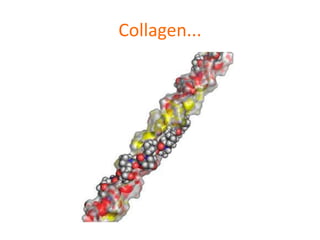
5. Skin and bone are made of a fibrous protein called
collagen.
6. They mediate responses, eg rhodopsin which is a protein
located in the eye.
7. Antibodies are proteins if the immune system.
8. Hormones are proteins of the endocrine system.
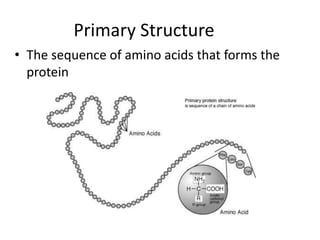
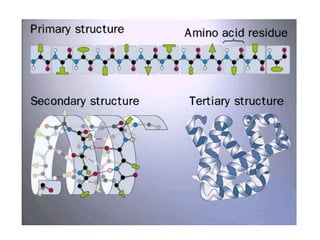
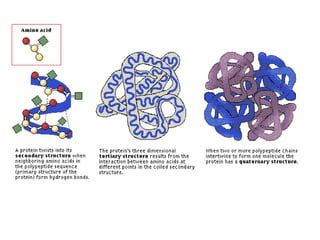
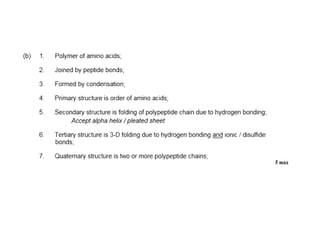
Primary Structure
• The sequence of amino acids that forms the
protein
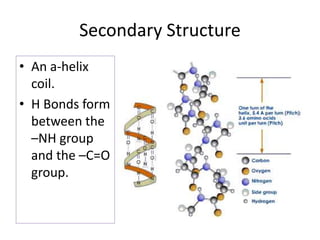
Secondary Structure
• An a-helix
coil.
• H Bonds form
between the
–NH group
and the –C=O
group.
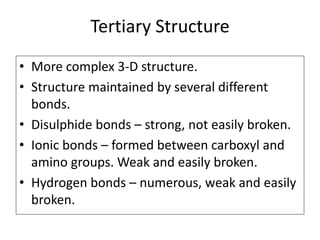
Tertiary Structure
• More complex 3-D structure.
• Structure maintained by several different
bonds.
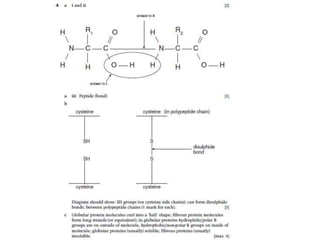
• Disulphide bonds – strong, not easily broken.
• Ionic bonds – formed between carboxyl and
amino groups. Weak and easily broken.
• Hydrogen bonds – numerous, weak and easily
broken.
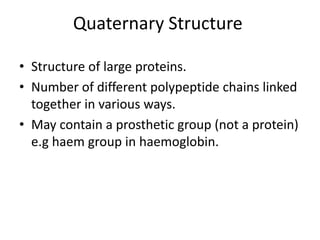
Quaternary Structure
• Structure of large proteins.
• Number of different polypeptide chains linked
together in various ways.
• May contain a prosthetic group (not a protein)
e.g haem group in haemoglobin.
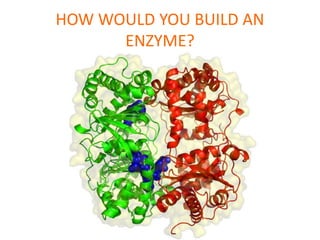
HOW WOULD YOU BUILD AN
ENZYME?
Haemoglobin...
Collagen...
Lesson 7 protein structure review

Lesson 7 protein structure review

  • 1.
    Protein Structure Review Aim– to understand how proteins are folded into their correct shape Starter – Without looking in your notes draw and amino acid
  • 2.
    Why are proteinsso useful? They have many different purposes. 1. They serve as enzymatic catalysts, eg pepsin which breaks down protein. 2. They serve to transport, eg haemoglobin transports oxygen. 3. They serve as storage, eg iron is stored in the liver as a complex with the protein ferritin. 4. They are used in movement. Proteins are the major component of muscles. 5. Skin and bone are made of a fibrous protein called collagen. 6. They mediate responses, eg rhodopsin which is a protein located in the eye. 7. Antibodies are proteins if the immune system. 8. Hormones are proteins of the endocrine system.
  • 5.
    Primary Structure • Thesequence of amino acids that forms the protein
  • 6.
    Secondary Structure • Ana-helix coil. • H Bonds form between the –NH group and the –C=O group.
  • 7.
    Tertiary Structure • Morecomplex 3-D structure. • Structure maintained by several different bonds. • Disulphide bonds – strong, not easily broken. • Ionic bonds – formed between carboxyl and amino groups. Weak and easily broken. • Hydrogen bonds – numerous, weak and easily broken.
  • 9.
    Quaternary Structure • Structureof large proteins. • Number of different polypeptide chains linked together in various ways. • May contain a prosthetic group (not a protein) e.g haem group in haemoglobin.
  • 13.
    HOW WOULD YOUBUILD AN ENZYME?
  • 14.
  • 16.