Biochemistry for Medics
www.namrata.co
The term carbohydrate is derived from the French    term : hydrate de

carbone

 Compounds composed of C, H, and O


 Empirical formula (CH2O)n    when n = 5 then C5H10O5

Not all carbohydrates have this empirical formula: e.g.

deoxysugars, amino sugars etc

Carbohydrates are the most abundant compounds found in nature


(cellulose: 100 billion tons annually)
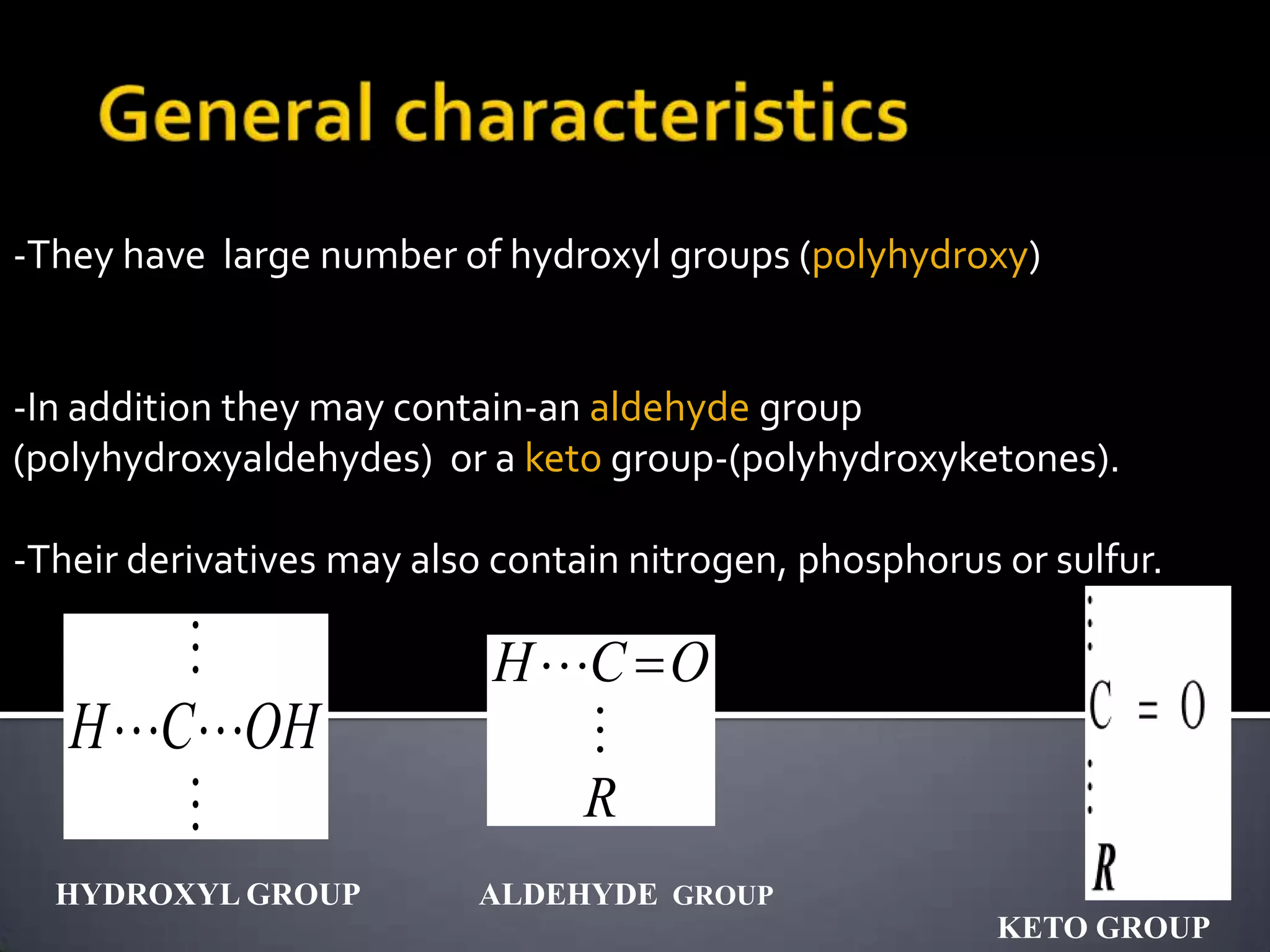
-They have large number of hydroxyl groups (polyhydroxy)


-In addition they may contain-an aldehyde group
(polyhydroxyaldehydes) or a keto group-(polyhydroxyketones).

-Their derivatives may also contain nitrogen, phosphorus or sulfur.

                          H C O
   H COH                    
                             R
  HYDROXYL GROUP           ALDEHYDE GROUP
                                                         KETO GROUP
Functions of Carbohydrates
Classification of carbohydrates
Monosaccharides
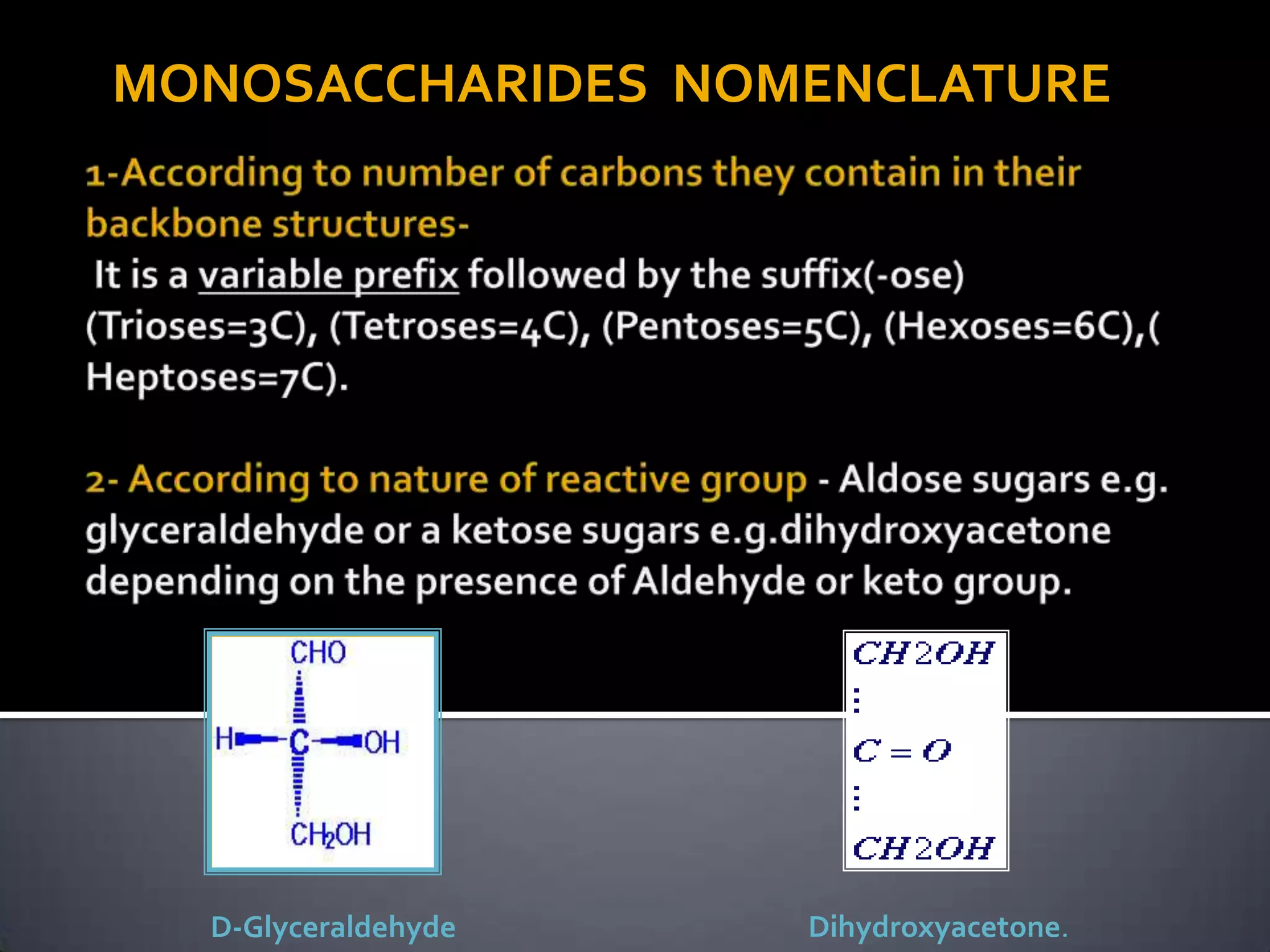
MONOSACCHARIDES NOMENCLATURE


  D-Glyceraldehyde   Dihydroxyacetone.
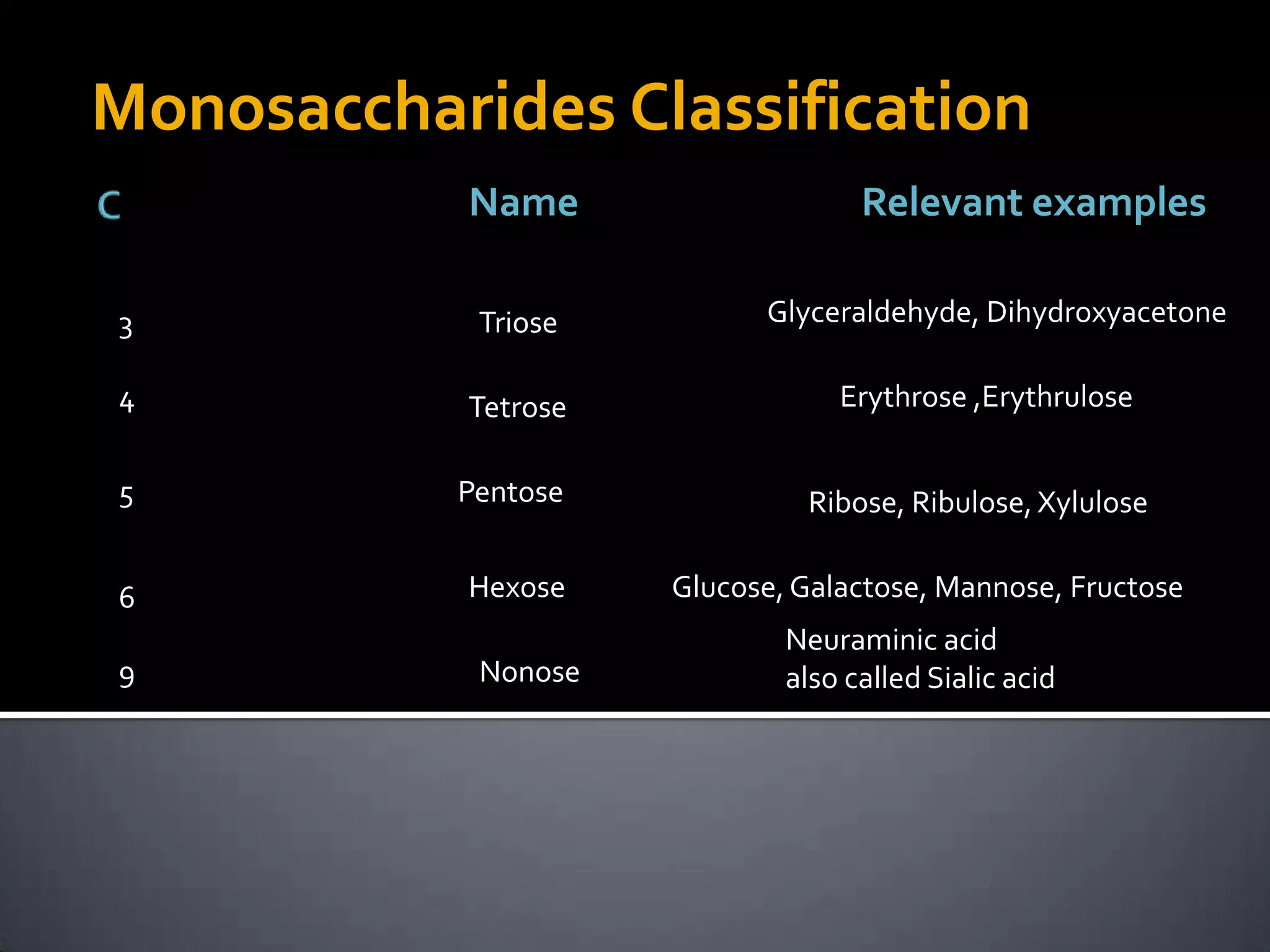
Monosaccharides Classification
            Name                    Relevant examples

3           Triose          Glyceraldehyde, Dihydroxyacetone

4           Tetrose               Erythrose ,Erythrulose

5          Pentose             Ribose, Ribulose, Xylulose


6           Hexose    Glucose, Galactose, Mannose, Fructose
                              Neuraminic acid
9           Nonose            also called Sialic acid
Aldose sugars


n - denotes the number of asymmetric carbon atoms
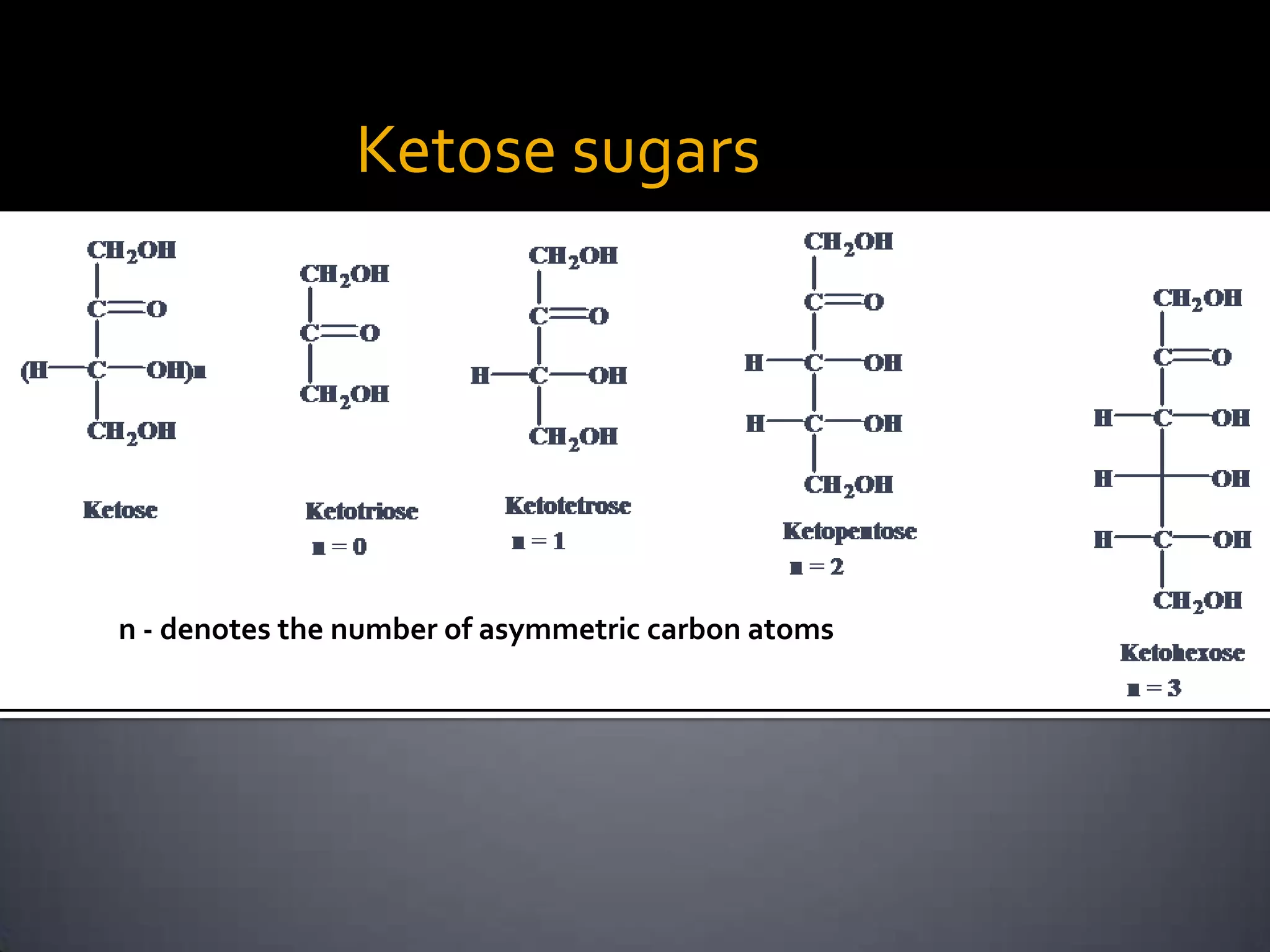
Ketose sugars


n - denotes the number of asymmetric carbon atoms
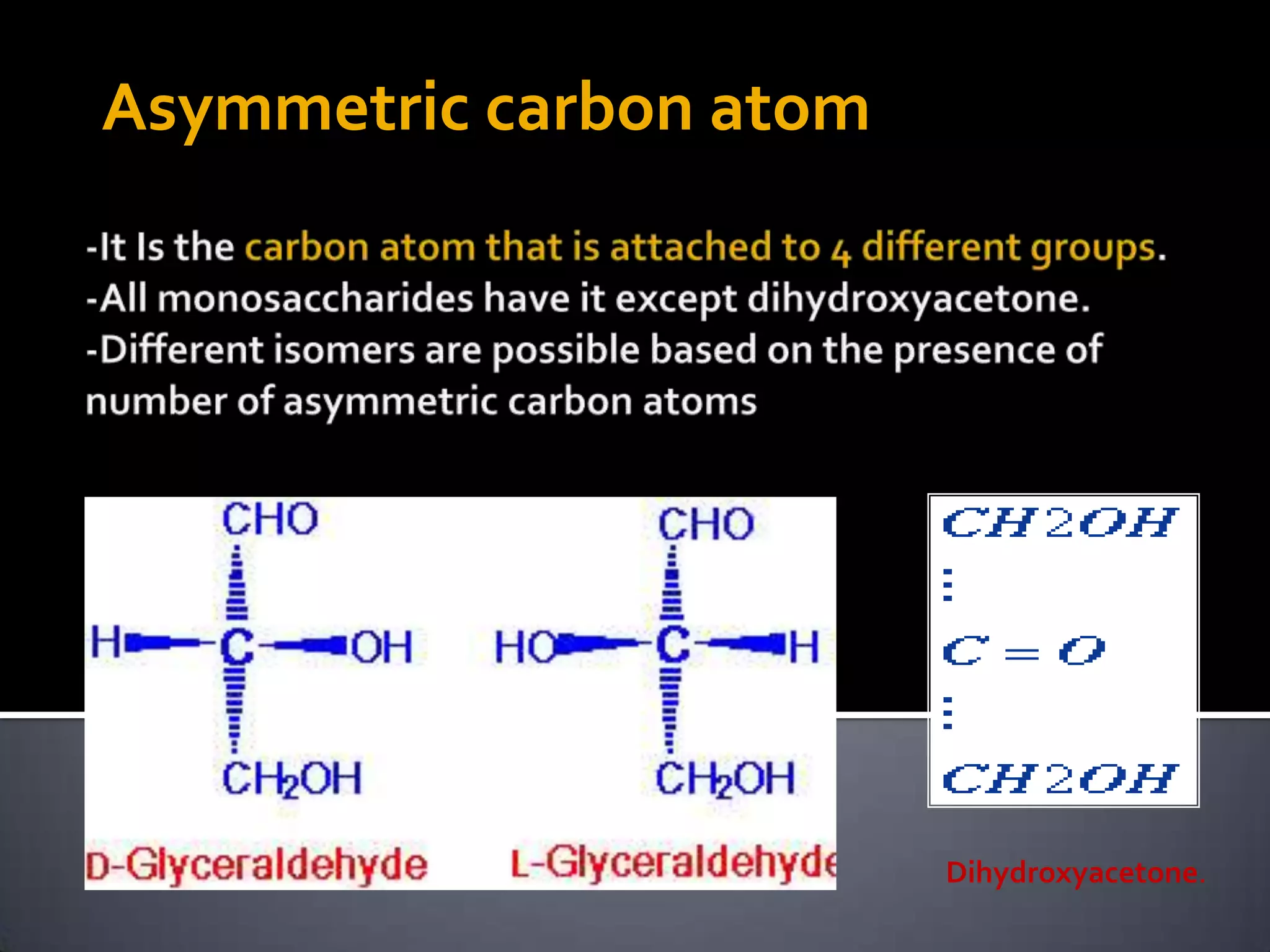
Asymmetric carbon atom


                         Dihydroxyacetone.
Isomerism in Monosaccharides
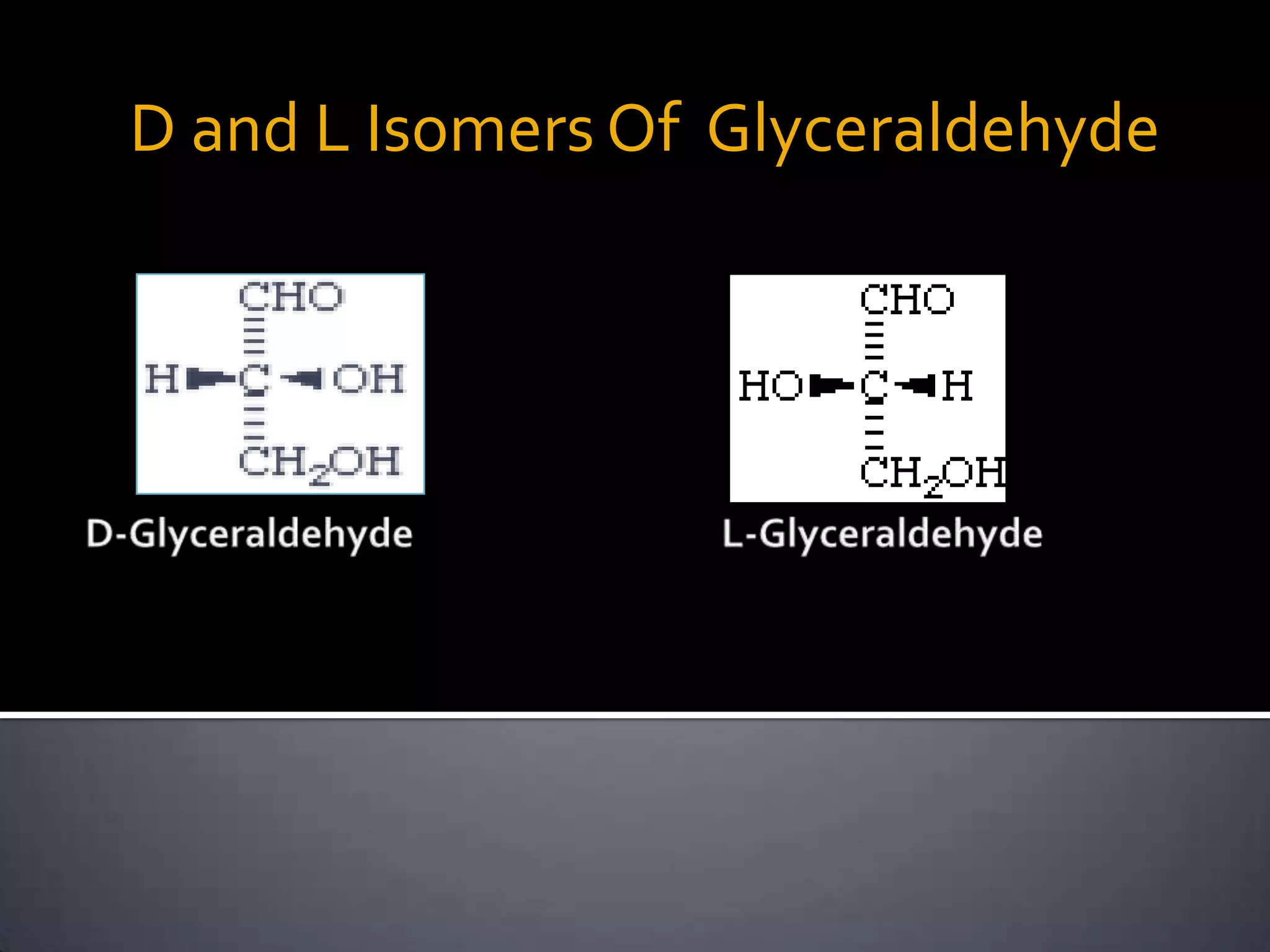
D and L Isomers Of Glyceraldehyde
Isomers of Monosaccharides(D and L)
D and L Isomers of Fructose
Isomerism in Monosaccharides
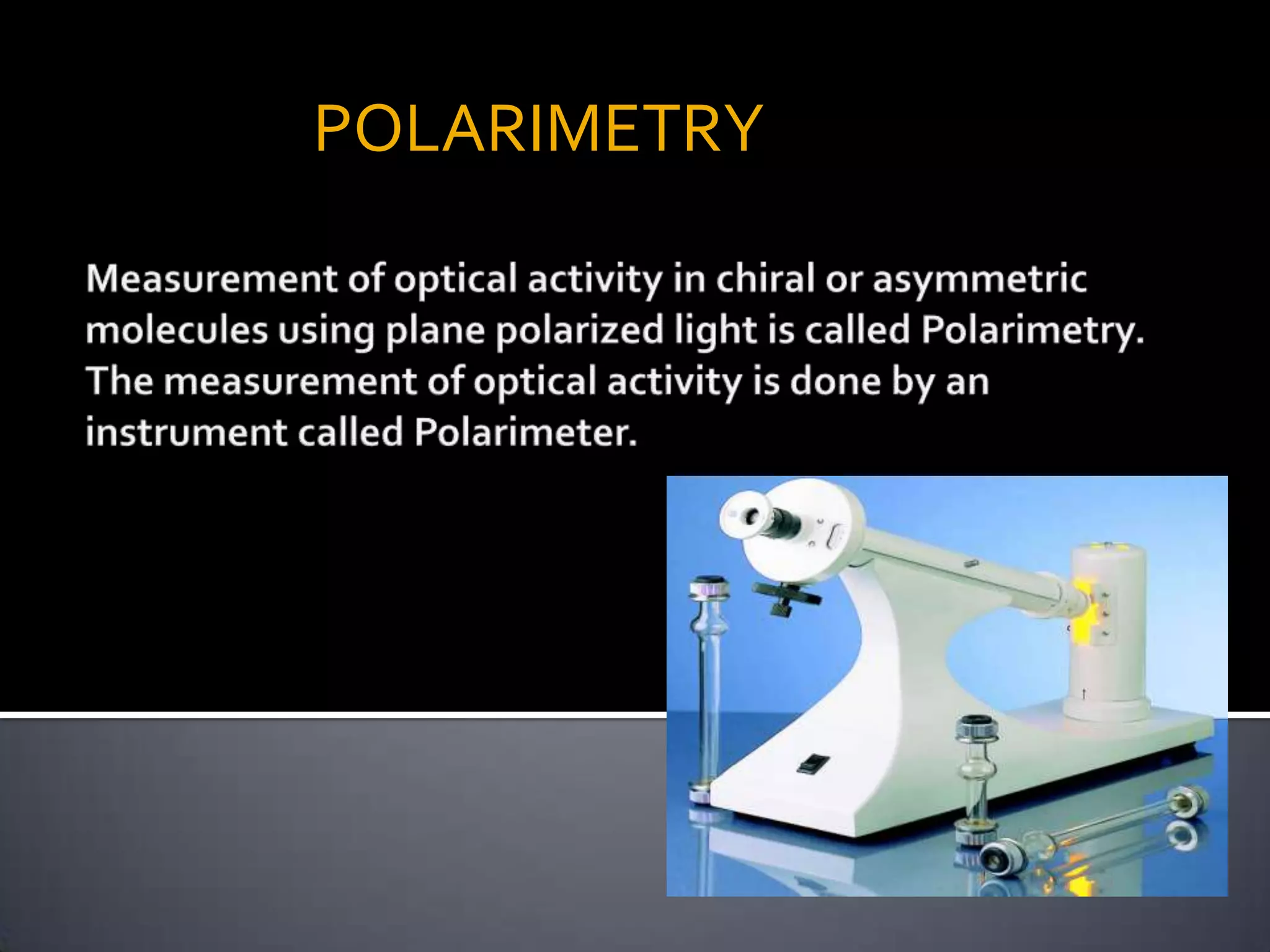
POLARIMETRY
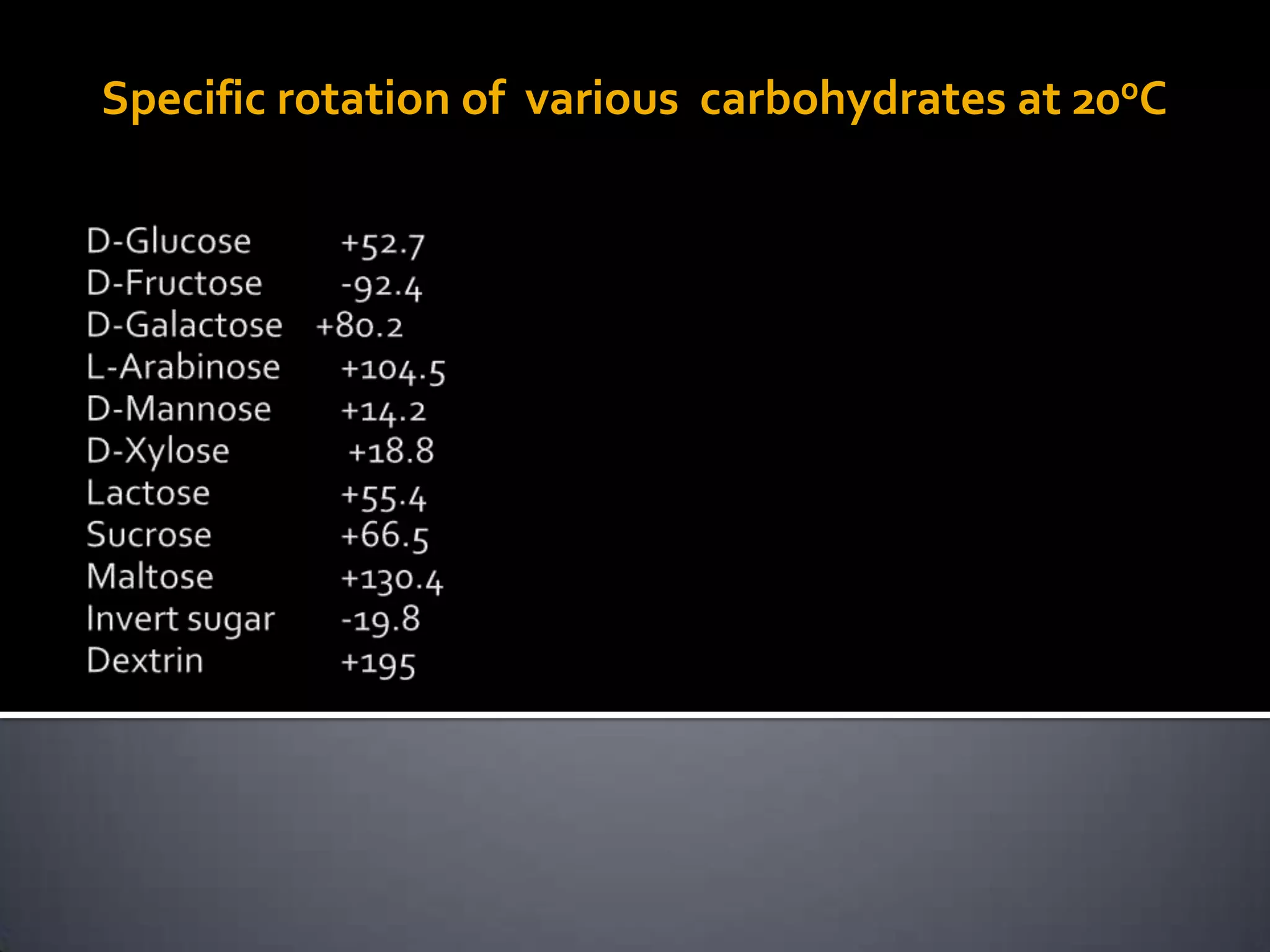
Specific rotation of various carbohydrates at 20oC
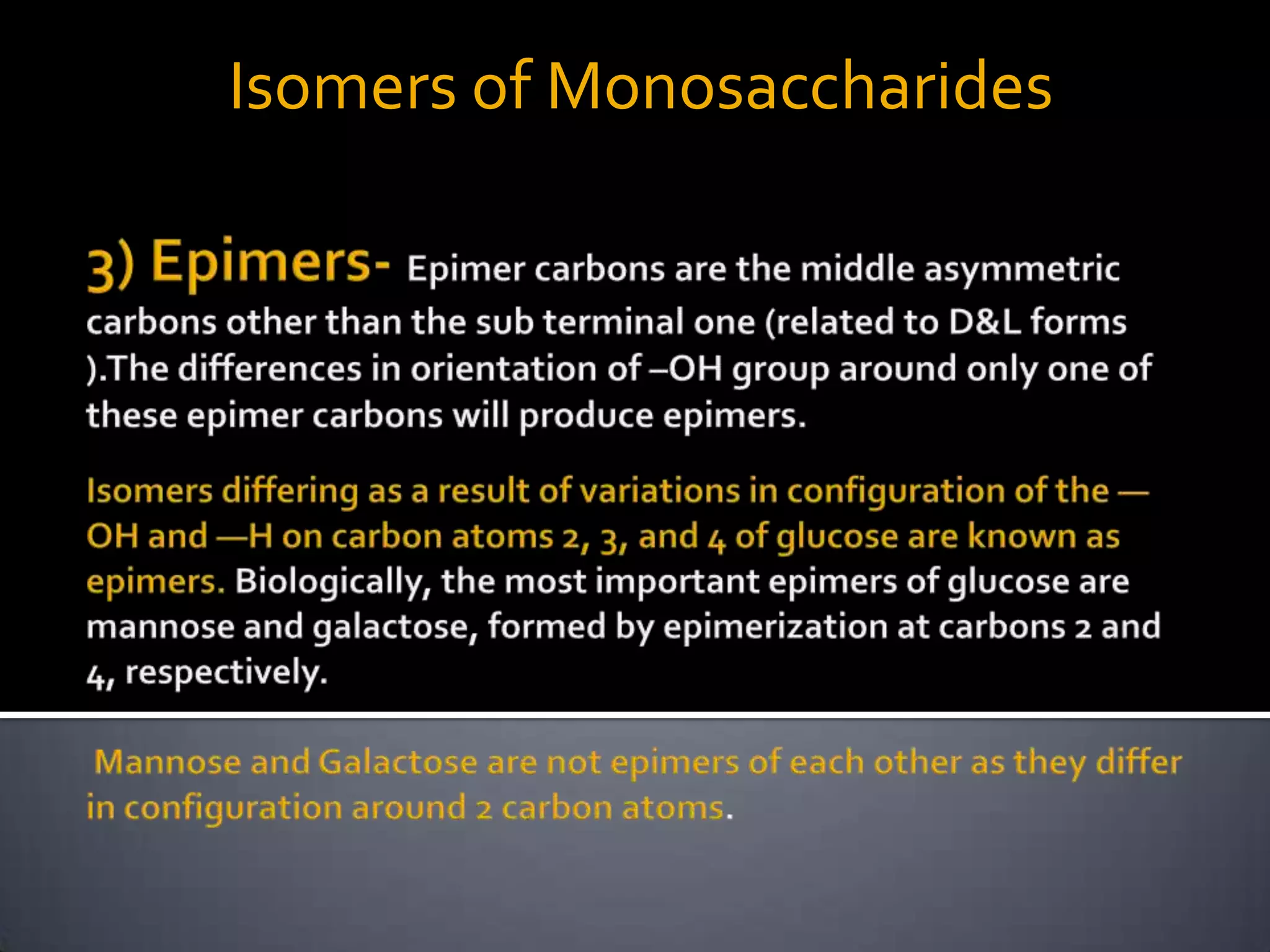
Isomers differing as a result of variations in configuration of the —OH and —H on carbon atoms 2, 3, and 4 of glucose are known as ep


                      Isomers of Monosaccharides
Epimers of Glucose
Isomers of Monosaccharides(Aldoses)
Isomers of Monosaccharides
(Ketoses)
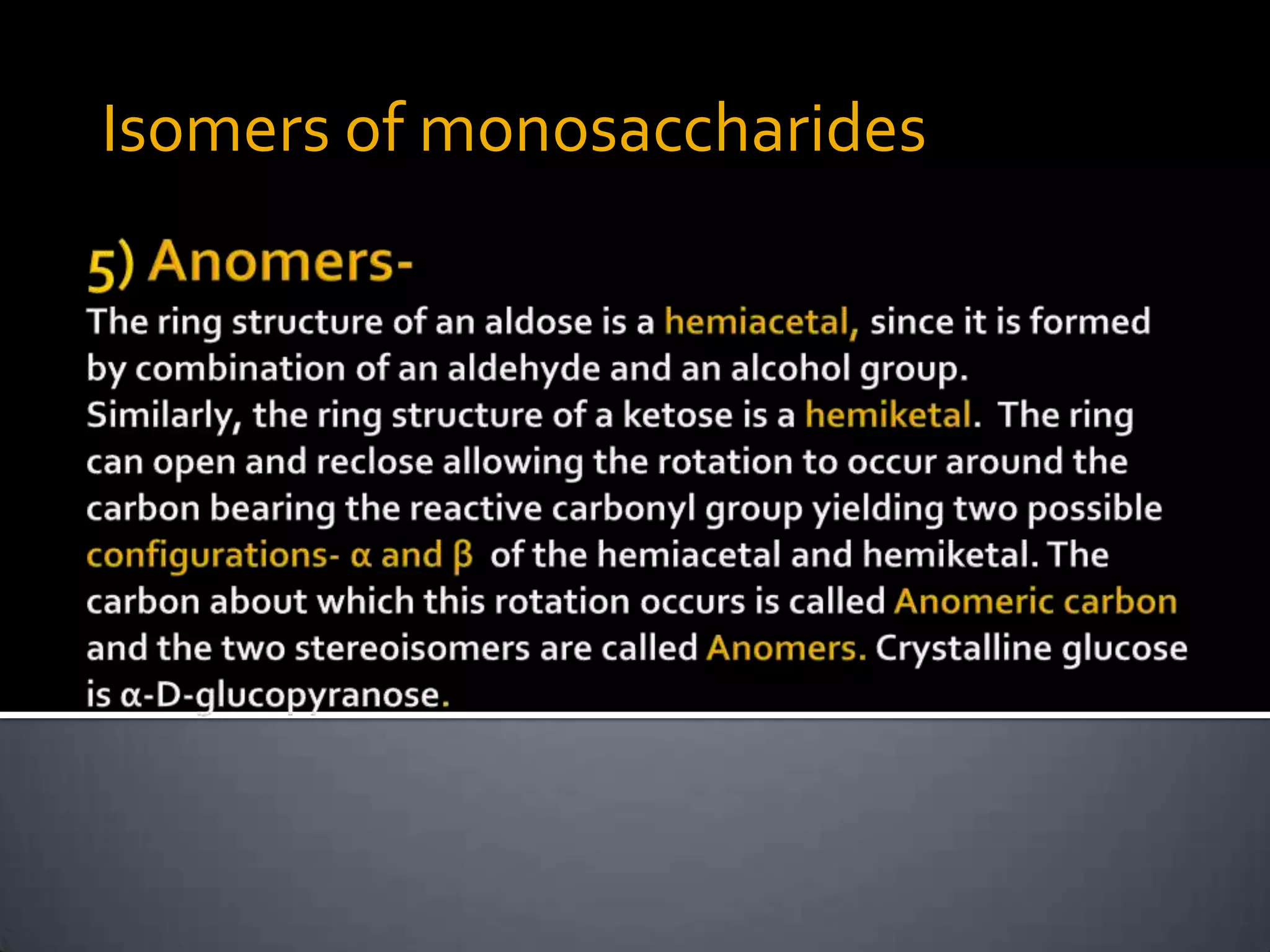
Isomers of monosaccharides
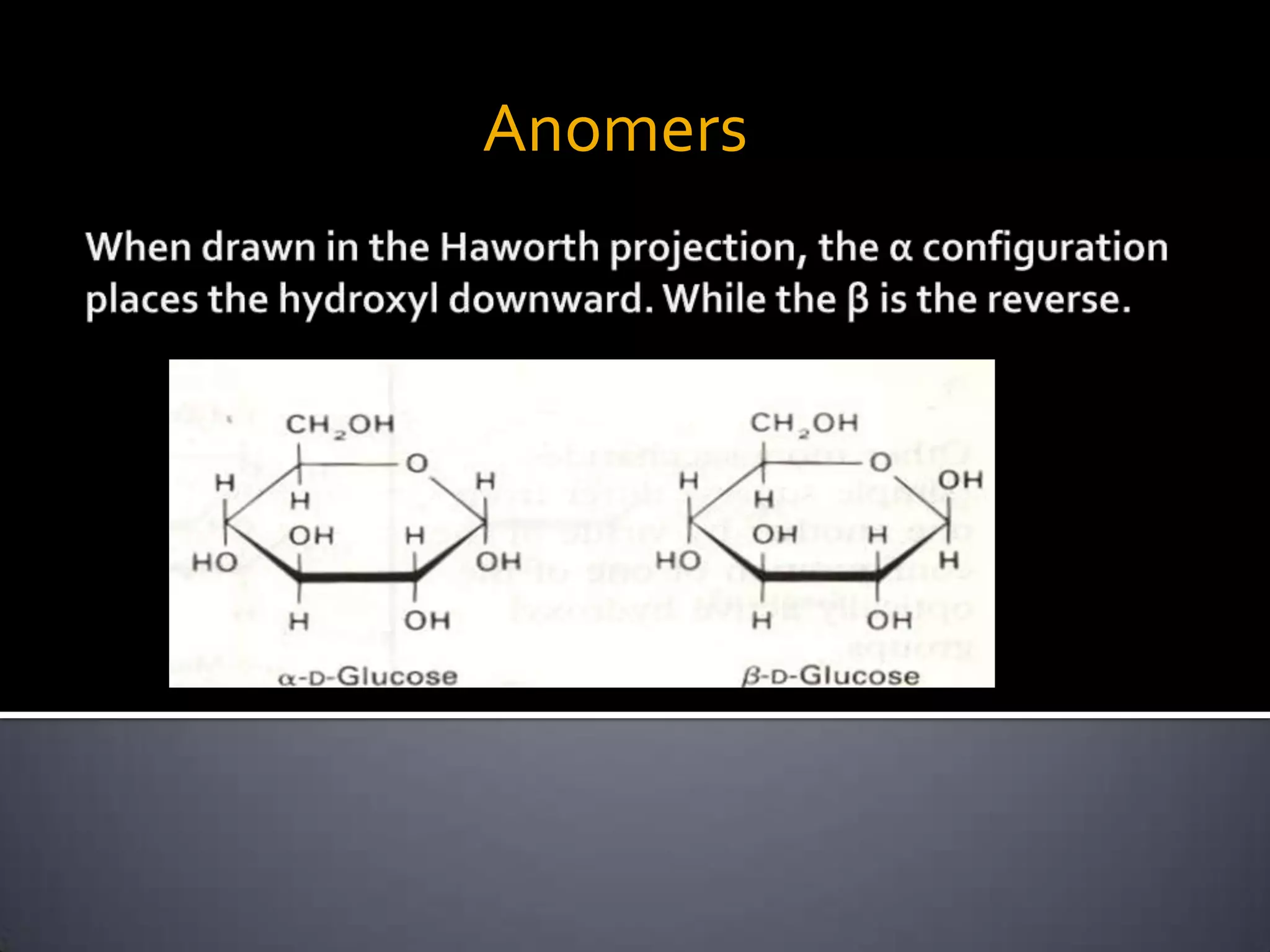
Anomers


          Haworth Projection
          of -D-Glucose
Anomers
Anomers
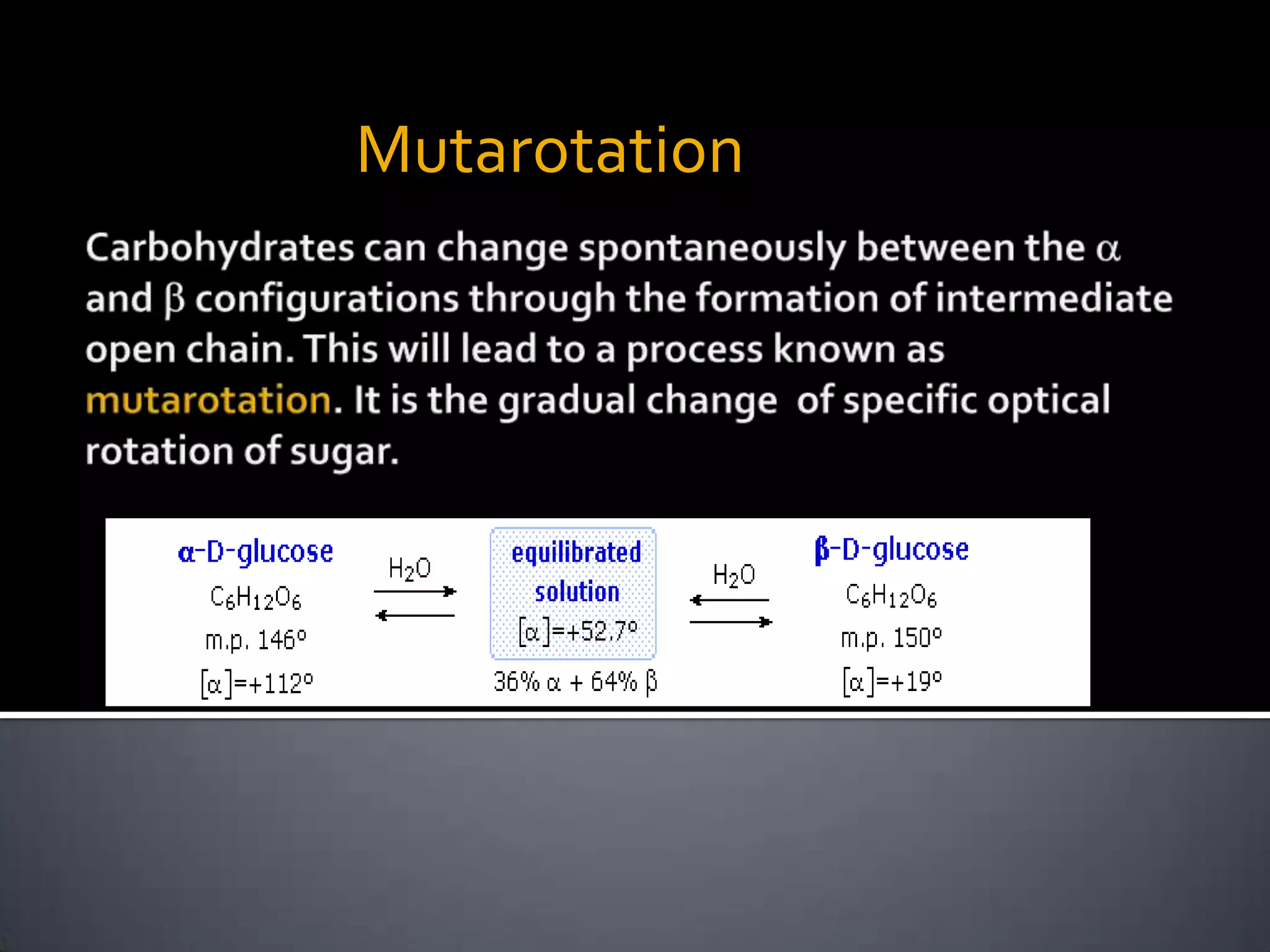
Mutarotation
Isomers of Monosaccharides
Structural representation of sugars
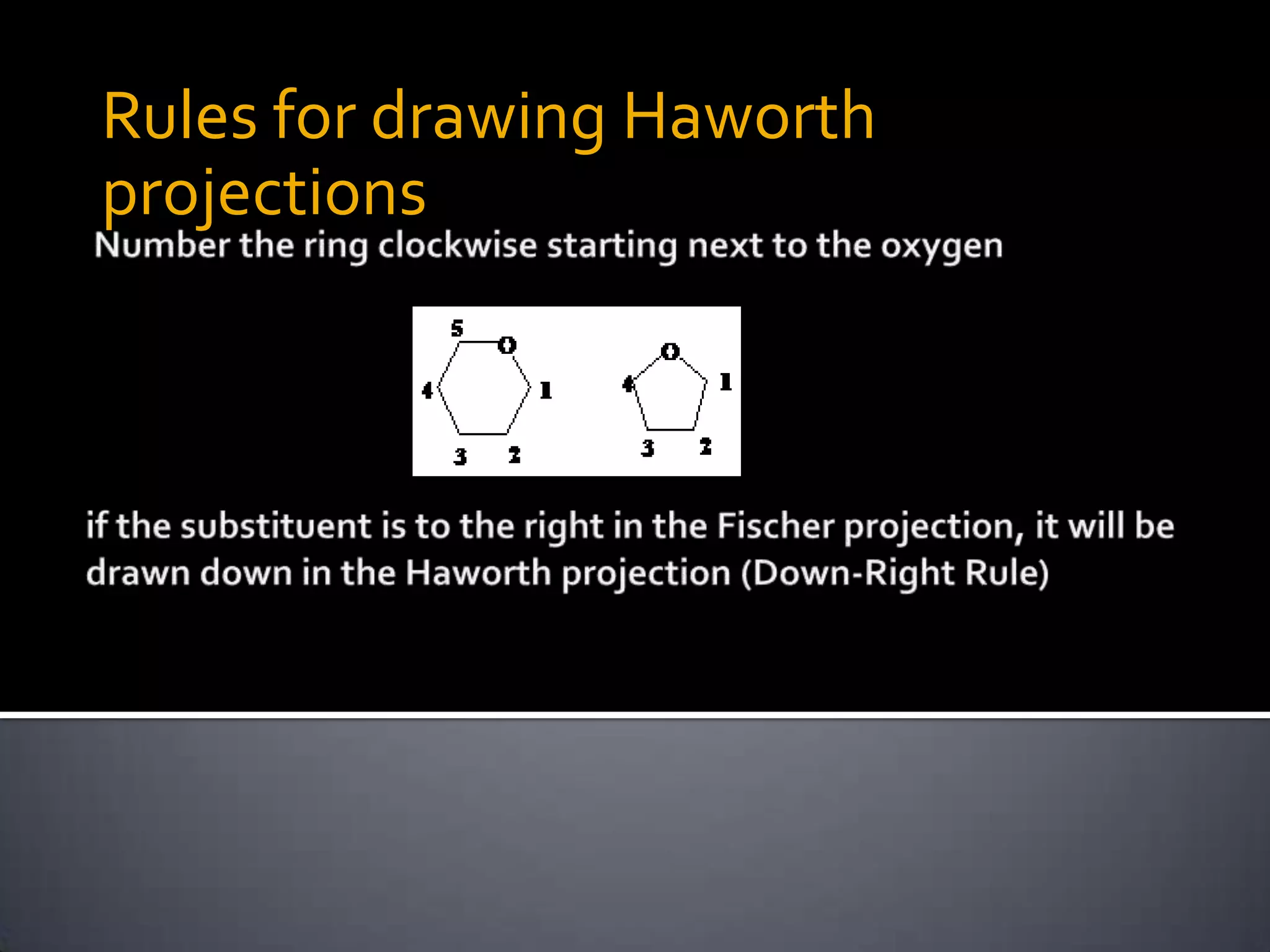
Rules for drawing Haworth
projections
Rules for drawing Haworth
projections
Rules for drawing Haworth
projections
Rules for drawing Haworth projections
Pyranose and Furanose forms of Glucose
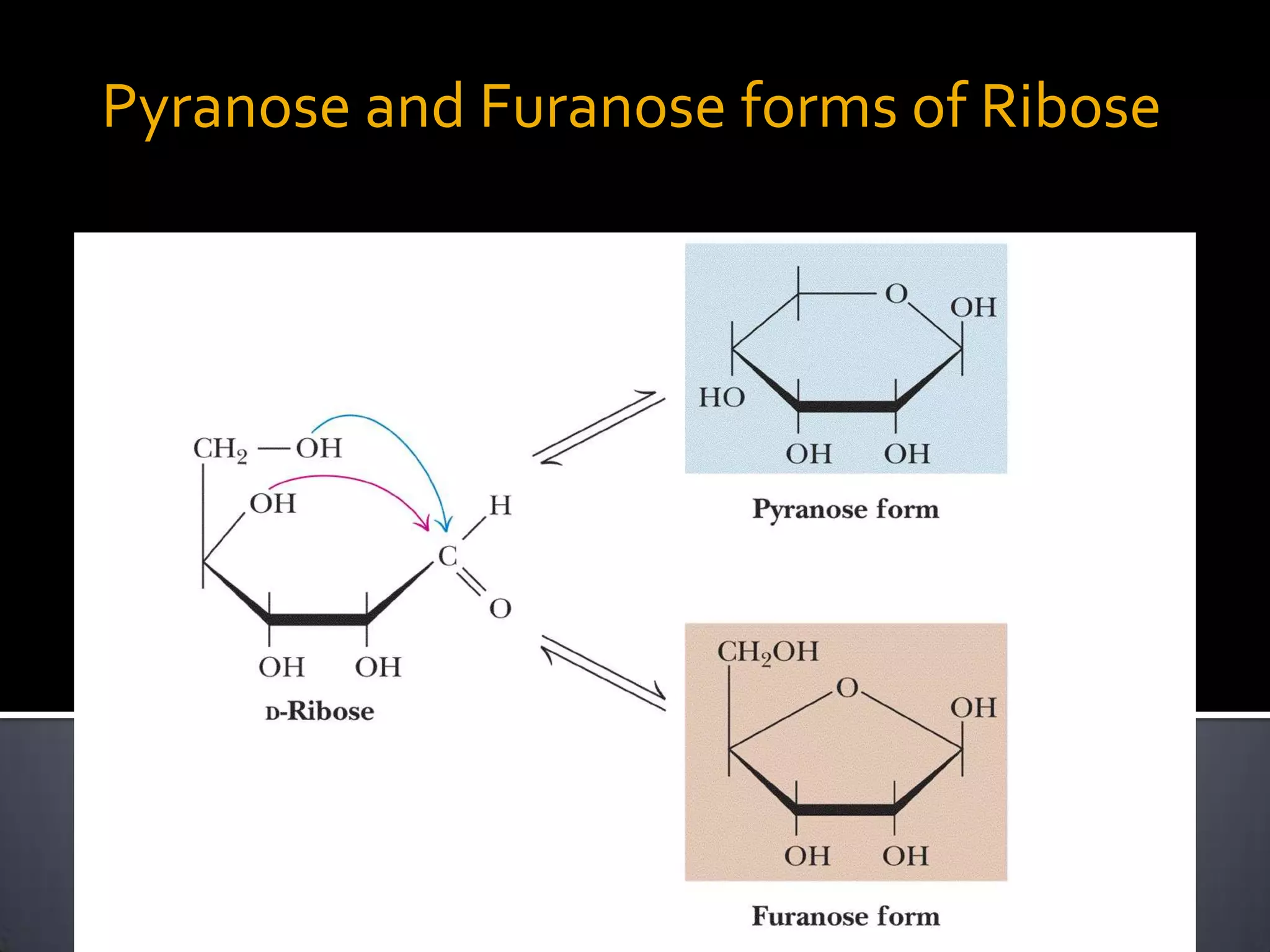
Pyranose and Furanose forms of Ribose
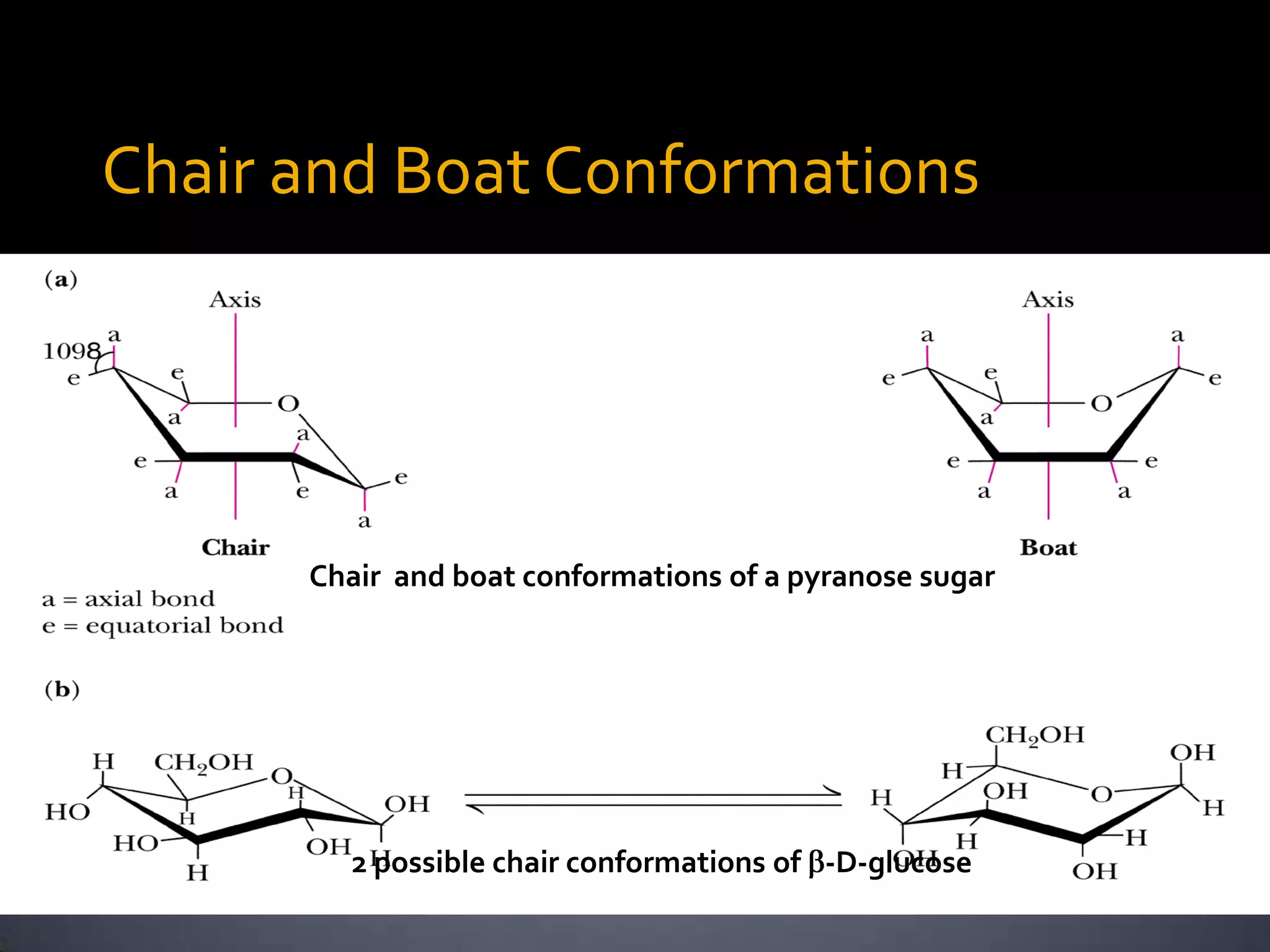
Chair and Boat Conformations


      Chair and boat conformations of a pyranose sugar


        2 possible chair conformations of -D-glucose
Reactions of monosaccharides
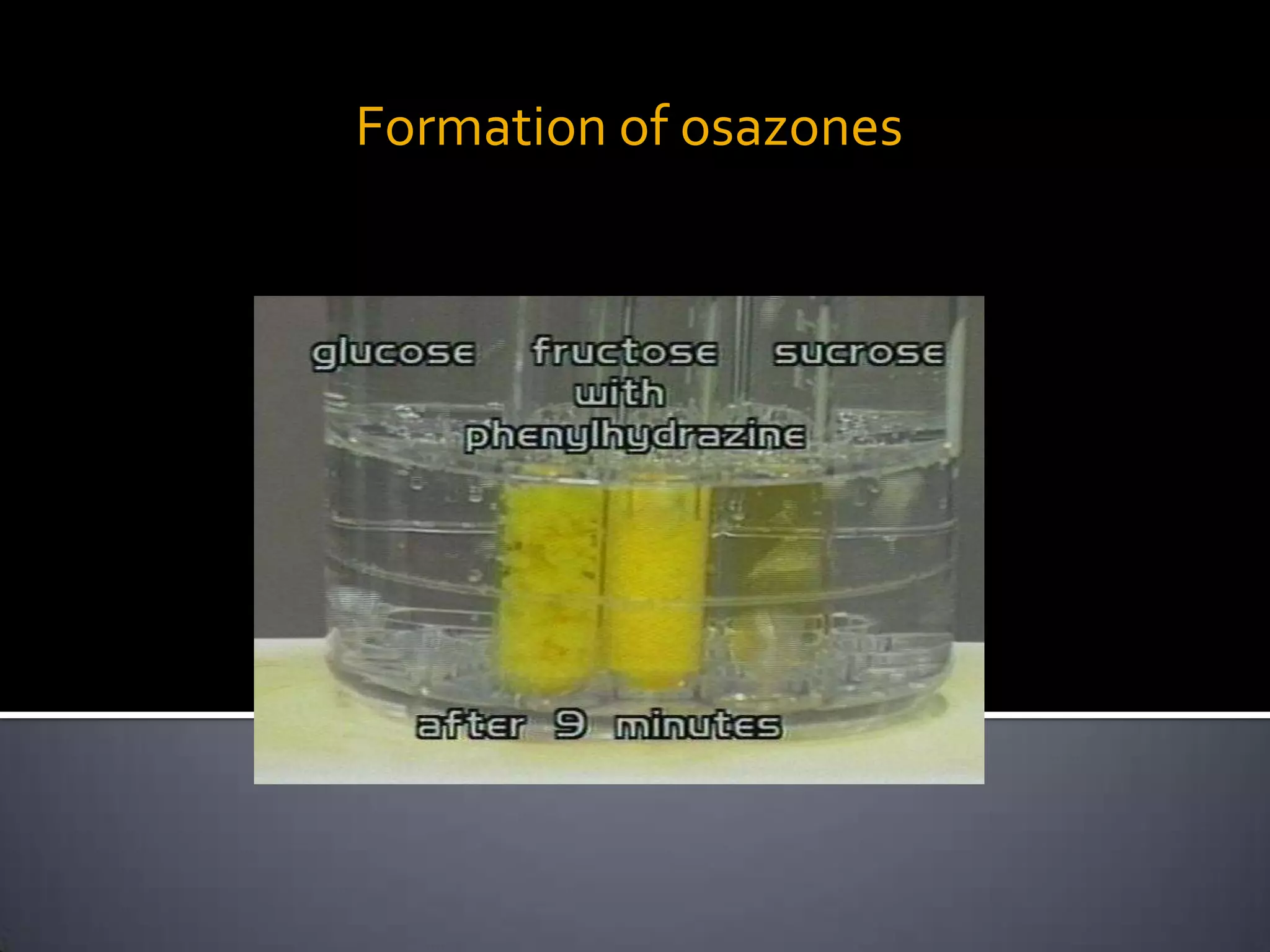
Formation of osazones
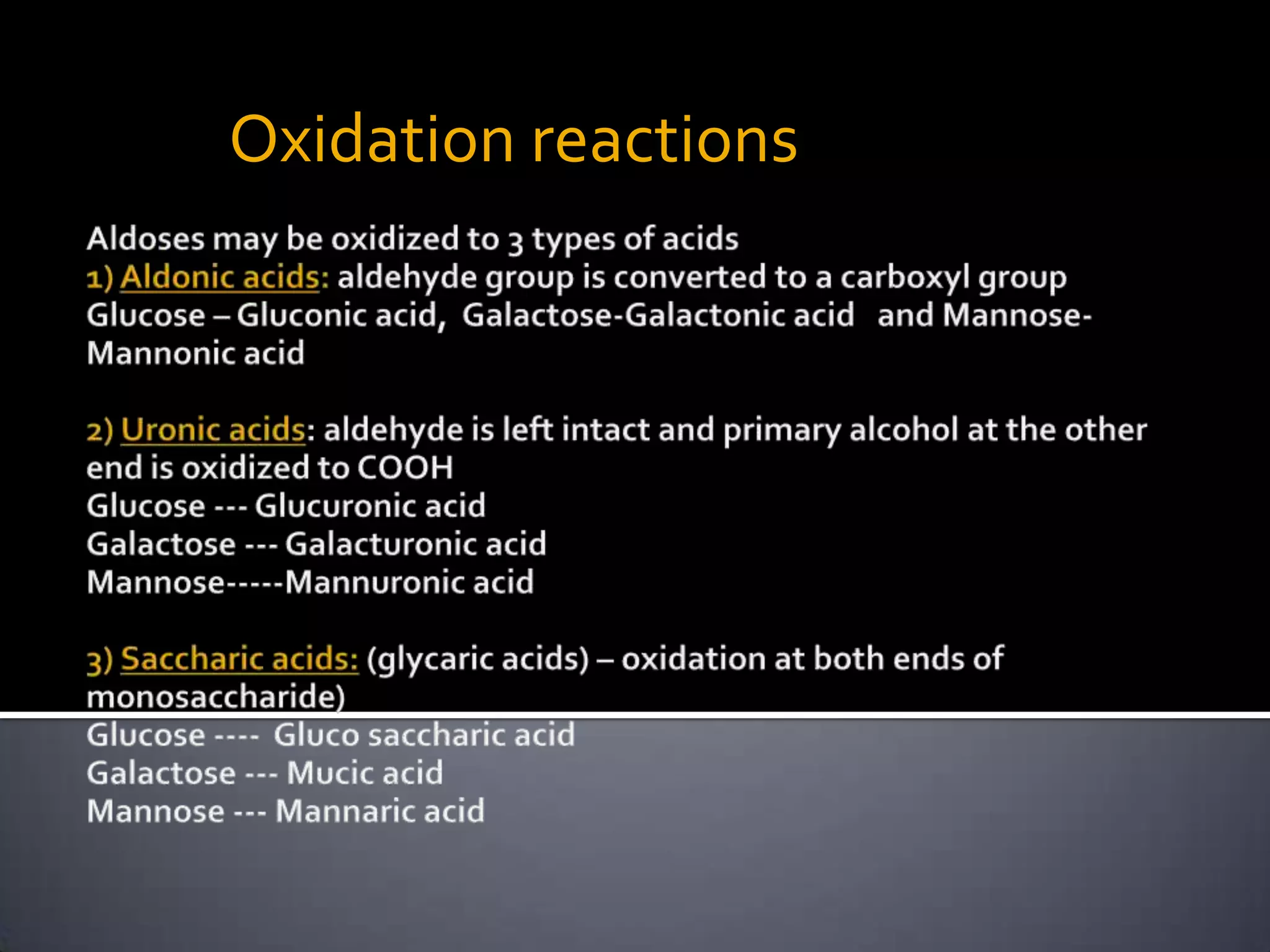
Oxidation reactions
Oxidation Products Of D-Glucose
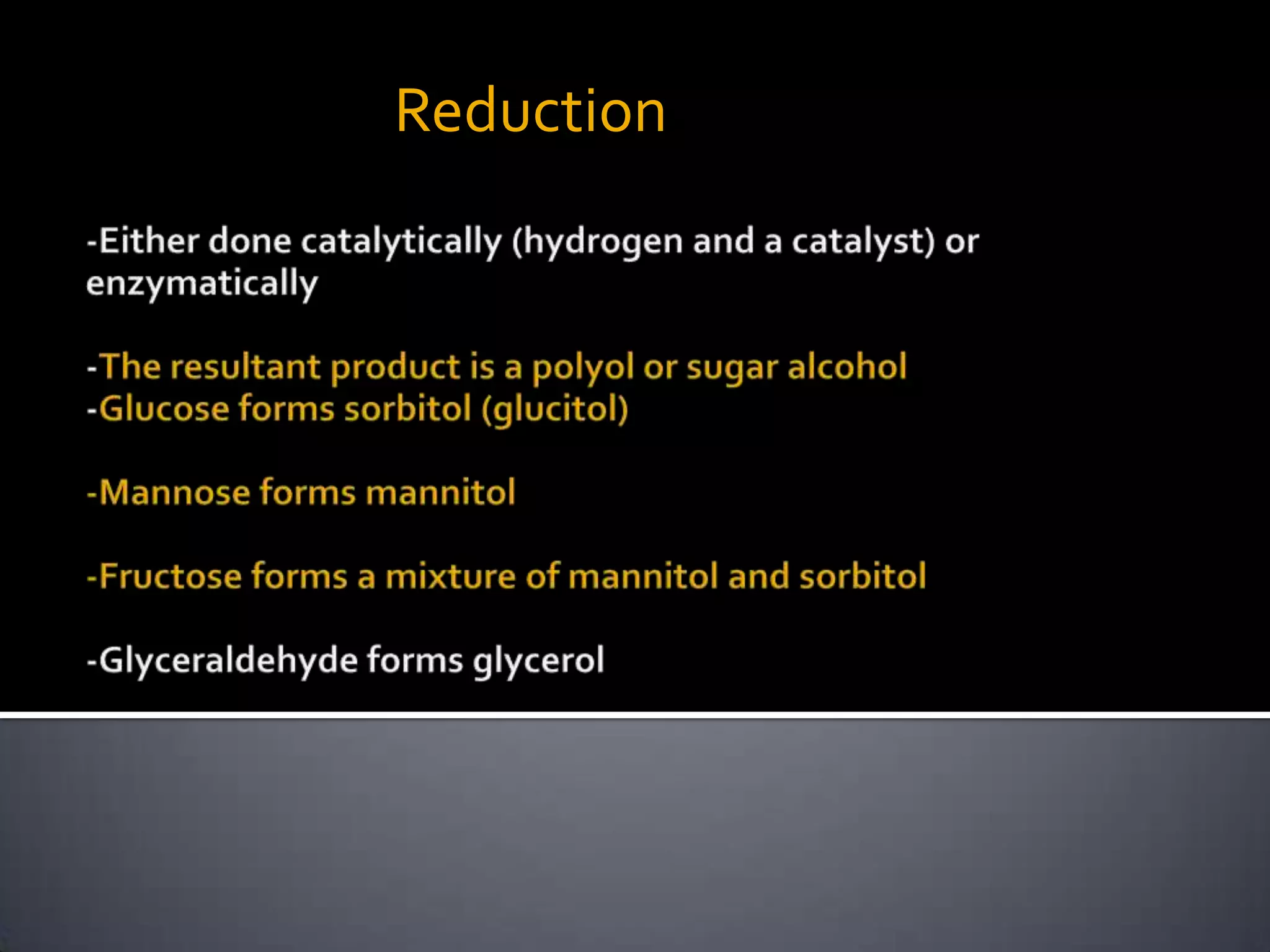
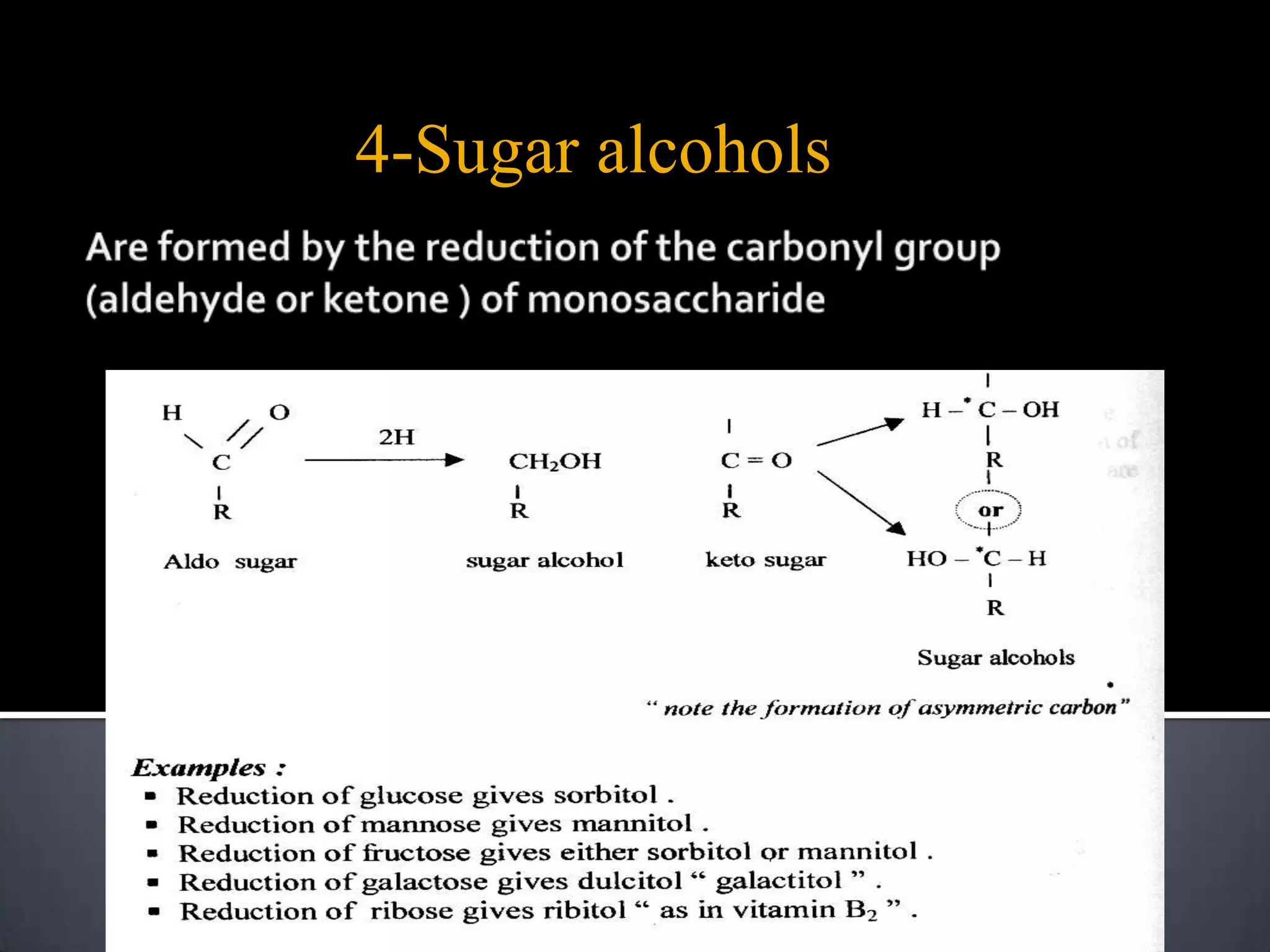
Reduction
Sructures of some sugar alcohols
Action of strong acids on monosaccharides
Action of Alkalies on sugars
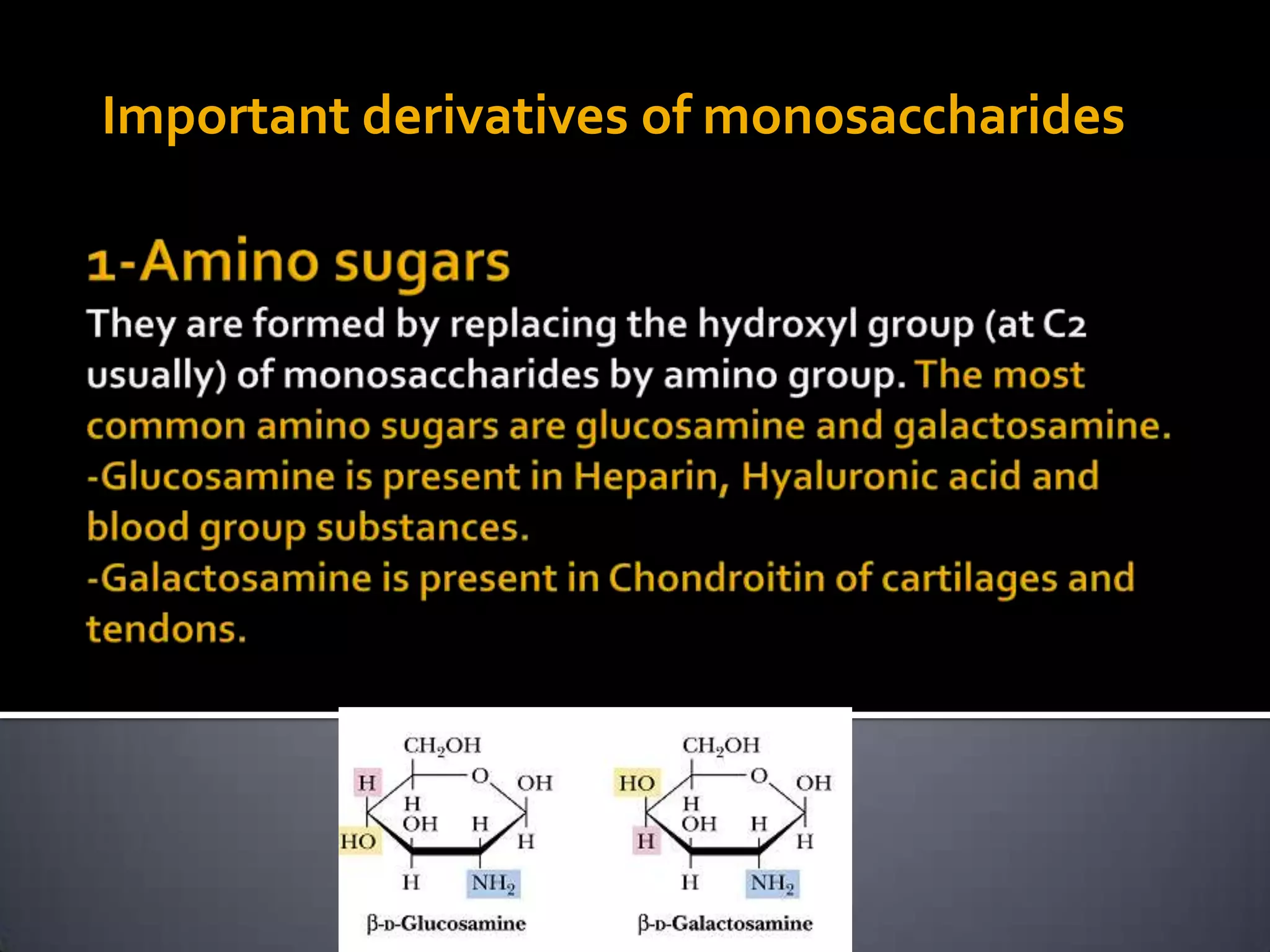
Important derivatives of monosaccharides
Amino Sugars
Amino Sugar acids
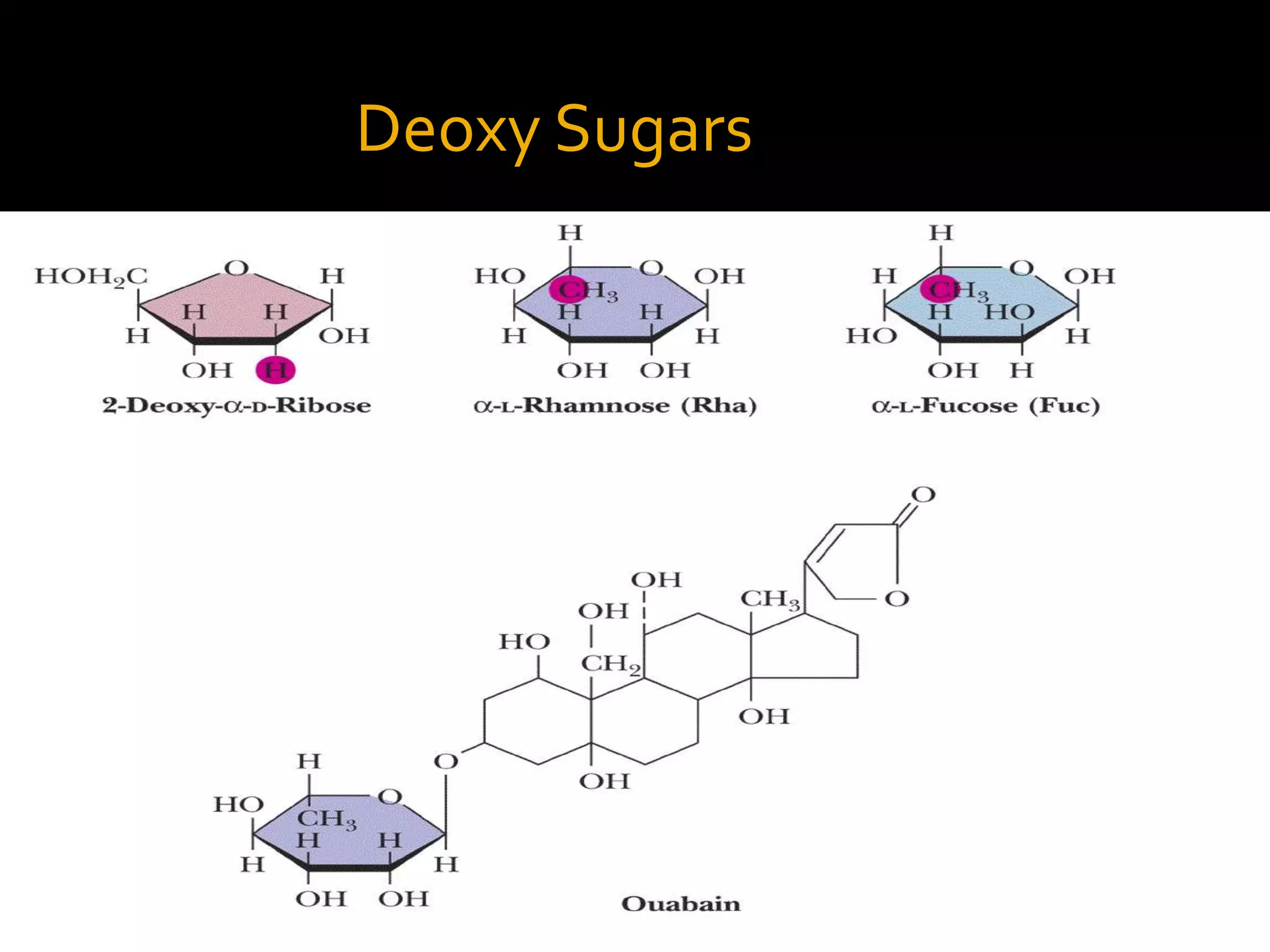
2-Deoxy   sugars
Deoxy Sugars
3-Sugar acids
4-Sugar alcohols
5-Sugar Esters
6-Glycosides
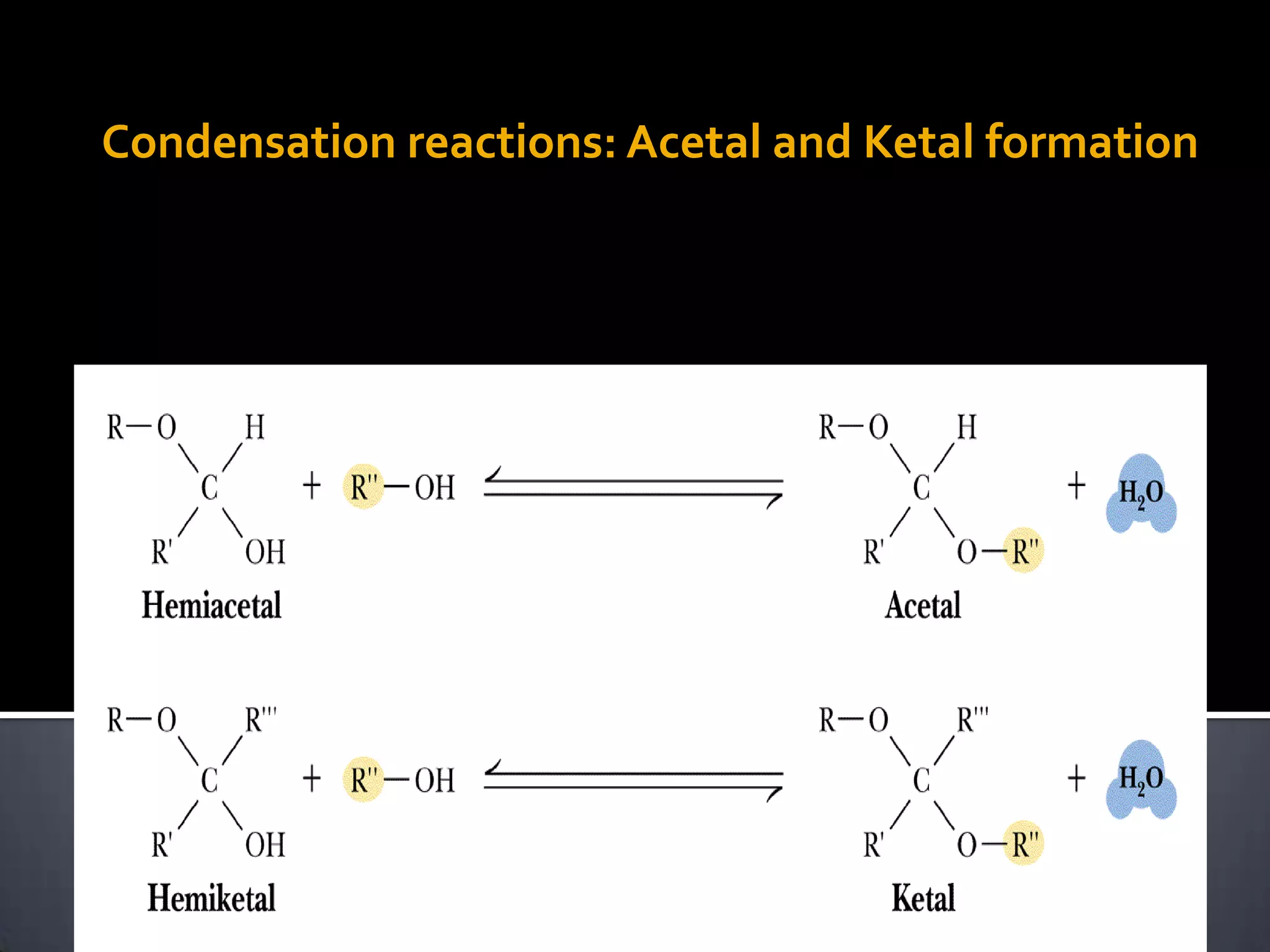
Condensation reactions: Acetal and Ketal formation
Significance of Glycosides
Summary

Monosaccharides