Genetically Modified Organisms - II
1
Lecture- 40
• Foreign gene is introduced by one or other technique
of transfection or transformation.
• Introduction of DNA segment, either naked or
integrated, into a vector.
• Gene introduced is called a transgene.
2
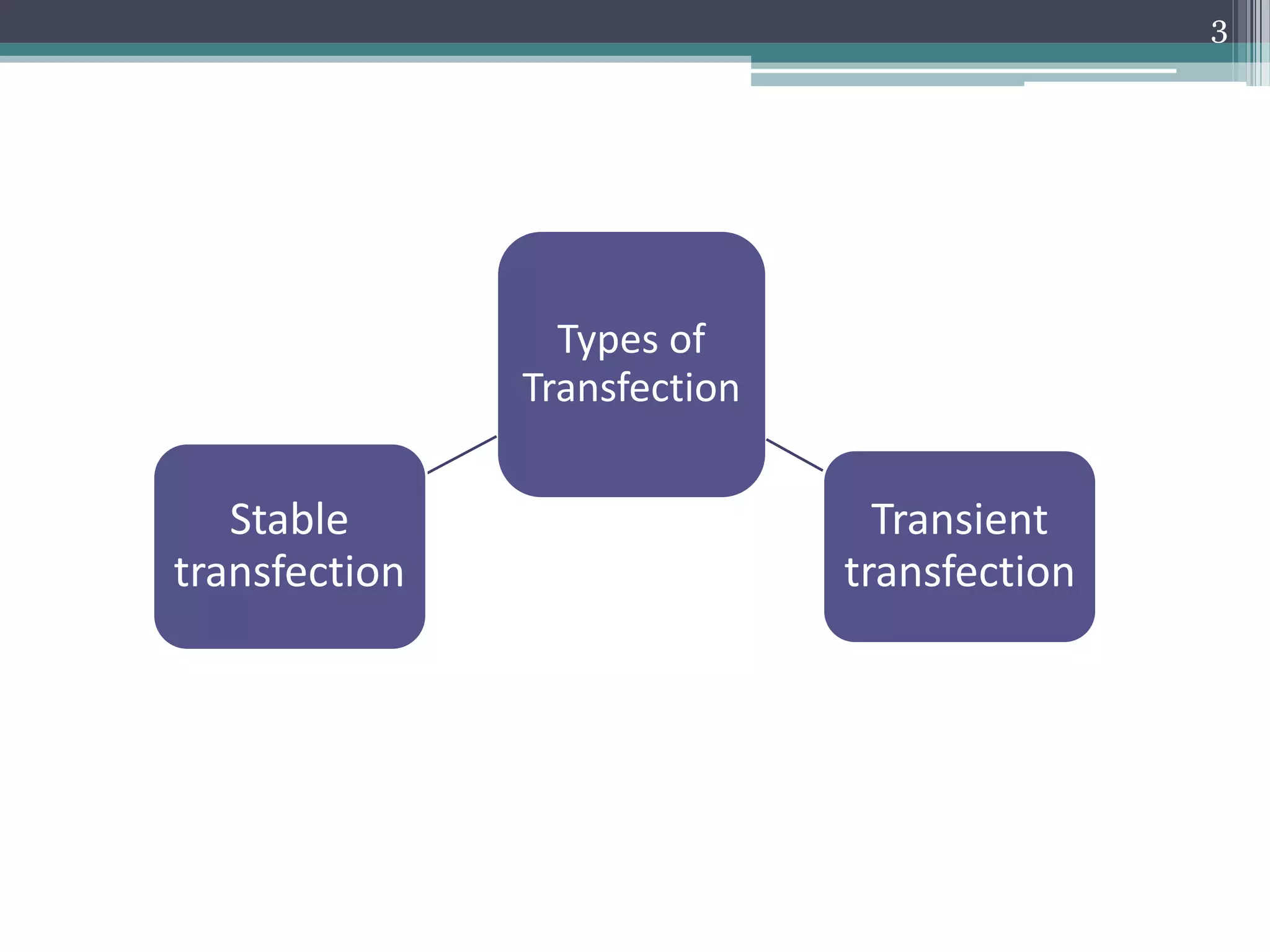
Types of
Transfection
Stable
transfection
Transient
transfection
3
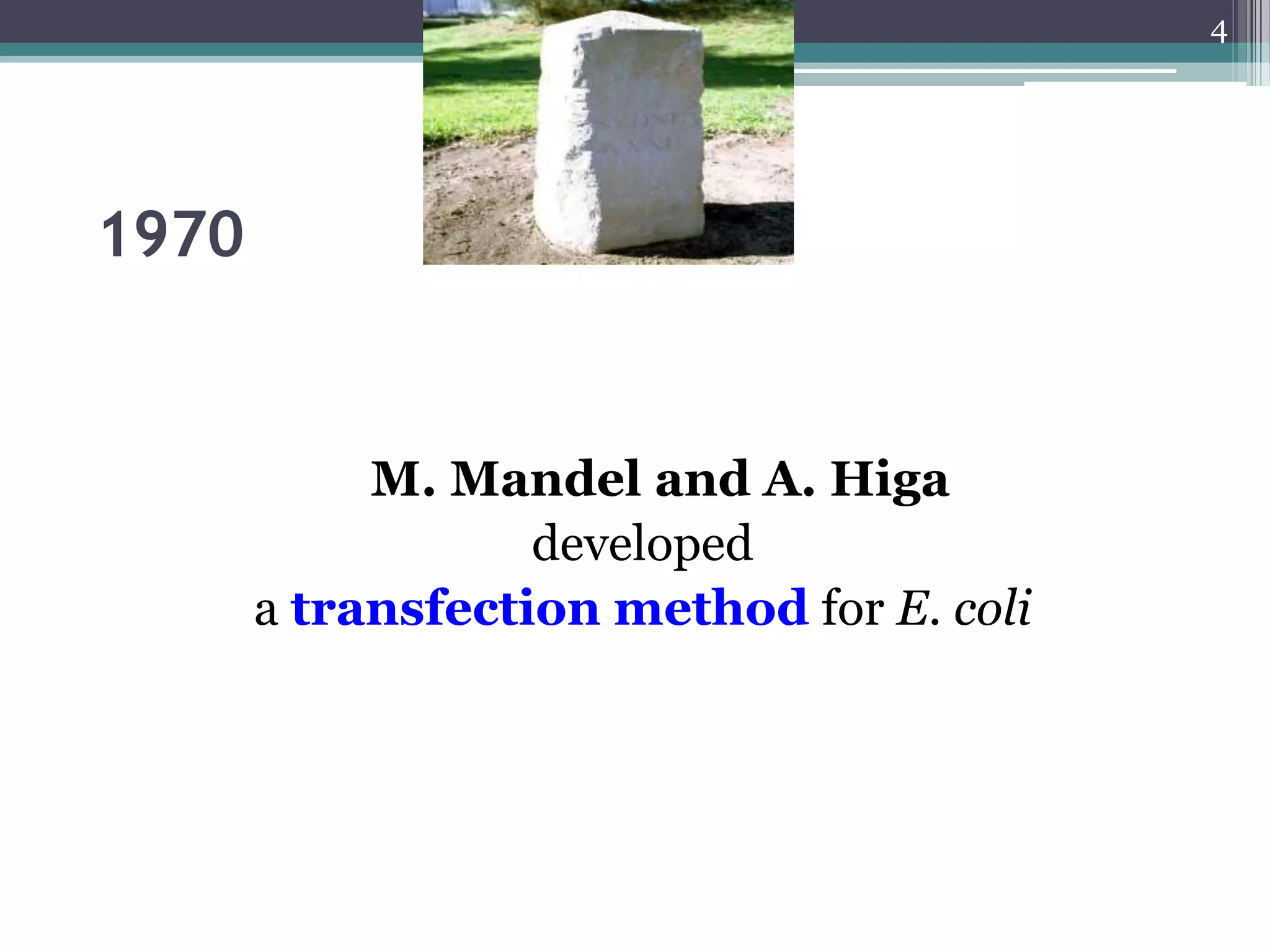
1970
M. Mandel and A. Higa
developed
a transfection method for E. coli
4
Objectives of genetic modification
• Majority of gene transfers aims at studies on
promoter function, reporter gene expression,
regulation of gene expression, etc.
• Genetic modification of animals may be aimed at
improving milk, meat, wool production, etc.
• Genes are transferred to obtain a large scale
production of the proteins encoded by these genes.
5
Animal Vectors
• Animal vectors are based on one or the other
viruses, e.g. SV40 vectors.
• Most of the vectors have the ability to replicate in
suitable animal host cells.
• TYPES:
▫ Retrovirus vectors
▫ Adenovirus vectors
6
Transgenic animals produced
• Transgenics have been produced in a variety of
animal species
▫ Transgenic mice
▫ Transgenic goat
▫ Transgenic rabbit
▫ Transgenic fish
▫ Transgenic cattle
▫ Transgenic sheep
▫ Transgenic pigs
7
• 1980 Mouse
• 1983 Tobacco plant
• 1985 Rabbit, sheep and pig
• 1994 Tomato plant (Flavr Savr)
• 1996 Cotton (Bollgard cotton/Bt
cotton)
Transgenic Organisms
8
Transgenic Mice
• Mice are preferred because they have:
▫ Short oestrous cycle and gestation period
▫ Relatively short generation time
▫ Production of several offsprings per pregnancy
▫ Convenient in vitro fertilization
9
Transgenic Rabbit
• Quite promising for gene farming or molecular
farming which aims at the production of recoverable
quantities of pharmaceutically or biologically
important proteins encoded by the transgenes
10
Other animals
Transgenic cattle
• for increased milk and meat production
• molecular farming
• improved properties of casein
• improved lactose and butter fat in milk
11
Transgenic sheep
• for incresed wool quantity and quality
• for meat production
• as bioreactors
12
Transgenic pigs
• For increased meat production
• Serve as bioreactors
Transgenic pigs expressing human growth
hormones do show improved growth but have
several health problems due to chronic
overproduction of growth hormones
13
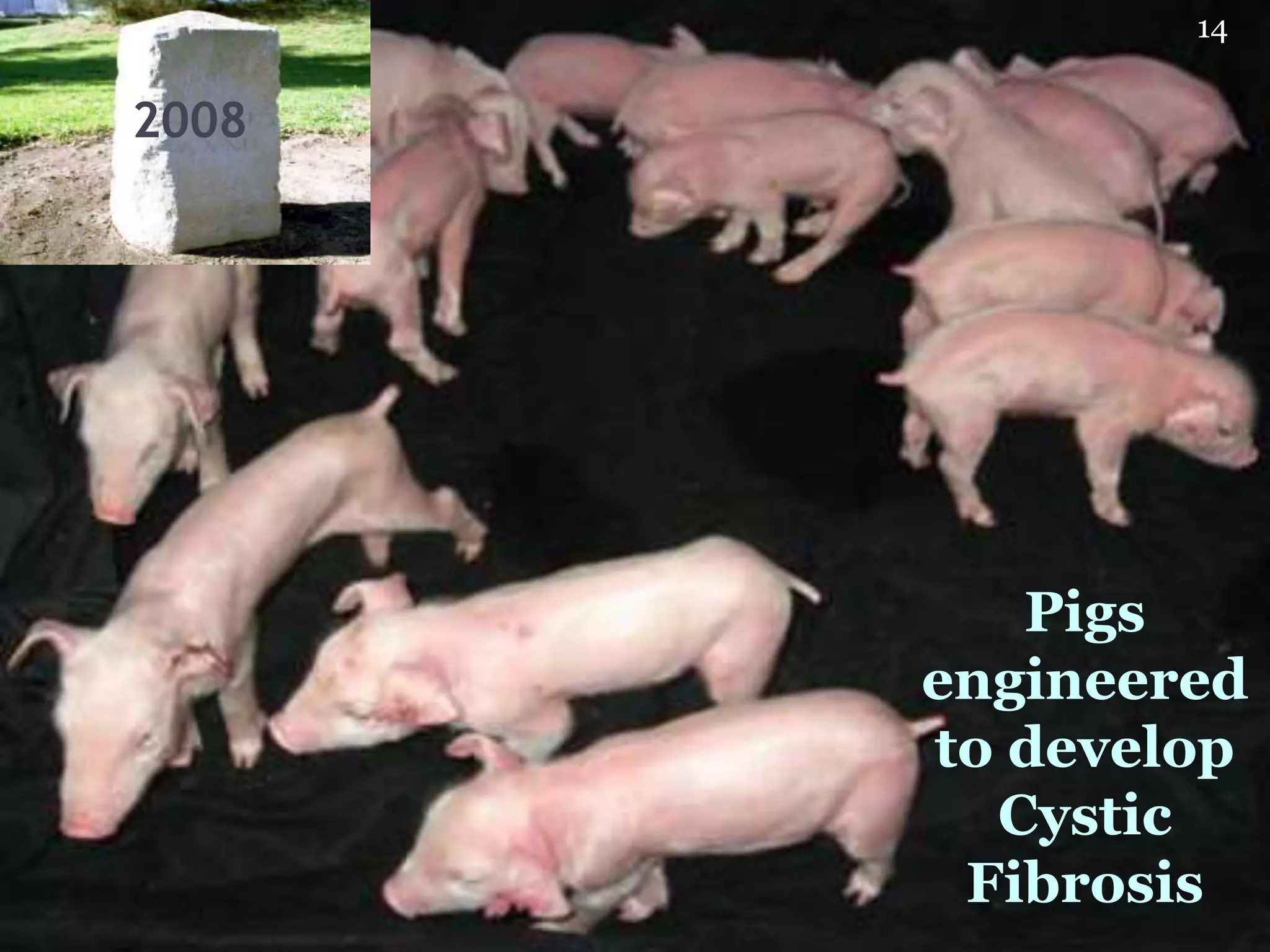
Pigs
engineered
to develop
Cystic
Fibrosis
2008
14
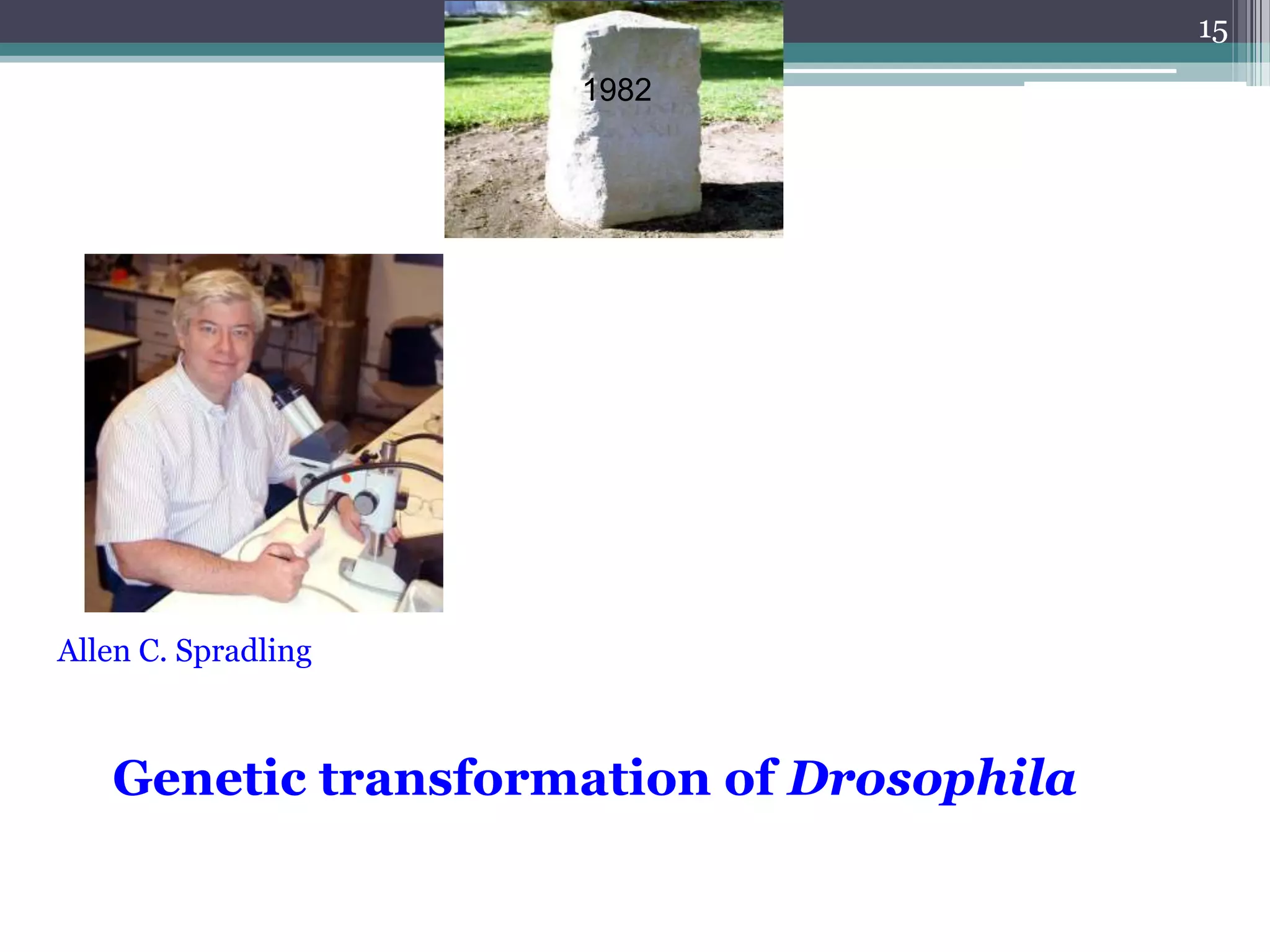
Genetic transformation of Drosophila
1982
Allen C. Spradling
15
Transgenic fish
• For increased growth
• To serve as bioreactors
Gene transfers have been successful in several
fishes like common carp, rainbow trout, Atlantic
salmon, catfish, goldfish.
16

Lectut btn-202-ppt-l40. genetically modified organisms - ii

  • 1.
  • 2.
    • Foreign geneis introduced by one or other technique of transfection or transformation. • Introduction of DNA segment, either naked or integrated, into a vector. • Gene introduced is called a transgene. 2
  • 3.
  • 4.
    1970 M. Mandel andA. Higa developed a transfection method for E. coli 4
  • 5.
    Objectives of geneticmodification • Majority of gene transfers aims at studies on promoter function, reporter gene expression, regulation of gene expression, etc. • Genetic modification of animals may be aimed at improving milk, meat, wool production, etc. • Genes are transferred to obtain a large scale production of the proteins encoded by these genes. 5
  • 6.
    Animal Vectors • Animalvectors are based on one or the other viruses, e.g. SV40 vectors. • Most of the vectors have the ability to replicate in suitable animal host cells. • TYPES: ▫ Retrovirus vectors ▫ Adenovirus vectors 6
  • 7.
    Transgenic animals produced •Transgenics have been produced in a variety of animal species ▫ Transgenic mice ▫ Transgenic goat ▫ Transgenic rabbit ▫ Transgenic fish ▫ Transgenic cattle ▫ Transgenic sheep ▫ Transgenic pigs 7
  • 8.
    • 1980 Mouse •1983 Tobacco plant • 1985 Rabbit, sheep and pig • 1994 Tomato plant (Flavr Savr) • 1996 Cotton (Bollgard cotton/Bt cotton) Transgenic Organisms 8
  • 9.
    Transgenic Mice • Miceare preferred because they have: ▫ Short oestrous cycle and gestation period ▫ Relatively short generation time ▫ Production of several offsprings per pregnancy ▫ Convenient in vitro fertilization 9
  • 10.
    Transgenic Rabbit • Quitepromising for gene farming or molecular farming which aims at the production of recoverable quantities of pharmaceutically or biologically important proteins encoded by the transgenes 10
  • 11.
    Other animals Transgenic cattle •for increased milk and meat production • molecular farming • improved properties of casein • improved lactose and butter fat in milk 11
  • 12.
    Transgenic sheep • forincresed wool quantity and quality • for meat production • as bioreactors 12
  • 13.
    Transgenic pigs • Forincreased meat production • Serve as bioreactors Transgenic pigs expressing human growth hormones do show improved growth but have several health problems due to chronic overproduction of growth hormones 13
  • 14.
  • 15.
    Genetic transformation ofDrosophila 1982 Allen C. Spradling 15
  • 16.
    Transgenic fish • Forincreased growth • To serve as bioreactors Gene transfers have been successful in several fishes like common carp, rainbow trout, Atlantic salmon, catfish, goldfish. 16