RISK ASSESMENT IN GENETIC
ENGINEERING
1
Lecture- 41
RISK ASSESMENT
 Characteristics of donor organisms
 Origin/source and taxonomic classification
 Genome characteristics and prior history for genetic
manipulation
2
 Nature of pathogenicity and virulence, infectivity or
toxicity, its host range and stability of these traits
 Techniques for identification of donor organism
3
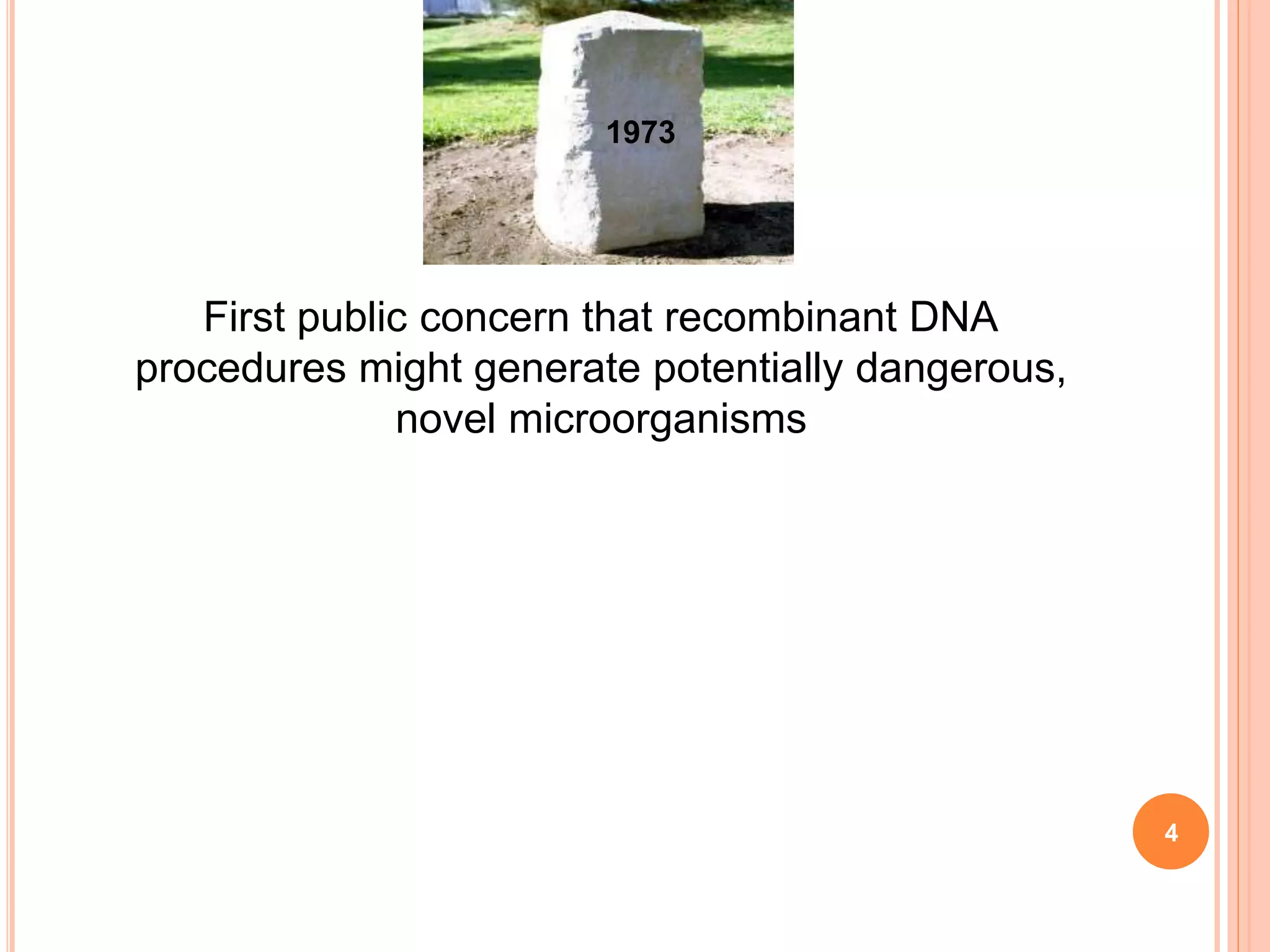
First public concern that recombinant DNA
procedures might generate potentially dangerous,
novel microorganisms
1973
4
1974
Call for a worldwide moratorium on certain classes
of recombinant DNA experiments
5
·
 Origin/source and taxonomic classification
 Genomic characteristics and prior history for
genetic manipulation, cultivation/growth and safe
use
 Information on reproductive cycle (asexual/sexual),
its growth and survival
 Degree of relatedness including evidence of
exchange of genetic material between donor and
recipient organisms or any other organisms
CHARACTERISTICS OF HOST/ RECIPIENT ORGANISM
6
CHARACTERISTICS OF GENE CONSTRUCT
• Origin
• Physical map (including coding regions, promoters
and enhancers, marker genes, antisense genes)
• Nucleotide sequence of intended insert and its
functions
7
CHARACTERISTICS OF VECTOR AND METHOD OF
TRANSFORMATION
Nature, source and function of vector
Method of transformation and detailed description of
transfer method
Selection method for transformants
Type of insertion (complete or partial) and number of
integration sites
Confirming integrity and fidelity of the insert
Determining production of fusion protein and its
location in recipient organism
8
 Genotypic characters including characterization of
site of modification of recipient genome, regulation
and stability of inserted DNA, frequency of
mobilization of inserted DNA and/ or genetic
transfer capability
 Phenotypic characters including taxonomic
characterization, colonization potential, antibiotic
resistance, infectivity, production of toxins,
allergens, antinutrients or any other metabolites
and its host range
Characteristics of transformed / modified
organism
9
 Expression and properties of the gene product
including copies /number of new gene(s), rate and
level of expression, activity of expressed protein,
allergenic/toxic hazards of the product
10
HUMAN HEALTH CONSIDERATIONS
 Toxicity
 Allergenicity
 Nutritional analysis
 Environmental Considerations
11
RISK CATEGORY
 Category I: experiments involving self cloning,
using strains and also inter species cloning
belonging to organism in the same exchanger
group etc. are exempt for the purpose of intimation
and approval.
12
 Category II: experiments falling under containment
levels II, III and IV, large scale use of recombinants
made of self cloning in systems belonging to
exempt category etc. require prior intimation to
IBSC.
13
 Category III: experiments involving toxin gene
cloning, cloning of genes for vaccine production,
use of infectious animals and plant viruses, self
fusion experiments, field testing and release etc.
require review and approval of IBSC before
commencement.
The categories of genetic engineering experiments
on plants have been notified specifically under the
“Revised Guidelines for Research in Transgenic
Plant, 1998” by DBT.
14
FOR PLANTS
 Category I: need only intimation to the IBSC in the
prescribed performa.
 Category II include lab and greenhouse/nethouse
experiments in contained environment where defined
DNA fragments that are non pathogenic to human and
animals are used for genetic transformation of plants.
 Permission for category II experiments is provided by
IBSC but the decision of the IBSC needs to be intimated
to the review committee on genetic manipulation
(RCGM) before execution of the experiment and RCGM
would put this information on record.
15
 Category III: pertains to high risk experiments
where the escape of transgenic traits into the open
environment could cause significant alterations in
the biosphere, the ecosystem, the plants and
animals by dispersing new genetic traits, the effects
of which cannot be judged precisely.
16
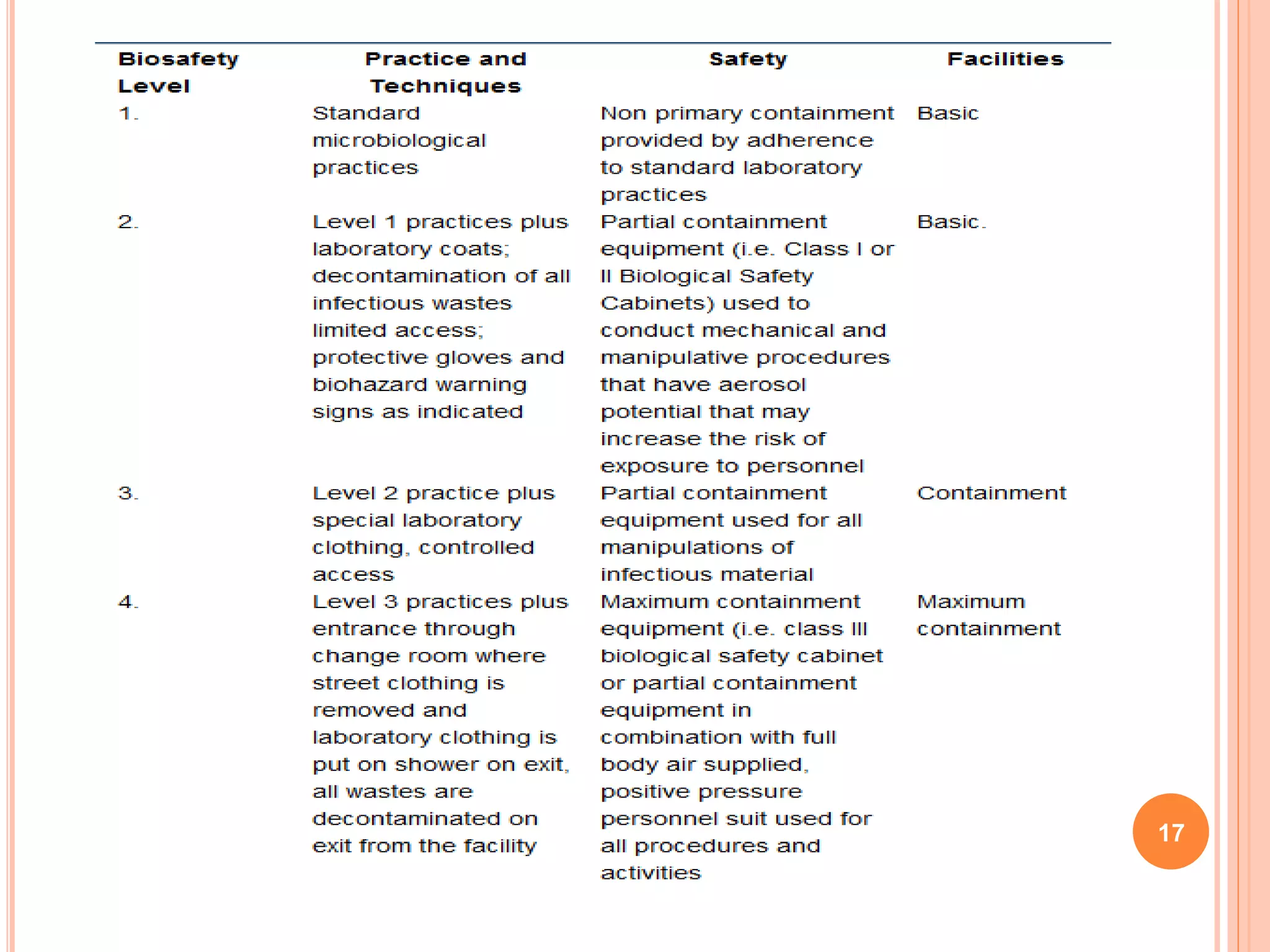
17
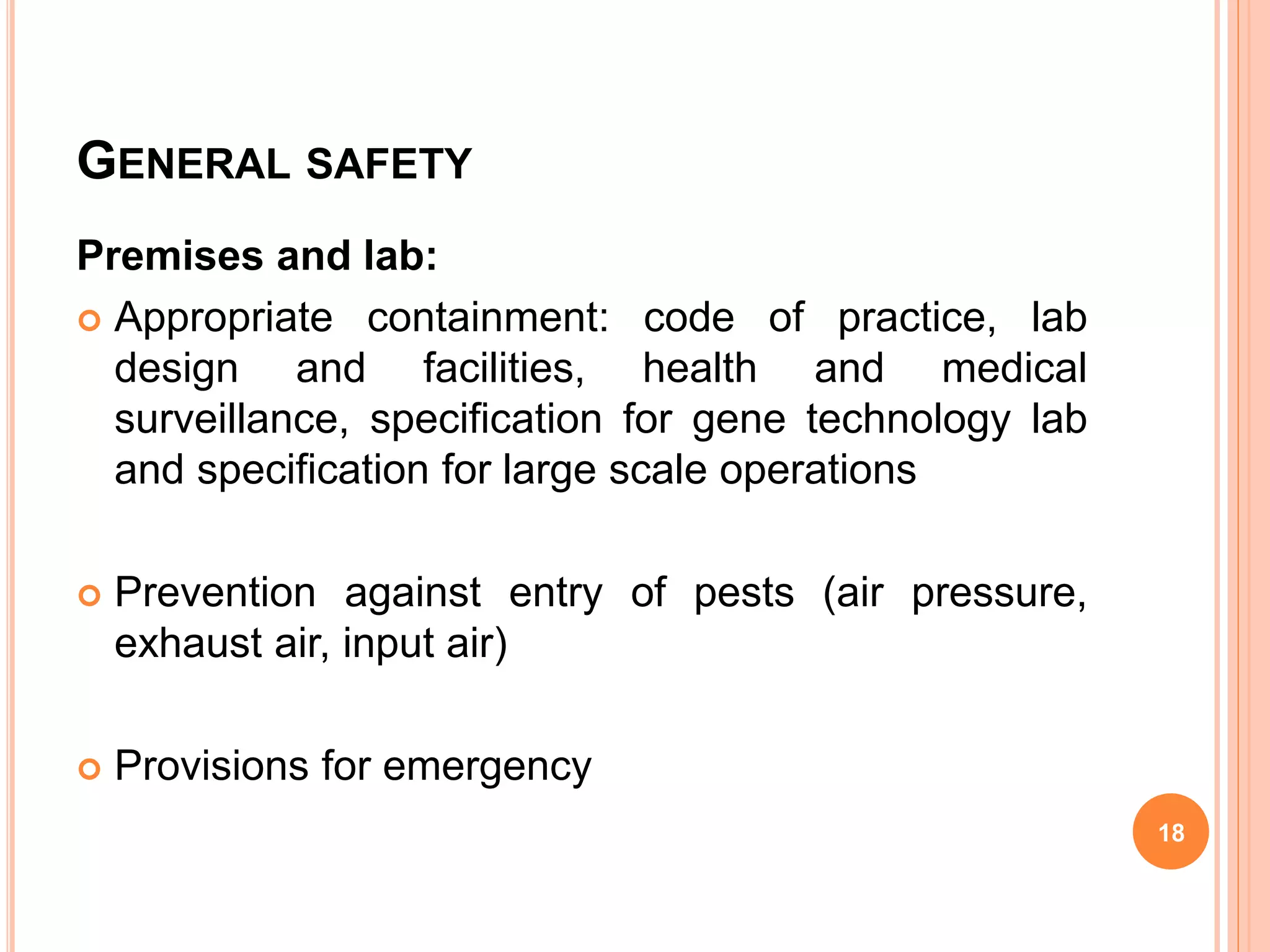
GENERAL SAFETY
Premises and lab:
 Appropriate containment: code of practice, lab
design and facilities, health and medical
surveillance, specification for gene technology lab
and specification for large scale operations
 Prevention against entry of pests (air pressure,
exhaust air, input air)
 Provisions for emergency
18
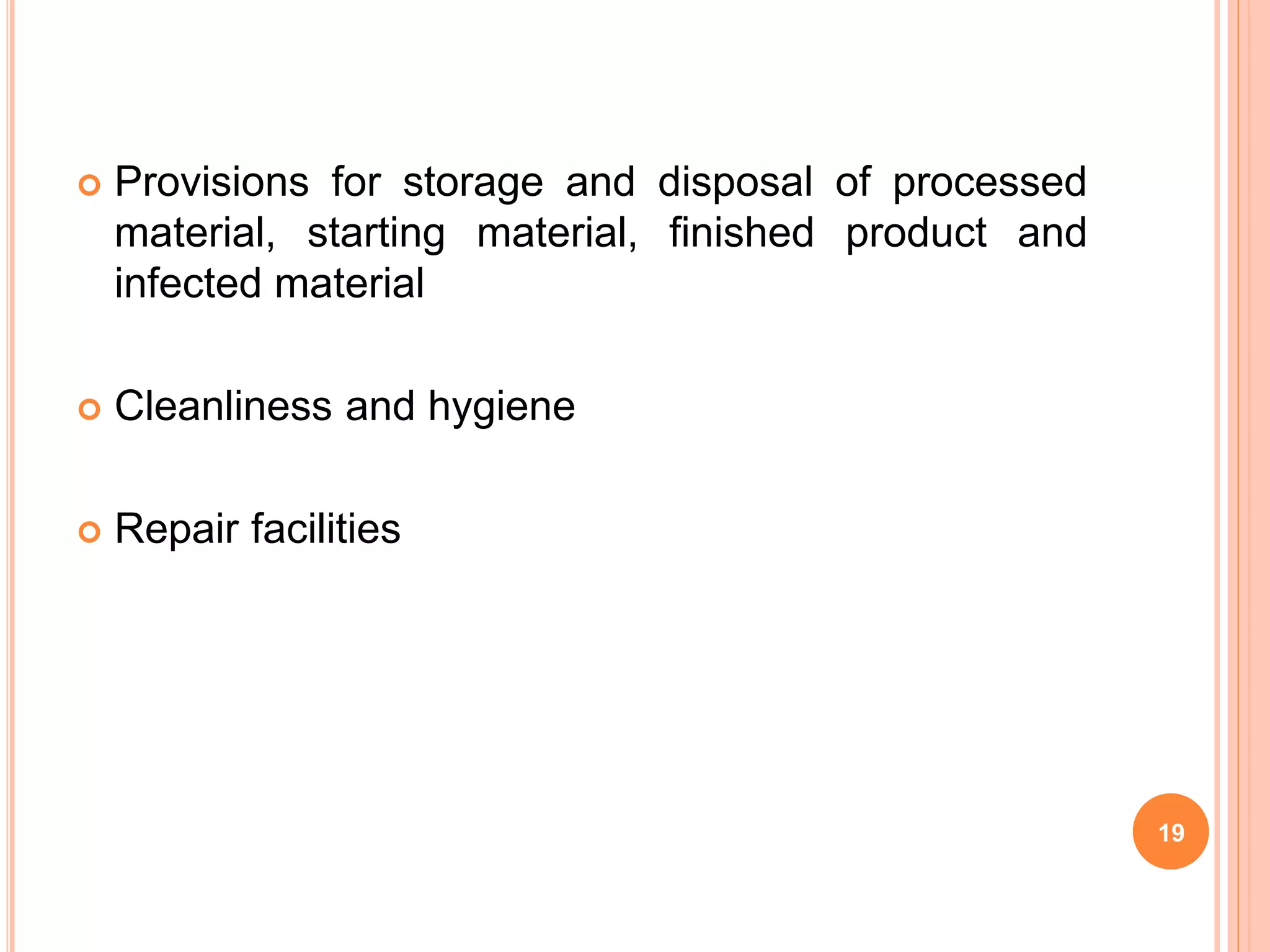
 Provisions for storage and disposal of processed
material, starting material, finished product and
infected material
 Cleanliness and hygiene
 Repair facilities
19
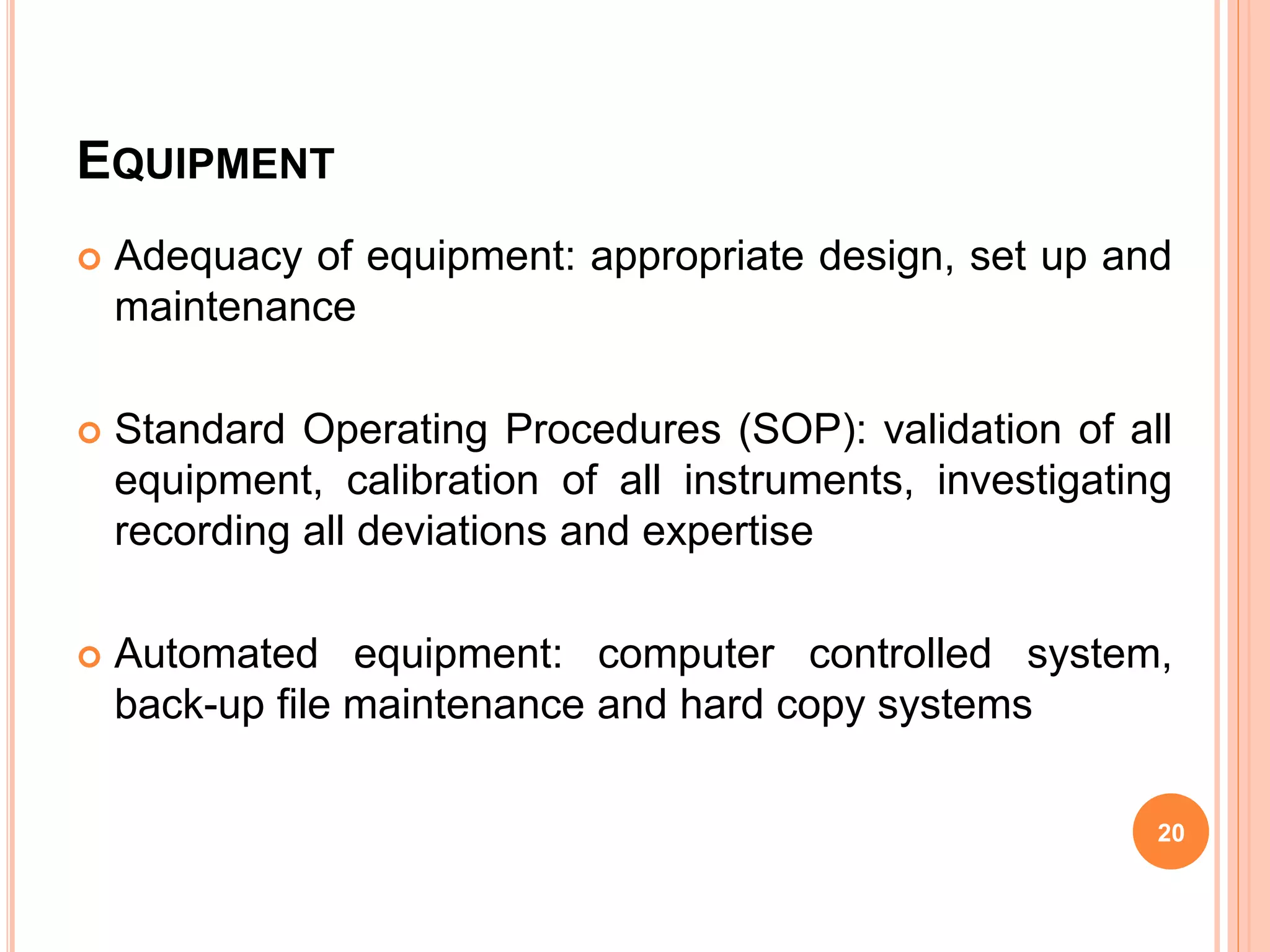
EQUIPMENT
 Adequacy of equipment: appropriate design, set up and
maintenance
 Standard Operating Procedures (SOP): validation of all
equipment, calibration of all instruments, investigating
recording all deviations and expertise
 Automated equipment: computer controlled system,
back-up file maintenance and hard copy systems
20
http://dbtbiosafety.nic.in/Files/Handbook.htm
21
22

Lectut btn-202-ppt-l41. risk assessment in genetic engineering

  • 1.
    RISK ASSESMENT INGENETIC ENGINEERING 1 Lecture- 41
  • 2.
    RISK ASSESMENT  Characteristicsof donor organisms  Origin/source and taxonomic classification  Genome characteristics and prior history for genetic manipulation 2
  • 3.
     Nature ofpathogenicity and virulence, infectivity or toxicity, its host range and stability of these traits  Techniques for identification of donor organism 3
  • 4.
    First public concernthat recombinant DNA procedures might generate potentially dangerous, novel microorganisms 1973 4
  • 5.
    1974 Call for aworldwide moratorium on certain classes of recombinant DNA experiments 5
  • 6.
    ·  Origin/source andtaxonomic classification  Genomic characteristics and prior history for genetic manipulation, cultivation/growth and safe use  Information on reproductive cycle (asexual/sexual), its growth and survival  Degree of relatedness including evidence of exchange of genetic material between donor and recipient organisms or any other organisms CHARACTERISTICS OF HOST/ RECIPIENT ORGANISM 6
  • 7.
    CHARACTERISTICS OF GENECONSTRUCT • Origin • Physical map (including coding regions, promoters and enhancers, marker genes, antisense genes) • Nucleotide sequence of intended insert and its functions 7
  • 8.
    CHARACTERISTICS OF VECTORAND METHOD OF TRANSFORMATION Nature, source and function of vector Method of transformation and detailed description of transfer method Selection method for transformants Type of insertion (complete or partial) and number of integration sites Confirming integrity and fidelity of the insert Determining production of fusion protein and its location in recipient organism 8
  • 9.
     Genotypic charactersincluding characterization of site of modification of recipient genome, regulation and stability of inserted DNA, frequency of mobilization of inserted DNA and/ or genetic transfer capability  Phenotypic characters including taxonomic characterization, colonization potential, antibiotic resistance, infectivity, production of toxins, allergens, antinutrients or any other metabolites and its host range Characteristics of transformed / modified organism 9
  • 10.
     Expression andproperties of the gene product including copies /number of new gene(s), rate and level of expression, activity of expressed protein, allergenic/toxic hazards of the product 10
  • 11.
    HUMAN HEALTH CONSIDERATIONS Toxicity  Allergenicity  Nutritional analysis  Environmental Considerations 11
  • 12.
    RISK CATEGORY  CategoryI: experiments involving self cloning, using strains and also inter species cloning belonging to organism in the same exchanger group etc. are exempt for the purpose of intimation and approval. 12
  • 13.
     Category II:experiments falling under containment levels II, III and IV, large scale use of recombinants made of self cloning in systems belonging to exempt category etc. require prior intimation to IBSC. 13
  • 14.
     Category III:experiments involving toxin gene cloning, cloning of genes for vaccine production, use of infectious animals and plant viruses, self fusion experiments, field testing and release etc. require review and approval of IBSC before commencement. The categories of genetic engineering experiments on plants have been notified specifically under the “Revised Guidelines for Research in Transgenic Plant, 1998” by DBT. 14
  • 15.
    FOR PLANTS  CategoryI: need only intimation to the IBSC in the prescribed performa.  Category II include lab and greenhouse/nethouse experiments in contained environment where defined DNA fragments that are non pathogenic to human and animals are used for genetic transformation of plants.  Permission for category II experiments is provided by IBSC but the decision of the IBSC needs to be intimated to the review committee on genetic manipulation (RCGM) before execution of the experiment and RCGM would put this information on record. 15
  • 16.
     Category III:pertains to high risk experiments where the escape of transgenic traits into the open environment could cause significant alterations in the biosphere, the ecosystem, the plants and animals by dispersing new genetic traits, the effects of which cannot be judged precisely. 16
  • 17.
  • 18.
    GENERAL SAFETY Premises andlab:  Appropriate containment: code of practice, lab design and facilities, health and medical surveillance, specification for gene technology lab and specification for large scale operations  Prevention against entry of pests (air pressure, exhaust air, input air)  Provisions for emergency 18
  • 19.
     Provisions forstorage and disposal of processed material, starting material, finished product and infected material  Cleanliness and hygiene  Repair facilities 19
  • 20.
    EQUIPMENT  Adequacy ofequipment: appropriate design, set up and maintenance  Standard Operating Procedures (SOP): validation of all equipment, calibration of all instruments, investigating recording all deviations and expertise  Automated equipment: computer controlled system, back-up file maintenance and hard copy systems 20
  • 21.
  • 22.