Genomic and cDNA libraries
1
Lecture- 20
• A genomic DNA library of an organism is a collection of clones
(colonies or plaques) containing all the fragments of genomic
DNA of this organism in a suitable vector.
• To construct this library, genomic DNA of the organism is
fragmented and all the fragments are ligated to a linearized
vector. The recombinant vector molecules are introduced into
the cells of a host.
• When the vector is a plasmid, each transformed cell of the
host is grown to form a colony and when the vector is a virus,
each recombinant viral molecule is made to infect a lawn of
host cells to form a plaque. Hence, a collection of colonies or
plaques representing the entire genome is obtained.
2
INTRODUCTION
3
•Genomic DNA libraries are quite suitable for cloning genes
of prokaryotes as the prokaryotic genomes are small and
their genes do not have introns. In this case the minimum
number of clones required to represent the entire genome
is about 5,000-10, 000, which is quite manageable.
•In contrast to the prokaryotic genomes, the eukaryotic
genomes are very large and their genes generally carry
several introns.
•The cloning of a eukaryotic gene by constructing a
genomic library involves a very large number of clones,
generally more than 100, 000. Hence, for cloning of
eukaryotic genes, cDNA libraries are preferred over
genomic DNA libraries.
4
•A cDNA library is a collection of clones (colonies
or plaques) containing cDNAs synthesized from
the mRNAs obtained from the cells in which the
gene of interest was expressing.
•All the synthesized cDNA molecules are ligated to
a linearised vector.
•As in case of the genomic DNA libraries, all the
recombinant vector molecules are introduced into
the cells of a host and a collection of colonies or
plaques is obtained depending on whether the
cloning vector was a plasmid or a virus.
DNA libraries - collections of DNA
sequences
• A DNA library is a collection of clones of DNA designed so
that there is a high probability of finding any particular piece
of the source DNA in the collection
• DNA libraries, like conventional libraries, are used to collect
and store information
• In DNA libraries, the information is stored as a set of DNA
molecules
• All DNA libraries are collections of DNA fragments that
represent a particular biological system of interest
• The two most common uses for these DNA collections are
DNA sequencing and gene cloning
5
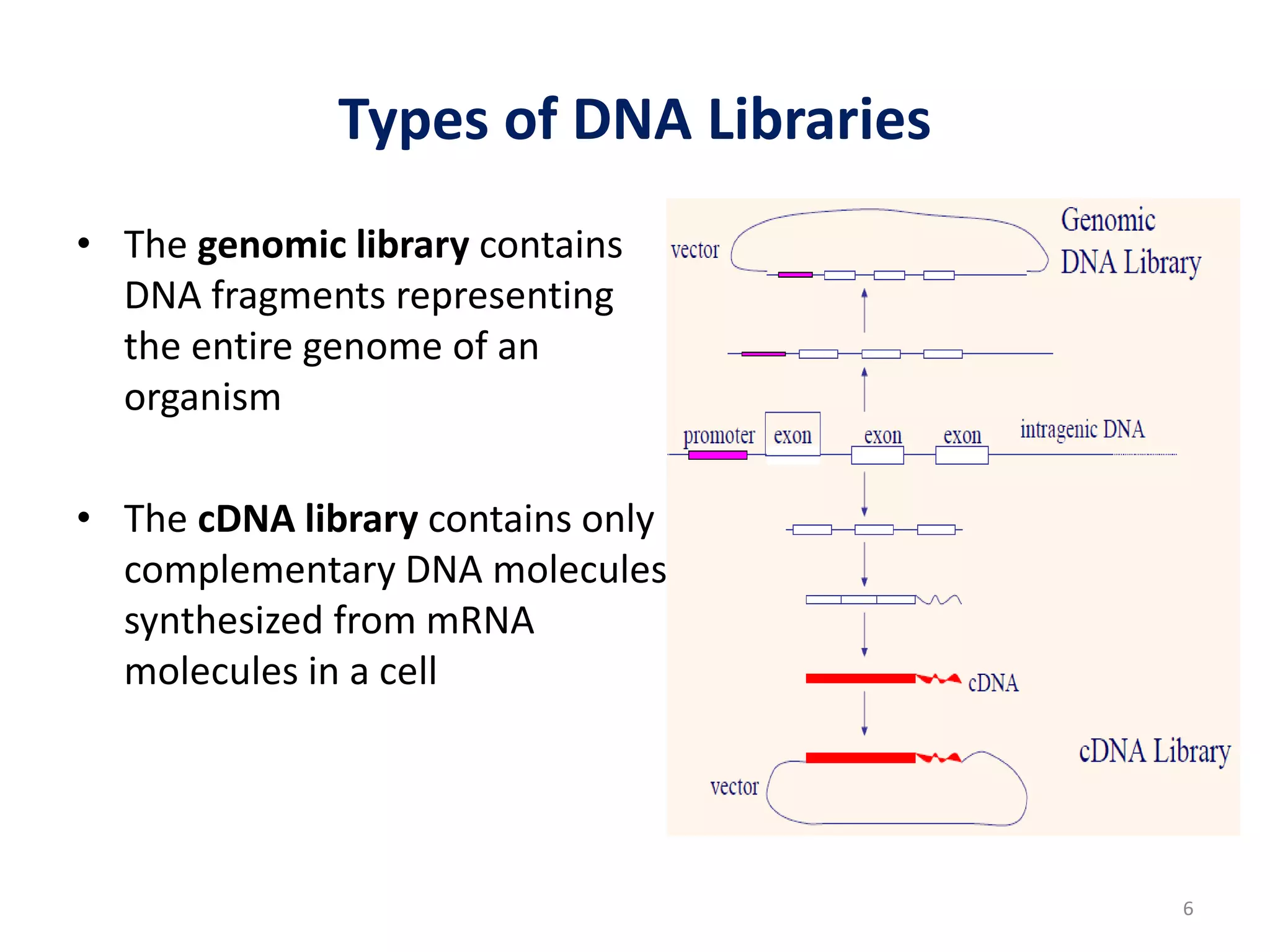
Types of DNA Libraries
• The genomic library contains
DNA fragments representing
the entire genome of an
organism
• The cDNA library contains only
complementary DNA molecules
synthesized from mRNA
molecules in a cell
6
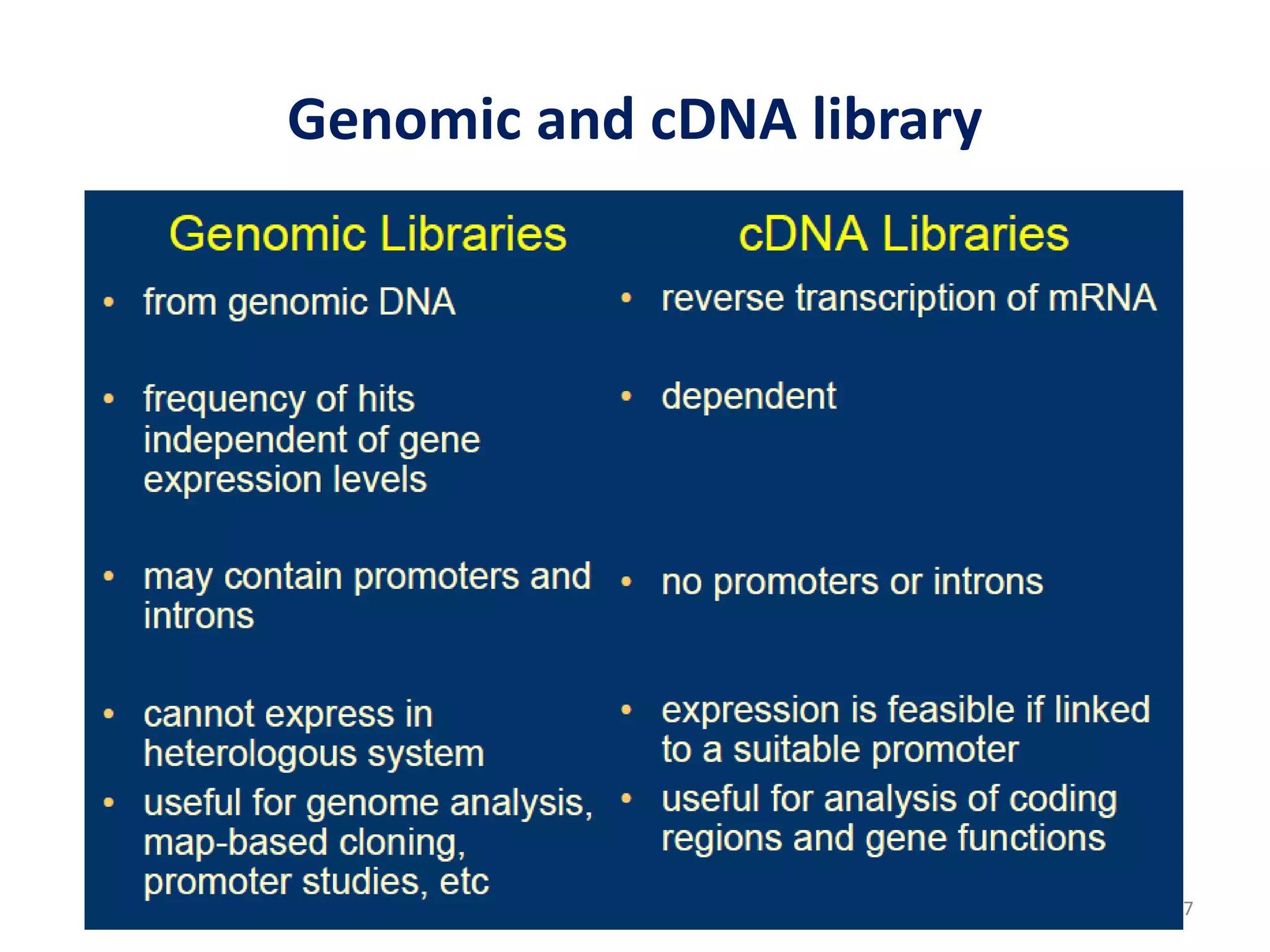
Genomic and cDNA library
7
Genomic Library
• Genomic library is made from total nuclear DNA of an
organism or species
• DNA is cut into clonable size pieces as randomly as
possible
8
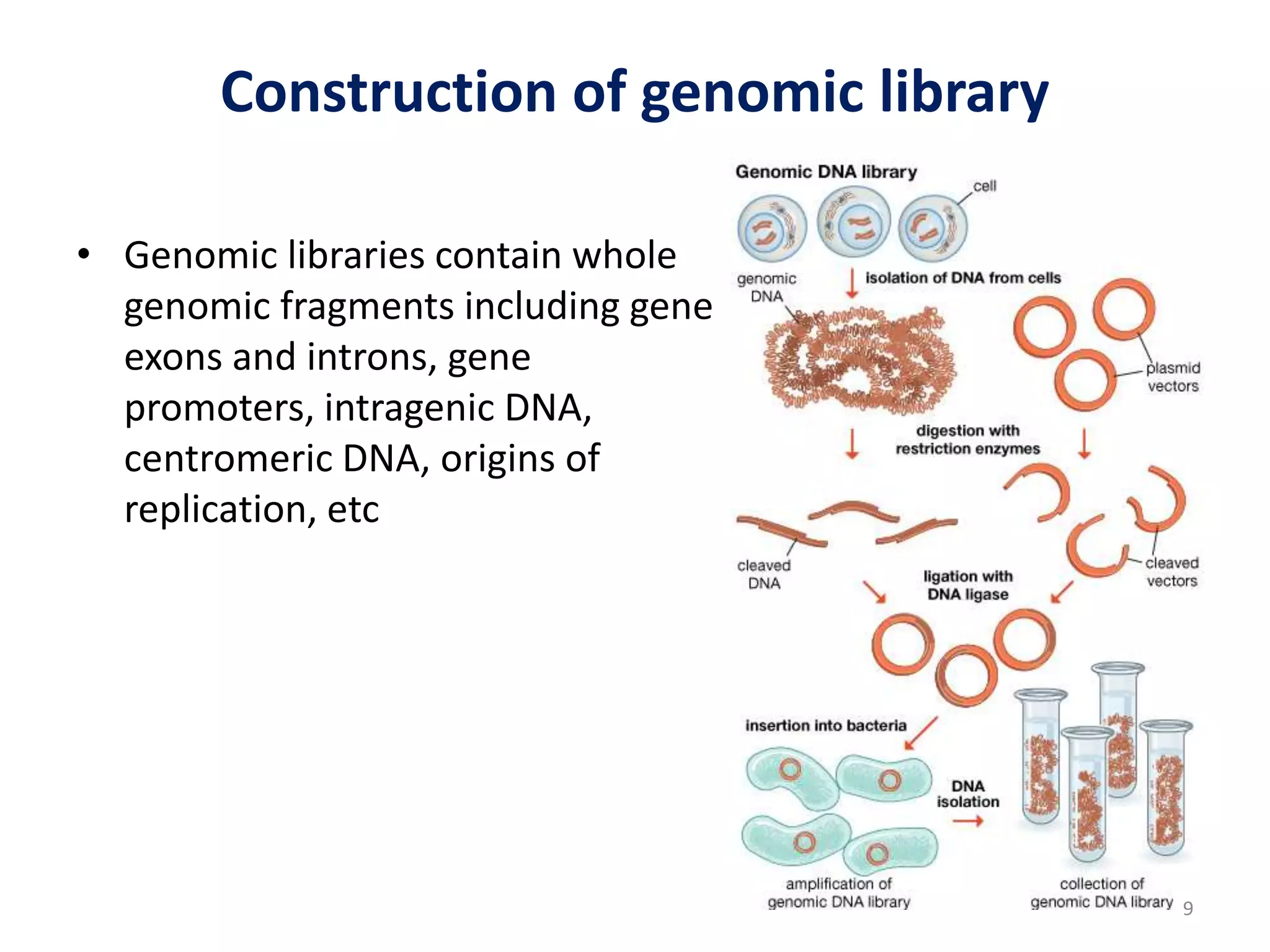
Construction of genomic library
• Genomic libraries contain whole
genomic fragments including gene
exons and introns, gene
promoters, intragenic DNA,
centromeric DNA, origins of
replication, etc
9
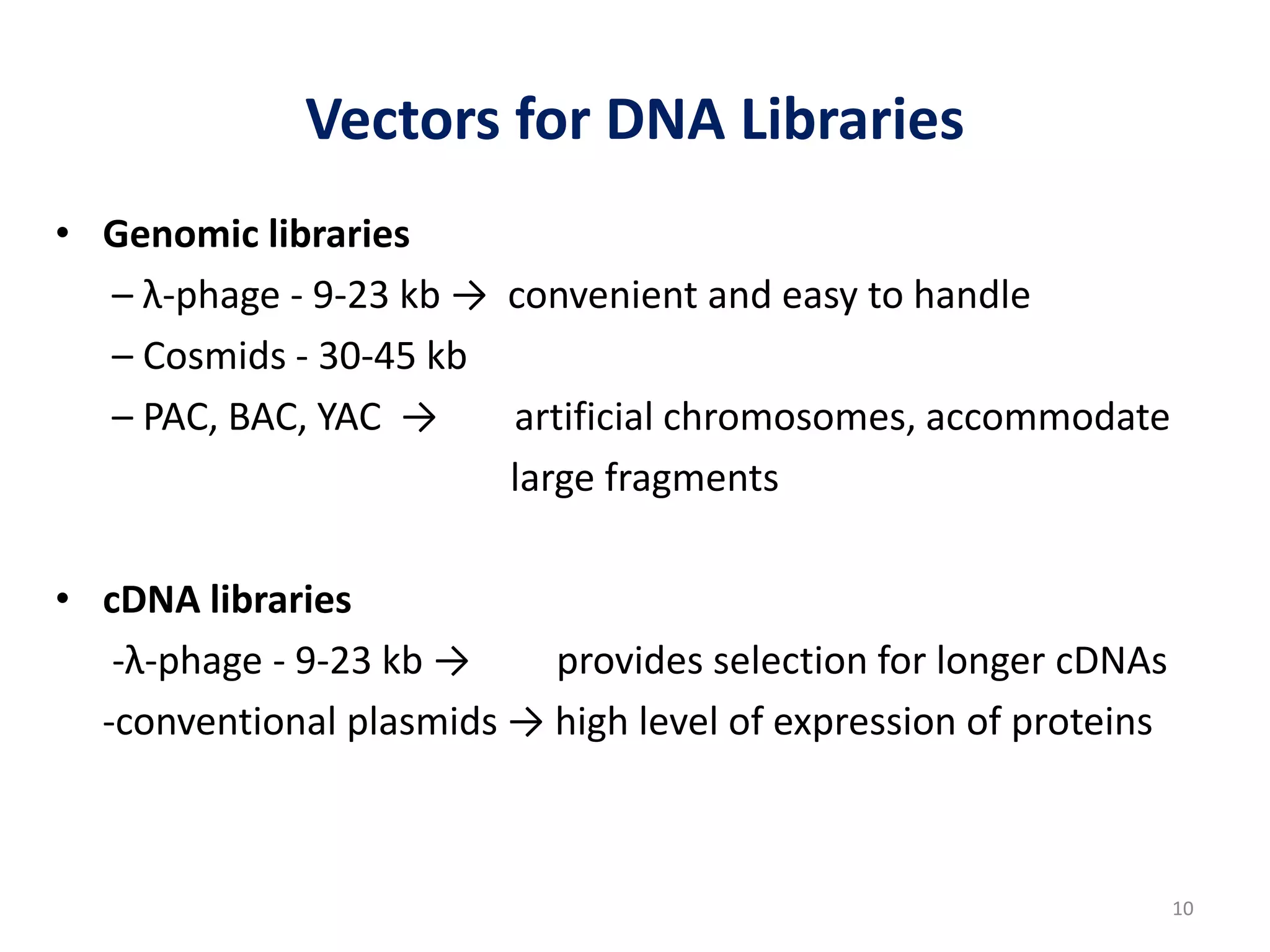
Vectors for DNA Libraries
• Genomic libraries
– λ-phage - 9-23 kb → convenient and easy to handle
– Cosmids - 30-45 kb
– PAC, BAC, YAC → artificial chromosomes, accommodate
large fragments
• cDNA libraries
-λ-phage - 9-23 kb → provides selection for longer cDNAs
-conventional plasmids → high level of expression of proteins
10
cDNA library
• cDNA library is a collection of clones containing cDNA
and represents the genes that are expressed within a
given cell or tissue type at a particular period
• cDNA libraries represent sequences after any post
transcriptional modification (e.g. Splicing of introns)
• The advantage of cDNA library is that it contains only
the coding region of a genome
11
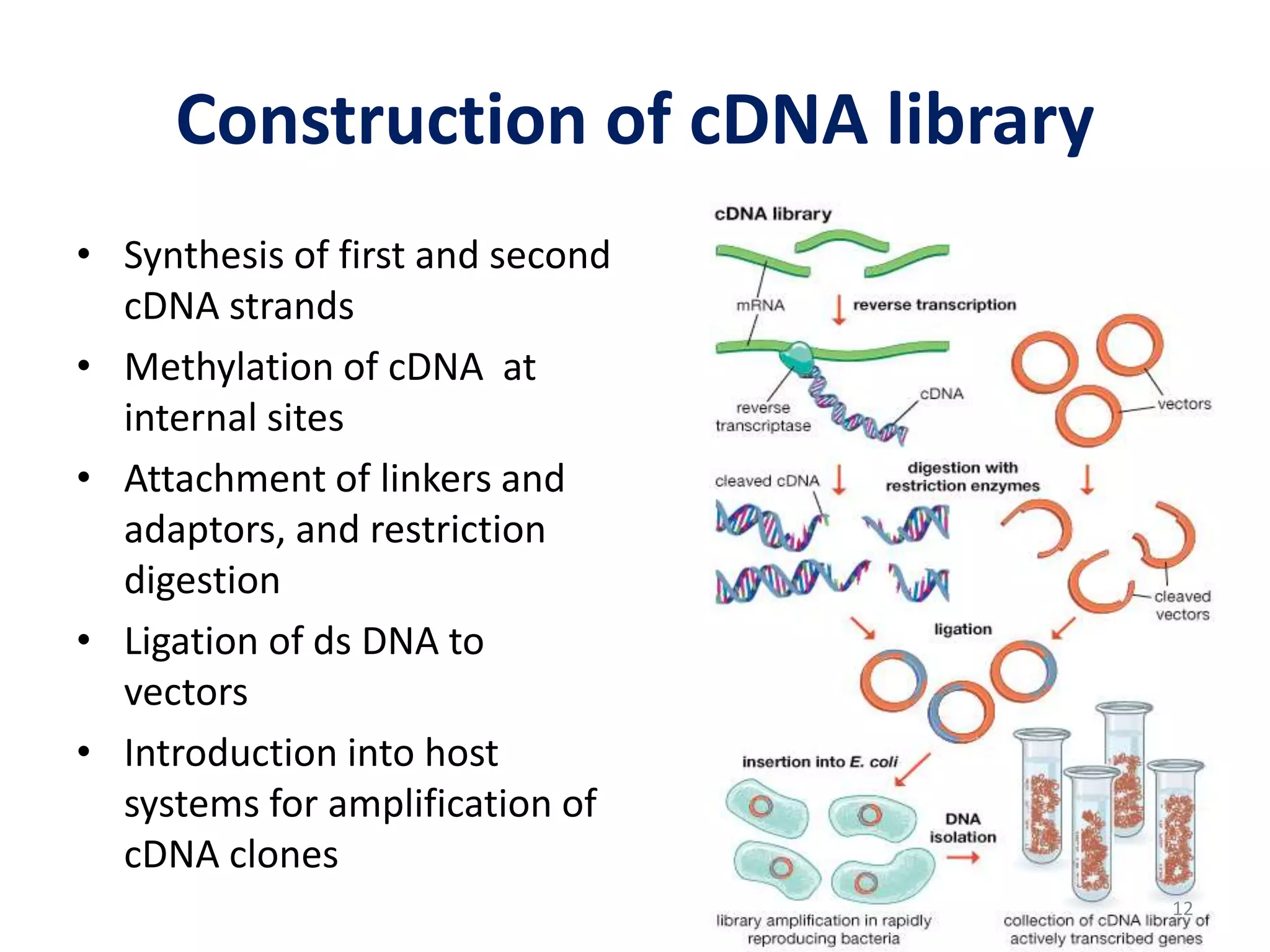
Construction of cDNA library
• Synthesis of first and second
cDNA strands
• Methylation of cDNA at
internal sites
• Attachment of linkers and
adaptors, and restriction
digestion
• Ligation of ds DNA to
vectors
• Introduction into host
systems for amplification of
cDNA clones
12
Advantages of cDNA
• The conversion of mRNA sequences to ds cDNA offers several
advantages, which include:
(i) mRNA is naturally labile single stranded molecule, and its
conversion into more stable ds cDNA facilitates long-term
storage of these sequences
(ii) cDNA is representative of the mRNA population (i.e.,
expressed genes) of the cell. Thus, the synthesis of cDNA is
the creation of a permanent biochemical record of the cell at
the time of lysis.
(iii) By synthesizing and cloning the resulting cDNA from a
single source, a method for propagating the cDNA is created.
This approach is greatly facilitated by the huge variety of
vectors compatible with an equally impressive variety of hosts
(iv) cDNA molecules, both long and short, can be used to
screen (hybridize to) members of much more complex
genomic DNA libraries
13
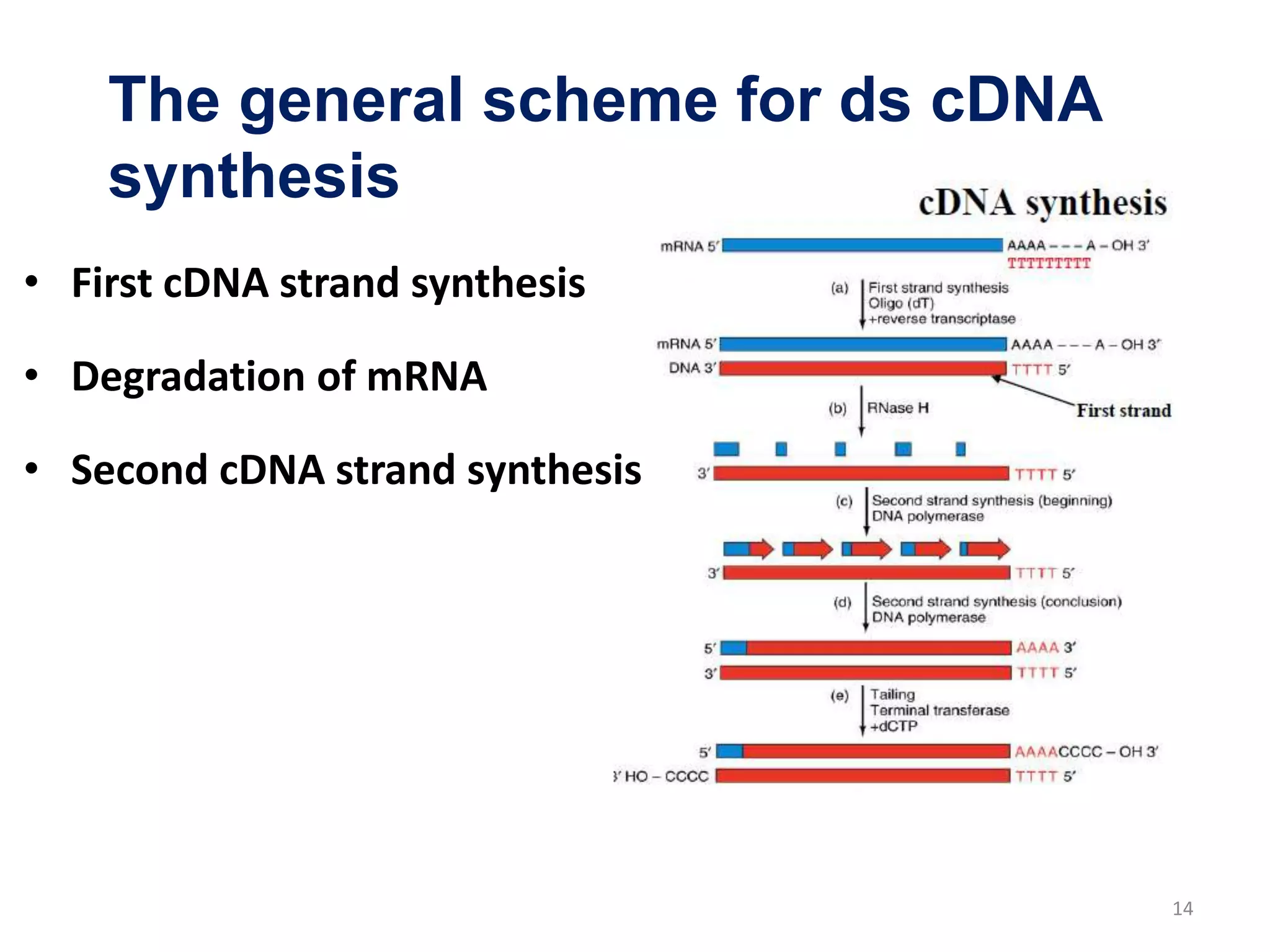
• First cDNA strand synthesis
• Degradation of mRNA
• Second cDNA strand synthesis
The general scheme for ds cDNA
synthesis
14
First cDNA strand synthesis
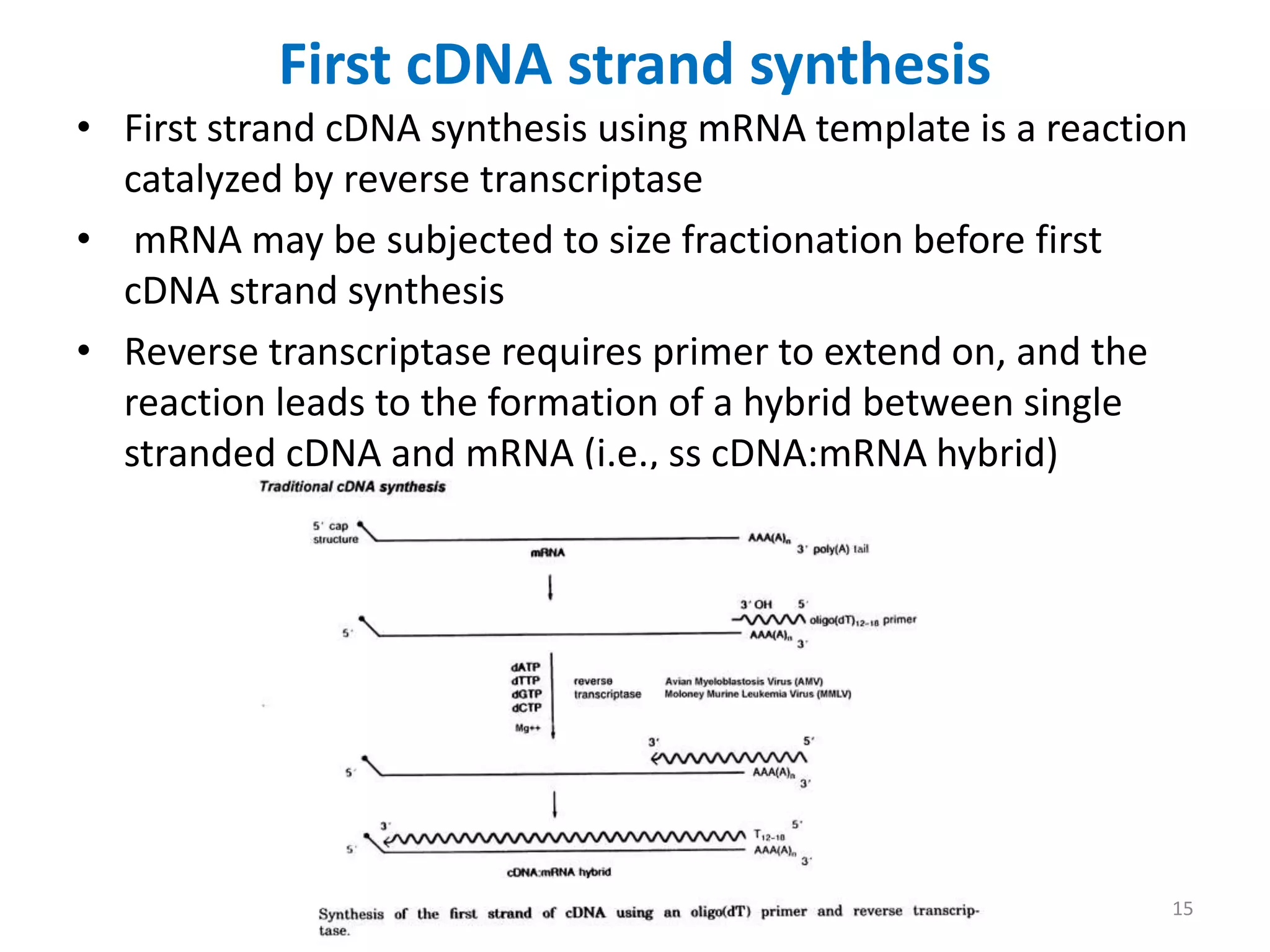
• First strand cDNA synthesis using mRNA template is a reaction
catalyzed by reverse transcriptase
• mRNA may be subjected to size fractionation before first
cDNA strand synthesis
• Reverse transcriptase requires primer to extend on, and the
reaction leads to the formation of a hybrid between single
stranded cDNA and mRNA (i.e., ss cDNA:mRNA hybrid)
15
Degradation of mRNA
• The mRNA template in ss cDNA:mRNA hybrid is
degraded by alkali treatment or by RNase H-
catalyzed nicking
• This step provides primers for second cDNA strand
synthesis (not in case of self-priming of second cDNA
strand and random primers catalyzed second strand
synthesis)
16
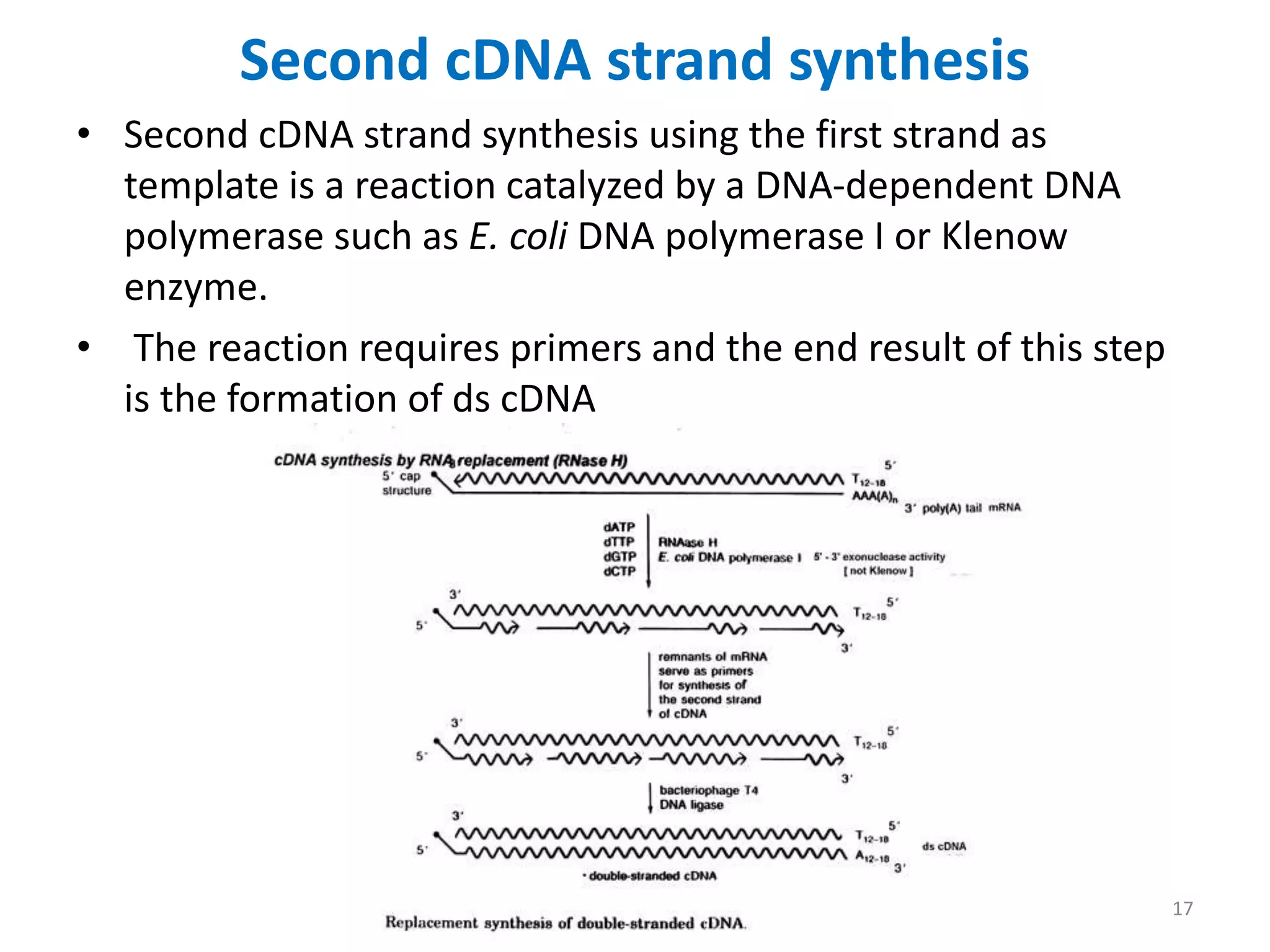
Second cDNA strand synthesis
• Second cDNA strand synthesis using the first strand as
template is a reaction catalyzed by a DNA-dependent DNA
polymerase such as E. coli DNA polymerase I or Klenow
enzyme.
• The reaction requires primers and the end result of this step
is the formation of ds cDNA
17
Size fractionation of mRNA
• The simplest method to enrich preparations of mRNA for
sequences of interest is to fractionate them according to size
• Size fractionation is used for enrichment of mRNAs that are
much larger or smaller in size than the bulk mRNAs of the cell
• Different ways of size fractionation include density gradient
centrifugation and agarose gel electrophoresis
• In density gradient centrifugation, different mRNAs present in
a sample when applied to the top of a prepoured density
gradient, and subjected to centrifugation, are separated
according to size
18
Effect of mRNA length on cDNA synthesis
• The length of specific mRNA, and hence the cDNA that is to
be cloned, influences the choice of primer and vector
• The majority of mRNA species are between 1.5 and 2.0 kb
in length. For these 'standard' mRNAs, the primer of choice
is oligo (dT), which is 12-18 nucleotides in length
• The oligo (dT) primer will anneal to the poly (A) tract, which
is found at the 3'-terminus of most eukaryotic mRNAs (his
tone is a notable exception)
• There are, however, a number of mRNAs, which are
extremely long, and it would be difficult to synthesize
complete cDNA copies from these long mRNAs in one piece
19
Primers used for first cDNA strand
synthesis
• The first step in the synthesis of ds cDNA is the formation of a ss
cDNA:mRNA hybrid, which results from the synthesis of first cDNA
strand using mRNA as a template
• First cDNA strand synthesis, either total RNA or poly (A) RNA can be
used depending on the purpose. If the cDNA is to serve as a
template for PCR, total RNA is usually sufficient, while poly (A) RNA
is employed if the cDNA is to be used as a hybridization probe
• For first cDNA strand synthesis, mRNA template and primers are
added together
• The preparation is heated to 70°C to melt the secondary structure
of a RNA and then cooled slowly to room temperature to allow
primer hybridization (called annealing of primers)
20
Oligo (dT) Primers
• Oligo (dT) primers that represent a chemically
synthesized stretch of 16-20 adenosine residues are
used when the mRNA species for which cDNA is
required is polyadenylated at its 3'- end
• If the mRNA is not polyadenylated, oligo (dT) primers
cannot be used
• The primer is added to the reaction mixture in large
molar excess so that each molecule of mRNA binds
several molecules of oligo (dT) primers at its long poly
(A) tail
• The annealed primer supplies free 3'-OH group, which
is extended by reverse transcriptase
21
Random primers
• Random primers (or random oligonucleotides) are a
collection of chemically synthesized oligonucleotides of
random sequence, usually hexamers
• These are produced by oligomerization of equal
quantities of mixed A, G, C, and T residues, so that all
possible hexameric sequences are present
• The hexamers bind throughout the length of the
mRNA molecule (wherever complementary) resulting
in internal priming of first cDNA strand instead of
priming from the 3'-end of the template
22
Random primers
• Random primers, however, create certain problems, for example,
(i) If one is interested in cDNA synthesis from poly (A) RNA, the product
will be contaminated from cDNAs synthesized from poly (A) RNAs as
well
(ii) cDNA clones derived from random priming of first strand cDNA tend
to be smaller than clones derived from oligo (dT) priming
(iii) The efficiency of priming varies from one mRNA to another,
depending on the size of mRNA, and complexity and composition of the
random primers pool
(iv) The primers have to be removed between first and second strand
synthesis steps, otherwise second strand synthesis will also initiate by
random priming
23
Oligo (dT) Primer-adaptor or Oligo (dT)
Primer-linker
• For first cDNA strand synthesis oligonucleotides such as
oligo (dT) primer-adaptor may also be employed
• These primers consist of oligo (dT) appended at their 5'-
end with overhanging sequences that will support the
addition of restriction enzyme sites or useful sequences on
one end
• The purpose of such primer-adaptor is directional cloning
of ds cDNA, hence such first cDNA strand synthesis is done
in combination with second strand synthesis with a similar
primer-adaptor having different restriction enzyme site
• Oligo (dT) primer-linker works on the same principle for
directional cloning 24
Asymmetrically tailed plasmid
(Oligomerically tailed plasmid)
• Synthesis of the first strand is also primed from an
oligo (dT) tail covalently attached to one end of the
linearized plasmid
• This strategy allows direct and efficient cloning of
cDNA into the vector
• Being large in size, it is often not possible to
incorporate enough oligomerically tailed plasmid in
the reaction mixture to achieve a high
primer:template ratio
25
Primers used for second cDNA strand
synthesis
• In order to obtain a molecule that is stable, and can be
manipulated and cloned into a vector, the mRNA in the ss
cDNA:mRNA hybrid needs to be replaced with a cDNA strand
of the same sequence
• This second cDNA strand synthesis is conveniently carried out
by E. coli DNA polymerase I (Kornberg enzyme), Klenow
enzyme, reverse transcriptase, or T4 DNA polyrnerase
• Thermostable DNA polymerases such as Tth and Taq DNA
polymerases can also be used, albeit rarely
26
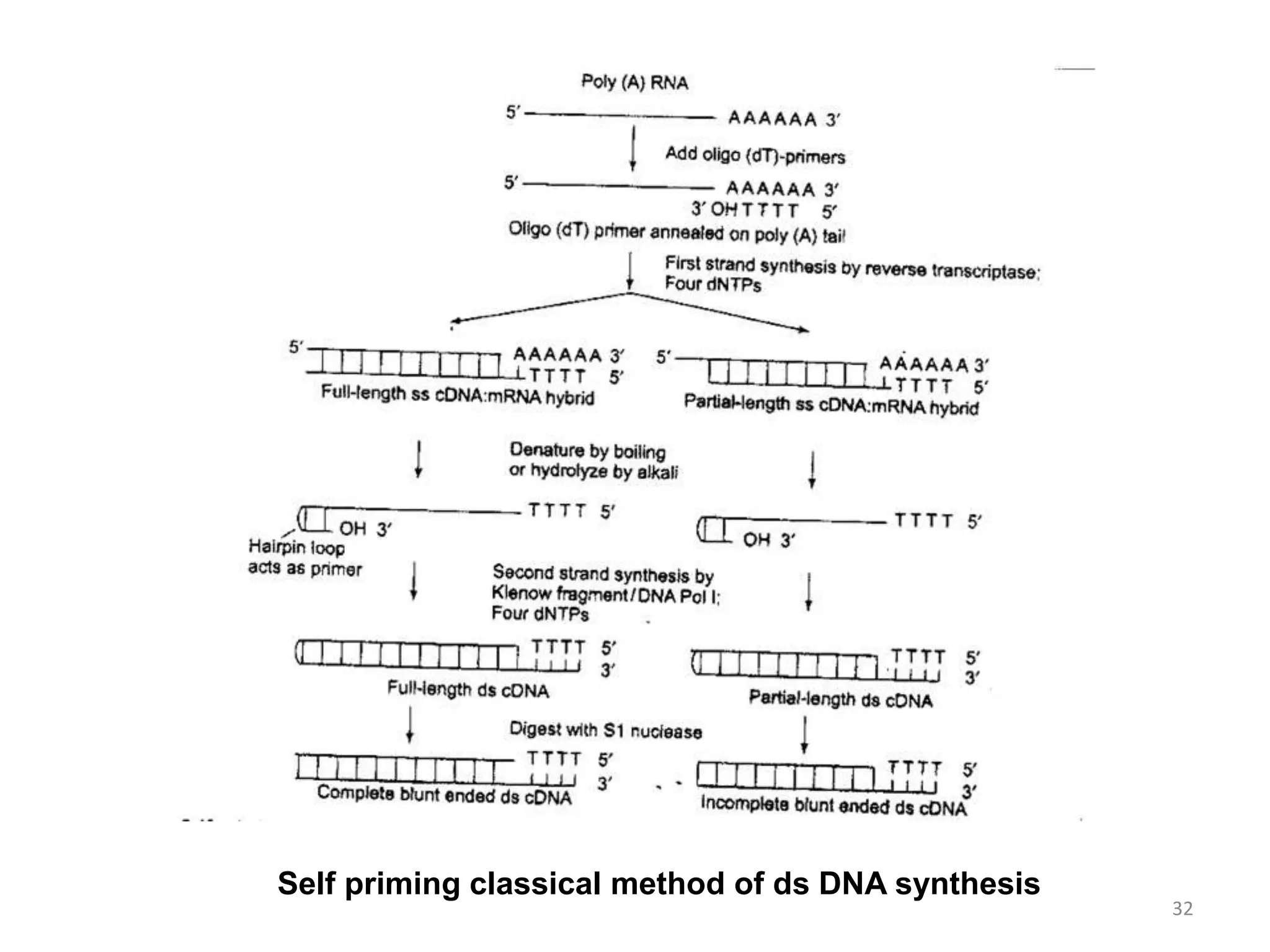
Self-priming
• This strategy takes advantage of the tendency of reverse
tanscriptase to form a hairpin loop during the first cDNA strand
synthesis, which is used as a primer for second cDNA strand
synthesis
• This hairpin is formed due to spontaneous intramolecular base
pairing during reverse transcriptase reaction. This technique is
advantageous because a single primer that is used for first cDNA
strand synthesis is used to synthesize the second cDNA strand as
well
• This method leads to higher yields of ds cDNA
• For cloning ds cDNA into a suitable vector, hairpin loop is removed
in a reaction catalyzed by S1 nuclease. As it is an uncontrolled
reaction, there may be frequent loss of cDNA sequences
corresponding to the 5'-end of mRNA
27
RNA fragments generated by RNase H
treatment (replacement synthesis)
• RNase H recognizes a ss cDNA:mRNA hybrid, and makes many
nicks or gaps in the RNA strand. Many RNA fragments thus created
along the length of the first cDNA strand provide free 3'-OH groups
to be used as primers for extension by polymerase. The reaction
has three main advantages:
(i) The priming is very efficient
(ii) Such priming does not need any further treatment or purification,
and can be carried out directly using the products of the first cDNA
strand synthesis reaction and
(iii) It eliminates the need to use S1 nuclease, and hence is free
from disadvantages such as loss of cDNA sequences that results
from S1 nuclease treatment
28
Oligonucleotide priming
• In this method, homopolymeric tail is added to the 3'-end of
the newly synthesized first cDNA strand
• This tailing is done by exploiting the activity of terminal
deoxynucleotidyl transferase (TdT), a template independent
DNA polymerase from calf thymus, in the presence of only
single type of dNTP (take for example, addition of oligo dC tail
by TdT in presence of dCTPs)
• This oligo dC tail then acts as an annealing site for a
chemically synthesized complementary oligonucleotide
primer (oligo dG)
29
Oligonucleotide-adaptor priming or
Oligonucteotidelinker priming
• In this method, once first strand is synthesized using oligo (dT)
primer-adaptor, a homopolymeric tail is added to its 3'-end in
a TdT-catalyzed reaction in the presence of dCTP
• First cDNA strand synthesis, oligo (dT) anneals to poly (A) tail,
and the adaptor provides a recognition site for a restriction
endonuclease
• This oligo (dC) tail provides complementary sequences for
annealing of oligonucleotide primer
• The mRNA strand in a ss cDNA:mRNA hybrid formed after first
cDNA strand synthesis is subjected to alkali hydrolysis or
denaturation
30
Random priming
• Similar to first cDNA strand synthesis by random
primers, second cDNA strand synthesis by Klenow
enzyme can also be primed by random primers
• Random priming of the second cDNA strand is done
after alkali digestion of RNA in ss cDNA:mRNA hybrid
• Random priming prevents 3' or 5' bias in the
resulting library, but with this method full-length
cDNA is hardly obtained
31
Self priming classical method of ds DNA synthesis
32
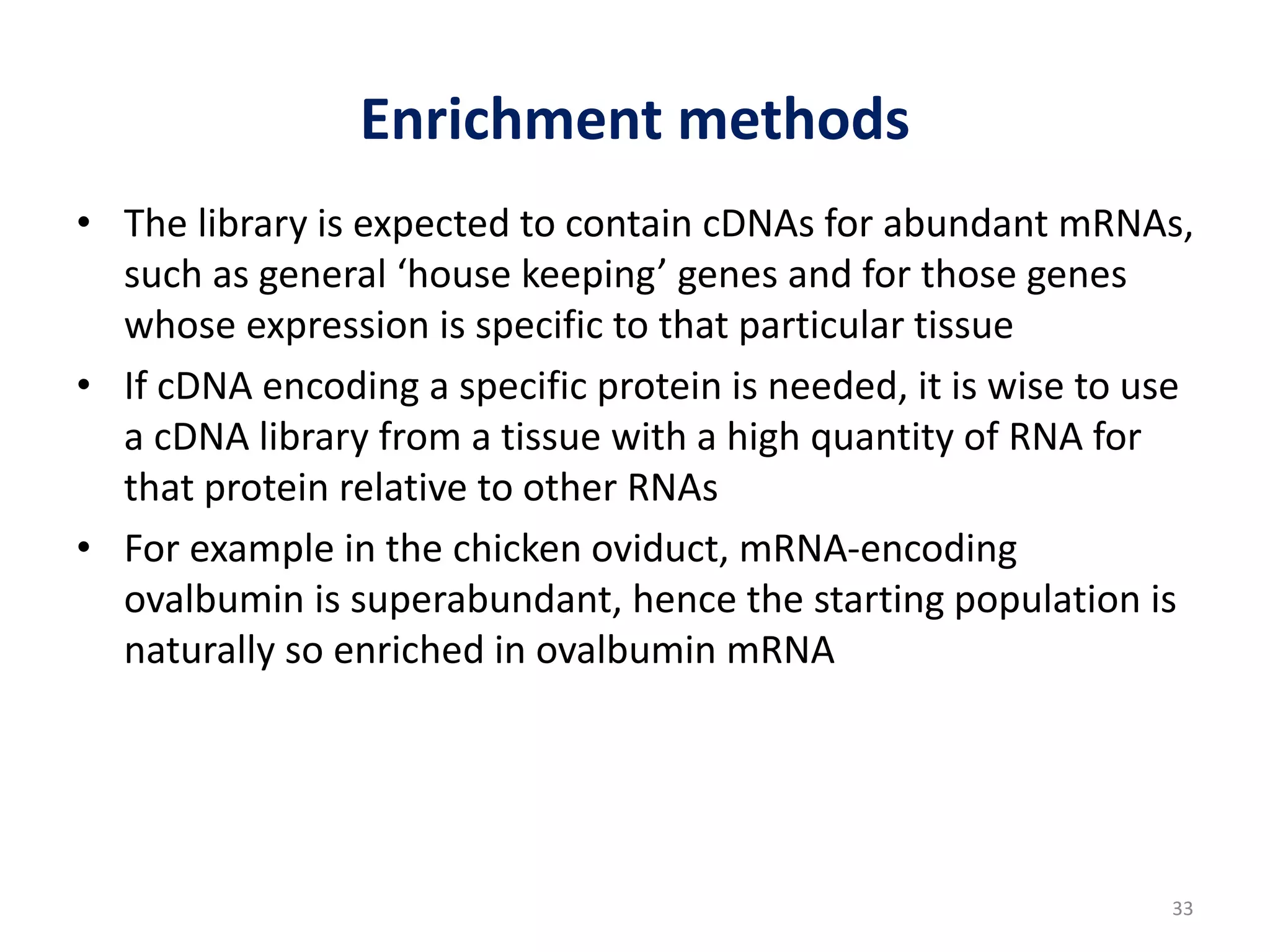
Enrichment methods
• The library is expected to contain cDNAs for abundant mRNAs,
such as general ‘house keeping’ genes and for those genes
whose expression is specific to that particular tissue
• If cDNA encoding a specific protein is needed, it is wise to use
a cDNA library from a tissue with a high quantity of RNA for
that protein relative to other RNAs
• For example in the chicken oviduct, mRNA-encoding
ovalbumin is superabundant, hence the starting population is
naturally so enriched in ovalbumin mRNA
33
Construction of eukaryotic cDNA libraries
in expression vectors
• Eukaryotic cDNA that encodes functional protein is cloned in
particular type of expression vector
• Most eukaryotic expression vectors are shuttle vectors that
contain:
Promoter
Two origins of replication
eukaryotic transcriptional and translational stop signals
A sequence that enables polyadenylation of mRNA
Two selectable marker gens, one for E. coli and other for
eukaryotic host cells
34
cDNA libraries generated by RT-PCR
• RT-PCR can be used to provide the cDNA for library
construction when the source of mRNA is unsuitable
(e.g. very small amount) for conventional approaches
• In this technique instead of gene-specific primers,
universal primers can be used
35
Subtractive cloning
• Subtractive cloning is a type of representational difference
analysis technique carried out for removal of common
sequences from two different cDNA preparations before
library construction
• Removal of common sequences is achieved by hybridizing ss
cDNA to a 10 to 20-fold excess of DNA or RNA prepared from
other source that does not express the gene of interest
• The DNA:RNA hybrids are then separated from unhybridized
cDNA by hydroapatite chromatography
• The most significant example of this approach is the cloning of
human gene for muscular dystrophy using normal DNA and
DNA from an individual with a deletion spanning the DMD
gene
36
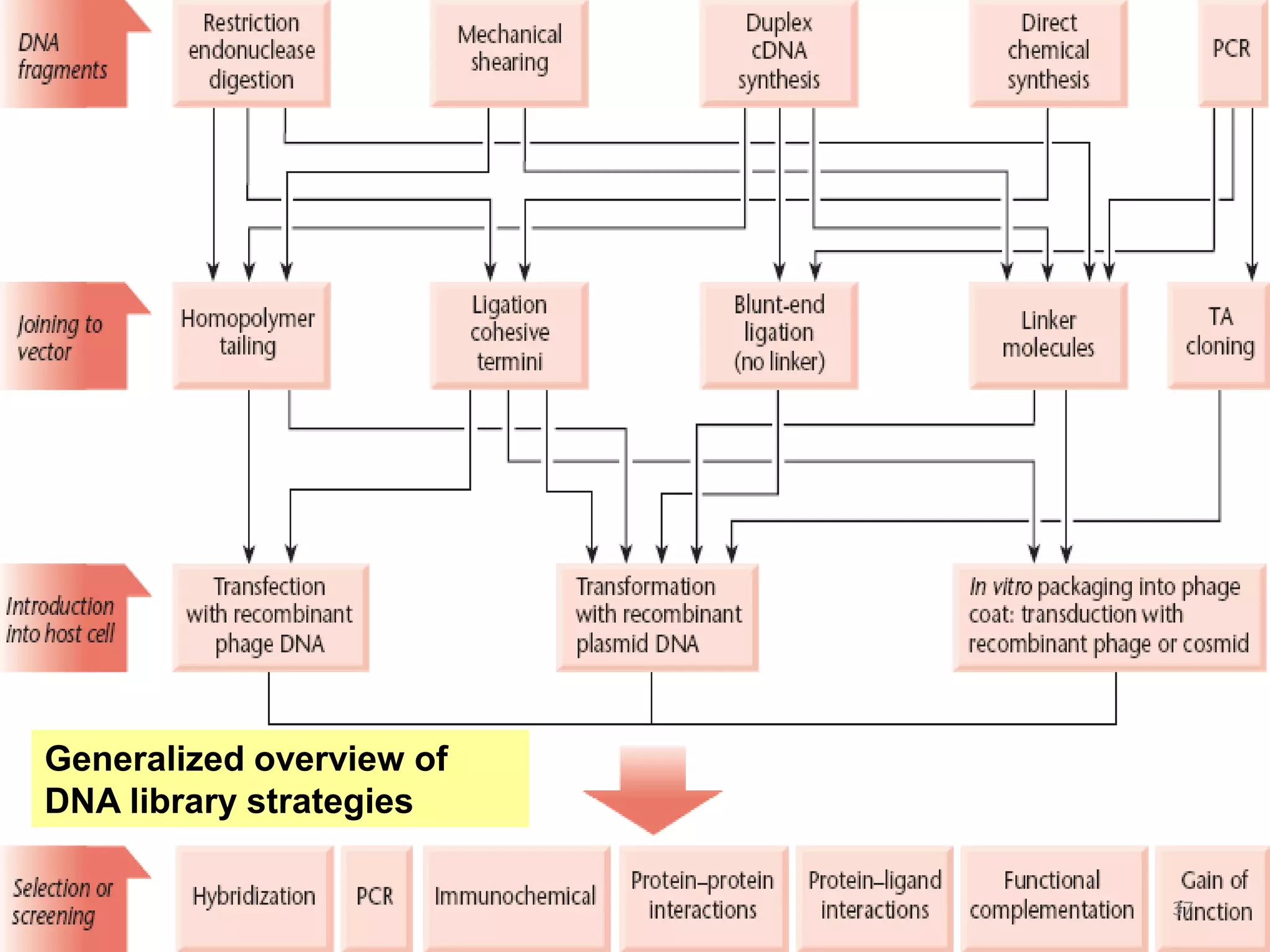
Generalized overview of
DNA library strategies
37

Lectut btn-202-ppt-l20. genomic and c dna libraries

  • 1.
    Genomic and cDNAlibraries 1 Lecture- 20
  • 2.
    • A genomicDNA library of an organism is a collection of clones (colonies or plaques) containing all the fragments of genomic DNA of this organism in a suitable vector. • To construct this library, genomic DNA of the organism is fragmented and all the fragments are ligated to a linearized vector. The recombinant vector molecules are introduced into the cells of a host. • When the vector is a plasmid, each transformed cell of the host is grown to form a colony and when the vector is a virus, each recombinant viral molecule is made to infect a lawn of host cells to form a plaque. Hence, a collection of colonies or plaques representing the entire genome is obtained. 2 INTRODUCTION
  • 3.
    3 •Genomic DNA librariesare quite suitable for cloning genes of prokaryotes as the prokaryotic genomes are small and their genes do not have introns. In this case the minimum number of clones required to represent the entire genome is about 5,000-10, 000, which is quite manageable. •In contrast to the prokaryotic genomes, the eukaryotic genomes are very large and their genes generally carry several introns. •The cloning of a eukaryotic gene by constructing a genomic library involves a very large number of clones, generally more than 100, 000. Hence, for cloning of eukaryotic genes, cDNA libraries are preferred over genomic DNA libraries.
  • 4.
    4 •A cDNA libraryis a collection of clones (colonies or plaques) containing cDNAs synthesized from the mRNAs obtained from the cells in which the gene of interest was expressing. •All the synthesized cDNA molecules are ligated to a linearised vector. •As in case of the genomic DNA libraries, all the recombinant vector molecules are introduced into the cells of a host and a collection of colonies or plaques is obtained depending on whether the cloning vector was a plasmid or a virus.
  • 5.
    DNA libraries -collections of DNA sequences • A DNA library is a collection of clones of DNA designed so that there is a high probability of finding any particular piece of the source DNA in the collection • DNA libraries, like conventional libraries, are used to collect and store information • In DNA libraries, the information is stored as a set of DNA molecules • All DNA libraries are collections of DNA fragments that represent a particular biological system of interest • The two most common uses for these DNA collections are DNA sequencing and gene cloning 5
  • 6.
    Types of DNALibraries • The genomic library contains DNA fragments representing the entire genome of an organism • The cDNA library contains only complementary DNA molecules synthesized from mRNA molecules in a cell 6
  • 7.
  • 8.
    Genomic Library • Genomiclibrary is made from total nuclear DNA of an organism or species • DNA is cut into clonable size pieces as randomly as possible 8
  • 9.
    Construction of genomiclibrary • Genomic libraries contain whole genomic fragments including gene exons and introns, gene promoters, intragenic DNA, centromeric DNA, origins of replication, etc 9
  • 10.
    Vectors for DNALibraries • Genomic libraries – λ-phage - 9-23 kb → convenient and easy to handle – Cosmids - 30-45 kb – PAC, BAC, YAC → artificial chromosomes, accommodate large fragments • cDNA libraries -λ-phage - 9-23 kb → provides selection for longer cDNAs -conventional plasmids → high level of expression of proteins 10
  • 11.
    cDNA library • cDNAlibrary is a collection of clones containing cDNA and represents the genes that are expressed within a given cell or tissue type at a particular period • cDNA libraries represent sequences after any post transcriptional modification (e.g. Splicing of introns) • The advantage of cDNA library is that it contains only the coding region of a genome 11
  • 12.
    Construction of cDNAlibrary • Synthesis of first and second cDNA strands • Methylation of cDNA at internal sites • Attachment of linkers and adaptors, and restriction digestion • Ligation of ds DNA to vectors • Introduction into host systems for amplification of cDNA clones 12
  • 13.
    Advantages of cDNA •The conversion of mRNA sequences to ds cDNA offers several advantages, which include: (i) mRNA is naturally labile single stranded molecule, and its conversion into more stable ds cDNA facilitates long-term storage of these sequences (ii) cDNA is representative of the mRNA population (i.e., expressed genes) of the cell. Thus, the synthesis of cDNA is the creation of a permanent biochemical record of the cell at the time of lysis. (iii) By synthesizing and cloning the resulting cDNA from a single source, a method for propagating the cDNA is created. This approach is greatly facilitated by the huge variety of vectors compatible with an equally impressive variety of hosts (iv) cDNA molecules, both long and short, can be used to screen (hybridize to) members of much more complex genomic DNA libraries 13
  • 14.
    • First cDNAstrand synthesis • Degradation of mRNA • Second cDNA strand synthesis The general scheme for ds cDNA synthesis 14
  • 15.
    First cDNA strandsynthesis • First strand cDNA synthesis using mRNA template is a reaction catalyzed by reverse transcriptase • mRNA may be subjected to size fractionation before first cDNA strand synthesis • Reverse transcriptase requires primer to extend on, and the reaction leads to the formation of a hybrid between single stranded cDNA and mRNA (i.e., ss cDNA:mRNA hybrid) 15
  • 16.
    Degradation of mRNA •The mRNA template in ss cDNA:mRNA hybrid is degraded by alkali treatment or by RNase H- catalyzed nicking • This step provides primers for second cDNA strand synthesis (not in case of self-priming of second cDNA strand and random primers catalyzed second strand synthesis) 16
  • 17.
    Second cDNA strandsynthesis • Second cDNA strand synthesis using the first strand as template is a reaction catalyzed by a DNA-dependent DNA polymerase such as E. coli DNA polymerase I or Klenow enzyme. • The reaction requires primers and the end result of this step is the formation of ds cDNA 17
  • 18.
    Size fractionation ofmRNA • The simplest method to enrich preparations of mRNA for sequences of interest is to fractionate them according to size • Size fractionation is used for enrichment of mRNAs that are much larger or smaller in size than the bulk mRNAs of the cell • Different ways of size fractionation include density gradient centrifugation and agarose gel electrophoresis • In density gradient centrifugation, different mRNAs present in a sample when applied to the top of a prepoured density gradient, and subjected to centrifugation, are separated according to size 18
  • 19.
    Effect of mRNAlength on cDNA synthesis • The length of specific mRNA, and hence the cDNA that is to be cloned, influences the choice of primer and vector • The majority of mRNA species are between 1.5 and 2.0 kb in length. For these 'standard' mRNAs, the primer of choice is oligo (dT), which is 12-18 nucleotides in length • The oligo (dT) primer will anneal to the poly (A) tract, which is found at the 3'-terminus of most eukaryotic mRNAs (his tone is a notable exception) • There are, however, a number of mRNAs, which are extremely long, and it would be difficult to synthesize complete cDNA copies from these long mRNAs in one piece 19
  • 20.
    Primers used forfirst cDNA strand synthesis • The first step in the synthesis of ds cDNA is the formation of a ss cDNA:mRNA hybrid, which results from the synthesis of first cDNA strand using mRNA as a template • First cDNA strand synthesis, either total RNA or poly (A) RNA can be used depending on the purpose. If the cDNA is to serve as a template for PCR, total RNA is usually sufficient, while poly (A) RNA is employed if the cDNA is to be used as a hybridization probe • For first cDNA strand synthesis, mRNA template and primers are added together • The preparation is heated to 70°C to melt the secondary structure of a RNA and then cooled slowly to room temperature to allow primer hybridization (called annealing of primers) 20
  • 21.
    Oligo (dT) Primers •Oligo (dT) primers that represent a chemically synthesized stretch of 16-20 adenosine residues are used when the mRNA species for which cDNA is required is polyadenylated at its 3'- end • If the mRNA is not polyadenylated, oligo (dT) primers cannot be used • The primer is added to the reaction mixture in large molar excess so that each molecule of mRNA binds several molecules of oligo (dT) primers at its long poly (A) tail • The annealed primer supplies free 3'-OH group, which is extended by reverse transcriptase 21
  • 22.
    Random primers • Randomprimers (or random oligonucleotides) are a collection of chemically synthesized oligonucleotides of random sequence, usually hexamers • These are produced by oligomerization of equal quantities of mixed A, G, C, and T residues, so that all possible hexameric sequences are present • The hexamers bind throughout the length of the mRNA molecule (wherever complementary) resulting in internal priming of first cDNA strand instead of priming from the 3'-end of the template 22
  • 23.
    Random primers • Randomprimers, however, create certain problems, for example, (i) If one is interested in cDNA synthesis from poly (A) RNA, the product will be contaminated from cDNAs synthesized from poly (A) RNAs as well (ii) cDNA clones derived from random priming of first strand cDNA tend to be smaller than clones derived from oligo (dT) priming (iii) The efficiency of priming varies from one mRNA to another, depending on the size of mRNA, and complexity and composition of the random primers pool (iv) The primers have to be removed between first and second strand synthesis steps, otherwise second strand synthesis will also initiate by random priming 23
  • 24.
    Oligo (dT) Primer-adaptoror Oligo (dT) Primer-linker • For first cDNA strand synthesis oligonucleotides such as oligo (dT) primer-adaptor may also be employed • These primers consist of oligo (dT) appended at their 5'- end with overhanging sequences that will support the addition of restriction enzyme sites or useful sequences on one end • The purpose of such primer-adaptor is directional cloning of ds cDNA, hence such first cDNA strand synthesis is done in combination with second strand synthesis with a similar primer-adaptor having different restriction enzyme site • Oligo (dT) primer-linker works on the same principle for directional cloning 24
  • 25.
    Asymmetrically tailed plasmid (Oligomericallytailed plasmid) • Synthesis of the first strand is also primed from an oligo (dT) tail covalently attached to one end of the linearized plasmid • This strategy allows direct and efficient cloning of cDNA into the vector • Being large in size, it is often not possible to incorporate enough oligomerically tailed plasmid in the reaction mixture to achieve a high primer:template ratio 25
  • 26.
    Primers used forsecond cDNA strand synthesis • In order to obtain a molecule that is stable, and can be manipulated and cloned into a vector, the mRNA in the ss cDNA:mRNA hybrid needs to be replaced with a cDNA strand of the same sequence • This second cDNA strand synthesis is conveniently carried out by E. coli DNA polymerase I (Kornberg enzyme), Klenow enzyme, reverse transcriptase, or T4 DNA polyrnerase • Thermostable DNA polymerases such as Tth and Taq DNA polymerases can also be used, albeit rarely 26
  • 27.
    Self-priming • This strategytakes advantage of the tendency of reverse tanscriptase to form a hairpin loop during the first cDNA strand synthesis, which is used as a primer for second cDNA strand synthesis • This hairpin is formed due to spontaneous intramolecular base pairing during reverse transcriptase reaction. This technique is advantageous because a single primer that is used for first cDNA strand synthesis is used to synthesize the second cDNA strand as well • This method leads to higher yields of ds cDNA • For cloning ds cDNA into a suitable vector, hairpin loop is removed in a reaction catalyzed by S1 nuclease. As it is an uncontrolled reaction, there may be frequent loss of cDNA sequences corresponding to the 5'-end of mRNA 27
  • 28.
    RNA fragments generatedby RNase H treatment (replacement synthesis) • RNase H recognizes a ss cDNA:mRNA hybrid, and makes many nicks or gaps in the RNA strand. Many RNA fragments thus created along the length of the first cDNA strand provide free 3'-OH groups to be used as primers for extension by polymerase. The reaction has three main advantages: (i) The priming is very efficient (ii) Such priming does not need any further treatment or purification, and can be carried out directly using the products of the first cDNA strand synthesis reaction and (iii) It eliminates the need to use S1 nuclease, and hence is free from disadvantages such as loss of cDNA sequences that results from S1 nuclease treatment 28
  • 29.
    Oligonucleotide priming • Inthis method, homopolymeric tail is added to the 3'-end of the newly synthesized first cDNA strand • This tailing is done by exploiting the activity of terminal deoxynucleotidyl transferase (TdT), a template independent DNA polymerase from calf thymus, in the presence of only single type of dNTP (take for example, addition of oligo dC tail by TdT in presence of dCTPs) • This oligo dC tail then acts as an annealing site for a chemically synthesized complementary oligonucleotide primer (oligo dG) 29
  • 30.
    Oligonucleotide-adaptor priming or Oligonucteotidelinkerpriming • In this method, once first strand is synthesized using oligo (dT) primer-adaptor, a homopolymeric tail is added to its 3'-end in a TdT-catalyzed reaction in the presence of dCTP • First cDNA strand synthesis, oligo (dT) anneals to poly (A) tail, and the adaptor provides a recognition site for a restriction endonuclease • This oligo (dC) tail provides complementary sequences for annealing of oligonucleotide primer • The mRNA strand in a ss cDNA:mRNA hybrid formed after first cDNA strand synthesis is subjected to alkali hydrolysis or denaturation 30
  • 31.
    Random priming • Similarto first cDNA strand synthesis by random primers, second cDNA strand synthesis by Klenow enzyme can also be primed by random primers • Random priming of the second cDNA strand is done after alkali digestion of RNA in ss cDNA:mRNA hybrid • Random priming prevents 3' or 5' bias in the resulting library, but with this method full-length cDNA is hardly obtained 31
  • 32.
    Self priming classicalmethod of ds DNA synthesis 32
  • 33.
    Enrichment methods • Thelibrary is expected to contain cDNAs for abundant mRNAs, such as general ‘house keeping’ genes and for those genes whose expression is specific to that particular tissue • If cDNA encoding a specific protein is needed, it is wise to use a cDNA library from a tissue with a high quantity of RNA for that protein relative to other RNAs • For example in the chicken oviduct, mRNA-encoding ovalbumin is superabundant, hence the starting population is naturally so enriched in ovalbumin mRNA 33
  • 34.
    Construction of eukaryoticcDNA libraries in expression vectors • Eukaryotic cDNA that encodes functional protein is cloned in particular type of expression vector • Most eukaryotic expression vectors are shuttle vectors that contain: Promoter Two origins of replication eukaryotic transcriptional and translational stop signals A sequence that enables polyadenylation of mRNA Two selectable marker gens, one for E. coli and other for eukaryotic host cells 34
  • 35.
    cDNA libraries generatedby RT-PCR • RT-PCR can be used to provide the cDNA for library construction when the source of mRNA is unsuitable (e.g. very small amount) for conventional approaches • In this technique instead of gene-specific primers, universal primers can be used 35
  • 36.
    Subtractive cloning • Subtractivecloning is a type of representational difference analysis technique carried out for removal of common sequences from two different cDNA preparations before library construction • Removal of common sequences is achieved by hybridizing ss cDNA to a 10 to 20-fold excess of DNA or RNA prepared from other source that does not express the gene of interest • The DNA:RNA hybrids are then separated from unhybridized cDNA by hydroapatite chromatography • The most significant example of this approach is the cloning of human gene for muscular dystrophy using normal DNA and DNA from an individual with a deletion spanning the DMD gene 36
  • 37.
    Generalized overview of DNAlibrary strategies 37