VARIANTS OF PCR-II
1
Lecture- 28
Reverse Transcriptase-PCR
RT-PCR is a technique used to amplify cDNA copies of RNA .
First Strand Reaction RNA strand is first reverse transcribed into a ss
cDNA template using dNTPs and an RNA-dependent DNA polymerase
(reverse transcriptase) through the process of reverse transcription. An
oligodeoxynucleotidyl primer is hybridized to 3'-end of mRNA and is then
extended by a reverse transcriptase to make a cDNA copy that can be
amplified by PCR. This reaction is usually carried out at 37oC.
Second Strand Reaction After the reverse transcription reaction is
complete and a cDNA has been generated from the original ss mRNA,
second strand reaction is initiated. In this step, standard PCR is performed
in the presence of gene-specific reverse and forward primers.
2
Applications of RT-PCR
• RT-PCR is widely used in the diagnosis of genetic diseases
• Determination of the abundance of specific different RNA
molecules within a cell or tissue as a measure of gene
expression.
• RT-PCR can also be very useful in the insertion of eukaryotic
genes into prokaryotes .
• RT-PCR is commonly used in studying the genomes of viruses
whose genomes are composed of RNA, such as Influenza virus
A and retroviruses like HIV.
3
Band-Stab PCR
• If during amplification the yield is very low, then the
desired fragment can be recovered by gel
electrophoresis and reamplified, which is known as
band-stab PCR.
• In band-stab PCR, ethidium bromide (EtBr) stained
agarose gel is analyzed by UV illumination and excess
fluid is removed by placing a piece of Whatman 3 MM
paper on the surface of the gel.
• Each band of interest is sampled carefully with the help
of hypodermic needle. The needle is withdrawn, the tip
is washed in PCR mixture, and the DNA of that
particular band is reamplified by using nested primers.
4
Degenerate PCR
• Degenerate PCR is similar to standard PCR, except, that instead of
using specific primers of a given sequence, mixed primers are used
in degenerate PCR.
• This PCR variation has proven to be a very powerful technique to
find new genes or gene families.
• Most of the genes that belong to a gene family share structural and
functional homologies.
• If the sequence for a gene from one organism is known and the gene
from another closely related organism is desired, the DNA sequence
for the particular gene in both organisms will be close, though rarely
similar.
• 'Clustal' alignment of the protein sequences from a number of
related proteins can be carried out to find the conserved and variable
domains. The primers are designed on the basis of conserved protein
motifs.
5
Anchored PCR
• In some type of PCR where only enough information to make a
single primer is known, a known sequence is added to the end of the
DNA by enzymatic addition of a polynucleotide stretch or by
ligation of known sequence, and the second primer is designed by
sequences of anchored DNA.
• This technique of amplification with single sided specificity has
been known as one-sided PCR or anchored PCR.
• The anchored or single-sided PCR allows specific amplification of
DNA where the 5' sequence of the molecule of interest is unknown.
• This approach is based on homopolymer tailing of cDNA catalyzed
by the terminal deoxynucleotidyl transferase.
• The amplification is performed by using one primer specific for the
molecule of interest (gene-specific primer), and a second primer
containing a defined 'anchor' sequence attached to a homopolymer
sequence complementary to the tail.
6
Ligation-anchored PCR (LA-PCR)
• An innovative technique of anchord PCR has
been developed in which an anchor of defined
sequence is directly ligated to first cDNA
strand, and the resulting product is amplified
by using primers specific for both the cDNA
of' interest and the anchor.
7
Applications of LA-PCR
• The production of general cDNA libraries from
very small amounts of starting material
• The analysis of T-cell receptor and
immunoglobulin V regions
• To clone developmentally regulated mRNAs
detected with gene trap vectors
• To characterize alternative promoter usage and
splice products
8
Asymmetric PCR
• A PCR technique in which the predominant product is a ss DNA as a
result of unequal primer concentration is known as asymmetric
PCR. Asymmetric PCR is carried out as usual, but with a great
excess of the primers for the chosen strand.
• As asymmetric PCR proceeds, the lower concentration primer (PL)
is quantitatively incorporated into ds DNA.
• The higher concentration primer (Px) continues to synthesize DNA,
but only of its template strand. This generates one of the strands by
linear amplification, and a fraction of its total product as ds DNA,
limited by the concentration ratio of the primers used.
• Thus, single stranded target strand along with the ds DNA can be
generated by an asymmetric PCR.
9
Differential display Reverse Transcriptase PCR
(DDRT-PCR of DD-PCR)
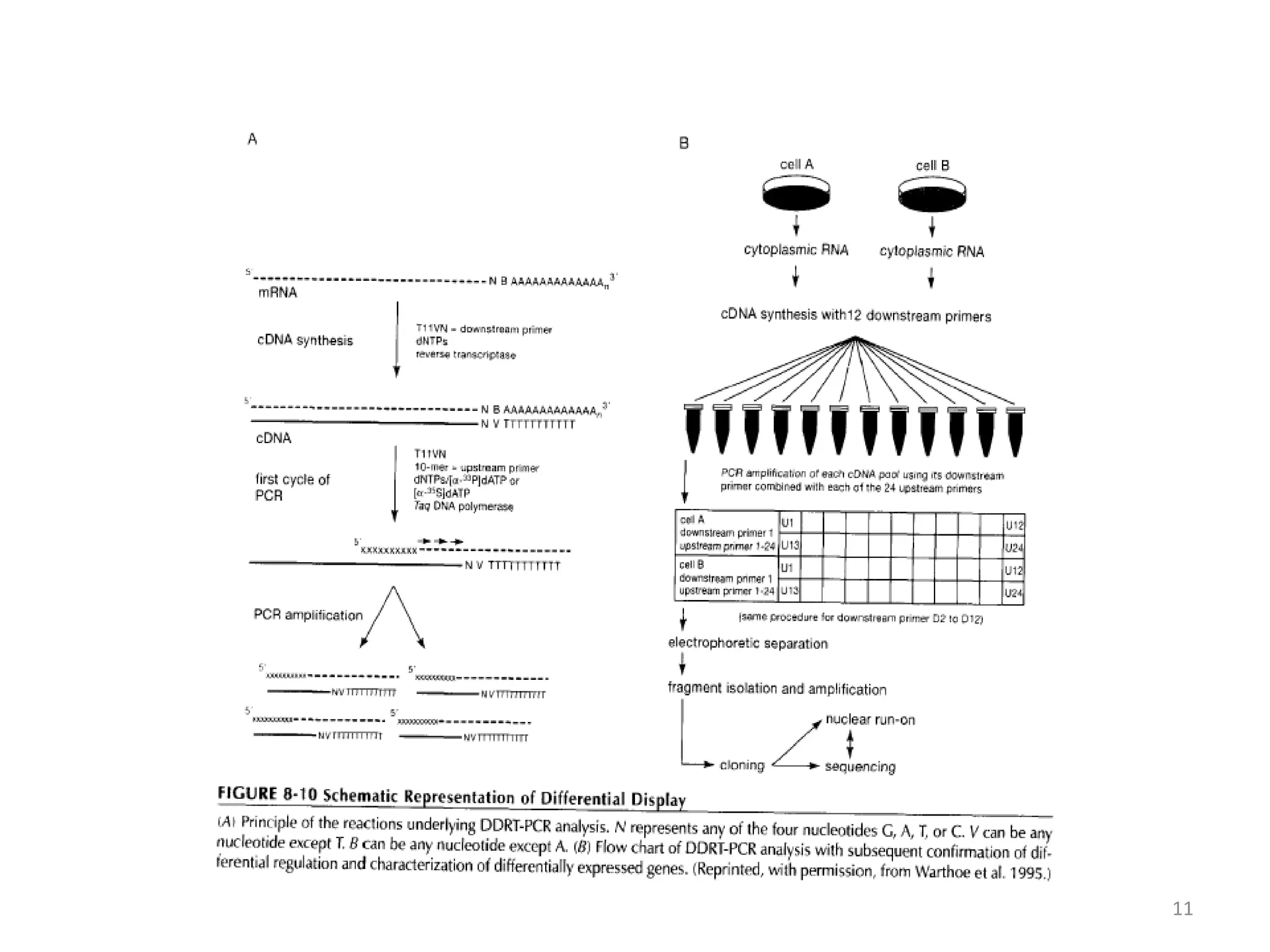
This is a technique to compare and identify changes in gene
expression at mRNA level between any pair of eukaryotic cell
samples. With the help of this technique differentially
expressed genes are identified. A limited number of short
arbitrary primers in combination with the anchored oligo-dT
primers are used.
The DDRT-PCR method consists of two major steps:
(i) Reverse transcription of RNAs isolated from different
samples with a set of degenerate, anchored oligo (dT) primers
to generate cDNA pools
(ii) PCR amplification of random partial sequences from the
cDNA pools with a limited number of short arbitrary primers.
10
11
Advantages of DDRT-PCR
It can detect changes in expression of closely
related genes that is not possible from
subtraction libraries.
12
Drawbacks of DDRT-PCR
• It is quite frustrating that only a part of mRNA in a cell can
be amplified, because for amplification the template should
be hybridized with a particular sense and antisense primer;
• The amplified product must be of the length of 100 -500 bp
so that it can be visualized on gel, i.e., the sense primer
should bind at considerable distance from the poly (A) tail;
• There are chances of obtaining a number of false positives,
which cannot be confirmed by blotting;
• The amplified pattern changes with different preparations
of RNAs and different types of Taq DNA polymerases;
13
Real-Time PCR
• Real-time PCR, also known as kinetic PCR, qPCR, qRT-
PCR, and RT-qPCR, is a quantitative PCR method for the
determination of copy number of PCR templates such as
DNA or cDNA in a PCR reaction.
• Real-time PCR monitors the fluorescence emitted during
the reaction as an indicator of amplicon production at each
PCR cycle, as opposed to the endpoint detection in standard
PCR. The fluorescence emitted acts as an indicator of' the
amount of PCR amplification that occurs during each PCR
cycle
• Thus, in real-time PCR machines, one can visually see the
progress of the reaction in 'real-time'. It is the method of
choice for measuring changes in gene expression.
14
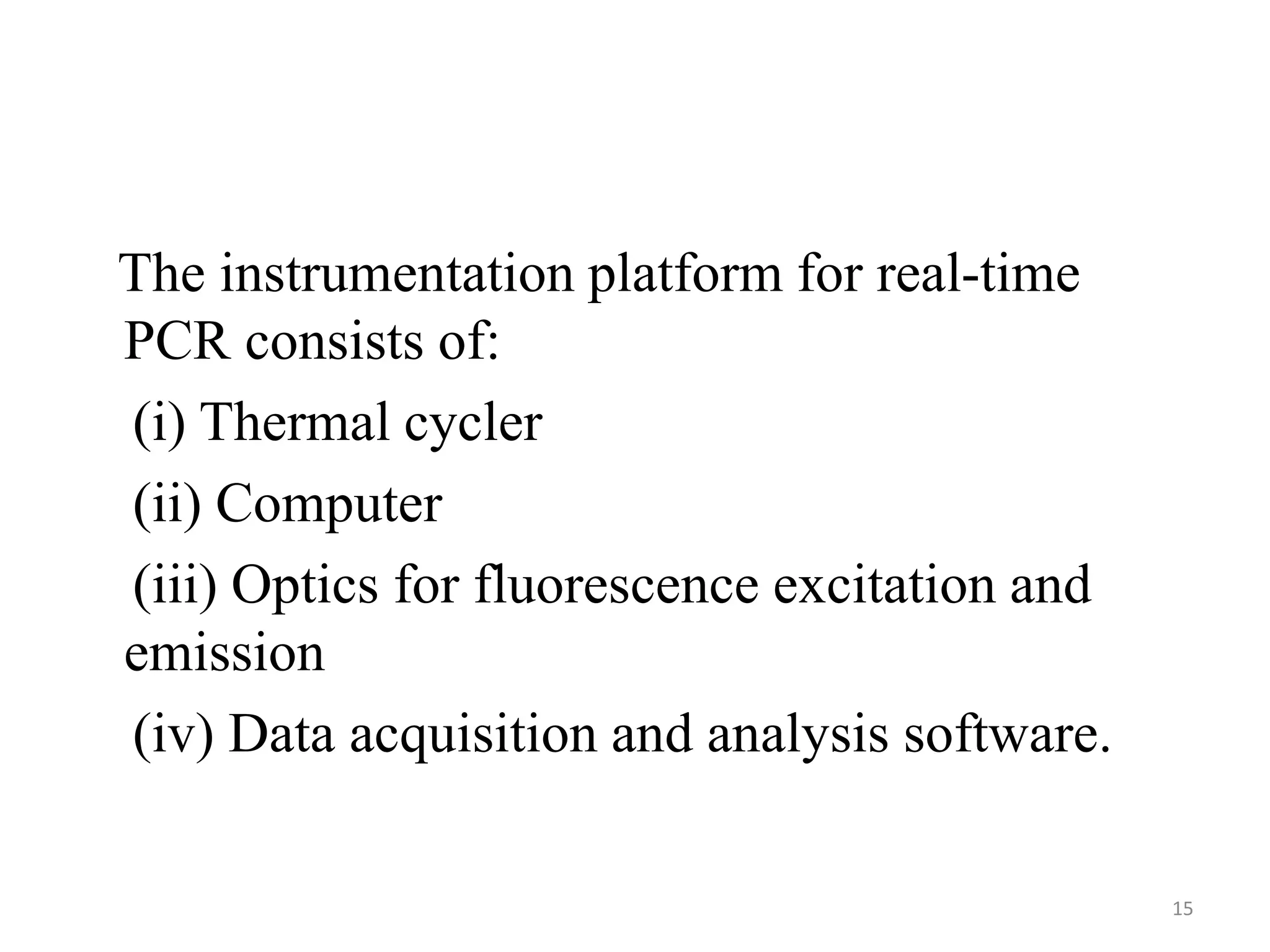
The instrumentation platform for real-time
PCR consists of:
(i) Thermal cycler
(ii) Computer
(iii) Optics for fluorescence excitation and
emission
(iv) Data acquisition and analysis software.
15
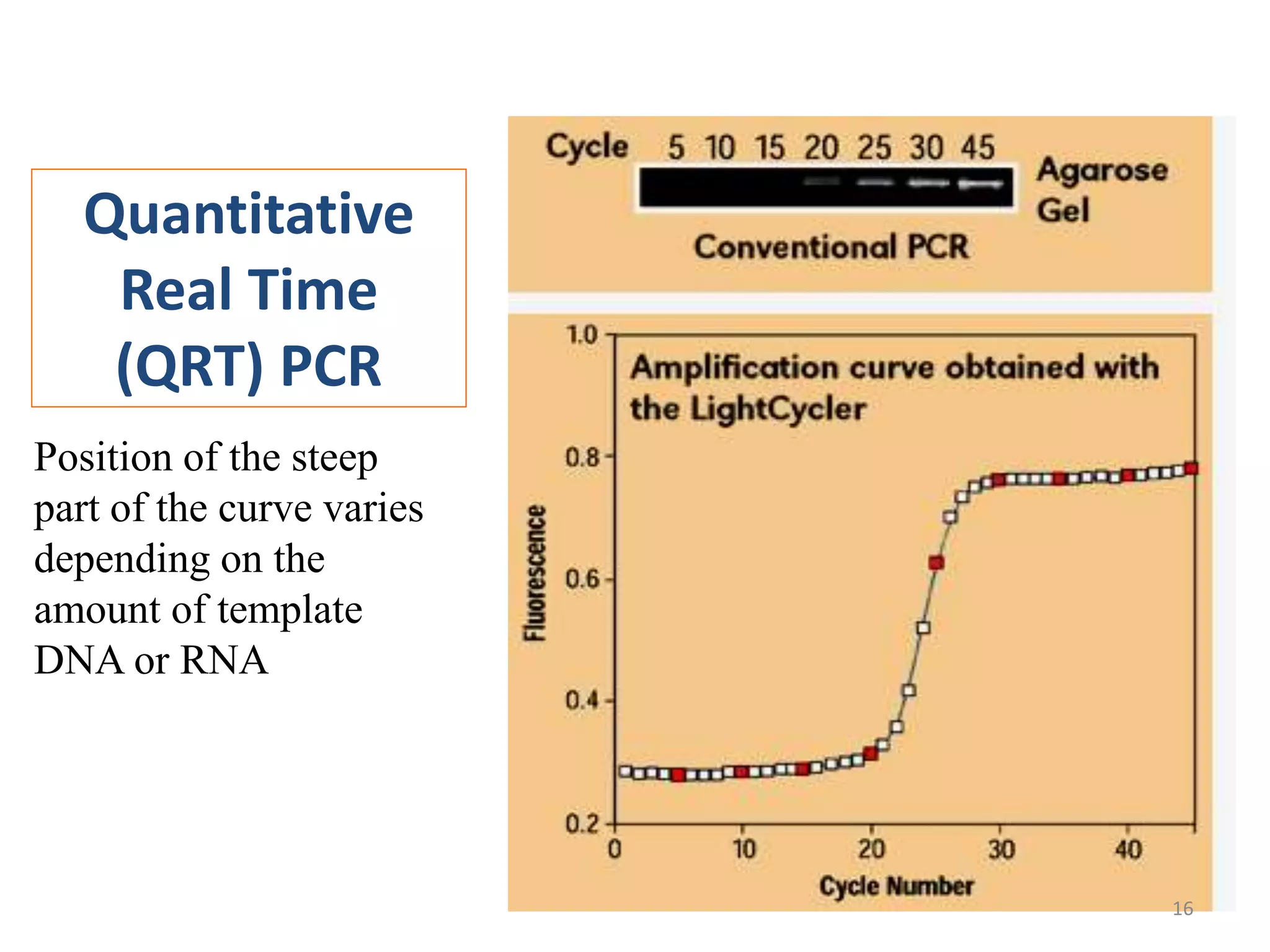
Quantitative
Real Time
(QRT) PCR
Position of the steep
part of the curve varies
depending on the
amount of template
DNA or RNA
16
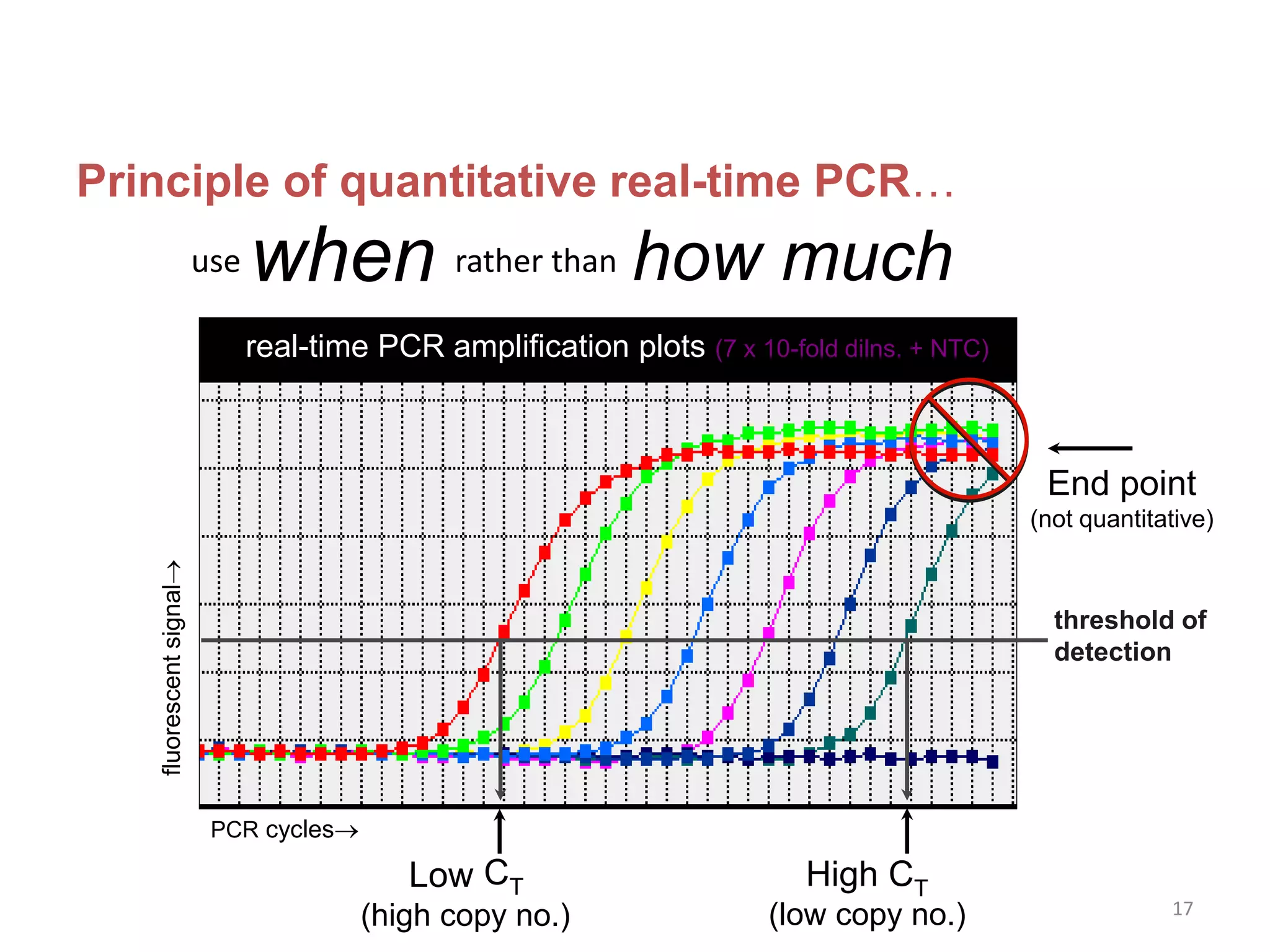
Principle of quantitative real-time PCR…
use when rather than how much
fluorescentsignal
PCR cycles
Low
(high copy no.)
High CT
(low copy no.)
real-time PCR amplification plots (7 x 10-fold dilns. + NTC)
End point
(not quantitative)
threshold of
detection
CT
17
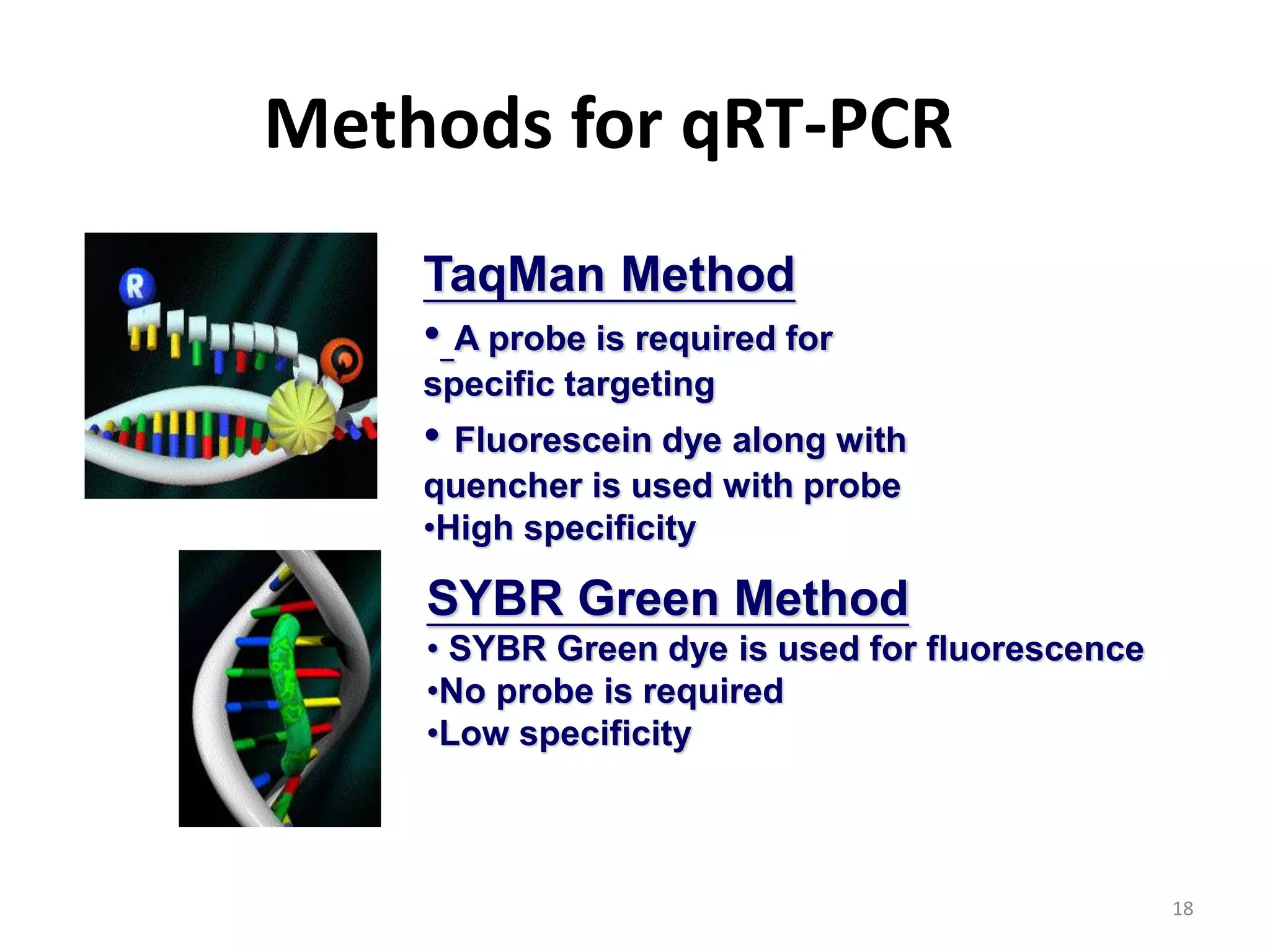
Methods for qRT-PCR
TaqMan Method
• A probe is required for
specific targeting
• Fluorescein dye along with
quencher is used with probe
•High specificity
SYBR Green Method
• SYBR Green dye is used for fluorescence
•No probe is required
•Low specificity
18
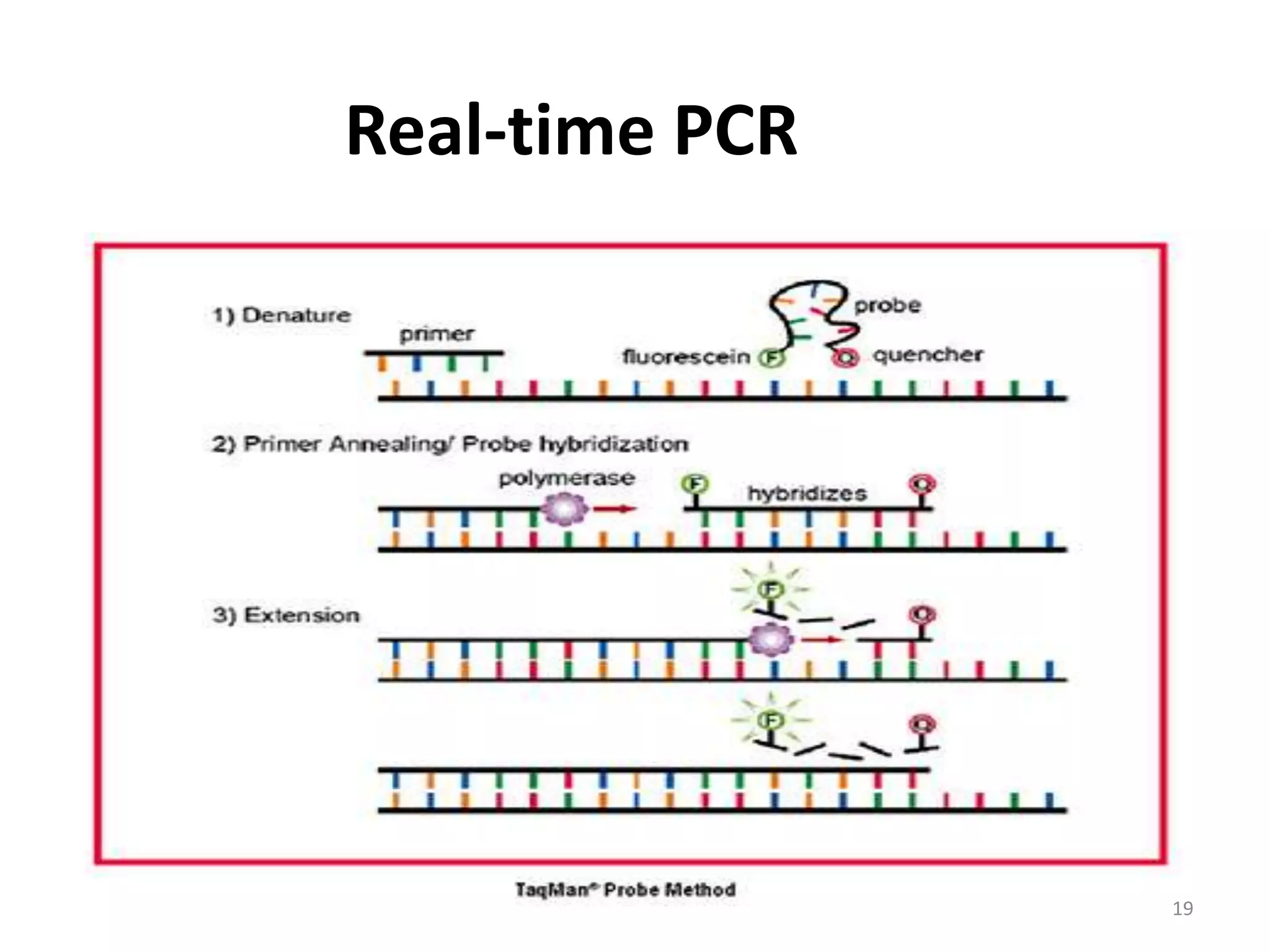
Real-time PCR
19
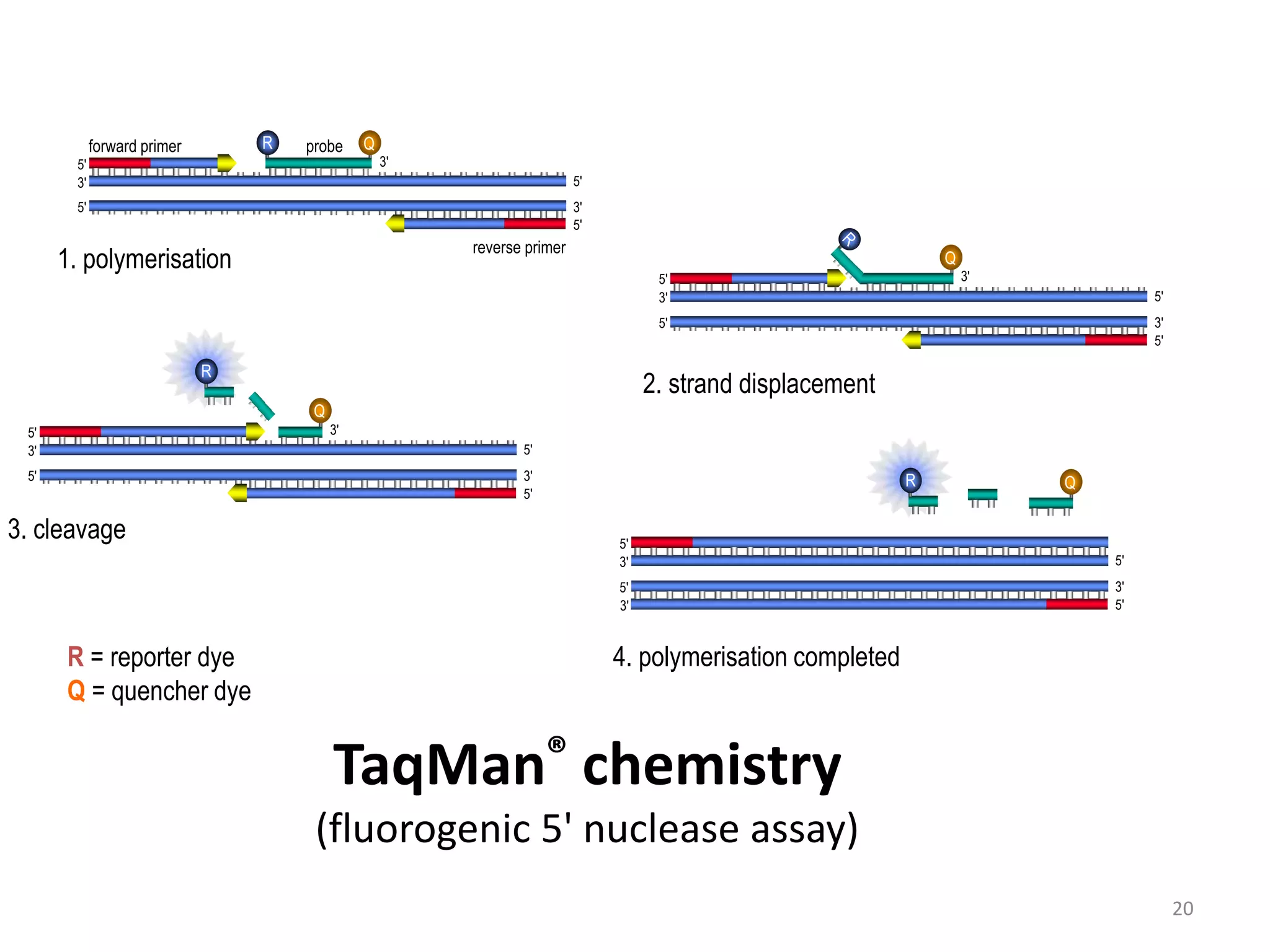
TaqMan® chemistry
(fluorogenic 5' nuclease assay)
R Qforward primer
reverse primer
3'
3'
5'
5'3'
5'
5'
1. polymerisation
probe
R = reporter dye
Q = quencher dye
3'
5'
5'3'
5'
5'
4. polymerisation completed
QR
3'
Q
3'
3'
5'
5'3'
5'
5'
2. strand displacement
Q
3'
3'
5'
5'3'
5'
5'
3. cleavage
R
20
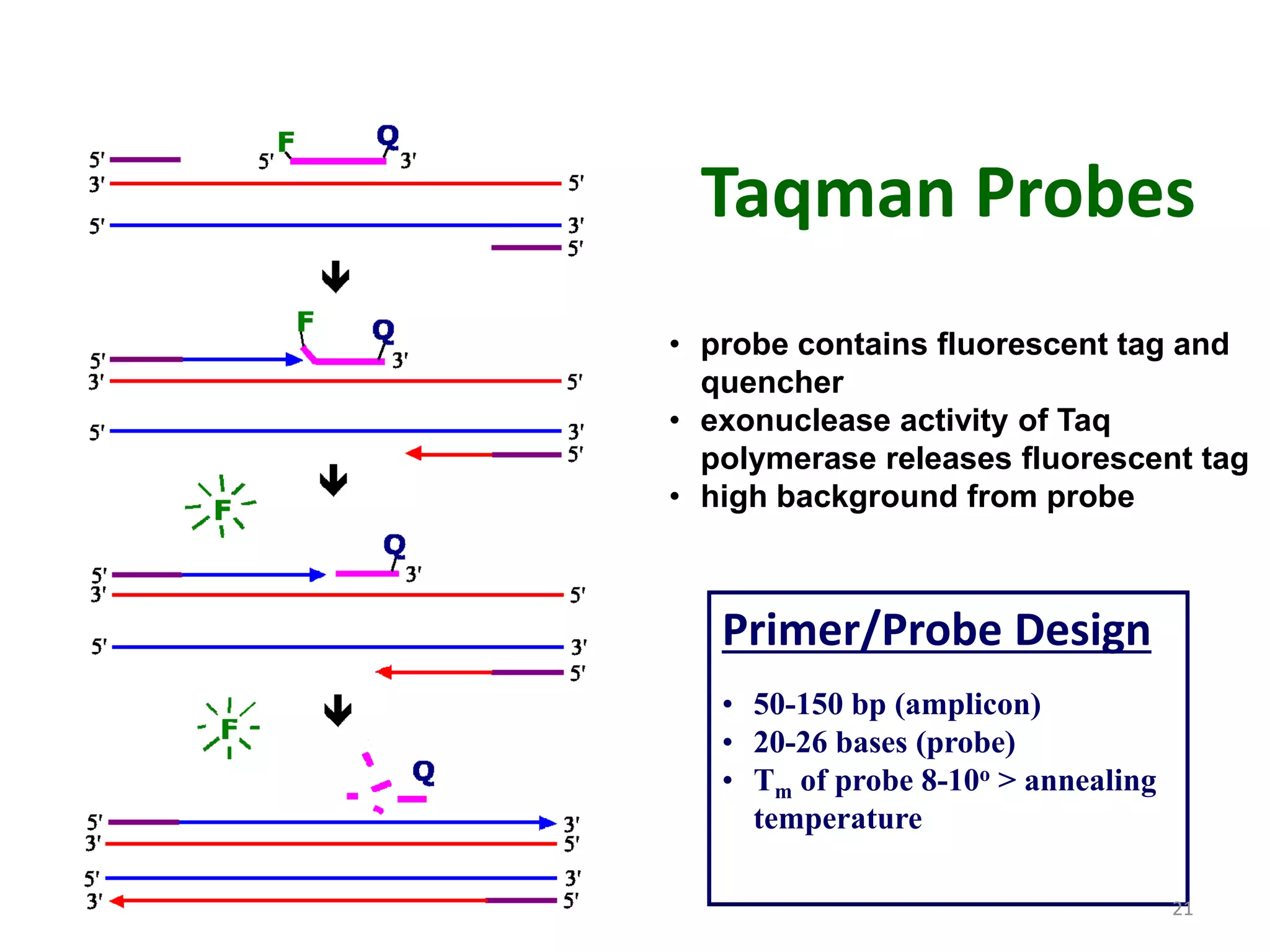
Taqman Probes
• probe contains fluorescent tag and
quencher
• exonuclease activity of Taq
polymerase releases fluorescent tag
• high background from probe
Primer/Probe Design
• 50-150 bp (amplicon)
• 20-26 bases (probe)
• Tm of probe 8-10o > annealing
temperature
21
22
Applications of Real-time PCR
• Commonly used for both basic research and
diagnostics.
• Real-time PCR is mainly used to provide
quantitative measurements of gene
transcription.
• Real-time PCR is applied to rapidly detect
infectious diseases, cancer and genetic
abnormalities.
23

Lectut btn-202-ppt-l28. variants of pcr-ii

  • 1.
  • 2.
    Reverse Transcriptase-PCR RT-PCR isa technique used to amplify cDNA copies of RNA . First Strand Reaction RNA strand is first reverse transcribed into a ss cDNA template using dNTPs and an RNA-dependent DNA polymerase (reverse transcriptase) through the process of reverse transcription. An oligodeoxynucleotidyl primer is hybridized to 3'-end of mRNA and is then extended by a reverse transcriptase to make a cDNA copy that can be amplified by PCR. This reaction is usually carried out at 37oC. Second Strand Reaction After the reverse transcription reaction is complete and a cDNA has been generated from the original ss mRNA, second strand reaction is initiated. In this step, standard PCR is performed in the presence of gene-specific reverse and forward primers. 2
  • 3.
    Applications of RT-PCR •RT-PCR is widely used in the diagnosis of genetic diseases • Determination of the abundance of specific different RNA molecules within a cell or tissue as a measure of gene expression. • RT-PCR can also be very useful in the insertion of eukaryotic genes into prokaryotes . • RT-PCR is commonly used in studying the genomes of viruses whose genomes are composed of RNA, such as Influenza virus A and retroviruses like HIV. 3
  • 4.
    Band-Stab PCR • Ifduring amplification the yield is very low, then the desired fragment can be recovered by gel electrophoresis and reamplified, which is known as band-stab PCR. • In band-stab PCR, ethidium bromide (EtBr) stained agarose gel is analyzed by UV illumination and excess fluid is removed by placing a piece of Whatman 3 MM paper on the surface of the gel. • Each band of interest is sampled carefully with the help of hypodermic needle. The needle is withdrawn, the tip is washed in PCR mixture, and the DNA of that particular band is reamplified by using nested primers. 4
  • 5.
    Degenerate PCR • DegeneratePCR is similar to standard PCR, except, that instead of using specific primers of a given sequence, mixed primers are used in degenerate PCR. • This PCR variation has proven to be a very powerful technique to find new genes or gene families. • Most of the genes that belong to a gene family share structural and functional homologies. • If the sequence for a gene from one organism is known and the gene from another closely related organism is desired, the DNA sequence for the particular gene in both organisms will be close, though rarely similar. • 'Clustal' alignment of the protein sequences from a number of related proteins can be carried out to find the conserved and variable domains. The primers are designed on the basis of conserved protein motifs. 5
  • 6.
    Anchored PCR • Insome type of PCR where only enough information to make a single primer is known, a known sequence is added to the end of the DNA by enzymatic addition of a polynucleotide stretch or by ligation of known sequence, and the second primer is designed by sequences of anchored DNA. • This technique of amplification with single sided specificity has been known as one-sided PCR or anchored PCR. • The anchored or single-sided PCR allows specific amplification of DNA where the 5' sequence of the molecule of interest is unknown. • This approach is based on homopolymer tailing of cDNA catalyzed by the terminal deoxynucleotidyl transferase. • The amplification is performed by using one primer specific for the molecule of interest (gene-specific primer), and a second primer containing a defined 'anchor' sequence attached to a homopolymer sequence complementary to the tail. 6
  • 7.
    Ligation-anchored PCR (LA-PCR) •An innovative technique of anchord PCR has been developed in which an anchor of defined sequence is directly ligated to first cDNA strand, and the resulting product is amplified by using primers specific for both the cDNA of' interest and the anchor. 7
  • 8.
    Applications of LA-PCR •The production of general cDNA libraries from very small amounts of starting material • The analysis of T-cell receptor and immunoglobulin V regions • To clone developmentally regulated mRNAs detected with gene trap vectors • To characterize alternative promoter usage and splice products 8
  • 9.
    Asymmetric PCR • APCR technique in which the predominant product is a ss DNA as a result of unequal primer concentration is known as asymmetric PCR. Asymmetric PCR is carried out as usual, but with a great excess of the primers for the chosen strand. • As asymmetric PCR proceeds, the lower concentration primer (PL) is quantitatively incorporated into ds DNA. • The higher concentration primer (Px) continues to synthesize DNA, but only of its template strand. This generates one of the strands by linear amplification, and a fraction of its total product as ds DNA, limited by the concentration ratio of the primers used. • Thus, single stranded target strand along with the ds DNA can be generated by an asymmetric PCR. 9
  • 10.
    Differential display ReverseTranscriptase PCR (DDRT-PCR of DD-PCR) This is a technique to compare and identify changes in gene expression at mRNA level between any pair of eukaryotic cell samples. With the help of this technique differentially expressed genes are identified. A limited number of short arbitrary primers in combination with the anchored oligo-dT primers are used. The DDRT-PCR method consists of two major steps: (i) Reverse transcription of RNAs isolated from different samples with a set of degenerate, anchored oligo (dT) primers to generate cDNA pools (ii) PCR amplification of random partial sequences from the cDNA pools with a limited number of short arbitrary primers. 10
  • 11.
  • 12.
    Advantages of DDRT-PCR Itcan detect changes in expression of closely related genes that is not possible from subtraction libraries. 12
  • 13.
    Drawbacks of DDRT-PCR •It is quite frustrating that only a part of mRNA in a cell can be amplified, because for amplification the template should be hybridized with a particular sense and antisense primer; • The amplified product must be of the length of 100 -500 bp so that it can be visualized on gel, i.e., the sense primer should bind at considerable distance from the poly (A) tail; • There are chances of obtaining a number of false positives, which cannot be confirmed by blotting; • The amplified pattern changes with different preparations of RNAs and different types of Taq DNA polymerases; 13
  • 14.
    Real-Time PCR • Real-timePCR, also known as kinetic PCR, qPCR, qRT- PCR, and RT-qPCR, is a quantitative PCR method for the determination of copy number of PCR templates such as DNA or cDNA in a PCR reaction. • Real-time PCR monitors the fluorescence emitted during the reaction as an indicator of amplicon production at each PCR cycle, as opposed to the endpoint detection in standard PCR. The fluorescence emitted acts as an indicator of' the amount of PCR amplification that occurs during each PCR cycle • Thus, in real-time PCR machines, one can visually see the progress of the reaction in 'real-time'. It is the method of choice for measuring changes in gene expression. 14
  • 15.
    The instrumentation platformfor real-time PCR consists of: (i) Thermal cycler (ii) Computer (iii) Optics for fluorescence excitation and emission (iv) Data acquisition and analysis software. 15
  • 16.
    Quantitative Real Time (QRT) PCR Positionof the steep part of the curve varies depending on the amount of template DNA or RNA 16
  • 17.
    Principle of quantitativereal-time PCR… use when rather than how much fluorescentsignal PCR cycles Low (high copy no.) High CT (low copy no.) real-time PCR amplification plots (7 x 10-fold dilns. + NTC) End point (not quantitative) threshold of detection CT 17
  • 18.
    Methods for qRT-PCR TaqManMethod • A probe is required for specific targeting • Fluorescein dye along with quencher is used with probe •High specificity SYBR Green Method • SYBR Green dye is used for fluorescence •No probe is required •Low specificity 18
  • 19.
  • 20.
    TaqMan® chemistry (fluorogenic 5'nuclease assay) R Qforward primer reverse primer 3' 3' 5' 5'3' 5' 5' 1. polymerisation probe R = reporter dye Q = quencher dye 3' 5' 5'3' 5' 5' 4. polymerisation completed QR 3' Q 3' 3' 5' 5'3' 5' 5' 2. strand displacement Q 3' 3' 5' 5'3' 5' 5' 3. cleavage R 20
  • 21.
    Taqman Probes • probecontains fluorescent tag and quencher • exonuclease activity of Taq polymerase releases fluorescent tag • high background from probe Primer/Probe Design • 50-150 bp (amplicon) • 20-26 bases (probe) • Tm of probe 8-10o > annealing temperature 21
  • 22.
  • 23.
    Applications of Real-timePCR • Commonly used for both basic research and diagnostics. • Real-time PCR is mainly used to provide quantitative measurements of gene transcription. • Real-time PCR is applied to rapidly detect infectious diseases, cancer and genetic abnormalities. 23