Submitted by,
TESSA RAJU
M.Sc. Environmental Science
GeneticEngineering
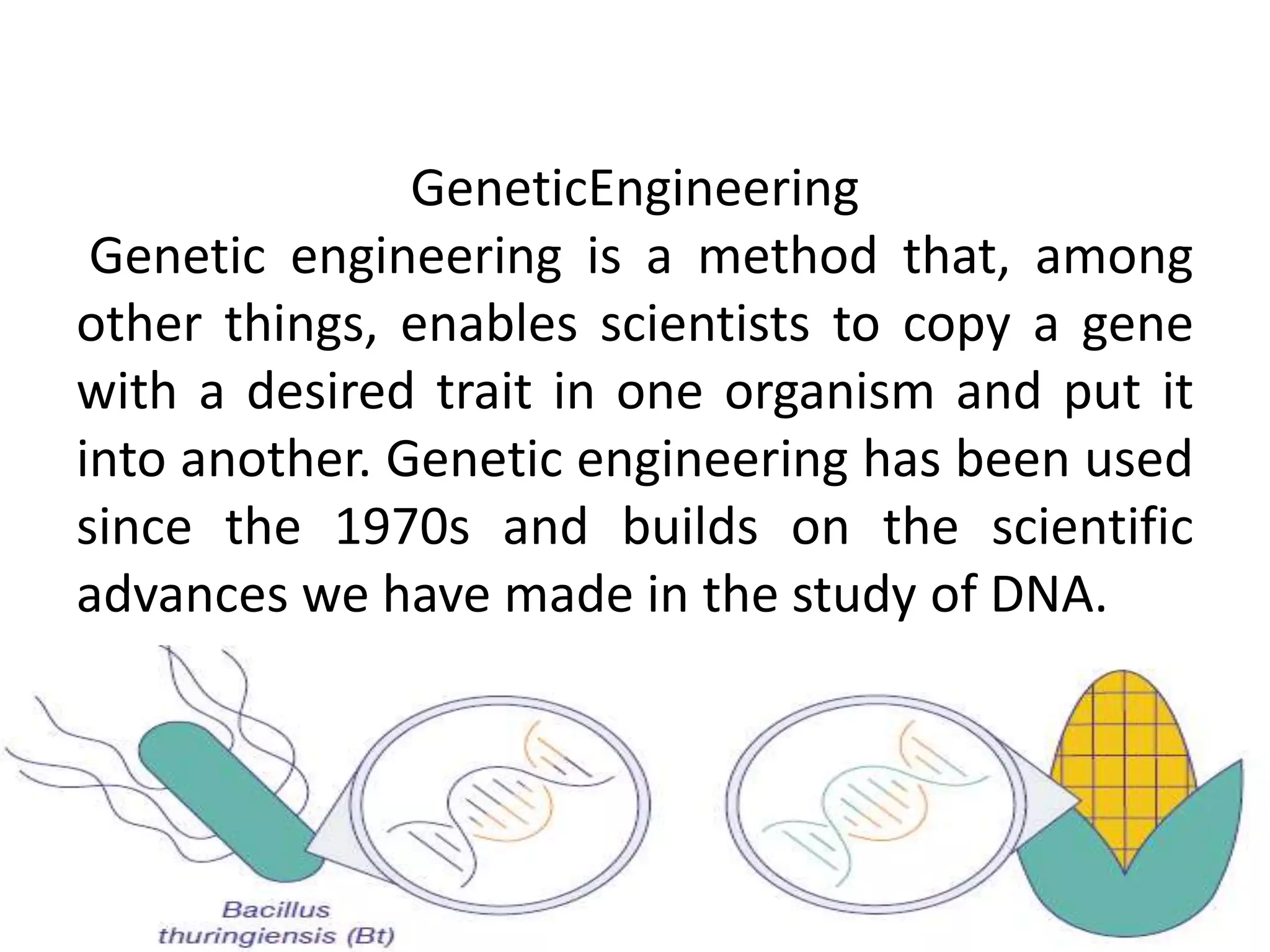
Genetic engineering is a method that, among
other things, enables scientists to copy a gene
with a desired trait in one organism and put it
into another. Genetic engineering has been used
since the 1970s and builds on the scientific
advances we have made in the study of DNA.
The first genetically
engineered crop plant
• Tobacco
• Reported in 1983. It was developed creating a
chimerical gene that joined an antibiotic
resistant gene to the T1 plasmid from Agro
bacterium.
*chimerical = formed from parts of various animals
Genetically modified foods
• Commercial sale of genetically modified foods
began in 1994, when Calgene first marketed its
unsuccessful Flavr Savr delayed-ripening tomato.
Most food modifications have primarily focused on
cash crops in high demand by farmers such as
soybean, corn, canola, and cotton.
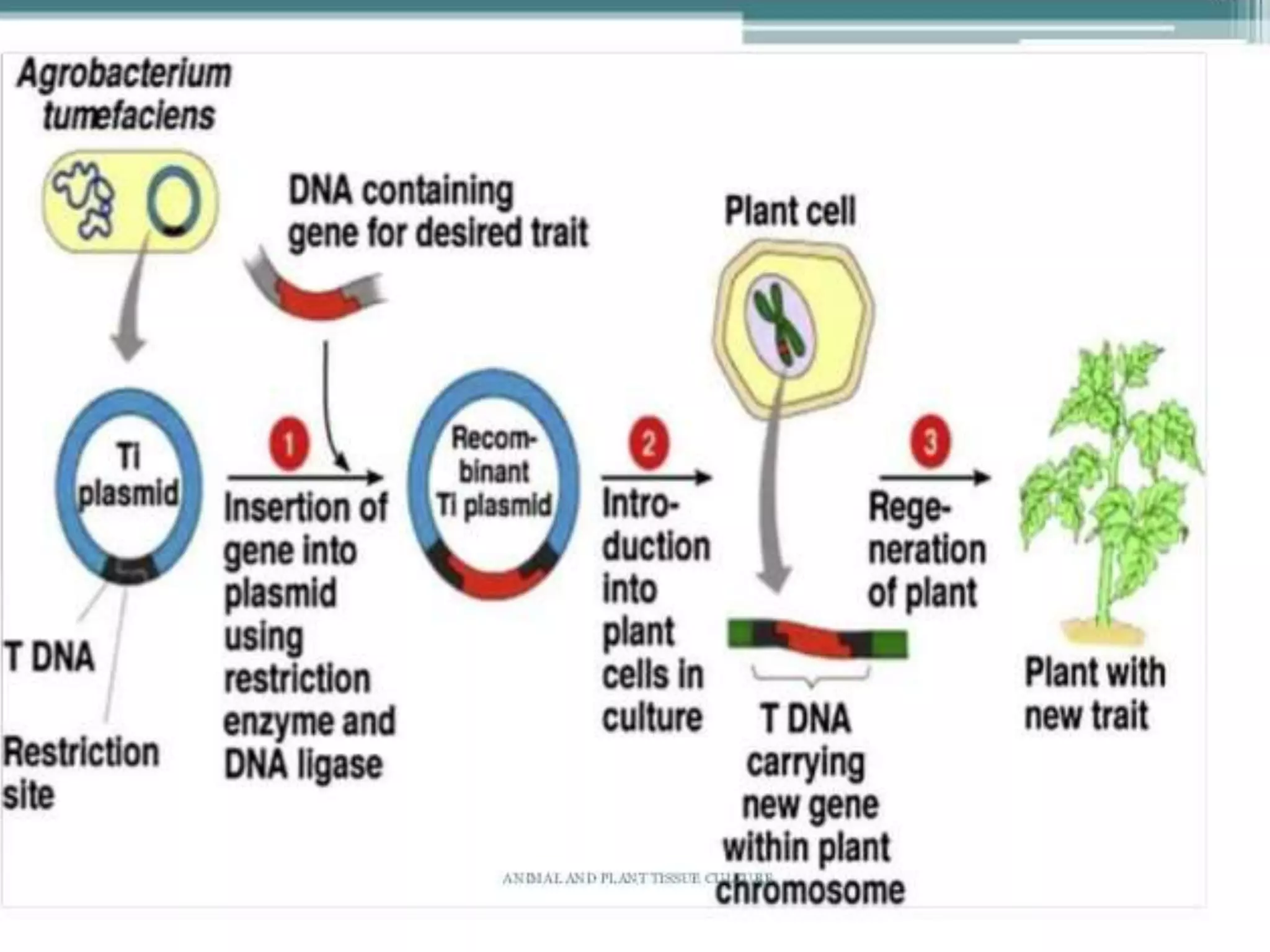
• Agrobacterium is a naturally occurring genetic
engineering agent and is responsible for the majority of
GE plants in commercial production.
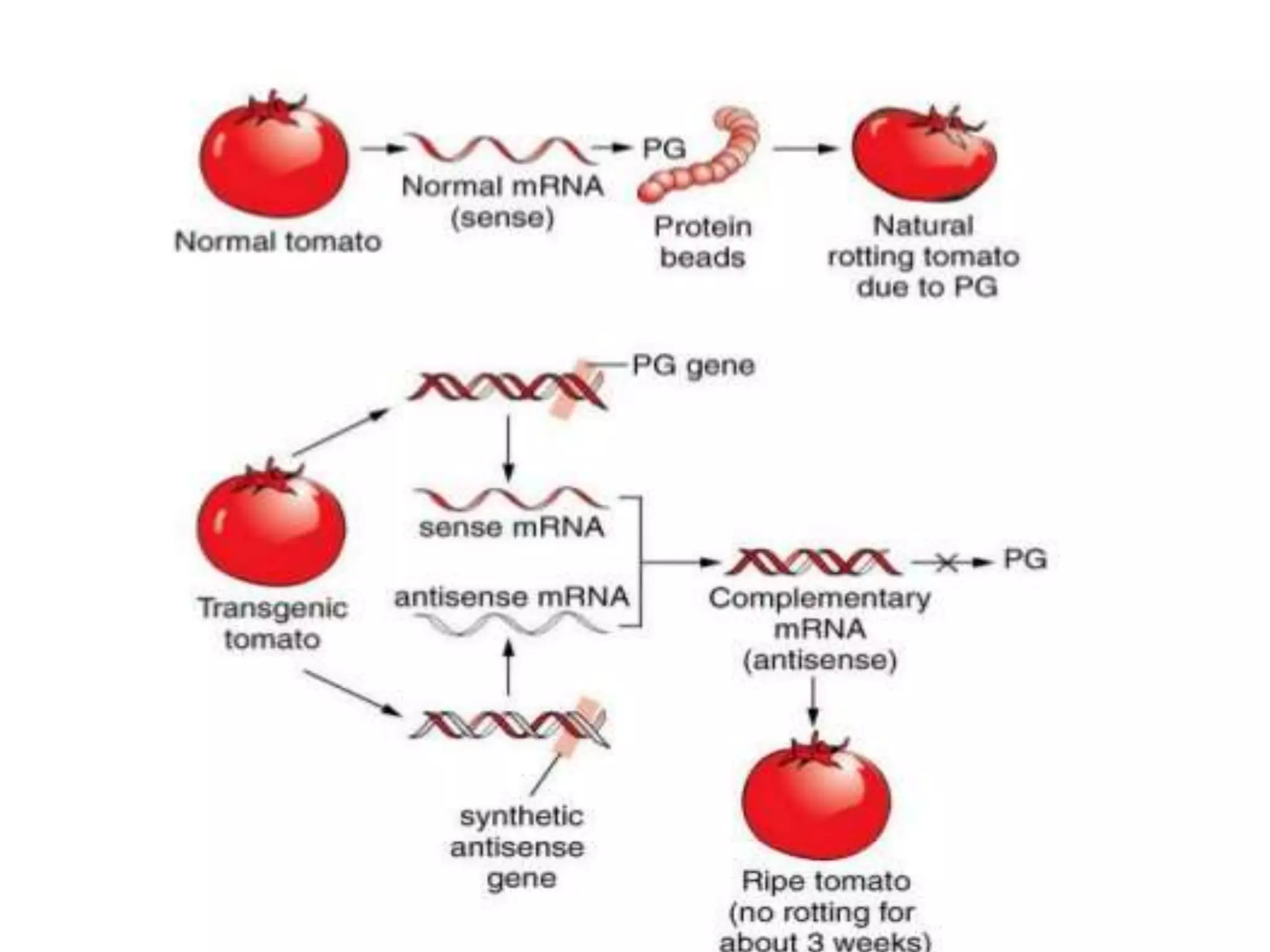
• The FLAVR SAVR™ tomato was developed through
the use of antisense RNA to regulate the expression of
the enzyme polygalacturonase (PG) in
ripening tomato fruit. This enzyme is one of the most
abundant proteins in ripe tomato fruit and has long
been thought to be responsible for softening in
ripe tomatoes.
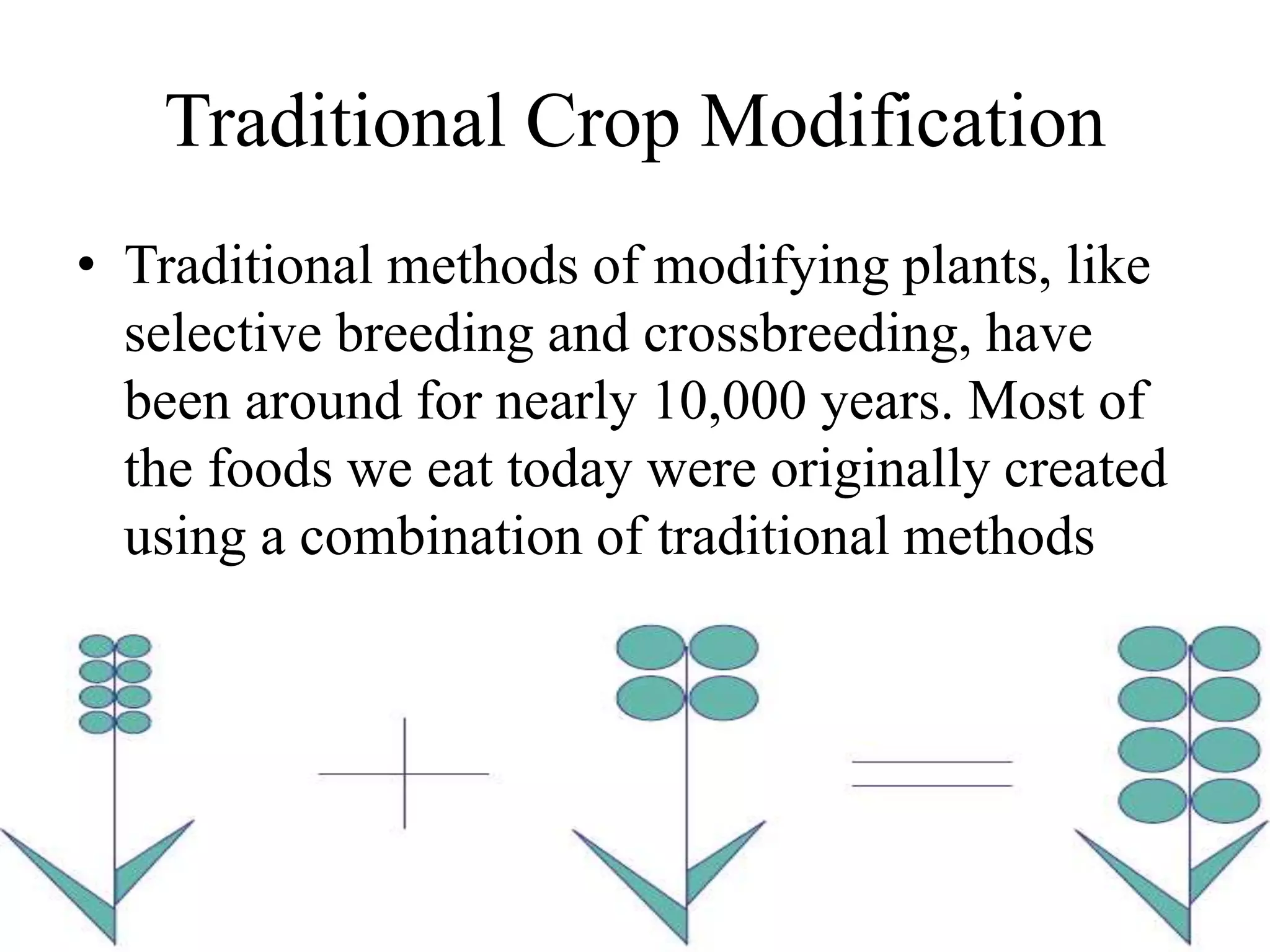
Traditional Crop Modification
• Traditional methods of modifying plants, like
selective breeding and crossbreeding, have
been around for nearly 10,000 years. Most of
the foods we eat today were originally created
using a combination of traditional methods
Genome Editing
• Genome editing is a new method that gives
scientists more precise and targeted ways to
develop new crop varieties. Genome editing
tools can make it easier and quicker to make
changes that were previously done through
traditional breeding.
Genetic Engineering/ Genetic
manipulation
• It is a process where the gene for a particular
character is introduced inside the chromosome of a
cell
• When the gene for a particular character is
introduced in a plant cell a transgenic plant is
produced. These transgenic plants exhibit characters
governed by the newly introduced gene
• USES
• It helps in improving crop variety
• It ensures food security and insect resistant crops
• It also improves the quality and yield of crops
Why genetically engineered plants???
• To improve the agricultural, horticultural (or)
ornamental value of a crop plant
• Resistance to certain pests, diseases and
environmental conditions
• Reduction of spoilage
• Resistance to chemical treatments (E.g.-
Resistance to herbicide)
• Improving the nutrient profile of the crop
Genetic Engineering/ Genetic
Manipulation
• Is the direct manipulation of an organisms genome
using biotechnology.
• It is a set of technologies used to change the genetic
makeup of cells, including the transfer of genes within
& across species boundaries to produce improved (or)
novel organisms
Genetically modified crops (GMCs, GM crops or
biotech crops) are used in agriculture, the DNA of
which has been modified using genetic engineering
techniques. In most cases the aim is to introduce a new
trait to plant which does not occur naturally in species
GENETIC ENGINEERING
• Genetic engineering is a new type of genetic modification.
• It is the purposeful addition of a foreign gene or genes to the
genome of an organism.
• A gene holds information that will give the organism a trait.
• Genetic engineering is not bound by the limitations of
traditional plant breeding.
• Genetic engineering physically removes the DNA from one
organism and transfers the gene(s) for one or a few traits into
another.
• Since crossing is not necessary, the 'sexual' barrier between
species is overcome.
• Therefore, traits from any living organism can be transferred
into a plant.
• This method is also more specific in that a single trait can be
added to a plant.
Transgenic plants
• Transgenic plants are the ones, whose DNA is modified using
genetic engineering techniques.
• A transgenic plant contains a gene or genes that have been
artificially inserted.
• The inserted gene sequence is known as the transgene.
• This process provides advantages like improving shelf life,
higher yield, improved quality, pest resistance, tolerant to heat,
cold and drought resistance, against a variety of biotic and a
biotic stresses.
• Transgenic plants can also be produced in such a way that they
express foreign proteins with industrial and pharmaceutical
value.
• Plants made up of vaccines or antibodies (Plantibodies) are
especially stricing as plants are free of human diseases, thus
reducing screening costs for viruses and bacterial toxins.
Development of Transgenic plants
The basic requirements of transformation
are,
1. A target genome
2. A vector to carry the gene
3. Modification of the foreign DNA to
increase the level of gene expression
4. Method to deliver the plasmid DNA
into the cell
5. Methodology to identify the
transformed cell
6. Tissue culture to recover the viable
plants from the transformed cells
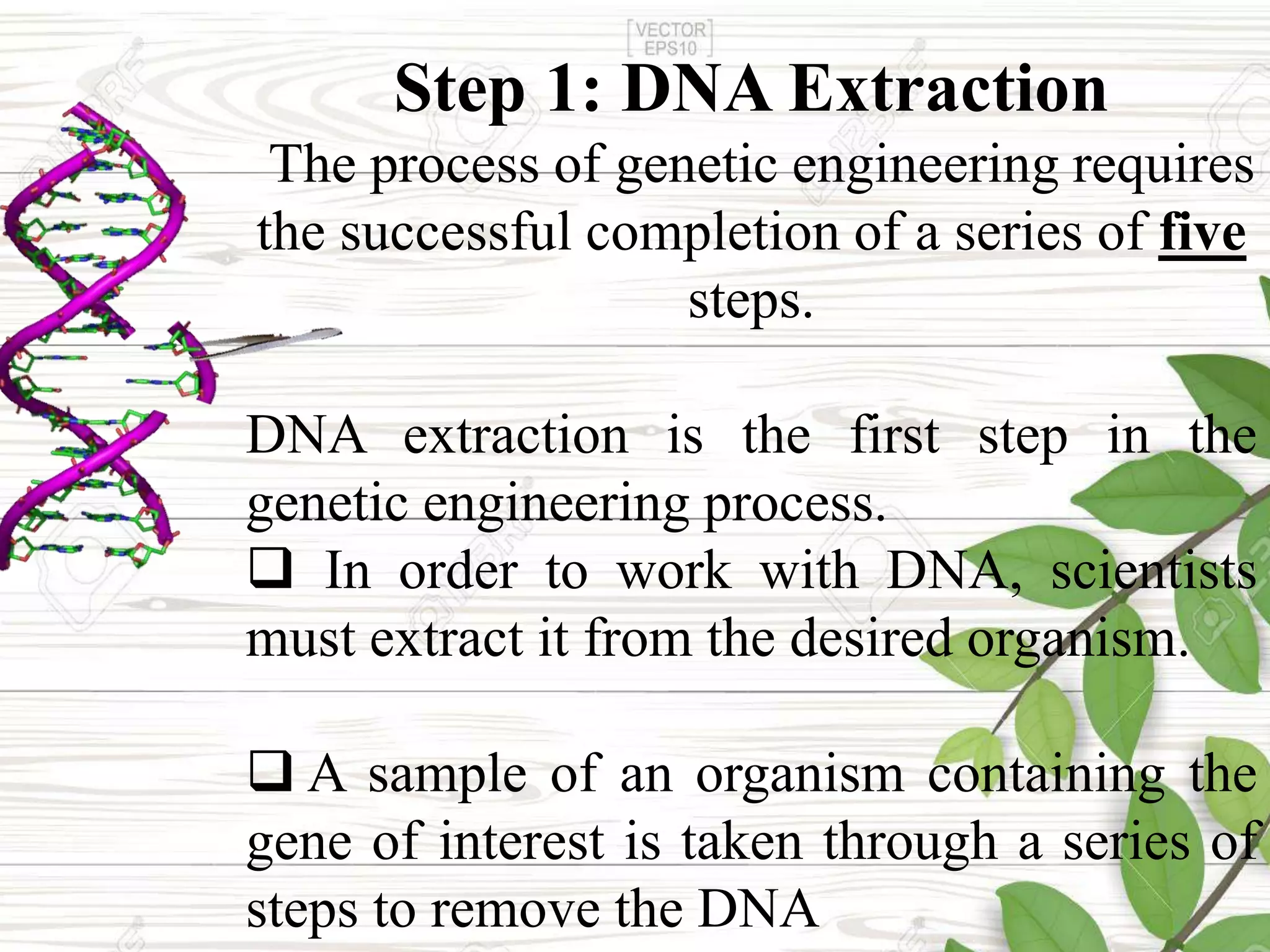
Step 1: DNA Extraction
The process of genetic engineering requires
the successful completion of a series of five
steps.
DNA extraction is the first step in the
genetic engineering process.
 In order to work with DNA, scientists
must extract it from the desired organism.
 A sample of an organism containing the
gene of interest is taken through a series of
steps to remove the DNA
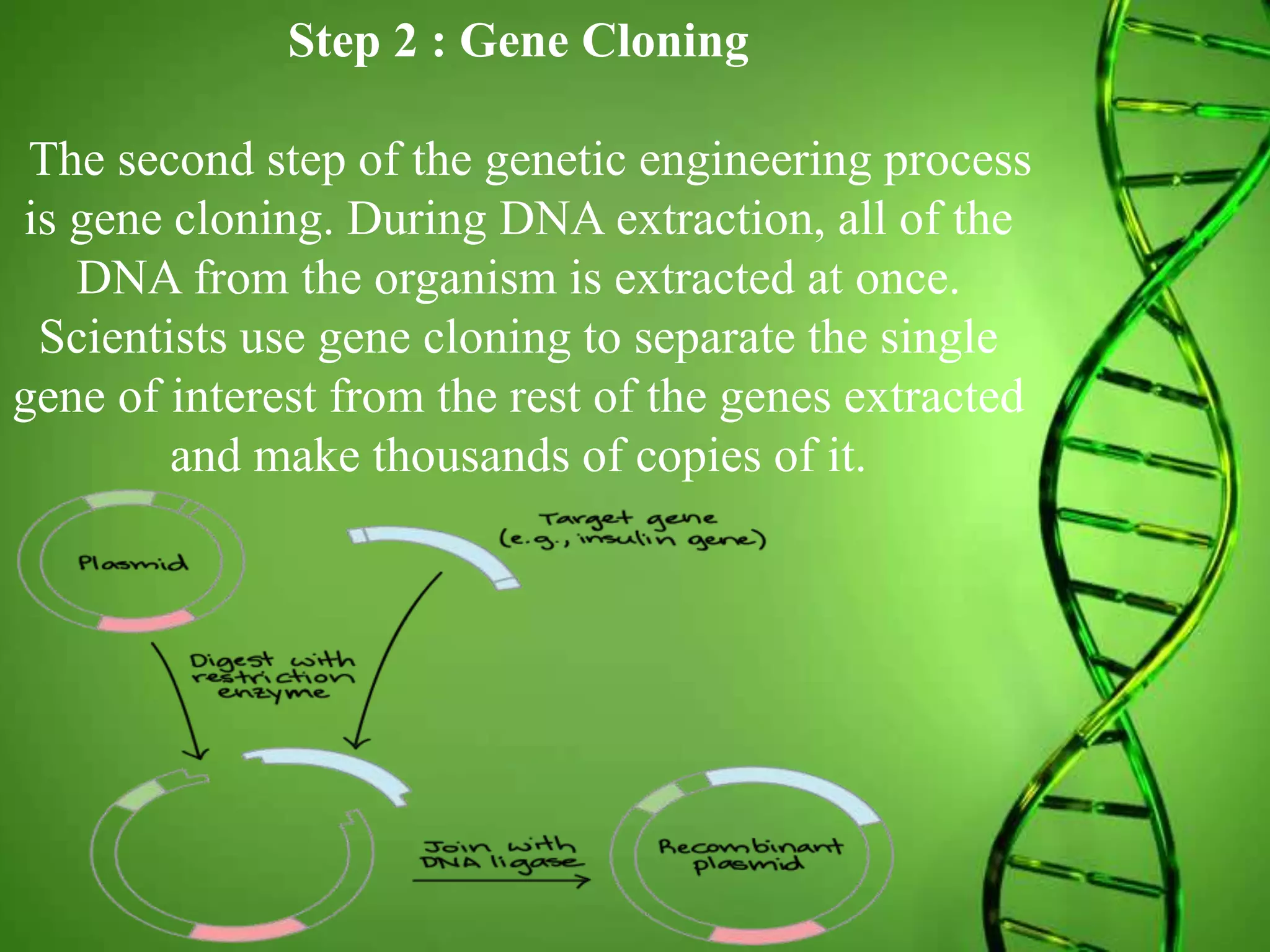
Step 2 : Gene Cloning
The second step of the genetic engineering process
is gene cloning. During DNA extraction, all of the
DNA from the organism is extracted at once.
Scientists use gene cloning to separate the single
gene of interest from the rest of the genes extracted
and make thousands of copies of it.
Step 2 : Gene Cloning
The second step of the genetic engineering process
is gene cloning. During DNA extraction, all of the
DNA from the organism is extracted at once.
Scientists use gene cloning to separate the single
gene of interest from the rest of the genes extracted
and make thousands of copies of it.
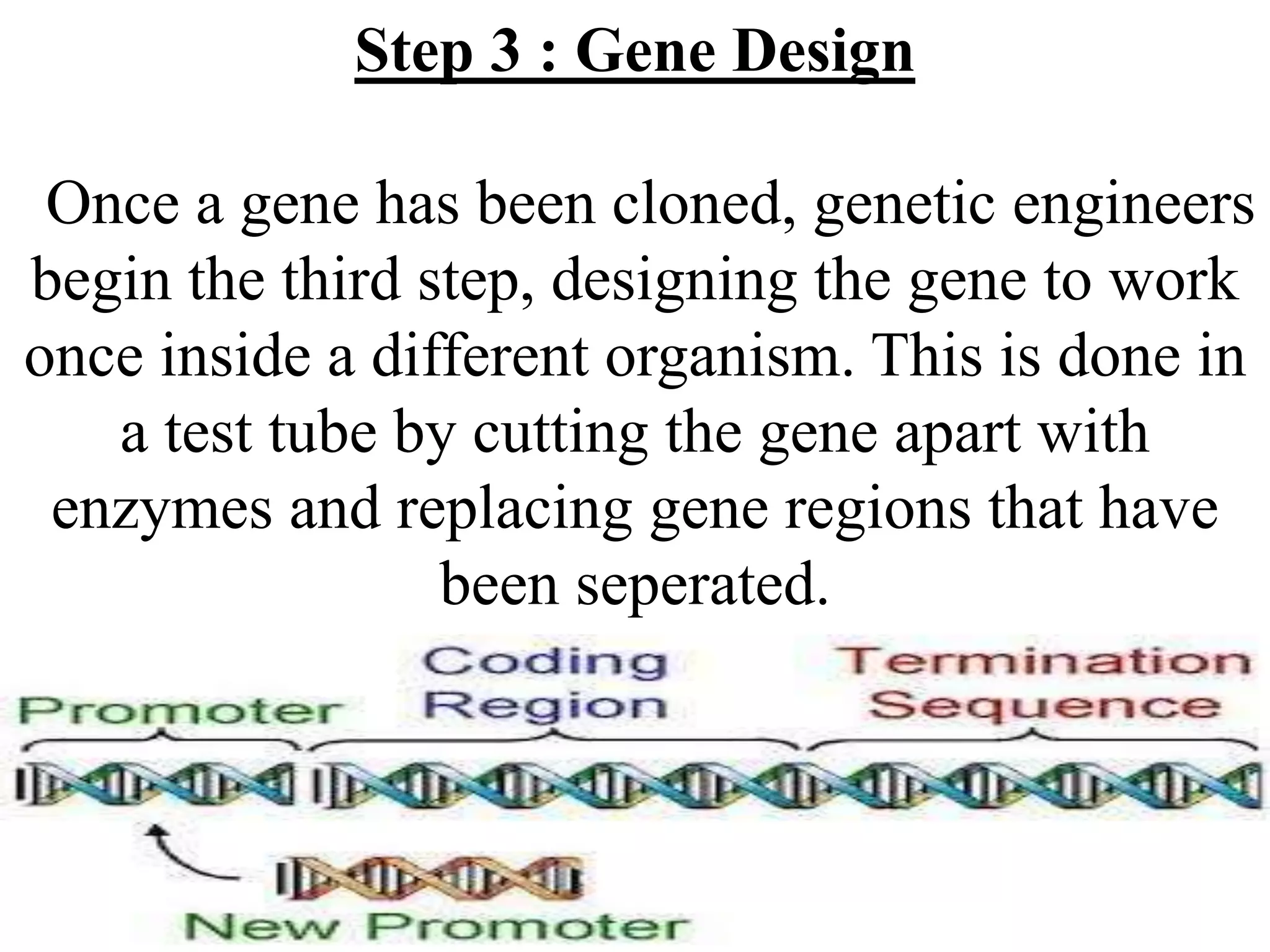
Step 3 : Gene Design
Once a gene has been cloned, genetic engineers
begin the third step, designing the gene to work
once inside a different organism. This is done in
a test tube by cutting the gene apart with
enzymes and replacing gene regions that have
been seperated.
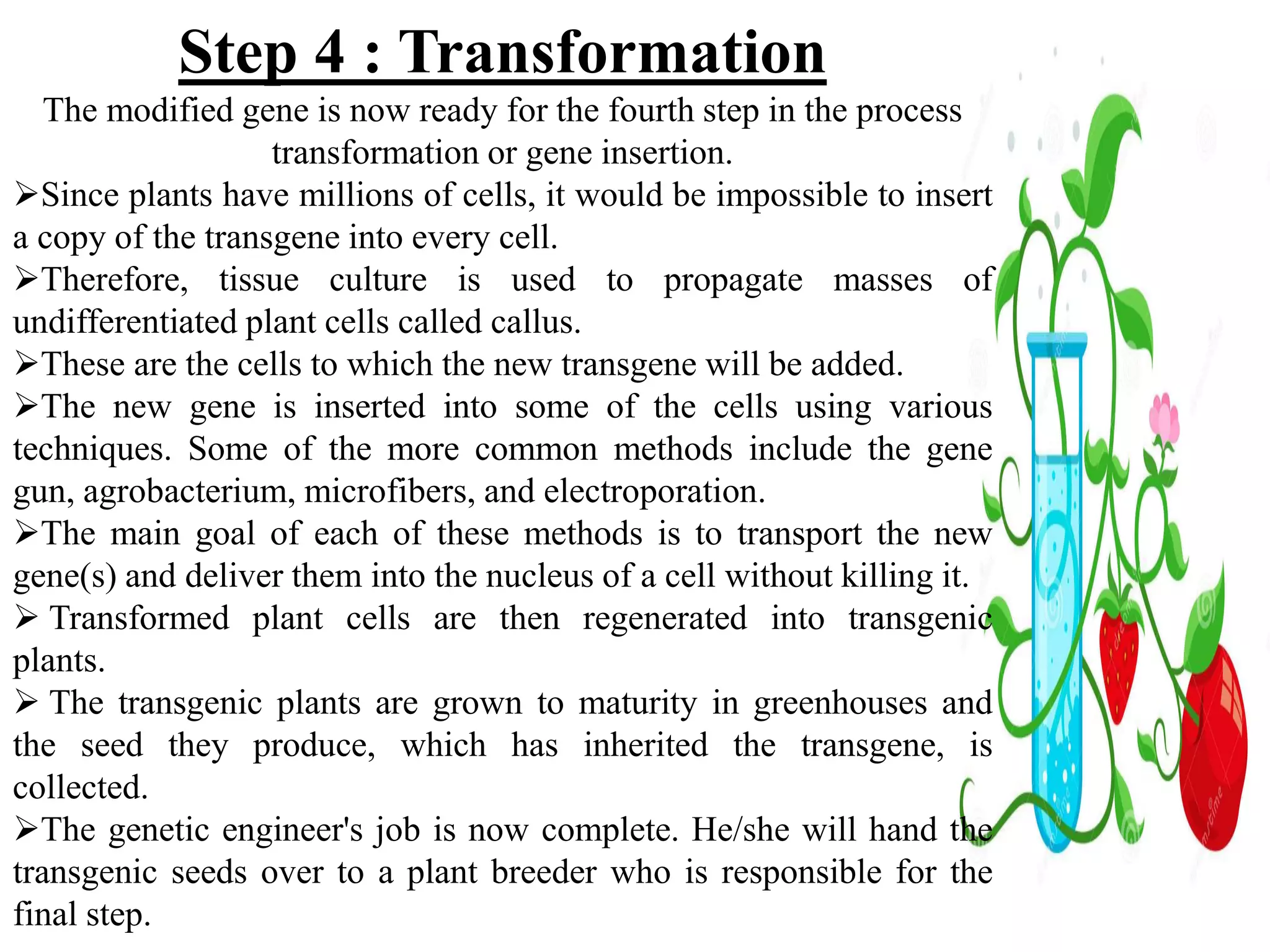
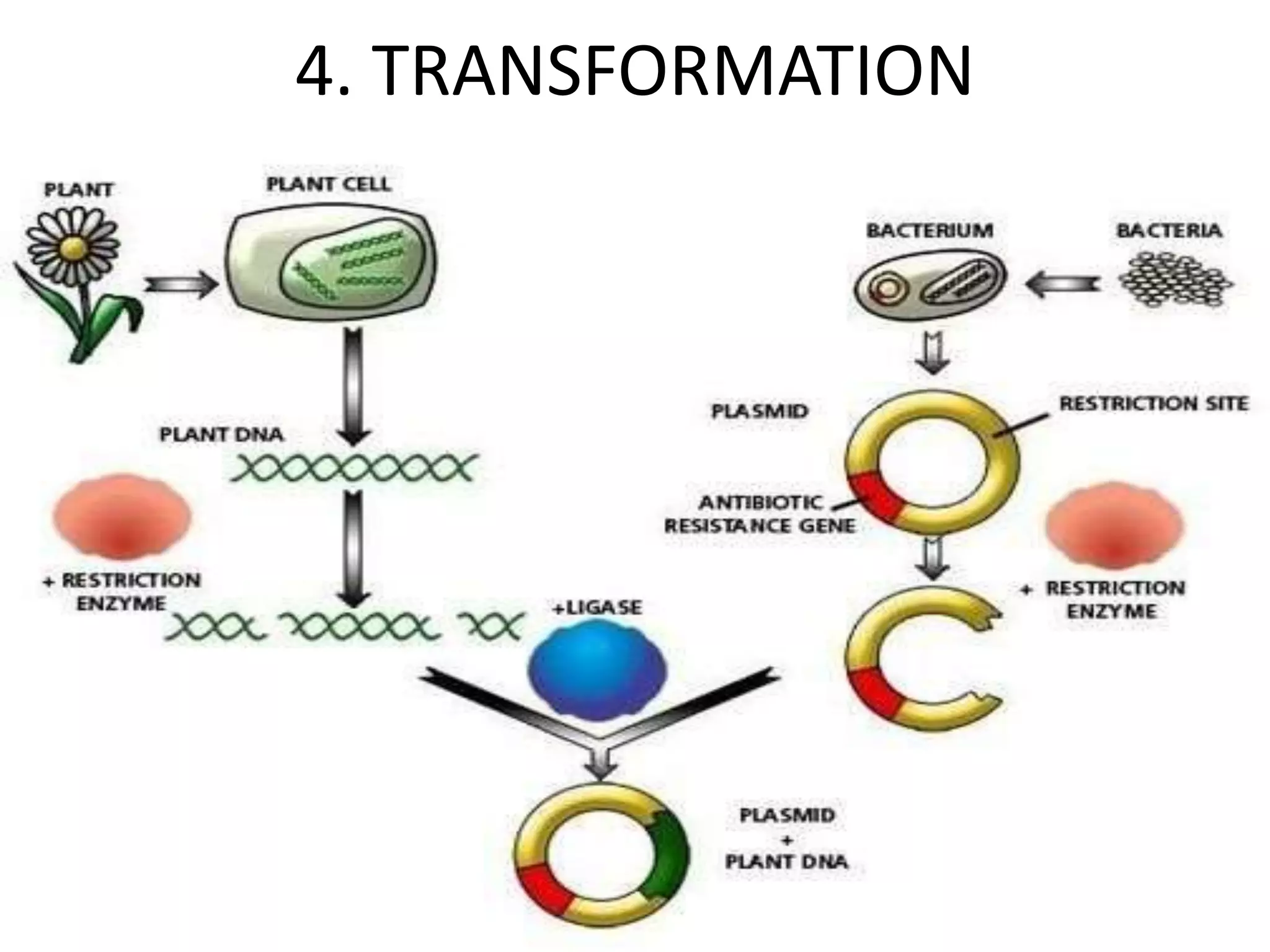
Step 4 : Transformation
The modified gene is now ready for the fourth step in the process
transformation or gene insertion.
Since plants have millions of cells, it would be impossible to insert
a copy of the transgene into every cell.
Therefore, tissue culture is used to propagate masses of
undifferentiated plant cells called callus.
These are the cells to which the new transgene will be added.
The new gene is inserted into some of the cells using various
techniques. Some of the more common methods include the gene
gun, agrobacterium, microfibers, and electroporation.
The main goal of each of these methods is to transport the new
gene(s) and deliver them into the nucleus of a cell without killing it.
 Transformed plant cells are then regenerated into transgenic
plants.
 The transgenic plants are grown to maturity in greenhouses and
the seed they produce, which has inherited the transgene, is
collected.
The genetic engineer's job is now complete. He/she will hand the
transgenic seeds over to a plant breeder who is responsible for the
final step.
4. TRANSFORMATION
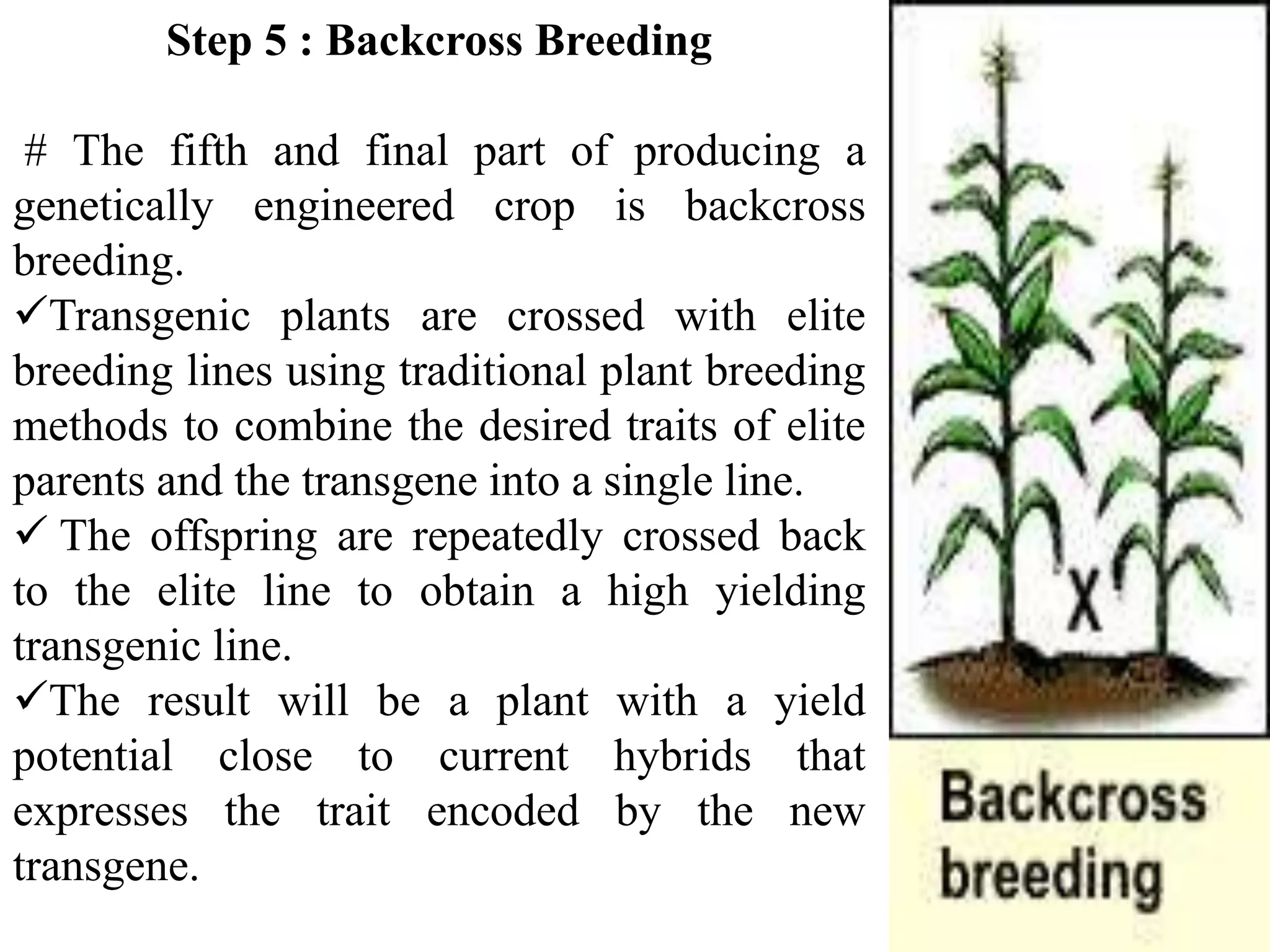
Step 5 : Backcross Breeding
# The fifth and final part of producing a
genetically engineered crop is backcross
breeding.
Transgenic plants are crossed with elite
breeding lines using traditional plant breeding
methods to combine the desired traits of elite
parents and the transgene into a single line.
 The offspring are repeatedly crossed back
to the elite line to obtain a high yielding
transgenic line.
The result will be a plant with a yield
potential close to current hybrids that
expresses the trait encoded by the new
transgene.
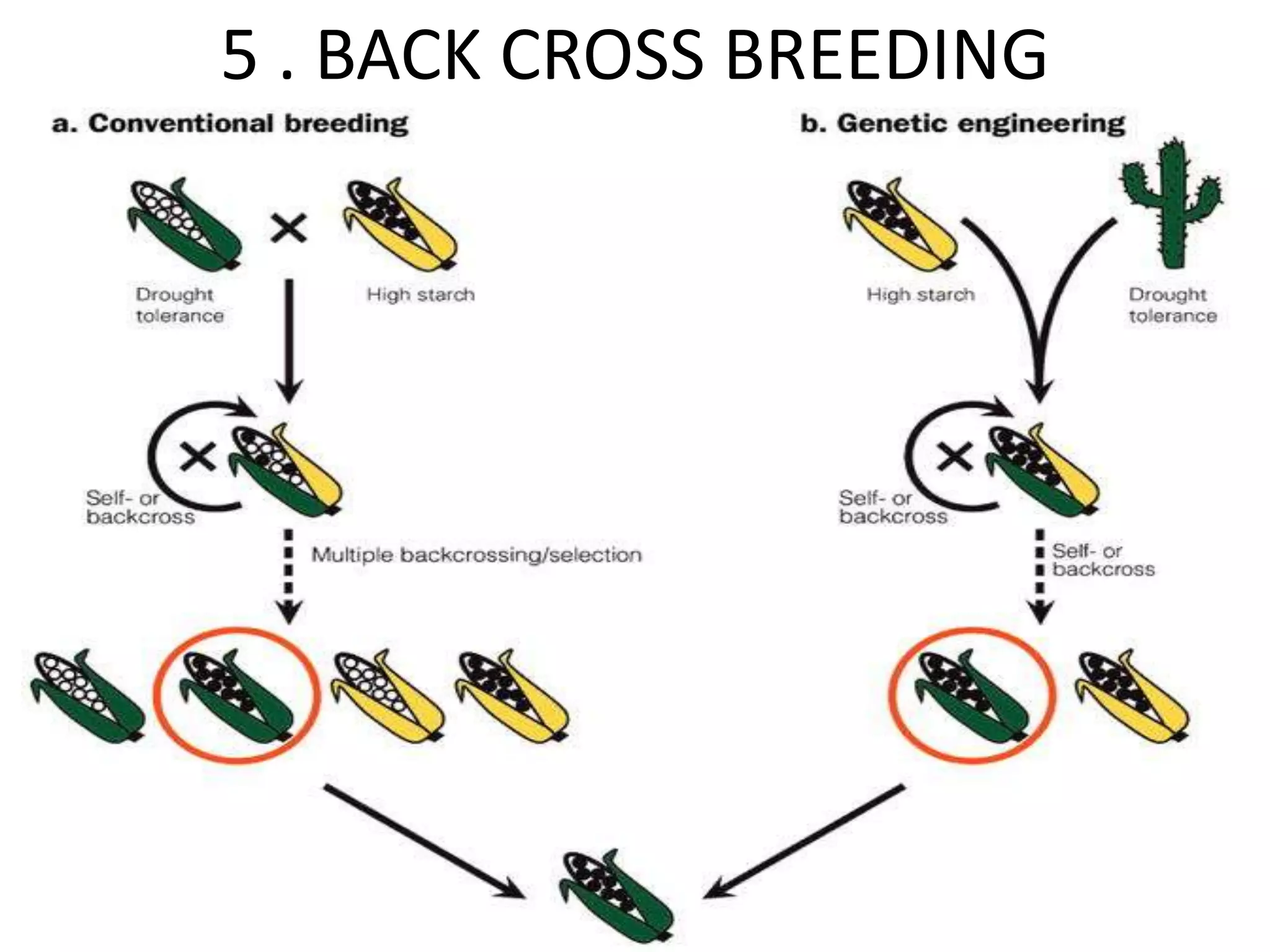
5 . BACK CROSS BREEDING
The Process of Plant Genetic
Engineering
The entire genetic engineering process is
basically the same for any plant.
The length of time required to complete
all five steps from start to finish varies
depending upon the gene, crop species,
available resources and regulatory
approval.
 It can take anywhere from 6-15+ years
before a new transgenic hybrid is ready
for release to be grown in production
fields.
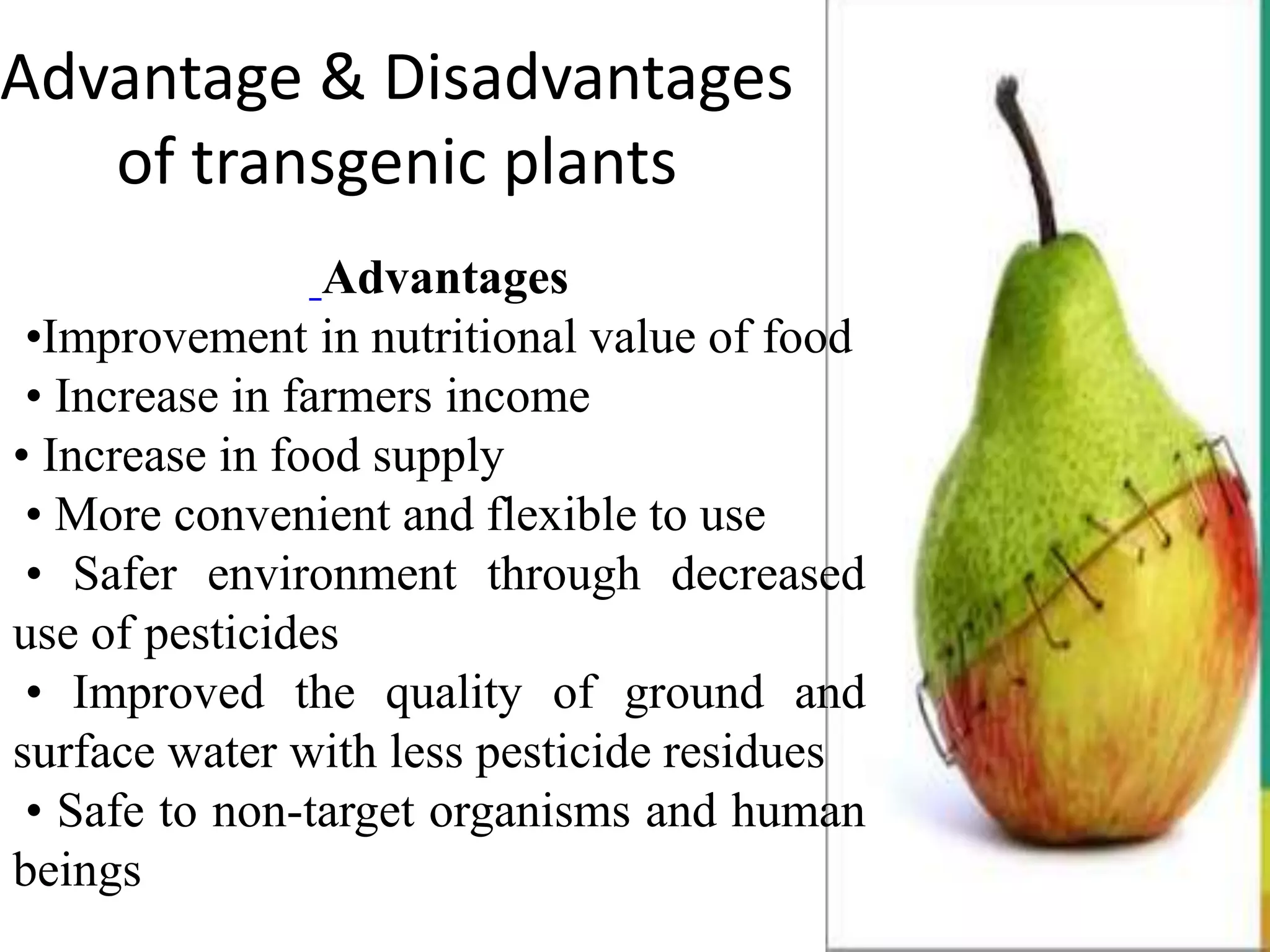
Advantage & Disadvantages
of transgenic plants
Advantages
•Improvement in nutritional value of food
• Increase in farmers income
• Increase in food supply
• More convenient and flexible to use
• Safer environment through decreased
use of pesticides
• Improved the quality of ground and
surface water with less pesticide residues
• Safe to non-target organisms and human
beings
Disadvantages
• Secondary pest incidence
• Disruption of pollinators and plant
communities would occur if the toxin is
expressed in plant nectar and pollen
• CCD- Is affecting bee hives and it is
supposed to be the use of Bt transgenic crops
• GM ingredients cause cancer-
Histopathologist (Dr. Stanley Ewan) “food and
water contaminated with GE material could
increase the growth of Malignant tumor
• GM food could raise new allergy outbreak in
humans – GM soybean containing “Brazilian
protein” was allergic to humans and was
withdrawn from production
Plant Genetic engineering ,Basic steps ,Advantages and disadvantages

Plant Genetic engineering ,Basic steps ,Advantages and disadvantages

  • 1.
    Submitted by, TESSA RAJU M.Sc.Environmental Science
  • 2.
    GeneticEngineering Genetic engineering isa method that, among other things, enables scientists to copy a gene with a desired trait in one organism and put it into another. Genetic engineering has been used since the 1970s and builds on the scientific advances we have made in the study of DNA.
  • 3.
    The first genetically engineeredcrop plant • Tobacco • Reported in 1983. It was developed creating a chimerical gene that joined an antibiotic resistant gene to the T1 plasmid from Agro bacterium. *chimerical = formed from parts of various animals
  • 4.
    Genetically modified foods •Commercial sale of genetically modified foods began in 1994, when Calgene first marketed its unsuccessful Flavr Savr delayed-ripening tomato. Most food modifications have primarily focused on cash crops in high demand by farmers such as soybean, corn, canola, and cotton. • Agrobacterium is a naturally occurring genetic engineering agent and is responsible for the majority of GE plants in commercial production. • The FLAVR SAVR™ tomato was developed through the use of antisense RNA to regulate the expression of the enzyme polygalacturonase (PG) in ripening tomato fruit. This enzyme is one of the most abundant proteins in ripe tomato fruit and has long been thought to be responsible for softening in ripe tomatoes.
  • 6.
    Traditional Crop Modification •Traditional methods of modifying plants, like selective breeding and crossbreeding, have been around for nearly 10,000 years. Most of the foods we eat today were originally created using a combination of traditional methods
  • 7.
    Genome Editing • Genomeediting is a new method that gives scientists more precise and targeted ways to develop new crop varieties. Genome editing tools can make it easier and quicker to make changes that were previously done through traditional breeding.
  • 8.
    Genetic Engineering/ Genetic manipulation •It is a process where the gene for a particular character is introduced inside the chromosome of a cell • When the gene for a particular character is introduced in a plant cell a transgenic plant is produced. These transgenic plants exhibit characters governed by the newly introduced gene • USES • It helps in improving crop variety • It ensures food security and insect resistant crops • It also improves the quality and yield of crops
  • 9.
    Why genetically engineeredplants??? • To improve the agricultural, horticultural (or) ornamental value of a crop plant • Resistance to certain pests, diseases and environmental conditions • Reduction of spoilage • Resistance to chemical treatments (E.g.- Resistance to herbicide) • Improving the nutrient profile of the crop
  • 10.
    Genetic Engineering/ Genetic Manipulation •Is the direct manipulation of an organisms genome using biotechnology. • It is a set of technologies used to change the genetic makeup of cells, including the transfer of genes within & across species boundaries to produce improved (or) novel organisms Genetically modified crops (GMCs, GM crops or biotech crops) are used in agriculture, the DNA of which has been modified using genetic engineering techniques. In most cases the aim is to introduce a new trait to plant which does not occur naturally in species
  • 11.
    GENETIC ENGINEERING • Geneticengineering is a new type of genetic modification. • It is the purposeful addition of a foreign gene or genes to the genome of an organism. • A gene holds information that will give the organism a trait. • Genetic engineering is not bound by the limitations of traditional plant breeding. • Genetic engineering physically removes the DNA from one organism and transfers the gene(s) for one or a few traits into another. • Since crossing is not necessary, the 'sexual' barrier between species is overcome. • Therefore, traits from any living organism can be transferred into a plant. • This method is also more specific in that a single trait can be added to a plant.
  • 12.
    Transgenic plants • Transgenicplants are the ones, whose DNA is modified using genetic engineering techniques. • A transgenic plant contains a gene or genes that have been artificially inserted. • The inserted gene sequence is known as the transgene. • This process provides advantages like improving shelf life, higher yield, improved quality, pest resistance, tolerant to heat, cold and drought resistance, against a variety of biotic and a biotic stresses. • Transgenic plants can also be produced in such a way that they express foreign proteins with industrial and pharmaceutical value. • Plants made up of vaccines or antibodies (Plantibodies) are especially stricing as plants are free of human diseases, thus reducing screening costs for viruses and bacterial toxins.
  • 14.
    Development of Transgenicplants The basic requirements of transformation are, 1. A target genome 2. A vector to carry the gene 3. Modification of the foreign DNA to increase the level of gene expression 4. Method to deliver the plasmid DNA into the cell 5. Methodology to identify the transformed cell 6. Tissue culture to recover the viable plants from the transformed cells
  • 16.
    Step 1: DNAExtraction The process of genetic engineering requires the successful completion of a series of five steps. DNA extraction is the first step in the genetic engineering process.  In order to work with DNA, scientists must extract it from the desired organism.  A sample of an organism containing the gene of interest is taken through a series of steps to remove the DNA
  • 17.
    Step 2 :Gene Cloning The second step of the genetic engineering process is gene cloning. During DNA extraction, all of the DNA from the organism is extracted at once. Scientists use gene cloning to separate the single gene of interest from the rest of the genes extracted and make thousands of copies of it. Step 2 : Gene Cloning The second step of the genetic engineering process is gene cloning. During DNA extraction, all of the DNA from the organism is extracted at once. Scientists use gene cloning to separate the single gene of interest from the rest of the genes extracted and make thousands of copies of it.
  • 18.
    Step 3 :Gene Design Once a gene has been cloned, genetic engineers begin the third step, designing the gene to work once inside a different organism. This is done in a test tube by cutting the gene apart with enzymes and replacing gene regions that have been seperated.
  • 19.
    Step 4 :Transformation The modified gene is now ready for the fourth step in the process transformation or gene insertion. Since plants have millions of cells, it would be impossible to insert a copy of the transgene into every cell. Therefore, tissue culture is used to propagate masses of undifferentiated plant cells called callus. These are the cells to which the new transgene will be added. The new gene is inserted into some of the cells using various techniques. Some of the more common methods include the gene gun, agrobacterium, microfibers, and electroporation. The main goal of each of these methods is to transport the new gene(s) and deliver them into the nucleus of a cell without killing it.  Transformed plant cells are then regenerated into transgenic plants.  The transgenic plants are grown to maturity in greenhouses and the seed they produce, which has inherited the transgene, is collected. The genetic engineer's job is now complete. He/she will hand the transgenic seeds over to a plant breeder who is responsible for the final step.
  • 20.
  • 21.
    Step 5 :Backcross Breeding # The fifth and final part of producing a genetically engineered crop is backcross breeding. Transgenic plants are crossed with elite breeding lines using traditional plant breeding methods to combine the desired traits of elite parents and the transgene into a single line.  The offspring are repeatedly crossed back to the elite line to obtain a high yielding transgenic line. The result will be a plant with a yield potential close to current hybrids that expresses the trait encoded by the new transgene.
  • 22.
    5 . BACKCROSS BREEDING
  • 23.
    The Process ofPlant Genetic Engineering The entire genetic engineering process is basically the same for any plant. The length of time required to complete all five steps from start to finish varies depending upon the gene, crop species, available resources and regulatory approval.  It can take anywhere from 6-15+ years before a new transgenic hybrid is ready for release to be grown in production fields.
  • 24.
    Advantage & Disadvantages oftransgenic plants Advantages •Improvement in nutritional value of food • Increase in farmers income • Increase in food supply • More convenient and flexible to use • Safer environment through decreased use of pesticides • Improved the quality of ground and surface water with less pesticide residues • Safe to non-target organisms and human beings
  • 25.
    Disadvantages • Secondary pestincidence • Disruption of pollinators and plant communities would occur if the toxin is expressed in plant nectar and pollen • CCD- Is affecting bee hives and it is supposed to be the use of Bt transgenic crops • GM ingredients cause cancer- Histopathologist (Dr. Stanley Ewan) “food and water contaminated with GE material could increase the growth of Malignant tumor • GM food could raise new allergy outbreak in humans – GM soybean containing “Brazilian protein” was allergic to humans and was withdrawn from production