Genetic Engineering & Development of
Transgenic plants
Presented by,
L.N.Nisha
I-PhD-Entomology
1
Genetic Engineering/ Genetic manipulation
• It is a process where the gene for a particular character is introduced
inside the chromosome of a cell
• When the gene for a particular character is introduced in a plant cell
a transgenic plant is produced. These transgenic plants exhibit
characters governed by the newly introduced gene
• It helps in improving crop variety
• It ensures food security and insect resistant crops
• It also improves the quality and yield of crops
2
Genetic Engineering/ Genetic Manipulation
Is the direct manipulation of an organisms genome using
biotechnology. It is a set of technologies used to change the genetic
makeup of cells, including the transfer of genes within & across
species boundaries to produce improved (or) novel organisms
3
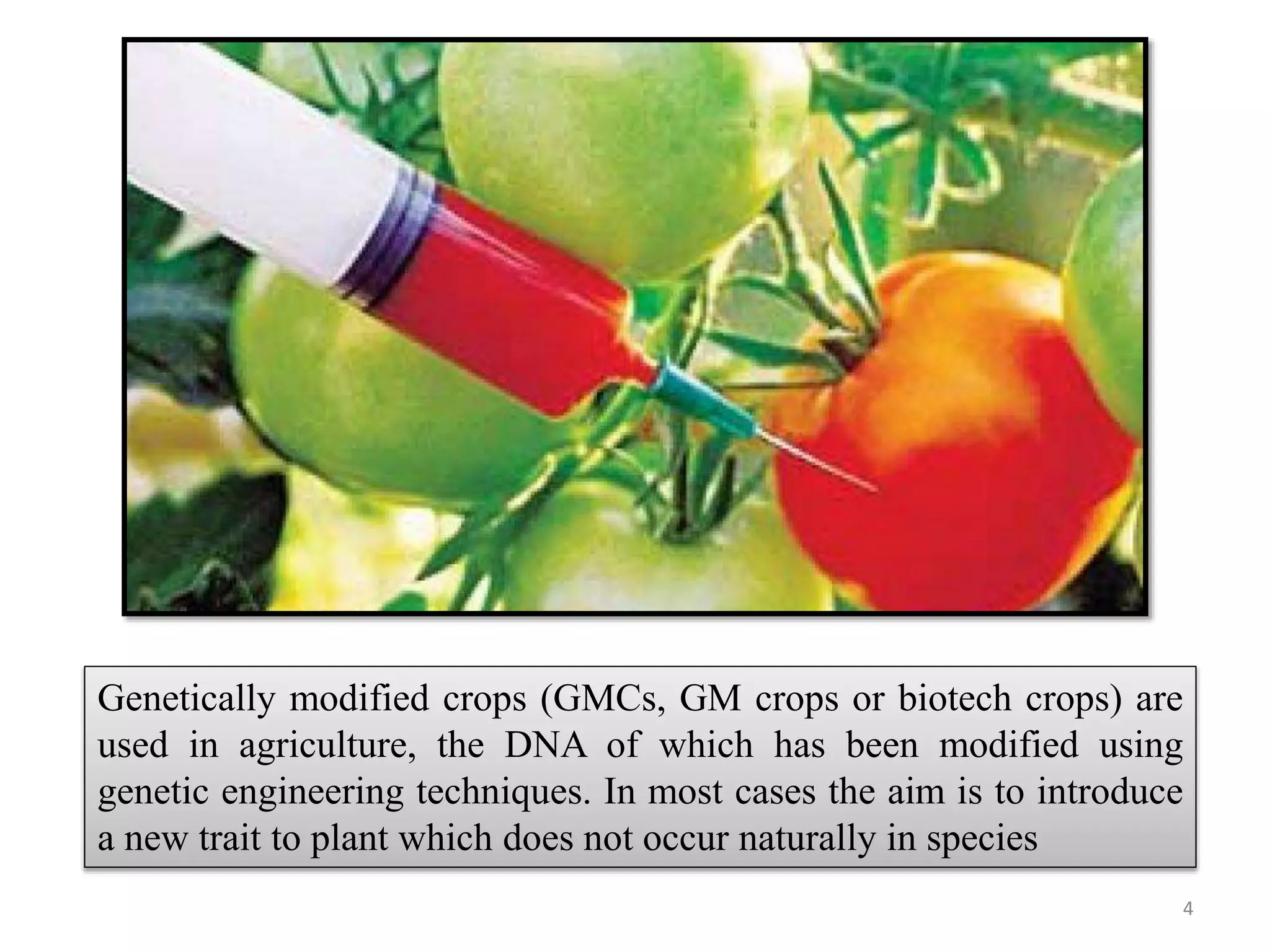
Genetically modified crops (GMCs, GM crops or biotech crops) are
used in agriculture, the DNA of which has been modified using
genetic engineering techniques. In most cases the aim is to introduce
a new trait to plant which does not occur naturally in species
4
Why genetically engineered plants???
• To improve the agricultural, horticultural (or) ornamental value of a
crop plant
• Resistance to certain pests, diseases and environmental conditions
• Reduction of spoilage
• Resistance to chemical treatments (Eg- Resistance to herbicide)
• Improving the nutrient profile of the crop
5
Transgenic Plants
It is a foreign gene/genetic
material that has been transferred
naturally (or) by any of a number of
genetic engineering techniques from
one organism to another
Transgene
6
Transgenesis
The phenomenon of introduction of exogenous
DNA into the genome to create and maintain a stable
and heritable character
7
Transgenic Plants
The plants whose genome is altered
by adding one or more transgenes
are known as transgenic plants
8
History of GMO’s
1982- 1st transgenic plant produced which is an antibiotic
resistance tobacco plant
9
1984- 1st successful plant genetic engineering experiments
was done by using Caulimovirus vector
10
1994- 1st genetically modified crop approved for sale in
US was Flavr- Savr tomato
11
1994- The European Union approved genetically engineered
tobacco resistant to the herbicide (Bromoxynil). First commercially
engineered crop marketed in Europe
12
1995- Bt- potato was approved by the US- Environmental Protection
Agency making it the country’s first pesticide producing crop
One of the most consequential
potato plant pest is CPB which
often becomes resistant to
chemical insecticides. Modified
potatoes carrying gene Cry3A
originating from the bacteria Bt.
13
1996- 1st genetically modified flower (Moondust- bluish
colored carnation was introduced)
14
2000- Golden rice with ß- carotene developed with increased
nutrient value
15
Development of Transgenic plants
The basic requirements of transformation are,
1. A target genome
2. A vector to carry the gene
3. Modification of the foreign DNA to increase the level of
gene expression
4. Method to deliver the plasmid DNA into the cell
5. Methodology to identify the transformed cell
6. Tissue culture to recover the viable plants from the
transformed cells
16
Transgenic plants have been produced by addition of
one or more following genes
• Endo-toxin gene from Bt
• Protease inhibitors
• Alpha amylase inhibitors
• Lectins
• Enzymes
• Pyramiding genes
17
Endotoxin gene from Bt
18
The gene responsible for
producing endotoxin is isolated from
Bt and cloned into plants to develop
resistance to insects
19
Protease inhibitors
• Insects have protease in their gut which are the enzymes helping in
digestion of protein
• PI inhibit the proteases and affect digestion in insects
• The PI are isolated from one plant and cloned into another to produce
transgenic plants
• Four classes- Serine, Thiol, Metallo and Aspartyl
• Serine PI is the most important
Eg- Cowpea trypsin inhibitor (CpTi) gene derived from cowpea and
cloned into tobacco against Helicoverpa
20
Alpha amylase inhibitors- Alpha amylase is a digestive enzyme
present in insects for digestion of carbohydrates. AAI affects the
digestion of carbohydrates in insects. Transgenic tobacco & tomato
expressing AAI which are resistant to Lepidopteran pests
Lectin genes- Lectin are a group of plant proteins that bind to
carbohydrates, including chitin. The deleterious effect of chitin
binding lectins on insect development is mediated by binding to
chitin in the peritrophic membrane that lines the midgut of insect
thus interfering with the uptake of nutrients
Eg- Gene encoding the pea lectin (P- Lec) has been expressed
in transgenic tobacco against Helicoverpa virescens
21
Enzymes- Chitinase enzyme gene, cholesterol oxidase and
lipo- oxygenase genes have been cloned into plants and these
transgenic plants show insecticidal properties. Eg- Expression of bean
chitinase (BCH) in transgenic tobacco against aphid
Pyramiding genes- Engineering transgenic crops with more
than one gene to get multi mechanistic resistance is called pyramiding
of genes
Eg- CpTi gene and pea lectin gene were cloned to produce
transgenic tobacco. Lectins and bean chitinase (BHC) genes were
cloned to produce transgenic potato
Bt insect resistant plants development
• Bacillus thuringiensis – a soil bacterium whose spores contain a
crystalline protein (Cry)
• In the insect gut the protein breaks down to release a toxin known as
delta-endotoxin
• This toxin binds to and creates pores in the intestinal lining
Resulting in ion imbalance
Paralysis of the digestive system
After few days the insect died
• Different versions of Cry genes also known as “Bt genes” have been
identified
22
Bt - Mode of entry
23
More than 100 different variations of Bt toxin have been
identified in diverse strains of Bt. The different variations have
different target specificity
Cry gene designation Toxic to the insect orders
Cry1A(a), Cry1A(b), Cry1A(c) Lepidoptera
Cry1B, Cry1C, Cry1D Lepidoptera
Cry II Lepidoptera, Diptera
Cry III Coleoptera
Cry IV Diptera
Cry V Lepidoptera, Coleoptera
24
Steps in development of transgenic plants
Transforming plants
Selection and Regeneration
Regeneration of whole plants
25
3
1
2
Genetic engineering techniques applied to plants
• Vector mediated gene transfer
Agrobacterium mediated gene transfer
• Direct (or) vectorless DNA transfer
Gene gun
Electroporation
Microinjection
26
Agrobacterium mediated gene transfer
• Natural soil borne bacterium – Crown gall disease in plants
• It is an efficient vector of DNA because it has the ability to transmit
a fragment of its large plasmid into the nuclear genome of an
infected cell
• The fragment called T-DNA, transfer contained genes- Oncogenes,
that induce tumors in the plant tissues
• The transgenic Agrobacterium is then used to transfer the delta
endotoxin protein into the plant cell chromosomes
• Plant cell is cultured and grown into a whole plant whose ells
contains the toxic protein
• These transgenic resistant plants then produce seed expressing the
insect resistant trait, which can be commercialized
• This procedure has been used to transfer Bt delta endotoxin gene to
many plants including (Cotton, tobacco, tomato and potato)
27
28
List of transgenic plants carrying Bt genes for insect resistance
S.N0. Crop Genes Target insect
1 Brinjal Cry IIIb Leptinotarsa
2 Cotton Cry 1A (b) H.zea, PBW
3 Maize Cry 1A (b) O. nubilalis
4 Potato Cry 1A (b) PTM
5 Rice Cry 1A (b) YSB, LF
6 Sugarcane Cry 1A (b) D. saccharalis
7 Tobacco Cry 1A (b) H.virescens
8 Tomato Cry 1A (c) Manduca sexta
29
Biolistic method (Particle gun)
• Also called as “Gene gun or Micro-projectile bombardment” method
• DNA is bound to tiny particles of gold or tungsten which are shot
into plant tissue
• The particles penetrate both the cell wall and membranes
• DNA separates from the metal and is integrated into the plant
genome inside the nucleus
• Successfully for monocots- Wheat, maize
• Disadvantage- Serious damage to the cellular tissue
30
31
Electroporation
Short pulse of high voltage
are applied to protoplasts
which make temporary pores
in the plasma membrane to
increase their permeability
and facilitate the uptake of
foreign gene
32
Microinjection
33
1. DNA of interest is taken in microinjector and then delivered
inside the cell
2. Micromanipulator
3. Successful- Tobacco & Alfalfa
4. Maximum of 40-50 protoplasts can be microinjected in one hr
Success of transgenic plants/ GM plants
34
• Insect resistant cotton- Bt
toxin kills the cotton boll
worm.
• Transgene- Bt gene from Bt
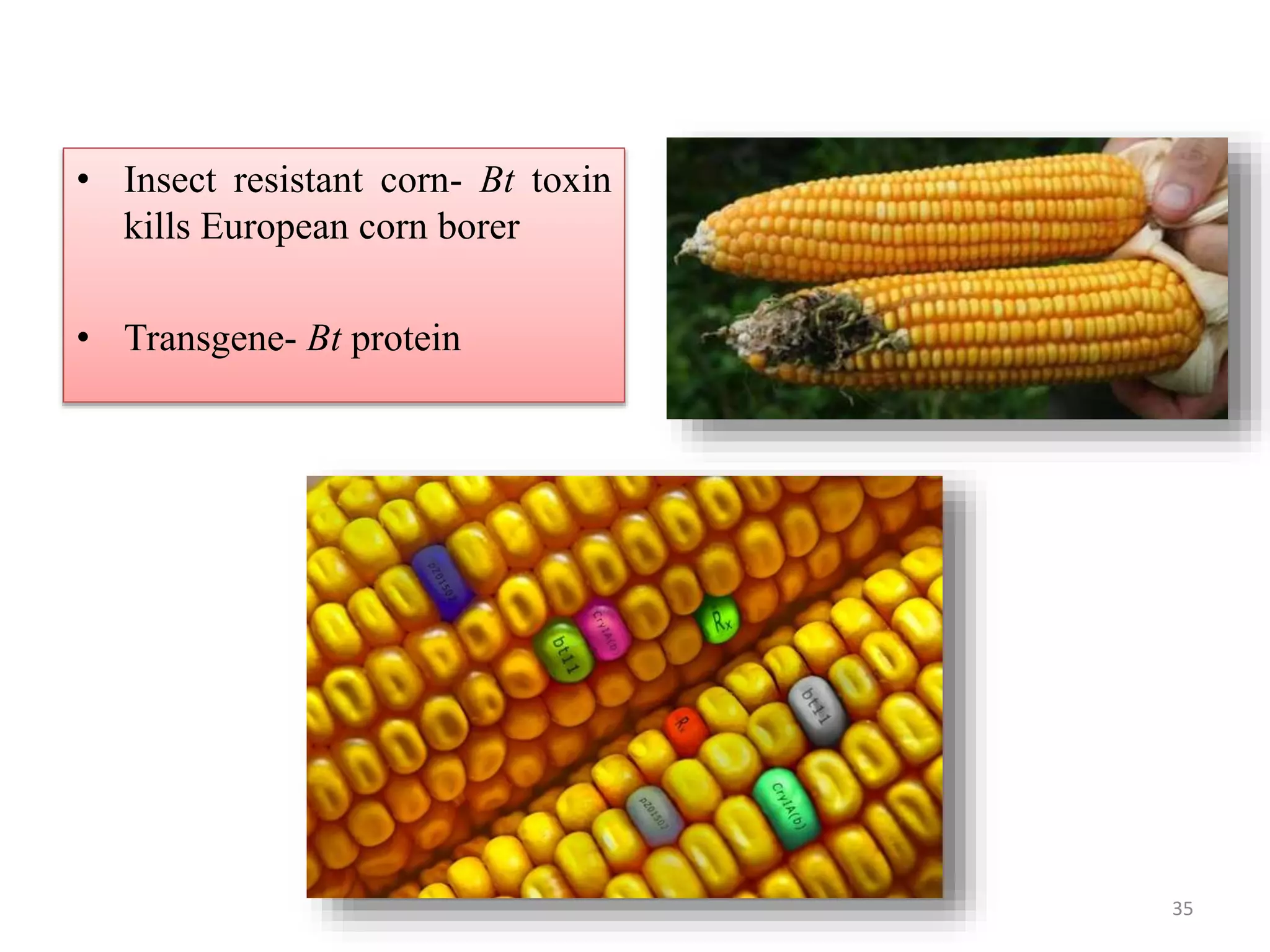
• Insect resistant corn- Bt toxin
kills European corn borer
• Transgene- Bt protein
35
Herbicide resistant crop- EPSP synthase
36
37
• Virus resistant papaya- Resistant to
papaya ring-spot virus
•Transgene- Virus coat protein
Advantage & Disadvantage of transgenic plants
38
Advantages of Transgenic plants
• Improvement in nutritional value of food
• Increase in farmers income
• Increase in food supply
• More convenient and flexible to use
• Safer environment through decreased use of pesticides
• Improved the quality of ground and surface water with less pesticide
residues
• Safe to non-target organisms and human beings
39
Disadvantages of transgenic plants
• Secondary pest incidence
• Disruption of pollinators and plant communities would occur if the toxin is
expressed in plant nectar and pollen
• CCD- Is affecting bee hives and it is supposed to be the use of Bt transgenic
crops
• GM ingredients cause cancer- Histopathologist (Dr. Stanley Ewan)
“food and water contaminated with GE material could increase the growth of
Malignant tumor
• GM food could raise new allergy outbreak in humans – GM soybean
containing “Brazilian protein” was allergic to humans and was withdrawn from
production
40
Conclusion
• Transgenic plants have the potential to solve many of the
worlds hunger and malnutrition problems
• Help to protect and preserve the environment by increasing
yield and reducing reliance upon chemical pesticides and
herbicides
41
THANK YOU………..
42

Genetic engineering and development of transgenic plants

  • 1.
    Genetic Engineering &Development of Transgenic plants Presented by, L.N.Nisha I-PhD-Entomology 1
  • 2.
    Genetic Engineering/ Geneticmanipulation • It is a process where the gene for a particular character is introduced inside the chromosome of a cell • When the gene for a particular character is introduced in a plant cell a transgenic plant is produced. These transgenic plants exhibit characters governed by the newly introduced gene • It helps in improving crop variety • It ensures food security and insect resistant crops • It also improves the quality and yield of crops 2
  • 3.
    Genetic Engineering/ GeneticManipulation Is the direct manipulation of an organisms genome using biotechnology. It is a set of technologies used to change the genetic makeup of cells, including the transfer of genes within & across species boundaries to produce improved (or) novel organisms 3
  • 4.
    Genetically modified crops(GMCs, GM crops or biotech crops) are used in agriculture, the DNA of which has been modified using genetic engineering techniques. In most cases the aim is to introduce a new trait to plant which does not occur naturally in species 4
  • 5.
    Why genetically engineeredplants??? • To improve the agricultural, horticultural (or) ornamental value of a crop plant • Resistance to certain pests, diseases and environmental conditions • Reduction of spoilage • Resistance to chemical treatments (Eg- Resistance to herbicide) • Improving the nutrient profile of the crop 5
  • 6.
    Transgenic Plants It isa foreign gene/genetic material that has been transferred naturally (or) by any of a number of genetic engineering techniques from one organism to another Transgene 6
  • 7.
    Transgenesis The phenomenon ofintroduction of exogenous DNA into the genome to create and maintain a stable and heritable character 7
  • 8.
    Transgenic Plants The plantswhose genome is altered by adding one or more transgenes are known as transgenic plants 8
  • 9.
    History of GMO’s 1982-1st transgenic plant produced which is an antibiotic resistance tobacco plant 9
  • 10.
    1984- 1st successfulplant genetic engineering experiments was done by using Caulimovirus vector 10
  • 11.
    1994- 1st geneticallymodified crop approved for sale in US was Flavr- Savr tomato 11
  • 12.
    1994- The EuropeanUnion approved genetically engineered tobacco resistant to the herbicide (Bromoxynil). First commercially engineered crop marketed in Europe 12
  • 13.
    1995- Bt- potatowas approved by the US- Environmental Protection Agency making it the country’s first pesticide producing crop One of the most consequential potato plant pest is CPB which often becomes resistant to chemical insecticides. Modified potatoes carrying gene Cry3A originating from the bacteria Bt. 13
  • 14.
    1996- 1st geneticallymodified flower (Moondust- bluish colored carnation was introduced) 14
  • 15.
    2000- Golden ricewith ß- carotene developed with increased nutrient value 15
  • 16.
    Development of Transgenicplants The basic requirements of transformation are, 1. A target genome 2. A vector to carry the gene 3. Modification of the foreign DNA to increase the level of gene expression 4. Method to deliver the plasmid DNA into the cell 5. Methodology to identify the transformed cell 6. Tissue culture to recover the viable plants from the transformed cells 16
  • 17.
    Transgenic plants havebeen produced by addition of one or more following genes • Endo-toxin gene from Bt • Protease inhibitors • Alpha amylase inhibitors • Lectins • Enzymes • Pyramiding genes 17
  • 18.
    Endotoxin gene fromBt 18 The gene responsible for producing endotoxin is isolated from Bt and cloned into plants to develop resistance to insects
  • 19.
    19 Protease inhibitors • Insectshave protease in their gut which are the enzymes helping in digestion of protein • PI inhibit the proteases and affect digestion in insects • The PI are isolated from one plant and cloned into another to produce transgenic plants • Four classes- Serine, Thiol, Metallo and Aspartyl • Serine PI is the most important Eg- Cowpea trypsin inhibitor (CpTi) gene derived from cowpea and cloned into tobacco against Helicoverpa
  • 20.
    20 Alpha amylase inhibitors-Alpha amylase is a digestive enzyme present in insects for digestion of carbohydrates. AAI affects the digestion of carbohydrates in insects. Transgenic tobacco & tomato expressing AAI which are resistant to Lepidopteran pests Lectin genes- Lectin are a group of plant proteins that bind to carbohydrates, including chitin. The deleterious effect of chitin binding lectins on insect development is mediated by binding to chitin in the peritrophic membrane that lines the midgut of insect thus interfering with the uptake of nutrients Eg- Gene encoding the pea lectin (P- Lec) has been expressed in transgenic tobacco against Helicoverpa virescens
  • 21.
    21 Enzymes- Chitinase enzymegene, cholesterol oxidase and lipo- oxygenase genes have been cloned into plants and these transgenic plants show insecticidal properties. Eg- Expression of bean chitinase (BCH) in transgenic tobacco against aphid Pyramiding genes- Engineering transgenic crops with more than one gene to get multi mechanistic resistance is called pyramiding of genes Eg- CpTi gene and pea lectin gene were cloned to produce transgenic tobacco. Lectins and bean chitinase (BHC) genes were cloned to produce transgenic potato
  • 22.
    Bt insect resistantplants development • Bacillus thuringiensis – a soil bacterium whose spores contain a crystalline protein (Cry) • In the insect gut the protein breaks down to release a toxin known as delta-endotoxin • This toxin binds to and creates pores in the intestinal lining Resulting in ion imbalance Paralysis of the digestive system After few days the insect died • Different versions of Cry genes also known as “Bt genes” have been identified 22
  • 23.
    Bt - Modeof entry 23
  • 24.
    More than 100different variations of Bt toxin have been identified in diverse strains of Bt. The different variations have different target specificity Cry gene designation Toxic to the insect orders Cry1A(a), Cry1A(b), Cry1A(c) Lepidoptera Cry1B, Cry1C, Cry1D Lepidoptera Cry II Lepidoptera, Diptera Cry III Coleoptera Cry IV Diptera Cry V Lepidoptera, Coleoptera 24
  • 25.
    Steps in developmentof transgenic plants Transforming plants Selection and Regeneration Regeneration of whole plants 25 3 1 2
  • 26.
    Genetic engineering techniquesapplied to plants • Vector mediated gene transfer Agrobacterium mediated gene transfer • Direct (or) vectorless DNA transfer Gene gun Electroporation Microinjection 26
  • 27.
    Agrobacterium mediated genetransfer • Natural soil borne bacterium – Crown gall disease in plants • It is an efficient vector of DNA because it has the ability to transmit a fragment of its large plasmid into the nuclear genome of an infected cell • The fragment called T-DNA, transfer contained genes- Oncogenes, that induce tumors in the plant tissues • The transgenic Agrobacterium is then used to transfer the delta endotoxin protein into the plant cell chromosomes • Plant cell is cultured and grown into a whole plant whose ells contains the toxic protein • These transgenic resistant plants then produce seed expressing the insect resistant trait, which can be commercialized • This procedure has been used to transfer Bt delta endotoxin gene to many plants including (Cotton, tobacco, tomato and potato) 27
  • 28.
  • 29.
    List of transgenicplants carrying Bt genes for insect resistance S.N0. Crop Genes Target insect 1 Brinjal Cry IIIb Leptinotarsa 2 Cotton Cry 1A (b) H.zea, PBW 3 Maize Cry 1A (b) O. nubilalis 4 Potato Cry 1A (b) PTM 5 Rice Cry 1A (b) YSB, LF 6 Sugarcane Cry 1A (b) D. saccharalis 7 Tobacco Cry 1A (b) H.virescens 8 Tomato Cry 1A (c) Manduca sexta 29
  • 30.
    Biolistic method (Particlegun) • Also called as “Gene gun or Micro-projectile bombardment” method • DNA is bound to tiny particles of gold or tungsten which are shot into plant tissue • The particles penetrate both the cell wall and membranes • DNA separates from the metal and is integrated into the plant genome inside the nucleus • Successfully for monocots- Wheat, maize • Disadvantage- Serious damage to the cellular tissue 30
  • 31.
  • 32.
    Electroporation Short pulse ofhigh voltage are applied to protoplasts which make temporary pores in the plasma membrane to increase their permeability and facilitate the uptake of foreign gene 32
  • 33.
    Microinjection 33 1. DNA ofinterest is taken in microinjector and then delivered inside the cell 2. Micromanipulator 3. Successful- Tobacco & Alfalfa 4. Maximum of 40-50 protoplasts can be microinjected in one hr
  • 34.
    Success of transgenicplants/ GM plants 34 • Insect resistant cotton- Bt toxin kills the cotton boll worm. • Transgene- Bt gene from Bt
  • 35.
    • Insect resistantcorn- Bt toxin kills European corn borer • Transgene- Bt protein 35
  • 36.
    Herbicide resistant crop-EPSP synthase 36
  • 37.
    37 • Virus resistantpapaya- Resistant to papaya ring-spot virus •Transgene- Virus coat protein
  • 38.
    Advantage & Disadvantageof transgenic plants 38
  • 39.
    Advantages of Transgenicplants • Improvement in nutritional value of food • Increase in farmers income • Increase in food supply • More convenient and flexible to use • Safer environment through decreased use of pesticides • Improved the quality of ground and surface water with less pesticide residues • Safe to non-target organisms and human beings 39
  • 40.
    Disadvantages of transgenicplants • Secondary pest incidence • Disruption of pollinators and plant communities would occur if the toxin is expressed in plant nectar and pollen • CCD- Is affecting bee hives and it is supposed to be the use of Bt transgenic crops • GM ingredients cause cancer- Histopathologist (Dr. Stanley Ewan) “food and water contaminated with GE material could increase the growth of Malignant tumor • GM food could raise new allergy outbreak in humans – GM soybean containing “Brazilian protein” was allergic to humans and was withdrawn from production 40
  • 41.
    Conclusion • Transgenic plantshave the potential to solve many of the worlds hunger and malnutrition problems • Help to protect and preserve the environment by increasing yield and reducing reliance upon chemical pesticides and herbicides 41
  • 42.