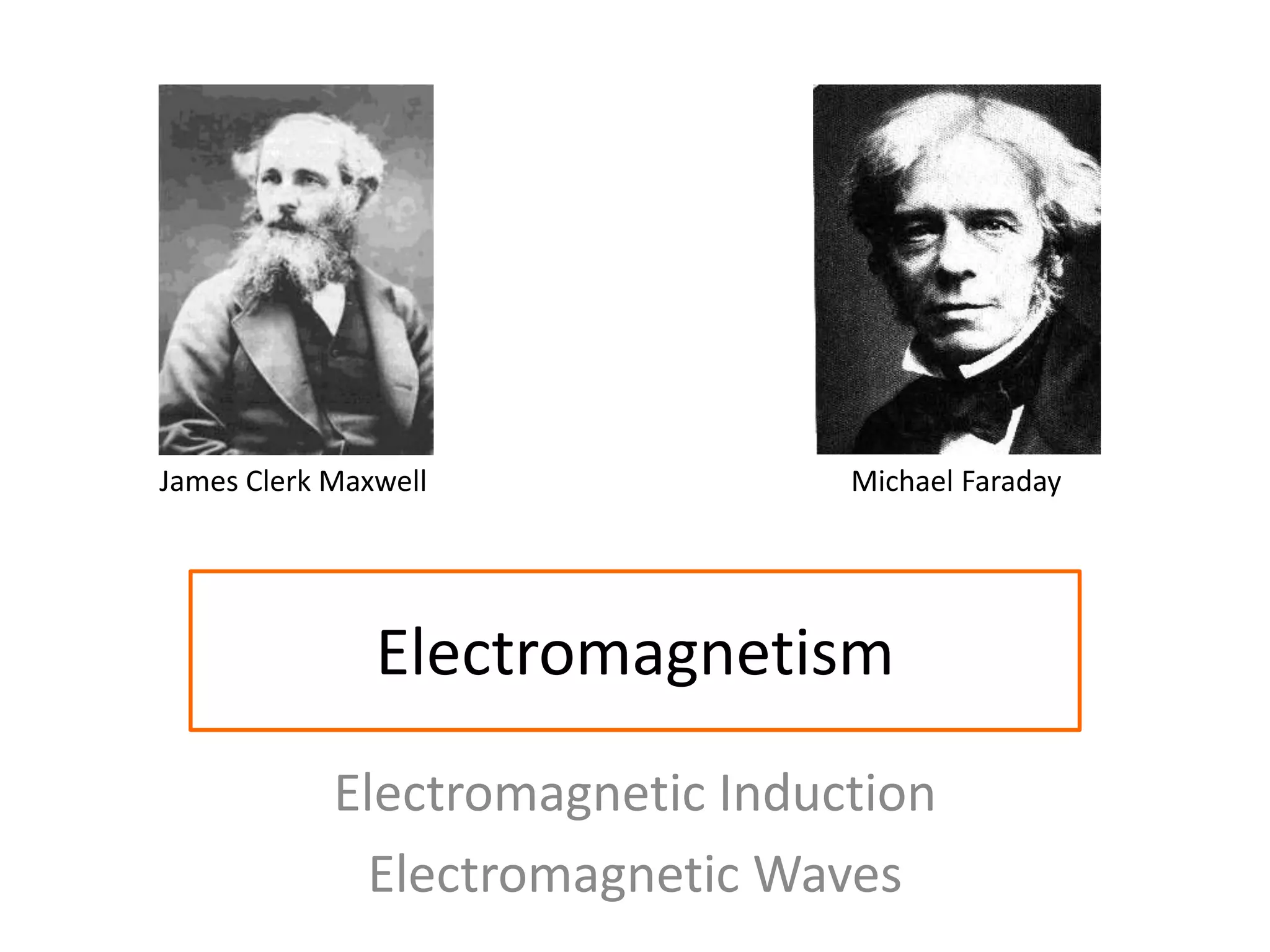
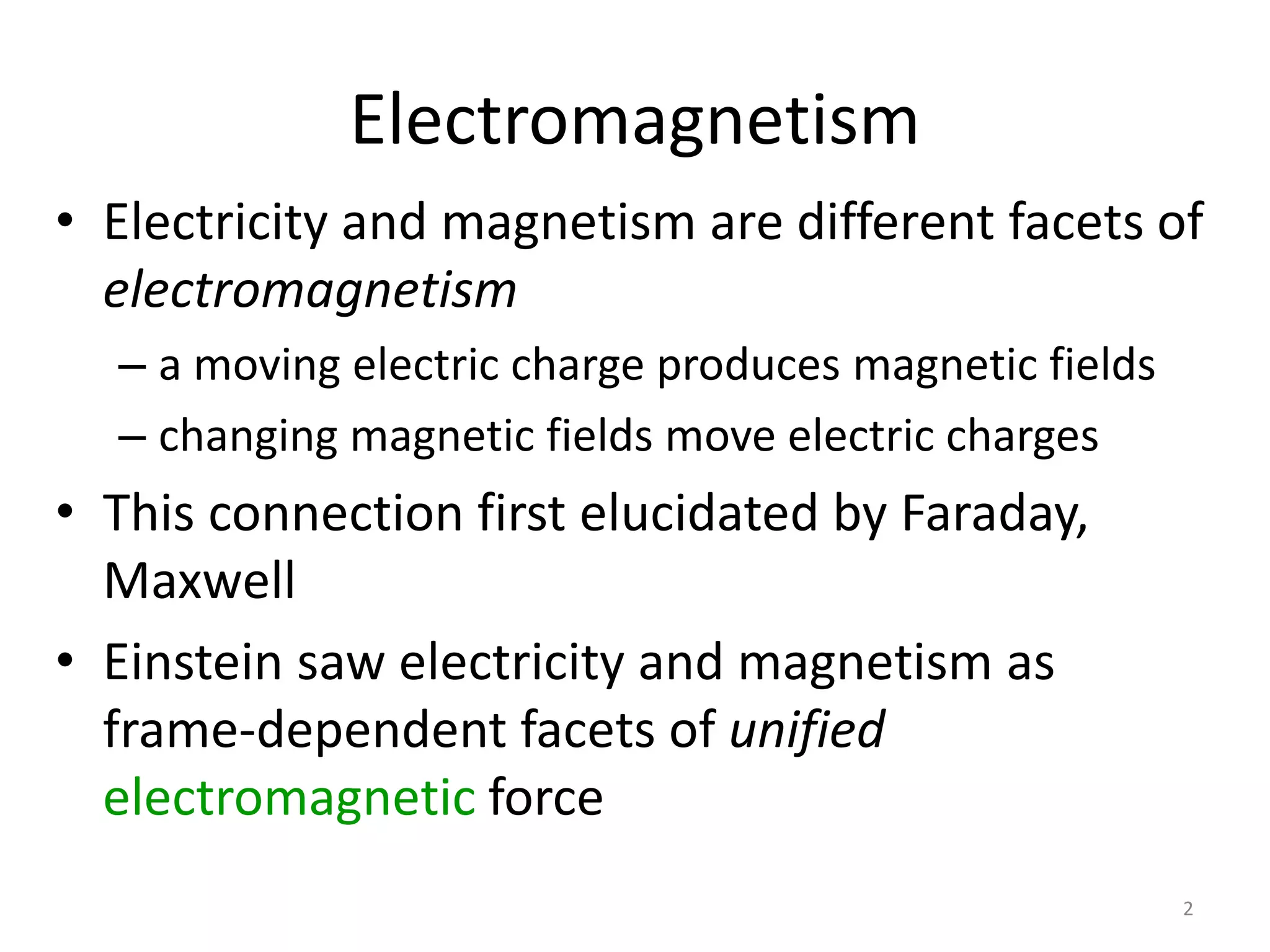
James Clerk Maxwell Michael Faraday 
Electromagnetism 
Electromagnetic Induction 
Electromagnetic Waves
2 
Electromagnetism 
• Electricity and magnetism are different facets of 
electromagnetism 
– a moving electric charge produces magnetic fields 
– changing magnetic fields move electric charges 
• This connection first elucidated by Faraday, 
Maxwell 
• Einstein saw electricity and magnetism as 
frame-dependent facets of unified 
electromagnetic force
3 
Magnetic fields from electricity 
• A static distribution of charges produces an 
electric field 
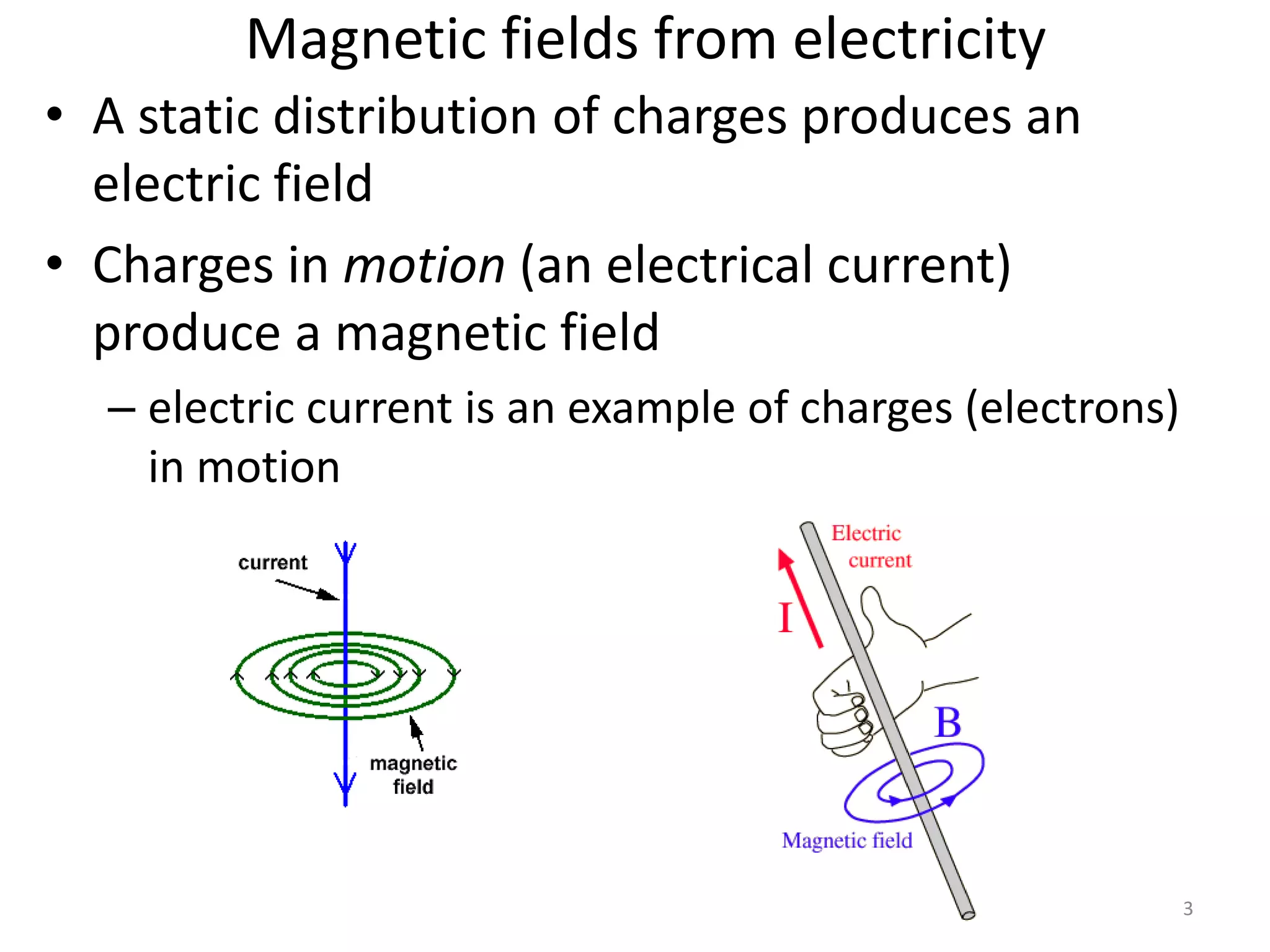
• Charges in motion (an electrical current) 
produce a magnetic field 
– electric current is an example of charges (electrons) 
in motion
4 
Electromagnets 
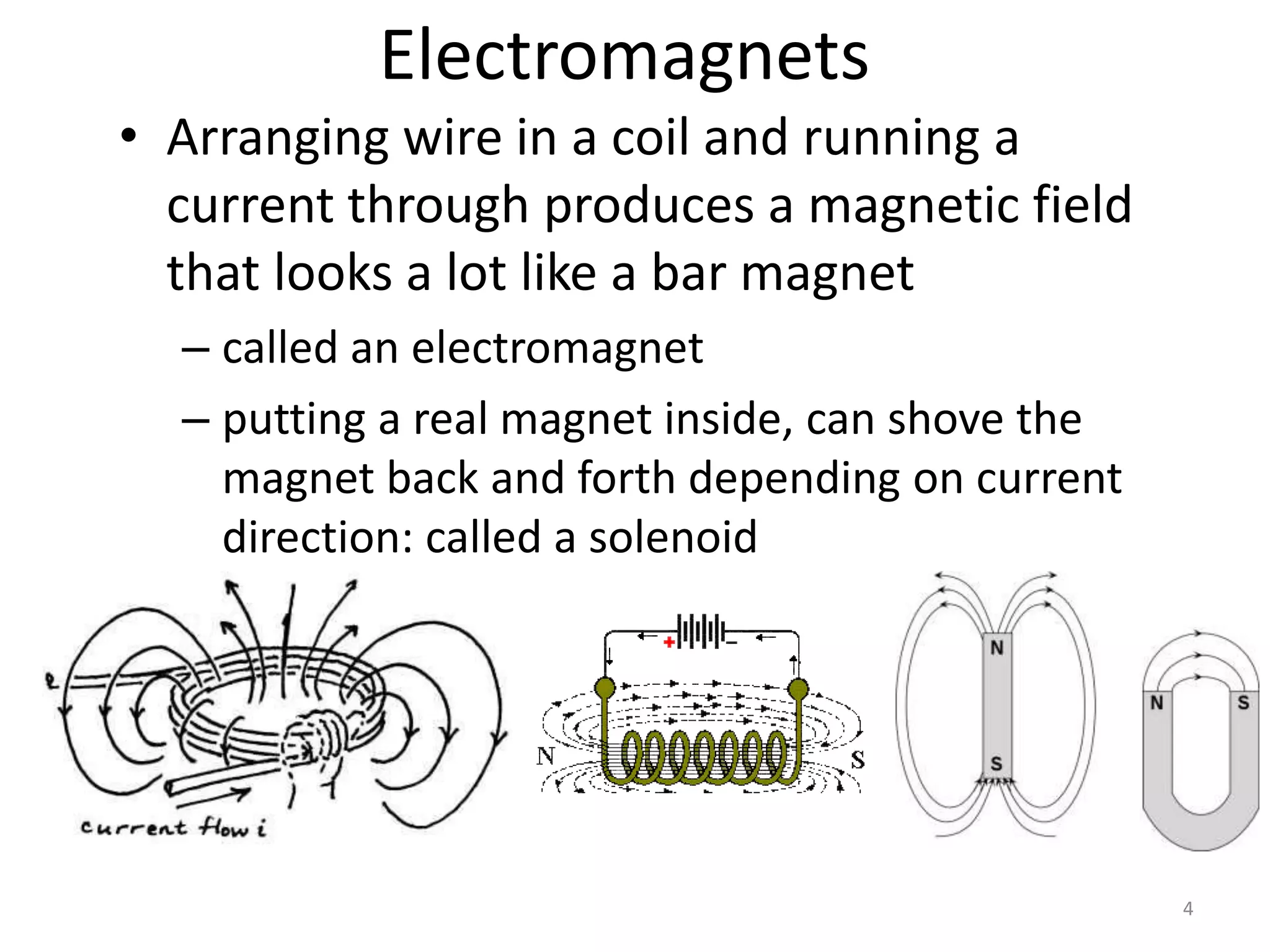
• Arranging wire in a coil and running a 
current through produces a magnetic field 
that looks a lot like a bar magnet 
– called an electromagnet 
– putting a real magnet inside, can shove the 
magnet back and forth depending on current 
direction: called a solenoid
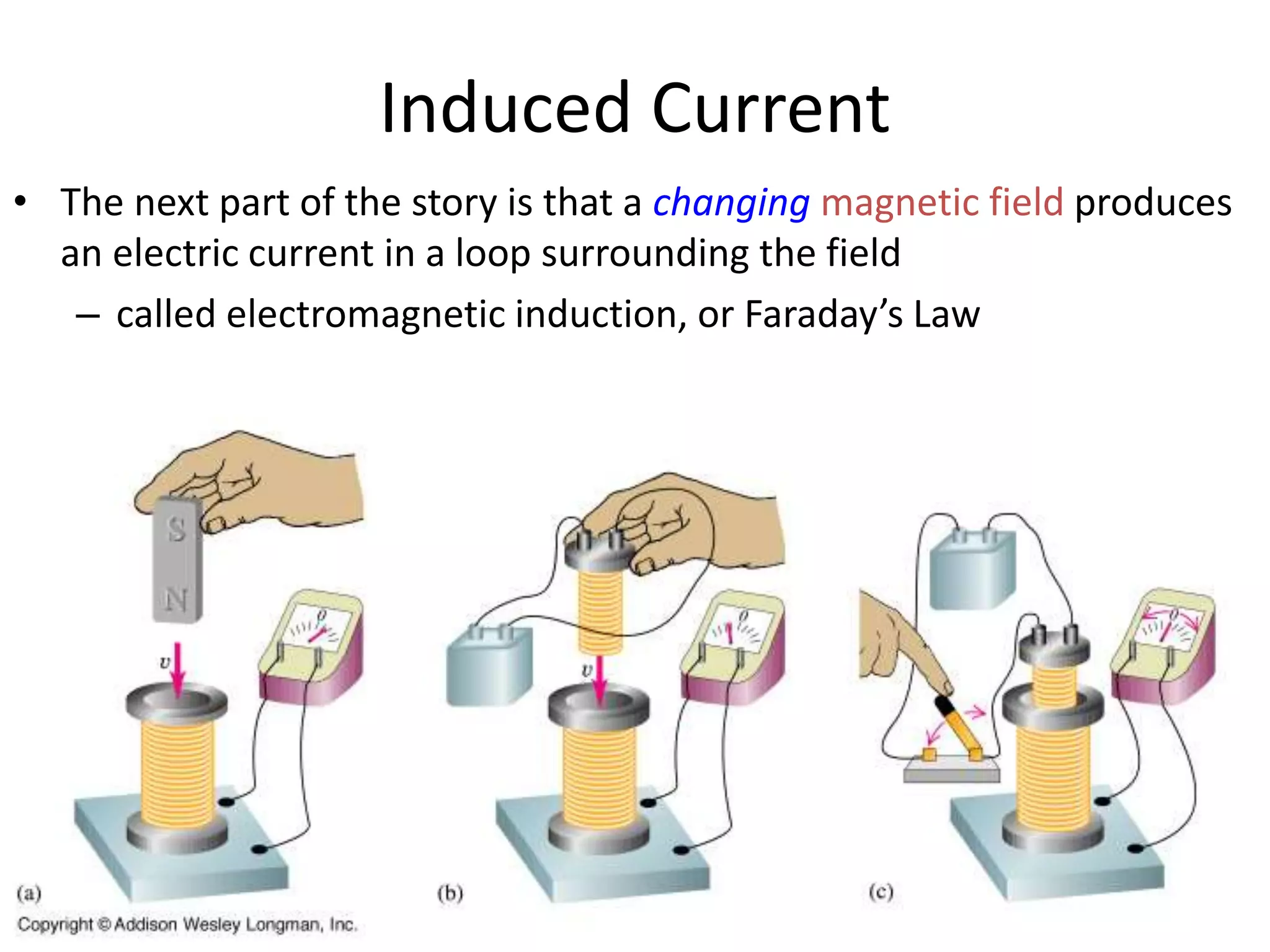
Induced Current 
• The next part of the story is that a changing magnetic field produces 
an electric current in a loop surrounding the field 
– called electromagnetic induction, or Faraday’s Law 
Spring 2008 5
6 
The Electromagnetic Connection 
• A changing magnetic field produces an electric field, and a 
changing electric field produces a magnetic field. 
• Electric and Magnetic fields can produce forces on charges 
• An accelerating charge produces electromagnetic waves 
(radiation) 
• Both electric and magnetic fields can transport energy 
– Electric field energy used in electrical circuits, e.g., released in 
lightning 
– Magnetic field carries energy through transformer, for example
7 
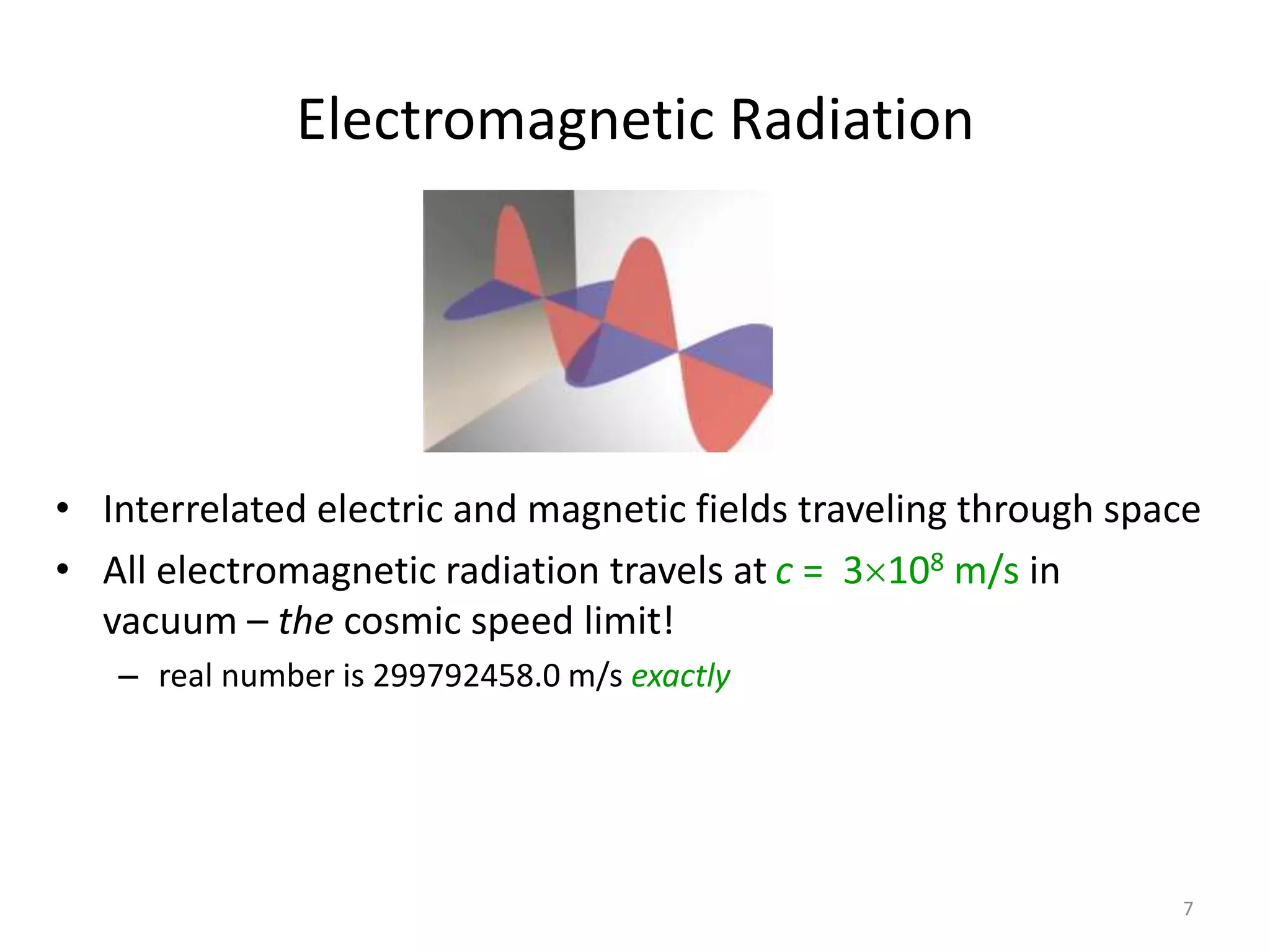
Electromagnetic Radiation 
• Interrelated electric and magnetic fields traveling through space 
• All electromagnetic radiation travels at c = 3108 m/s in 
vacuum – the cosmic speed limit! 
– real number is 299792458.0 m/s exactly
8 
What’s “Waving” in EM waves? 
• What medium transports sound waves? 
– Can there be sound waves in the vacuum of outer space? 
• What medium transports water waves? 
• What medium transports radio waves? 
• A topic of considerable debate in the late 1800’s and early 
1900’s 
• Led to the concept of the “luminiferous ether” – an invisible 
“jello” that was thought to vibrate electromagnetically 
• Experiments that sought this ether didn’t find it! 
• This was quite a surprise 
Electromagnetic waves travel through empty space!
Examples of Electromagnetic Radiation 
9 
• AM and FM radio waves (including TV signals) 
• Cell phone communication links 
• Microwaves 
• Infrared radiation 
• Light 
• X-rays 
• Gamma rays 
• What distinguishes these from one another?
10 
Uses of Electromagnetic Waves 
• Communication systems 
– One-way and two-way 
• Radar 
• Cooking (with microwaves) 
• Medical Imaging (X rays) 
• “Night Vision” (infrared) 
• Astronomy (radio, wave, IR, visible, UV, gamma) 
All that we experience through our eyes is conveyed by 
electromagnetic radiation…
11 
The Electromagnetic Spectrum 
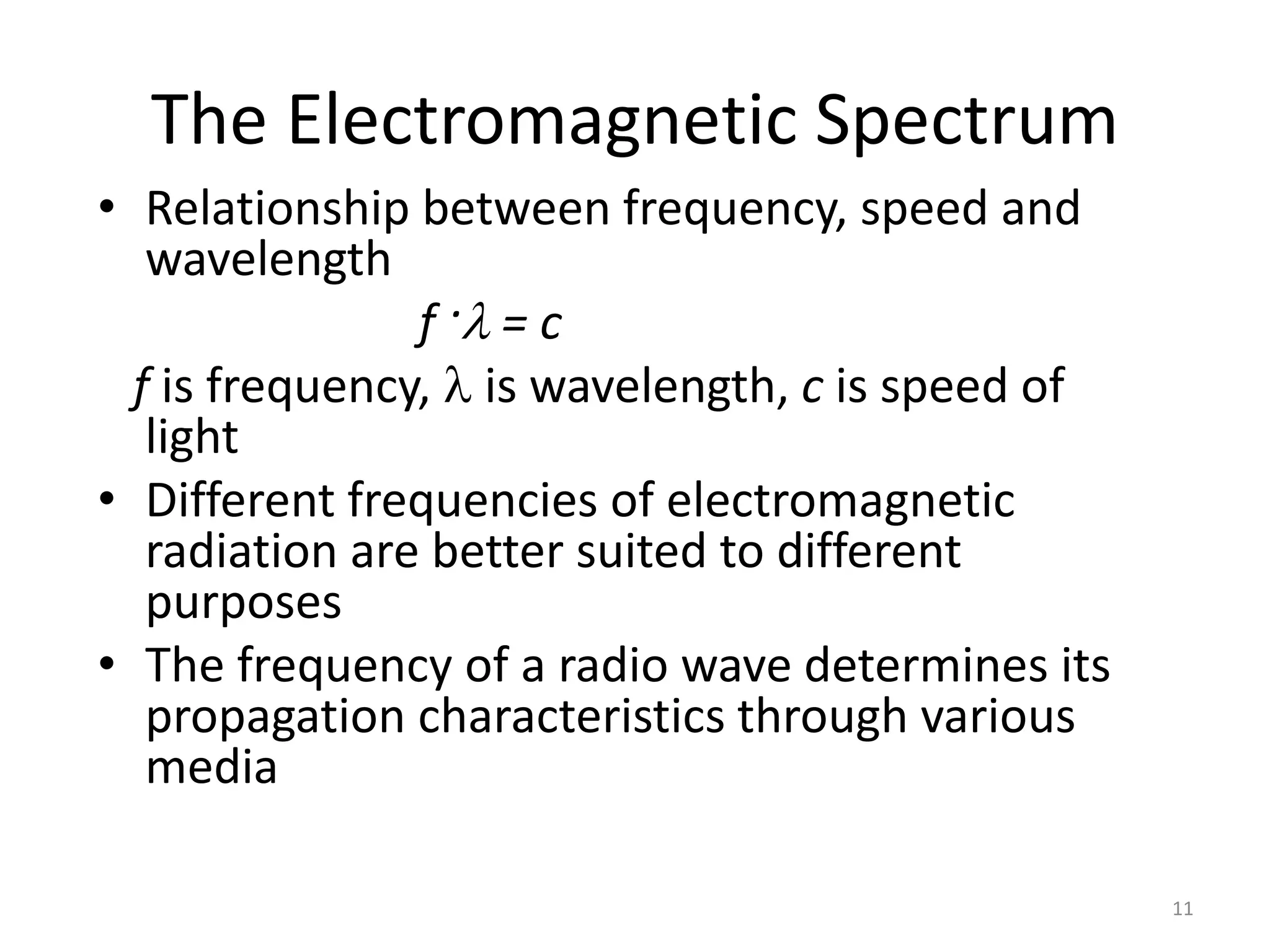
• Relationship between frequency, speed and 
wavelength 
f ·l = c 
f is frequency, l is wavelength, c is speed of 
light 
• Different frequencies of electromagnetic 
radiation are better suited to different 
purposes 
• The frequency of a radio wave determines its 
propagation characteristics through various 
media
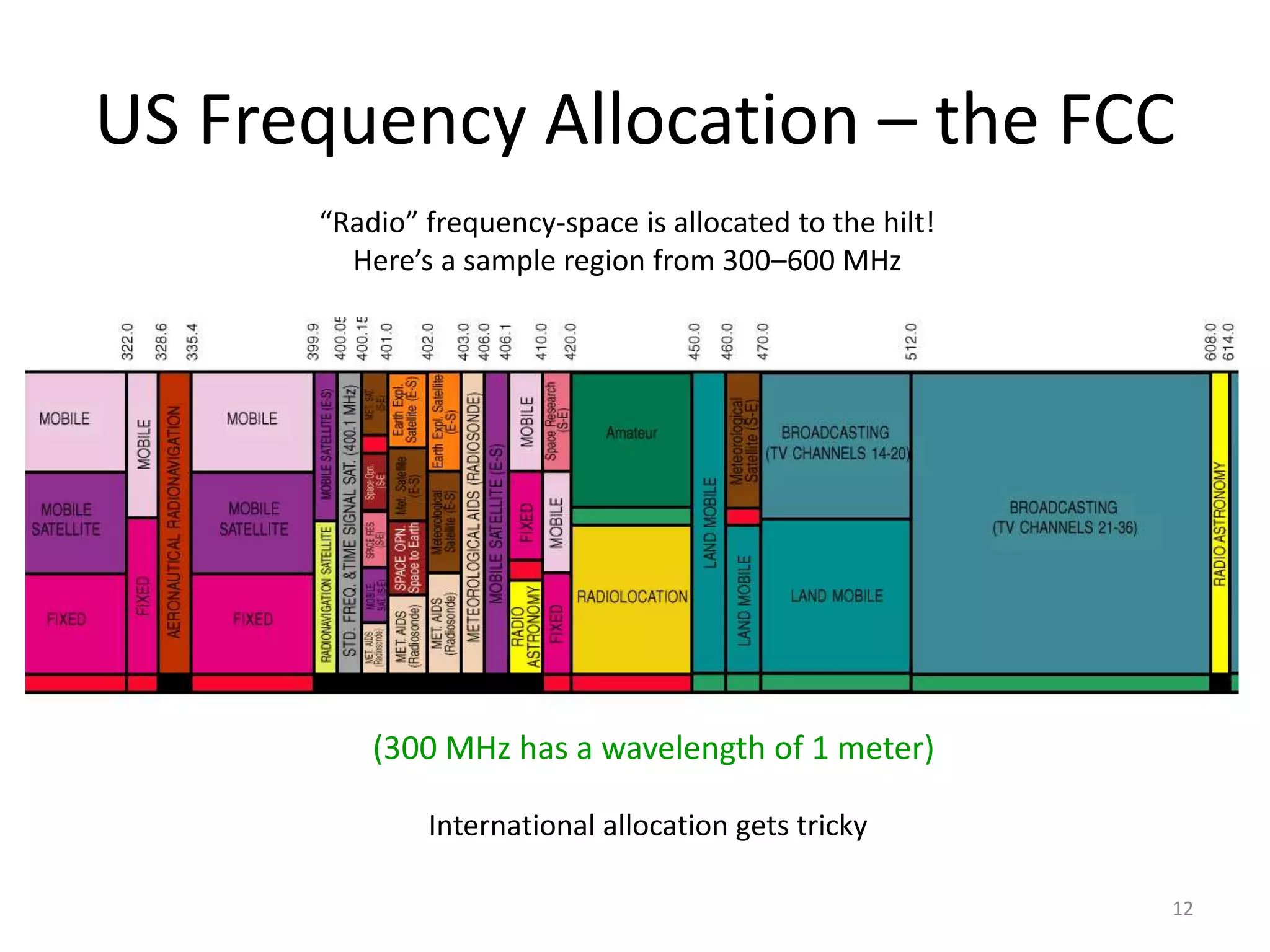
US Frequency Allocation – the FCC 
12 
“Radio” frequency-space is allocated to the hilt! 
Here’s a sample region from 300–600 MHz 
(300 MHz has a wavelength of 1 meter) 
International allocation gets tricky
13 
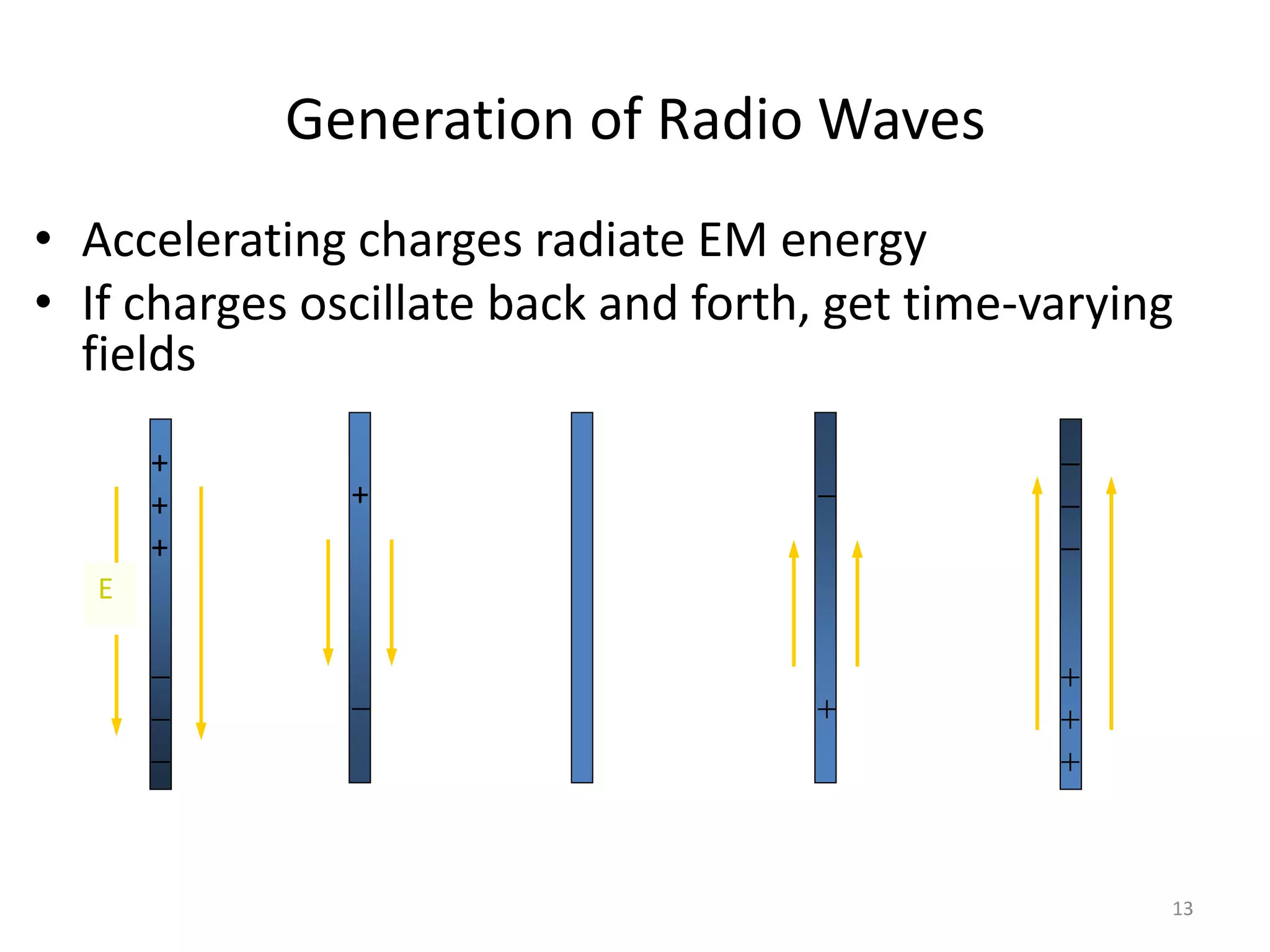
Generation of Radio Waves 
• Accelerating charges radiate EM energy 
• If charges oscillate back and forth, get time-varying 
fields 
E 
+ 
+ 
+ 
- 
- 
- 
+ 
- 
- 
+ 
- 
- 
- 
+ 
+ 
+
14 
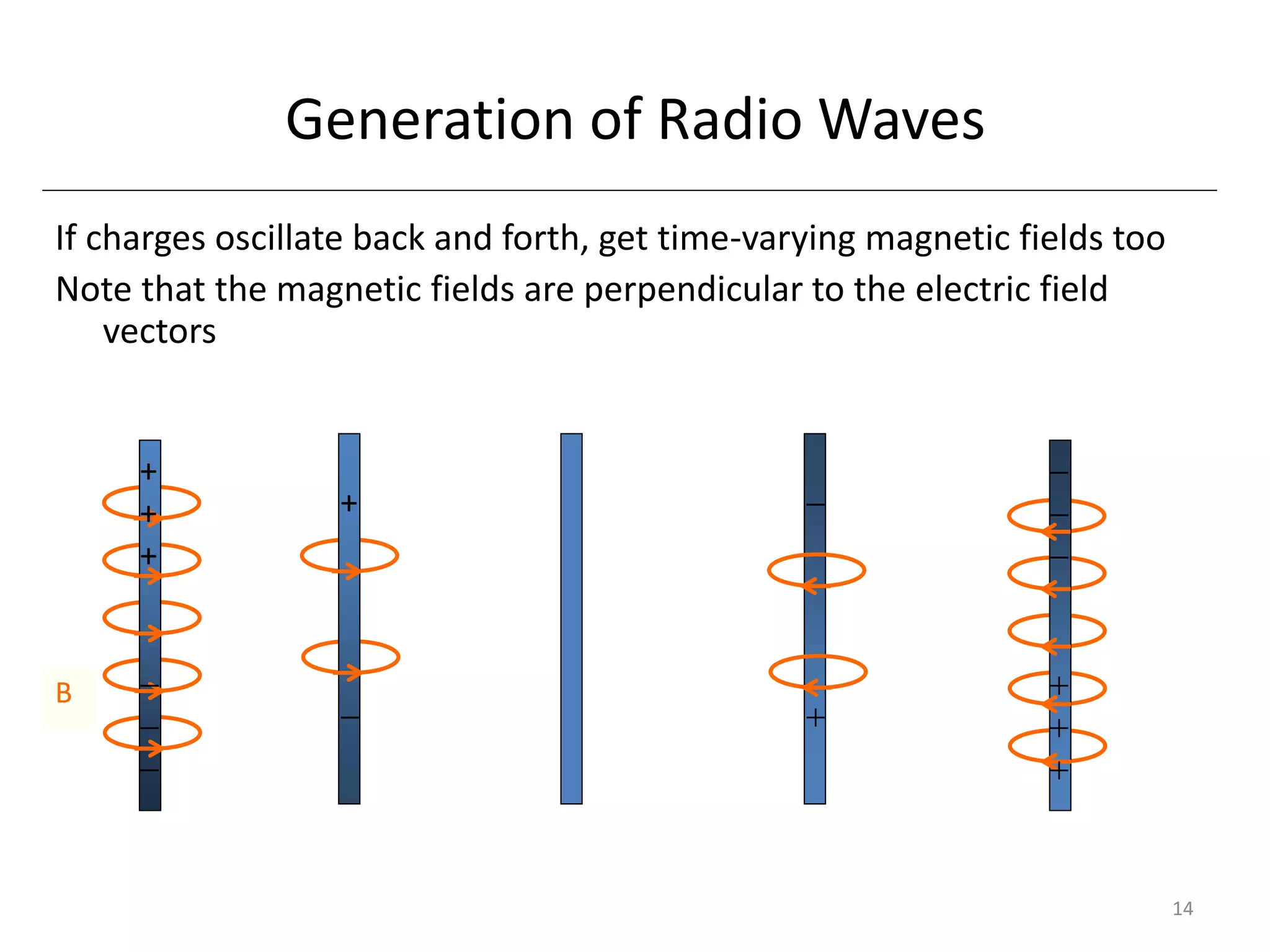
Generation of Radio Waves 
If charges oscillate back and forth, get time-varying magnetic fields too 
Note that the magnetic fields are perpendicular to the electric field 
vectors 
B 
+ 
+ 
+ 
- 
- 
- 
+ 
- 
- 
+ 
- 
- 
- 
+ 
+ 
+
15 
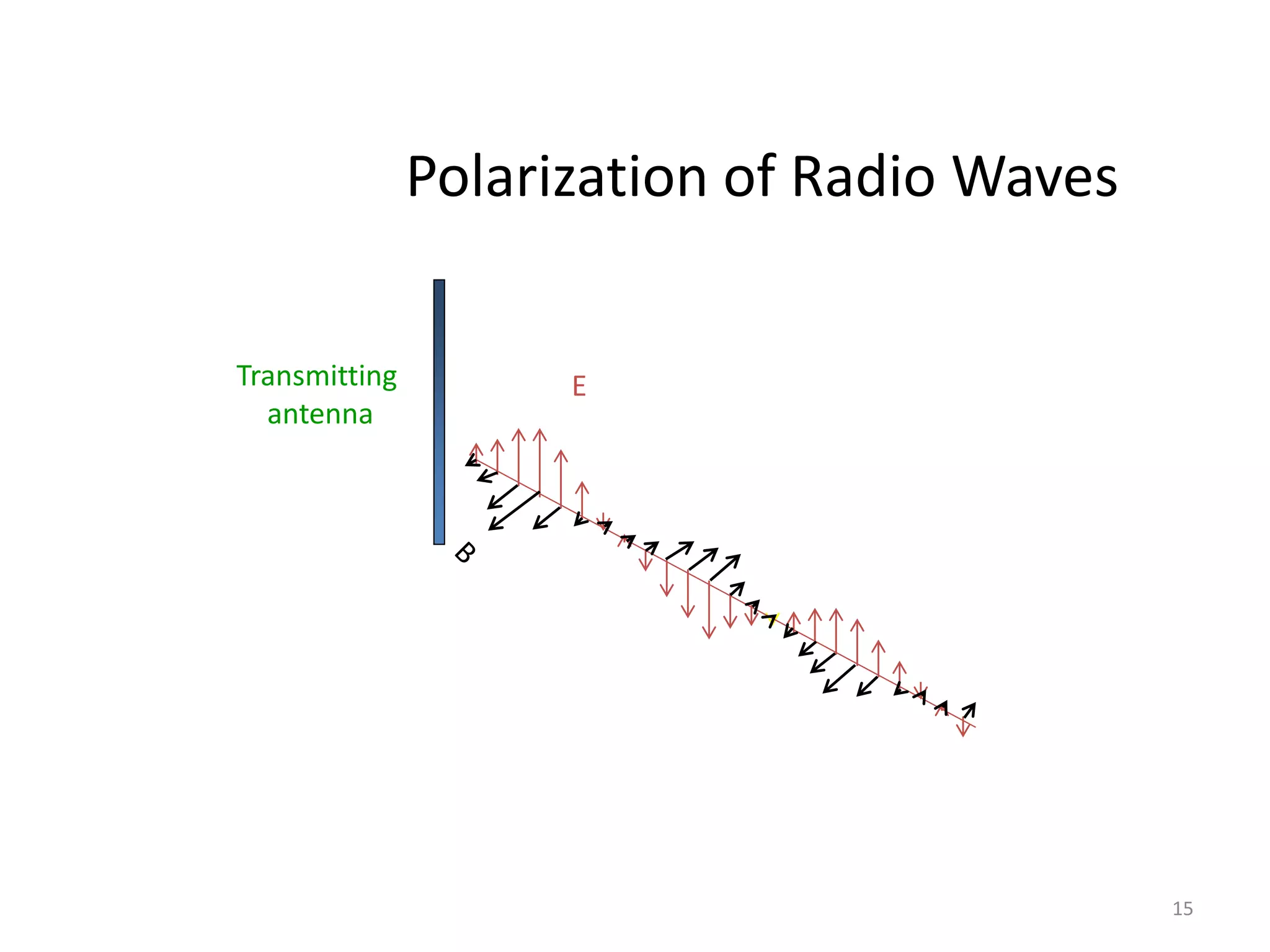
Polarization of Radio Waves 
Transmitting E 
antenna
16 
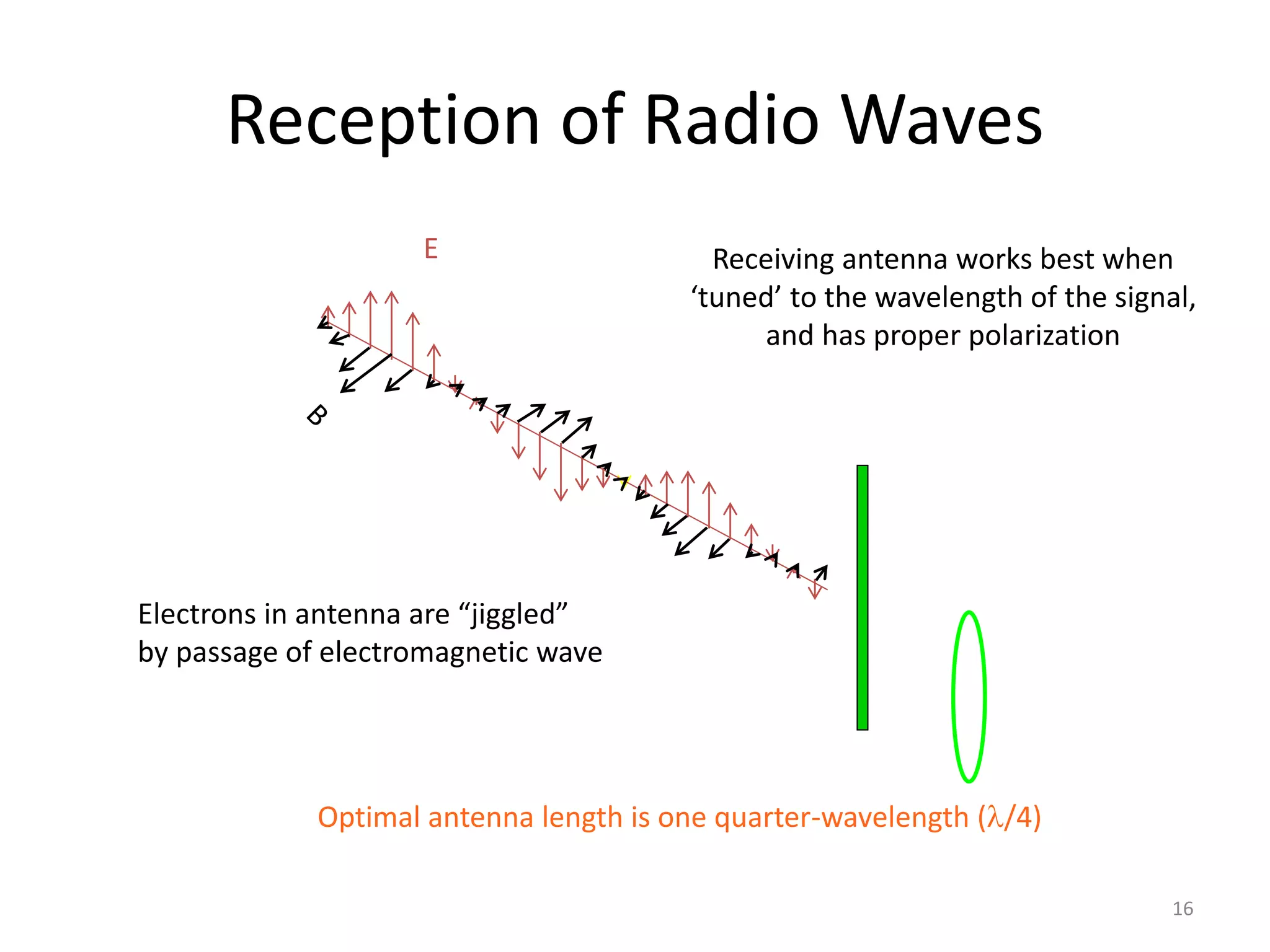
Reception of Radio Waves 
Receiving antenna works best when 
‘tuned’ to the wavelength of the signal, 
and has proper polarization 
E 
Electrons in antenna are “jiggled” 
by passage of electromagnetic wave 
Optimal antenna length is one quarter-wavelength (l/4)

Lecture 1 electromagnetism

  • 1.
    James Clerk MaxwellMichael Faraday Electromagnetism Electromagnetic Induction Electromagnetic Waves
  • 2.
    2 Electromagnetism •Electricity and magnetism are different facets of electromagnetism – a moving electric charge produces magnetic fields – changing magnetic fields move electric charges • This connection first elucidated by Faraday, Maxwell • Einstein saw electricity and magnetism as frame-dependent facets of unified electromagnetic force
  • 3.
    3 Magnetic fieldsfrom electricity • A static distribution of charges produces an electric field • Charges in motion (an electrical current) produce a magnetic field – electric current is an example of charges (electrons) in motion
  • 4.
    4 Electromagnets •Arranging wire in a coil and running a current through produces a magnetic field that looks a lot like a bar magnet – called an electromagnet – putting a real magnet inside, can shove the magnet back and forth depending on current direction: called a solenoid
  • 5.
    Induced Current •The next part of the story is that a changing magnetic field produces an electric current in a loop surrounding the field – called electromagnetic induction, or Faraday’s Law Spring 2008 5
  • 6.
    6 The ElectromagneticConnection • A changing magnetic field produces an electric field, and a changing electric field produces a magnetic field. • Electric and Magnetic fields can produce forces on charges • An accelerating charge produces electromagnetic waves (radiation) • Both electric and magnetic fields can transport energy – Electric field energy used in electrical circuits, e.g., released in lightning – Magnetic field carries energy through transformer, for example
  • 7.
    7 Electromagnetic Radiation • Interrelated electric and magnetic fields traveling through space • All electromagnetic radiation travels at c = 3108 m/s in vacuum – the cosmic speed limit! – real number is 299792458.0 m/s exactly
  • 8.
    8 What’s “Waving”in EM waves? • What medium transports sound waves? – Can there be sound waves in the vacuum of outer space? • What medium transports water waves? • What medium transports radio waves? • A topic of considerable debate in the late 1800’s and early 1900’s • Led to the concept of the “luminiferous ether” – an invisible “jello” that was thought to vibrate electromagnetically • Experiments that sought this ether didn’t find it! • This was quite a surprise Electromagnetic waves travel through empty space!
  • 9.
    Examples of ElectromagneticRadiation 9 • AM and FM radio waves (including TV signals) • Cell phone communication links • Microwaves • Infrared radiation • Light • X-rays • Gamma rays • What distinguishes these from one another?
  • 10.
    10 Uses ofElectromagnetic Waves • Communication systems – One-way and two-way • Radar • Cooking (with microwaves) • Medical Imaging (X rays) • “Night Vision” (infrared) • Astronomy (radio, wave, IR, visible, UV, gamma) All that we experience through our eyes is conveyed by electromagnetic radiation…
  • 11.
    11 The ElectromagneticSpectrum • Relationship between frequency, speed and wavelength f ·l = c f is frequency, l is wavelength, c is speed of light • Different frequencies of electromagnetic radiation are better suited to different purposes • The frequency of a radio wave determines its propagation characteristics through various media
  • 12.
    US Frequency Allocation– the FCC 12 “Radio” frequency-space is allocated to the hilt! Here’s a sample region from 300–600 MHz (300 MHz has a wavelength of 1 meter) International allocation gets tricky
  • 13.
    13 Generation ofRadio Waves • Accelerating charges radiate EM energy • If charges oscillate back and forth, get time-varying fields E + + + - - - + - - + - - - + + +
  • 14.
    14 Generation ofRadio Waves If charges oscillate back and forth, get time-varying magnetic fields too Note that the magnetic fields are perpendicular to the electric field vectors B + + + - - - + - - + - - - + + +
  • 15.
    15 Polarization ofRadio Waves Transmitting E antenna
  • 16.
    16 Reception ofRadio Waves Receiving antenna works best when ‘tuned’ to the wavelength of the signal, and has proper polarization E Electrons in antenna are “jiggled” by passage of electromagnetic wave Optimal antenna length is one quarter-wavelength (l/4)

Editor's Notes