 Review: Electric Field
 Review: Work and Energy
 Analogy with Gravity: Work and PE
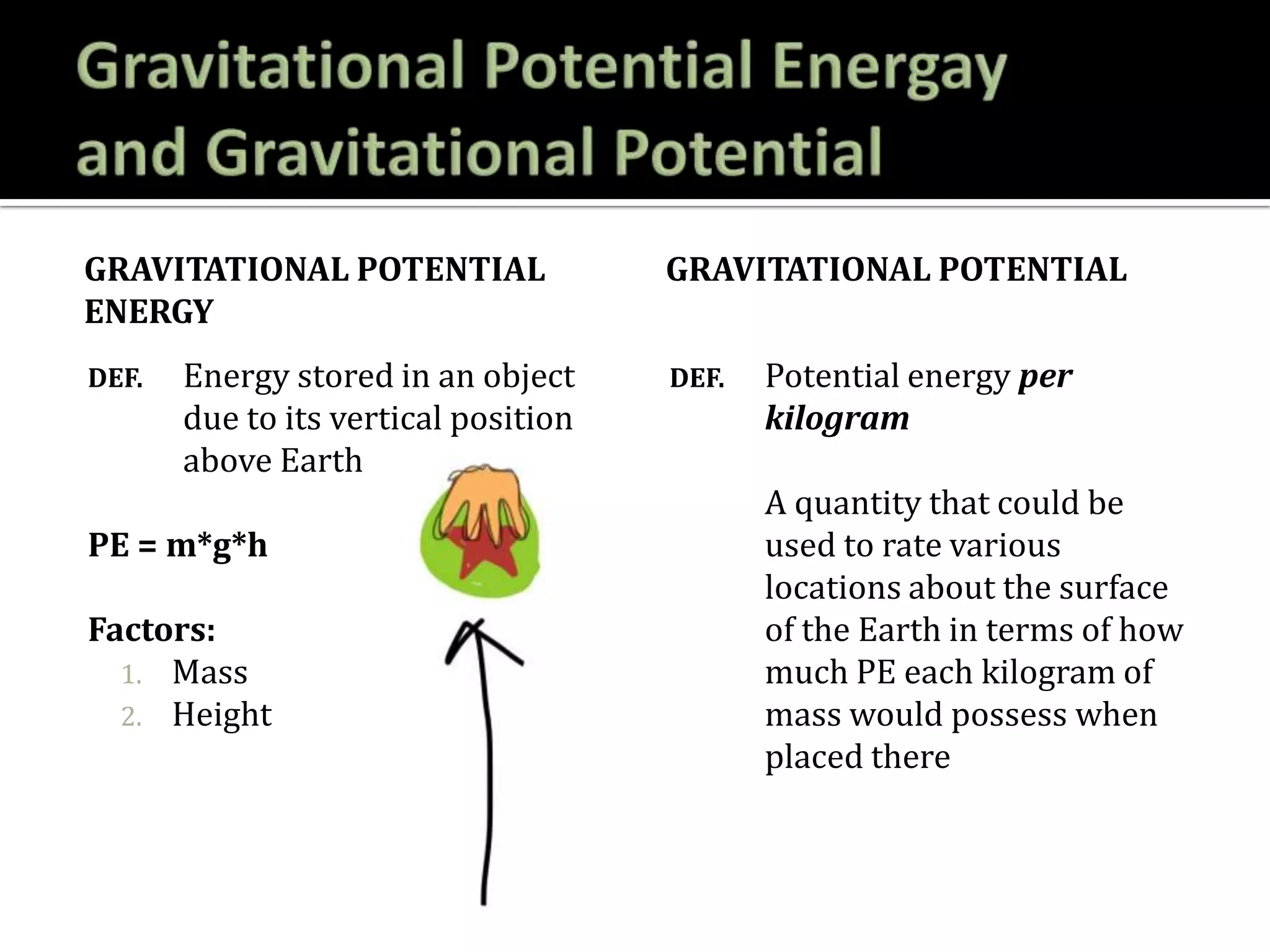
 Gravitational Potential Energy
 Gravitational Potential
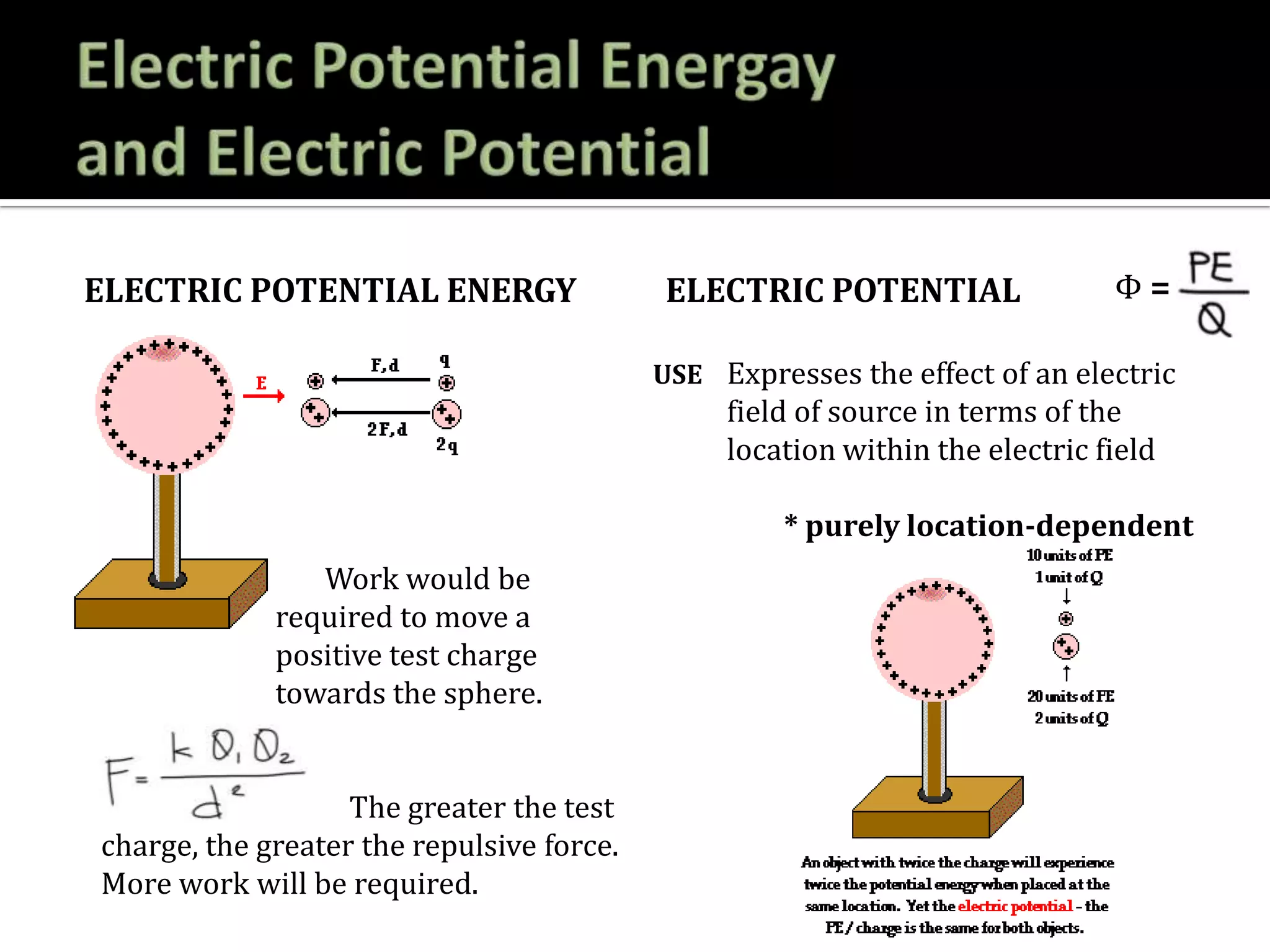
 Electric Potential Energy
 Electric Potential
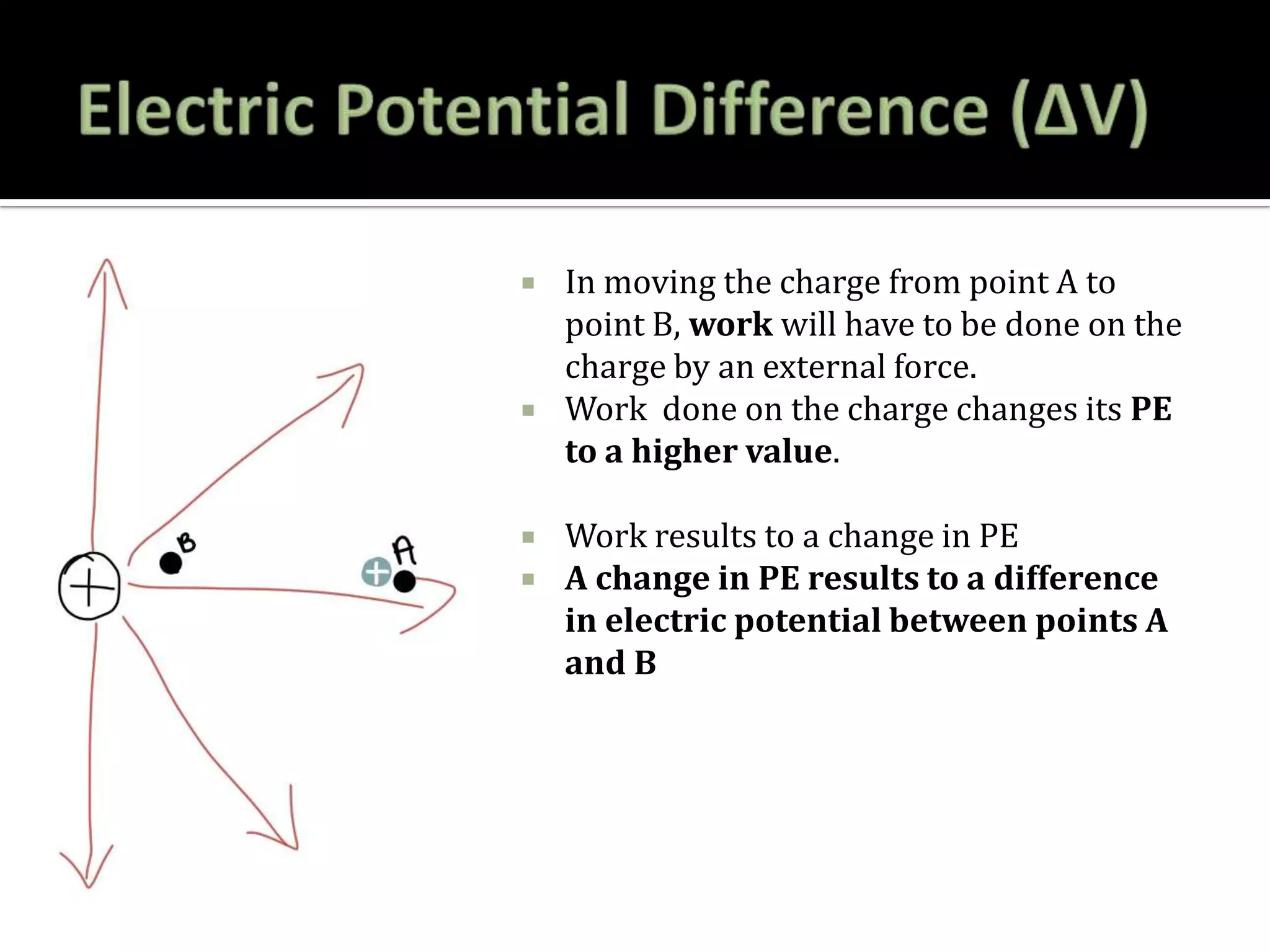
 Electric Potential Difference
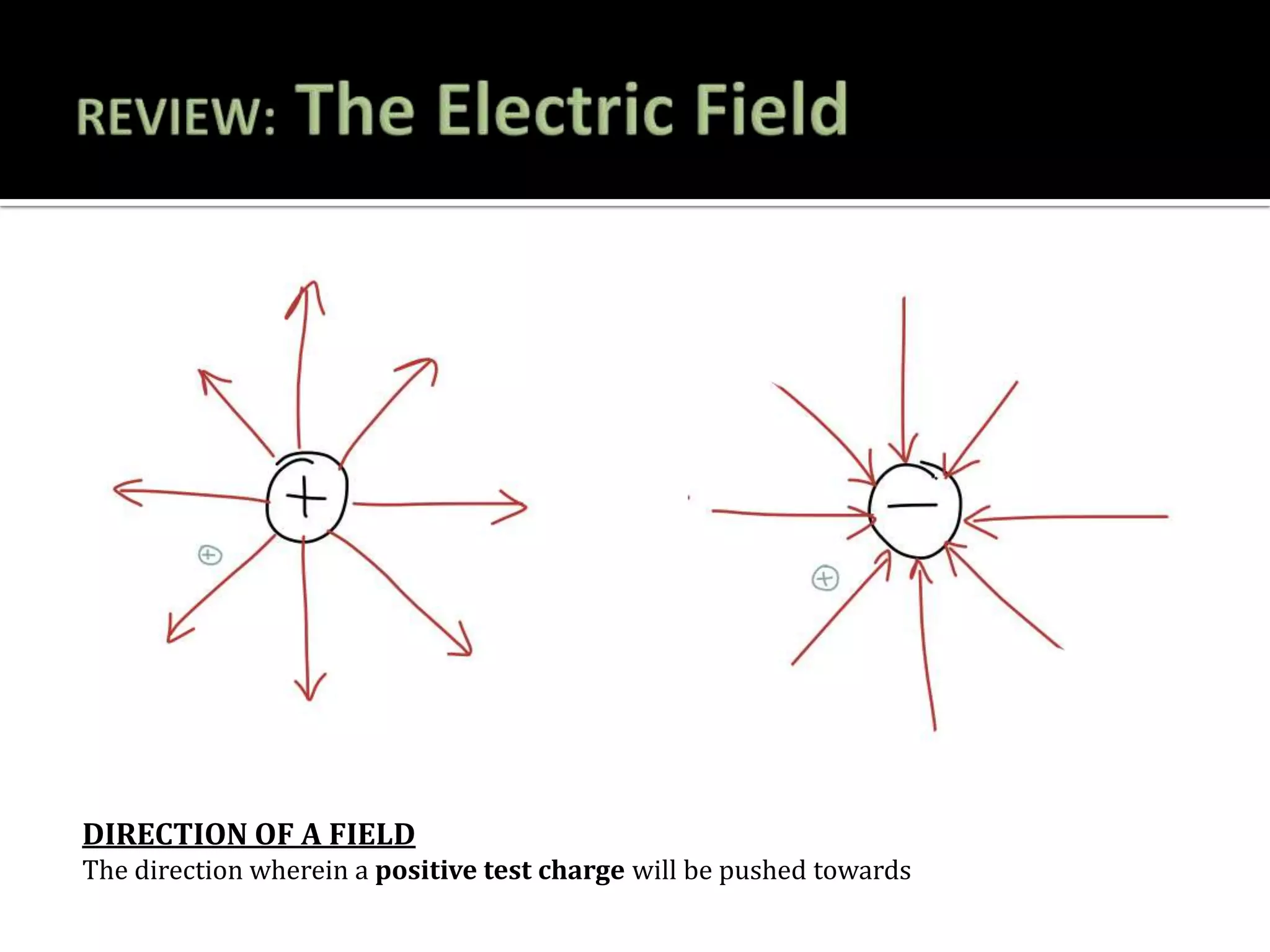
DIRECTION OF A FIELD
The direction wherein a positive test charge will be pushed towards
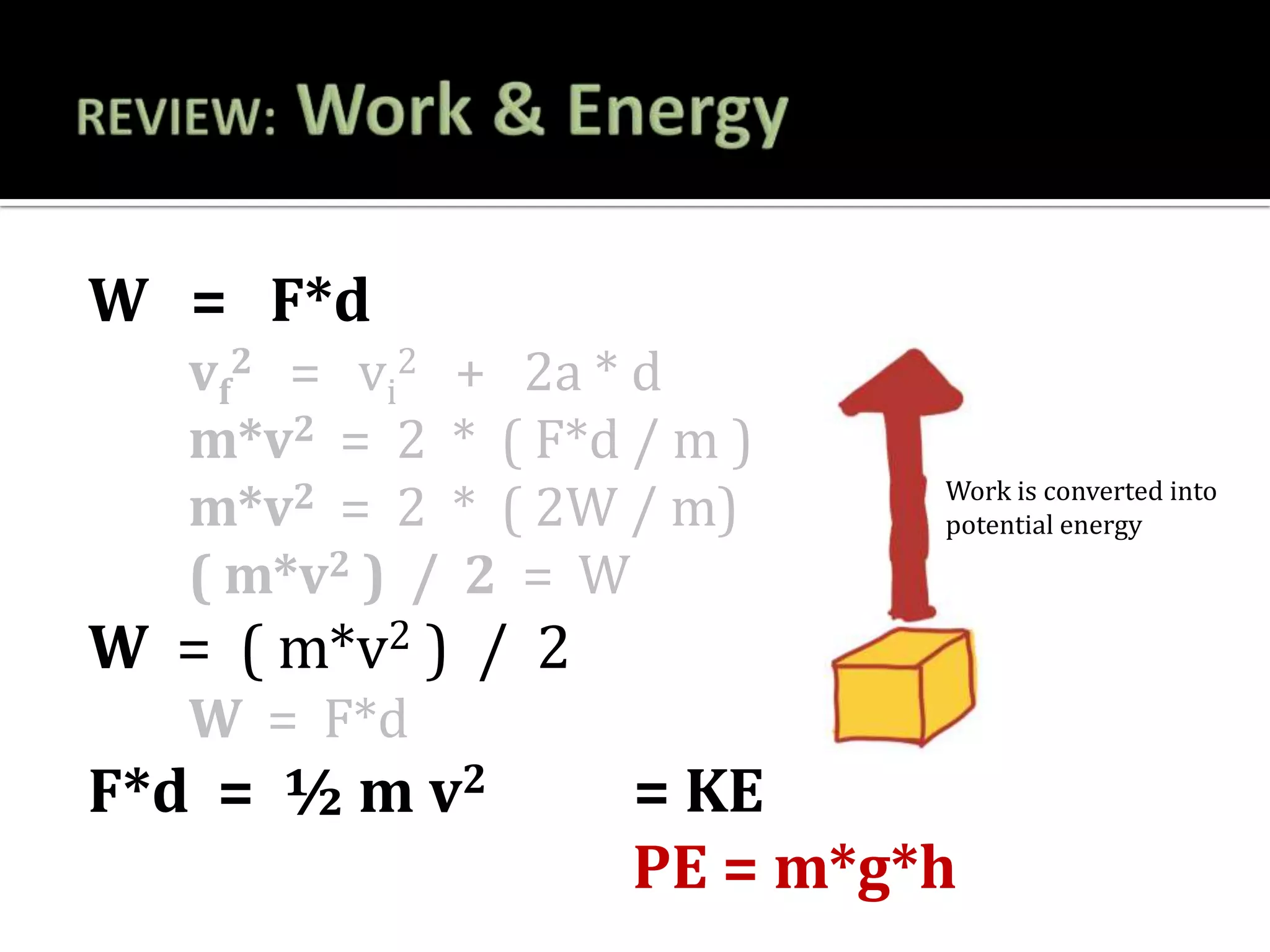
W = F*d
vf
2 = vi
2 + 2a * d
m*v2 = 2 * ( F*d / m )
m*v2 = 2 * ( 2W / m)
( m*v2 ) / 2 = W
W = ( m*v2 ) / 2
W = F*d
F*d = ½ m v2
PE = m*g*h
Work is converted into
potential energy
= KE
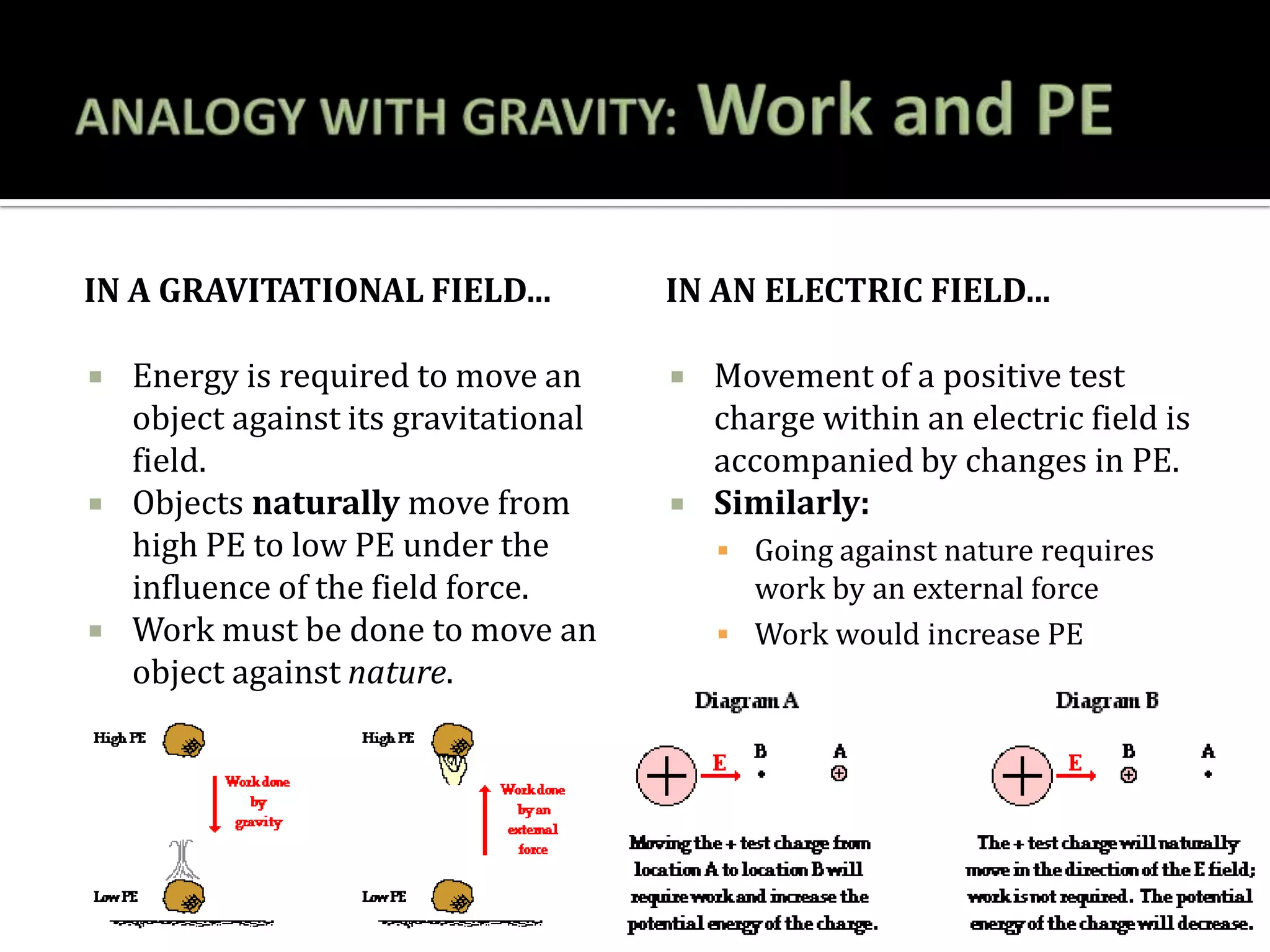
IN A GRAVITATIONAL FIELD...
 Energy is required to move an
object against its gravitational
field.
 Objects naturally move from
high PE to low PE under the
influence of the field force.
 Work must be done to move an
object against nature.
IN AN ELECTRIC FIELD...
 Movement of a positive test
charge within an electric field is
accompanied by changes in PE.
 Similarly:
 Going against nature requires
work by an external force
 Work would increase PE
GRAVITATIONAL POTENTIAL
ENERGY
DEF. Energy stored in an object
due to its vertical position
above Earth
PE = m*g*h
Factors:
1. Mass
2. Height
GRAVITATIONAL POTENTIAL
DEF. Potential energy per
kilogram
A quantity that could be
used to rate various
locations about the surface
of the Earth in terms of how
much PE each kilogram of
mass would possess when
placed there
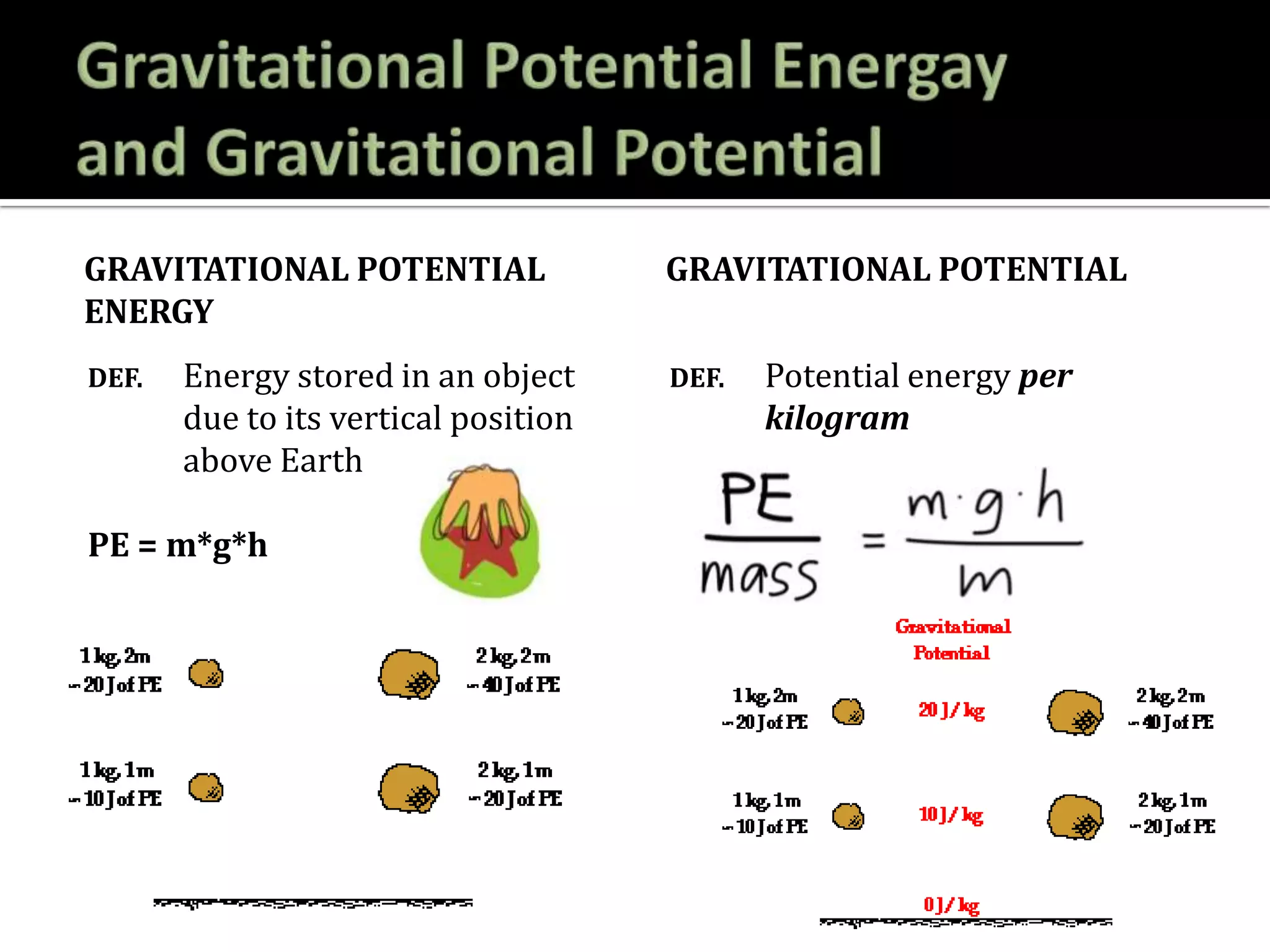
GRAVITATIONAL POTENTIAL
ENERGY
DEF. Energy stored in an object
due to its vertical position
above Earth
PE = m*g*h
Factors:
1. Mass
2. Height
GRAVITATIONAL POTENTIAL
DEF. Potential energy per
kilogram
* mass-independent
Work would be
required to move a
positive test charge
towards the sphere.
The greater the test
charge, the greater the repulsive force.
More work will be required.
ELECTRIC POTENTIAL ENERGY ELECTRIC POTENTIAL
USE Expresses the effect of an electric
field of source in terms of the
location within the electric field
* purely location-dependent
Φ =
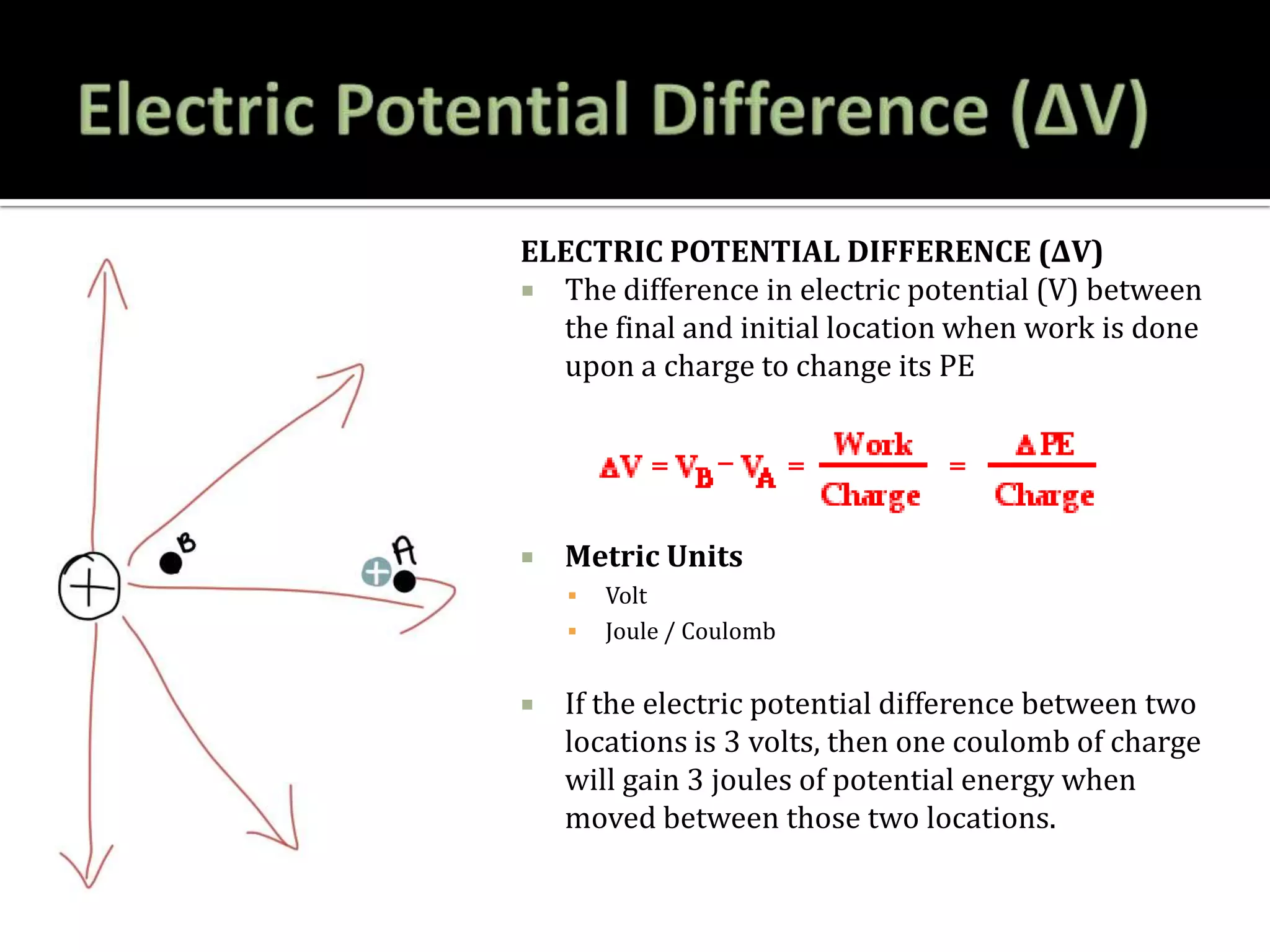
 In moving the charge from point A to
point B, work will have to be done on the
charge by an external force.
 Work done on the charge changes its PE
to a higher value.
 Work results to a change in PE
 A change in PE results to a difference
in electric potential between points A
and B
ELECTRIC POTENTIAL DIFFERENCE (ΔV)
 The difference in electric potential (V) between
the final and initial location when work is done
upon a charge to change its PE
 Metric Units
 Volt
 Joule / Coulomb
 If the electric potential difference between two
locations is 3 volts, then one coulomb of charge
will gain 3 joules of potential energy when
moved between those two locations.

Electric potential difference (voltage)

  • 2.
     Review: ElectricField  Review: Work and Energy  Analogy with Gravity: Work and PE  Gravitational Potential Energy  Gravitational Potential  Electric Potential Energy  Electric Potential  Electric Potential Difference
  • 3.
    DIRECTION OF AFIELD The direction wherein a positive test charge will be pushed towards
  • 4.
    W = F*d vf 2= vi 2 + 2a * d m*v2 = 2 * ( F*d / m ) m*v2 = 2 * ( 2W / m) ( m*v2 ) / 2 = W W = ( m*v2 ) / 2 W = F*d F*d = ½ m v2 PE = m*g*h Work is converted into potential energy = KE
  • 5.
    IN A GRAVITATIONALFIELD...  Energy is required to move an object against its gravitational field.  Objects naturally move from high PE to low PE under the influence of the field force.  Work must be done to move an object against nature. IN AN ELECTRIC FIELD...  Movement of a positive test charge within an electric field is accompanied by changes in PE.  Similarly:  Going against nature requires work by an external force  Work would increase PE
  • 6.
    GRAVITATIONAL POTENTIAL ENERGY DEF. Energystored in an object due to its vertical position above Earth PE = m*g*h Factors: 1. Mass 2. Height GRAVITATIONAL POTENTIAL DEF. Potential energy per kilogram A quantity that could be used to rate various locations about the surface of the Earth in terms of how much PE each kilogram of mass would possess when placed there
  • 7.
    GRAVITATIONAL POTENTIAL ENERGY DEF. Energystored in an object due to its vertical position above Earth PE = m*g*h Factors: 1. Mass 2. Height GRAVITATIONAL POTENTIAL DEF. Potential energy per kilogram * mass-independent
  • 8.
    Work would be requiredto move a positive test charge towards the sphere. The greater the test charge, the greater the repulsive force. More work will be required. ELECTRIC POTENTIAL ENERGY ELECTRIC POTENTIAL USE Expresses the effect of an electric field of source in terms of the location within the electric field * purely location-dependent Φ =
  • 9.
     In movingthe charge from point A to point B, work will have to be done on the charge by an external force.  Work done on the charge changes its PE to a higher value.  Work results to a change in PE  A change in PE results to a difference in electric potential between points A and B
  • 10.
    ELECTRIC POTENTIAL DIFFERENCE(ΔV)  The difference in electric potential (V) between the final and initial location when work is done upon a charge to change its PE  Metric Units  Volt  Joule / Coulomb  If the electric potential difference between two locations is 3 volts, then one coulomb of charge will gain 3 joules of potential energy when moved between those two locations.