Electric Charge
Objective
• To understand about electric charges & its
transfer by friction
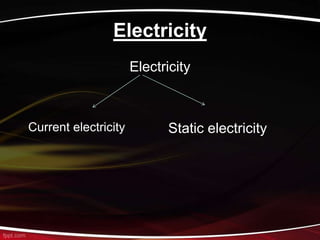
Electricity
Electricity
Static electricityCurrent electricity
Static electricity
• Also known as electrostatic
charges
• Generated due to friction.
Where do charges come
from?
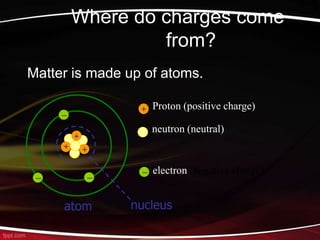
Matter is made up of atoms.
+
+
+
–
––
+
–
Proton (positive charge)
neutron (neutral)
electron (negative charge)
atom nucleus
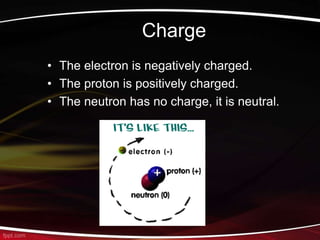
Charge
• The electron is negatively charged.
• The proton is positively charged.
• The neutron has no charge, it is neutral.
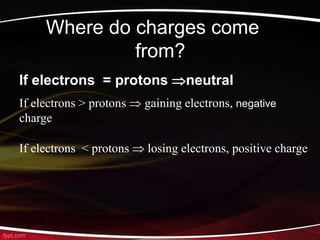
If electrons = protons neutral
Where do charges come
from??
If electrons > protons  gaining electrons, negative
charge
If electrons < protons  losing electrons, positive charge
How do charges behave?
• Like charges repel; unlike charges
attracts.
• A charged object may even attract a
neutral one.
Examples
• When a polythene rod is rubbed with a
woolen cloth, electrons transfers from the
wool to polythene. So the polythene get a
net negative charge & wool gets positive
charge
Conductors , Insulators &
semiconductors
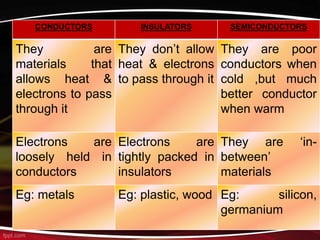
CONDUCTORS INSULATORS SEMICONDUCTORS
They are
materials that
allows heat &
electrons to pass
through it
They don’t allow
heat & electrons
to pass through it
They are poor
conductors when
cold ,but much
better conductor
when warm
Electrons are
loosely held in
conductors
Electrons are
tightly packed in
insulators
They are ‘in-
between’
materials
Eg: metals Eg: plastic, wood Eg: silicon,
germanium
Earthing
• If charges build upon materials, electrons
may be pulled through the air and causes
spark
• To prevent any danger due to this spark,
the object can be earthed
• Earthing means the object is connected to
the ground by a conducting materials so
that unwanted charges flows away.
Electrostatic induction
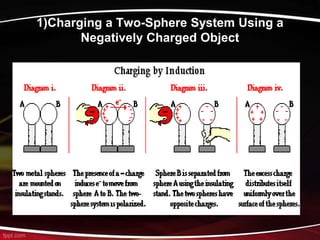
1)Charging a Two-Sphere System Using a
Negatively Charged Object
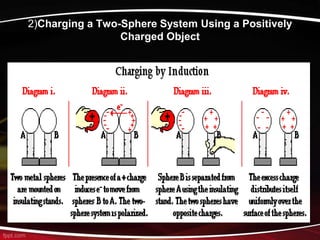
2)Charging a Two-Sphere System Using a Positively
Charged Object
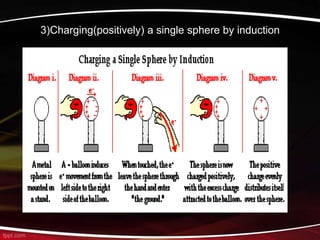
3)Charging(positively) a single sphere by induction
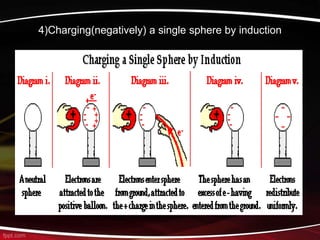
4)Charging(negatively) a single sphere by induction
Electrostatic induction
• The production of a charge in an
uncharged body by bringing a
charged object close to it is known as
electrostatic induction.
• The charges that appear on the
uncharged materials are known as
induced charges
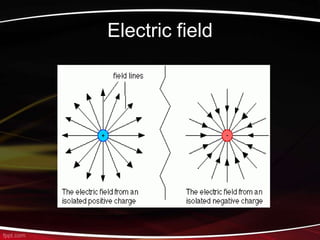
Electric field
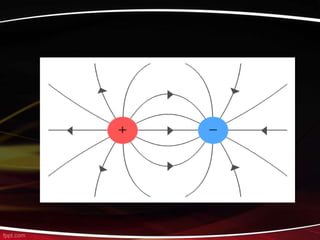
• The region around the electric charges
where another charge when placed will
experience a force of attraction or
repulsion is called an electric field
• the direction of electric field is from the
positive charge to the negative charge
• Electric field is represented by imaginary
lines called electric field lines.
Home work
• Write any 3 Dangers of static electricity

Electric charges

  • 1.
  • 2.
    Objective • To understandabout electric charges & its transfer by friction
  • 3.
  • 4.
    Static electricity • Alsoknown as electrostatic charges • Generated due to friction.
  • 5.
    Where do chargescome from? Matter is made up of atoms. + + + – –– + – Proton (positive charge) neutron (neutral) electron (negative charge) atom nucleus
  • 6.
    Charge • The electronis negatively charged. • The proton is positively charged. • The neutron has no charge, it is neutral.
  • 7.
    If electrons =protons neutral Where do charges come from?? If electrons > protons  gaining electrons, negative charge If electrons < protons  losing electrons, positive charge
  • 8.
    How do chargesbehave? • Like charges repel; unlike charges attracts. • A charged object may even attract a neutral one.
  • 9.
    Examples • When apolythene rod is rubbed with a woolen cloth, electrons transfers from the wool to polythene. So the polythene get a net negative charge & wool gets positive charge
  • 10.
    Conductors , Insulators& semiconductors
  • 11.
    CONDUCTORS INSULATORS SEMICONDUCTORS Theyare materials that allows heat & electrons to pass through it They don’t allow heat & electrons to pass through it They are poor conductors when cold ,but much better conductor when warm Electrons are loosely held in conductors Electrons are tightly packed in insulators They are ‘in- between’ materials Eg: metals Eg: plastic, wood Eg: silicon, germanium
  • 12.
    Earthing • If chargesbuild upon materials, electrons may be pulled through the air and causes spark • To prevent any danger due to this spark, the object can be earthed • Earthing means the object is connected to the ground by a conducting materials so that unwanted charges flows away.
  • 13.
  • 14.
    1)Charging a Two-SphereSystem Using a Negatively Charged Object
  • 15.
    2)Charging a Two-SphereSystem Using a Positively Charged Object
  • 16.
  • 17.
  • 18.
    Electrostatic induction • Theproduction of a charge in an uncharged body by bringing a charged object close to it is known as electrostatic induction. • The charges that appear on the uncharged materials are known as induced charges
  • 19.
  • 21.
    • The regionaround the electric charges where another charge when placed will experience a force of attraction or repulsion is called an electric field • the direction of electric field is from the positive charge to the negative charge • Electric field is represented by imaginary lines called electric field lines.
  • 22.
    Home work • Writeany 3 Dangers of static electricity